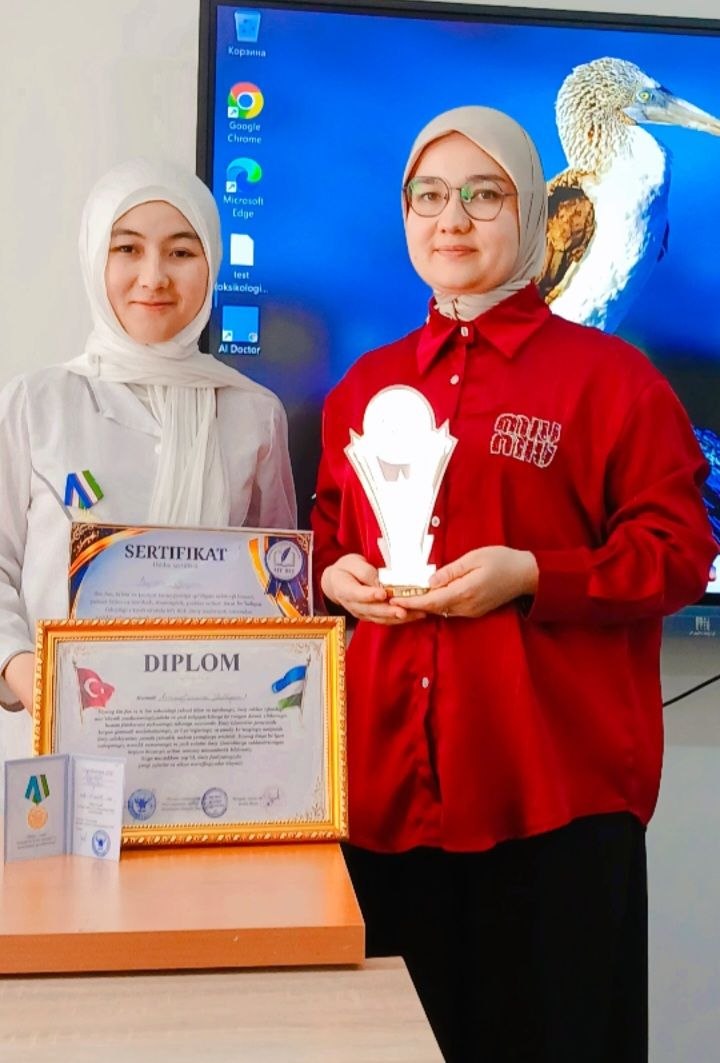
Essay from Sevara Matnazarova

How Reading Improves a Child’s Imagination

A child’s imagination is one of the most beautiful and powerful gifts in life. It is through imagination that children learn to dream, explore, and believe in possibilities far beyond what their eyes can see. Among the many things that help a child grow, reading stands as one of the greatest treasures. A simple book, filled with words and stories, has the magical ability to open doors to worlds children never knew existed. Reading does not only teach children letters and words; it teaches them how to imagine, feel, dream, and understand life in a deeper way. When a child opens a book, something truly special begins to happen. They are no longer sitting quietly in one room; instead, they travel to magical kingdoms, fly through the sky with heroes, dive into deep oceans, or walk through forests filled with wonder. A story becomes more than just words on paper—it becomes an experience. A child who reads about brave explorers may begin dreaming about adventures of their own, while a child who reads stories about kindness may grow into a more caring and understanding person. Unlike television or smartphones, reading requires children to build the story inside their own minds. When a book describes a castle, a dragon, or a peaceful village, every child imagines it differently. One child may picture a shining golden castle in the clouds, while another imagines a mysterious stone palace hidden in the mountains. This beautiful process strengthens creativity because children become creators of their own worlds. Their minds begin to think freely, shaping colors, faces, emotions, and places in ways no screen could ever fully provide.

       Reading also helps children understand feelings—both their own and those of others. Through stories, children experience joy, sadness, fear, hope, friendship, and courage. They laugh with happy characters and feel pain when a character struggles. Sometimes, a child may quietly see themselves in a story, finding comfort in knowing they are not alone in their feelings. In this way, books become silent friends, offering lessons, warmth, and understanding without judgment. Imagine a child sitting by a window on a rainy evening, holding a favorite book in their hands. Outside, the world may seem ordinary, but inside their imagination, extraordinary things are happening. They are climbing mountains, speaking with magical creatures, or solving mysteries with brave companions. That child may not realize it at the moment, but they are learning valuable skills—creativity, patience, empathy, and confidence. Reading shapes not only the imagination but also the heart.

Furthermore, reading gives children the courage to dream bigger. A child who reads stories about inventors may dream of changing the world someday. A child inspired by stories of brave leaders may grow up believing they, too, can make a difference. Books quietly plant seeds of hope and ambition in young hearts. Even the smallest story can leave a lifelong impact.

In today’s fast-moving world, many children spend more time watching screens than opening books. Phones, games, and videos can entertain them quickly, but entertainment is not always the same as imagination. Screens often show children exactly what to think and what to see, while books invite them to think for themselves. Reading teaches patience in a world of speed and creativity in a world filled with distractions. Parents and teachers play an important role in helping children fall in love with reading. Reading bedtime stories, visiting libraries, or simply allowing children to choose books they enjoy can create beautiful memories. Sometimes, the moments children remember most are not expensive gifts or big adventures, but quiet evenings spent listening to stories with someone they love. Those moments can shape a child’s future in powerful ways. A child who reads often grows into a person who thinks deeply, dreams freely, and understands others kindly. Imagination developed through reading can help children become better writers, artists, scientists, teachers, or leaders. More importantly, it helps them become compassionate human beings who believe that anything is possible.

       In conclusion, reading is much more than a school activity or daily habit—it is a journey of the heart and mind. It teaches children to imagine worlds they have never seen, understand feelings they have never experienced, and believe in dreams they have not yet reached. Every book a child opens becomes a small light guiding them toward creativity, wisdom, and hope. If we want children to grow into thoughtful, imaginative, and confident individuals, we must place books in their hands and stories in their hearts. Because sometimes, the greatest magic a child will ever discover begins with turning the first page of a book.

By Sevara Matnazarova (Uzbekistan)
Poetry from Jessie Vanderwall

Everything

It is only when I see the whole world

That I discover it is lonely.

I had never known loneliness

before I knew you.

I feel an absence deep in my chest

And on my skin, cold,

that I’ve never felt before,

that I’ve never had.

I stare into nothingness

and only everything stares back.

Only your eyes.

which I see as I lean on a wilted leg

towards a body which is not there,

which does not know I lean in its direction,

and surely never will.

I wouldn’t believe you if you told me now,

but looking out at everything, all I feel

is cold.

I have no hand to hold, 

no coat to take.

But then, 

I never did.

I had never known loneliness

before I knew you.

And how lonely it is,

to know everything.

Essay from G‘iyosova Mohinur Yoqubjon qizi

Methods of Developing Linguistic Skills in Grades 5–6

Introduction

In modern language education, one of the primary objectives is to develop students’ linguistic competence, enabling them to understand language structures and use them effectively in communication. Grades 5–6 represent a crucial stage in this process, as students begin to acquire systematic knowledge of phonetics, vocabulary, morphology, and syntax. Developing linguistic skills at this level not only enhances language proficiency but also strengthens critical thinking, communication abilities, and overall academic performance. Therefore, teachers should employ innovative and effective methods to facilitate the formation of linguistic skills among learners.

Main Part

The Concept of Linguistic Skills

Linguistic skills refer to a learner’s ability to recognize, analyze, interpret, and appropriately use language units in both oral and written communication. These skills are developed through the integration of theoretical linguistic knowledge and practical language activities.

Methods of Developing Linguistic Skills

1. Analytical Exercises

Analytical exercises encourage students to examine language structures and identify their functions. Activities such as classifying parts of speech, analyzing sentence structures, and identifying grammatical patterns help students understand the nature of language and improve their analytical thinking.

2. Problem-Based Learning

Problem-based learning engages students in discovering language rules through inquiry and investigation. Teachers present linguistic problems or questions, and students work collaboratively to find solutions. This approach promotes independent thinking and deeper understanding of language concepts.

3. Interactive Teaching Methods

Interactive methods such as brainstorming, clustering, role-playing, concept mapping, and group discussions increase student participation and motivation. These techniques encourage active learning and help students apply linguistic knowledge in meaningful contexts.

4. Text-Based Learning

Working with texts is one of the most effective ways to develop linguistic skills. Students analyze vocabulary, grammar, and stylistic features within authentic texts. They also practice summarizing, retelling, and interpreting texts, which enhances both comprehension and language production skills.

5. Educational Games

Considering the age characteristics of 5–6-grade students, educational games play an important role in language learning. Activities such as word-building games, language competitions, puzzles, and vocabulary challenges make learning enjoyable while reinforcing linguistic concepts and skills.

6. Information and Communication Technologies (ICT)

The integration of digital technologies, multimedia presentations, online quizzes, and educational applications creates an engaging learning environment. ICT tools provide interactive opportunities for practicing linguistic concepts and support individualized learning experiences.

Assessment of Linguistic Skills

The assessment of linguistic skills should include various forms such as written assignments, oral presentations, tests, projects, and classroom participation. Effective assessment enables teachers to evaluate students’ ability to apply linguistic knowledge in practical situations and identify areas requiring further development.

Conclusion

In conclusion, developing linguistic skills in Grades 5–6 is an essential component of language education. The effective use of analytical exercises, problem-based learning, interactive methods, text-based activities, educational games, and information and communication technologies contributes significantly to students’ linguistic competence. These methods help learners acquire a deeper understanding of language structures, improve communication skills, and foster independent and critical thinking. As a result, students become more confident and proficient users of language, which supports their academic and personal growth.

About the Author

G‘iyosova Mohinur Yoqubjon qizi was born on June 16, 2001, in Namangan city, Namangan region, Uzbekistan. She completed her secondary education at School No. 1 in Namangan city. Later, she graduated from the Uzbek Language Department of Andijan State University, where she gained a strong academic foundation in linguistics and language teaching.

Currently, she is a second-year master’s student at Namangan State Pedagogical Institute, pursuing advanced studies in the field of education and language teaching. Her academic interests include modern teaching methodologies, linguistic competence development, language education, and innovative approaches to improving students’ communicative skills.

As a young researcher, Mohinur G‘iyosova actively participates in scientific and educational activities, contributing to the advancement of language teaching practices and pedagogical research. She is dedicated to exploring effective methods that enhance students’ learning outcomes and foster their intellectual development.

Essay from Merojxon Ahliddin qizi Majidova

The Role of Phytochemical Components in the Therapy of Liver Diseases and Uterine Fibroids and Their Organic Chemical Classification

Senior Lecturer of the Department of Medical and Biological Chemistry

Fergana Public Health Medical Institute

Rozia Mamadaliyevna Nazirtashova

Second-Year Pharmacy Student

Merojxon Ahliddin qizi Majidova

Abstract

This article explores the biological and chemical interrelations of phytotherapy in the treatment of liver pathologies and hormone-dependent benign tumors, particularly uterine fibroids. The study mainly focuses on the chemical structures, stereochemistry, isomerism, and mechanisms of action of biologically active organic compounds such as flavonolignans, glycosides, and alkaloids found in medicinal plants including Silybum marianum, Rhodiola quadrifida, and Chelidonium majus.

Keywords: Silybum marianum, Rhodiola quadrifida, Chelidonium majus, silybin diastereomers, flavonolignans, phenylethanoid glycosides, chelidonine alkaloid, estrogen metabolism, hepatoprotective activity, uterine fibroids, phytochemical analysis, stereochemistry.

Introduction

In the human body, gynecological homeostasis and hepatobiliary system functions are closely interconnected. Liver cells (hepatocytes) perform the detoxification and utilization of excess steroid hormones, especially estrogen, which is considered the main stimulator in the pathogenesis of uterine fibroids. When liver function deteriorates or hepatocyte membranes are damaged, the metabolism of xenobiotics and endogenous hormones becomes impaired. As a result, the concentration of free estrogen in blood plasma increases, contributing to the enlargement of uterine fibroids, which are hormone-dependent tumors. Therefore, the use of phytochemical compounds promoting liver regeneration indirectly provides significant therapeutic benefits in fibroid therapy.

Main Part

Medicinal Plants Used in Liver Diseases

Silybum marianum (Milk Thistle) — Silymarin Complex

The active extract isolated from Silybum marianum fruits, known as Silymarin, is a polyphenolic compound belonging to the flavonolignan class. The most active component of silymarin is Silibinin (Silybin), with the molecular formula C25H22O10 and molecular weight of 482.441 g/mol. It naturally occurs as an equimolar mixture of two diastereomers: Silybin A and Silybin B. Their molecular difference lies in the spatial configuration of hydroxymethyl (-CH2OH) and phenyl groups at chiral centers.

Silymarin possesses antioxidant and anti-inflammatory properties. It is widely used to protect liver cells from toxins and to support treatment of liver diseases such as hepatitis and cirrhosis. It reduces damage caused by toxins, medications, and free radicals, stimulates protein synthesis in hepatocytes, and enhances liver regeneration. Silymarin is commonly prescribed as supportive therapy in chronic hepatitis and alcoholic or non-alcoholic fatty liver disease.

Typical dosage ranges from 100 to 300 mg daily.

Regioisomers

The extract also contains regioisomers such as Isosilybin A and Isosilybin B, Silychristin containing a benzofuran heterocyclic ring, and Silydianin characterized by a bicyclic ketone system. The biosynthetic precursor of these compounds is the flavanonol Taxifolin (C15H12O7).

For liver protection and профилактика, recommended doses are 140–280 mg/day. In chronic hepatitis and steatosis, 140 mg two or three times daily is administered. In Amanita phalloides poisoning, intravenous doses of 20–30 mg/kg/day are used to block amanitin uptake into hepatocytes.

Hypericum perforatum (St. John’s Wort) — Hypericin

Hypericin is a polycyclic aromatic compound derived from anthraquinone with the molecular formula C30H16O8. Due to its highly conjugated pi-electron system, it demonstrates anti-inflammatory and strong photodynamic activity. It reduces bile stasis in the gallbladder and hepatic ducts.

Hypericin exhibits significant biological activity:

– Antidepressant effects by inhibiting reuptake of serotonin, dopamine, and norepinephrine;

– Antiviral activity against enveloped viruses, including HIV and cytomegalovirus;

– Photodynamic activation under light exposure, producing reactive oxygen species capable of destroying cancer cells.

Because of its photosensitizing effects, hypericin may increase skin sensitivity to ultraviolet radiation, causing burns or rashes.

Medicinal Plants Used in Uterine Fibroid Therapy

Rhodiola quadrifida (Red Brush) — Salidroside, Phenylethanoid Glycoside

Molecular formula: C14H20O7. The molecule consists of glucose and p-tyrosol (aglycone) linked via a beta-glycosidic bond.

Salidroside possesses adaptogenic properties and stabilizes estrogen and progesterone balance. Since uterine fibroids are hormone-dependent tumors, chronic stress may disrupt hormonal balance and accelerate fibroid growth. Salidroside reduces cortisol levels and helps normalize hormonal status.

Its antioxidant and anti-inflammatory effects reduce oxidative stress and pathological fibrosis in uterine tissues. In vitro studies indicate that salidroside can suppress proliferation and induce apoptosis of gynecological tumor cells. However, sufficient clinical evidence confirming its effectiveness in shrinking uterine fibroids in humans is still lacking.

Chelidonium majus (Greater Celandine) — Chelidonine

Chelidonine belongs to the benzophenanthridine alkaloid group with the molecular formula C20H19NO5. Due to the presence of a tertiary amine group, it forms salts with acids and exhibits high toxicity.

Chelidonine demonstrates cytostatic activity by inhibiting mitosis, thereby suppressing hyperplasia and proliferation of fibroid tissues. However, unsupervised use may result in hepatotoxicity.

Chemical Basis of Antioxidant Mechanisms

The hepatoprotective effects of polyphenolic compounds such as silymarin and hypericin are associated with the hydrogen-donating ability of their phenolic hydroxyl (-OH) groups. Free radicals damaging liver tissue react with phytochemical antioxidants according to the following mechanism:

Ar-OH + R• → Ar-O• + RH

Table of Medicinal Plants and Their Active Compounds

Plant Name| Active Compound| Chemical Class| Molecular Formula| Main Function

Silybum marianum| Silibinin (A and B)| Flavonolignan| C25H22O10| Restoration of hepatocyte membranes

Hypericum perforatum| Hypericin| Anthraquinone derivative| C30H16O8| Choleretic and anti-inflammatory effect

Rhodiola quadrifida| Salidroside| Phenylethanoid glycoside| C14H20O7| Modulation of estrogen/progesterone balance

Chelidonium majus| Chelidonine| Benzophenanthridine alkaloid| C20H19NO5| Cytostatic inhibition of tumor growth

Conclusion

This study presents new scientific perspectives on understanding the pathogenetic relationship between liver diseases and uterine fibroids based on principles of organic chemistry and modern phytopharmacology. The findings indicate that the functional state of the hepatobiliary system plays a crucial role in regulating hormonal homeostasis, particularly estrogen metabolism.

Diastereomers and regioisomers of silibinin found in Silybum marianum stabilize hepatocyte membranes and inhibit lipid peroxidation, thereby enhancing detoxification capacity and indirectly reducing hormonal imbalance that stimulates fibroid growth.

At the same time, glycosides of Rhodiola quadrifida and alkaloids of Chelidonium majus exhibit selective cytostatic and adaptogenic effects on fibroid tissue proliferation. Nevertheless, the high biological activity of phytochemical substances and the hepatotoxic risk associated with compounds such as chelidonine require careful medical supervision during phytotherapy.

Considering the potential negative effects of phytoestrogen-containing plants in patients with uterine fibroids, phytotherapy should not be regarded as an independent treatment method but rather as a supportive synergistic approach complementing standard clinical therapy under physician supervision.

Future studies focusing on the molecular mechanisms of natural polyphenols and alkaloids may contribute to the development of new safe therapeutic agents at the intersection of gynecology and hepatology.

Essay from Mirzajonova Sabokhon

Iron Metabolism in the Human Body

Mirzajonova Sabokhon

Assistant of the Department of Physiology

Mahammadjonova Mohlaroy Doniyorbek qizi

Student of Fergana Medical Institute of Public Health

Introduction

Iron is one of the most essential microelements for the human body. It plays an important role in normal cellular activity, oxygen transport, energy metabolism, and enzyme functions. A deficiency of iron in the body leads to anemia, while excess iron may cause various toxic conditions. Therefore, iron metabolism is considered a strictly regulated biological process.

Iron is mainly found in hemoglobin. Hemoglobin is a protein contained in erythrocytes (red blood cells) that transports oxygen from the lungs to tissues. In addition, iron is also a component of myoglobin, cytochromes, and many enzymes. The body of an adult human contains approximately 3–5 grams of iron.

Absorption and Transport of Iron

Iron enters the body through food products. The main dietary sources of iron include meat, liver, egg yolk, legumes, spinach, and cereals. Dietary iron exists in two forms: heme iron and non-heme iron. Heme iron is mainly found in animal products and is more easily absorbed by the body. Non-heme iron is found in plant products and is absorbed less efficiently.

Most iron absorption occurs in the duodenum and the upper part of the small intestine. Ascorbic acid (vitamin C) enhances iron absorption, whereas phytates, as well as tannins found in tea and coffee, reduce iron absorption.

Within intestinal cells, iron passes into the bloodstream with the help of special proteins. In the blood, iron binds to the protein transferrin, which transports it to the bone marrow, liver, and other tissues.

Functions of Iron in the Body

One of the main functions of iron is its participation in oxygen transport. Iron in hemoglobin binds oxygen molecules and delivers them to all organs and tissues. Iron in myoglobin creates an oxygen reserve in muscles.

In addition, iron is a structural component of many enzymes involved in oxidation-reduction reactions. It plays an important role in energy production, immune system function, and cell growth. Iron deficiency weakens the immune system and may lead to fatigue, dizziness, and reduced working capacity.

Storage of Iron

Excess iron in the body is stored in the forms of ferritin and hemosiderin. The main iron reserves accumulate in the liver, spleen, and bone marrow. Ferritin is a water-soluble protein that safely stores iron, whereas hemosiderin represents a more concentrated storage form of iron.

Iron metabolism in the body is regulated by hormones and biologically active substances. In particular, the hormone hepcidin controls the absorption of iron from the intestine and its release into the bloodstream. When hepcidin levels increase, iron transfer into the blood decreases and slows down.

Iron Deficiency and Iron Overload

Iron deficiency is one of the most common micronutrient deficiencies worldwide. It may result from poor nutrition, chronic blood loss, pregnancy, or intestinal diseases. In iron deficiency anemia, the hemoglobin level decreases, and oxygen delivery to tissues becomes impaired.

Excessive accumulation of iron may lead to hemochromatosis. In this condition, iron accumulates in the liver, heart, and pancreas, disrupting the function of these organs. Therefore, maintaining a normal level of iron in the body is extremely important.

Conclusion

In conclusion, iron is an essential microelement necessary for the normal functioning of the human body. It plays a vital role in oxygen transport, enzyme activity, and energy metabolism. Both iron deficiency and iron overload are dangerous for the body. Therefore, consuming iron-rich foods in moderation and maintaining a healthy diet are crucial for preserving overall health.

Essay from Egamberdiyeva Diloromxon Olloberdi qizi

THE INTERPRETATION OF ADOLESCENT PSYCHOLOGY IN TOHIR MALIK’S “ALVIDO BOLALIK”

Egamberdiyeva Diloromxon Olloberdi qizi

2nd year student of Uzbek Philology,

University of Business and Science

Abstract:

This article analyzes the interpretation of adolescent psychology in Tohir Malik’s famous novel “Alvido Bolalik”. The work vividly describes the inner world of teenagers, their emotional experiences, social problems, and psychological conflicts. The article discusses the influence of family environment, social injustice, lack of attention, and spiritual loneliness on the formation of adolescent character. Through literary analysis, the author’s artistic skill in portraying the psychological state of young people is revealed. The article also examines the educational and moral significance of the novel in modern society.

Keywords: adolescent psychology, Uzbek literature, Tohir Malik, social environment, spirituality, youth problems, psychological analysis, family influence, morality.

Introduction

Uzbek literature has always paid special attention to the spiritual world of human beings, especially the emotional and psychological experiences of young people. One of the writers who deeply analyzed the human psyche and social problems in Uzbek literature is Tohir Malik. His novel “Alvido Bolalik” occupies an important place among works dedicated to adolescent life and social reality.

The novel reflects the complicated destiny of teenagers who suffer from social inequality, family problems, and lack of kindness. Tohir Malik skillfully portrays the inner conflicts of adolescents, their hopes, disappointments, fears, and emotional struggles. Through realistic descriptions and strong characterization, the writer reveals how social environment influences the personality and worldview of young people.

Today, the issue of youth education and psychological stability remains one of the most urgent social problems in many countries. Therefore, studying the psychological interpretation of adolescents in literary works is important not only from a literary perspective but also from a social and educational viewpoint. In this regard, “Alvido Bolalik” serves as a valuable source for understanding the emotional world of teenagers and the factors affecting their behavior.

Main Part:

Tohir Malik’s “Alvido Bolalik” is one of the most powerful psychological novels in modern Uzbek literature. The author focuses not only on external events but also on the inner world of his characters. The psychological experiences of adolescents are portrayed naturally and convincingly throughout the novel.

One of the central ideas of the work is the influence of family environment on a child’s spiritual development. Many adolescent characters in the novel grow up without enough love, attention, and emotional support. As a result, they become vulnerable to negative influences in society. The writer demonstrates that neglect and indifference may destroy the moral stability of young people.

The emotional loneliness of adolescents is another important issue described in the novel. Teenagers often feel misunderstood by adults and society. Because of this psychological isolation, they struggle to find their place in life. Tohir Malik successfully reveals the hidden pain, fear, and confusion inside the hearts of young people. The characters experience emotional pressure, disappointment, and hopelessness, which deeply affect their behavior and decisions.

In the novel, social injustice also plays a significant role in shaping adolescent psychology. Poverty, inequality, violence, and unhealthy social conditions force many teenagers to choose the wrong path. Some characters lose trust in people and become emotionally broken. The author shows that society itself may become responsible for the tragic fate of young individuals when kindness, education, and moral support are absent.

Another remarkable aspect of the novel is the realistic portrayal of psychological conflict. The adolescent characters constantly struggle between good and evil, hope and despair, honesty and crime. These internal conflicts make the characters realistic and emotionally powerful. Tohir Malik uses dialogue, inner monologue, and descriptive language effectively to express the emotional condition of teenagers.

The educational significance of “Alvido Bolalik” is also very important. The novel encourages parents, teachers, and society to pay more attention to the spiritual needs of young people. It reminds readers that adolescence is a sensitive period in human life and that every child needs love, understanding, and guidance. The work calls society to protect youth from harmful influences and to create a healthy moral environment for them.

Furthermore, the novel reflects universal human values such as kindness, compassion, responsibility, and humanity. Even though the events are connected with Uzbek society, the psychological experiences of the characters are understandable for readers all over the world. This universal character increases the artistic and social value of the work.

Tohir Malik’s artistic mastery is especially visible in his ability to combine realism with psychological analysis. He does not idealize his characters; instead, he portrays them as ordinary human beings facing difficult life circumstances. Because of this realism, readers feel emotionally connected to the characters and their suffering.

The language and style of the novel also strengthen its psychological influence. Emotional expressions, meaningful dialogues, and vivid descriptions help readers understand the mental condition of adolescents more deeply. The writer’s simple but powerful language makes the novel emotionally impressive and socially meaningful.

Conclusion:

In conclusion, Tohir Malik’s “Alvido Bolalik” is an important psychological and social novel that deeply analyzes the inner world of adolescents. Through realistic characters and emotional conflicts, the author reveals the influence of family, society, and environment on the psychological development of young people.

The novel emphasizes that lack of love, social injustice, and spiritual loneliness may negatively affect adolescent behavior and future destiny. At the same time, the work highlights the importance of kindness, education, and moral support in raising healthy and responsible individuals.

The psychological interpretation of adolescents in “Alvido Bolalik” demonstrates Tohir Malik’s great artistic skill and his deep understanding of human nature. The novel remains relevant today because the problems of youth, family relations, and social morality continue to concern modern society.

Therefore, the work is not only a valuable example of Uzbek literature but also an important literary source for studying adolescent psychology and social issues in contemporary life.

References

1. Malik, Tohir. Alvido Bolalik. Tashkent: Sharq Publishing House.

2. Karimov, Naim. History of Uzbek Literature. Tashkent.

3. Qo‘shjanov, M. Psychological Analysis in Uzbek Prose.

4. Literary studies and articles on modern Uzbek literature.

5. Sources related to adolescent psychology and literary criticism.

Poetry from Brent Yergensen

Assurance Came Nigh

I laid in bed, pondering the day,
like a phantom unexpected, sleep took its way.
It was one of those dreams, vivid but just a moment—
imagery rising, leaving my mind in atonement.

I saw a man, burdened with life,
he was drowning in pain, so full his strife.
I saw him walking a field in the forest, shrubbery round him high.
He stopped and pled to God, and assurance came nigh.He emerged assured, leaving the wooded setting with speed,
his confidence high, God answered his need.
And I awoke seconds later, wondering why the short dream—
perhaps a vision, I woke with prayer in mind.