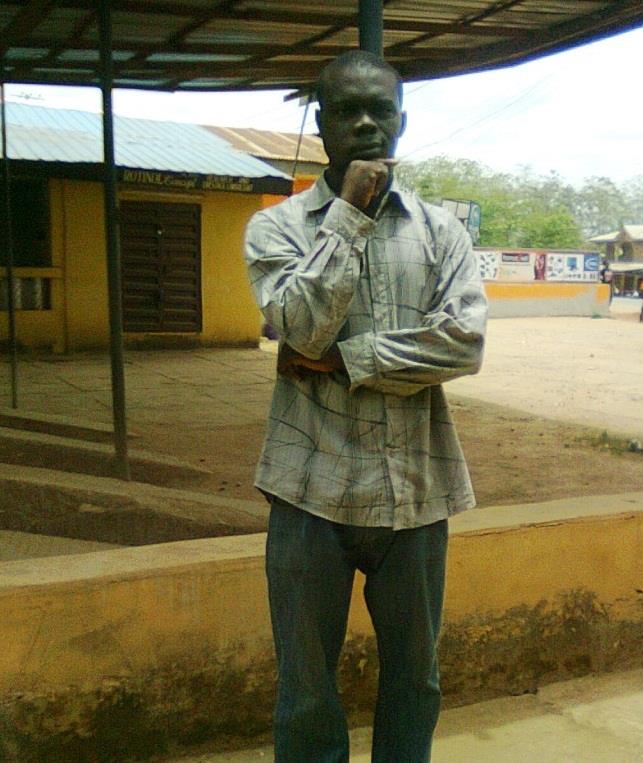
Michael Robinson’s poem collection in his book From Chains to Freedom depicts genuine and authentic lived experiences of many black males in the United States. These poems are timely reminders of how far we have to go in our fight for equity and justice for Black people. He has been writing for a long while. Many admire Michael’s courage, voice and determination to tell his story and open other’s eyes and minds. I love his poem “Moving on with Life.”
After the murder of George Floyd, many of us who have been fighting for justice and equity for many years, want to ensure this is not just a moment of reckoning for racial justice in the United States, but that the momentum continues and becomes a movement. That is my prayer and hope after I read Michael’s book. These poems are great reminders of how we should keep fighting and never give up. Thank you Michael for this five star poem collection to hold us accountable and urge us to be responsible allies and advocates for many who are voiceless.
Poet Michael Robinson
Michael Robinson’s book From Chains to Freedom can be ordered directly from the author. Please email Michael at mjrobinson@rollins.edu to ask him about a copy!
Poetry on a Rural Theme:
Living in the Middle of Nowhere & Wondering Why
by Marjorie ThelenThe Ditch Witch Blues
after helping John again
with some impossible task
in her estimation
this time trying to load
a 600 pound piece of equipment
a ditch witch
its big wheels
spinning in the mud
onto a trailer covered with snow
that fell overnight, predicted
that the ditch witch slid off of the first time
nearly smashing into John
she's thinking a modest apartment
with an alley view
in a liberal, progressive community,
cultural venues by the boatload,
surrounded by people who have been in therapy
no concern about running out of water
or neighbors shooting at the devil
or rabid extremists
or fulminating fundamentalists
is beginning to look appealing
her country gal era may be over
chorus
oh, she's singing the ditch witch blues
yes, she's crying the ditch witch blues
time might be right to hit the road tonight
because she's singing the ditch witch blues
but
the silence is nice
mountain views spectacular
you can see the stars
John has plenty of space for his treasures
but
the roads are abominable
the dust never ends
and there's the water problem
chorus
oh, she's singing the ditch witch blues
yes, she's crying the ditch witch blues
time might be right to hit the road tonight
because she's singing the ditch witch blues
Damn Coyotes
I can't believe she left the radio blaring again.
She thinks it keeps the coyotes away.
Well, I can't sleep.
Stop complaining. The treat bowl in the morning makes it all worthwhile.
It was skimpy this morning.
Oh, shut up. Quit complaining. I hear she's going to butcher this fall.
You might be on the list. I notice you aren't laying like you used to.
Ha, neither are you. God, I hate NPR. You'd think she'd at least put on the country and western station.
Little blind duck
Little blind duck
bumps into doors and fences
but knows the way to the pond
if John's fire truck isn't in the way
Scarlett is her name
old Indian runner duck
now covered with mostly
white feathers that used to be black
Her favorite foods are tomatoes,
watermelon, and cooked pumpkin
she has one duck friend left
a short, squat mallard
who sometimes looks out for her
sometimes not
A turkey gobbler mistook her
for a turkey hen
insisted on humping her
squashing her into the ground
and bloodying her head
he went into the freezer
Then the two hen turkeys did the same
bloodying Scarlett’s head again
which caused her blindness
they went into the freezer, too
Moral of the story: be careful who you hump
Guido
how can you eat your pet?
because we raised him
because he got back rubs every day
because he got orange peels, corn cobs, and cabbage treats
because he had girl friends
because he grazed green pastures, ate alfalfa
because he had nice shade to chew his cud
we nourished him
he nourishes us
we wouldn’t do it again
Purple Potatoes
We could make a potato dish
to take to the potluck
like potato salad or casserole
that would be easy
I don't think the guys
would like purple potatoes
what?
are you embarrassed
to take something that
has been grown in our garden
organic, local, non-GMO?
no, no, it's not that
it's just that the guys around here
aren't used to purple potatoes
Shooting at the Devil
the devil flies around the sagebrush at night
shouting
the neighbor shouts back
and orders him to go away
the trouble started
when the new people moved in
when the neighbor comes home
stuff is moved around
they hexed the place
they grind up animals and
throw them raw against her house
she called out the sheriff twice
he was no help
so she shoots at the devil instead
scaring the neighbors to death
Obituary Notice for the Oregon Frontier
Burns and Hines
old frontier towns in southeast Oregon,
died a slow, agonizing death
after refusing to acknowledge climate change
and that they were using water
faster than it came into the basin.
The residents of Harney County
were among other rural Oregon communities
that launched a sustained effort
to defeat every carbon emission reduction bill
that came before the legislature,
that squelched every voice that said
the way they used water
was unsustainable.
Well, they got their way.
They kept their diesel farm equipment
and old gas hog trucks.
They kept their methane-producing cows.
They kept their water devouring pivots.
They watched the Harney Basin Aquifer dry up.
They scratched their head when their domestic wells went dry
and their cows died for lack of water.
No water.
No alfalfa.
No cows.
No way to live.
You drive through two ghost towns today.
Front doors stand open
on long deserted homes.
Grass grows
through the pavement of the main streets.
Traffic lights hang dead, unblinking.
Tumbleweed is the only thing moving.
No one home.
But they won all those battles
to keep fossil fuels cheap
and polluting their environment.
They won the battle
to keep their center pivots operating
and guzzling water.
But they didn't win the battle
to preserve their way of life.
One Hundred Feet Down
are snail shells
under layers
and layers
of black sand
remnants
of an old lake
thousands,
millions of
years ago
then clay rock
and then clear water at last
at 220 feet
how old is that
water we drink?
how long has it been
down there?
are we drinking ancient swamp water?
what have we disturbed
with our modern technology?
maybe three toed horses
will coming galloping out of the well
or ancient rhinoceroses
or gigantic cockroaches
The only evidence
I have
of ancient life
below
from our newly drilled well
are tiny snail shells
that were sleeping, undisturbed
one hundred feet down
Gnats
on the road from Burns to Bend
Glass Butte rises to the south, full of obsidian
that oozed up and hardened into beautiful black glass
millions of years ago
between Hampton and Bend south of the highway
lies the Brothers fault swarm
that runs southeast to northwest across Oregon
patiently waiting to move again
to the west rise the Sisters, Newberry Crater, Mt. Bachelor
Mt. Jackson, the resplendent Cascade volcanoes
to the north across the Columbia River
lie Mt. Rainer and Mt. St. Helens
sleeping, waiting
even further west 80 miles off the coast
lies the Juan de Fuca fault which last moved
January 26, 1700 about 9:00 P.M.
a 9.0 on the Richter scale
crating a tsunami
that left dead cedar trees still standing
on the banks of the Copalis River in Washington
and waves recorded in Japan
the Juan de Fuca plate gets unstuck
on average every 243 year
we think we have problems now
We average 80 years here on planet Earth
from baby to elementary to high school
maybe college, maybe marriage, maybe kids
then old age and we're done
80 years
The earth is 4.54 billion years old
we are gnats on the back of time
These days I often melt into the arms of chairs and I find myself gripping the banister as I head down the stairs and I prefer to have guests visit my thoughts rather than actually having them here and I am selfish with moments and often search under furniture to see if happier times like my long lost dog might be hiding somewhere and I was going to keep these dark musings to myself but after careful, tearful consideration decided to share
Jaded Journey
I move through a dusty cluttered room to a paint-peeled door that leads to a driveway with weeds punching through where I get in my old jalopy Ford with its tattered seats and start the elderly engine which clears its metallic throat and then I drive aimless through the rain on an errant errand and distracted by the rubbish of redundancy I briefly forget that my to-do list will one day be all checked off and come to a bitter end
Low Profile
There is a lot I could, should, or would do if I was brave and bold and outgoing like cliff or social climbers but I tend to stick close to home-base rather than step outside and chase elusive opportunities disguised as attainable goals most nights I stay in and count wolves in sheep’s clothing and I never cease to be amazed that all my ambition amounts to nothing more than pillow fluffing
Flip Side
By day I am that guy who you assume is alright because he is gregarious and seems like he really could care less and by night I am the phantom gentleman who carries himself like a Casanova castaway who kissed the world and made it cry sadly smiling with an overbite on a defunct online dating site a lonely non-smoker who often asks the darkness if it would like a light
Ivan Jenson is a fine artist, novelist and popular contemporary poet. His artwork was featured in Art in America, Art News, and Interview Magazine and has sold at auction at Christie’s. Ivan was commissioned by Absolut Vodka to make a painting titled Absolut Jenson for the brand’s national ad campaign. His Absolut paintings are in the collection of the Spiritmusuem, the museum of spirits in Stockholm, Sweden.
Jenson’s painting of the “Marlboro Man” was collected by the Philip Morris corporation. Ivan was commissioned to paint the final portrait of the late Malcolm Forbes. Ivan has written two novels, Dead Artist and Seeing Soriah, both of which illustrate the creative and often dramatic lives of artists. Jenson’s poetry is widely published (with over 600 poems published in the US, UK and Europe) in a variety of literary media. A book of Ivan Jenson’s poetry was recently published by Hen House Press titled Media Child and Other Poems, which can be acquired on Amazon. Two novels by Ivan Jenson entitled, Marketing Mia and Erotic Rights have been published hardcover.
Mr. Griffins, six feet tall, handsome but frowning, always in a suit, middle-aged Euro-American Philosophy lecturer at the University of Maryland, was good at what he loved doing most: lecturing all levels of philosophy students. He was so knowledgeable in the subject that most students saw him as the best of all philosophy lecturers at the Department of Philosophy. However, ‘Professor’, as he was popularly called, was plagued with a challenge. He was tired of following the “by the books” tradition. Professor looked forward to a time when Philosophy would pay back the dues he had paid to it – to come up with ideologies that would stand the test of time.
Charles and Kelvin were freshmen at the university studying Philosophy. From their first to their final years, they have been under the tutelage of Mr. Griffins but realized his displeasure despite his teaching proficiency. This got his students unhappy with him. It soon got to the point that one of his students, Adam, during an hour-long lecture, amplified Griffin’s innate desire by asking: “Mr. Know It All, when will you come up with your own ideologies?!” This stirred a wind of change that affected his personality completely.
Inspired by Adam and Sandra, his wife of twenty years, and encouraged by his students and friends Charles and Kelvin, Mr. Griffins wrote the most thought-provoking, national and international bestselling, philosophy-based book the university has ever recorded in its history – One Man’s Deep Words. He was awarded the university award for “Most Outstanding Lecturer of all Time.” Along with being a highly regarded philosophy text, his book influenced other departments of the university in many ways.
After writing a thesis based on his bestseller, he was awarded a Doctorate Degree in Philosophy. Three years later, he retired and wrote full time. With his name poised over every nook and cranny of Maryland and different prizes to his credit, Dr. Griffins has now written four great works, which have been reviewed in the Washington Post, Seattle Times, New York Times, ABC, Fox and a host of other major media outlets. He has been interviewed on podcasts and radio programs and in magazines by most media outfits in the United States and some in Canada.
Charles Dickens, the critical realist and social satirist of the Victorian era depicted childhood memorabilia recollections in David Copperfield through the rhetoric of fictional biographer David Copperfield. Contemporary British polemical social critique and satirist George Orwell, said, “Among the British writers there is no better than Dickens in depicting childhood.”11 year old Dickens worked in a shoe polish factory as an apprentice and later a scanty legacy enabled him to attend school since his father was released from debtors parole. David’s widowed mother Ms. Clara was seduced by the affair of Mr. Murdstone, the cold hearted or stone hearted wine merchant and entrepreneur or proprietor of the firm Murdstone and Grinby. Blunderstone Rookery had to be forsaken ever since David’s being harassed by didactic dogmatism of the step parentage.
Downcast destiny of David Copperfield, leading to vulnerable exploitation among the insalubrity Victorian industrial pollution. Mysteries of childhood labour thus deteriorates the physical, mental, emotional and psychological health of David. He doesn’t have a sustainable living standard. Lack of love and affection were prevalent universalized themes of Victorian Literature. Miracles of the Industrial Revolution ironically provided malice and malevolence in the factory lives. Descriptions of Salem House portray the inevitable tyranny of deplorable and despondent educational institutions in Victorian England. “Scraps of old copy-books and exercises litter the dirty floor. There is a strange unwholesome smell upon the room, like a mildewed corduroys, sweet apples wanting air and rotten books” Mr. Creakle, the headmaster and owner of Salem House, although profits from this enterprise but remains lackadaisical of improvement or pragmatism.
Shabbily clothed languishing lethargic master Mr. Mell and subsequently the unwelcoming embarrassment faced by David (“Take care of him. He bites”) criticizes the ethics of pedagogy and pedagogue. At the age of sixteen, Dickens began working as the apprentice for a law firm in London. The London Museum library attracted him overwhelmingly and he was privileged to learn short hand. By 1828 Dickens was endowed the Courts of Common reporter.
Soon he forsakes the legal profession to devote to the passion of journalism featuring reportage pertaining to parliamentary affairs. The legacy and fortune of David Copperfield was embellished by the association of guardian angel, Miss Betsey Trotwood, the eccentric widow with a quick mind and independent spirit (the comic precursor of Miss Havisham in Great Expectations). Mr. Wickfield and his daughter Miss Wickfield together encouraged David’s pursuits of attaining higher education. And the Canterbury Micawber family and the seashore Yarmouth Pegotty household occasionally enabled David Copperfield to idyllic settings for recreations and holiday destinations. Twists of broken hearted incidents highlight significance of parting with Emily (Emily was really naïve in bigotry and class prejudices or economic discrimination); “good as his word” and “very good looking” James Steerforth eloped with Emily sardonically. Elopement with Emily couldn’t satisfy the incest of obsessive infatuation.
Furthermore, James Steerforth blandishing accomplished wooed of Dora Spenlow, David’s first wife. Micawber family was always broken into some financial crisis or other. Mr. Micawber satirizes the biographical allegory of Charles Dickens’ father John Dickens. John Dickens was incompetent with money and piled up tremendous debts throughout his life. When Dickens was twelve his father was arrested and taken custody in debtors’ prison of London New Gate. Whistling, childish naivety of Mr. Micawber’s witticism found resentment and indignation at “put lemon –peel into the kettle, sugar in the snuff tray, attempted to pour boiling water out of a candlestick”.
Nonetheless the melancholia and manic depression from burden of bankruptcy, enraged due to involvement with schemes of Uriah Heep squandering wealth whimsically mutated dramatically ever since Agnes’ aroma perfumed in this anticipation. He admires Agnes more than a daughter and indebted to her in benevolent spirits as elicited explicitly in the manifestation. Micawber proclaims to David in this passage: “Wickfield”, said Mr. Micawber now turning bright red. “My dear Copperfield, she is the only starry spot in a miserable existence. My respect of that young lady, my admiration or her character, my devotion to her for her love and truth, and goodness!…”