Essay from Jaylan Salah

Conversations with the Artist on Edge

My Interview with Egyptian director Hisham Abdelkhalek
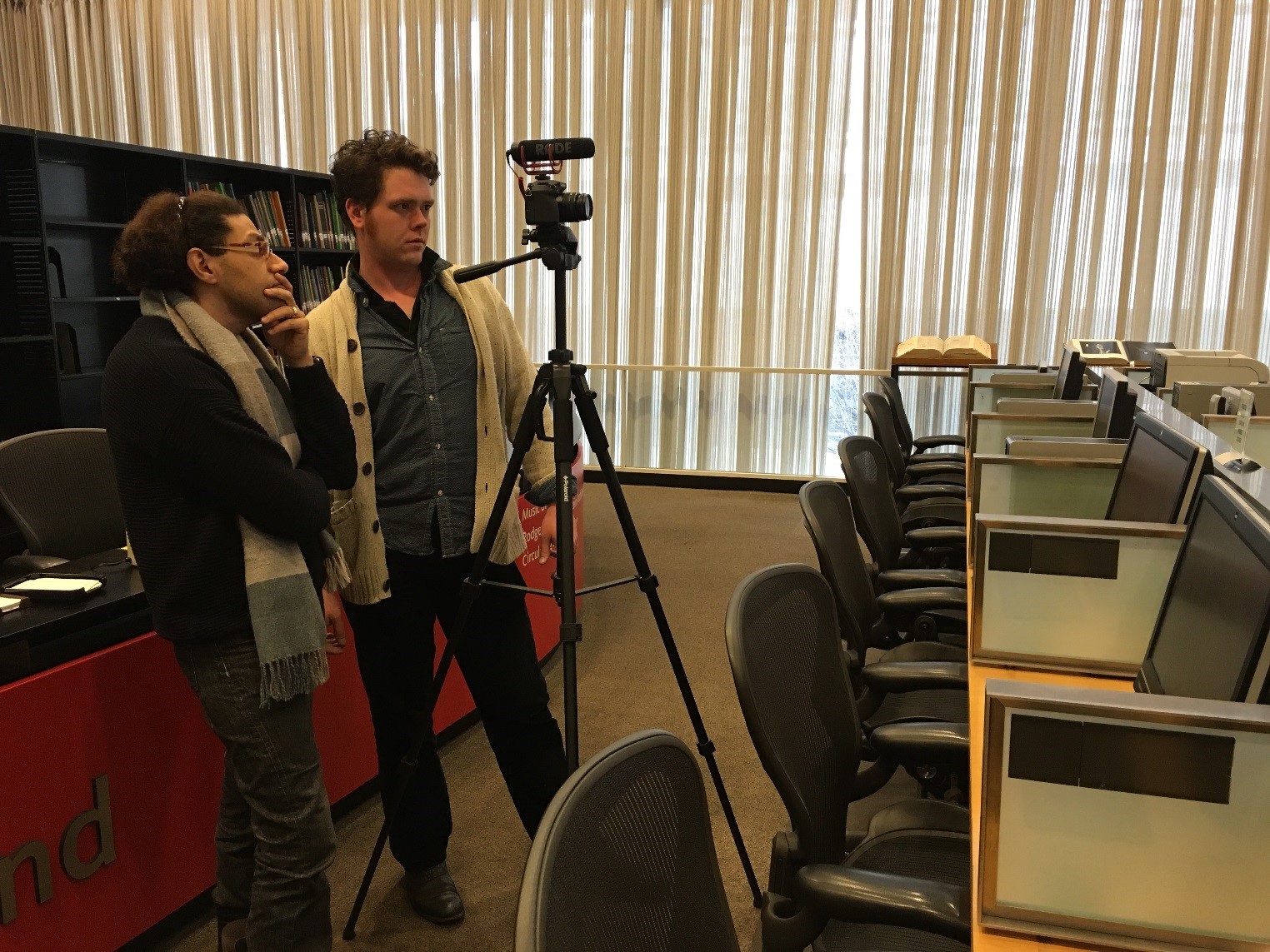
Hisham Abdelkhalek during directing A Footnote in Ballet History?

Hisham Abdelkhalek during directing A Footnote in Ballet History?

Neurotic, alert with childlike wonder, Hisham Abdelkhalek is an Egyptian director, adventurer whose love for his home country juxtaposes with his creative spark. Abdelkhalek directed and produced French movies backed up by French production companies to represent Egypt. His Instagram shows his nostalgia for a cosmopolitan Egypt and the traditional Egyptian cuisine.

“My artistic influence is mainly Youssef Chahine whom I consider one of the greatest thinkers of our time. He was heavily involved in portraying the real Egypt and that is why he succeeded worldwide. However, I personally do not like to disclose my artistic influences because I love to prove myself as a director apart from whoever affected me.”

Like any other Egyptian dreamer, Abdelkhalek’s career span a decade of filmmaking, art direction for musicals, and short films as experimental as they are poetic. Although he flexes his artistic muscle between mysticism and reality, his documentary “A Footnote in Ballet History?” –which I had the honor of watching and moderating the postscreening Q&A- is not simply a sentimental reminiscence at a cosmopolitan Egypt but more of an homage to great women who have not received their deserved recognition in history.

Abdelkhalek is no fan of small projects. His resume includes a variety of grand projects including the artistic direction of Opera “Aida” in Doha, Qatar and under the pyramids of Giza, Egypt in 2002 as well as the Egyptian Permanent Mission to the UN Gala Event on October 13, 2015 at the Metropolitan Museum of Art.
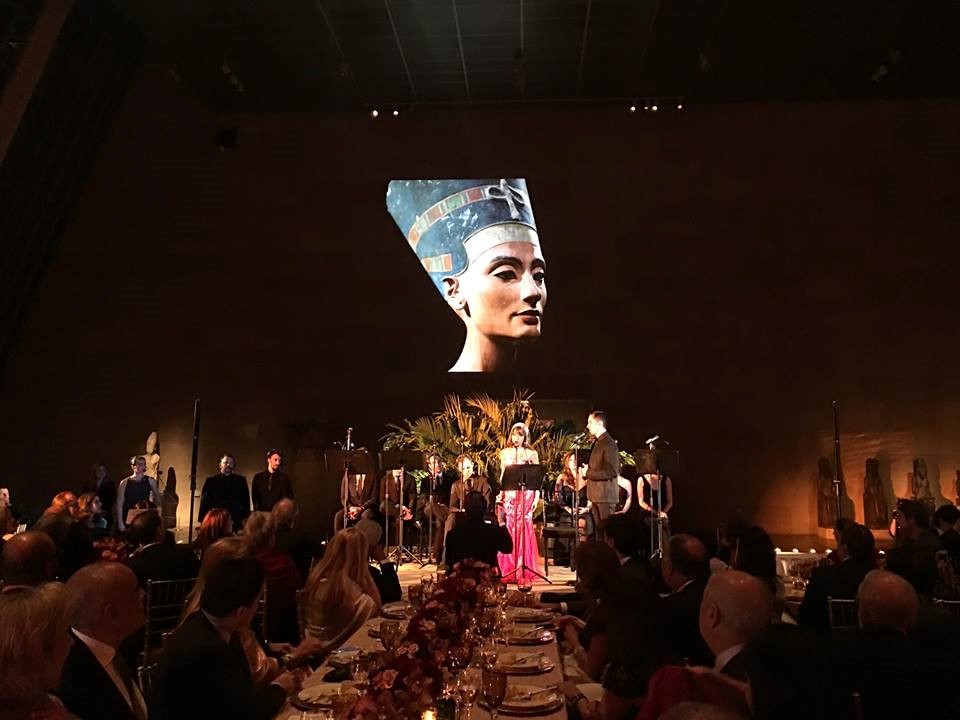
Akhenaten performance during the UN Gala at the Metropolitan Museum of Art Concert

Akhenaten performance during the UN Gala at the Metropolitan Museum of Art Concert

Akhenaten will be the first pharaonic musical to open at Broadway. It will feature 23 songs with an expected budget of 16 million dollars. This spectacle of songs and ancient pharaonic theological themes showcases performances by major Broadway stars such as Christina DeCicco, William Michals, Ted Keegan, Seph Stanek and Timothy McDevitt. The musical also will include a chilling performance of “O’ my Son” by Broadway favorite N’Kenge.

I have had the pleasure of sitting down with Abdelkhalek in 2016 during the 38th edition of the Cairo International Film Festival (CIFF). He was buzzing with excitement and energy, expressing his opinions openly about the bureaucracy that filmmakers typically face as well as the problems that he personally faced during directing Opera Aida in Egypt in 2002, stating the hierarchy of the Mubarak regime back then as factors behind his decision to travel to Paris where he cofounded his production company So Freakantastik with his friend Olivier Delesse.

“Working during the Mubarak regime I witnessed all forms of corruption on all managerial levels. After “Aida” I decided to leave for good. In Europe I opened a film production company and started making movies. I returned due to a partnership with media and production mogul Isaad Younis’s company Al Arabia Cinema Production and Distribution to distribute Egyptian films in Europe. I have always been keen on spreading films by the great Egyptian directors such as Dawood Abdelsayed and Mohamed Rady all over Europe. I became involved in social and political activism during the Egyptian revolution of 2011 until the Muslim Brotherhood took power where I joined mass protests against the Islamist rule. Right after Islamist president Mohamed Morsy was overthrown, I traveled back to Europe to make art.”

Abdelkhalek is your typical artist on edge. During our meeting he smoked one cigarette after the other, recounting tales from his artistic journey with bitterness, without falling into the pit of despair. When it was time to talk about one of his masterpieces “A Footnote in Ballet History?” his eyes glistened with memories as he spoke of how his project saw the light,

“I was directing Akhenaten The Musical for Broadway in 2013, co-written with Hesham Nazih and Mohamed Metwally, when Ashraf Sewailam the renowned opera singer introduced me to former legendary Egyptian prime ballerina Magda Saleh. Later, while attending a formal dinner after the UN Gala dinner in Egypt’s UN ambassador’s -at the time- house, I met Magda Saleh for the second time as well as her husband. That was when I was smitten by her personality. I wanted to make a film about her since I was already aware of her inspiring history and her career as one of Egypt’s dancers who danced the legendary role of Giselle with the Bolshoi Ballet in Russia.

The idea expanded into archiving the journey of Egypt’s Bolshoi 5; Saleh, Diane Hakak, Aleya Abdel Razek, Wadoud Faizy and Nadia Habib. The film was jointly produced between So Freakantastik and Saudi, American and French collaborators, as well as through crowdfunding which I believe is one of the modern gifts technology presented to aspiring filmmakers. Through crowdfunding, filmmakers and artists could get access to resources they otherwise would not be able to, funding-wise. “A Footnote in Ballet History?” was produced on a budget of more than 100,000 dollars, with $14,000 raised strictly from Indiegogo.”
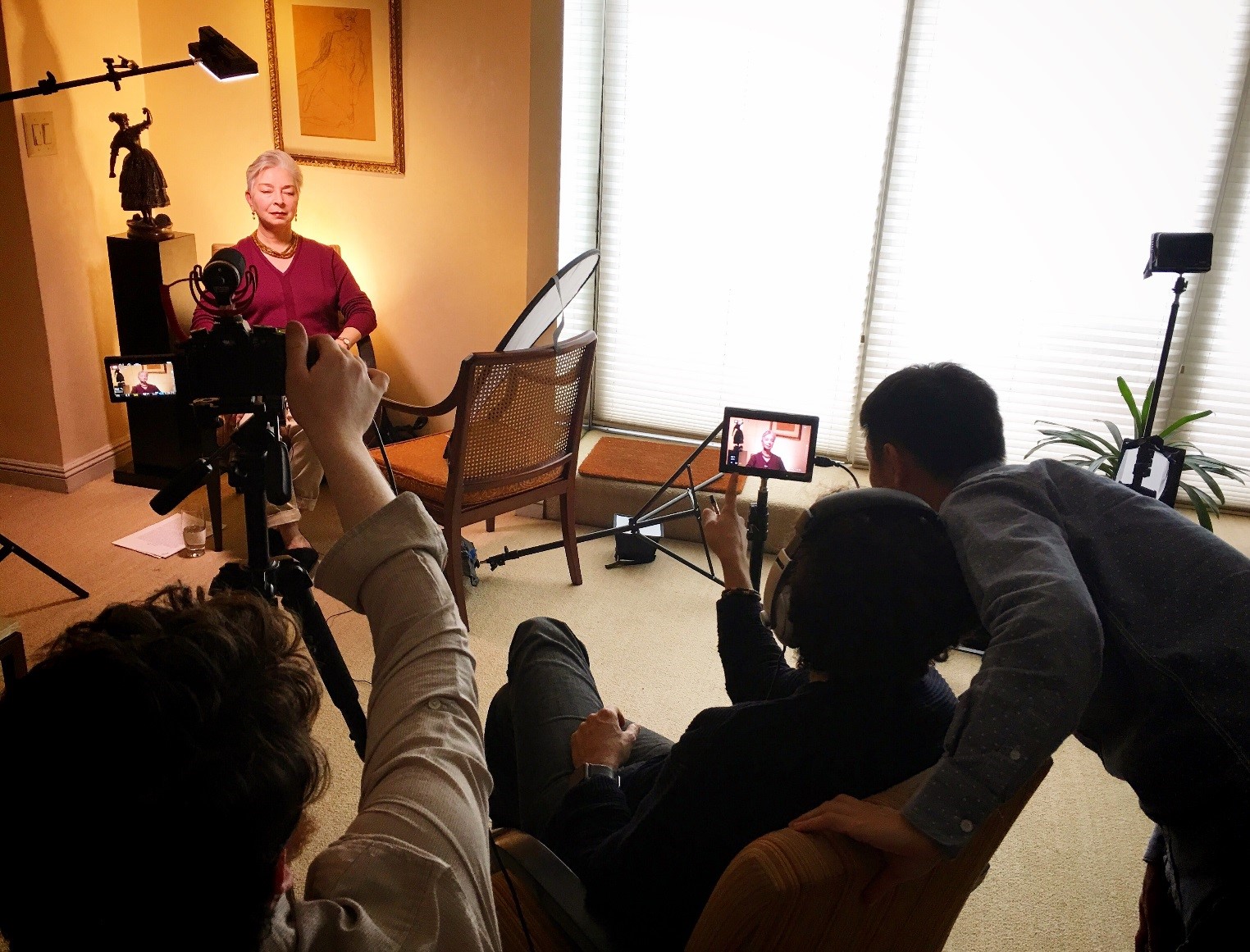
Legendary Egyptian ballerina Magda Saleh during the shooting of “A Footnote in Ballet History?”

Legendary Egyptian ballerina Magda Saleh during the shooting of “A Footnote in Ballet History?”

Legendary Egyptian ballerina Magda Saleh during the shooting of “A Footnote in Ballet History?”

“A Footnote in Ballet History?” did not simply tell an enchanting tale of the 5 ballerinas as they sealed a footprint in Egyptian history through intense training and a life-changing transition to Moscow for formal ballet training at the Bolshoi Ballet company. It also gives due credit to the late Minister of Culture Tharwat Okasha who -right after the 1952 Egyptian revolution- inaugurated the Academy of Arts and the Higher Institute of Ballet in 1959, envisioning it to be a professional artist factory where young men and women are formally educated and trained with global standards of artistry.

“I did not simply want to tell the tale of five butterflies who danced their way to the top, but more of an important period in my country. How Egypt transitioned from the Russian camp to the American camp during the era of late president Anwar El Sadat, how enriching was 1960s Egypt, and how well-educated most people were through reading fan letters sent to Saleh in three languages from all over Egypt.”

Abdelkhalek told me that while editing his film, he had a peculiar feeling of unjustly dismissing the cornerstones of Egypt’s culture.

“It devastates me to notice how the West treats our monuments and heritage with due respect more than we do to ourselves. When the Temple of Dendur was transferred to the Metropolitan Museum of Art in New York, cultural significance was foreseen during the preparation for receiving the temple, including the design as a mythological, religious and symbolic concept. For your information, the Temple of Dendur was where UN Gala Event was held.”

Our interview grew into a longer tale of texting and communicating. I was more than glad to extend it until he reached his culmination through the creation process of his feature debut “Jesus and the Others” starting 2019.

O my son at Egyptian UN Gala night at the Metropolitan Museum of Art

“Jesus and the Others” recounts the Holy Family’s journey in Egypt from a Coptic Orthodox point of view. It is the tale of how the Virgin Mary, Joseph, and Mary’s cousin, Salome, as well as a young Jesus escaped from King Herod into Egypt. The script –by late scriptwriter and novelist Fayez Ghaly- has been rejected on basis of refusal to screen it due to portraying Jesus Christ from a Coptic POV rather than from the POV of the Muslim majority;

“I did not search for the script. It has been present ever since a long time and –like a regular reader- I followed the long struggle to produce the film as well as the copyright and the censorship battles to prevent the making of the film. I was not involved at all in the beginning. Until the screening of my film “A Footnote in Ballet History?” during the 38th edition of CIFF, when Fadi Ghaly –Fawzy Ghaly’s son- offered me the script to read and direct. I was elated that he expressed his vehement insistence that I direct the film.

For a whole year, I left the script in my drawer, afraid that once I started reading it I would be attached to it and immediately seek directing it. I picked this project because it fits the grander scheme of my artistic vision; presenting Egypt to the World. Jesus does not belong to a certain religious group but he is more of a universal icon.”

Abdelkhalek states that the film cannot be produced via an Arabic production company nor shot in Egypt to avoid conflict with the Censorship office or battles on religious basis. However, he insists on using an all-Muslim cast of Arab actors –with the exception of food vlogger and actor Mourad Makram- to emphasize the state of compassion and coexistence between Egypt’s two complements; Copts and Muslims. He intentionally plans a dream cast with actors from all over the world with big names from Hollywood and Europe.

“We opened a fair casting call for three months and I was surprised to find big names from Egypt auditioning. Currently we are lining up our main cast whether Egyptian, Arab, or A-list actors from Hollywood and Europe. Our film crew includes big names in the filmmaking industry globally, such as famed Japanese cinematographer Tetsuo Nagata with names such as La Vie en Rose and Paris, Je t’aime to his name or Jean-Luc Van Damme as co-producer, as well as one of the most talented set designers in America. Our high-profile cast and budget are related to the nature of the film as a foreign production and not an Egyptian production. Shooting will take place between Puglia in Italy due to the ancient nature of the city similar to Jerusalem, Betlehem at the time, as well as in Ouarzazate, Morocco which is the world’s largest studio.”

Abdelkhalek is highly opinionated. He believes that cinema cannot be graded on the basis of art vs. commercialism. Great films receive both critical acclaim and box office success. This is what he is aiming at while directing and producing “Jesus and the Others.”

“There’s no such thing as an artist with a mission or a message that he wants to transmit to the world. We produce entertainment. We want people to be entertained. It’s up to audiences whether they like what they see or they don’t. People don’t ask about the message or the aim of art in the Western world. We, as Arabs, are more concerned with what’s the hidden message or the main theme that a director targets in a film. I personally do not have any message that I want to transmit through my art. However, what I seek is to show the actual image of Egypt culturally and socially to the Western world.”

Jesus and the Others starts shooting in….
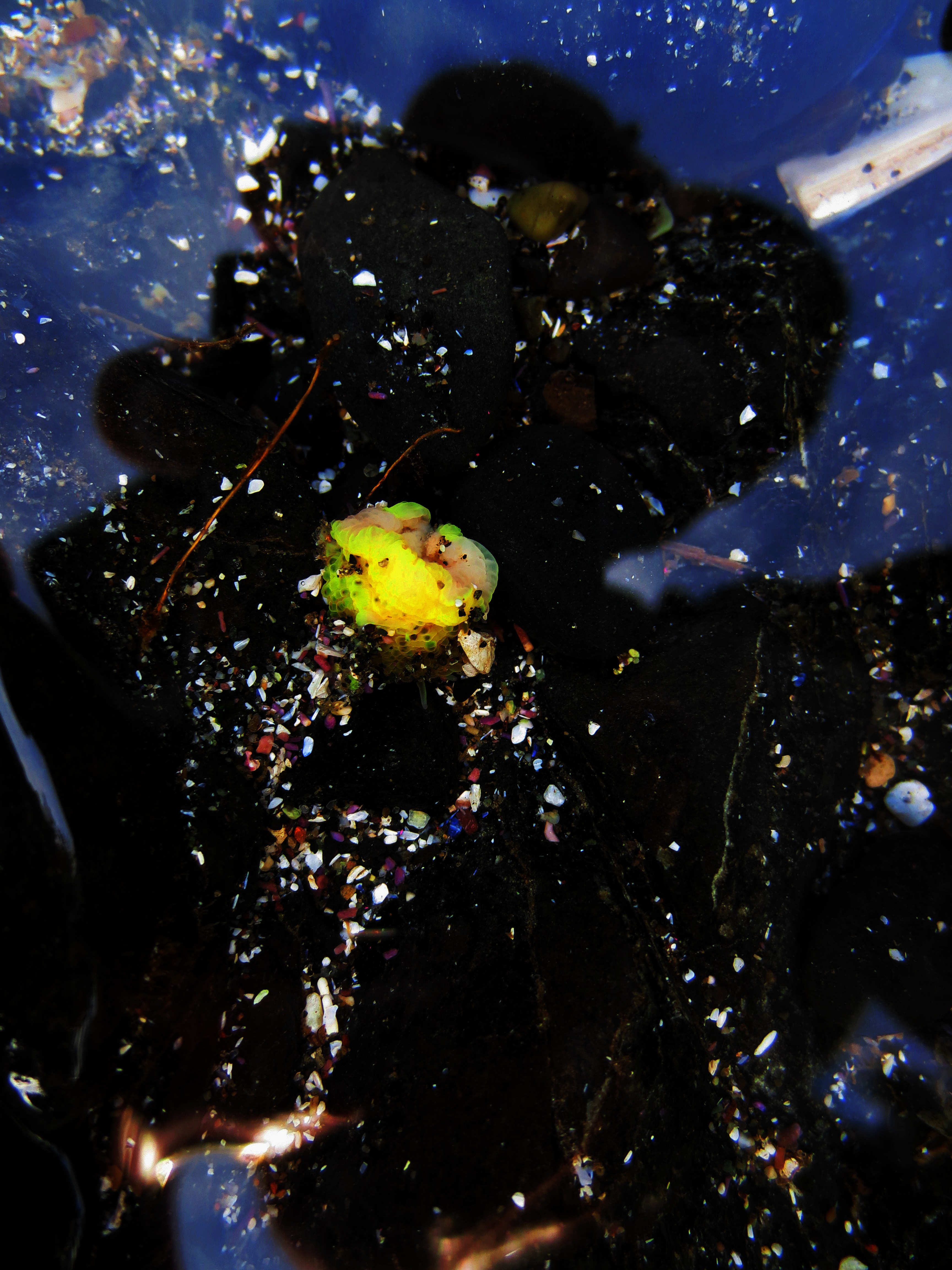
Mixed media from Jayne Marek

Yellow Curl

Yellow Curl

Amendments


when psychological disturbance is not being treated,

the bodymind knows; when a drug has shrouded


reality with a costume that flutters its feathers

as the body spins or floats, softened and disoriented,


or with a garment ponderous with leaden slices

as with the protective drape spread across


a body before an X-ray, we know that some drugs and

the bodymind fit uneasily against each other,


one cannot probe into the other but sweeps across it

like the leading edge of a deluge:


a prerequisite of healing is awareness, which can be

scorching, so a blanket of chemicals may be spread


to interrupt the pain so the bodymind can unclench

its confused agony for a blessed time:  I am not saying


people don’t need relief, I am saying the bodymind

is a whole of fluid and continual movement,


as I think artists know as they give themselves into flow

of noticing and physically responding to a great Idea


which, in its turn, has come from awareness:  mutable states,

like rain, and rainless parts of sky, and rainbows,


parse vapor into an equilibrium of colors in flow:

a lesson one may learn from looking out the window


as well as into oneself is not to trust a drug

and not to drug the earth:  in early summer,


one can look out the window to see red

Jupiter’s Beard, yellow daisy centers circled with white


fronds, purple sage and lavender tips just coming out

of clouds of green next to a few gold grasses; the iris


and camas and tulips, done now, ragged-leaved

and in need of deadheading, splay dried fronds


in all directions unfocused and spent with trying

after weeks of effortful blooming, and now they


shiver and shred; there will be no more easy rain:

this is the patch of earth I sweated for,


wept over, broke my skin into blisters for,

disrupting the stasis of scraped suburban yard


surface by digging, poking, spreading, incorporating

what was needed (sand, pumice, humus, detritus


of the right kind of organic waste, scrap newspapers,

compost, and fresh soil from plastic bags, an irony not lost


on modern gardeners) so as to feed

wizened brown bulbs which resemble frowning knots


of angry aged faces so old you cannot tell what

gender they might have presented with


nor even what identity they may have most deeply

felt:  I was so tired from hauling and digging


that at last I planted bulbs willy-nilly (a perfectly

evocative word not enough used, so here it is)


and these bulbs have reached up and out into belonging,

wild surprises of colors spiking the yard-world


and no doubt communicating with their roots,

so important yet frail as eyelashes, reaching


for sun and for damp depths:  if the soil is made right,

and here you have it, something deeper can express


more than itself in the infiltrations of disparate

particles that combine to nurture a whole system

Wormhole

Wormhole


Body Marks


scars are not the only imprints which remain on our bodies,

although people may think of scars first off, when a body


mark is mentioned, or perhaps tattoos:  I suppose these days

tattoos constitute the inscribings most often seen,


skin decorations appearing under the hem of a short sleeve

or underneath the currently fashionable loose neckline


of a blouse or gripping a calf muscle; many cultures

have used tattoos to signal, to embody age or affiliation:


human history in tattoos as a striking means of expression

and sometimes in your face, so to speak, communicating


with variety and imagination:  the tone of one’s skin,

however, will highlight or nuance or restrict


how a tattoo turns out, so that whatever people

might wish to say with their skins must interface


with the world’s eyes, as in fact skin always has done:

yet many body marks are private, such as from surgical


procedures or accidents:  by happenstance I have four

tiny red dots on my belly from the claw tips


of a cat jumping from my lap, for on that one day

and with that one lap-leap out of hundreds


(since cats insist on sitting in one’s lap and then

cannot stand to be there all of a sudden, and


there is urgent business elsewhere that requires

a human to become a launch pad), and


these punctures did not heal or vanish back into

the expanse of belly (yes I confess it)


but instead remained small red imprints of

animal being on my animal being:  these


accidents of blood-pricks healing over as permanent

petechiae do not seem to be scars:  I am not surprised,


looking over my scar collection, how cat claws and

human fingernails can create lasting pale slashes


in the epidermis:  if only we could construct vehicles

from keratin, springy and durable, protective, able to


cover and re-knit the body surface when epidermis

is breached (and so acts as a marker—here


was an event that split the skin!):  although keratin

supposedly is not living tissue, it traces life events


more clearly than a tattoo:  wound blemishes are

acquired as a result of some of the countless


acts of violence bodies encounter (may they be

minor), such as childhood fights with a sibling who had


long enough fingernails (real keratin ones) to hold

an edge; I have plenty of memories


of the particular stinging throb of scratched hands

and arms, between having cats for many years


and fights in childhood and the odd knife slip and

a couple of operations (some of which


were successful); I may admire the colorful art of

tattoos but I have a sufficient store of scars

Drift

Drift

Artist’s Statement:  Artistic visions ideally provide exciting imagery and a capable, even provocative, formal touch.  I use visual and verbal designs to lead the mind’s eye beyond an initial response.  These poems use couplets to follow a modern perspective in thinking about how modern life impinges on our relationships with the natural world.  The photos abstract their colors and designs from natural subject matter to achieve ambiguity, inviting readers to think about how objective reality can be perceived in multiple ways.
 
Bio Note:  Jayne Marek’s poems and art photos appear in One, Light, Grub Street, The Cortland Review, Slipstream, The Lake, Stonecoast Review, Spillway, Women’s Studies Quarterly, Sin Fronteras, Notre Dame Review, and elsewhere.  She provided color cover art for Silk Road, Bombay Gin, Amsterdam Quarterly’s 2018 Yearbook, and The Bend, as well as her recent poetry books In and Out of Rough Water (2017) and The Tree Surgeon Dreams of Bowling (2018).  Twice nominated for a Pushcart Prize, she won the Bill Holm Witness poetry contest and was a finalist, most recently, in the Naugatuck River Review and the Up North poetry contests.

Poetry from Serendipity Sprout

Redemption

Today I met an angel,

waiting in line to redeem our cans.

The line was long, shopping carts full of bottles,
a cold wet day, we chatted to pass the time.
A man walked up to me, I noticed his formal looking jacket,
his many necklaces, cross and crucifix, mother Mary,
a copper chain with the letters K and M studded in diamonds.
There were many in line, but he approached me,
eager to tell me his tale.
He spoke fast, with a heavy accent,
apologizing for his imperfect English,
He told of how he came from Czechoslovakia,
but fought for our country in the war.
He said he had been to heaven,
and returned to Earth,
protected by a blessing from Jesus.
His health was amazing,
at 75 he was healthier than the rest of us,
waiting there in the cold.
He said when it snowed, no snow would land on his car.
Everyone else would drive 10 miles per hour,
but he would drive 100.
The police would pull him over,
but they would not give him a ticket,
they would kiss his hands,
because they knew he was from heaven,
and he would share his benediction.
He was named after Mary and Joseph
something he only told his close friends.
I wanted to kiss his hands too,
but I didn’t.
I told him my father
also shared the initials
on his necklace, K.M.
a man who once talked to God,
through his computer.
As I was getting into my car,
I saw his parked next to mine,
a long dent and scratch down the side
told it’s own story,
don’t drive faster than
your angels can fly.

Poetry from Robert Quill

Peelings

I strip
away my
life
in awkward
peelings.

Beneath,
a clown.
Macbeth. Whoever.

Don’t eat the
chips. They are full
of worse poisons
than lead.

But they
go nicely
in a word salad.

Star Horizons

I’m a space
traveling mama
who’s really
a man.

I go from one
planet, your inner
self, to the next,
your enemy’s garden.

I’m everywhere,
nowhere, collecting
evidence to hold the
rest of the universe

in celestial contempt.

Essay from Chimezie Ihekuna

INTRODUCTION

The self-help material, ‘11 Major Deceptions You Must Guard Yourself Against …’ is primarily a relationship-based material that cut across relationship recognition, marriage and seriousness – defined relationships (amongst individuals). It is work-piece with the potential of helping those seeking for serious relationships and marriages.

It gives a “let-us-face-it” approach to analyze the power of certain blindfolds known as deceptions in terms of their true recognition, consequences and proffers long lasting solutions to preclude oneself from their servitude. With insight-based examples, stories and other interests, the work-piece sheds light on each of the mentioned deception.

It unravels the can of worms associated with various marriages and relationships people involve themselves in. From the fruiting years of childhood to the growing years of youth and finally, to the stable years of adulthood, the material deals with blindfolds associated with people of these ages. Infidelity, divorce, pre-marital and post-marital sex and other vices are general blindfolds that the work-piece believes originates from the media, schools and the general society.

Deceptions 1to 11 discuss the blindfolds virginity loss affect the lives of youngsters, influences the persona of the male and female folks in terms of getting married, the adverse effects of engaging in multiple sexual relations, the ills of chauvinism of men and resulting subjugation of women  in marriage, the wrong prioritization of money as criterion for marriage, the wrong notions of  men and women about each other, the “love is blind” and “divorce is normal” veils, the issue as to whether married men and or women keep a company of singles, the belief of men going on sexual adventure with women and the conviction that things can get better when married.

11 Major Deceptions You Must Guard Yourself Against… gives the way-outs of the blindfolds in the time and age the world is living in. This is intended to enable individuals who are in serious relationships with their spouses and “normally” married for people around the world, irrespective of race, status or background, a beneficial and enduring union with their spouses.


Tables of Contents

Deception 1: It is no big deal losing your virginity

Deception 2: It is good to feel the ‘sweetness’ of sex by engaging other partners into it.

Deception 3: The ‘bad’ girls end up getting or marrying the ‘good’ guys (vice versa)

Deception 4: As men, we ought to give into sex advances from women, whether married or not.

Deception 5: When there is money, it will be safe to get married

Deception 6: He (or she) has a sexually not-good past, but will change, though still in the habit of flirting

Deception 7: Love is blind

Deception 8: Divorce is normal

Deception 9: As a married man or woman I can still keep an intimate company of bachelor or spinster friends

Deception 10: Till the right man or woman comes will I become sexually faithful.

Deception 11: Things will change for the better only if I am married.


DECEPTION 1

It is no big deal losing your virginity

In recent times, a youngster, losing the worth of sexual virginity, is no longer an anomaly as it used to be. In fact, there are various statements that encourage young people to “give up” their virginity. Expressions such as “You are not a woman, if you aren’t sexually active”, “You’re missing the peak of sexual enjoyment, if you don’t indulge in it”, “This is the age you experience the dynamics of manhood and womanhood”, “Make love!”, “You‘ll become a complete person” and so on are used to effect what has now become the acceptable modern value – promiscuity instead of chastity. However, if we view this issue from both sides of the coin, can it be said that promiscuity possesses an intricate (positive) value than chastity?

Consider a situation where a farmer, as part of his painstaking selfless service towards community development, was handsomely rewarded with two fertile lands which he has to choose from. The first land had been bush-fallowed, used for other not-good purposes (diabolism). However, its soil is fertile; very cultivation-friendly. On the other hand, the second land has never been fallowed, possesses a host of ever-green tall trees, productive medicinal crops and cash crops, never been defiled and obviously very fertile. If you were the farmer, which of the lands would you choose from?

Undoubtedly, Teenagers are the victims of this development as they take in hook, line and sinker the efficacies of the deceptive “It’s no big deal losing your virginity”. From the every late years of childhood to the stable years of adulthood, virginity loss has become a household name and is an embraced phenomenon. Why?

Generally, youths seem unperturbed; the cancerous spread of virginity loss in the lives of every tom, dick and Harry. Unfortunately, young women are most times victims of this eventuality. Conversely, teenage men are not left out as virginity loss sets the pace for a likely insecurity and doubt (infidelity) in their subsequent dealings with their female counterparts

At this juncture, a striking statement would be made to enlighten people about virginity’s worth, irrespective of gender. But the term “virginity” has its light reflected on the woman, though it applies to the man. Hence, our attention would be focused on the female genders. Before the “striking” statement, a ray of light would have to be shed on the ‘virginity’, cutting across the male and female genders: virginity is a mindset which can be translated as the ability of the individual to abstain or practically say “No” to lust-filled offers, no matter the nature of prevailing circumstance.

“The only physically sacred possession, worth, most cherished jewel a woman can really uphold is her virginity. Without it, she is (likely) to be treated like other women, irrespective of status and background. The consequences? Increased in-security and doubts as unveiled by infidelity continued fornication and adultery. The way out? A thorough and genuine spiritual overhaul”. This is the striking statement.

The Leonardo Da Vinci’s Monalisa Portrait is the most insured material in the world; no man can buy it, even the world’s richest man! What is fascinating is that modern X-ray can reveal only its three visible versions. If a man-made material can be seen as the most expensive and insured, how much more the God-inputted virginity?

Founded in 1886, Coca-Cola arguably remains the most richest and successful bottling company in the world. Why? The peculiar (codified) concentration that tastes uniquely different in various places is obviously the reason for its greatness. Without this reason, Coca-Cola, like other bottling companies will undoubtedly not be as successful as it is. In the same but a more greater vein, a woman who is a virgin is one in a million of women, an analogous “field”, attracting well-meaning men to her because what is “codified” in her is undefiled, yet to be decrypted.

A Buddhist Priest is designated with the “ritualistic” responsibility of keeping the sacredness of the temple at specified times. Similarly, the God-given virginity is a sacred worth which ought to be kept until the time is discerned for consented ritual is figured out. In other words, marriage should be the specified time (time discerned) where the fullness of consented ritual (sexual intercourse) exercise can be appreciated. Unfortunately the sacred worth of many young people (especially women) has been lost before the “stipulated time”. In fact, the world has turned upside down, clamping down the accepted value of chastity and promoting promiscuity in various forms; media, schools, and people. Without an equivocation, there are consequences of “decrypting” the God-given ‘code’ before the ‘stipulated time’. What are they?

Reviewing the crux of the “striking” statement with respect to the asked “what are they? the following can be inferred.

(1)  Increased in-security and doubt (as unveiled by infidelity)

(2)  Continued fornication and adultery

Others include contracting diseases, vagueness in direction (life-set goals) poor sense of judgment, low self-esteem e.t.c. These would be explained in Deception 2. Precisely, these point at the gravity or efficacy of encouraged promiscuity using the loosing-your-virginity approach as a starter.

On the other side of the coin, chastity poses its consequences whose price demands a painstaking commitment with proven-results of self-control. The following showed the aftermaths of chastity.

(1)  Chastity saves youngsters from the dangers of unwanted pregnancies (female ones)

(2)  Chastity prevents young people from imminent dangers of contracting diseases that are deadly.

(3)  It precludes juveniles from the servitude of increased in-security and doubt and in future, infidelity in terms of continued fornication and adultery.

(4)  The worth of chastity affords youths the opportunity to be goal-focused; prospect-driven; success-oriented and counseled rightly.

(5)  At this point, a question is directed to you: Sincerely which of these is a mirage? Options: (a) Chastity (b) Promiscuity.

If you are reading this and you are not a virgin, it is no crime. After all, as humans, we are mistake-bound. However, you can start now by vowing to become chaste, though it is a hard nut to crack task but it is worth the effort, considering the long-term benefits. If you are a virgin, no matter what is been said, always say to yourself, “I am one in a million of women.

Note: If you question seven guys on whom they will marry, there is a likelihood that you will get at least four response saying; “I would prefer marrying a more chaste girl”.


Travel vignette from Norman J. Olson

From London to Real Winter

by:  Norman J. Olson


on Tuesday, January 15, 2019, Mary and I had a busy morning running errands…  not too long after noon, we caught a bus on the cold and icy corner of McKnight Road and Stillwater Road in St. Paul, a five minute walk from our house…  it takes about an  hour for this bus to get across St. Paul via West Seventh Street and Randolph Avenue…  we crossed the Mississippi on the Ford Parkway bridge and caught a light rail train at the 46th St. Station for the ten minute ride to MSP airport…  at about 5 pm, we got on a beautiful 767 for the overnight flight to London Heathrow…


we got to London early in the morning, and made our way to the tube station to buy new Oyster cards…  these are fare cards for the London underground and make getting around central London simple, cheap and easy…  Oyster cards in hand, we got the Piccadilly Line to Earls Court where I had booked a nice cheap hotel…  central London is very expensive but as you get further out, the hotels get much cheaper…  closer in than Earls Court, the prices go up…  further out, the prices are the same but the subway ride is longer…  so for a visitor to London, Earls Court is ideal…  and it is on the Piccadilly line which makes it easy to get to from Heathrow and as a busy line, trains are seldom more than a minute or two away…  the District line also stops at Earls Court, which makes it a straight shot to Victoria to catch a train or a coach…  anyway, the little hotel we use is modest and serves a free full English breakfast (beans, eggs, white toast, coffee, bacon and bangers) which is a great way to start off a winter day of exploring in London…


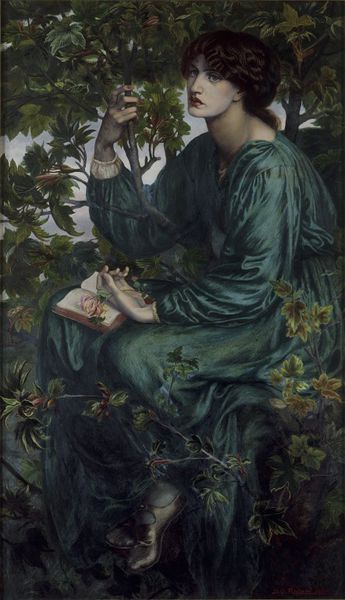
Art from Dante Gabriel Rossetti, woman in a green gown out in a garden

we find the best way to readjust jet lag is to just get on with our day, so after a few hours of rest and freshening at the hotel, we got the tube to Leicester Square…  we like to visit London in January because, while it is often cold and rainy, it is much nicer than weather in Minnesota in January and we find the crowds much less…  in summer in central London, it is sometimes so crowded that you can barely walk and the museums etc. just get sort of overwhelmed…  plus, in January, it is easy for us to get flights…  our pattern on these trips is to spend the days in art museums and the evenings going to plays…  so, at Leicester Square, we found discount tickets for the plays that Mary wanted to see starting that night with Mama Mia…  this is not my kind of music, but live theater is always fun and I enjoyed watching the beautiful young singers and dancers and Mary loved the play…


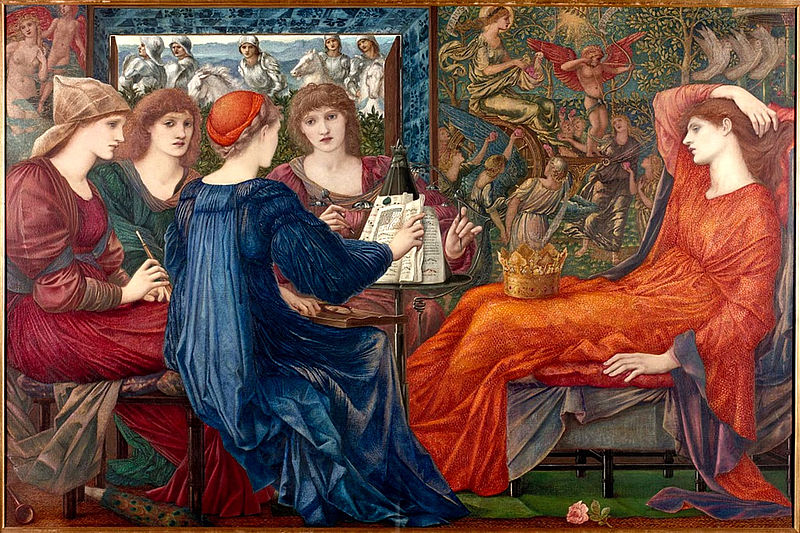
after the play, we were ready for a crash, so headed back to the hotel, just a few minutes away by tube…  the subway, of course, was standing room only with  the after theater crowd…  the next day after our fabulous breakfast, we took the tube with a change at Green Park to Pimlico…  where it is a short walk to the Tate Britain…  I had noticed that the Tate Britain was having a huge show of the work of Victorian Pre Raphaelite Edward Burn-Jones and was very excited to see the show…  it cost about $20 each to get in but the show was amazing…  Edward Burn-Jones was a second generation Pre Raphaelite whose paintings of fairytales, Arthurian legends and mythological subjects earned him a significant fortune in the late 1800s and became virtually worthless as the 20th Century wore on…  those who know me know that I have been a serious student of Pre Raphaelite art for many years and have traveled a good deal to see actual works, especially those of Dante Gabriel Rossetti… I am not sure why I enjoy this art so much, but I love to look at the Pre Raphaelite paintings and drawings and to read about the artists’ personal lives…


Laus Veneris, by Edward Burne-Jones

so, to see an exhibition of the magnitude and quality of the one at the Tate Britain was really a treat…   Burn-Jones (I read that he hyphenated his name because he wanted to stand out from the long list of Brits named Jones) is to my 21st century eye, a deeply flawed artist…  I would say some of his work is embarrassingly bad, some of his attitudes worthy of an eye roll from the enlightened pedestal of our own modern philosophical biases…  on the other hand, some of the images, like the fairytale paintings from Buscot Manor, brought down to London to be the centerpiece of this show, are just gorgeously, almost desperately beautiful…  the mechanics/techniques that he used are fascinating to me as a maker of somewhat representational oil paintings and I am just delighted with his ability to draw…  so, while I find some of his works, many of his attitudes  and some of his paradigms unpalatable I am still fascinated by looking at the paintings…  many of these paintings indeed are more interesting to me as autobiographical documents than as embodiments or illustrations of the mythological story told on the card next to the painting…  although, I cannot lionize him or his work as the Victorians did, I still enjoy looking at it and reading about his life and trying to see which faces in the paintings are his wife or his girlfriend…  he was btw, Rudyard Kipling’s uncle…


anyway, we walked from Pimlico to the Tate Britain and spent several hours looking at the Burn-Jones paintings, some of which are really wonderful…  then we walked along the Thames Embankment to the famously ornate parliament (Big Ben is hidden by scaffolding)…  there was a great police presence there and tents set up for demonstrators who were demonstrating either for or against Brexit…  I never did figure out which…

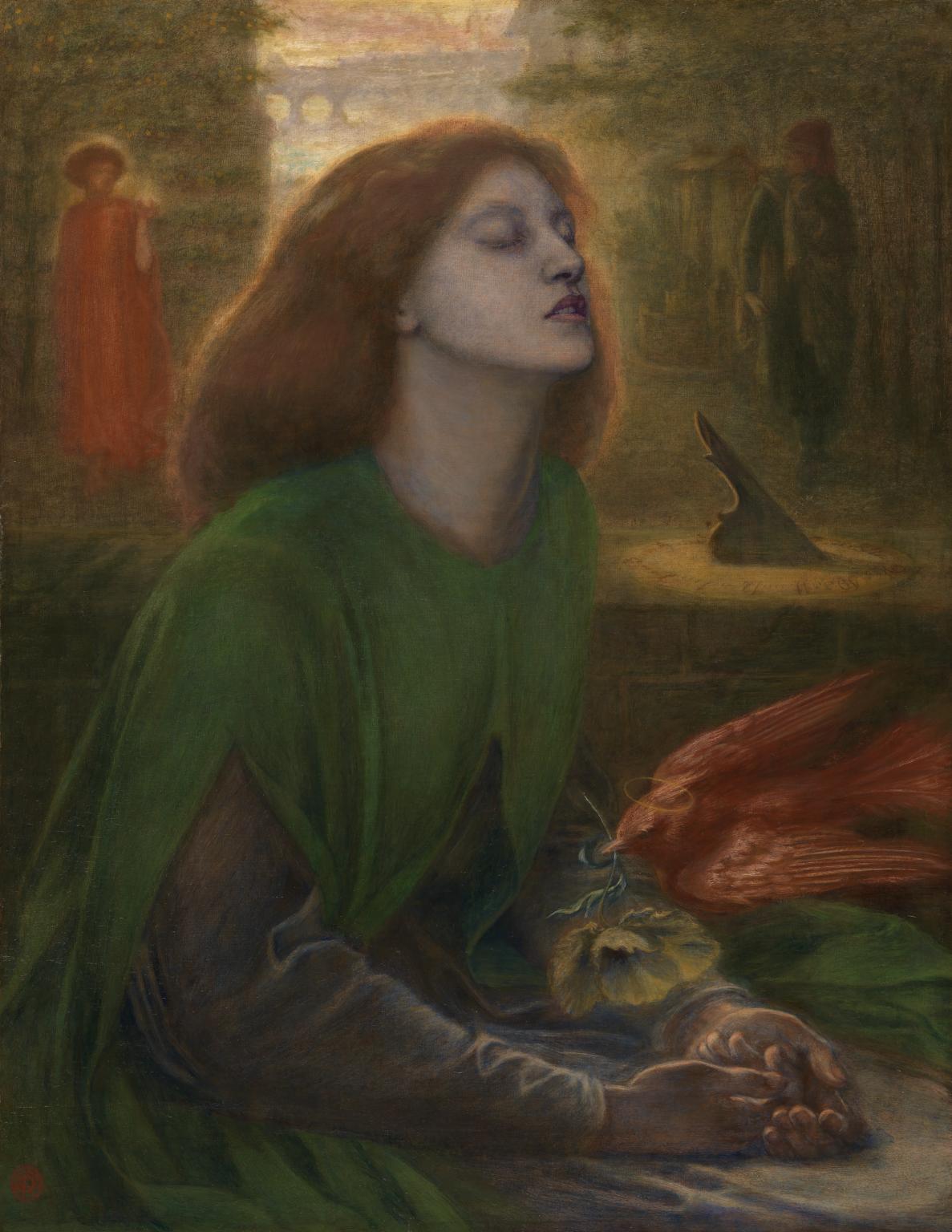
Beata Beatrix c.1864-70 Dante Gabriel Rossetti 1828-1882 Presented by Georgiana, Baroness Mount-Temple in memory of her husband, Francis, Baron Mount-Temple 1889 http://www.tate.org.uk/art/work/N01279


we then walked on to Trafalgar Square where we whiled away a couple hours in a coffee shop upstairs in a book store, sitting by the window watching the people come and go…  that evening, the play was Motown…  a musical tribute to Barry Gordy and Motown records…  again, not my favorite music, but I enjoyed the nostalgia and always can dig live music, plus, Mary picks the shows while I pick the art galleries, so I hope I have learned a lot and opened my mind a bit by learning to dig what she likes and she loved this show… I knew nothing about Motown, but I remembered many of the songs from the pop charts when I was in high school and later…


William Morris’ Golden Lily

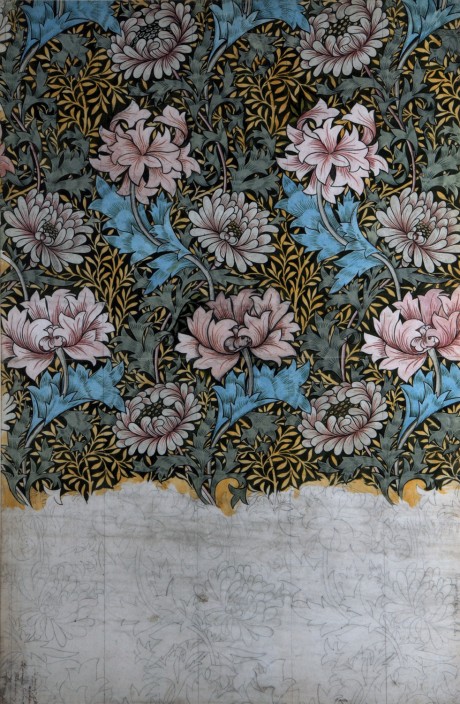
the next morning, we took the Victoria line north to the end of the line at Walthamstow…  I had heard that there was a house there that William Morris had lived in that was preserved as a memorial to him and his work…  Morris was Edward Burn-Jones’ close friend and founder of the arts and crafts movement…  he was also a second generation Pre Raphaelite and so of interest to me in that context as his wife was Dante Rossetti’s girlfriend and subject of many of his best paintings…  I find it interesting that although we think of the late 1800’s as anything but liberated, these three were able to work out a ménage a trois of sorts that worked for them for a while…  and Morris is perhaps the only one of the Pre Raphaelites who is still relevant today as his work designing wallpaper and other household items, his philosophy of craftsmanship and quality in everyday products and his talents as poet, prose writer and socialist are modern in the sense that he actually accomplished more by publication and social activism than the more precious if artistically talented Rossetti and Burn-Jones who were fundamentally apolitical…

Chrysanthemums by William Morris

we got off the train at Walthamstow and started trying to find the William Morris museum…  we did not have very good directions…  there was a huge street fair going on with many stands lined up in the High Street selling produce and clothing as well as all kinds of other stuff…  none of the people either the sales persons or the customers seemed to have much in the way of English and the people we asked had not heard of William Morris or his house…  after walking about a mile through the street fair, we realized that we were on High Street and should have been on Hoe Street, so we backtracked and found a cell phone salesman who gave us good directions, although, we still had to ask at one more shop before we actually found the museum…  when we got there, it turned out to be a lovely old house with a series of displays about the life of Morris…  I found the story of his life to be far more interesting than I had thought and found his hand drawn wallpaper designs to be incredibly beautiful…  the house was set at the edge of a large park and we sat and had a soda and a coffee in the little shop looking out over the lovely lawns and old trees…  Morris only lived at this house as a child, but I thought that if he could come back, he would have appreciated this serious, lovely and lovingly presented monument to his life…


we took the tube back to central London and found the theater just off Piccadilly Circus where the play, the curious incident of the dog in the night-time for that night was playing… this was the only non musical we saw…  Mary had read the book and this was a thoroughly interesting play with lots of avant-garde effects which portrayed events in the life of an autistic child…  I found it profound and moving… yet it had some fine humor as well…   before we went into this play, we bought tickets for a play for Saturday night, the only evening we still had open…  we used one of the half price ticket booths that you see on Leicester Square and around Piccadilly…  the tickets of course, are not usually half priced but they are discounted and it is an easy way to book decent shows in one place at reasonable prices…  there was a whole foods market there, so we bought some snacks to bring into the theater which some theaters allow but others do not, in the cheap seats…  things are a bit more fancy in the pricy seats…  lol

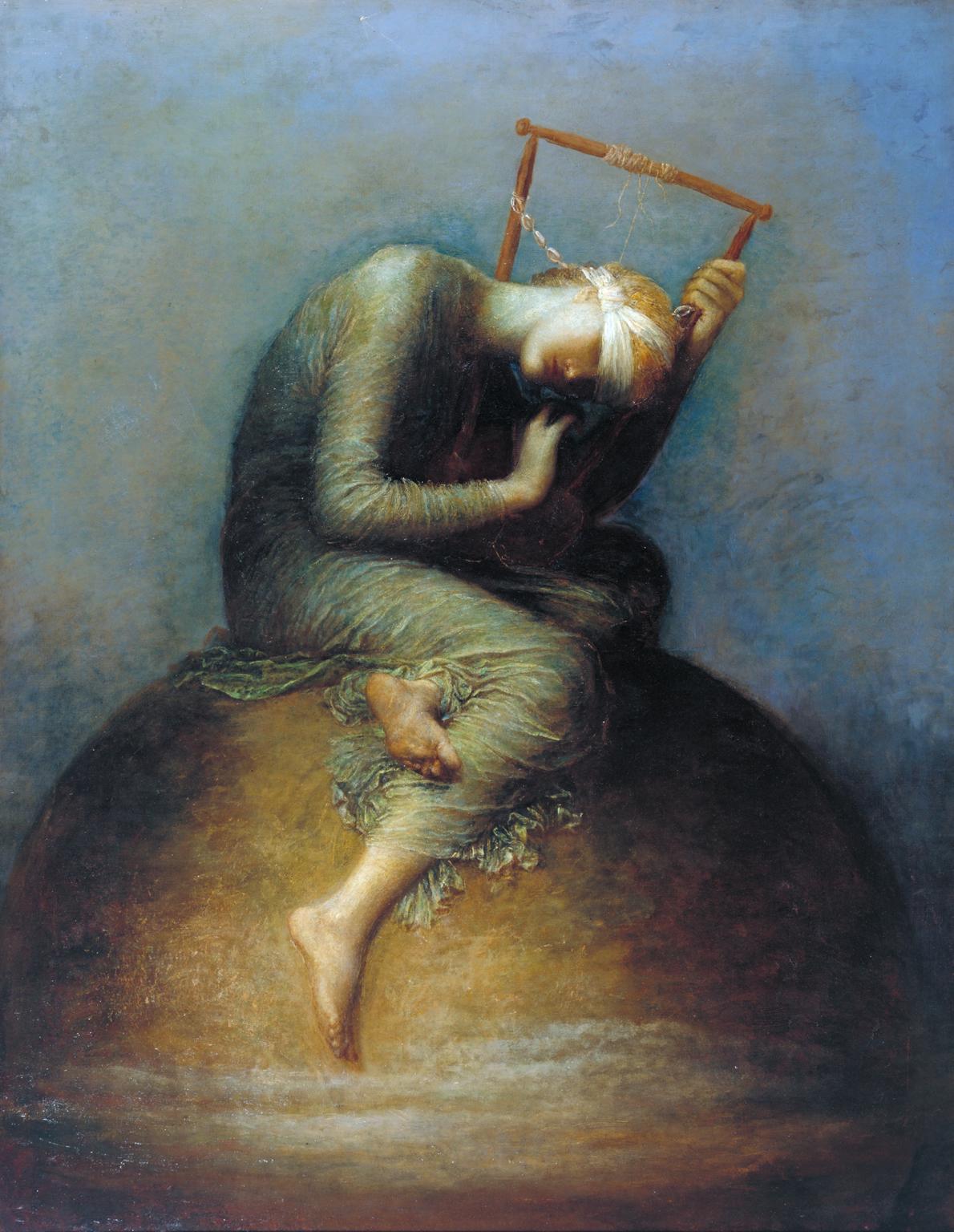
Hope 1886 George Frederic Watts 1817-1904 Presented by George Frederic Watts 1897 http://www.tate.org.uk/art/work/N01640


the next day, we took the tube to Knightsbridge where we went into the Victoria and Albert Museum…  this museum is a vast treasure trove of art, furniture and archeological artifacts from all over the world…  I was mostly interested in the paintings and was delighted to find some small strange paintings by the great William Blake who I consider to be a minor artist, but perhaps the greatest of all English lyric poets…  and so anything his hand has touched is of interest to me…  there was also a very nice Rossetti painting of Mrs. Morris in a green dress…  a lovely weird painting but everything I love in Rossetti, so it was a joy to see…

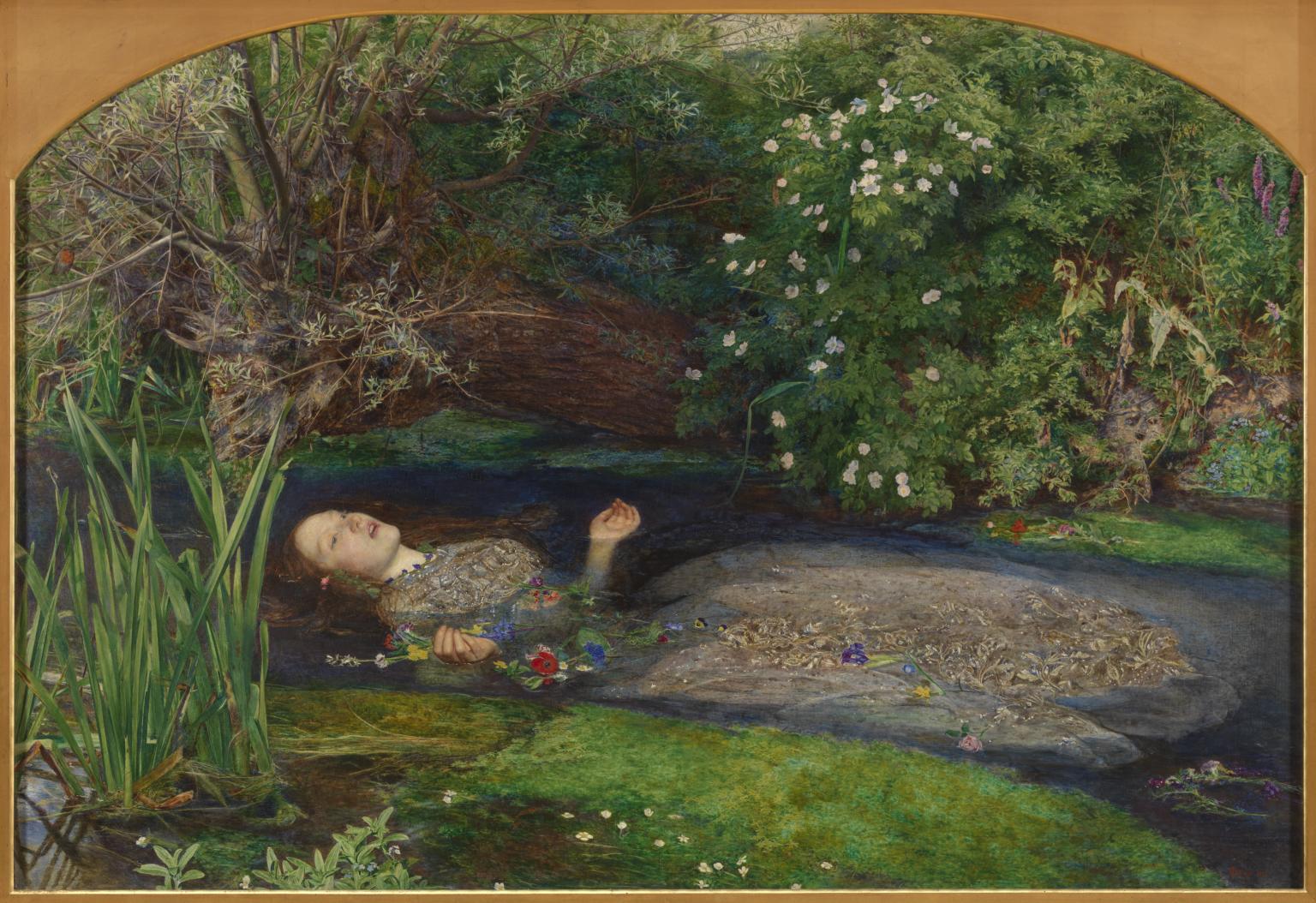
Ophelia 1851-2 Sir John Everett Millais, Bt 1829-1896 Presented by Sir Henry Tate 1894 http://www.tate.org.uk/art/work/N01506


after a couple hours of wandering around this vast museum, we left and found a small Pret a Manger restaurant for lunch…  these places have baguette sandwiches, salads and soups that are always cheap, healthy and delicious…  a big improvement on the old days when all you could get in London was foul tasting Wimpy burgers and greasy newspaper cones of grease soaked fish and chips…  we then walked along Hyde park as dusk came into night… it was chilly, but we had our warm gear so were very comfortable and we walked all the way to Piccadilly…    that evening, we used some coupons that the movie ticket guy gave us to have a free piece of cake and a drink at a small café on Shaftsbury Avenue and then went across the street to see the play Thriller, a tribute to Michael Jackson…  again, the music was familiar to anybody who owned a radio in the 80s or 90s…  the musicians and dancers were beautiful, young and enthusiastic and the show was highly entertaining…

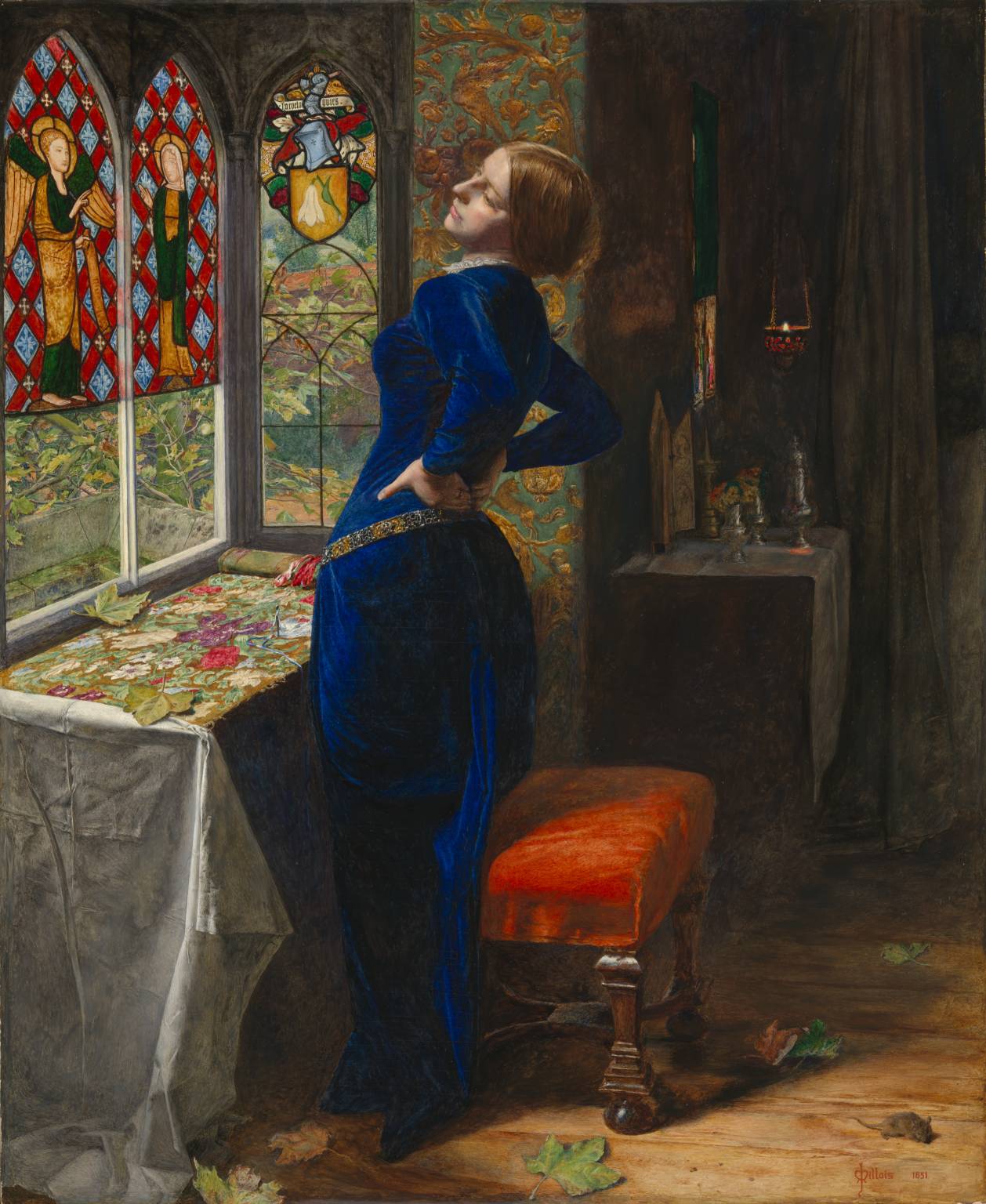
Mariana 1851 Sir John Everett Millais, Bt 1829-1896 Accepted by HM Government in lieu of tax and allocated to the Tate Gallery 1999 http://www.tate.org.uk/art/work/T07553


the next day, Saturday, was our last in London…  we spent the day again at the Tate Britian looking at the Pre Raphaelite art…  focusing this time on the Victorian room where wonderful pieces by GF Watts, Rossetti, Millais, Holman Hunt and other painters are hung…  I really do not get tired of looking at and studying these amazing paintings…  then we walked again to Westminster and had coffee and soda again at the same coffee bar in the book shop… we decided to splurge on a pre play meal, so had a wonderful Italian dinner at a small restaurant just behind the National Portrait Gallery and walked over to that evening’s play, called The Company…  which was a modern take on the musical about a single woman whose friends bugged her to get married…  it was funny and serious with some nice songs and the lead actress did a fine job of making the audience a part of the character’s life…


the next morning, we took the district line to Victoria Station, walked a few blocks to the Victoria Coach station and got on a coach for Amsterdam…  it was fun to see the English countryside of farms and hills and then we got to the Channel tunnel where the coach was put on this train that hauled us through the tunnel, a trip of about a half an hour…  we then spent the day driving across northern France into Belgium and arrived in Brussels in the evening…  we stopped and picked up some food and then went on to Amsterdam where we arrived at ten pm…  I had booked a hotel just off Dam Square in central Amsterdam…  I thought it was eighty euros a night but it turned out that I had read it wrong and it was eighty euros for two nights…  well, that was okay as it was very cheap, but the hotel was a bit more budget than even we usually use…  as we wound up having to climb a mountain of stairs…  fortunately, there was a younger man there who helped us up with our bags…


we did not do much in Amsterdam except walk around…  we went to the Cuyp Market where we basically walked around and looked at the goods offered in the many street stalls…  it was ten degrees colder in Amsterdam than London but still not bad by Minnesota standards so we were comfortable walking around…  the food in the market all looked and smelled amazing, especially the cheese shops with their many fat yellow cheeses stacked up…  but we are both on limited diets, so our only real dietary splurge was a Pannenkoeken that we ate with strawberries and whipped cream at a little restaurant we walked by that overlooked one of the canals just a few blocks from the Rijksmuseum…  as we enjoyed our Pannenkoeken which is a sort of light and delicious crepe, and sipped our drinks, we watched the sightseeing boats going by on the canal and the people walking by…


we then walked to a tram stop and took a tram back to Dam Square…  as it was dark by then, we walked around the red light district where it is always fun to see the groups of tourists heading for the coffee shops to smoke weed, ogling the high class prostitutes in the windows and glancing sideways at the porno shops with their racks of dildoes and leather underwear… lots of restaurants and bars and people partying…


the next morning, we took the train to Schiphol and caught a flight to Minneapolis…  at the airport, we met our son as arranged…  he brought us a hockey bag and a box both of which were full of Christmas presents our daughter had not been able to fit in her bags when her family went back to California after visiting us over Christmas…


then after checking those bags, we caught the eight pm flight to Las Vegas…  we had three free nights at a nice hotel in Vegas, so it was good to be there, in the relative warmth doing our usual…  Mary gambled and I spent the time reading and drawing…   we got to Vegas Tuesday evening and on Thursday had the pleasure of meeting with a well known art dealer who has become a friend and who I had never met…  he showed us around his galleries and we had a great time talking about art…  I do not know a lot of art people, so this conversation was very nice to me to talk about this stuff that is such a big deal in my little world…  lol with a knowledgeable and interested person…


we then left on Friday and drove to Riverside, California to spend the weekend with our wonderful daughter and her equally wonderful family…  it was hot in Riverside, so we got thoroughly warmed up and enjoyed playing mini golf with the grandchildren… on Monday we drove back to Vegas as we had another free night at a nice hotel…  then on Tuesday, we flew back to Minneapolis…  the temperature when we got off the bus at McKnight Road and Stillwater Road was -18 Fahrenheit (-27 Celsius)…  the north wind was so cold in our faces, we had to turn our backs to the wind three or four times just walking one block to our house…  even so, it was good to be back to our home and real winter….

Poetry from J.D. DeHart

J.D. DeHart

Beak Boy
originally at Strange Poetry
For his seventh birthday, the parents
gave him a jungle-themed birthday party.
Zebras, lions, and rhinos romped around
with elephants and monkeys.
But he chose the toucan mask.
An hour later, they found him squatting
in the tallest tree in the backyard.
“How did he get up there?” mother asked.
“It’s just a phase,” father suggested.
It’s been months.
He only comes down for earthworms
and slices of cake.  He doesn’t do his
chores anymore but has built a rather
splendid little nest.
The neighbors complain of late night
video game flashes and sounds
coming from the tree.  The parents
don’t know what will happen when
winter begins to approach, but father
is still insisting it’s a phase.
Sacred
originally at Eunoia Review
Some people put marks
around a spot of earth
and others hang glass on the wall,
or revel at ceramic figures
or write to famous persons
We collect small items
in boxes, wrap them in newspaper,
and store them away
then get out the old objects
Put them back up to change
seasons, and the cycle continues,
our application of sacred
given to tiny kiln-blown fragments
that cannot even say our names.
Symbolism Takes a Seat
originally at Eunoia Review
In walked dear symbolism,
whom I invited so often to
class with me and down
she sat.
Along the ride, she pointed
out the plumage of bright
birds flapping past, perhaps
resembling courage;
a pool standing stagnant
representing my lack;
an old man signalling
the inevitability of my fall.
Dear, you read too deeply,
she told me as she left,
just enjoy the rest of the trip,
which I took to mean life.
But maybe not.
Abruptly
originally at Eunoia Review
In rushes the season, in rushes
the dog, small frantic creature.
I drain my life before the classroom,
seeping out my humanity
before an unforgiving audience.
The lesson could involve a dancing
tiger and there would be no ovation.
I could light myself afire and someone,
probably that shaggy shiftless one,
would declare, Boring, then return
to a private world of video game avatars.
My switch of gears is abrupt, threatens
to tear out the transmission of life,
spitting out gravel. Somewhere there’s
a new town with the same old “folks”
who populate this town, only wearing
slightly different shades with a variation
of the now-familiar vernacular.
Ruins
originally at Eunoia Review
When they have unearthed us, will they
look back at our architects and mutter,
How they rivaled the pyramids, or will
they first get hold of our wasted celebrity
adoration, our overpopulation, or propensity
for barbaric neighborhood yawp, will they
first peruse the words of Faulkner or Melville,
or lay their hands on the garish pop novels
we carry with us, with oversized umbrellas,
considering our culture with furrowed brows,
will their verdict be, Let us imitate them, or
No wonder they have all gone missing.
Latex
originally at Eunoia Review
The slap of rubber, even in its clownish
lavender shade, conveys the deepest sense
of other, the hand arranging the needles,
shaking up the small bottles and I bidding
my love to go be prodded with those same
sharp implements, the smile on a nurse’s
face as thin and medicinal as those gloves,
a voice like the tapping out of air bubbles.
Orange Epidemic
originally at Eunoia Review
I dreamed about a world where, suddenly
at the edges of their being, some people
started turning orange, burning shades
of autumn, and so the landlords and officers,
wearing their capitalistic top hats, threw
these shades of persons into chains, stuffing
them into Orwellian overalls, and put them
to diligent work building a new country,
throwing up the guard of a new regime.
I have to stop reading dystopian fiction
before turning the lamp out.
John Ram
originally at Eunoia Review
 
When first domesticated, John was given
A power tie and a mug with antlers
He was informed about corporate life
Now he paces in the offices
Snorting and bucking, attempting to climb
The heights are sheer
This is what his hooves are made for
They talk about him at the water cooler.