May 2013: Journeys through Time, Space, and the Mind

Happy Mother’s Day, Memorial Day, whatever you celebrate this May. Our monthly theme is journeys, travels of the body, mind and spirit.


Some journeys are literal, such as the fictional heroic journeys in Brant Waldeck’s novel Guardians of the Scepter (reviewed by Bruce Roberts), while others involve observations and conjectures, such as Geoff Marcy and other scientists’ search for faraway exoplanets.

Some contributors travel in time. Literally, as Christian Marclay does through freezing and recording daily moments in his clock installation at San Francisco’s MOMA, or through artistic tribute or empathetic imagination.

Several writers introduce elements of the old into the modern, providing comparisons and expanding the relevance of their works. Emily Allen brings older music into her modern afternoon in her prose sketch Four Chords and the Truth, and Christopher Bernard reviews a poetry collection from Ernest Hilbert, whom he calls the ‘Milton of the Alleys.’  Bruce Roberts reviews a chapbook from Mark Schwartz, entitled ‘On Third Street: Kerouac Revisited,’ which is intended to continue the 1940′s Beatnik tradition. Also, he examines a collection from Khary Jackson, ‘Any Psalm You Want, where in one notable piece Jackson superimposes a historical Civil War re-enaction onto modern-day violence in a poor Black neighborhood.

Leena Prasad, in her monthly neuroscience column ‘Whose Brain Is It?‘ explores the biological and psychological basis for health benefits from the old remedy of acupuncture.

Some contributors travel, not physically or through time, but psychologically, into others’ lives and experiences, through empathy. Randle Aubrey, in his critique of a recent environmental protest against the Keystone XL oil pipeline, points out the need for communication across class and cultural groups in order to convey the relevance of certain issues, such as ecological concerns, to a broader coalition of people. In other words, he encourages people to uncover the intersections between the issues affecting them, to blur the boundaries between ‘their’ issues and those of others. To find themselves in a broader narrative, to journey mentally beyond the bounds of their day to day experiences.

Dave Douglas explores the guidance and direction someone might need for a journey, literal or metaphorical, in his poem Radio Flyer.

And Alexandra Dean Grossi takes the landscape of our collective mind, the Internet, and renders it as a set of traditional paintings and photographs. Many traditional, Romantic and Surrealist artists and authors throughout history have drawn upon mythology and dreams as subjects (Salvador Dali, Paul Gauguin, Toni Morrison, Isabel Allende, and many others.) To an extent, Internet memes, jokes, conversations are becoming our dream-world, our subconscious, where we collect and percolate sentence fragments, thoughts, and unfinished ideas. We consider things by crowdsourcing them, spread the good and the bad around like recurring dreams/nightmares, and construct new narratives in cyberspace.

Some people decry the lack of civility, proper grammar, fact-checking etc on the Net, but perhaps cyberspace is more properly considered as a personal and cultural dreamscape than a component of our polished literary or scholarly output. The net is where we journey to in our off hours, where we catch up on what’s going on and what our friends think about it, where we find sometimes half-baked but cute and poignant pictures and inspirations, where we shapeshift and create new identities for personal exploration and transformation. It can be the scholarly library, but more often serves the role of the campfire gathering, the late-night cafe, the coming-of-age roadtrip. Where we formulate and test out ideas before presenting them to the public.

Like the hashish-influenced wanderings of French Romantic author Gerard de Nerval or the grotesque fantasies of E.L. Hoffmann, the Internet represents a space where we can let our minds wander. We can publicly pose our highest aspirations and darkest instincts under cover of disguises, and become beguiled by this semi-real world. So, the least polished parts of the Internet seem to fill a need within human nature, a psychic impulse that remains as our world develops more technology.

Not everywhere that we visit in our dreams is pleasant, and there are nightmares as well as scenes of fanciful inspiration. Rachel Mallino Fowley illustrates this through her essay “I Am Jane Doe’s Daughter,” pointing out the lingering effects of child abuse on adults and the difficulty in recovering and in holding perpetrators accountable. Michellina van Loder describes her narrator’s struggle with an eating disorder in a poem entitled ‘Milk and Honey,‘ drawing upon ancient concepts of provision and blessing to highlight the tragedy of the speaker’s being unable to meet his/her most basic needs. And Egyptian poet Jaylan Salah draws upon images from Western history, most dramatically the Salem witch trials, to communicate her observations of her home city of Alexandria and her wishes for a peaceful society respecting individual freedom and dignity. She conveys the power of personal independence by showing what can happen when a repressive society denies it, and celebrates the strength of those who hold to their convictions even at great personal cost.

We at Synchronized Chaos hope that your journey through this month’s issue proves more of a restorative journey or creative escapade than a nightmare. Please enjoy the works of our contributors, and thank you very much for reading!

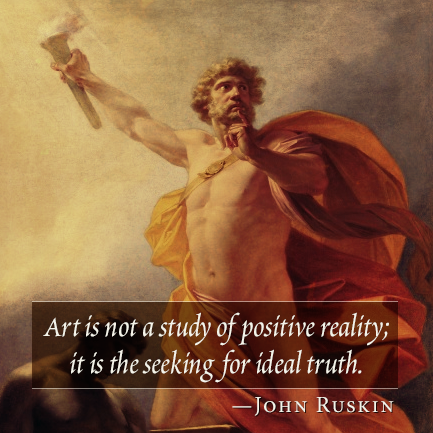
In keeping with the spirit of this month, we’re traveling back in time through this classical artist’s rendering of Prometheus, the mythical Greek bringer of fire and enlightenment to humanity. Icon courtesy of Finn Gardiner, a design collective in Boston.

____________________________________________________________________________________

‘Whose Brain Is It?” a monthly neuroscience column by Leena Prasad


Needle Pleasure
by Leena Prasad

topic acupuncture
region all regions
chemicals adenosine, dopamine


Adele’s eyes are closed. The music in the background slowly unties the knots in her muscles. She feels the tiny prick of the needles as they are inserted into her forehead, the side of her head, and near her eyes. A few needles are inserted near her ears while she lies face up on a massage table. Adele cannot see all the acupuncture needles that stick out from her face and does not feel any pain after the sensation of the initial prick.

Acupuncture releases a neurotransmitter called adenosine. One of the many roles of adenosine is to help in pain control. When the human skin is punctured with small holes, the body responds by preparing itself to manage the pain via the release of adenosine. This release of this neurotransmitter also acts on other pain in the body. Essentially, acupuncture coaxes the body into releasing a natural painkiller.

The acupuncturist places little fragrant eye pillows over Adele’s closed eyes, tells her to relax, and to not move her head. “It is best not to fall asleep,” she advises. She puts a small bell in Adele’s right hand and tells her to ring the bell if she needs anything. Adele hears soft footsteps moving towards the door, the flip of the light switch, and the door closing. She does not feel the needles at all. Instead, she feels relaxed and pampered, as if she is at a health spa.

After several minutes, Adele feels changes in the intensity of her migraine. The headache is not gone, but it is starting to wane in intensity. This makes her wonder if this is due to her psychological expectations or if there are actual physiological responses in her body. She knows that acupuncture works for many people but not everyone.

Adenosine attaches to receptors in order to transmit its message for releasing pain killers. It is possible to have insufficient or malfunctioning adenosine receptors. Thus, people with problematic adenosinereceptors will not have the same level of benefit from a treatment as someone with healthy receptors.

After several minutes, Adele starts to feel drowsy, but concentrates on staying awake, and using her mental energy to focus on chasing away the migraine. Adenosine slows down nerve signals thus causing drowsiness and relaxation. Eventually, the acupuncturist comes back into the room and removes the needles from Adele’s head. Adele can feel the change already. The migraine is not completely gone but it is much less severe. She feels happy and has to resist an urge to hug the acupuncturist.

Adele is in a great mood for the rest of the evening because the adenosine in her body causes a chain reaction of activating the feel-good neurotransmitter dopamine. Convinced about the results of the treatment, she calls the acupuncturist and leaves a message to request recurring weekly appointments. Although her decision for regular treatment might be motivated by the mood enhancing effects of dopamine, several studies show that consistent use of acupuncture is useful in reducing the intensity and frequency of migraine headaches.


This is a monthly column published in SynchChaos.com magazine and Leena is looking for other syndication opportunities. Leena Prasad has a writing portfolio at FishRidingABike.com. Links to earlier stories in her monthly column can be found here.

Josh Buchanan, a UC Berkeley graduate, edits this column with an eye on grammar and scientific approach.

Dr. Nicola Wolfe is a neuroscience consultant for this column. She earned her Ph.D. in Clinical Psychopharmacology from Harvard University and has taught neuroscience courses for over 20 years at various universities.

References:

  1. Vickers, Andrew J., et all, Acupuncture for Chronic Pain, JAMA Internal Medicine, http://archinte.jamanetwork.com/article.aspx?articleid=1357513, Oct 2012
  2. Goldman, Nanna., et all, Adenosine A1 receptors mediate local anti-nociceptive effects of acupuncture, Nature Neurosicence, http://www.nature.com/neuro/journal/v13/n7/full/nn.2562.html, March 2010
  3. Fredholm, Bertil B.,PhD; Svenningsson, Per MD PhD, Adenosine–dopamine interactions, Neurology, December 9, 2003 vol. 61 no. 11 suppl 6 S5-S9
  4. Takano T., Chen X., et all, Traditional acupuncture triggers a local increase in adenosine in human subjects. 2012 Dec;13(12):1215-23. doi: 10.1016/j.jpain.2012.09.012.

Stone villains and a talking squirrel: Bruce Roberts on Brant Waldeck’s middle-school adventure Guardians of the Scepter.


Guardians of the Scepter,

By Brant Waldeck: A Review.


My third grade granddaughter, Sophia, is excited. Weeks ago, she saw my copy of Secret of the Portals, the first in this kids’ adventure series by Brant Waldeck. Reading the cover, she was hooked, and begged to take it home to read—which she did.

Last week she spotted Guardians of the Scepter, second in the series, in the book pile on my desk, awaiting review. Her eyes lit up, and after reading the cover, wanted it: “Can I please, please, please take it home, Grandpa?” Well, no, because I’ve been busy, and hadn’t written the review yet. But here it is, and the book will soon be hers.

Kids need interesting, exciting books to read if they are to develop the lifelong reading habit. A book with heroes, villains, battles, superpowers, and of course a talking squirrel is just the ticket to grab kids by the imagination and pull them into a fantasy story that hones their reading skills. This series by Brant Waldeck, written to entertain his own kids, are such books.

The first, Secret of the Portals, introduces us to Tommy and Bruten and their families, two seemingly ordinary kids who grow and develop in new worlds, entered through magic portals from our world. In the World of Stone, especially, Bruten discovers near super powers battling stone villains, using a phenomenal weapon called the Scepter.

In the second, Guardians of the Scepter, we learn that this scepter has a long association with their families, and that as this history is revealed, the plot gets more and more interesting, for both good and evil powers want this mighty weapon.

Pursued by villains on Earth, bent on capturing the Scepter, Bruten and Tommy escape through yet another portal to Cerebra, a land where certain people possess amazing mental powers. Yet this time it’s Tommy, not Bruten, who develops in amazing ways that he never knew possible.

The plot twists and turns through surprise after surprise, as new heroes emerge to help them, battling villains that they never would have suspected, all obsessed with the power of the Scepter.

These books will not enthuse adult readers—too simple–but then adults are not the target audience. For kids though, say ages 9 through 12, who need to read everything they can, these are books that will hold their attention, pulling them to finish, and that’s how lifelong readers are developed.

“OK,OK,Sophie, you can have the book now!”


Bruce Roberts, April, 2013

 Bruce Roberts is a poet, artist and retired schoolteacher from Hayward, California. He may be reached at brobe60491@sbcglobal.net


Essay by Rachel Mallino Fowley

I Am Jane Doe’s Daughter

In the aftermath of the most horrific mass shooting our country has ever seen, a courageous woman wrote about her own nightmare and burden, comparing herself to the slain mother of a mass murderer. The article, entitled “I am Adam Lanza’s Mother” blew a hole through our fractured mental health system. Her intent, as I understood it, was to show the world that, despite all of her attempts to seek help, the “system” continues to fail her and she is frightened – very frightened – of her own son. And she wants help.

Monsters really do live in closets.

I am Jane Doe’s daughter. I, too, have sought help. My first therapy session was at age 13. By 35, I had seen over a dozen psychotherapists and psychiatrists. I’ve had more diagnoses than fingers. But there is one constant diagnosis with regards to my ill functioning brain – Post Traumatic Stress Disorder. I once begged to be checked in to a psychiatric hospital. In 2012, I was eligible to participate in a drug trial at The National Institute for Mental Health in DC, where I stayed as an inpatient for four months. Why? Because as a child, I was physically, emotionally, and sexually abused at the hands of a woman – my mother.

For the sake of this story, I am referring to my mother by her current married name. Before Doe, she was Smith, and before Smith, she was Jones. My mother is a public school teacher, currently teaching middle school children at Palm Springs Community Middle School (formerly, Jefferson Davis Middle School) in West Palm Beach, Florida. Yes, I’m outing her. Because, despite the crimes of which she made me a victim, she also had sex with a sixteen year old boy when I was fifteen years old, in our home. I was there, with my boyfriend at the time. There was an investigation, but nothing ever came of it. She continued to teach and still does to this day.

I was abused on a daily basis, but because this is not a book, I will stick to the most damaging atrocities. Between the ages of eight and ten, every weekend, my mother forced me to visit her pool- hall junkie boyfriend, a man by the name of Jimmy Doe, whose living situation consisted of various cheap motel rooms. During those visits, I was forced to watch Jimmy and my mother have sex. In fact, that’s all they did. It was a curious situation – every motel room Jimmy rented only had one bed. I had few options: either sit on the same bed where they were having sex, sit in a chair that faced the bed where they were having sex, or hide in the bathroom. I can remember instances while hiding in the bathroom, my mother calling out, “what are you doing in there” – as if to say, “Why aren’t you out here watching us fuck?” Beyond the sex, their interactions were always sexually gratuitous – it was normal for Jimmy to grab my mother’s vagina while kissing her good-bye.

On the car ride home from several of these sexual exploits, my mother would find a reason to scream at me, I had engaged in some imaginary wrong doing that would cause her to become irate. My punishment was my mother flooring the gas pedal as we traveled down a busy road and her threatening to “slam the car into a brick wall and kill us both”. I believed, without a doubt, that my own mother was going to murder me.

What makes this situation a purposeful crime against my innocence is that during these years, my mother and I lived with my grandparents. There was no logical reason I had to join my mother to these motel rooms and watch her have sex. She could have easily left me with my grandparents. This is sexual abuse – at the hands of a woman.

Along with the sexual abuse, my mother was violently physically abusive. She has punched me in the face and blackened my eyes – to which I was instructed to go to school and tell people that I accidentally“ran into the stationary bicycle”. I was strangled on a number of occasions and once again, instructed to lie when I went to school. This time, it was a “sun rash”. Many times my mother publicly dragged me by my hair down the street as I screamed for help, but no one ever came. I was beaten more times than I can count with wooden salad spoons and told that if I cried, she would beat me more. I was slapped, back-handed, knuckles protruding, on a regular basis. Her knuckle bones seemed as round as globes. I was forced to sit on my knees, facing a corner, for hours. I am embarrassed to admit that I was beaten numerous times for not being able to have a bowel movement every day when I was a little girl.

As for the emotional abuse, she spewed it out as if she were vomiting up spoiled food. I am my father, I will grow up to be nothing, I am useless and ugly. One Christmas, she refused to purchase a Christmas tree or presents, but offered to pay for a nose job. This was her way, once again, to beat down and crush my already fragile self esteem. If I made an A- on a test, I was berated because it wasn’t an A+. As punishment, she took scissors to all of the clothes in my closet. She cut and cut until there was nothing left. She cut until there was nothing left of me.

My final beating occurred when I was fifteen. My mother leapt from a chair, grabbed me by my hair, tossed me to the ground face-first, forced her knee into the small of my back and proceeded to slam my face numerous times against the floor. As she did this, she screamed, “I’m going to kill you”. I was fifteen and thought, finally, my life is over. Finally.

It was at that moment I was able to escape. I ran away and lived on the streets of Florida for six months. I’ll spare you the sad stories of what a fifteen year old girl sometimes has to do in order to not sleep in a park bathroom. (Something I’ve actually done.) But I lived. And at sixteen, the father I never knew flew to Florida and put me on a plane to Pittsburgh, where I lived until I was eighteen.

As for my mother, I have never spoken to her again. During the years she abused me, I was summoned to the school office once and asked about my home life situation. I lied. I lied because I was terrified of what my mother would do if she found out I told them the truth. During those years, not a single family member stepped in to rescue me. Now that I’m older, and no longer under my mother’s thumb, I have no way of prosecuting her for her crimes. The justice system surrounding adult children of child abusers is a fractured system. The statute of limitations removes the possibility of prosecution once an adult is willing and able to confront the crimes caused by our perpetrators. The bruises are gone. All that remains is a brain injury. Adult children of child abusers are the only group of victims told to “forgive” their perpetrators without any real justice served. My mother will never see the inside of a jail cell. She continues on with her life, now remarried and with a son who is about to graduate high school. I’ve made several attempts to contact him and make him aware that if he ever needs a place to run, that my door is always open to him.

Unfortunately, my life has not continued. I am still my mother’s prisoner. I am Jane Doe’s daughter. I do not leave the confines of my bedroom. I have tried and taken more psychotropics than I can count. I’ve been to therapy. I’ve seen the bleached white walls of psychiatric institutions. I don’t sleep. I am unable to properly convey to the best man in the world, my husband, just how much I love him. I am emotionally absent yet filled to the brim with resentment toward a system that does not acknowledge the crimes that were made against me, crimes that severed part of me and now I stumble around as if I have a phantom limb. I can feel that part of me that is missing. I am a phantom person. But now I’m ready for as many people to know who this phantom person is:   I am Jane Doe’s Daughter.

I do not want anyone’s pity. I want, what I believe many adult children of child abusers want – acknowledgement. I can no longer carry this abuse around in silence. If the current justice system is unable to acknowledge the fact that I have been a victim of numerous crimes at the hands of my own mother, then I feel that I’ve been forced to create my own justice. That justice, for me, is to OUT the sadistic and dangerous criminal slithering about her community, working at your public schools, and still abusing.

My mother is Jane Doe.  And I am her daughter.

Piece by Rachel Mallino Fowley, accomplished poet and writer, and founder of the organization IACHD, dedicated to assisting adult survivors of child abuse through support groups and legal assistance. You may find and contact her online through their website or on Facebook (under her name.) 

_________________________________________________________________________________
If you’re in an abusive situation, or a homeless teen, and need help, please call one of the hotlines here: http://teenadvice.about.com/library/weekly/aa070500a.htm

National Youth Crisis Hotline: 1-800- 448-4663

Provides counseling and referrals to local drug treatment centers, shelters, and counseling services. Responds to youth dealing with pregnancy, molestation, suicide, and child abuse. Operates 24 hours, seven days a week.

For young adults (18-24) who are homeless or abuse survivors, you may contact Covenant House, the Larkin Street Youth Center (San Francisco) or Safe Horizons (New York City.)

Here’s a link to a book on how to create safety and hold perpetrators of any kind of interpersonal abuse accountable through community-based methods, if you need or would like alternatives to the legal system: http://www.amazon.com/Revolution-Starts-Home-Confronting-Communities/dp/0896087948 (this is NOT vigilante violence or revenge stuff, it’s a guide to building a community that makes violence and bullying unacceptable. Creating safety in ways that go beyond relying on the criminal justice system.)

Also, Rachel Mallino Fowley recommends two books: Trauma and Recovery, by Dr. Judith Herman, MD, which explains how and why adult survivors can continue to be affected psychologically and physically from childhood abuse. Also Understanding the Borderline Mother by Christine Lawson, which describes the psyche and actions of some mothers with mental illnesses that can leave them prone to abusing their children, and gives a sense of what the children can experience being raised in those situations.

Finally, and most of all, Rachel encourages any young person who’s being abused to speak out and tell a responsible adult (another parent, a teacher, a counselor, scout leader, neighbor, etc.) as there are often people who care and can help you get out of the situation. This is not easy but as she knows, you are not alone.

‘Four Chords and the Truth’ prose sketch by Emily Allen


Four Chords and The Truth

Each time I close my eyes and picture my 40 year old self, the same image pops into my head. I am sitting in a weathered chair on the back porch of my humble old home overlooking the sun rise over the rolling Appalachians. There’s a warm coffee mug in my hand, dogs snoozing at my feet. I sit in solitude, maybe next to my husband or near my child. I sit in a meditative state, smelling homemade granola baking in the oven, feeling the chilly mountain morning air on my lips, hearing birds sing, winds shake the leaves, and a song. It’s the faint sound of a gentle acoustic strum and an emotive voice with a story to tell coming through my speakers. I tap my feet to the tempo of the strumming, I nod my head to the lyrics, I hum along to the sweet melody. The landscape is made perfect by the soundtrack behind it. My 40 year old self has everything she’s ever wanted: a roof over her head, a family, a back porch with a view, and music.

Folk music has followed me for years now. Old folk, new folk, indie folk. Bob Dylan is my comrade, Fleet Foxes wrote my anthem, Willie Nelson can bring a tear to my eyes. I have a varied taste in music, and I seek out new sounds, new styles, new artists, but my home will always be with folk.

May you grow up to be righteous,

May you grow up to be true,

May you always know the truth

And see the lights surrounding you.

May you always be courageous,

Stand upright and be strong,

May you stay forever young,

-Bob Dylan

Sometimes I dream about becoming a folk singer. I picture it when I sing along to a song. I’m sitting on a small stage at a small venue with a small crowd of people sitting at tables, drinking their beers, maybe a whisky here and there. I’ve got a guitar in my hand. I’m strumming the chords I chose, singing the words that are on my heart. I am watching the faces of the crowd as each listener decides what the lyrics mean. I’ll see a woman nod or a man close his eyes as he listens to my confessions, and I’ll feel their pain or their joy and they’ll feel mine.

I am sure folk singers, in those moments, feel more connected to the world than anyone. I think that’s part of the appeal. Folk singers value simplicity. They usually pick four chords to play. They write words we can understand. They speak the truth. No complexity, no grand allusions. Just pure thoughts, raw emotions.

Look around you

Look down the bar from you

The lonely faces that you see

Are you sure that this is where you want to be?

  • Willie Nelson

Some of my fondest memories from my time in college have taken place on the porch of my apartment. There I would spend hours alone or with my closest friends sipping on IPAs and listening to folk. Cut off t-shirts and blue jeans, trucker hats and a love of all things wild, our friends were as moved by the melodies as we were. We’d comment on the mix, the lyrics, the sounds, and we’d talk about life, about loves lost and found, and how beautiful the night was. There’d be moments where we didn’t speak at all, just reveled in our gratitude for each other and the music and the night. I found solace in these moments with the people I love most, and the sounds I love most ringing in my ears. Folk is about community, it’s about friendship, it’s about love.

After some thinking I think I’d rather be

A functioning cog in some great machinery

Serving something beyond me.

Fleet Foxes

When I imagine my 40 year old self, I imagine a woman who never lost touch with her love of music. She still sits on her back porch with her friends, drinking IPAs and laughing. She still revels in the sounds sailing through her ears. She still cries when Willie Nelson sings to her through her speakers. She’ll teach her kids to find solace in song, she’ll teach them to express themselves through lyrics and melodies. There’s something about her music, that makes her feel whole, it makes her feel connected to the earth, to the world around her. All she needs is four chords and the truth. 

Piece by Emily Allen, at Georgia Southern University. Emily may be reached at ea00426@georgiasouthern.edu and welcomes comments, feedback and suggestions on her work! 

Intersectionality, Keystone XL activism, and climate change: essay by Randle Aubrey

On Wednesday, April 3rd, I attended the #noKXL protest in the Pacific Heights district of San Francisco to stand against the proposed construction of the Keystone XL pipeline. The pipeline is designed to transport Canadian tar sands crude oil across America to the Gulf of New Mexico for international distribution, and even a little research into the project shows it to be an ecological disaster of nightmarish proportions, catapulting humanity even closer to an environmental abyss. More than one thousand people were in attendance at the event, flooding the streets of the ultra-rich San Francisco neighborhood with music, endless chants, and of course, large numbers of police. Thankfully, the latter were not required to be deployed to their full crowd-controlling effectiveness, as the protesters stayed relatively peaceful and cordial throughout the day, despite the extreme chill and high winds that blasted across the neighborhood. Whether or not Obama received the message during his day of closed-door fundraising that Californians are not in favor of the pipeline is unclear, but it’s hard to imagine that the efforts of the protesters could have been missed as his cavalcade snaked its way through the crowds to the Getty Mansion. This protest was the work of professionals, working together in concert to make maximum impact with minimal equipment, and they did it well.

It’s difficult to sort out the feelings and impressions that you experience when attending your first protest. The way these things are presented by the media doesn’t often reflect the reality on the ground, and this event was certainly no exception. I really wasn’t sure what kind of experience I was going to have, and I’m uncertain on how to speak about what happened that day without thinking of it in terms of the greater climate change reform movement in general. That being said, I want to start by offering a caveat about what follows: I’ll not be speaking much on the specific events of that day nor of my role in them, as I feel that to do so would fail to offer any real insight. Both EcoWatch and The Huffington Post offer great coverage on that end, as well as plenty of great photos of the event. Rather, I’d prefer to speak on my overall impressions of the protest and the movement against Keystone XL as a whole, which I, based upon what I saw that day, believe to be in dire jeopardy.

Yes, you read that right. As of right now, if he were required to make a decision today, I do not believe President Obama would block construction of the Keystone XL pipeline, even if you were to factor in the recent Pegasus Pipeline spill in Arkansas, the largest tar sands spill to date since TransCanada began transporting the stuff within U.S. borders. Frankly, the spill could not have come at a better time (if there is such as thing), as it lends great credence to the argument that constructing another, considerably larger pipeline (Keystone XL would be the largest to date) would be an incredibly risky undertaking, fraught with very real danger for the future of our environment, as well as for hundreds of communities across the country. The resistance effort is and has been truly noble one – one I believe necessary and will continue to firmly support – but I fear it is and will continue to be insufficient to sway the mind of the Commander In Chief.

Here’s the thing about this movement that strikes me as its weakest point: it is a revolution of the bourgeoisie. It is a movement comprised primarily of white, middle-class Americans, too many of whom have something to lose. It’s plainly evident when you look at the photos from this particular protest, as well as the dozens of others that have taken place over the last year or so. There are exceptions, of course: I saw many Native Americans, Latinos, Asians, and Arabic peoples participating in the protest, giving me hope that, at some point, climate change reform can become the ‘issue public’ it needs to be in order to be successful. The problem with recruiting large numbers of people of color into the climate change reform movement is that, in their respective communities, an abstract issue like climate change is not as immediately pressing as dealing with things like discrimination, poverty, joblessness, and immigration reform. Without demonstrable intersectionality between these problems and that of climate change, the movement will continue to be spearheaded by those who are not affected by social inequality. In the meantime, while those same people may be concerned about the future of our civilization, and they may all be quite irate about the current state of affairs, I do not feel that their outrage – however well-justified it may be – will outweigh their desire to preserve their privilege or their status when push comes to shove.

“More than 1,000 Obama volunteers, voters and donors turned out in San Francisco to remind our president that his legacy will be judged harshly if he approves Keystone XL. And we have more than 50,000 more Americans from every state of the union willing to risk arrest in peaceful civil disobedience to stop him [from] making the most catastrophic decision of his presidency,” stated Becky Bond, political director of CREDO Action Network, the activist organization responsible for staging the protest. CREDO launched a pledge drive to recruit activists for their cause, urging them to “risk arrest in peaceful dignified civil disobedience in their local communities,” according to the EcoWatch article. But if Obama’s legacy is the only thing at risk in this movement, and there is no real and immediate political price to be paid for supporting the pipeline project and the fossil fuel industry, it seems doubtful that he will capitulate to reformers. Given his staunch support for marriage equality and the likely repeal of DOMA, his active pursuit of responsible gun control legislation here at home, and the passing of the Affordable Care Act (better known to all as Obamacare), his legacy will likely be one that is generally favorable to the majority of ordinary citizens, especially in light of him having accomplished these things despite considerable opposition from the Republican Party. Even widely publicized skepticism on our foreign policy and the future of our civil liberties seem to have had little effect on the man’s reputation overall. Most liberals and even many conservatives seem to trust his use of drones, so-called ‘enhanced interrogation’ and ‘extraordinary rendition’ techniques (read: torture and kidnapping), and not-so-covert warrantless surveillance where they would have never trusted someone like, say, former president George W. Bush, all the while ignoring the issue of what effect these aspects of his legacy will create for those who inherit the office behind him. Many of those who aren’t ignoring the future of foreign policy tend to castigate Obama as somehow more immoral than Bush when it comes to these matters, and as such remain on the fringes of popular opinion. The truth of this matter lies somewhere in between (as it often does with things like this), but I digress.

And what of these 53,000 people that pledged to resist? What percentage of them are actually willing to get themselves arrested for climate change reform, if or when the time comes? I don’t doubt that a great number of people will put their freedom on the line should it become necessary, but will it be enough? Most importantly, is this what needs to happen? Do people need to start getting arrested en masse for the President to take a truly progressive stance on climate change? And if so, when? Does it need to happen before the decision is made to build the pipeline, or after? I can’t help but wonder if groups like CREDO and Friends Of The Earth are asking themselves questions like these at the moment. The questions of risk and morale are self-evident, as seem to be the strategies to support them; the latter questions of timing, escalation, and ultimately, responsibility, require careful consideration, and should not be taken lightly. But do they weigh as heavily on the minds of the protesters as they do the organizers? While the actual numbers of arrested during last Wednesday’s protest have not been publicly released, I only saw one person escorted away by the police, and while his arrest was widely cheered by those present, I did not see anyone follow him.

Even this late in the game, it’s still hard to imagine that climate change reform is something worth gambling your freedom and good name away for. But if what we all fear comes to pass and the President does authorize construction of the Keystone XL pipeline, it seems inevitable that the climate change reform movement will begin to increasingly radicalize. It will have to, in order to survive. So as the country inches ever closer to the deadline, it remains to be seen if tomorrow’s actions will speak louder than today’s words, and whether jumping the gun will prove to be more effective than running at the mouth.


Randle Aubrey is a regular contributor to Synchronized Chaos, and he can be reached at thedailyecho@gmail.com 


Bruce Roberts on Khary Jackson’s poetic imagination: review of Any Psalm You Want

Any Psalm You Want

A collection of poetry

By Khary Jackson


Great poetry should be read aloud. And that’s why it has taken me so long to write this review. From the moment I began Khary Jackson’s Any Psalm You Want, his intense, electrifying language said, “Speak me!” so I did. And then, of course, I had to do it again, still allowing his words to fly trippingly from my tongue, and focusing on meaning, the sum total of passionate imagery, metaphor, symbol, historical allusion—of communication vibrant and intense. This is a brilliant book.

In poem after poem, Jackson impresses with wonderful connections between the mundane and the symbolic. In “From Antonio(Stradivari)”(p. 82), he connects the shape of Stradivarius’ violins with the shape of his first wife, Francesca, so the tender care with which he shapes his instruments becomes a love poem to his wife.

In “Abandoned House – for Detroit,”(p. 22) the emptiness of walls and floors becomes painful embarrassment to the life that once lived there—the loves, the hates, the arguments, the happiness: “When you’ve become an abandoned house,/your job is to remain still, to apostle your pride, to deny the mother’s voice in your bedroom ceiling,/ deny the father’s peppered steak in the kitchen,/deny the son’s fantasies in your shower.”

In “Enactment,”(p. 13) he twists the concept of a Civil War Reenactment, so that’s it’s gang versus gang in a drive-by, leaving a young boy “to twist his torso, yank his limbs to the choreographed puncture of lungs, thump the grass without bracing his fall, . . . and from somewhere near, from everywhere, a forty-year old black woman will howl for her boy. Her hands will shred the air.”

The historical fact of George Washington getting false teeth from the mouths of slaves, in “The Borrowed Mouth,” (p. 63) becomes an ironic speculation on why those teeth did not assume control, why their voices did not take over and speak through him in his political addresses, bewildering his audience with visions of a slave’s life from the mouth of the president.

In “Apologies to a House Party,” (p. 49) Nina Simone’s voice is background music at a party, yet the chatter goes on, no one’s really listening, and he wants to rage at them for silence, for the bluesy passion of her voice symbolizes the gritty injustice of Black experience: “Nina Simone’s giving birth while we stare at the wall./She is hunched over the coffee table wailing Mississippi Goddam!”

Jackson also impresses with the range of his poetic material. His titles alone document that he is well-read, constantly listening to the pulse of the world, and finding ways to intertwine the historical and modern: Such titles as “From Leadbelly to Kurt Cobain,” “John the Baptist—2nd Coming,” “Frida in Detroit,” “George Gershwin Writes Janis Joplin upon Hearing Her Version of Summertime,” “Esperanza Spalding Plays Her Bass At The White House show that he tunes his poetic ears and eyes to the world.

In “Rosa Parks (or Blue Grass, Part II,)” (P. 70) Rosa Parks, Robert Johnson, Bessie Smith and Scott Joplin, intermingle with 50 Cent, Lil Kim, Eminem, Dr. Dre, and John Legend in a musical, historical collage reminiscent of the old tv show “Meeting of Minds,” where say Thomas Jefferson would sit and talk with Genghis Khan, Plato, and Queen Victoria. A wonderful imagination is at work in these poems.

In short, this is one terrific book by one terrific author. For intense beauty of language, for impassioned feelings, no matter what the topic, for poetic significance found in simple, tangible objects, read Any Psalm You Want, by Khary Jackson—aloud!


Bruce Roberts, April, 2013