





PEDAGOGICAL VIEWS OF ABDULLA AVLONI
Daminova Sevinch Tuychi qizi
3rd-year Student, Primary Education Program,
National Pedagogical University of Uzbekistan
Abstract
This article analyzes the life and pedagogical views of Abdulla Avloni, an Uzbek enlightener, poet, playwright, and educator. It examines Avloni’s role in the development of public education in Uzbekistan, the essence and significance of his work “Turkiy Guliston or Morality,” as well as his ideas on enlightenment and national awakening. The article scientifically explores the thinker’s interpretation of education and upbringing as the most important factors in human life, the theoretical and practical aspects of his pedagogical activity, and his contribution to the development of the modern Uzbek school system. In addition, the relevance of Abdulla Avloni’s views on knowledge, morality, upbringing, and patriotism for today’s education system is highlighted.
Keywords: Abdulla Avloni, pedagogy, upbringing, enlightenment, morality, Jadid school, education, national awakening.
At the beginning of the 20th century, the national awakening and enlightenment movement gained wide momentum in Turkestan. During this period, among the intellectuals who called the people toward knowledge, culture, and progress, Abdulla Avloni occupied a special place. As a poet, playwright, publicist, public figure, and most importantly, a devoted educator of the people, he left an incomparable mark on the history of Uzbek pedagogy. Abdulla Avloni dedicated his entire life to enlightening the nation and educating the younger generation in the spirit of knowledge and morality.
Throughout his career, Avloni worked as a teacher, established new-method schools, created textbooks, and encouraged the public toward enlightenment through the press. His pedagogical views were innovative for his time and continue to play a significant role in shaping the modern education system today.
The thinker’s work “Turkiy Guliston or Morality” is considered a masterpiece of Uzbek folk pedagogy. In this work, he scientifically presents his views on morality, upbringing, knowledge, and human development. Avloni’s ideas on education and upbringing have retained their relevance not only in his own time but also in the present day. Therefore, studying his pedagogical heritage and applying it to modern educational practice holds great scientific and practical significance.
Abdulla Avloni (1878–1934) is one of the most prominent enlightenment figures, educators, and writers to emerge during the period of national awakening of the Uzbek people. He was born on July 12, 1878, in the Mergancha neighborhood of Tashkent, into a family of craftsmen. Showing an interest in learning from an early age, Avloni first studied at a traditional school and later at a madrasa. Entering the world of literature and enlightenment in his youth, this talented young man began writing poetry at the age of fifteen. In his early works, he called on the people to escape ignorance, study in new-method schools, and acquire knowledge and professions.
Avloni’s enlightenment activity was primarily manifested in the field of journalism. In 1907, he published the newspapers “Shuhrat” and “Osiyo”, serving as their editor and promoting ideas of enlightenment, unity, and progress. Although the tsarist government soon shut down these publications, Avloni did not cease his activities. He continued his work in the newspapers “Sadoyi Turkiston”, “Turon”, and the journal “Kasabachilik Harakati”, making an invaluable contribution to the formation of Uzbek journalism. He regarded the press as a force that awakens the people, calling it “a lamp that illuminates the darkness of ignorance.”
Abdulla Avloni’s pedagogical activity formed the essence of his entire life. He viewed teaching not merely as a profession but as a sacred duty in service to the nation. In his lessons, he paid special attention to nurturing students’ independent thinking, patriotism, and moral purity. He considered expressive reading, emotional engagement with texts, and sincere communication between teacher and student as essential components of the educational process.
In “Turkiy Guliston or Morality,” Avloni deeply analyzes the issue of human perfection. According to him, upbringing is the fundamental foundation of human life. He famously wrote: “For us, upbringing is a matter of either life or death, salvation or destruction, happiness or catastrophe.” Through these words, Avloni interprets upbringing not only as a personal matter but as a factor determining the fate of the nation.
In his works, he divides upbringing into four main directions:
The timing of upbringing – education must begin from early childhood;
Physical upbringing – a healthy mind is formed through a healthy body;
Intellectual upbringing – developing intelligence, striving for knowledge, and cultivating thinking; Moral upbringing – instilling virtues such as honesty, conscience, patience, and compassion.
Avloni’s pedagogical views were considered innovative approaches in his time. He regarded education and upbringing as inseparable concepts “like body and soul,” emphasizing that teaching and moral education complement one another.
The thinker viewed morality as the highest human virtue. In “Turkiy Guliston or Morality,” he divided human behavior into two categories: good morals and bad morals. Good morals include patriotism, cleanliness, courage, conscience, patience, and kindness, while bad morals include ignorance, anger, laziness, lying, and greed. Avloni supported these ideas with verses from the Qur’an, hadiths, and the wisdom of thinkers such as Socrates, Aristotle, Ibn Sina (Avicenna), Sa‘di, and Bedil.
As an educator, Avloni sought to cultivate love for the mother tongue, respect for knowledge, diligence, and loyalty to the homeland among the younger generation. His poems and fables written for children possess strong educational value, fostering love for books, labor, and nature. In his poems about the Motherland, the poet depicts the homeland as a beautiful, generous, and prosperous land, instilling a sense of pride and honor in children.
Avloni’s work “A Brief History of the Prophets and the History of Islam” was written in a religious-enlightenment direction, aiming to acquaint the younger generation with Islamic history and enrich their spiritual world. This work was widely used as a textbook for primary schools in its time.
The thinker was not only a writer but also an active practical educator. During the 1920s and 1930s, Abdulla Avloni taught at the Teachers’ Seminary in Tashkent, the Faculty of Pedagogy, and the Central Asian University, where he trained many young teachers. During these years, he compiled the textbook “Literature Chrestomathy,” thereby laying the foundation for the methodology of teaching Uzbek literature in schools.
Throughout his life, Avloni devoted himself wholeheartedly to the enlightenment of the nation. In recognition of his services, he was awarded the honorary title “Hero of Labor” in 1927 and “Shock Worker of Public Education of Uzbekistan” in 1930. His name is still remembered with great respect in the history of the Uzbek education system. Today, schools, streets, scientific centers, and a museum at the Institute for Advanced Training of Teachers in Tashkent bear the name of Abdulla Avloni, honoring his invaluable contribution to education and enlightenment.
Abdulla Avloni regarded education as a powerful force leading the people toward freedom, culture, and progress. He emphasized the irreplaceable role of the teacher’s personality in educating the younger generation as well-rounded individuals. Therefore, Avloni can be regarded not only as a great figure of his own time, but also as one of the founders of the entire history of Uzbek pedagogy.
In conclusion, Abdulla Avloni is a great educator, poet, and enlightener who left an indelible mark on the spiritual and educational life of the Uzbek people. His views remain highly relevant not only for his own era, but also for the modern education system today. In his pedagogical activity, Avloni placed upbringing at the center of human life, interpreting it as the most important factor in the nation’s prosperity and the development of society.
His work “Turkiy Guliston or Morality” is a masterpiece of Uzbek pedagogical thought. It addresses the issues of educating a well-rounded generation based on values such as moral integrity, aspiration for knowledge, patriotism, compassion, and humaneness. For Avloni, education and upbringing were inseparable concepts; he highly valued the teacher as the most important figure shaping the future of the nation.
Even today, the ideas put forward by Avloni—humanism, moral education, loyalty to national values, love of knowledge, and the cultivation of independent thinking—are fully aligned with the main directions of modern education. Therefore, the legacy of Abdulla Avloni stands as the foundation of Uzbek pedagogy and an inexhaustible spiritual source in the upbringing of the younger generation.
References
Zunnunov, A. (2004). History of Pedagogy. Tashkent.
Dolimov, U. Abdulla Avloni as the Founder of Uzbek Pedagogy of the National Awakening Period.
Ziyouz. (n.d.). Retrieved from www.ziyouz.com
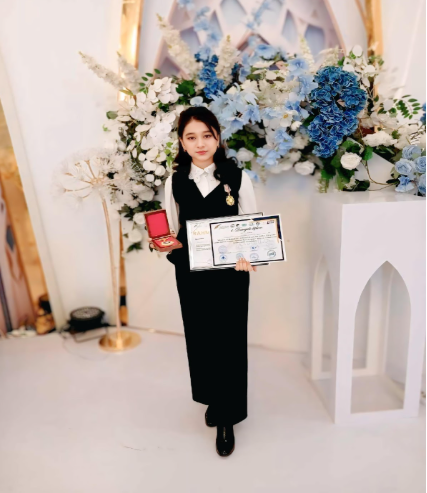
Daminova Sevinch Tuychi qizi was born in 2006 in Shahrisabz district, Kashkadarya region, Uzbekistan. She graduated successfully from Secondary School No. 72 in Shahrisabz district, Kashkadarya region. Since 2023, she has been a student of the present-day National Pedagogical University of Uzbekistan.
During her academic journey, she has distinguished herself through her high level of activity, strong interest in science, and initiative. She has carried out volunteer activities at the Pinnacle Science Republican Scientific Center, contributing to the promotion of scientific research among young people.
Sevinch Daminova is the author of scientific articles published in prestigious journals of countries such as the United States, Singapore, and Russia, which reflects her recognition at the international level as a young researcher. She is the holder of more than 50 diplomas and certificates and has actively participated in numerous national and international competitions.
In 2025, she became the recipient of the “Future Star” Statuette, organized on the scale of the Commonwealth of Independent States. She has also been awarded the “Advanced Generation” badge and the “Devoted to High Science” badge. In the “Mosaic of Nations” competition organized by the Jadids International Scientific Research Association, she won first place and was awarded the “Friendship” badge.
She is the author of a number of poems and international scientific articles, successfully combining creativity and scientific research. She is a determined and ambitious young scholar who aims to contribute to the development and prosperity of her country in the future.

THE IMPORTANCE OF TEACHER SPEECH CULTURE AND CONDUCTING WORK IN THE STATE LANGUAGE
Mengboyeva Baxtiniso Mamatqobilovna
First-year student, Faculty of Philology,
Uzbek Language and Literature Department,
Denov Institute of Entrepreneurship and Pedagogy
Email: @meliqulovabarno3gmail.com
TEACHER SPEECH CULTURE AND THE IMPORTANCE OF WORKING IN THE STATE LANGUAGE.
Abstract: This article analyzes the relationship between the culture of teacher speech and working in the state language. It also highlights the role of speech culture in the professional activity of a teacher, its impact and significance in the educational process. It is shown that ensuring the accuracy, fluency and standardization of speech in the process of working in the state language is one of the main duties of a teacher.
Keywords: Speech culture, teacher, state language, document management, effective speech, expressiveness, formal style.
The culture of a teacher’s speech is one of the most important factors determining the effectiveness of the educational process. This is because a teacher’s ability to express ideas clearly, fluently, and understandably creates a solid foundation for students to master knowledge thoroughly. Conducting activities in the state language not only ensures the correct management of official documents, but also guarantees unity and discipline within an educational institution. Therefore, a teacher’s speech culture and literacy in the state language become an integral part of their professional competence. This article highlights the significance of these processes and their impact on the quality of education.
1. The essence of a teacher’s speech culture and its role in the pedagogical process
A teacher’s speech is one of the main tools of the educational process and is a key factor in influencing students’ minds, providing knowledge, and ensuring the effectiveness of education and upbringing. Speech culture includes not only correct, fluent, and clear speaking, but also the ability to express ideas in an expressive, logical, and comprehensible manner. In addition, a teacher’s speech shapes the psychological environment of the learning process and fosters students’ interest, confidence, and motivation toward the subject.
The effectiveness of a teacher’s speech determines the overall success of the lesson. A teacher with a high level of speech culture is able to capture students’ attention, explain topics fluently, and present complex concepts in a simple and concise way.Especially in the modern educational process, a teacher not only provides knowledge, but also acts as a communicator, educator, and moral leader, guiding, motivating, and evaluating students through their speech.
2. The main characteristics of a teacher’s speech: clarity, fluency, logic, and expressiveness
A teacher’s speech is distinguished by the following qualities:
Clarity. Clarity in pedagogical speech means delivering information without confusion, in a clear and understandable manner, using precise terminology. Clarity helps prevent unnecessary questions, misunderstandings, and ambiguities during the lesson. The correct use of scientific concepts, definitions, and examples is an important manifestation of clarity.
Fluency. A teacher’s fluent speech determines the rhythm of the lesson. Proper use of pauses, logical stress, and speaking at a moderate pace ensure fluency. Fluent speech also helps develop students’ listening culture.
Expressiveness. Expressive speech enriches students’ imagination and actively engages them in the learning process. Intonation, stress, pauses, and emotions create memorable impressions for students. Especially in subjects such as literature, art, and history, expressive speech becomes one of the teacher’s main tools.
Logic. Logical speech is reflected in the consistency of ideas, cause-and-effect relationships between concepts, and the sequential presentation of thoughts. A logically structured speech helps students develop critical and systematic thinking.
3. Speech culture as a teacher’s professional competence
A teacher’s speech culture is a core component of their professional mastery and pedagogical competence. The modern education system requires teachers to possess the following speech competencies:
adherence to the norms of the literary language;
deep knowledge of the grammatical, phonetic, and lexical rules of the state language;
control of diction;
observance of speech etiquette rules;
ability to communicate effectively with an audience;
correct use of communication genres (lecture, explanation, question-and-answer, discussion).
A teacher with rich speech and the ability to think scientifically forms a positive image in students’ minds. Such a teacher not only provides knowledge, but also serves as a role model of speech culture for learners.
4. The content and significance of conducting documentation in the state language
In the Republic of Uzbekistan, conducting documentation in the state language implies maintaining official documents in Uzbek across public administration, education, healthcare, the judicial system, the economy, and other sectors. This process plays an important role in strengthening political independence, enhancing national identity, and ensuring clarity within the legal system.Conducting documentation in the state language serves to:
ensure documents are maintained in a clear and unified standard;
observe literary norms in official communication;
promote effective communication between state institutions;
enable citizens to clearly understand their rights and obligations;
support the development of national culture;
enhance the prestige and status of the language.Proper organization of documentation in the state language ensures order, consistency, and legality in social life.
5. Conducting documentation in the state language in a teacher’s professional activity. In the education system, a teacher is not only an instructor, but also a record keeper. In this process, the teacher must correctly and appropriately prepare official documents in the state language, such as class registers, curricula, electronic diaries, orders and directives, reports, and official records.This process depends on the teacher’s knowledge of the official style, ability to distinguish document types, strict adherence to language norms, literacy in spelling and punctuation, as well as responsibility and accuracy. Proper documentation in the state language by teachers directly affects the legal functioning, discipline, and overall effectiveness of an educational institution.
6. The interconnection between a teacher’s speech and the culture of the state language
Speech culture and the culture of record-keeping are complementary processes. The richer and more fluent a teacher’s oral speech is, the more precise and compliant with official standards their written speech becomes. Proficiency in conducting documentation in the state language enhances a teacher’s communicative literacy. These two processes also have a strong impact on students’ education and upbringing. A teacher’s speech model helps shape students’:
culture of thinking,
writing skills,
respect for the literary language,
sense of national identity,
readiness for official communication.
7. Speech technologies and electronic documentation in the state language in modern education
In today’s digital era, teachers are required not only to have clear and accurate speech, but also to use information technologies effectively. Electronic diaries, online platforms, official emails, and reports must be maintained in the state language. This requires not only linguistic literacy, but also technical competence.
A teacher’s electronic communication is based on:
concise and clear style in official correspondence,
adherence to spelling rules,
avoidance of unnecessary words,
logically structured content,
observance of official etiquette.
Conclusion
A teacher’s speech culture is one of the key factors determining the quality of the educational process. Fluency, clarity, and expressiveness of speech directly influence students’ comprehension of knowledge, interest in lessons, and the effectiveness of communication. Conducting documentation in the state language ensures that official documents are prepared correctly and in accordance with established standards, and it enhances the culture of official communication. Therefore, a teacher must be knowledgeable, responsible, and possess a high level of speech culture in both areas.
References:
Law of the Republic of Uzbekistan “On the State Language”.
Toxliyev B., Fundamentals of Speech Culture, Tashkent.
G‘ulomov A., Conducting Documentation in the State Language, учебное пособие.
Qosimov B., Language and Speech Culture, textbook.
Official documents of the Cabinet of Ministers of the Republic of Uzbekistan on record-keeping procedures.
Mengboyeva Baxtiniso Mamatqobilovna was born on April 1, 2007, in Denov District, Surkhandarya Region. She graduated from General Secondary School No. 73 located in Denov District. Currently, she is a first-year student at the Faculty of Philology, majoring in Uzbek Language and Literature, at the Denov Institute of Entrepreneurship and Pedagogy in Denov District, Surkhandarya Region. She has earned nearly 50 international certificates.
She is a participant in the project “The First Step Towards a Scholarship – Season 1”, created by Dilshoda Akhadova. In addition, she serves as the coordinator of the “Eco Call” movement council at the Denov Institute of Entrepreneurship and Pedagogy. At the same time, she is a member of the Argentine Association of Science and Writers, holding an official membership certificate.

The Significance of Foreign Language Learning for Young People
Norqulova Madina
a second-year undergraduate student
Samarkand State Institute of Foreign Languages
Abstract:
In this article, the significance of foreign language proficiency in the lives of young people is analyzed. The impact of foreign languages on the educational process, professional development, and social engagement is examined from a scientific and theoretical perspective. Furthermore, the article substantiates that, in the context of globalization, the acquisition of foreign languages serves as a crucial factor in enhancing the competitiveness of youth.
Key words: Foreign language education; youth competitiveness; globalization; language proficiency; international integration; human capital; educational reforms; multilingualism; global labor market; lifelong learning.
Introduction
In the current era of globalization, knowledge of foreign languages is considered one of the crucial factors for societal development. In a period when information exchange has accelerated and international relations have expanded, young people’s mastery of foreign languages plays a significant role in their intellectual, professional, and social development. In particular, English, as a means of international communication, occupies a leading position in the fields of education, science, and technology.
Literature review
Foreign language proficiency contributes to the development of young people’s cognitive potential and enhances their critical thinking skills. Scientific research indicates that knowledge of multiple languages broadens an individual’s intellectual perspective and enables them to approach problems from various viewpoints. At the same time, acquiring foreign languages fosters young people’s ability to independently analyze information.
Within the education system, foreign language proficiency is regarded as one of the key factors ensuring academic mobility. Proficiency in a foreign language is considered a prerequisite for participation in international educational programs, grants, and exchange projects. Moreover, access to foreign academic sources and research contributes significantly to improving students’ overall level of knowledge.
At the 72nd Session of the United Nations General Assembly, the President of our country emphasized: “The future and prosperity of our planet depend on what kind of people our children grow up to be. Our main task is to create the necessary conditions for young people to fully realize their potential.”At a time when the boundaries between globalization, culture and values, and national identity are rapidly diminishing, language plays a crucial and fundamental role in enabling young people to integrate into the global community. Today, young people clearly understand that without knowledge of foreign languages, it is almost impossible to find a place in international business, science, politics, economics, or the fields of information and communication technologies.
Furthermore, the establishment of the “El-yurt umidi” Foundation, aimed at providing opportunities for young people to study abroad, train specialists, and maintain communication with compatriots, has served as an additional incentive. One of the main requirements for participating in the foundation’s selection process is possessing a valid national (CEFR) or international language certificate (such as IELTS, TOEFL, or DELF). Every year, hundreds of young people take advantage of this opportunity to pursue undergraduate or master’s degrees at foreign higher education institutions and return to their homeland as skilled professionals. According to many of them, knowledge of a foreign language not only broadens their worldview but also serves as a key that opens the door to the global arena.
Conclusion
In conclusion, the mastery of foreign languages plays a pivotal role in the personal, academic, and professional development of young people in Uzbekistan. As globalization continues to shrink the distances between cultures, values, and national identities, foreign language proficiency has become a key factor for youth to successfully integrate into the global community. The state’s efforts to provide favorable conditions—such as high-quality language education, international certification support, and opportunities for studying abroad—ensure that young people can fully realize their potential. Ultimately, enhancing foreign language skills not only broadens the worldview of the youth but also equips them with the knowledge, competencies, and confidence necessary to contribute effectively to the country’s prosperity and compete in the international labor market.
Reference
1.Crystal, D. (2019). English as a Global Language. Cambridge: Cambridge University Press.
2.Nunan, D. (2015). Teaching English to Speakers of Other Languages: An Introduction. London: Routledge.
3.Graddol, D. (2006). English Next. British Council.
4.Baker, C. (2011). Foundations of Bilingual Education and Bilingualism. Bristol: Multilingual Matters.
5.Galloway, N., & Rose, H. (2015). Introducing Global Englishes. London: Routledge.
6.Phillipson, R. (2009). Linguistic Imperialism Continued. London: Routledge.
7.Kachru, B. B., Kachru, Y., & Nelson, C. L. (Eds.). (2006). The Handbook of World Englishes. Oxford: Blackwell Publishing.
8.Jenkins, J. (2006). World Englishes: A Resource Book for Students. London: Routledge.
9.Samovar, L. A., Porter, R. E., & McDaniel, E. R. (2012). Communication Between Cultures. Boston: Wadsworth Cengage Learning.
10.Crystal, D. (2003). The Cambridge Encyclopedia of the English Language. Cambridge: Cambridge University Press.
Norqulova Madina was born in Pastdargʻom district, Samarqand region, Uzbekistan, in 2006. She is a 19-year-old undergraduate student currently in her second year at Samarkand State Institute of Foreign Languages. Madina has earned over 50 certificates in various academic and professional fields, demonstrating her strong commitment to continuous learning and personal development. She has achieved a B2 level in English, reflecting her solid proficiency in the language. Her extensive qualifications highlight her dedication to academic excellence and her readiness to participate in international educational and research opportunities.

The Role of Linguoculture in Shaping Worldview: Language as a Cultural Code
Abstract
This article examines the role of linguoculture in shaping human worldview, conceptualizing language as a cultural code that encodes collective values, beliefs, and cognitive patterns of a speech community. Drawing on the theoretical framework of linguoculturology, the study explores how culturally marked linguistic units reflect and construct culturally specific ways of perceiving reality. The research employs qualitative methods, including semantic and conceptual analysis of linguocultural units such as metaphors, culturally loaded lexemes, and phraseological expressions. The findings demonstrate that language functions not merely as a communicative tool but as a semiotic system through which cultural meanings are preserved, transmitted, and transformed. The study argues that worldview formation is deeply influenced by linguocultural factors embedded in language, which shape both individual and collective cognition. By highlighting the interdependence of language, culture, and worldview, this research contributes to contemporary discussions in linguoculturology and intercultural communication, offering insights relevant for cross-cultural studies and linguistic anthropology.
Keywords: linguoculture; worldview; cultural code; language and culture; conceptualization; cultural meanings; linguistic worldview.
Introduction:
In contemporary linguistics, the interrelation between language and culture has become a central area of interdisciplinary research, giving rise to such fields as linguoculturology, linguistic anthropology, and intercultural communication. Language is no longer viewed solely as a neutral means of communication; rather, it is increasingly understood as a cultural phenomenon that reflects, preserves, and transmits the collective experience of a speech community. Within this paradigm, language functions as a cultural code through which culturally specific meanings and values are encoded and interpreted.
The concept of worldview has attracted significant scholarly attention, as it represents the way individuals and communities conceptualize reality. According to linguocultural theory, worldview is not formed independently of language; instead, it is shaped by culturally marked linguistic structures that influence perception, cognition, and interpretation of the world. Lexical choices, metaphors, phraseological units, and culturally loaded expressions embody national and cultural specifics, thereby contributing to the formation of a linguistic worldview. As a result, speakers of different languages may conceptualize the same phenomena in distinct ways.
Linguoculturology, as an interdisciplinary field, focuses on the interaction between language and culture and examines how cultural meanings are embedded in linguistic units. Scholars such as V. A. Maslova, Yu. S. Stepanov, and E. Sapir have emphasized that language serves as a repository of cultural memory and a mechanism for constructing social reality. From this perspective, language operates as a semiotic system that encodes cultural norms, values, and cognitive patterns, shaping both individual and collective worldviews.
Despite extensive research on language and culture, the role of linguoculture in shaping worldview remains a relevant and evolving topic, particularly in the context of globalization and intercultural communication. Understanding language as a cultural code allows for deeper insight into how cultural meanings are structured and how misinterpretations may arise in cross-cultural interactions. Therefore, this study aims to examine the role of linguoculture in worldview formation by analyzing culturally marked linguistic units and their conceptual significance. The findings are expected to contribute to ongoing discussions in linguoculturology and provide a theoretical foundation for further comparative and applied research.
Literature review
The relationship between language and culture has long been a subject of scholarly inquiry across linguistics, anthropology, and philosophy. Early foundations of this relationship can be traced to the works of Wilhelm von Humboldt, who emphasized that language embodies the “spirit” of a nation and shapes the way its speakers perceive the world. This idea was further developed in the Sapir–Whorf hypothesis, which posits that language influences thought and worldview, suggesting that linguistic structures play a decisive role in shaping cognitive patterns.
In the framework of modern linguistics, linguoculturology has emerged as a distinct interdisciplinary field that examines the interaction between language and culture through the prism of national mentality and cultural values. Scholars such as V. A. Maslova argue that linguoculture represents a system of culturally marked linguistic units that reflect collective experience and cultural memory. Similarly, Yu. S. Stepanov conceptualizes culture as a set of constants embedded in language, emphasizing the symbolic and semiotic nature of linguistic signs as carriers of cultural meaning.
Numerous studies have focused on the notion of linguistic worldview, which refers to the culturally specific representation of reality encoded in language. Researchers have demonstrated that lexical-semantic fields, metaphors, and phraseological units serve as key mechanisms through which worldview is constructed. Lakoff and Johnson’s theory of conceptual metaphor has been particularly influential in illustrating how abstract concepts are structured through culturally grounded metaphoric models. Their work highlights that metaphors are not merely linguistic devices but cognitive tools shaped by cultural experience.
Recent research in linguoculturology has expanded toward discourse analysis and intercultural communication, examining how linguocultural meanings are negotiated in various communicative contexts, including media, political discourse, and digital communication. Scholars note that globalization and increased intercultural contact intensify the need to understand language as a cultural code to prevent misinterpretation and cultural conflict. Studies in this area emphasize that culturally embedded meanings often remain implicit, making them challenging for non-native speakers to decode.
Methodology
This study adopts a qualitative research design grounded in the theoretical principles of linguoculturology. The methodological framework is aimed at examining language as a cultural code and identifying the role of linguocultural elements in shaping worldview. Given the interdisciplinary nature of the research, methods from cognitive linguistics, cultural linguistics, and semantic analysis are integrated to ensure a comprehensive approach.
The primary data for analysis consist of culturally marked linguistic units selected from contemporary English discourse, including literary texts, media sources, and publicly available cultural narratives. These units include metaphors, phraseological expressions, culturally loaded lexemes, and conceptual keywords that reflect culturally embedded meanings. The selection criteria focused on frequency of use, cultural relevance, and their potential to represent shared cultural values and cognitive patterns.
Data analysis was conducted in several stages. First, a semantic analysis was employed to identify the core meanings and cultural connotations of the selected linguistic units. Second, conceptual analysis was applied to determine how these units contribute to the construction of culturally specific concepts and worldview models. Third, an interpretative analysis was carried out to examine the relationship between linguistic forms and underlying cultural values, beliefs, and norms. This multi-level analytical procedure allowed for the identification of recurring linguocultural patterns.
To enhance the validity of the findings, the study draws on established theoretical models in linguoculturology and cognitive linguistics, including the concepts of linguistic worldview and conceptual metaphor. Triangulation was achieved by comparing interpretations across different types of texts and by correlating linguistic data with relevant cultural and theoretical sources. Although the research does not rely on quantitative measures, the systematic and replicable nature of the qualitative methods ensures methodological rigor.
Results and Discussion
The analysis of linguoculturally marked linguistic units reveals that language operates as a cultural code through which collective values, beliefs, and cognitive patterns are structured and transmitted. The findings demonstrate that culturally embedded meanings are systematically reflected in lexical choices, metaphoric models, and phraseological expressions, contributing to the formation of a culturally specific worldview.
One of the key results of the study is the identification of recurrent conceptual domains that play a central role in worldview construction. Metaphorical expressions grounded in everyday experience, such as spatial orientation, movement, and social hierarchy, were found to encode culturally significant values. These metaphors not only organize abstract concepts but also reflect culturally determined ways of interpreting reality. For example, culturally preferred metaphoric models highlight dominant social norms and value systems, thereby reinforcing shared cognitive frameworks within a speech community.
The analysis further shows that culturally loaded lexemes function as symbolic markers of national and cultural identity. Such lexical units carry implicit cultural knowledge that extends beyond their dictionary meanings, requiring shared cultural competence for proper interpretation. These findings support the view that linguistic meaning is inseparable from cultural context and that language serves as a repository of collective cultural memory. As a result, speakers internalize culturally specific worldviews through everyday linguistic practices.
Conclusion:
The analysis of linguoculturally marked linguistic units reveals that language operates as a cultural code through which collective values, beliefs, and cognitive patterns are structured and transmitted. The findings demonstrate that culturally embedded meanings are systematically reflected in lexical choices, metaphoric models, and phraseological expressions, contributing to the formation of a culturally specific worldview.
One of the key results of the study is the identification of recurrent conceptual domains that play a central role in worldview construction. Metaphorical expressions grounded in everyday experience, such as spatial orientation, movement, and social hierarchy, were found to encode culturally significant values. These metaphors not only organize abstract concepts but also reflect culturally determined ways of interpreting reality. For example, culturally preferred metaphoric models highlight dominant social norms and value systems, thereby reinforcing shared cognitive frameworks within a speech community.
The analysis further shows that culturally loaded lexemes function as symbolic markers of national and cultural identity. Such lexical units carry implicit cultural knowledge that extends beyond their dictionary meanings, requiring shared cultural competence for proper interpretation. These findings support the view that linguistic meaning is inseparable from cultural context and that language serves as a repository of collective cultural memory. As a result, speakers internalize culturally specific worldviews through everyday linguistic practices.
References
Humboldt, W. von. (1999). On language: The diversity of human language-structure and its influence on the mental development of mankind (P. Heath, Trans.). Cambridge University Press. (Original work published 1836)
Lakoff, G., & Johnson, M. (1980). Metaphors we live by. University of Chicago Press.
Maslova, V. A. (2001). Linguoculturology. Academy Publishing Center.
Sapir, E. (1929). The status of linguistics as a science. Language, 5(4), 207–214. https://doi.org/10.2307/409588
Stepanov, Y. S. (2004). Constants: Dictionary of Russian culture. Akademicheskiy Proekt.
Sharifian, F. (2017). Cultural linguistics: Cultural conceptualisations and language. John Benjamins Publishing Company.
Wierzbicka, A. (1997). Understanding cultures through their key words. Oxford University Press.
Kramsch, C. (1998). Language and culture. Oxford University Press.
Fillmore, C. J. (1985). Frames and the semantics of understanding. Quaderni di Semantica, 6(2), 222–254.
Rizoqulova Parvina Ramzovna was born in Kashkadarya, Uzbekistan. She is a 19-year-old undergraduate student currently in her second year at Karshi State University. She has earned over 50 international certificates, demonstrating a strong commitment to academic and professional development. She is certified at the C+ level in her native language and has achieved an IELTS score of 6.0, reflecting her proficiency in English. Her extensive qualifications highlight her dedication to continuous learning and her readiness to engage in international academic and research opportunities.
actualizing the 'evening' answer
to The Riddle of the Sphinx


     *


what I heard was not what was being said


     *


he'd spit in his own Pepsi if you asked for a sip


     *


aisle seat for the sorrowful ballet


     *


not in the script, the gull that flew past the bay window


     *


my incessant blathering wore out
her hammer, anvil and that other bone
I can never remember


     *


limping toward unknown archipelagos
with a notebook and two childhood prayers


     *


brown blood in the hambone
and the first-class relic


     *


words everywhere, the oceanic fears of the illiterate


     *


maybe Gutei just needed a minute to think


     *


he's where it widens and slows with Sarah Vaughan


     *


it's hard to be alone in the hereafter

(ALL MY WORKS ARE DEDICATED TO MY BELOVED TEACHER A.T. KAMILJANOVNA —- TO THE LIGHT OF MY DARK EDUCATIONAL LIFE.)
You are like a sun ¢ in winter
i mean : we see you very rarely, like the sun in winter, but at every meeting your radiant smile, your eyes filled with warmth warm us, i would like to see the sun * every day I hope to have more sunny days in 2 semester
Don’t take my words as a compliment or sycophancy
As only with you my tongue is connected with my heart
Each
word, each message I share with you, is a melody of my soul.
Missing you is like waiting for spring in the midst of a harsh
winter.❄️
We do not say I miss you…
Between us, chilly winds still blow,
As if spring got lost in the snow.
You are my sun, my inspiration bright,
But now you shine only in dream’s light.
I’m your ray, breaking through the grey,
Through silence, still seeking the way.
I long for spring to bloom once more,
For my soul to tremble ̶ but not from war.
Let cold fade in the warmth of your hand,
You’re like April ̶ you always withstand.
Even in storms, even apart,
I reach for you, with all my heart.
You Didn’t See….
You didn’t see the love I gave you —
Pure and bright, like springtime light.
I kept waiting, hoping, dreaming,
That your warmth would make things right.
What’s my fault? — Just standing near you?
Being a ray through storm and snow?
While the ones who hurt with glances
Let their silent anger grow.
I kept quiet — you heard no sorrow,
Just my voice behind a wall.
But you were more than just a moment –
You were spring and sun and all.
And the things between the phrases,
All the words you didn’t see —
They were more than dreams or silence…
They were simply you and me.
I am Khamzayeva Rukhshona Bakhodirovna, a second-year student at the Faculty of Theory and Practice of English Translation at Silk Road University of Tourism and Cultural Heritage in Samarkand. My academic and professional interests focus on written and oral translation as well as on the impact of artificial intelligence on contemporary translation practice.
My research interests include translation studies, intercultural communication, advertising and literary translation, and the integration of digital technologies in the language industry. I am the author of analytical and research papers examining the challenges and prospects of the translation profession in the era of digitalization.
In addition to my academic work, I work as a translator in the jewelry industry and participate in international forums and conferences, including events with foreign experts. I am fluent in Russian and English and currently study Turkish. I plan to further develop my professional skills in translation, international relations, and diplomacy.
I am particularly interested in academic writing, public speaking, and cross-cultural communication, and I am committed to continuous professional and intellectual development.