
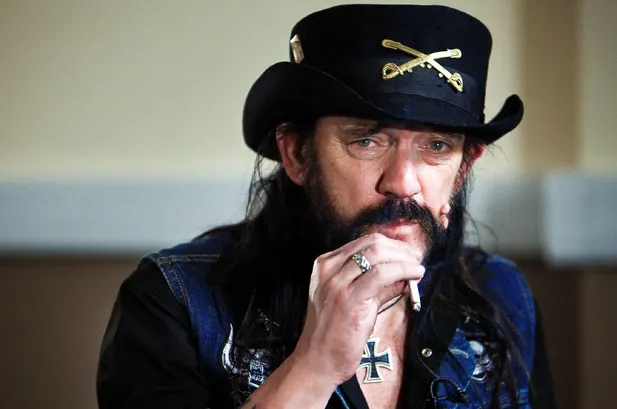
Lemmy’s hotel bed: an altar, a stage, a throne. Lemmy Kilmister, high priest of the Church of Motörhead, placed me there as if I were a supplicant, a guest, a fellow conspirator in the endless liturgy of rock ’n’ roll. He pressed cigarettes on me—his communion wafers—and the gesture was both casual and ceremonial.
Later, I told Hollywood scenester and Lemmy associate Tequila Mockingbird about it. She hadn’t been there, hadn’t seen the way Lemmy’s eyes carried both mischief and gravity, hadn’t felt the weight of his charisma pressing down like a bass riff. From the outside, she misjudged it, calling it seduction. But that was her projection, not the truth of the moment.
Because Lemmy’s seduction was not necessarily sexual. It was existential. It was about drawing you into his orbit, making you part of the mythos. He seduced everyone—men, women, journalists, fans—into the gravity well of Motörhead. To sit on that bed was to be baptized into his world, where the sacred texts were written in nicotine stains and the gospel was screamed through Marshall stacks.
At the time, I was Alex S. Johnson, rock journalist. I wasn’t out as transfemme yet. My identity was still a private constellation, a truth I carried but hadn’t named aloud. Lemmy didn’t know that part of me, and yet—looking back—I see how his gesture resonates differently through the lens of who I am now, as Kandy Fontaine.
Classic Lemmy: collapsing the distance between journalist and confidant, between interview and communion. He didn’t care about categories—man, woman, transfemme goddess, fan, or critic. He cared about whether you could hang, whether you could accept the offering, whether you could step into the myth without flinching.
The cigarettes were not just smokes. They were a bond, a way of saying: You’re one of us now. The bed was not an invitation to romance but to belonging. And in that moment, I understood the difference between being misjudged from the outside and being initiated from within.
Now, as Kandy Fontaine, transfemme goddess, I revisit that memory with new eyes. I see not just the ritual of inclusion but the radical acceptance embedded in it. Even though I wasn’t out, Lemmy’s gesture carried no judgment, no hesitation. He didn’t need me to explain myself. He simply welcomed me into the communion of rock ’n’ roll, and in retrospect, that welcome feels even more profound.