
THE BALAKAVI VISIONARY: AN INTERVIEW WITH MR. BALACHANDRAN NAIR C.S.
BY RUPA RAO
Introduction
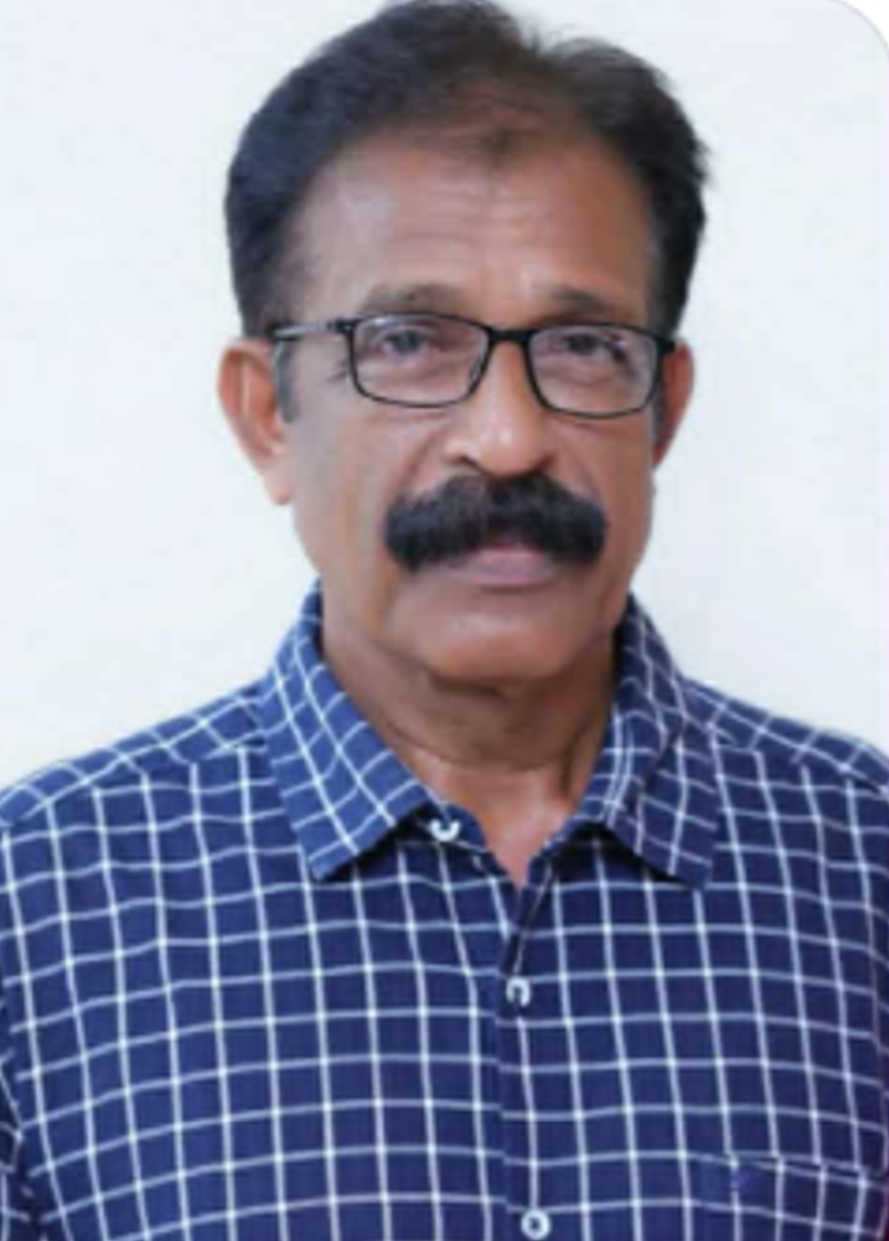
Some individuals quietly reshape the world around them, not through grand speeches or positions of power, but through persistent acts of love, conviction, and service. Mr. Balachandran Nair C.S. — poet, mentor, retired CRPF officer, and the driving force behind the BALAKAVI School Level New Poets Initiative — is one such figure.
From a childhood shaped by hardship to a life dedicated to nurturing young voices across India and beyond, his journey is a testament to resilience, creativity, and unwavering belief in the transformative power of literature. This interview captures his story, his mission, and the extraordinary movement he has built — one child, one poem, one dawn at a time.
INTERVIEW
Q1. What inspires you to focus your energies on encouraging children across states and countries to write and recite poetry?
BN: No one knows, nor has anyone recorded, who first stood facing which direction and witnessed the beautiful dawn. Yet people still gather on hilltops and seashores to watch the sunrise. I am not the sun, a hill, or the sea, but I am still able to help literary enthusiasts witness the rising of schoolchildren as new poets—reciting poems they have written for the first time in their lives. Appearing in colourful school uniforms, sounding like chirping birds. I simply capture a small bit of their talent, cupping my palms around it like a firefly, revealing it when you open your eyes in the early morning. The happiness on children’s faces when you look at them in awe keeps me going, inspiring me to collect another firefly for your next dawn.
Q2. When and how did you come up with this concept?
BN: The 14th of November, the birthday of India’s first Prime Minister, Pandit Jawaharlal Nehru, is celebrated as Children’s Day. I received an invitation to speak to the students of Government High School, Njekkad (Kerala) on that day in 2021. From childhood, I always wanted to be different. So I made a request to the school authorities: I would collect and send poems authored by a few living poets, and the students would recite them during the celebration. In return, I promised to gift each student a poetry book. They agreed, and I collected poems and books from my Facebook friends and forwarded them to the school. The programme was a grand success—many children reciting poems by living, established poets, and those poets watching online. More than a hundred books were gifted to the students and the school library. It was then that it occurred to me: if a student writes and recites their own poem, it will benefit them in many ways. That was the first seed, and I decided to move forward with the idea.
Q3. When did you step into your creative writing phase, and how did it happen?
BN: I am from Kerala, and my mother tongue is Malayalam. I learned Tamil by reading cinema posters. My last four years of schooling were in Madras. I was obsessed with cinema and watched almost every film released at that time. Cinema articles were the first things I read in newspapers. After joining the Central Reserve Police, I hardly had time to write. But the urge to write film scripts slept deeply within me. When I received promotions and had more time, I finally sat down to write scripts—mostly at night. I wrote two or three and approached several well‑known studios between 1990 and 1992. There were promises, but nothing worked out. Later, I discovered that one of my scripts had been made into a film without credit. I ran out of the theatre crying. The same thing happened again with another script in Malayalam. That film won National and State Awards. Though devastated, I gained confidence that I can write. But I didn’t write again for fifteen years.
Q4. What is your family background?
BN: My father served in the British Indian Military. During World War II, he deserted the camp with a few friends to join the Indian Independence Movement and the INA. After independence, he returned home and became a hardcore Communist. He lost everything fighting court cases but ensured we never starved. None of us could study beyond matriculation. I lost my father in 1999 and my mother in 2004. I am from Attingal, Kerala. I married in 1977 and have two daughters, aged 46 and 44. The elder is a homemaker; the younger is a Headmistress. Both have two children each. My eldest grandchild works in IT; the others are studying.
Q5. Who inspired your love for poetry?
BN: I began using Facebook in 2016. Poet Anushka Sharma, a Punjabi settled in South Africa, was my first Facebook friend. I commented humorously on her poems, and she often said my comments outshone her writing. One day she insisted I write a poem myself. I wrote my first English poem at the age of sixty‑six.
Q6. How did you juggle writing and your career?
BN: In my early days as a soldier, I had no time or space to write. But I had access to a library and read extensively. Later, after promotions, I wrote at night. Writing film scripts was my passion.
Q7. Does anyone in your family follow in your footsteps?
BN: My youngest grandchild, Ashwin B. Nair, now fourteen, writes better than me. He published his first poetry anthology Darling Doodles in 2023 and his second, Dwelling Desires, in 2025. He attended online poetry meets with me and received appreciation from veteran poets. Now in high school, he writes during vacations.
Q8. What role does your wife play in your mission?
BN: My wife, Maheswari Amma, is a devoted homemaker. She constantly worries about my health, which suffers because I skip meals, drink little water, and hold my urine during school visits. I have undergone multiple renal stone surgeries and still undergo physiotherapy for a stiff neck caused by mobile‑phone use during the 2022 drive. As a pensioner, I spend much of my pension on travel and project expenses. She endures my endless phone calls and irregular routines without complaint. Her worries are justified… but I am not obedient. I have work to do—for the children. My dream is to give her one day free from my painful aaahhhs and woooohs.
Q9. Who supported you when you began, and who supports you now?
BN: The HaVen International literary platform, founded in 1999, was my first base. I began introducing schoolchildren through it on 1 January 2022. I contacted hundreds of poets worldwide and collected their biodata and simple poems for children to recite. The idea clicked. The 2022 programme ran for 365 days and created world records for:
· 407 New Poets introduced
· 357 living poets featured
· 87 countries involved
Certificates, prizes, and an annual function followed. After a break due to health issues, I revived the project in 2025, expanding it to include differently abled children. With HaVen inactive, I partnered with the International Academy of Ethics (IAE), led by Dr. Jernail S. Anand. The 2025 programme is broadcast daily through IAE and 21 global literary platforms.
Q10. Tell me about the children involved.
BN: Every child is a gem. In BALAKAVI, most New Poets are under ten. One school in Bangalore—East West Public School—has produced 92 New Poets, thanks to teacher Grace Sitharaman. As of 24.12.2025, 287 New Poets have been introduced in 152 days. Adding the 2022 drive, the total is 694. If all schools had cooperated, the number would be in the thousands.
Q11. What do you envision next?
BN: I run BALAKAVI single‑handedly. It is a massive daily task. If a global body that values literature, education, and peace recognizes this effort, it would fulfil my mission. Such recognition would inspire literary communities worldwide to think and act differently in a rapidly changing world.
Q12. What do you enjoy reading and writing?
BN: I love detective and fiction novels—Robert Ludlum, Stephen King, Ken Follett, Frederick Forsyth, Alistair MacLean, Wilbur Smith, Irving Wallace. I write Malayalam short stories and English poems, often with unexpected twists.
Q13. Anything more you’d like to add?
BN: I want to bring differently abled children into the limelight. Many parents hide them from society. I want to change that. And I wish I could give my wife a peaceful day… but I know that may remain a dream.
Q14. How did your partnership with IAE begin?
BN: I was introduced to IAE and its Director, Dr. Jernail Singh Anand, by Dr. Molly Joseph. Dr. Anand supported BALAKAVI wholeheartedly. He visited Kerala twice—once to distribute prizes to 100 students, and again with international scholars to meet New Poets. IAE broadcasts the programme daily, followed by 21 global platforms.
Q15. Any influencers or heroes you follow?
BN: My heroes are the children. They are like honey bees—buzzing, gathering nectar, never stinging, always singing. I simply help extract honey from their writings for the world to taste.
Q16. What dreams remain?
BN: I have published seven books—five poetry anthologies, one Malayalam short‑story collection, and one translated anthology. My poems appear in 92 books. One poem was translated into 89 languages. My dream is to continue guiding children to write and publish their own books.
* Bio of Mr. Balachandran Nair C.S.**
Mr. Balachandran Nair C.S. is a retired CRPF officer, poet, mentor, and the visionary behind the BALAKAVI School Level New Poets Initiative. Born in Attingal, Kerala, he overcame early hardships to become a passionate advocate for children’s literary expression. His work has introduced hundreds of young poets to the world, bridging cultures across 87 countries. A multilingual writer and translator, he has published seven books and contributed to over ninety anthologies worldwide. His mission remains simple yet profound: to nurture young voices, especially those often overlooked, and to spread literature, peace, and hope through the innocence of children.
Closing Note
Some people plant trees whose shade they will never sit under. Mr. Balachandran Nair plants poets.
Through his unwavering dedication, he has created a movement that transcends borders, languages, and limitations. His work reminds us that the future of literature does not lie in grand institutions, but in the small hands of children holding their first poem.
May his journey continue to inspire generations — and may the dawn he brings to young minds never fade.
Rupa Rao holds an MBA and a Law degree. She serves as an administrator at the Literary Warriors Group and as Chief Coordinator for the International Academy of Ethics. Her writings appear in global poetry anthologies, magazines, and literary platforms. She balances writing with hosting poetry sessions and author chats online. A lover of nature walks and yoga, she continually seeks to nurture her soul. She has completed an eminent author’s biography and has co‑authored, curated, and edited seven poetry anthologies and one prose work. She has also edited a novella and three poetry collections for writer friends.