
A film project on film history legend Billy Wilder
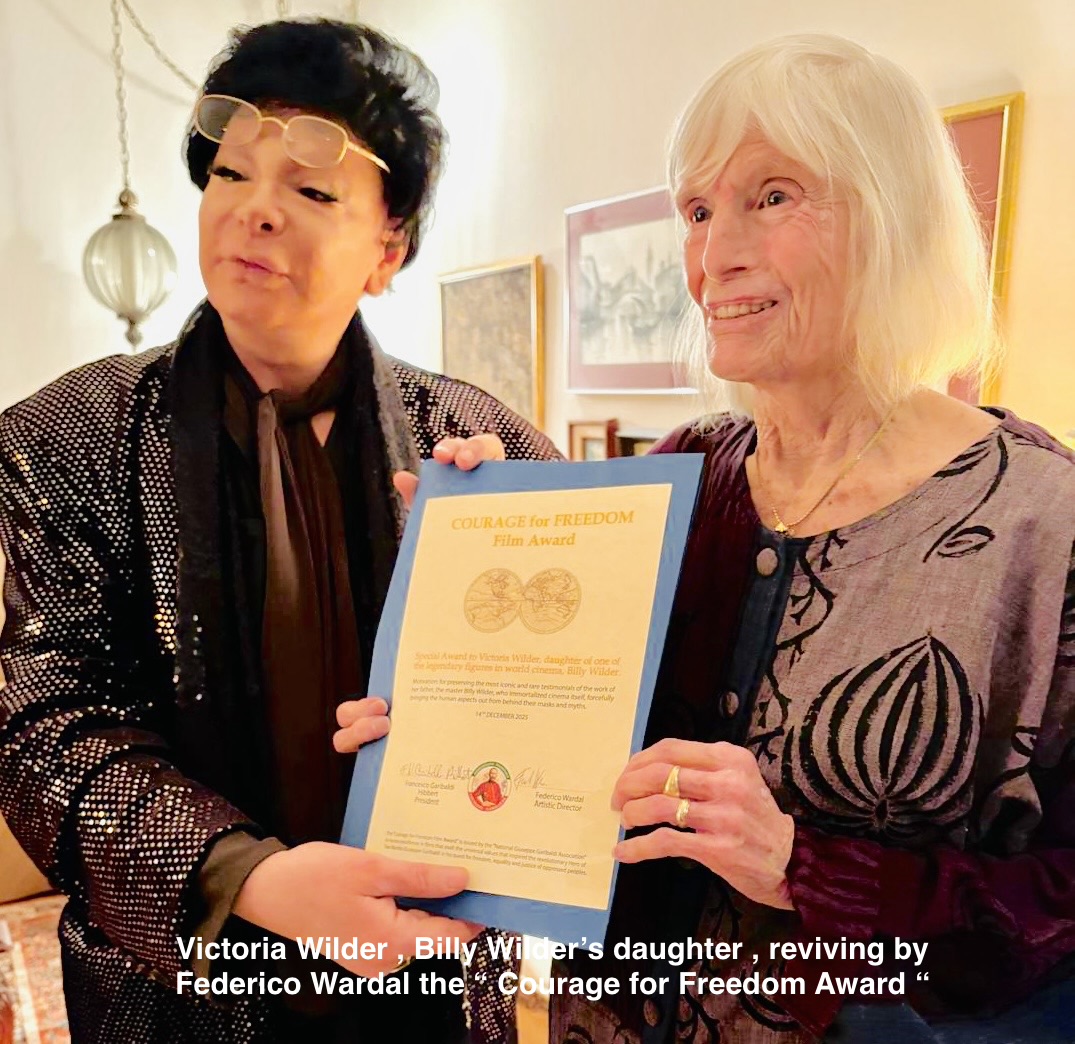
Victoria Wilder, his daughter, was awarded the “Courage for Freedom Award”
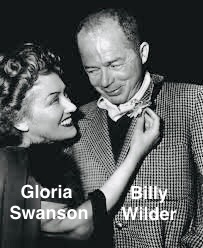
I met Billy Wilder with Gloria Swanson in Hollywood on my birthday, January 24, 1974.
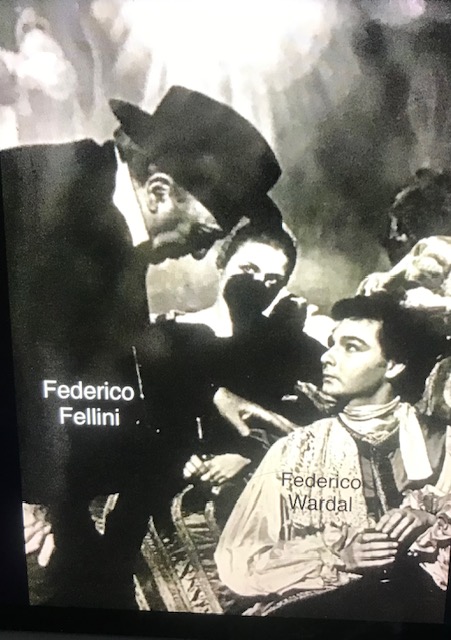
I told him that I had postponed my first meeting in Rome with Federico Fellini, scheduled for the same day.
Billy Wilder observed me carefully, as if his eyes were a camera: he wanted to understand my true essence, revealing an urgency, since, perhaps, he wanted to be the first great director to discover me, before my meeting with Fellini.
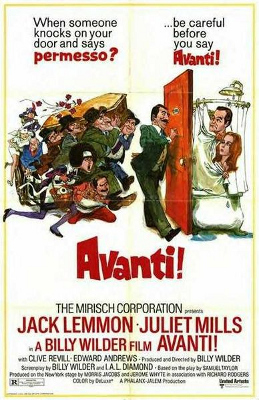
Wilder had filmed, only two years earlier, “Avanti!” with Jack Lemmon, his first film in Italy, in Ischia and Sorrento, and since I was Italian by birth, the conversation shifted to this film, but without Wilder giving up on his intention to decode my essence, with his increasingly “investigative” gaze.
Although very young, I had a fairly precise idea of what elements of my personality interested Wilder and which later interested Fellini.
In this scenario, Gloria Swanson had limited herself to mentioning Marlene Dietrich, who had introduced us.
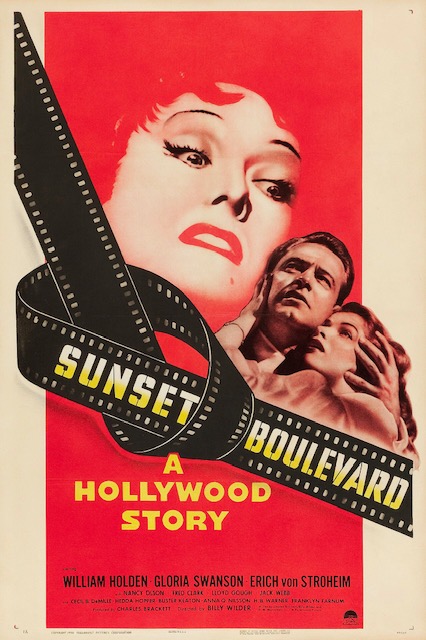
We were at Paramount Pictures, and can you imagine that nothing happened related to the famous scene in “Sunset Boulevard” in which everyone recognizes “Norma Desmond,” the “forgotten” silent film diva played by Swanson in Wilder’s film?
Something quite similar to that scene happened, due to Swanson’s long absence from Paramount, including that of Wilder, whose last film with Paramount Pictures had been “Sabrina” with Bogart, Hepburn and Holden, ending a 12-year business relationship between him and the company.
Some people waved at Wilder and Swanson from a distance, and while Swanson reacted almost “without reacting,” Wilder responded to the greetings, without taking his eyes off me, to explore my slightest reaction.
And I couldn’t help but utter this sentence: “I’ll tell Fellini about what’s happening here now, but after we’ve known each other for a while.”
Wilder understood the “chess move” I had made and extended his hand towards mine, appreciating the ambiguous “subtlety” of my statement.
Swanson, expected this reaction from Wilder, observed everything with detachment and a certain irony.
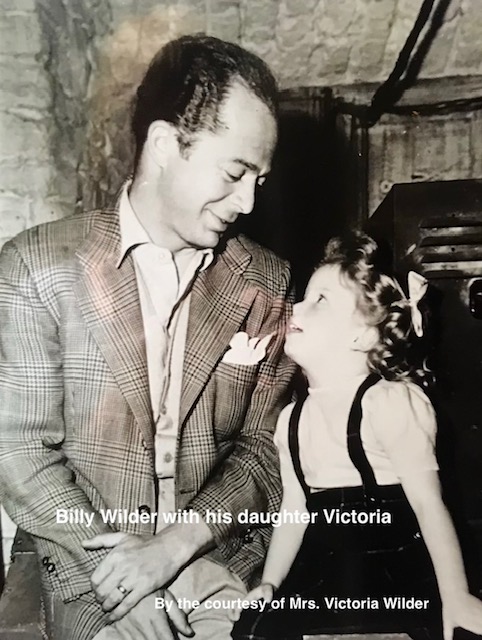
A few days ago, Victoria Wilder, Wilder’s daughter, pointed out a very important detail about her father: she told me that her father always appreciated being recognized and greeted, even though this was inevitable due to his enormous fame.
In short, this aspect of fame never bothered him.
The scene in the Paramount Studio from his film “Sunset Boulevard” was always within him, and Wilder deliberately made that scene immortal, since, I understood, it embodied himself and the essence of cinema.
During the truly incessant greetings from the Paramount staff, being Italian, I was offered a “cappuccino,” and Wilder, in response to what I had said earlier, told me: “Federico, Fellini will immediately adore you if you ask him for a ‘cappuccino ‘ because you’ve created a scene that, if I had seen it, I would have included in ‘Sunset Boulevard’ . Yes, from how you picked up the cup, to when you brought it to your mouth to sip the ‘cappuccino’.”
Obviously, we all laughed.
Beneath that sentence, there was something much broader, which I will include in the film about him. Yes, I am proposing to make a film about Wilder, since I am building a mosaic with the pieces of memories I have of him, added to what Victoria Wilder told me about her father a few days ago, on my birthday.
Victoria Wilder , introduced to me by Lady Silvia Gardin , was delighted to receive the “Courage for Freedom” award from my hands, created by Francesco Garibaldi, a descendant of the hero Garibaldi, which commends Mrs. Victoria, a great collage artist, for having had the tenacity and perseverance to collect rare and precious testimonies about her father, the only one who had the courage to reveal the true identity of the Olympus of fame: Hollywood.
But there is very important news that has just recently emerged: after the death of actor Gianfranco Barra, part of the cast of Wilder’s film “Avanti,” the only Wilder film shot in Italy, the entire film archive was given by Barra’s heirs to Graziano Marraffa, president of the Italian historical film archive.
This archive contributes to the rediscovery of the celebrated director and gives more urgency to my initiative to make a film about him, which, by depicting Hollywood, clearly illustrates the dangers faced by anyone who falls victim to the most popular obsession of our times: fame.
Pingback: Synchronized Chaos’ First February Issue: Paying Attention | SYNCHRONIZED CHAOS