
Enhancing Women’s Employment and Entrepreneurship – A Factor of Socio-Economic Development
Today, women’s active participation plays a crucial role in ensuring the sustainable development of society, the growth of the economy, and the well-being of families. Women’s active involvement in the labor market not only increases their personal income but also expands the country’s economic potential and contributes to job
creation. Therefore, it remains one of the most important social issues.
The Importance of Increasing Women’s Employment
Women’s employment is closely linked to their social activity, economic independence, and growing status in society. An employed woman:
Contributes to the economic stability of her family;
Creates opportunities for raising healthy and educated children;
Participates actively in social life;
Realizes her talents and abilities.
Furthermore, the effective utilization of women’s labor leads to an increase in the number of skilled professionals in the labor market.
Women’s potential is especially high in fields such as education, healthcare, services, handicrafts, and innovation.
Entrepreneurship – Expanding Opportunities for Women
In recent years, special attention has been paid to the development of women’s entrepreneurship.
Starting their own businesses allows women to:
Achieve financial independence;
Work in areas of personal interest;
Create additional employment opportunities;
Strengthen their social engagement.
Small business and family entrepreneurship, in particular, serve as favorable directions for women living in rural areas.
Traditional and profitable activities such as tailoring, cooking, livestock breeding, carpet weaving, gold embroidery, and needlework remain key sources of income for women.
State Support for Women’s Development
To support women’s empowerment, the following measures are being implemented:
Organization of vocational and professional training courses;
Provision of preferential loans, subsidies, and grants;
Implementation of projects enabling remote work;
Establishment of business advisory centers;
Introduction of special programs for socially vulnerable women.
These initiatives are creating a solid foundation for women’s active participation in the economic sphere.
Challenges and Solutions
However, in certain regions, several challenges persist in increasing women’s employment:
Insufficient qualifications and education;
Limited access to financial resources;
Social stereotypes and psychological barriers;
Time constraints due to family responsibilities.
To overcome these barriers, it is essential to:
Provide women with training in modern professions;
Develop their entrepreneurial skills;
Expand remote work opportunities;
Strengthen mentorship and advisory systems;
Promote gender equality within families.
Conclusion
Women’s employment and entrepreneurship are vital indicators of social progress.
By supporting women economically:
Family welfare is strengthened;
Poverty rates decline;
New jobs are created;
The national economy develops sustainably.
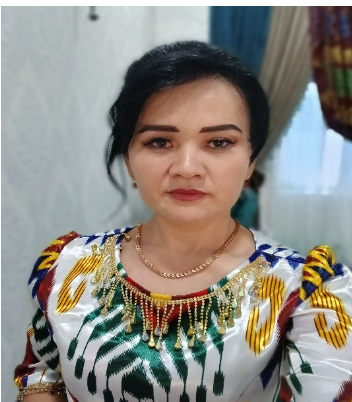
Abdiyeva Mahbuba Rahmiddinovna was born on September 22, 1989, in Nishon district, Kashkadarya region. She studied at secondary schools No. 31 and No. 11 in her district, and later graduated from the Faculty of Natural Sciences at Qarshi State
University, majoring in Geography (2013–2017). She is married. From 2019 to 2022, she worked as an educator at Preschool No. 23 and as a teacher at Secondary School No. 11 in Nishon district.
Since 2022, she has been serving as the Women’s Activist of the Paxtaobod and Jalajin neighborhoods of Nishon district, Kashkadarya region. She is currently learning English and Turkish. Her articles titled “Developing Beekeeping in Uzbekistan” and “Uzbek National Handicrafts” have been published. She actively participates in ecological projects and is a member of the Association of Artisans. Her future goals include pursuing a master’s degree at a foreign university, working in the field of management, establishing a handicraft center and assisting in the legalization of women entrepreneurs’ activities.