
THE IMPACT AND IMPORTANCE OF ARTIFICIAL INTELLIGENCE IN THE PROCESS OF LEARNING ENGLISH
Author: Jumanazarova Nafisa
Email: davlatmuradovna@gmail.com
ORCID:0009-0001-5442-4349
University:National university of Uzbekistan
Field: Foreign language and literature
Annotation: This article discusses the role of artificial intelligence in learning English. The topic is relevant, as it was chosen due to the impact of AI tools on educational processes amid the development of digital education. The aim of the article is to analyze how AI technologies can enhance the efficiency of language learning. The study employed analytical and comparative methods. The results indicate that artificial intelligence helps to individualize language learning and increase motivation, which makes the educational process more effective.
Keywords: artificial intelligence, digital education, individualization, motivation.
Annotatsiya: Ushbu maqola sun’iy intellektlarning ingliz tilini o’rganishdagi roli haqida yoritilgan. Mavzu dolzarb bo’lib, raqamli ta’limning rivojlanishi AI vositalarining o’quv jarayonlariga ta’siri tufayli tanlangan. Maqolaning maqsadi – AI texnologiyalari til o’rganish samaradorligini qanday oshirishini tahlil qilish. Tadqiqotda tahlil va solishtirma metodlaridan foydalanilgan. Natijalar shuni ko’rsatadiki, sun’iy intellekt til o’rganishni individualizatsiyalash va mativatsiyani oshirishga yordam beradi, bu esa ta’lim jarayonini samarali qiladi.
Kalit so’zlar: sun’iy intellekt, raqamli ta’lim, individualizatsiyalash, mativatsiya.
Аннотация: В данной статье рассматривается роль искусственного интеллекта в изучении английского языка. Тема актуальна, так как была выбрана в связи с влиянием инструментов ИИ на образовательный процесс в условиях развития цифрового образования. Цель статьи — проанализировать, как технологии ИИ могут повышать эффективность изучения языка. В исследовании использовались аналитический и сравнительный методы. Результаты показывают, что искусственный интеллект способствует индивидуализации изучения языка и повышению мотивации, что делает образовательный процесс более эффективным.
Ключевые слова: искусственный интеллект, цифровое образование, индивидуализация, мотивация.
INTRODUCTION
As is well known, in recent years digital technologies have been rapidly developing in the field of education, and tools such as artificial intelligence have been widely introduced in schools and universities. Especially in learning foreign languages, AI technologies play an important role. Of course, this makes language learning more convenient, effective, and engaging. Therefore, the role of artificial intelligence in language learning has become a highly relevant issue.
The significance of this topic lies in the fact that in the era of globalization, the English language is considered one of the main tools for professional development. For this reason, the demand for learning this language is increasing day by day. Traditional teaching systems are no longer able to fully meet everyone’s needs. Artificial intelligence, however, can organize the learning process according to the learner’s level of knowledge, learning speed, and interests.
However, it has also been observed that AI technologies do not always produce sufficient positive results in learning English. In many cases, they negatively affect students’ ability to think quickly and independently. The main purpose of this article is to analyze the role of artificial intelligence tools in learning English and to study the extent of their impact on the education system.
RESEARCH METHODOLOGY
This study was aimed at determining the effectiveness of artificial intelligence in learning English and was conducted using a mixed-methods approach. This method made it possible to examine the issue from multiple perspectives. The study analyzed the level of use of AI tools and their impact on language learning outcomes through both qualitative and quantitative data.
The main focus of the research was to identify how effective artificial intelligence tools (such as ChatGPT, Duolingo, ELSA Speak, and others) are in the process of learning English compared to traditional teaching methods. For the study, 100 students majoring in English at the Faculty of Foreign Philology of the National University of Uzbekistan were selected as participants.
Within the scope of the research, a survey was conducted to address the following questions: How useful are AI technologies in developing language skills such as listening, speaking, and grammar? Do students consider these technologies more effective than traditional education methods?
Data were collected through questionnaires, interviews, and observation. Through surveys and interviews, students shared their opinions on how frequently they use AI tools and how convenient they find them. The observation process allowed for the analysis of the practical application of AI technologies during lessons.
The effectiveness of the study was evaluated based on test results, vocabulary development, and speaking activity.
Literature Review
The integration of artificial intelligence technologies into the process of teaching English has led to significant changes in instructional methodologies. Studies conducted worldwide highlight the role of AI tools in developing language skills, organizing personalized learning, and increasing student engagement. In addition, AI-based systems for text translation, chatbots, and automatic analysis of written texts are considered effective tools in English language learning.
In a 2020 study conducted by Li and his colleagues, it was found that students’ pronunciation improved significantly through the use of AI-based speech recognition systems. These findings are consistent with Chen’s research, which demonstrated that artificial intelligence enhances learners’ oral fluency and accuracy. Furthermore, in his studies on digital education and artificial intelligence, Ben Williamson emphasizes that AI-based applications (such as ChatGPT, Gemini, Grammarly, and others) make the learning process more flexible and tailored to individual needs. According to him, artificial intelligence presents materials in accordance with learners’ proficiency levels, thereby significantly improving language learning effectiveness.
At the national level, Uzbek scholars have also been conducting research on the implementation of artificial intelligence technologies in language education. For example, studies published by Dilrabakhon Akhmedjonova and Shahnoza Hasanova analyze the role of AI tools in the process of learning English, along with their advantages and pedagogical limitations. In addition, an experimental study carried out by Zarina Sherali qizi Murodova showed the positive impact of AI-based pronunciation analysis applications on students’ pronunciation development.
At the same time, some researchers point out that the excessive dominance of AI technologies in education may limit the role of teachers and reduce social interaction. In their view, AI tools should be used as supportive instruments in education, while the human factor should remain central.
Research results
During this study, the performance of students learning English through artificial intelligence tools was analyzed. The collected data indicated that students who regularly used AI-based applications achieved higher results compared to those who followed traditional learning methods. In particular, noticeable improvement was observed in pronunciation, speaking fluency, and vocabulary development.
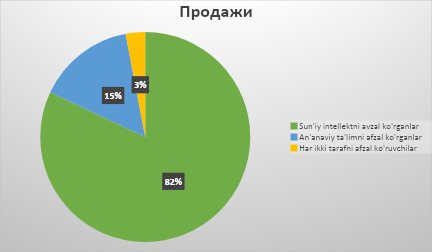
According to the statistical analysis, the test scores of the group using AI tools improved by an average of 18–25 percent. The survey results revealed that 82% of students stated that artificial intelligence applications made language learning more interesting and easier, while 15% preferred learning through traditional teachers. The remaining 3% indicated that it was not important who or what they learned from, as long as knowledge was gained.
Furthermore, classroom observations showed that students completed independent exercises more frequently and corrected their mistakes more quickly when using AI technologies.
Discussion
The obtained results demonstrate that artificial intelligence technologies have a high level of effectiveness in the process of learning English. AI-based applications play a significant role in increasing students’ motivation to learn languages, expanding opportunities for independent practice, and developing communicative skills. The analysis revealed that artificial intelligence creates a personalized learning environment, provides immediate feedback, and enhances learning efficiency through interactive exercises.
At the same time, some students prefer direct interaction with traditional teachers, which indicates that the human factor still holds considerable importance in the educational process. Additionally, 3% of the participants stated that the source of education was not important, emphasizing that motivation to acquire knowledge is the key factor. This suggests that it is not technology itself, but rather learners’ intrinsic motivation that plays a decisive role in the learning process.
Overall, the findings of this study confirm that integrating artificial intelligence technologies into English language education serves as an effective tool for improving the quality of the learning process. Therefore, it is essential to use AI capabilities wisely in educational practice, align them with pedagogical approaches, and develop digital learning environments tailored to students’ needs. This approach not only enhances language learning outcomes but also contributes to the development of learners’ independent study skills and future professional competencies.
Conclusion
This study was aimed at examining the impact of artificial intelligence technologies on the process of learning English and identifying the effectiveness of modern digital tools in education. The findings indicate that AI-based applications enhance student engagement by making language learning more interactive, convenient, and personalized. These technologies play a crucial role in providing immediate feedback, expanding opportunities for independent practice, and developing communicative skills.
At the same time, the importance of the teacher’s role in the educational process remains significant. The results suggest that artificial intelligence technologies are most effective when integrated with traditional pedagogical approaches rather than used in isolation. This combined approach not only improves the quality of education but also helps develop learners’ critical thinking, responsible learning habits, and conscious use of modern technologies.
Overall, the implementation of artificial intelligence technologies in English language education represents a key direction in the modernization of teaching and learning processes. It broadens students’ learning opportunities and increases educational effectiveness. Therefore, further research is recommended to explore the impact of AI tools across different educational levels and to analyze their psychological, pedagogical, and social aspects in order to develop more advanced digital education models.
References
1.Chen X., Liu G., Zhang Y. Virtual tutors and speaking fluency in English language learning. — New York: Educational Technology & Society, 2018.
2.Smith J., Anderson L. The Impact of Artificial Intelligence on English Language Learning. — New York: American Journal of Pedagogical and Educational Research, 2022.
3.Brown T., Wilson M. The Use of Artificial Intelligence in English Learning: Teachers’ and Students’ Perceptions. — New York: Journal of Language and Education, 2021.
4.Murodova Z. Sun’iy intellekt asosidagi talaffuz tahlilining ingliz tili fonetikasini o‘rganishga ta’siri: O‘zbek EFL o‘quvchilari misolida. — Moskva: Obrazovanie Nauka i Innovatsionnye Idei v Mire, 2025.
5.Murodova Z., To‘xtayev A. Sun’iy intellekt asosidagi talaffuz tahlilining ingliz tili fonetikasini o‘rganishga ta’siri. — Toshkent: Zamonaviy filologiya tadqiqotlari jurnali, 2023.
6.Abdusamadova M. Raqamli texnologiyalar asrida sun’iy intellekt orqali talabalarni ingliz tilida gapirishni o‘rgatish. — Toshkent: World Scientific Research Journal, 2025.
7.Kamolova F. O‘zbekiston sharoitida sun’iy intellekt texnologiyalari yordamida ingliz tilida gapirish ko‘nikmalarini o‘rgatish. — Toshkent: World Scientific Research Journal, 2025.
Pingback: Synchronized Chaos’ Second February Issue: Sound and Fury, Signifying Everything | SYNCHRONIZED CHAOS