
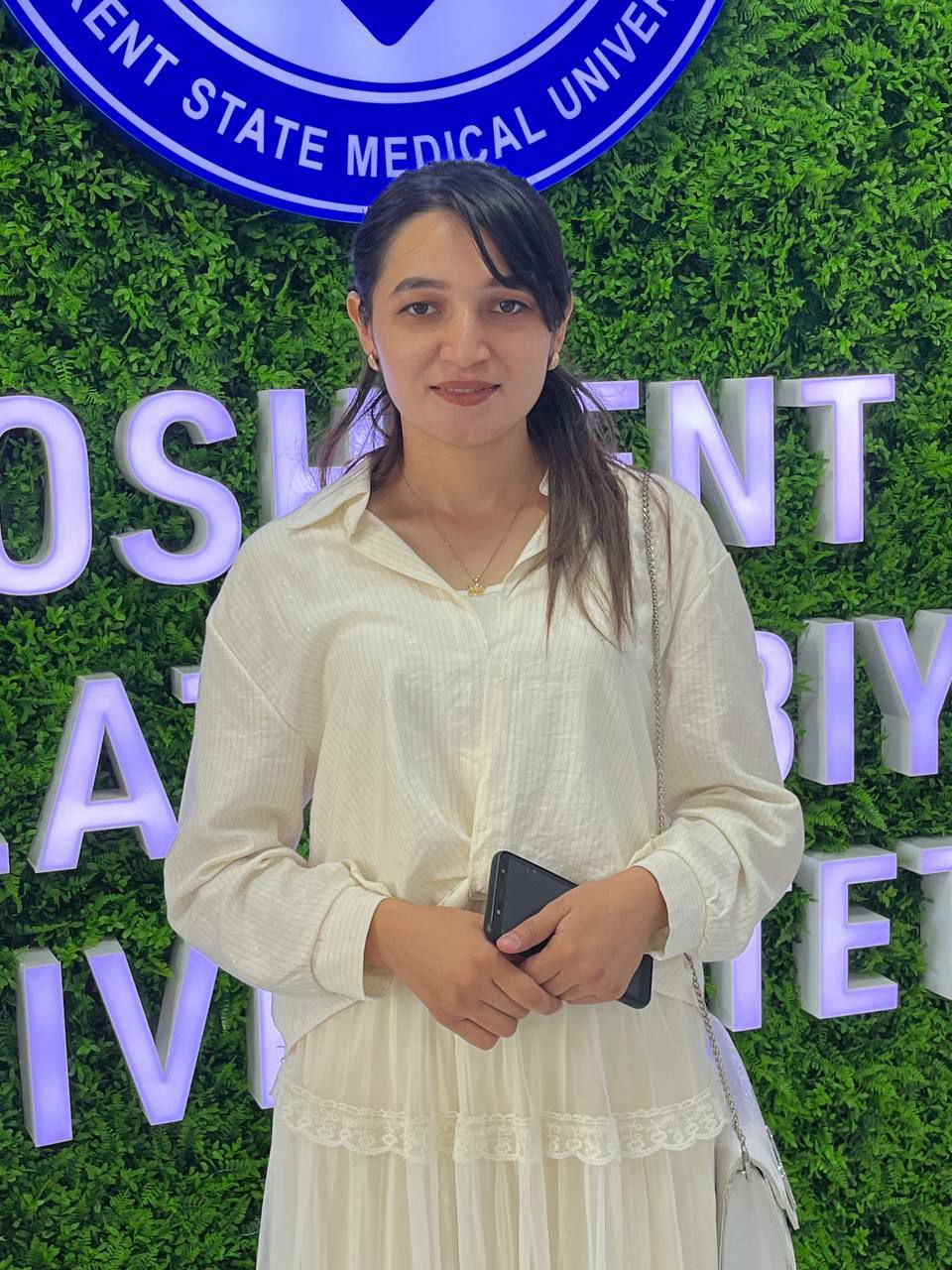
O‘roqova Nargiza was born on March 26, 2001, in Ishtixon district of Samarkand region. She is currently a first-year grant student at Tashkent State Medical University.
Her work experience includes teaching Biology at Secondary School No. 33 in Ishtixon district of Samarkand region during the 2024/2025 academic year.
She graduated from the Faculty of Biology at Jizzakh State Pedagogical University in the 2020/2024 academic years.
She is fluent in English, Russian, Arabic, and Turkish.
CAUSES AND ANALYSIS OF THE INCREASE IN ALLERGIC DISEASES IN CHILDREN
O‘roqova Nargiza Sherali qizi
First-year student, Group 102-A, Faculty of General Medicine
Tashkent State Medical University
Abstract
Allergy is considered one of the most common health problems among children. Allergies arise due to various factors and are largely associated with parental supervision. This article discusses the causes of allergies, as well as measures for their prevention and treatment.
Keywords
Allergy, dust, children, health, genetic predisposition, environment, medicine, parents, medications.
Introduction
In recent years, allergic diseases among children have become increasingly common, including allergic rhinitis (nasal allergy), bronchial asthma, atopic dermatitis (skin allergy), and food allergies. The prevalence of these conditions has been steadily increasing over the years. This trend is evident not only in medical statistics but also in everyday life.
Main Part
Allergy is a condition characterized by the body’s hypersensitivity to certain environmental factors and is manifested by the production of antibodies in response to antigens. These antigens bind to antibodies and cause abnormal reactions in the body.
Causes of Allergies
Food Allergies
Food allergies are among the most common types of allergies in children. The most frequent allergenic foods include milk, nuts, eggs, fish, melon, wheat, mung beans, and soy. Symptoms may include skin rash, itching, abdominal pain, diarrhea, and in rare cases, anaphylaxis (a severe allergic reaction resulting from increased sensitivity to antigens entering the body).
Respiratory Allergies
These occur due to the inhalation of allergens such as house dust, animal fur, and mold spores. The main symptoms include runny nose, coughing, sneezing, itching, and redness of the eyes.
Drug Allergies
Some children may develop allergic reactions to antibiotics, antipyretic drugs, or vaccines. Symptoms may include skin rash, swelling, and redness.
Contact Allergies
Skin allergies occur upon contact with allergens such as chemicals and metals. They are characterized by redness, rash, and itching of the skin.
Insect Bites
Reactions caused by bee, wasp, or mosquito stings can range from mild redness to severe swelling and anaphylactic shock.
In addition, allergies may be caused by hereditary factors, diseases of internal organs (such as the stomach, liver, and kidneys), frequent infectious diseases, and intestinal parasites.
Diagnostics
To select appropriate treatment for allergies, it is necessary to identify the allergen through diagnostic methods. In many cases, eliminating contact with the triggering factor is sufficient to relieve symptoms.
Diagnostic Methods for Allergies
Skin tests: Allergens are introduced through scratches or injections. Reactions such as redness and swelling may appear within half an hour. Delayed-type reactions may also occur.
Blood tests: Used to determine IgE levels for diagnosing type I allergies.
IgE testing: Based on blood serum analysis and commonly used for detecting food allergies in children.
Blood tests are considered more accurate and safer. Specialized allergy centers successfully conduct such diagnostic studies.
Prevention
Prevention of allergies involves avoiding contact with allergens and eliminating products that trigger allergic reactions. Regular wet cleaning of the home, as well as removing carpets and textile items, is important. Strengthening and hardening the body is also recommended.
Conclusion
Allergies in children are serious but manageable conditions. Understanding the types of allergies, as well as methods of prevention and treatment, helps parents provide a safe and comfortable life for their children. Most importantly, timely consultation with specialists and adherence to their recommendations are essential.
References
Nishonboyev K.N., Hamidov J.H. Medical Biology and Genetics. Tashkent, 2005.
Mavlonov O., Tilavov T., Aminov B. Biology. Tashkent, 2019.
Med24.uz — Allergy: symptoms, diagnosis, and treatment.
Doriclub.uz — Types of allergies in children: prevention and treatment.
Pingback: Synchronized Chaos First March Issue: Fingering the Spines | SYNCHRONIZED CHAOS