
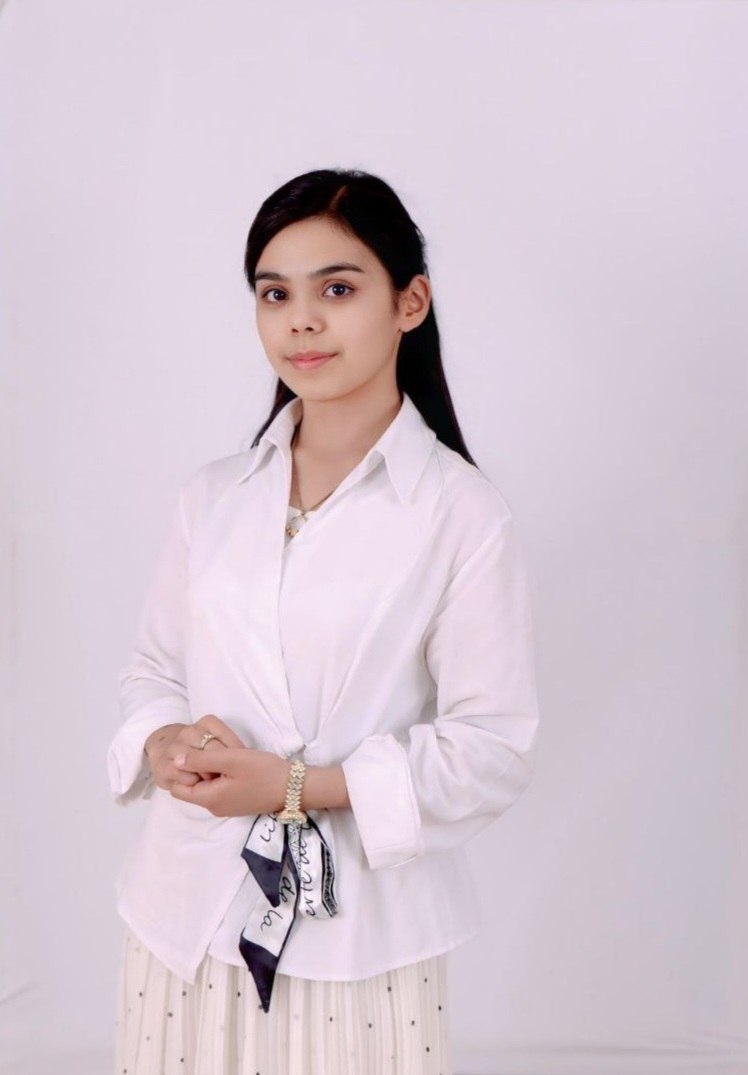
Masharipova Yorqinoy Ravshanbek qizi. Student of the Urgench State Pedagogical University, Philology Department.
SYMBOL OF COMPASSION
There is such a being in this world that no matter how much one writes or speaks about her, it will never be enough; there will always remain words left unsaid. Because a mother is not something that can be fully described by words — she is a sacred presence understood by the heart, felt through emotion, and measured by a lifetime. A mother is the beginning of life and the continuation of humanity. As long as she exists, we are never alone; as long as she exists, humanity remains whole. Even before we come into this world, our mother lives together with us. The nine months during which she carries us beneath her heart are not merely a biological process, but a school of spiritual connection, patience, and self-sacrifice. Throughout these months, a mother swallows both her joy and her pain. From that very moment, she begins to live for a child not yet born. She gives up everything that could pose a danger to the life growing within her. The warmth and affection we feel from the very moment of our birth belong to our mother. Perhaps that is why our love for mothers has always been different from all other loves.
When speaking of the purest love in human life, nothing can compare to a mother’s love for her child. Her compassion and affection are so pure that they are free of conditions and calculations. She never expects a reward for everything she does for us from birth until maturity. Seeing her children happy is the greatest happiness for a mother. In this world, the only person who believes we deserve a better life than the one she herself lives is our mother.
It is truly difficult to imagine life without a mother. She loves us more than anyone else. When the time comes, she is ready to risk even her life for us and strives to never let us lack anything. She always offers us the best of everything: food, clothing, words, and love. Even if she wears old clothes herself, she considers the best worthy only of her children. Have you ever noticed that when food on the table is scarce, a mother’s stomach is always “full”?
According to research, the strongest pain in the world is the pain a mother experiences while giving birth. And she endures it. As infants, we cry at night due to natural processes, and she endures that too. When we fall ill, her soul suffers even more than ours. As if that were not enough, she spends sleepless nights caring for us, forgetting rest and even herself — and she endures all of this for her children. But what about us? What have we done, and what are we doing, to repay those sleepless nights? We simply claim that we are not understood. Yet did she not understand us when we were infants and unable to speak? Was it not she who sensed our hunger and restlessness without a single word? Sometimes knowingly, sometimes unknowingly, we hurt her feelings, yet she is a mother — would she ever truly resent her child?
We often consider ourselves people of high self-worth. Let me explain this with an example. Imagine that we take care of a domestic animal, say, a puppy. We feed it, play with it, and when our affection overflows, we might even bathe it. Time passes, and it grows into a large dog. One day, it starts barking at us and, having learned from stray dogs, even tries to attack us. Naturally, we would beat it or chase it away, trying not to let ourselves be harmed. Now think about it: is a mother, who has suffered, forgotten her own dreams, and devoted the most beautiful years of her life to raising her child, truly deserving of harsh words or complaints from her children over trivial matters? What should we call the fact that she faces such situations not once but many times, swallowing her pain each time and continuing to give love as if nothing happened?
A mother is the only being whose patience knows no limits and whose love is unconditional. She endures pain, adapts to sleepless nights, passes every harsh word from her child through her heart, yet continues to give love. But this silence and endurance are not signs of weakness — they are signs of greatness.
We have no right to think that a mother’s patience is infinite. Every swallowed sorrow, every unspoken pain leaves a trace in her heart. A mother does not expect perfection from us; she expects humanity — a kind word, a moment of attention, and a respect that lasts a lifetime.
Therefore, let us value our mothers not after losing them, but while they are still alive. For success achieved without a mother’s blessing is empty, and a path walked without her prayers is barren. As long as a mother exists, there is a mountain standing behind us. Before that mountain collapses, recognizing its value is our greatest human duty.