
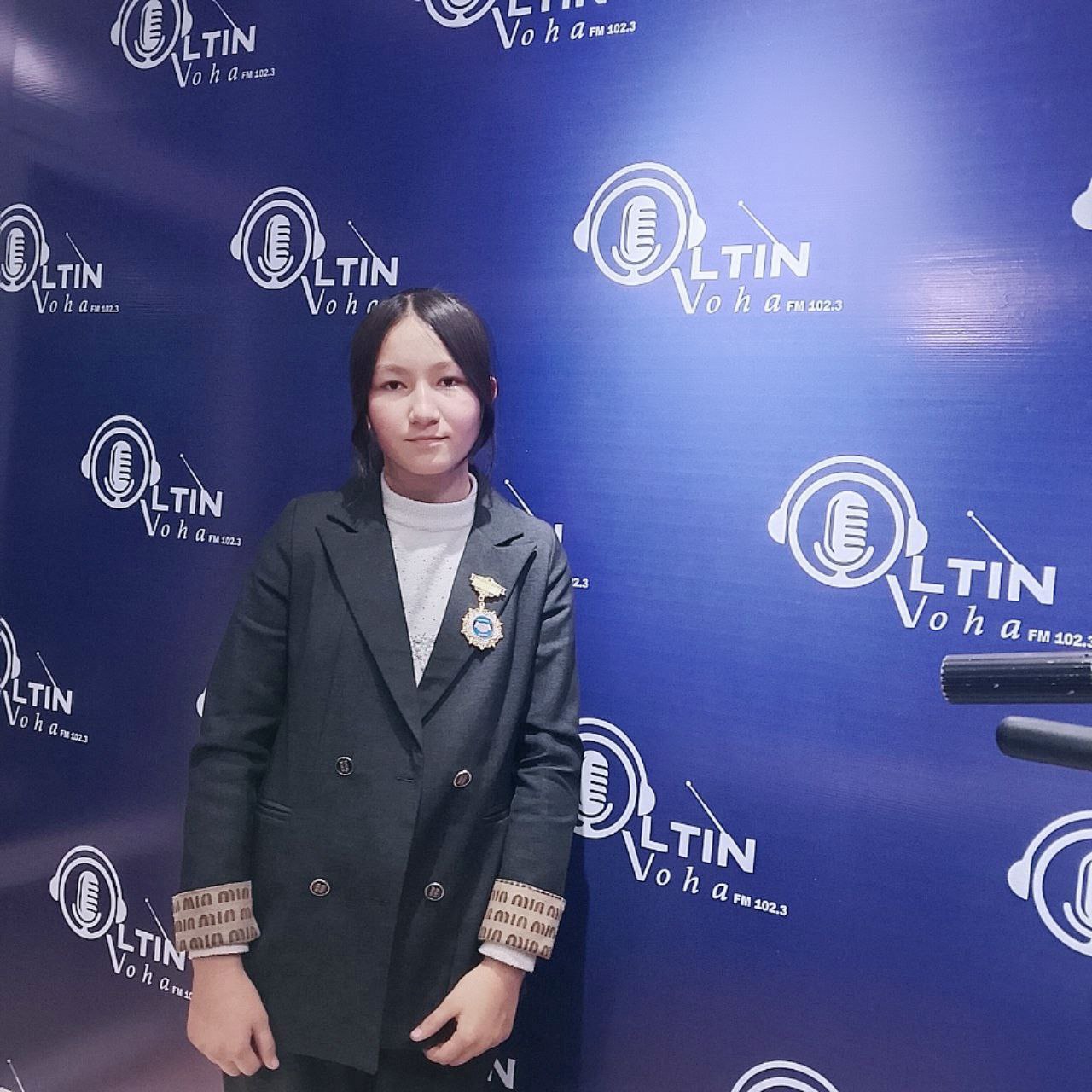
Abdusaidova Jasmina was born on July 20, 2011, in Gallaorol District of Jizzakh Region. She is a young creative talent and aspiring writer who continues to actively pursue her artistic work. She has participated in numerous competitions and events, winning prestigious first, second, and third places.
From an early age, she developed a strong passion for learning and has tested herself in various fields and disciplines. She is the recipient of the “Best Leader” nomination award.
Her creative works have been published several times in the international newspapers Classico Opine and Kenya Times. They have also been featured on international platforms such as Atunis Galaxy Poetry (Albania), Alessandria Today (Italy), and SynchChaos (United States).
She serves as an ambassador for three international organizations in India. Her creative works are indexed on Google.
She actively participated in the creative festival titled “Mosaic of Nations – 8 Countries, 1 Stage, 1 Heart,” where she won first place and was awarded the “Ambassador of Friendship” badge.
She is also a member of the Writers’ Union of Argentina.
Alisher Navoiy and His Literary Heritage: His Unparalleled Place in Uzbek Literature
Abstract
Alisher Navoiy is one of the greatest figures in the history of Uzbek literature. His творчество not only made an immense contribution to the development of the Uzbek language but also had a profound influence on world literature. This article explores Alisher Navoiy’s life, literary heritage, philosophical views, most famous works, and historical significance. It also analyzes how Navoiy’s творчество is perceived in the modern era and how his works influence the thinking and worldview of contemporary readers. Navoiy is examined as a poet, thinker, and statesman, and his role in today’s cultural and spiritual heritage is evaluated.
Keywords: Alisher Navoiy, Uzbek literature, poetry, Fuzuli, love, Sufism, historical heritage
Introduction
Alisher Navoiy (1441–1501) is recognized as one of the greatest poets and literary figures of Central Asia. Born in the city of Herat (present-day Afghanistan), Navoiy had an unparalleled influence not only on Uzbek literature but also on the development of the entire Turkic and Persian literary traditions. The deep philosophical thought, spiritual meaning, and poetic mastery found in his works have been studied for centuries. This article provides a detailed analysis of Navoiy’s contribution to literature and culture, as well as his life, works, and philosophical views.
Main Part
1. Alisher Navoiy: His Life and Personality
Alisher Navoiy was born in 1441 in Herat, which was part of the Timurid Empire. Raised in an intellectually rich family, he studied literature, philosophy, logic, astronomy, and religious sciences from a young age. Despite living during a period of political instability, he served as a minister in the court of Sultan Husayn Bayqara.
Although he was a statesman, he paid great attention to the development of art, science, and literature, supporting many scholars and poets. His personality harmoniously combined the qualities of a politician, poet, and Sufi thinker.
2. Navoiy’s Works: The Harmony of Poetry and Philosophy
Alisher Navoiy was an extremely prolific writer, and his works cover a wide range of themes, including love, morality, justice, enlightenment, and spiritual perfection.
His most famous work is Khamsa (“The Quintet”), a collection of five epic poems, which includes:
Hayrat al-Abrar (“Wonder of the Righteous”) – a moral and philosophical work discussing virtue and the spiritual principles of society.
Farhad and Shirin – an epic devoted to tragic love.
Layli and Majnun – a famous love story symbolizing divine love and spiritual madness.
Sab’ai Sayyar (“Seven Planets”) – a work about enlightenment, justice, and governance.
Saddi Iskandari (“The Wall of Alexander”) – a poem devoted to wisdom, politics, and leadership.
Navoiy’s mastery of language, thought, and genre has ensured that his works remain valued not only in his own era but also today.
3. Sufism and Philosophy: The Foundation of Navoiy’s Worldview
One of the most important aspects of Navoiy’s творчество is Sufi philosophy. Sufism is based on the ideas of spiritual purification, closeness to God, and the cleansing of the soul.
In his work Muhabbatnama (“The Book of Love”), the concept of love is interpreted not only as a feeling between people but also as a spiritual path toward reaching the Creator.
For Navoiy, true love is the path that leads the soul toward perfection.
4. Navoiy and the Uzbek Literary Language
Although Navoiy wrote in two languages—Persian and Turkic (Chagatai)—his greatest contribution was elevating the Turkic language to a high literary level. During a time when Persian dominated literary expression, he deliberately wrote in Turkic and demonstrated its rich expressive possibilities.
By doing so, he laid a strong foundation for Uzbek literature.
5. Navoiy’s Legacy in Modern Literature and Thought
Even today, Alisher Navoiy’s творчество has not lost its relevance. His works have been translated into many languages and are studied worldwide. In Uzbekistan, February 9 is celebrated annually as “Navoiy Day.”
His ideas about justice, compassion, knowledge, and love remain an invaluable spiritual heritage for modern society.
Conclusion
Alisher Navoiy was not only a poet but also a great thinker, statesman, and spiritual leader whose influence has endured for centuries. The poetic beauty, philosophical depth, and spiritual values in his works continue to inspire humanity to reflect and to cultivate self-improvement.
Navoiy’s heritage is an invaluable treasure of the Uzbek people and an integral part of world culture.
References
Navoiy, A. (2013). Khamsa (Five Epics). Tashkent: Akademnashr.
Navoiy, A. (2011). Hayrat al-Abrar. Tashkent: Gafur Ghulom Publishing House.
Navoiy, A. (2012). Lison ut-Tayr. Tashkent: Fan Publishing.
Sultonov, B. (2015). Alisher Navoiy and His Sufi Views. Tashkent: National Library of Uzbekistan.
Mahmudov, R. (2020). Alisher Navoiy: His Personality and Literary Heritage. Tashkent: Writers’ Union of Uzbekistan.
Komilov, N. (2001). Sufism. Tashkent: Movarounnahr.
Quronov, D. (2004). Introduction to Literary Studies. Tashkent: Akademnashr.
Ibrohimov, A. (2018). History of Uzbek Classical Literature. Tashkent: Fan and Technology.
Yoldoshev, M. (2016). Artistic Thinking in the Works of Alisher Navoiy. Tashkent: O‘qituvchi Publishing.
Karimov, I. A. (1997). High Spirituality — An Invincible Force. Tashkent: Manaviyat.