
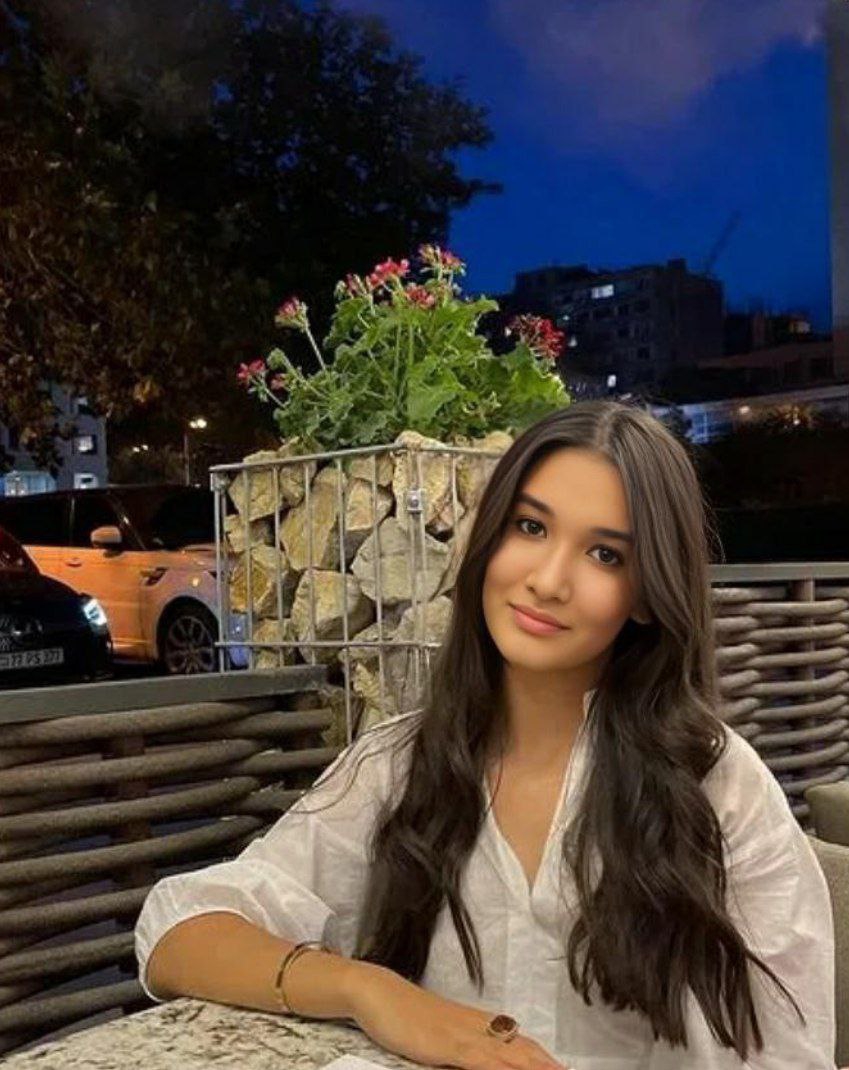
The Girl with the Silk Scarf
The family was all together. Everyone had gathered in one room, watching a TV series. The voices coming from the television, the laughter and cheerful chatter filled the room, as if to say that life was alive and warm in this house. The stove hummed softly, slowly chasing away the shadows of the cold night.
The girl was sitting there too. Her silk scarf fell gently over her shoulders, not setting her apart from the others—on the contrary, it made her look even more ordinary, even happier. Among people, she always smiled. That was why no one ever thought she might be carrying pain in her heart. No one. But in truth, her inner world was completely different. Inside her lived unspoken words, accumulated questions, nights without answers. She could not tell this pain to anyone. Even if she did, would they understand? She was not sure. Depression lived quietly within her—it did not shout, it did not cry, it simply pressed on her heart, slowly and relentlessly.
She gently twisted the edge of her silk scarf between her fingers. To her, this scarf was not just an accessory. It was a curtain. A delicate barrier between the happy face people saw and the ruined world inside her. Silk was her silence—hiding her pain. A funny scene appeared in the series. Laughter filled the room once again. The girl tried to smile too. The smile was there on her lips, but her heart could not reach it. In that moment, she felt a truth once again: sometimes a person can feel lonely even among the closest people. Sitting near the warm stove, she took a slow breath. The heat touched her face, yet the cold inside her remained. Still, seeing her family’s happiness brought a faint light into her heart. At least they were happy. Perhaps her silence, her patience, was for them.
The girl slightly lowered her head. Inside, she turned to the Creator. No sound came out, no words formed on her lips—because some prayers are spoken only by the heart. “I am enduring,” she said within herself. “I am still standing.”
She knew that tomorrow everything would not suddenly change. Pain does not disappear overnight. But in that moment, she felt one thing clearly: she had not let go of hope. The silk scarf rested quietly on her shoulders as she slowly closed her eyes. The warmth spreading from the stove felt as though it was fighting the cold inside her. She sensed a tiny—very tiny—spark burning in her heart. Perhaps it was that spark that would push her to live one more day.
The girl slowly opened her eyes. Laughter in the room continued. She adjusted her silk scarf and joined the others once again. Because sometimes, to keep living, a person chooses to look strong. And silk—that was her silent strength.
Mashhura Ochilova was born on August 14, 2001, in Sherobod district, Surxondaryo region, Uzbekistan.
She is a graduate of the Faculty of Philology at Samarkand State Institute of Foreign Languages, majoring in Korean and English philology.
Mashhura is an educator of Korean and English languages and a regional-stage participant of the prestigious Zulfiya State Prize competition.
She is the author of more than twenty international scholarly articles and has actively participated in academic presentations and conferences held in countries such as Qatar, Egypt, Turkey, Azerbaijan, and the United States. Her research papers have been translated into English and Turkish and published in international journals indexed on the Google Scholar platform.
Fluent in Korean and English, and proficient in Russian and Turkish, she demonstrates strong multilingual competence. Currently, she serves as the Director of the Yumyong Academy Online Learning Center, where she teaches nearly 200 students in Korean and English languages, contributing to cross-cultural education and linguistic development.