
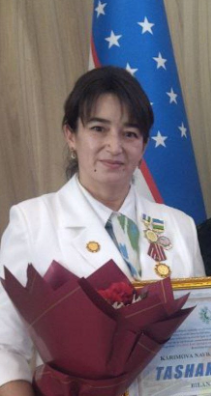
METHODOLOGICAL FOUNDATIONS FOR DEVELOPING THE ABILITY TO CREATE NEW KNOWLEDGE IN THE PEDAGOGICAL PROCESS
Navbaxar Mahmudjanovna Karimova
Educator at Multidisciplinary Specialized Preschool Educational Institution No. 9, Gurlan District, Khorezm Region
Master’s Degree Student in Pedagogy at Asia International University
Dissertation Research Topic
“Methodological Foundations for Developing the Ability to Create New Knowledge in the Pedagogical Process”
Abstract
This article analyzes the theoretical and practical aspects of developing the ability of students and learners to create new knowledge within the modern educational system. The study highlights the role of creative thinking, research skills, and innovative approaches in the pedagogical process. Furthermore, the article systematically presents the main methodological principles, methods, and tools that contribute to the development of this ability.
Keywords: pedagogy, knowledge creation, creativity, research activity, innovative methods, critical thinking, competency-based approach.
Introduction
The twenty-first century is characterized by information technologies and globalization, where the ability to independently search for, analyze, and create new knowledge has become more important than merely acquiring ready-made information. Traditional educational models were predominantly reproductive in nature and required passive participation from learners. However, modern society demands specialists who not only possess existing knowledge but can also find original solutions in uncertain situations, generate new ideas, and apply them in practice. Therefore, developing the ability to create new knowledge in the pedagogical process is not only a didactic issue but also a socio-economic necessity.
The Concept of Knowledge Creation and Its Psychological and Pedagogical Essence
The ability to create new knowledge is the process through which an individual identifies previously unknown facts, patterns, or relationships, systematizes them, and applies them in practice to generate subjective or objective novelty. From a psychological perspective, this process is based on the integration of divergent thinking, intuition, and logical analysis.
From a pedagogical perspective, knowledge creation represents the highest level of learners’ cognitive activity. This process includes the following stages: identifying the problem, formulating hypotheses, collecting and analyzing data, testing through experimentation or modeling, and drawing conclusions. Within this process, the teacher’s role shifts from that of a controller to a facilitator and collaborative researcher.
Methodological Foundations and Principles
To develop the ability to create new knowledge, the following methodological principles should be followed:
1. Principle of Problem-Based Learning
The educational process should begin not with providing ready-made answers but with creating open-ended problem situations. The questions posed to learners should not have a single predetermined answer and should require the use of various sources to find solutions. Such situations stimulate curiosity and the desire for inquiry.
2. Principle of Subject-to-Subject Relationships
The traditional vertical relationship between teacher and learner should be transformed into horizontal cooperation. Through dialogue, discussions, debates, and collaborative projects, learners develop the ability to express their ideas freely and critically evaluate the ideas of others.
3. Principle of an Integrated Approach
New knowledge often emerges at the intersection of disciplines. Therefore, organizing interdisciplinary lessons and projects that connect natural sciences, exact sciences, and humanities is highly effective. For example, solving environmental problems requires the integration of knowledge from biology, chemistry, economics, and law.
4. Principle of Individualization and Differentiation
Each learner possesses unique cognitive styles, interests, and creative potential. The educational process should provide tasks and learning paths tailored to individual needs and strengths, allowing learners to realize their full potential.
Methods and Technologies for Developing Knowledge Creation Skills
To implement the above principles, the following modern pedagogical technologies are recommended:
Research Activity Method
In this approach, learners conduct small-scale scientific research projects. They select topics, review literature, collect empirical data, and present their findings. This process develops a culture of scientific thinking.
Project-Based Learning (PBL)
Through long-term projects, learners create new products, models, or strategies to solve real-life problems. Both the final result and the process itself are evaluated.
Design Thinking
This human-centered approach consists of empathy, problem definition, idea generation, prototyping, and testing. Design thinking helps learners discover innovative solutions without fear of making mistakes through iterative processes.
Case Study Method
By analyzing complex real-life situations, learners examine problems in depth and justify their decisions. This method develops analytical thinking and decision-making skills.
TRIZ Elements (Theory of Inventive Problem Solving)
The use of specialized algorithms to overcome technical and creative contradictions enhances learners’ systematic creative thinking abilities.
Transformation of the Assessment System
Traditional grading systems cannot fully reflect the process of creating new knowledge. Therefore, formative assessment should become a priority. Assessment criteria should include originality of ideas, validity of solutions, quality of source utilization, teamwork skills, and presentation abilities. The portfolio method can be used to monitor learners’ developmental progress over time.
Conclusion
Developing the ability to create new knowledge in the pedagogical process is a complex and multifaceted task. It requires not only changes in teaching methodology but also fundamental reforms in the educational environment, the teacher’s role, and assessment systems. Methodological foundations should be based on problem situations, collaboration, integration, and individualized approaches. Modern methods, particularly research activities and project-based learning, play a decisive role in transforming learners from passive recipients of information into active creators of knowledge. In the future, enriching this field with digital technologies and artificial intelligence capabilities will further increase pedagogical effectiveness.
References
- Vygotsky, L. S. Thinking and Speech. Tashkent: O‘qituvchi Publishing House, 2020.
- G‘ulomov, S. G. Pedagogical Technologies and Their Application Methodology. Tashkent: Fan va Texnologiya Publishing House, 2021.
- Sawyer, R. K. The Cambridge Handbook of the Learning Sciences. Cambridge University Press, 2014.
- Law of the Republic of Uzbekistan “On Education.” Tashkent, 2020.
- Sternberg, R. J. Creativity: From Potential to Realization. American Psychological Association, 2019.
Navbaxar Mahmudjanovna Karimova was born on March 25, 1984, in Gurlan district of Khorezm region, Uzbekistan, into an educated family.
From 1990 to 1998, she studied at Secondary School No. 1 in Gurlan district. Between 1998 and 2001, she continued her education at Gymnasium No. 6 in Gurlan district and successfully graduated with excellent academic results.
From 2001 to 2003, she studied Nursing at the Electromedical Technical College in Tashkent, the capital city of Uzbekistan, and graduated with honors and outstanding academic achievements.
From 2020 to 2025, she successfully completed her Bachelor’s degree in Preschool Education at Urgench State University.
In 2026, she successfully completed a professional retraining course in Defectology (Special Education) at Nizami Tashkent State Pedagogical National University.
Currently, she works as a Defectologist (Special Education Teacher) at the Multidisciplinary Specialized Preschool Educational Institution No. 9 in Gurlan district, Khorezm region, which operates under the National Agency for Social Protection under the President of the Republic of Uzbekistan.
She is fluent in both Russian and Turkish languages. In addition, she is currently a Master’s student in the field of Pedagogy at Asia International University.
In 2023, she was awarded the badge “Dedicated Professional of Her Profession”.
In 2024, she received the badge “Best Scientific Researcher of the Year”.
In 2025, she was awarded the badge “Excellent Worker in Preschool and School Education”.
She is the author of the methodological guidebook titled “Inclusive Education in Preschool Educational Institutions.”
She has also published books entitled “My Goals,” “Dear Child, For You,” and “Young Explorers.”
Many of her scientific articles have been published in international newspapers and journals.
Her article titled “STEAM Technologies in Preschool Educational Institutions” was published in the book “Leading Women of Uzbekistan” in Türkiye. More than 200 of her articles have been published on international platforms and websites.
Pingback: Synchronized Chaos Mid-July 2026: Landscapes of the Soul | SYNCHRONIZED CHAOS
Your dissertation topic is spot-on important. My doctorate is in education, so I was drilled with pedagogical teaching and learning structures and rules. These mostly did not promote creative learning strategies which would possibly lead to new knowledge. However, in my classroom with my students I practice many ‘different’ teaching and learning methods, for example, delivering curriculum through quasi-guided questions and answers; no traditional pedagogical “stand and deliver lectures.” Jerry