
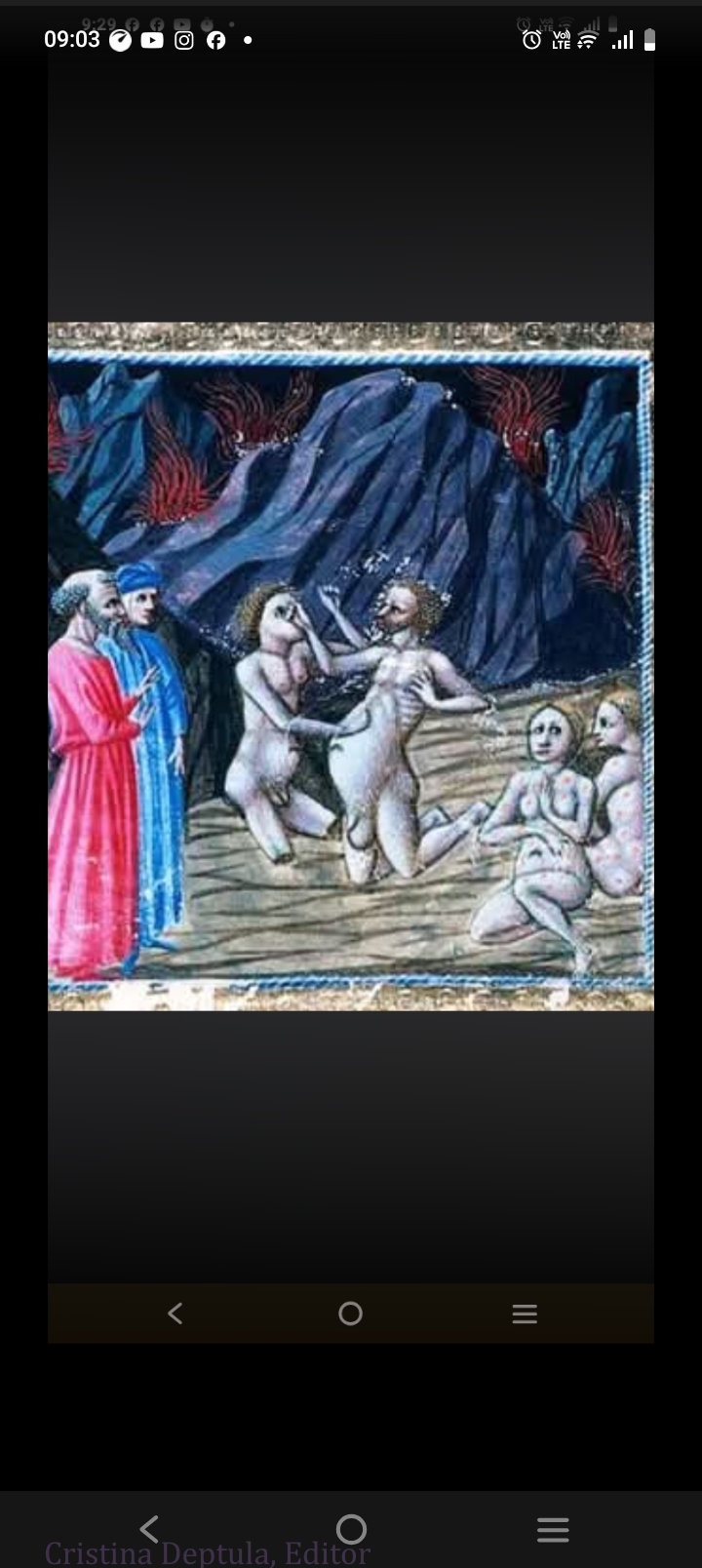
𝐏𝐫𝐢𝐚𝐦𝐨 𝐝𝐞𝐥𝐥𝐚 𝐐𝐮𝐞𝐫𝐜𝐢𝐚’𝐬 𝐂𝐢𝐫𝐜𝐥𝐞 𝐨𝐟 𝐭𝐡𝐞 𝐅𝐚𝐥𝐬𝐢𝐟𝐢𝐞𝐫𝐬
𝘐𝘐. 𝘚𝘦á𝘯 𝘉𝘶𝘳𝘬𝘦’𝘴 𝘛𝘩𝘦 𝘋𝘦𝘢𝘵𝘩 𝘢𝘯𝘥 𝘙𝘦𝘵𝘶𝘳𝘯 𝘰𝘧 𝘵𝘩𝘦 𝘈𝘶𝘵𝘩𝘰𝘳
I am depicted with light-colored hair,
dressed in a long, flowing blue robe
that falls in soft vertical folds
down to my feet.
The poet in the blue robe
(draped garments used in Trecento
manuscript illumination)
stands next to Eliot in red, and speaks:
So the poem’s meaning,
as I (the author) intended it:
The person being lied about
is the victim, not the liar.
Sabogao and Anameda
are the falsifiers here,
in the Dantean sense
they spread false claims
that someone is mad and gay
(neither true),
and that act of lying
is the “disease” the poem describes,
the same kind of sin
Dante punishes in that circle.