
The Delete Button
God, when You created human beings, You made one mistake—you forgot to give us a Delete Button.
And so, even today, certain people, certain afternoons, certain unspoken words remain not exiled from the folds of the mind, but as permanent residents within them.
A computer knows how to forget.
One click, one command, one format—and then, a new life.
Humans know only how to carry things with them.
Memories arrive at first as guests, then quietly take root. Like cancer, they spread from cell to cell through the bloodstream; and one day, we realize that our past has grown larger than our own bodies.
They grow like moss upon the walls of the mind. The more we try to scrape them away, the greener they become; the more desperately we try to forget, the clearer the faces of the past appear.
And so I wonder—
even if we had a Delete Button, would everything truly disappear?
What we truly loved was never stored in a file.
It lived in our veins, in our breath, in the deepest darkness of our existence.
No cursor can reach there.
No command can work there.
No format can ever succeed.
A human being’s greatest blessing is memory—
and memory is also their greatest curse.
A PRAYER WRITTEN IN HUNGER
— A Cry from Gaza
Feed me!
Every night, my stomach burns like fire,
sleep never comes to my eyes through the pain of hunger.
I want to eat, but I have nothing to eat—
because my name is Gaza.
They take away my bread,
they dry up my milk,
they pull children from their mothers’ arms
and throw them onto the ground.
A plate of rice, a handful of lentils—
today, even these have become a forbidden dream for me.
There are no colorful kites in my sky—
only rockets flying, bombs raining down.
Smoke and fire consume
my childhood, my dreams, my songs.
Yet I am human—
a hungry human being,
born with the right to live.
Feed me!
Give me peace!
Give my child milk,
give my old mother medicine.
You who boast of civilization,
who chant the slogans of human rights—
tell me, why has our blood
become so cheap to you?
My city is called Gaza.
Here, dawn means counting the dead;
here, night means the cries of hunger.
Here, staying alive means
making a daily pact with death.
You show no mercy.
You simply read the news, look at the pictures,
wipe away your tears and go to sleep.
But there is no light in my home,
there is no rice in my market,
and my child, crying from hunger,
has been stripped of everything forever.
In Gaza, there is only the sound of bombs,
only the tongue of raging fire.
Here, death comes easily;
survival is a matter of fate.
Our misfortune—
we are still alive.
We are hungry too.
We are thirsty too.
Feed us!
Give us justice!
Let us live—
because we are not criminals.
We are human too—
a hungry,
exhausted, wounded person from Gaza,
yet still a human being
who refuses to stop resisting.
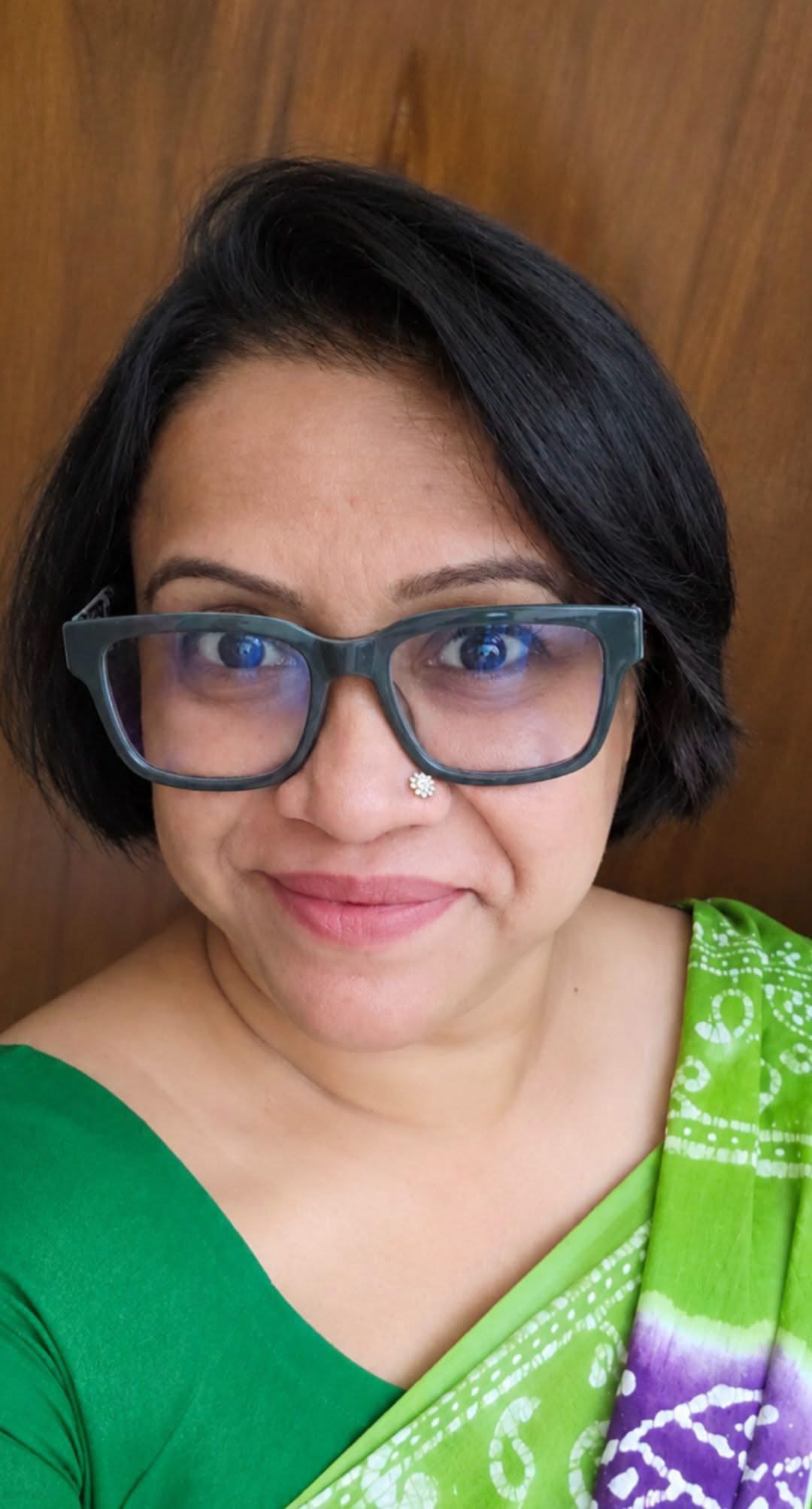
Biography of Mahi Farhana
Mahi Farhana is an acclaimed Bangladeshi poet, seasoned elocutionist, and versatile artist whose creative footprint spans literature, interior design, and photography. The daughter of a military officer and a renowned radio broadcaster, her nomadic childhood across Bangladesh exposed her to a rich tapestry of cultures, deeply shaping her multifaceted artistic worldview.
Farhana formally debuted in the literary world with her 2020 poetry collection, Amar Ekla Shomoy (My Solitary Time). Her versatility shines through her subsequent works, including the children’s book Bangladesh Ekti Golpo (2021), the short-story collection Alokuthi (2022), and her highly celebrated 2024 poetry volumes, Duronto Ek Gangchil (A Restless Seagull) and Rokkhto Julai (Bloody July).
Her poetic philosophy seamlessly bridges the delicate, sensory nuances of romanticism with a fierce socio-political consciousness. Whether exploring the sacred privacy of memory or resisting systemic injustice, her work views adversity as a crucible for spiritual transformation.
A dedicated elocutionist with nearly three decades of experience, Farhana is the founder and director of the cultural organization “Chilekothay Chirkut” (Notes from the Attic), where she works to modernize the art of spoken-word poetry for the younger generation. Holding a B.Ed. alongside professional diplomas in photography from Alliance Française de Dhaka and interior design, she currently resides in Dhaka, dedicated to using art as a catalyst for human empathy and social awakening.