
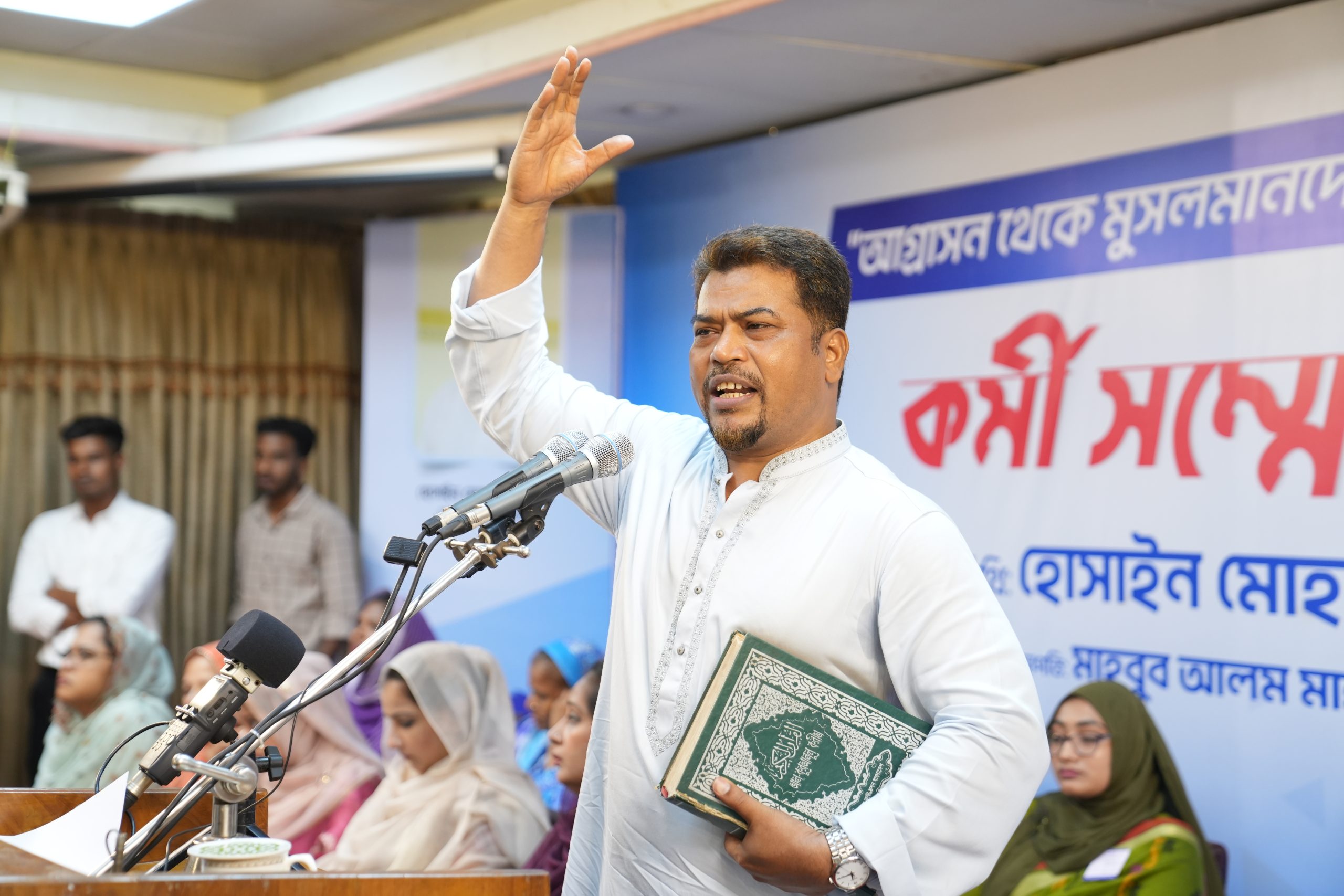
Islam Is the Only Solution to Ensuring Human Rights: Imam Hossain Mohammad Salim.
The world today is passing through a profound crisis. Although human civilization has made significant progress in science, technology, and economic development, it has failed to ensure people’s genuine rights, freedom, and justice. Instead, human rights violations, suppression of freedom of expression, wars, violence, and discrimination continue to occur in different parts of the world. The question is: despite such progress and the existence of so many international organizations, why are people still deprived of their fundamental rights?
Looking at the world, we can see that powerful nations are imposing wars and domination on weaker states to protect their own interests. The cries of oppressed people in Palestine and the deprived lives of the Rohingya community in Myanmar have exposed the limitations of the international human rights system. Although the United Nations and various international organizations are committed to protecting human rights, in many cases, their effective role is hardly visible. As a result, human rights often become helpless in the face of the political interests of powerful nations.
Concerns over human rights, freedom of expression, and justice are not limited to the international arena; they are equally evident in our own country. In recent years, incidents of mob violence, extremism, communal hatred, and the tendency to take the law into one’s own hands have raised serious questions about social stability. Freedom of expression is a fundamental human right. However, when individuals face threats, humiliation, or violence for expressing dissenting opinions, it cannot be said that genuine freedom has been established.
The root causes of this crisis are not limited to individual moral degradation; they are also connected to the prevailing philosophy and systemic weaknesses of society and state governance. In a system where power and self-interest are placed above justice, people’s rights can never be universally protected.
Islam is often viewed as being limited to religious rituals and practices. At times, it is even portrayed as something frightening. However, Islam is a simple, balanced, and comprehensive way of life revealed by Allah. From individual life to family, society, state, economy, and judicial systems, Islam teaches justice, fairness, responsibility, and human dignity in every sphere.
The fundamental principle of Islam is that no human being should be subjected to injustice, and no one’s rights should be violated. Justice must be equal for everyone, whether powerful or weak. A person’s identity, wealth, power, or social status must never influence the administration of justice. The practical implementation of these principles can establish genuine human rights in society.
Ensuring human rights requires more than merely writing provisions for the protection of rights in law books. Justice, ethical principles, and accountability must be established at every level, including state administration, the judiciary, military structures, and the economic system. The tendency to use power for personal interests must be eliminated. The rights and welfare of people must receive the highest priority at every level of state governance.
In this regard, establishing a justice-based society and state system founded on the commandments of Allah is essential. No human-made system can remain completely free from the influence of human interests, greed, and the desire for power. In contrast, the fundamental purpose of the divinely ordained way of life is to ensure human welfare, protect rights, and eliminate injustice and oppression.
Another important issue is the unity of the Muslim world. Mutual divisions, political conflicts, and clashes of interests among Muslim countries have weakened their collective strength. It is essential to overcome these divisions and establish mutual understanding, cooperation, and unity. At the same time, dialogue, tolerance, and mutual respect must be strengthened among people of different religions and communities.
We want a world where no one is oppressed because of their religion, race, language, or political identity; where everyone enjoys freedom of expression; where justice is impartial; and where the state exists for the welfare of its people. Achieving this goal requires not merely superficial reforms but also positive changes in people’s thinking, morality, and the fundamental principles of state governance.
I believe that establishing human rights, freedom of expression, and justice requires implementing the true teachings and principles of Islam in individual, social, and state life. Islam must be understood in its true form, and its justice-based philosophy must be applied for the welfare of humanity. Only then can the path be paved toward building a peaceful, discrimination-free, and justice-based world.