Mathematics has long been regarded as the universal language of logic, precision, and intellectual discovery. Beyond simple calculations and formulas, advanced mathematics serves as the foundation of scientific innovation, technological progress, and philosophical reasoning. In the modern era, mathematical theories influence nearly every aspect of human civilization, ranging from artificial intelligence and cryptography to economics and space exploration.
One of the most fascinating characteristics of mathematics is its abstract nature. Unlike other disciplines that rely heavily on observation, mathematics often constructs entirely theoretical systems that later prove to be applicable in reality. For instance, non-Euclidean geometry was once considered purely hypothetical, yet it eventually became essential to Albert Einstein’s theory of relativity. This demonstrates how mathematical concepts frequently precede scientific breakthroughs rather than merely supporting them.
Moreover, higher-level mathematics develops critical thinking and analytical reasoning. Fields such as calculus, linear algebra, and topology require individuals to approach problems systematically and logically. These disciplines train the mind to identify patterns, evaluate evidence, and formulate rigorous arguments. Consequently, mathematics is not only a practical tool but also a method of intellectual discipline that sharpens human cognition.
Another significant aspect of mathematics lies in its relationship with uncertainty. Probability theory and statistics enable researchers to analyze unpredictable phenomena and make informed decisions based on data. In contemporary society, governments, corporations, and scientists rely extensively on mathematical models to predict economic trends, monitor climate change, and improve healthcare systems. Without mathematical analysis, modern decision-making would lack precision and reliability.
Despite its complexity, mathematics possesses remarkable beauty and elegance. Many mathematicians describe equations and proofs as artistic creations because of their symmetry, simplicity, and logical harmony. This aesthetic dimension transforms mathematics from a purely technical subject into a profound exploration of order and truth.
In conclusion, mathematics is far more than a school subject or computational instrument. It is a sophisticated intellectual framework that shapes scientific advancement, strengthens reasoning abilities, and reveals the hidden structures underlying the universe. Its enduring relevance ensures that mathematics will continue to play a central role in humanity’s pursuit of knowledge and progress.
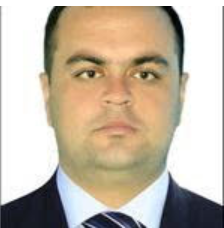
My name is Sharifov Sirojiddin Shavkatovich, a passionate and ambitious teacher born on July 16 1989, in Shakhrisabz district, Kashkadarya Region, Uzbekistan.
I have been working as a math teacher for ages and l can say that l already could help over 1000 students enter their dream university.
With a deep interest in leadership, public speaking, and writing, I continue to work hard toward achieving academic excellence and inspiring others in my community.
(Trans. by Nhat-Lang Le. Edited by Susan Blanshard)
BITTER POTION
(For Ngọc Trâm)
As fever is burning you on its pyre
I become ash too
The bitter potion cannot wait any more
Holding your hand
I pour
My grief into the empty bowl…
O’ daughter! As the mist falls
My hardship arches across the cold night
For frail flowers
To give off scent needs bitter roots.
Sweat becomes callused hands
Spring pours into the medicine bowl
My old age weeps with mute tears
While truth bursts out for no reason.
I wonder what you eat in your dreams
I put the bowl on the window
When you grow up to my age now
At the bottom of the bowl
There may still be a storm.
(Trans. by Nhat-Lang Le. Edited by Susan Blanshard)
Where the Sky Is Spacious
You blow in the warmly ardent season
Trees wither for lack of water not far from the river swollen in splendor
The fish grinds up the hook and upsets the order of time
I shrink up to fly into infinity
The tower raises multi-directional sensory organ
Your braided hair is glorious like a beaded open-air crown
and your skin resplendent as the back of the moon
sweet fruit and golden paddy resplendent as the back of the moon
the timely seeds stand up proudly
the thunder, lightning and tornado are self-confident,
but when my grandparents’ silhouettes are seen
through the perfumed vapour of cooked rice, I burst into tears
Overwhelming absorption and sudden revelation
are woven into horizon of clouds in every circular breath of hope
to trigger the drops of drizzle in the chest
and the leftover food preserved in memory
Truth makes the letters jump out and they cannot be withdrawn
we are all more self-confident when we wake up and see the symbol engulfed in the mouth of fire.
(Translated by Nguyễn Tiến Văn. Edited by Susan Blanshard)
Accompanying the Guest Out of the Alley
After brewing tea
When I returned
The guest was gone
Speaking on the phone
His family said he had been dead seven years
A misunderstanding
At home
All in turmoil
No memory of when the portrait was taken down
Where was the winding clock?
To whom was the fake ancient teapot given?
Dropping in on the neighbour
To check several food items
Some with higher prices
Some remained unchanged
In the house
The tea still hot
Pushing a cup towards the guest’s vacant place
A deadly vapour six meters high suddenly rose up
Bowing down in front once in a while.
(Translated byNguyễn Tiến Văn. Edited bySusan Blanshard)
Mothergate(*)
I
Mother nature caressing child as the moonlight
Sound passing from bough to bough, the howling
Skin and flesh of the woman I loved,
Our love child spreading deep into the dark
Entering into the dark night,
Skin and flesh erect lift the layered clouds for us
To make a watershed of rain over the sources of rivers
A bough quivers on the water’s surface
Where a bird suddenly perches
Only I can see that small bird so far away from the road
Far away from the garden, from the other flocks of birds
I quietly pass through the corona at the bottom of the water
And look up at the sky with open wings
Rising to the top of the tree where the bird’s beak
Bends down to feed into the mouths of its fledglings
Each sip of wind
Sound of chipped grain in the chest
The bare ground and green fruit
The dense-leaved canopy of the forest
Newborn child on the ground
Swim across the river the tadpole’s tail severing
Learning to flaps its wings, fanning the wind into the nest’s warm bowel
Sprouts the cotyledon leaves, flies away freely
Steam rises by the river-wharf
Space condenses the confusion of time
Smoke steams up high
I realize I am swimming in a sea mist
Not mist but rain
The tall tower glittering
Breathing, muscles firm, the leaf singing…
The dead return, suddenly, in the blossoming flower
I shudder at a shoreline
The water surface choking where there are no breaking waves
A sip of cool water drifting slowly…
Suddenly remembers the high tide season submerging the cricket’s cave
Burble sound of bubbles gushing up by stages
So that I realize where the cave mouth is…
II
Place child on the ground
The riverbed has enough pain to tear off the body of night
Nature glossy wet
The trunk of trees disintegration turns into splinters
Water swift flowing
Flowing faster
I burst into tears to sweep away the spider web
Sound of the heron’s hoarseness
The ashes flashing up
Moon trembling
Pick up a pebble to draw on the ground
A field
The young calf bewildered
A clear outline as the calf bent down to graze
Another direction draws an extra eye
The eye of wild animals or eye of human
Write the words on the remaining empty boxes.
III
The voice very close
Under the light of dawn you must transform yourself!
Fruits
Firelights
Yin Yang bowl of water
While crawling over bowl of twilight
Pull the body gradually out of the shell
I sip the dewdrops
The ghastly shell heaped up high
Was out of reach
Groups of people helping each other towards incapacity
End of dawn.
IV
The shade of trees bursting out underfoot
Images on the map are torn off?
Or the half-bat half-mouse corpse?
I was so frightened, weaving the grating
Set booby-traps around myself
Sharpening the knife
Preparing a matchbox
As close to the horizon
The drifting darkness was terrible
Faster than emotion
I keep accumulating anxiety, the resentment
Until the blackness of night was completely
Erased off.
V
I chased small prey
Threw myself upon the wave’s crest, then lost direction
The low tide
In the dream near morning
My bones painful
The tail and dorsal fin frostbitten
There is a hand threading the strings
Dragging me slowly on the ground
They stopped to shelter from the rain
Suddenly release me
Near the foot of waves
I was grateful the rain
The loud thunder and cool wind.
VI
Father recently tried to get up after being bedridden, staggering out the door, he fell into a square block of light
He tried to point his finger, then said: “That green beetle on a leaf canopy, father sees it for the first time”.
I tell these unintentional stories about the time father was in a coma. A story of the large cloud that flew slowly through our home. The deep wells rising steam up to the window. One story about the song of the crypsirina temia bird, makes everyone look at the bowl of drugs.
The body of father is like shallow rivers, dry wood, and the empty paddy grain
The raceme of weighty fruits, swaying in the strong wind
Father suddenly whispering: Please help father go to rest
Sound of dried leaves sliding off the roof makes father and I shed tears together.
VII
The universe lays the black coat over me
Only eyes open to pray
Mumbling I still thought
… white hand black blood white tongue black tears white back black helix curl of white hair black sweat
The black spilt on everything will end us
Let’s pray to save the people of this world
Lighthouse…
Kitchen bright…
Look in any direction
Like learning to focus on the blackboard
Learning to separate the colors
To spell the letters
This crossroad of white
The earth’s surface, the seas surface white
Great old man, a chair, the woman in white
The inspector, the farmer in white…
The mouth reads aloud, the mind still holds sundry thoughts
…white tongue black tears white back black helix curl of white hair…
VIII
Curled up I sleep in cold wind
Dream to be a fetus
The navel-string connects to the solar
Fly above canopy of the trees
The eyes with a look, make the sound of sobbing… blue
Every tiny bud of limbs
Springing lightly in the body of Him
I wake up
That place starts on the road
The colt unsteady standing up
The flock of insects crawling out of the trunk
The tiny shrimp blasting off the throat of water.
IX
drum gong and eight ornaments
opens the festival of imperial court
sing and dance to heaven
the great merit of four palaces
opens the mind of a disciple
tolerant eyes look
the quiet weather
the special envoy giving out grace
sincerity respectfully kowtow
four gods flanking the lady god
garb and turban of sorceress are brocade and flower embroidery.
come and go refreshed
moving between heaven and earth
powdery cheeks and ruby lips
rhythm of bamboo beating and rhythm of castanets
string of coins
sacred dragon hovering
five great mandarins’
the hand swaying
high talent deep virtue
the flame glittering
fondle protecting
loving mason bee
silkworm spits out the silk cord
garb and scarf flapping
alluvial cuddling
wind coming back to the riverbed
cassaba melon pyriform melon
fragrance of lotus and areca pervading
boys and girls entering the region
prepare the sedge mat, prepare the blanket
as flower, as butterfly
faces glowing with pleasure
as the ground is to the sky
grass and trees in good verdant
raining fast and violently
…
Translated from Vietnamese by Trần Nghi Hoàng
Edited by Frederick Turner
(*) Mothergate – Mother in this poem does not mean “mother” as normal. It carries the meaning of “the Way”, the “philosophy of belief.”. As: “The Way that can be told of is not an unvarying way; The names that can be named are not unvarying names. It was from the Nameless that Heaven and Earth sprang; The named is but the mother that rears the ten thousand creatures, each after its kind” (Lao-tzu)
The Opening Ground
Gushing
between the screams of ephemeral belts of land
the riverbed writhes in waning light
dusk holds day tight in its mouth
fire convulses
fiercely ascending the tree tops
scorching the buds
A flight of birds spreads across the sky
so thoughts can reign on earth
where the wind’s face meets a bowed hill top
a deep cavern exhales myths to morning dew
ponds and puddles find a heavenly direction
the river gives birth while flowing
An open embrace of waves
playing in childish ebullience
the water surface turns to ruins
You set up an already broken sun
Drifting…
An unknown silence is drifting by
the lamp wick shortens
as kerosene soot says its last words
I vaguely hear the boiling batch of herb saying its apology
With closed eyes the world appears unpolluted. The surrounding pure spaces are spreading and latticed. We see ourselves in childhood holding a bright candle in the church. The candlelight is filling eye-sockets, filling the hollow immobile gaps amidst secret verdant foliage. With closed eyes the forest resembles a garden. The rattan stems, the ferns and wild grasses take the shape of huge ancient trees. The needle leaves form a large canopy. The earth bee, the porcupine, the squirrel, and the bull are similar shapes… And I stayed motionless for a long time with my eyes closed. Even though my premonition had warned me, they were looking for a clue, fanning the wind, taking fright… With closed eyes we can see people and all things in justice and in a clear light. Pens and books, beds and drawers, knives and chopping boards, and the old bike were of the same size. Each human organ opens up with multiple strange eyes, while the venoms absorbed are permanently sealed up with no way of escape. With closed eyes you are not so busy as when I am with open eyes. But your silence makes queer resounding sounds, telling me that your love has penetrated the trees, the streets and houses, the gardens, the fields, and the rivers and springs… From now on we need not doubt anything until we close our eyes forever
(Translated byNguyễn Tiến Văn. Edited bySusan Blanshard)
Photos, Fruit and Dreams
Under-exposed photos, speed-ripened fruit and dreams that lose their wings before the rain, flow slowly against the current of memories.
A wind blows open morning fields, rushes into rooms full of blended dust and light, wipes sweat off freshly bathed dreams.
The origins are within the span of a hand, when you come back you have gone through your entire life, or you wait to reincarnate into the next life.
Those souls that have yet to reincarnate, visit worshipping places, fly aimlessly, then shelter in fixed idolatry.
Someone runs across the dreams, the fruit and photos, to recover what he lost, to feel each tear choke back and see the amalgam of each shadow.
Origins have renewed space, and a generation of young grass is spreading over old ground.
Souls stand at new angles opening to different lights, and in the moan of fresh dew, they pause and knock on each vowel.
Everywhere new streams are beginning to pour into memories, taking the photos, the fruit, the dreams, to turn everything into a voice last night.
The herb doctor burned his books at the end of the garden
New medicines in stock had expired
The witches suffered punishment
Their mouths closed by iron hooks
Birth
When the bell suddenly dropped
Covering the old temple warden’s head
The fish committed suicide by jumping into a cloud
Ten thousand fishing hooks, hanging in the sky
Birth
Ink was splattered under feet and blood
Congealed in throat and lung arteries
With a stroke on the first page
Thousands of pages were permeated.
*
Fallen from the summit
With two sharp wings
Centering on the corpse
Slashing the atmosphere
Hurried winds had no time for bandages.
*
Clawing from the eye sockets
The viewpoints
With posthumous pictures as evidence
Cut out the tongue
Stretch to dry off in the sun
the slogan’s lesson
Slice off flesh piece by piece
Dismember limbs
Show the innards
The skull all set up
Was completely covered with mold
This epitaph could not be written.
*
The crow dreamed
All deaths were arranged
After the crow’s croaking
Who volunteers to lie down.
*
The crow flew into the room
A finger raised slightly
Implying:
This is the gun muzzle
The scythe
Even the spade
Even the very hard finger
Rather it was frozen
Then defrosted
Then melted down.
*
Do not approach the shade
It was the crow
Spreading its wings at sunset, sunrise
With its claws clinging to the winds
To grind dry leaves
To prune outreaching branches
The poet took refuge in the shade
Each letter hollowed out of an eye.
*
To look at
Things
Glaringly
Because in the wink of the eye
The shadow of the crow
Stormed in.
One’s own shadow
Did not raise its voice
For fear of turning into a chick.
*
A number of people emerged from the crowd, clad in black, wearing black masks. While running, they slapped their arms on their flanks. They tried to raise their heads by stretching their necks. The black shadow hovered close to the ground.
*
Perched on a tree fork after overeating and napping, the crow dreamed that every mouthful of food squeezed into its stomach would turn into an egg. The crow chicks crept in groups from the five organs and immediately lowered themselves to hunt with the instinct of a bird of prey.
*
The utmost sufferings looked back on a life almost dead. The cloak gave a muffled shout when passing desk and drawers. The telephone slept silently. The staple opened its mouth to hide its claws. The broomstick gripped the laborer’s arm, and pulled her to the garbage dump. The hat brim on the head cried out in panic, then bent down to devour the entire face of the guard. Nobody opened the gate. Yet many people managed to find an entrance.
*
The disembodied souls looked for a way back to fight the evil crows. After the volley of non-lethal bullets, smoke from incense joss-sticks spread onto a board, with the first word written for the new lesson.
*
This is the last line in a testament:
“Start the celestial burial at the appearance of the crow’s shadow”.
*
The night shadow crept into the crow’s belly.
And ours too. With gnawing pain together on the hungry river. The drops of troubled water found a way to pass through cotton fibres. The huge surface of water, its vibrations, wishing to keep hold of human shadows. Strike a match and remember that the wick is very distant. Throw up both arms, raise your voice alone in the darkness.
The crow out of sorts through the might
Craws in fright
For the first time the sound goes out without an echo.
(Translated byNguyễn Tiến Văn. Edited bySusan Blanshard)
Biography of Mai Văn Phấn
Vietnamese poet Mai Văn Phấn was born 1955. He has published 19 poetry books and 1 book “Critiques – Essays” in Vietnam. 34 poetry books and translations of his are published and released in foreign countries and on Amazon’s book distribution network. Poems of Mai Văn Phấn are translated into more than 40 languages. He has won a number of Vietnamese and international literary awards, including: The Vietnam Writers’ Association Award in 2010; The Cikada Literary Prize of Sweden in 2017; etc.
TOSHKENT GUMANITAR FANLAR UNIVERSITETI 2-BOSQICH TALABASI SOBIROVA IRODA ABDULAZIZ QIZI THE IMPORTANCE OF IMPROVING ECONOMIC LITERACY AMONG YOUTH
ANNOTATION / ANNOTATSIYA / АННОТАЦИЯ
English: This article discusses the importance of improving economic literacy among young people, the role of economic education in society, and the development of financial thinking among students. Economic knowledge helps young people become active participants in the modern economy.
O‘zbekcha: Ushbu maqolada yoshlarning iqtisodiy savodxonligini oshirishning ahamiyati, iqtisodiy bilimlarning jamiyat taraqqiyotidagi o‘rni hamda talabalarda moliyaviy tafakkurni rivojlantirish masalalari yoritilgan.
Русский: В данной статье рассматривается значение повышения экономической грамотности молодежи, роль экономических знаний в развитии общества и формирование финансового мышления у студентов.
In the modern world, economic knowledge has become one of the most important factors for personal and social development. Young people play a significant role in the future of every country. Therefore, improving economic literacy among youth is an essential task for educational institutions and society. Economic literacy means understanding financial systems, managing personal budgets, making rational economic decisions, and participating actively in economic life.
Today’s global economy requires individuals who are capable of adapting to rapid technological and financial changes. Young people with economic knowledge can better understand market relations, entrepreneurship, investment opportunities, and financial planning. This helps them become more independent and responsible members of society.
The Role of Economic Literacy
Economic literacy is important not only for personal success but also for national development. Economically educated citizens contribute to the stability and growth of the country’s economy. They are more likely to start businesses, create jobs, and participate in innovative projects.
Young people who understand economic principles are able to make informed decisions about spending, saving, and investing money. This reduces financial problems and improves living standards. Economic literacy also teaches responsibility, discipline, and strategic thinking.
In many countries, governments and universities organize seminars, training courses, and educational programs to improve economic awareness among students. Such initiatives encourage creativity and entrepreneurial thinking.
Economic Education in Universities
Higher education institutions play a major role in developing students’ economic knowledge. Universities provide theoretical and practical skills related to economics, business, marketing, and management. Students gain opportunities to participate in scientific conferences, research projects, and innovation programs.
Modern universities also focus on digital economy and information technologies. Digital banking, online business, and financial technologies have become essential parts of modern economic systems. As a result, students need to understand not only traditional economics but also modern technological trends.
Teachers and scientific supervisors help students improve analytical thinking and problem-solving abilities. Research activities motivate young people to contribute to science and society.
Youth and Entrepreneurship
Entrepreneurship is one of the most important directions for youth development. Young entrepreneurs create new businesses, generate employment opportunities, and support economic growth. Economic literacy helps young people understand risks and opportunities in business activities.
In Uzbekistan, special attention is being paid to supporting youth entrepreneurship. Government programs, grants, and educational initiatives provide young people with opportunities to realize their business ideas. Universities also organize startup competitions and innovation forums to encourage students.
Entrepreneurship develops leadership qualities, communication skills, and creativity. These abilities are important for achieving success in both personal and professional life.
Conclusion
In conclusion, improving economic literacy among youth is essential for the future development of society. Economically educated young people are capable of making effective decisions, creating innovative ideas, and contributing to national prosperity. Universities and educational institutions should continue organizing scientific and educational programs to support talented students.
The future of every nation depends on educated, active, and responsible youth. Therefore, increasing economic knowledge among young people should remain one of the main priorities of society. References: 1. Principles of Economics – Gregory Mankiw. 2. Economic Theory textbooks. 3. Scientific articles on youth economic literacy. 4. Official economic development programs of Uzbekistan.
This morning, I bring forth the epitaph to be crafted on my forehead, bury me
I do not owe the air the right to take a breath and breathe out toxic words lined up on a queue for slaughter
one time or the other, I realized that I had dipped my finger in guilt and licked its broth, well-seasoned with my father’s alarm reminding me of my dynamic surname pulled out of the house built for nameless babies
father wraps guilt like a scarf around my neck choking my lungs from revisiting freedom. it urged me to die, die and die again
don’t resurrect on the third day if you are a woman
bury yourself
I die because everyone dies to me in the bid to open up the shadow of a new god
I die because father clocked 60 and 60 times I remember the death of the sun
I die because I lose my broth of guilt.
I die because I am a shameless woman
I die because the queue for slaughter ends with my throat
The magician, who cut off a rhinoceros’s horn and wore it on his head,
Borrowed a penguin’s wings to caress the texture of a green apple.
Click, he opens the door to the heart and steps inside.
Cut in half the time you have experienced and tap on its flank.
Dress each and every seed with imagination.
Lift the shade, as if invisible hours are opening their eyes one by one.
Pay heed to the mesmerizing silhouette from behind, and the tears in between.
The desert wind blows in, carving away the walls of the mind.
An occasional, unexpected intent—the hunger grows desperate.
Causing a stir at the center of life, the fallen apple’s shoulders tremble.
The magician secretly, stealthily covets
Dali’s art book hidden inside his hat.
On days when his neck stiffens from trying to soothe colliding tendons,
He stands Gala from the drawer upon a plate.
Shall we stir the hardening spring water with the rhinoceros’s horn?
Shall we borrow the magician’s hat and wear it for just ten months?
Who knows? On the first day of the New Year, in a major daily newspaper,
We might just read the smile of a ripe, red apple.
마술사는 모자를 쓰고
연명지
코뿔소의 뿔을 잘라 머리에 쓴 마술사
펭귄의 날개를 빌려와 풋 사과의 결을 매만지다
딸깍, 심장의 문을 열고 들어가
경험한 시간의 반을 잘라 측면을 두드려보세요
씨앗 하나 하나에 상상력을 입혀주세요
보이지 않는 시간이 하나 둘 눈 뜨듯이 그늘을 들어 올리세요
매혹적인 뒷태와 사이의 눈물에 유념하세요
사막의 바람이 불어와 마음의 벽을 깎아낸다
간간이 허를 찌르는 의도, 허기가 간절해진다
삶의 중심에서 소동을 부리다 떨어진 사과의 어깨가 떨린다
마술사는 몰래몰래 모자안에 숨겨논
달리의 화집에 눈독을 들여요
충돌하는 힘줄들을 말리느라 뒷골이 당기는 날에는
서랍 속 갈라를 접시위에 세우지요
코뿔소의 뿔로 굳어가는 샘물을 저어볼까요
마술사의 모자를 빌려와 열 달만 써볼까요
혹시 알아요 신년 첫날 중앙 일간지에
빨갛게 익은 사과의 미소를 읽을 수도
Profile
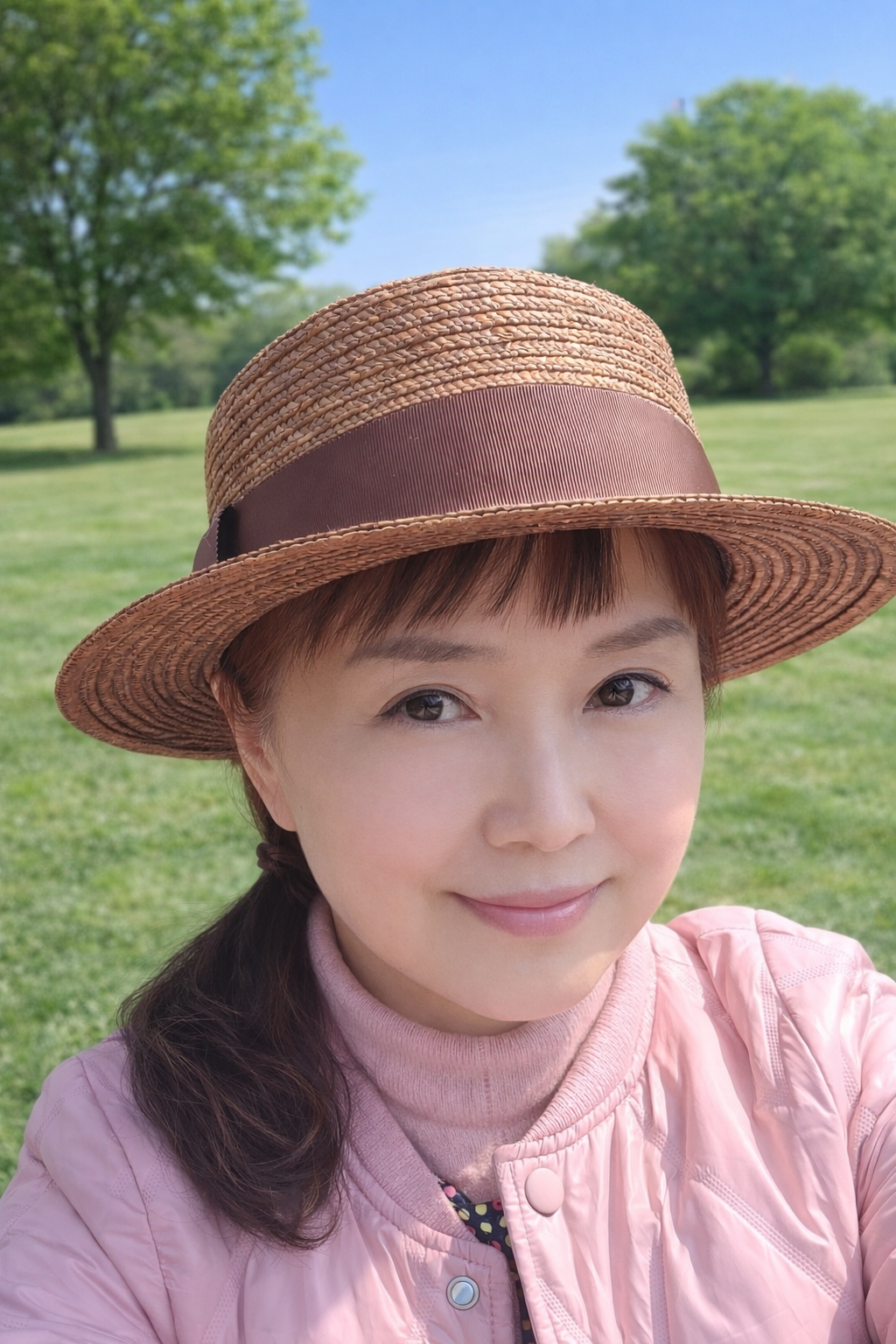
Poet Yeon Myeong-ji began her literary career in 2013 with the poetry collection 『Gashibi』, published in the Minerva Poetry Series.
Her published works include the poetry collections 『Sitting Like an Apple』 and 『Where would the House of the Sorry’ be? 』 the e-poetry collection 『Seventeen Marco Polos,』 and the travel essay 『Step by Step, Walking the Camino.』
She has received the Tolstoy Literary Award, the Homi Literary Award, the Cheongsong Gaekju Literary Award, and the Aviation Literary Award. In 2025, she was awarded the Bronze Prize in Poetry at the Literature Asia Awards.
Her poems have been translated and published in local languages in India, Pakistan, Kosovo, Italy, Egypt, the United States, and Belgium, Greece, UK, and Iraq.
Hello, I wanted to share an idea with you: heat recovery from a fireplace.
When one heats a house, an apartment, or any living space with a fire in a fireplace or stove, heat is emitted and radiates around it, warming the room where the fire is located.
The idea I am presenting is that by recovering the hot air from the combustion in pipes, this hot air, then circulated through a system of pipes around the living space and out of the room, can carry the heat. This heat, radiating from the pipes themselves, will spread around them and be able to heat the entire space, or at least a portion of it, beyond the room where the initial fire was located.
Several applications of this idea are possible. First, it is important to avoid capturing combustion fumes and catch only the hot air. This can be achieved by carefully positioning the hot air intakes and using a filter, for example. Next, the heating system’s circulation pipes must be made of a suitable material, such as a heat-conducting metal like lightweight aluminum, to maximize the system’s performance. Finally, the hot air, being naturally mobile, must be directed either to a cooler outside outlet or, potentially, to a storage system, as properly conditioned hot air is known to retain heat well.
In the installation of these two, hot air outlet and storage systems, I believe a small turbine, either propeller-driven or powered by a dynamo, could be installed. With the right equipment, this could generate a small amount of domestic electricity. In the case of a domestic dwelling, having a stock of hot air will easily serve, if installed for this purpose, to heat water for the inhabitants’ use.
Thus, by recovering heat in the truest sense of the word, we can save firewood, firstly to improve our living conditions, and secondly, we can see it as a potential source of responsible electricity and hot water!
We could easily imagine this system on the scale of an entire building, or even a group of houses…
You’ll probably need to be a bit handy or a “DIYer” to install such a network of pipes, but I think it’s within reach of many people around the world.
And having already seen it installed at a friend’s house who followed my advice, I can guarantee you it’s remarkably efficient!