Essay from Dilafruz Muhammadjonova

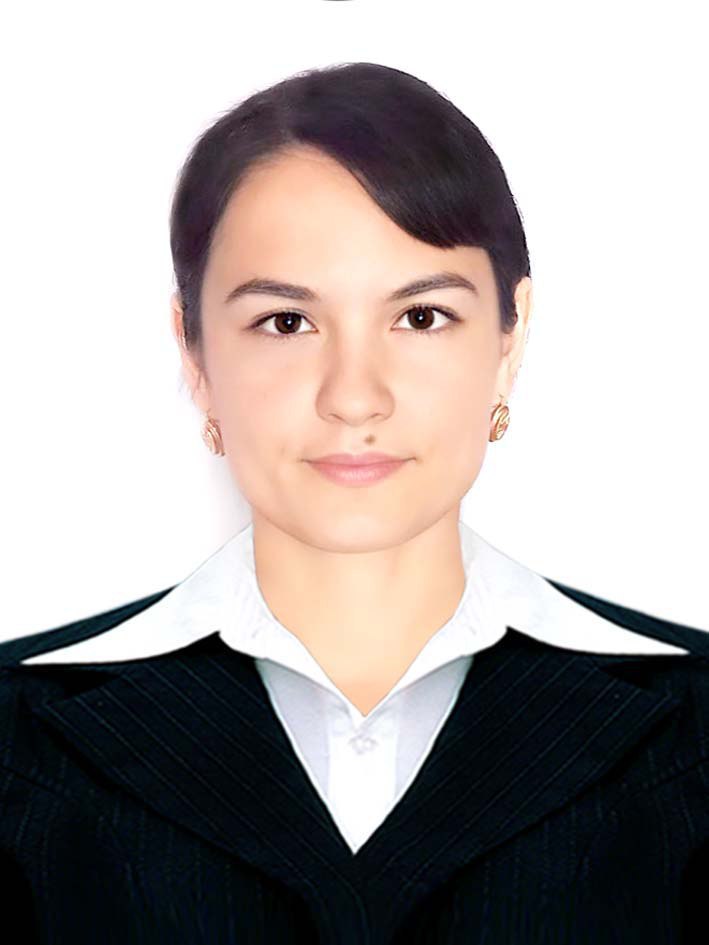
Young Central Asian woman with long flowing dark hair in two pigtails, white fluffy blouse, and a black skirt. She's holding a medal and standing next to a flag.

BEKHBUDIY: CALL OF ONE HEART, ONE IDEA, ONE CENTURY

“Turon, what is your state, vying with the stars?

Thousands of separate heads—Freedom, why not come?

Find your own opportunity—Nation, why not rise?

Time will not wait. Will the heart not beat?

It is a companion to fear… Should I live like this?

Your death is nigh.”

(Najmiddin Ermatov)

     Uzbekistan, my radiant land, the home of the golden cradle generation where the sun sleeps in your veranda when you sing a “alla”, where white “to’n and “adras” robes suit well, adorned with silk belts; the land of Mahmudkhoja Bekhbudiy, Fitrat, and Chulpan; a bright nation where faith and Islam are perpetual companions! My dearest sun-filled land, an oasis where the architect of the Taj Mahal, the engineer of the Nile, and the Imam Bukhariys originated; where spring whispers in winter, and gold blossoms in the soil! My heavenly nation, a pearl of the East, that has captured the morning shimmer of the sun in its orbits, a stellar land that has made both the sun and the stars fall in love with it!

     My chest is full of pride that the great Turkistan enlighteners, who endured all hardships for the happiness and prosperity of this country and sacrificed their lives to lead the homeland from darkness to light, are my ancestors. The feeling and glorification of the homeland are inherent in the heart of every person who grew up on the soil of Mulki Turon. When talking about the brave sons ready to give their lives for their country, the difficult lives of our Venerable Jadids, who raised them in the spirit of the homeland, and simultaneously the dawn suns who opened the eyes of our nation, serve as an example for everyone.

     “If we, the Turanians, spend the money we use for weddings and funerals on the path of science and religion, we will soon progress like the Europeans, and both we and our religion will gain prestige and development. If we continue in our current state, we will have nothing but humiliation and misery in religion and the world.” The people were in a deep sleep of negligence. Yes, these were the words of Bekhbudiy spoken at a time when other intellectuals were bursting forth from within, like a volcano, with the cry of “freedom”… The more we study the history, life, and activities of these national luminaries, the more they remain alive, and the unfulfilled desires scratching a corner of our hearts are reincarnated. They are rivers that have overflowed their banks and flowed backwards, untamable stallions restless in chains, the frothing blood of the nation, the life of enlightenment that has reached the throat in the face of ignorance. The Jadids are the new echo of the questions sought from the essence of the homeland, the tears that flowed behind the eyes of Mother Turkestan, whose heart was filled with lamentation; they are the very identity of this country, the root veins of New Uzbekistan. They were lessons incarnate, brought into the world to explain the value of the gift called life, the honor and respect of a human being, and what it means to be worthy of one’s nation and homeland. The goal of these innovators, who did not fit into the despotic system and had their own new world and ideology, was the noble pursuit of opening the nation’s eyes, achieving the days of progress for the people of Turkestan, reaching the world through educated national cadres, and building a free civil society on the foundation of enlightenment and culture. Striving to reform and renew a backward country, its education system, Bekhbudiy despaired with the “needs of the nation” in his heart, saying, “This path leads to a bad end; we must learn and teach,” and never lost hope for our present day until his execution.

     Have you seen the softly rustling, burning candles in the dark night? They flicker faintly, continuously and orderly spreading light. This light has the power to illuminate the entire night. Mahmudkhoja Bekhbudiy was such a candle of light.

He selflessly sacrificed himself, like a shieldless victim, to return the sun to the dark, unattended heart of a slumbering nation. It was exactly Behbudiy who launched the wingless birds of the darkness of illiteracy into the sky of science, “drowned” the thirsty fish in the ocean of endless books, and acted as the rider for the unsaddled horses. Mahmudkhoja dreamed of seeing the Uzbek people on equal footing with developed nations, and he stood out among the mature Jadids of the period of intellectual awakening with his worldview and activities. In his view, the school alone was not enough for enlightenment. It was necessary to keep up with the times and world events, to be aware of the condition, and daily life, of the nation and homeland. Therefore, society needed a mirror in which it could see both its ugliness and its beauty. This need and necessity led Bekhbudiy to theater and the press.

     “Padarkush” came into existence during this period. The author called this work a “national tragedy,” and it tells the story of ignorance and folly, where an uneducated child falls into corrupt ways and kills his own parents. Despite its small size, the lesson to be learned from it is extremely important. The life path and scientific and social activities of this enlightener, who tried his best to light the candle of the future in people’s hearts, are an endless example for us, as are his works and instructive ideas.

     In particular, there is a lesson in Behbudiy’s attitude towards world phenomena. His discretion in distinguishing between friend and foe is immaculate. The evidence he provided to prove his views is strong. The weights of his balance scale are not hollow inside. That is why dozens of names of Eastern scholars and titles of works appear in the content of his articles. Since he knew Russian perfectly, he referred to Russian books and the ideas of Russian scientists. There is great pain, a great dream, and meaning embodied in the communication, awareness, and cry of His Holiness Bekhbudiy with world civilization, world scientists, and world-famous books. For instance, in his article “Islahi Tahsil” (Reform of Education), he wrote, “We should send students to Egypt to systematically study general religious and Arabic literature and learn the methods of education there.” In this regard, he freely expressed his recommendation.

     Bekhbudiy is the star that defines the nation’s new path! Bekhbudiy is the gazelle staring into the far distance, trying to save its herd from predators! Bekhbudiy is the rope that fell into the hands of executioners and is preventing the innocent from perishing! Bekhbudiy is the compassionate soul worried about the lifeless, impoverished people, astonished by the populace that has even forgotten religion! Bekhbudiy is the love whose heart is burning while looking at those smiling as they die! Bekhbudiy is the tightrope walker carefully passing the pearl of knowledge from one heart to another above those silently watching! What an honor that Mahmudkhoja was born like the sun, with such dedication fixed in his body and soul.

      Indeed, the Jadids were not ordinary people. They opened new method schools and created textbooks. They enriched our language with writing and linguistic units. They worked tirelessly, like swallows trying to awaken the sleep in people’s eyes. They went from village to village, knocking on doors saying, “We have brought knowledge, please accept it.” The pen was their sword, every letter put on paper served them like a soldier. They published newspapers and magazines, wanting to awaken the nation with only one thing—the truth. Prison chains, years of exile, and even the executioner’s sword could not stop them. All of them sacrificed their lives on the path of their sweet dreams.

Is there a greater, more magnificent deed than this for a nation? True, this enlightenment movement, which urged the future towards light and stirred Turkestan, encountered great obstacles, was erased from the pages of history, the national leaders were branded as “nationalists,” and the bright faces were blackened. However, neither chained legs nor bound hands could turn the Jadids, who have taken an eternal place in the consciousness of the young generation, away from the path of enlightenment. The secret of eternity lies precisely in this commitment and self-sacrifice. “Oh Turkistan, did you manage to preserve the second pearls emerging from the shells? Did you not accept with a torn and patched shroud those who honored you with poems that sang of your love in every line? Oh Turkistan, did you stand by silently when the riders galloping in the field of literature were whipped on the head? Did you not share sustenance from your fields and dastarkhans, becoming a ready meal for those who trampled your sacred soil? Oh Turkistan, did you ever throw the stones that muddled the water back at them? Even if evil deeds and the most sordid events occurred in your past, could you loudly proclaim the thousands of treasures of enlightenment, the priceless jewels of knowledge within your chest? Turkistan, every dream of yours has a unique secret, every night of yours is adorned with divine inspiration. Turkistan, we bow to every wind of yours, we cherish every flower of yours. We will shine as stars in your sky, we will pay our debts as children on your lands, we will be the generation that preserves your power!

     In conclusion, our ancestors, who dreamed of seeing their colonized homeland among the world’s developed countries by fighting against ignorance and defending the nation’s honor, have achieved their goals today. Now, we, the owners of today, have a strong duty not to forget that we must realize the centuries-old dreams of our ancestors, preserve the land where peace reigns, and make the youth understand whose descendants we are through our aspirations, participation in reforms, and initiatives. Indeed, the future of New Uzbekistan is a glorious responsibility entrusted to our shoulders. As Bekhbudiy emphasized: “Oh zealous youth! The time is yours. Unite with each other, build societies, and serve the nation’s cause.””

Dilafruz Muhammadjonova is a second-year student majoring in Uzbek Language and Literature at the Faculty of Philology of the National Pedagogical University of Uzbekistan named after Nizami.

Poetry from Islamova Dilnoza Khamidovna

As white as snow, innocent
A pure heart, no dust
A waste of time
I have such a friend

Always on my side
Never gossips
A ungrateful help
I have such a friend

Never sold my secrets
Or told anyone else
Never told a lie
I have such a friend

A partner in joy and sorrow
No hostility
May fate grant it,
I have such a friend

Thank you for going, my friend
If you go, I will not be short of anything
My support and my support
I have such a friend

Essay from Odinaxon Qodirova

Young Central Asian woman with a black and white spotted headband and black fluffy coat.

INNOVATIVE AND DIGITAL METHODS FOR DEVELOPING READING CULTURE AMONG SENIOR SCHOOL STUDENTS

Abstract

This article examines pedagogical mechanisms for increasing senior school students’ interest in reading under conditions of global informatization. It highlights the integration of modern technologies such as Book Blogging, QR Quest, and SMM Simulation into the educational process while moving away from traditional teaching methods. As a result of the study, methodological recommendations for developing reading culture among senior school students were developed.

Keywords: reading culture, innovative methods, senior school students, digital pedagogy, book blogging, critical thinking, motivation.

INTRODUCTION

In the modern education system, enriching students spiritually and developing independent thinking skills are among the most important objectives. However, the rapid development of the internet and social networks has caused senior school students to drift away from reading books. According to statistical data, adolescents tend to perceive information mainly in visual and short formats (clip thinking), which creates difficulties in reading lengthy literary works. Therefore, pedagogy faces the task of promoting reading culture through innovative methods adapted to students’ age and interests.

LITERATURE REVIEW AND METHODOLOGY

The issue of developing reading culture has long been a focus of pedagogical research. Uzbek pedagogue Q. Yoldoshev emphasized enriching students’ inner world through literary analysis, while contemporary studies increasingly highlight the role of the social environment.

In particular, M.A. Zaynitdinova scientifically substantiated the importance of family environment and systematic cooperation with parents in fostering students’ interest in reading. As noted by the author, “Cooperation between parents and schools is one of the most important factors in positively changing students’ attitudes toward books.” This idea suggests that reading should not be limited to classroom activities but should become an integral part of students’ daily lives.

Foreign researcher M. Prensky introduced the concept of “digital natives”, proving that modern adolescents prefer interactive and visual forms of information rather than traditional formats. These theoretical perspectives allow reading culture to be studied at the intersection of digital technologies and family values.

This study employed a systemic approach, pedagogical observation, and comparative analysis methods. The research process was organized in three stages based on experimental work conducted among senior school students.

Diagnostic stage: A survey revealed that 65% of students lacked time for reading, while 20% considered literary works boring.

Practical and innovative stage: The following innovative technologies were implemented in experimental groups:

Book Trailer Project: Students created 60-second video advertisements based on books they read, enabling deeper understanding through visualization.

Family–School–Book Model: Based on Zaynitdinova’s methodology, activities such as “Best Reading Family of the Week” contests and online reading sessions were organized with parents, increasing students’ social responsibility toward reading.

Literary QR Quests: Interactive games were organized in classrooms and libraries, allowing students to move to the next “station” by answering book-related questions.

Analytical stage: After implementing innovative methods, students’ motivation for reading increased by 35%, and their literary analysis skills showed qualitative improvement.

RESULTS AND DISCUSSION

The implementation of innovative methods led to a significant positive dynamic in students’ reading activities. The results can be analyzed through the following indicators:

Motivational indicator: After introducing book blogging and QR quests, 42% of students developed intrinsic motivation toward reading, compared to 18% in the control group.

Family factor influence: Applying the family–school cooperation model increased students’ daily reading time at home from 25–30 minutes to 55–60 minutes, explained by joint book discussions with parents.

Creative approach: The use of SMM simulation increased students’ comprehension of literary works by 1.5 times. Students learned to interpret characters through modern formats such as posts and comments rather than simple memorization.

Comparative analysis shows that traditional teaching methods form a “passive learner” model, while innovative and collaborative methods transform students into “active researchers.” Observations and surveys conducted in senior classes indicate that only 15–20% of students read regularly in classes without innovative approaches. Applying the proposed methodology can increase this indicator to 35–40%.

CONCLUSION

In conclusion, developing reading culture among senior school students is a crucial process in enhancing national spirituality. Instead of rejecting technology, it should be transformed into an assistant for reading. As emphasized by M.A. Zaynitdinova, only through joint efforts of schools and families can books become an inseparable part of students’ lives.

References

Mirziyoyev, Sh.M. (2017). Resolution on the Comprehensive Program for Developing the Publishing and Distribution System of Books and Promoting Reading Culture. PQ-3271.

Cabinet of Ministers of the Republic of Uzbekistan. (2020). Resolution No. 781 on the National Program for Developing and Supporting Reading Culture (2020–2025).

Zaynitdinova, M.A. (2024). Cooperation with Parents in Enhancing Students’ Reading Culture. Educational Research in Modern World, No. 4.

Yoldoshev, Q. (2012). Methods of Teaching Literature. Tashkent: Fan va Texnologiya.

Togayev, Sh. (2020). Pedagogical Foundations of Developing Reading Culture among Students. Tashkent.

Ismoilova, M. (2018). Pedagogical Technologies and Teaching Mastery. Tashkent: Iqtisod-Moliya.

Zunnunov, A. (1992). Methods of Teaching Literature. Tashkent: O‘qituvchi.

Mavlonova, R., & Torayeva, O. (2008). Pedagogy. Tashkent: O‘qituvchi.

Pajares, F. (2002). Self-efficacy Beliefs in Academic Settings. Review of Educational Research.

Gilmanshina, S.I. (2021). Innovative Technologies in the Reading Process. Modern Pedagogical Education.

Odinaxon Qodirova is a student of the Pedagogy program at the Faculty of Pedagogy and Psychology, Fergana State University. She is an active participant in numerous academic and educational projects.

She is the holder of nearly 20 international certificates and diplomas and has participated in both international and national conferences. She has been awarded the “Umid Niholi” breast badge for her achievements.

Her scientific works are indexed on Google Scholar, reflecting her academic and research activity.

Essay from Alisherova Hurmatoy

Young Central Asian woman with an elegant black hat with a white lining, and black and white scarf.

I will not shed my tears, believe me, not a day,

My painful wounds will fade and drift away.

Until my final breath, I will not cry,

If once you say to me: “Do not, my dear.”

My heart is dressed in happiness alone,

No crowns or thrones before my eyes are shown.

You do not know—these moments are my bliss,

If once you whisper softly: “Do not cry.”

My tears will dry at once within my sight,

My sorrow will be chased away that night.

The scent of joy will rise from deep inside,

If once you gently say: “Do not cry.”

Perhaps you do not love me as I do,

But please, remember this—do not undo.

No world of countless realms could feel such cheer,

If once you tell my heart: “Do not cry.”

My name is Alisherova Hurmatoy. I was born on October 21, 2007, in Toshloq district of Fergana region, Republic of Uzbekistan. I graduated from Secondary School No. 4 in the same district with a GPA of 4.82. In 2024, I was recommended for admission to Fergana State University, majoring in Primary Education, on a state-funded (grant) basis.

In 2025, I became the holder of a 100% proficiency certificate in the Uzbek Language and Literature. Currently, I am both a student and a teacher, teaching native language and mathematics to students.

My life motto is: “Stopping for one day is equal to losing years.”

Speaking about my creative journey, I am a student of the poet Abdulla Boqiy Kenjaboyev, and I have been writing poetry since the age of 7–8. It has been ten years since I started writing poems. At present, I am working on publishing a book of my own authorship.

Behind every poem I write lie my mother’s prayers, my teachers’ trust, and a great deal of my own effort. A person does not become a poet by chance; it is said that poetic talent is a gift granted only to the chosen ones. I am truly happy to be among those chosen, and through this talent, I continuously strive to raise the name of Uzbekistan to even greater heights.

Essay from Mamadaliyeva O’giloy

Young Central Asian woman with long dark hair and a black coat.

Achieving my dreams step by step is the result of my self-confidence, determination, and continuous hard work. I move toward every goal I set with a clear plan and strive to fulfill my responsibilities with a strong sense of accountability. The field of business deeply interests me. By improving my knowledge and experience in this area, I aim to become a successful, initiative-driven, and socially beneficial businesswoman in the future. For me, business is not only a source of income, but also a means of creating innovation and development.

Success is measured not only by the final result, but also by the knowledge, experience, and lessons gained along the journey toward it. I firmly believe that every honest and determined step taken toward a goal will surely lead to worthy results.

Mamadaliyeva O‘giloy is a first-year student of Group 25.38 in the Primary Education program at the Faculty of Pedagogy, Psychology, and Art Studies of Fergana State University.

Essay from Xayrullayeva Zahro

Young Central Asian woman with her dark hair up in a bun, earrings, and a white fluffy coat.

INNOVATIVE SOLUTIONS FOR PRESERVING THE NATIONAL LANGUAGE

Abstract

This article presents a set of proposals addressing the factors that currently undermine the status of the Uzbek literary language in society and outlines measures to eliminate these threats through innovation. In the modern technological era, the aggressive “attack” of Internet language on the national language is pushing it toward the brink of decline. Such circumstances weaken the expressive power of the Uzbek language, which is a source of national pride. The literary language has its own established norms that are uniform for all speakers of the language [4, online resource]. Nevertheless, despite these standards, modern innovations have contributed to a linguistic crisis. At the same time, there are real opportunities to halt the negative consequences caused by technological development through innovative solutions. If the ideas and proposals advanced in this article are supported, the development of the language will reach a high level in society, making it possible to preserve its full potential.

Keywords: literary language, globalization, modern speech, Internet language, artificial intelligence, targeted methods.

Introduction

The literary language is the refined, standardized, and highest form of a national language. In contemporary Uzbekistan, state administration and official affairs are conducted in the Uzbek literary language. When the state language of Uzbekistan is mentioned, it primarily refers to the Uzbek literary language; therefore, it is protected at the state level. The literary language represents a processed and standardized form of a national language that serves the cultural needs of its speakers. The concept of “processing” is relative, as literary languages have historically changed across different periods and among different peoples.

Even within a single nation, the literary language has taken different forms over time (for example, the ancient Turkic literary language and the modern Uzbek literary language). In certain historical periods, the language of one people served as the literary language for another. For instance, Classical Arabic functioned as a literary language for Persian and Turkic peoples, Classical Chinese for the Japanese, and Latin for several European nations.

The literary language exists in two forms: oral and written. Any literary language is shaped on the basis of folk speech, generalizing dialectal features and becoming understandable to all speakers. A nation cannot possess a rich culture without a developed literary language. In this sense, the literary language remains one of the most pressing issues of society. Literary language is sometimes confused with its various forms, such as artistic language or spoken language; however, these cannot be considered identical.

Historical Development of the Uzbek Language

An examination of the stages of development of the Uzbek language—from ancient Turkic to modern Uzbek literary language—allows observation of linguistic evolution and identification of differences between these stages. Such differences generally arise from two main factors:

internal laws of linguistic development, including systemic and structural changes within the language itself;

contact between two or more languages (interstratal relations).

In the development of the Uzbek language, ancient Turkic functioned as the substratum language, while Arabic, Persian, and Tajik served as superstratum languages. Interaction between substratum and superstratum languages typically occurs under conditions of bilingualism or multilingualism. These interactions have resulted in processes known as language substratification, such as Turkic–Arabic, Turkic–Persian, Uzbek–Arabic, Uzbek–Tajik, and Uzbek–Russian bilingual contexts. Along with internal development laws, these factors have caused significant structural changes in the language from ancient Turkic to modern Uzbek literary language [1, pp. 9–10].

A review of Uzbek linguistic history demonstrates that the language has undergone complex stages of formation and development. Historically, Uzbek has interacted with several non-related languages belonging to different language families due to socio-political circumstances. The degree and quality of influence varied across these languages. Some had a strong impact on the lexical composition of Uzbek, while others had minimal influence [3, p. 22].

Impact of Technology and Globalization

In the 21st century, the rapid development of information technologies and social media has had a direct influence on language use. Among young people in particular, written communication increasingly involves abbreviations, emojis, English words, and slang expressions. This raises a critical question regarding the purity, clarity, and expressive capacity of the Uzbek literary language.

Today, Uzbek is spoken by nearly 45 million people worldwide, significantly exceeding the minimum threshold of one million speakers required for language survival. The distribution of Uzbek speakers by country is presented below:

No.

Country

Number of Speakers

Notes

1

Uzbekistan

32–34 million

Official language

2

Afghanistan

3–4 million

Northern regions

3

Tajikistan

1–1.5 million

Border regions

4

Kazakhstan

800,000–1 million

Southern diaspora

5

Russia

500,000–1 million

Labor migration

6

Kyrgyzstan

900,000–1 million

Osh and Jalal-Abad regions

7

Turkmenistan

300,000–400,000

Border areas

8

United States

30,000–50,000

Migrants and students

9

Turkey

20,000–30,000

Education and employment

10

Germany, South Korea

10,000–20,000

Labor migration

Modern Uzbek reflects each era through change. Vocabulary richness is a key indicator of linguistic power and expressive capacity. However, in recent years, a decline in vocabulary richness has become a serious issue. This decline is not only related to linguistic evolution but also to weakened cultural awareness and reduced engagement with the mother tongue.

Causes of Vocabulary Decline

Several factors contribute to the reduction of vocabulary richness in modern Uzbek:

Globalization and foreign language influence:

The increasing use of English loanwords has reduced lexical diversity.

The continued influence of Russian has also led to the replacement of native Uzbek words with borrowed terms.

Social media abbreviations:

Platforms such as Telegram, Instagram, and Twitter popularize abbreviations, emojis, and simplified expressions, distancing users from classical literary norms.

Technological simplification:

Software, mobile applications, and online platforms often rely on shortened and simplified language instead of full and accurate expressions.

Educational shortcomings:

Some educators experience difficulties in mastering literary Uzbek, which hinders effective language instruction.

Certain textbooks contain simplified or incorrect language rather than contemporary literary norms.

Abbreviated forms (e.g., shortened spellings), excessive use of foreign terms (like, story, post, comments, ok), and replacement of words with emojis weaken linguistic culture. These tendencies are clearly observable in everyday communication on platforms such as Telegram, Instagram, and TikTok.

Proposed Solutions

Despite these challenges, the problem is solvable. The following solutions are proposed:

Improving teacher qualifications through specialized training and professional development

Creating updated textbooks with accurate, rich, and standardized language

Developing digital resources in Uzbek

Designing AI-based applications to enhance vocabulary acquisition

Creating interactive games and tests to promote correct word usage

Supporting Uzbek language promotion on social media

Encouraging bloggers and influencers to use rich literary language

Developing AI-based spelling and grammar assistants that suggest full forms instead of abbreviations

For example, an application could be created under the slogan “Write fast, but write correctly!”, where users receive scores based on adherence to literary norms. Rewards such as internet data packages or prize competitions could motivate young users and help prevent degradation of literary standards.

Conclusion

Although Internet language offers convenience and speed, preserving the purity of the literary language is essential. Every language evolves, but such development should not undermine its roots. Preserving the literary language means safeguarding national identity and cultural thought. By effectively combining artificial intelligence with conscious language use, it is possible to protect and develop linguistic culture. However, meaningful results can only be achieved when technological innovation is aligned with individual responsibility toward language.

References

Sayfullayeva, R.R., Mengiyev, B.R., Boqiyeva, G.H. Modern Uzbek Literary Language. Tashkent: Fan va Texnologiya, 2009.

Madvaliyev, A. The Relationship Between Language Development and Thought. Language and Thought, 1998.

Ethnologue: Languages of the World. Statistics on the distribution and number of Uzbek speakers.

Rahmatullayev, G. History of the Uzbek Literary Language. 1994.

Jamolov, H. Modern Uzbek Literary Language. Tashkent: Talqin, 2005.

Shoabdurahmonov, Sh. Theory of Literary Language. Tashkent, 2004.

UNESCO Atlas of the World’s Languages in Danger.

Saidov, Y. History of the Uzbek Literary Language. Bukhara: Durdona Publishing House, 2019.

Xayrullayeva Zahro was born on April 13, 2006, in Kitob District, Kashkadarya Region. She is currently a student at Samarkand State Institute of Foreign Languages. At the institute, she is a young student who has earned respect through her talent and active participation. She is the author of numerous scientific articles and a collection of poetry. Her creative works have been published in international journals as well as in prestigious national publishing houses.

Essay from Mashrabxoʻjayeva Feruzaxon

Young Central Asian woman with straight dark hair, hoop earrings, a multicolored bead barrette, and a white collared shirt and black and white plaid coat.

The trust of my parents has given me strength.

My father is the most precious person in my life, a man whose value is as high as the sky itself. He is such a father that if I asked him for a single star from the sky, he would prepare the moon for me instead. Until this very age, he has always been my support — encouraging my education in every possible way, working tirelessly day and night for my sake. He has always told me, “My daughter, I have great hopes for you,” and has stood by my side, shoulder to shoulder, in every step I take. My father is my greatest pillar of strength, and when I try to describe him, tears come to my eyes.

Mashrabxoʻjayeva Feruzaxon was born on March 7, 2005, in Chimyon village, Fergana District, Fergana Region. She is currently a second-year student at Fergana State University.