From the Memory of My High School Life
Shibganj is an upazila in the westernmost district, Chapainawabganj of Bangladesh which is bordered by India. This upazila is surrounded by the banks of the Padma and Pagla river. Dadonchak is a village in that upazila. My childhood and adolescence were spent in the campus of Adina Fazlul Haque Government College located in this village.
When I am going to sit for writing about something the memory of my high school life the situation over all the country does not go well. Political turmoil and chaotic condition grasp all around. Sonar Bangla, our country Bangladesh is covered with golden sight of the ripe paddy fields. Again we find peace and tranquility sitting under a large banyan, neem or mango tree to the vast green fields that looks like the green carpet covered on all over there. Once we called ours a riverine country but now most of the rivers and lakes have gone to dry and we suffer much from flood in rainy season and too much hot in summer season.
My secondary education life spent in this beautiful natural environment was a heavenly glory. The name of my school is Dadonchak Hemayet Memorial High School located in this village, Dadonchak. How nice the days I spent in the school with my classmates and teachers! All the teachers were very skilled to teach us. This school was established in 1919. Therefore, the event that the school students are going to celebrate the 100th anniversary, a few years later on 26 December, 2025, is a great expression of hope and a reunion and it will continue till 27 December, 2025. Among the many institutions, our school is one of them, founded by the renowned personality of the locality, Idris Ahmed Mia. Idris Ahmed Mia was a social worker, a poet and a political figure. Many Schools, a college, a PTI (Primary Teachers Training Institute) and some small industries had been established in this area by him. Over time, the small industries have now disappeared.
This school is located adjacent to Adina Fazlul Haque Government College. PTI and Primary School are also very close to one each other. The college had been nationalized in 1986 declared by the then President Hussain Muhammad Ershad. There are three Government institutions here. The college metioned above, Dadonchak Government PTI and Dadonchak Government primary school. At that time there were no facilities of paved roads, transports and electricity. Establishing such schools, college or small industries was a very difficult work. Idris Ahmed Mia, obtaining graduation with distinction from University of Calcutta, (a public university of Kolkata), India, as a heavenly messenger, in this dark and arduous area founded one institution after another to enlighten the people of this area for their welfare.
The days of building schools or any other institutions were not as easy as they are now at present. It is said that during the construction of this school, some miscreants burned down the school building several times. But Idris Ahmed Mia was an indomitable man. Nothing could shake him and finally he was able to establish the school. It is said that all the perpetrators later died of leprosy. Therefore, if the intention is honest, no obstacle can stop someone from doing any good deed. Idris Ahmed Mia was such a man who served the people of the society with all he had.
High school life is the golden period of anybody’s life. Nothing can be sweeter than recollecting the memory of the past specially the secondary education life. The foundation of learning is laid during this time. In other words, what one learns in life the seed is sowed in this period. This period is very important for a student to build up his/her future career. So in this time the students must be serious to read and write according to their daily routine and plan. After completing my primary education from Monakasha Primary School I got admitted into Dadonchak Hemayet Memorial High School in 1986. As a child I would understand very little about what I should learn and how I can develop myself with the learning process.
At that time the teaching staff of our school was excellent. Most of the teachers were skilled and would include themselves in the classes with excellent teaching quality. They had nice technique to engage the students with them. A very interesting matter is that there were three teachers in the same name in our school. Nazrul A, Nazrul B and Nazrul C. Nazrul A taught us English and Geography, Nazrul B Mathematics and Nazrul C Social Sceince. Our headteacher, Safiqur Rahman was a famous Mathematics teacher in this district. Faizur Rahman Bisu was also a very excellent teacher. Though he was a science teacher, he had a good command to teach in any subject whether science or arts or general knowledge.. My English primary knowledge was developed by Abdul Kader, another English teacher of our school. I also remember some other teachers like Mosharraf Sir, Rafique Sir and Kalu Sir etc. Many of them have died. May God’s peace be upon them.
The most interesting thing is that I find myself also a secondary school teacher as I followed my teachers in my school life. In this way, students of this school are employed in various sectors of the country, some as doctors, some as engineers, some as bankers, some as teachers in schools, colleges and universities, some as administrators, some as businessmen, some as non government employees, and many are employed abroad, transcending the boundaries of the country. Therefore, it can be said that every educational institution is a factory for building a nation. And every now and then the special moments of the school come to my memory when I stop my eyes or at my leisure. High school time is a very important time that all things we catch from our teachers established in our mind in such a way that it remains forever. Some of the advices of the teachers can never be forgotten. So, a teacher is like an ideal to the students.
Golam Rabbani was my class friend from grade six to ten and we we came out with success obtaining first division in the SSC (Secondary School Certificate) examination in 1991. Now, at present he is the Headteacher of this school. I congratulate my friend for his being a headteacher of this school. And I hope that he may lead the school in such a way that every student may see the bright or glorious future in his/her life. Just at the moment I am going to finish the writing, the sun is rising and I can smell the scent of the roses in front of my childhood home in the air. Love you the past, love you the petals of the roses.
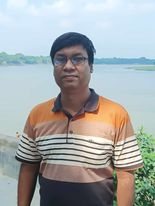
Md. Mahbubul Alam is from Bangladesh. His writer name is Mahbub John in Bangladesh. He is a Senior Teacher (English) of Harimohan Government High School, Chapainawabganj, Bangladesh. Chapainawabganj is a district town of Bangladesh. He is an MA in English Literature from Rajshahi College under National University. He has published three books of poems in Bangla. He writes mainly poems but other branches of literature such as prose, article, essay etc. also have been published in national and local newspapers, magazines, little magazines. He has achieved three times the Best Teacher Certificate and Crest in National Education Week in the District Wise Competition in Chapainawabganj District. He has gained many literary awards from home and abroad. His English writings have been published in Synchronized Chaos for seven years.