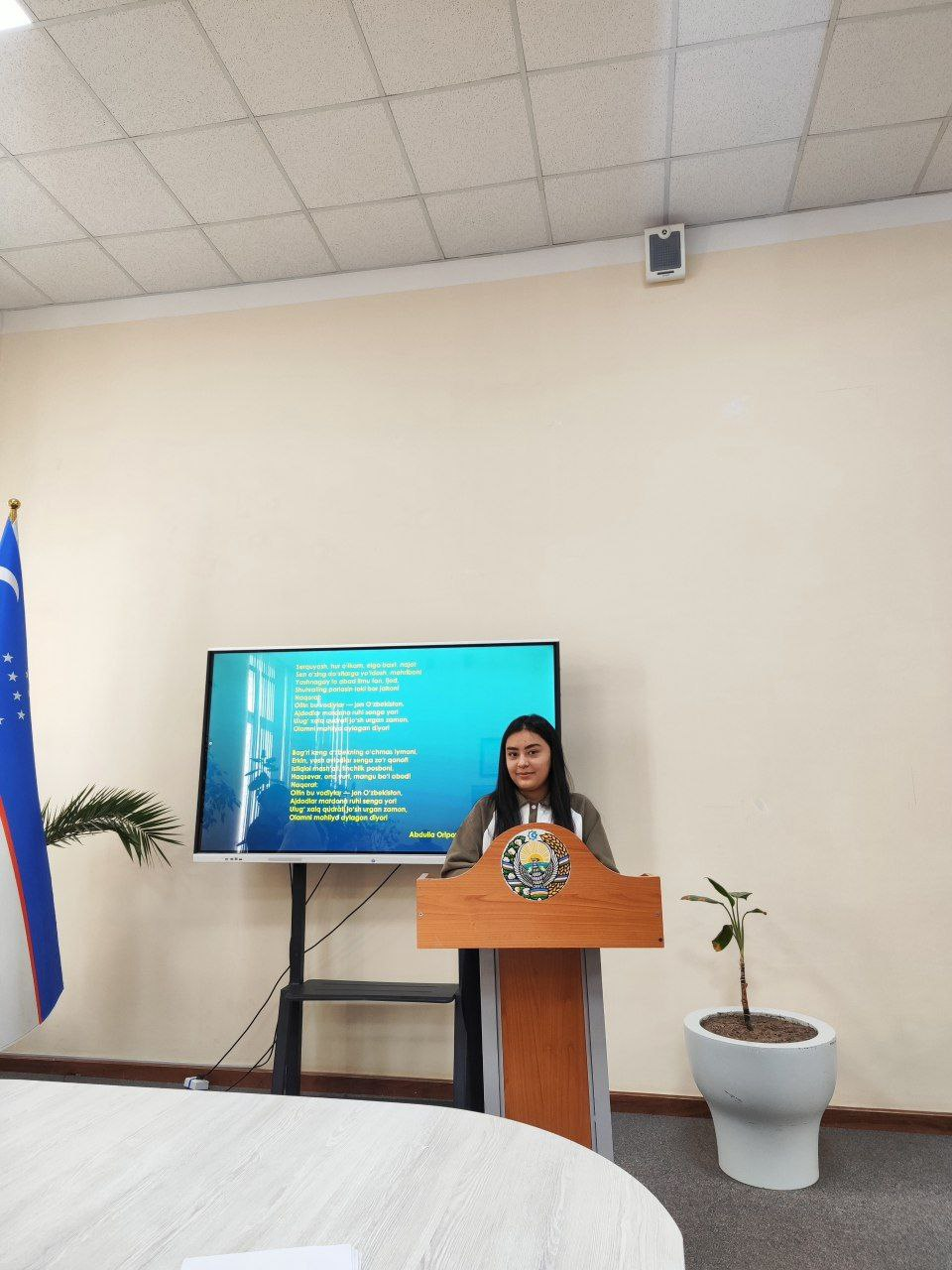
Finding Myself: A Journey of Perseverance and Hope
Life rarely unfolds the way we expect. Sometimes, the dreams we once thought were within reach drift away, only to return stronger when we decide not to give up. My story is not about perfection — it is about persistence, patience, and believing that even the smallest step forward can lead to a brighter tomorrow.
Over the past year, I have discovered that growth begins when comfort ends. I used to be shy and uncertain, but through learning English, I found not just a language — I found a voice. A voice that allowed me to express my dreams, to share my ideas, and to connect with the world. Alongside my studies, I have learned the value of patience and the quiet power of consistency. Life has taught me that even slow progress is progress, and that self-belief is the foundation of all success.
My current goal is to achieve the Navoiy State Scholarship — a symbol of hard work, knowledge, and national pride. To reach it, I actively participate in international conferences, translate short stories, and publish articles about self-development. Each article I write is not just an academic task, but a reflection of my journey — my struggles, my small victories, and my endless curiosity. Every translation I do opens a new window to another world, teaching me empathy, culture, and the beauty of words.
Yet, this journey has not been easy. In 2023, when I entered university on a contract basis, I felt broken. My family could not afford my tuition, and for a moment, my dreams seemed too far away. But I refused to give in to despair. Instead, I took a step forward — I started teaching English at an education center. That decision changed everything. In 2024, I began teaching at another institution, improving my skills, gaining experience, and learning that every hardship hides an opportunity.
Those early days were not simple. I remember preparing lessons late at night, studying in between classes, and pushing myself to do more each day. There were times when exhaustion whispered that I should stop, but hope kept me moving. And in time, I achieved something I once thought impossible — financial independence. I learned that even when life closes doors, persistence can build new ones.
Today, I look back not with regret, but with gratitude. I am endlessly thankful to my family — especially my parents — who have been my greatest supporters. When the world doubted me, they didn’t. Their love became my strength, their belief became my wings. I am also grateful to every obstacle that once made me cry — because each one shaped me into who I am today.
Now, as a third-year university student, I am more focused than ever. My dream extends beyond personal success. I want to launch educational projects that inspire young people to love books, to seek knowledge, and to believe in their own potential. I want to show them that learning is not a burden, but a path to freedom.
After graduation, I plan to pursue a Master’s degree and continue researching, writing, and teaching. But above all, I want to remain curious — to keep learning, growing, and evolving. Because to me, life’s true success is not about reaching the top, but about becoming the best version of oneself through honesty, effort, and compassion.
Dreams are not meant for those who wait — they belong to those who believe, work, and never stop learning. And I have promised myself: I will never stop.
Hayitboyeva M.SH.Student in Kokand universityEmail:hayitboyevamaftuna38@gmail.com
Annotation: Grammar serves as the structural foundation of any language, providing rules and frameworks that enable effective communication. This article explores the crucial role of grammar in language learning, addressing its theoretical significance, practical applications, and pedagogical implications. By analyzing contemporary research and educational practices, this paper highlights how grammar facilitates language acquisition, comprehension, and production. Furthermore, it discusses debates around explicit versus implicit grammar instruction and how grammar integrates with other language skills. Ultimately, understanding grammar’s role enhances both teaching methodologies and learner outcomes.
Introduction Language learning is a complex cognitive process involving the acquisition of vocabulary, phonology, syntax, semantics, and pragmatics. Among these components, grammar—often defined as the set of rules governing the structure of sentences—plays a pivotal role.
The role of grammar in language learning has been a topic of considerable debate among linguists, educators, and psychologists. Some argue that grammar is indispensable for acquiring proficiency, while others advocate for a more communicative, usage-based approach that downplays formal grammar instruction.
This article examines the role of grammar in language learning by exploring its theoretical underpinnings, its function in language acquisition, and the practical implications for teaching and learning. It also reviews empirical studies that investigate the effects of grammar instruction and considers how grammar interacts with other linguistic skills.
Grammar encompasses morphology (the study of word formation), syntax (the arrangement of words in sentences), and, to some extent, phonology and semantics. It provides learners with the rules that dictate how words combine to form meaningful utterances. Without grammar, language would be a collection of random words lacking coherence.
Several theories shed light on the importance of grammar in language learning:
Generative Grammar Theory (Chomsky, 1957) posits that humans possess an innate Universal Grammar that guides language acquisition. According to this view, grammar is central because it reflects underlying cognitive structures. Interactionist Approaches emphasize that grammar develops through interaction and communication, suggesting a more dynamic role where exposure to grammatical input in meaningful contexts fosters learning.
Usage-Based Theories argue that grammar emerges from language use and frequency, highlighting the importance of input and pattern recognition rather than explicit rule learning.Despite differing perspectives, these theories agree that grammar plays some role in enabling learners to produce and comprehend complex sentences.Grammar helps learners decode meaning by signaling relationships between words, such as subject-verb agreement, tense, and word order. For example, understanding past tense morphology allows learners to interpret temporal context, while knowledge of sentence structure helps parse complex sentences.
Producing grammatically correct sentences enables learners to communicate ideas clearly and be understood. Mastery of syntax and morphology reduces ambiguity and improves fluency. Furthermore, grammar knowledge allows learners to manipulate language creatively, forming novel sentences beyond memorized phrases.
Explicit Grammar Learning involves direct instruction about rules, often through formal lessons and exercises. This approach supports conscious understanding and correction.
Implicit Grammar Learning occurs naturally through exposure and use without focused attention on rules. It mimics how first languages are acquired but may be slower and less precise.
Research suggests that a combination of explicit and implicit approaches is most effective, with explicit grammar instruction benefiting learners in formal educational contexts, while implicit learning supports natural language use.
Traditional language teaching emphasized grammar-translation methods, focusing heavily on grammatical rules and translation exercises.
However, modern communicative language teaching (CLT) stresses meaningful communication and tends to integrate grammar instruction contextually rather than isolating it.
Task-based language teaching incorporates grammar within meaningful tasks, helping learners notice and apply grammar in authentic situations. Content-based instruction uses subject matter content to contextualize grammar learning, promoting deeper engagement.
Digital tools and software provide interactive grammar practice and immediate feedback, enhancing learners’ engagement and offering personalized instruction.
Computer-assisted language learning (CALL) environments support both explicit grammar drills and communicative practice. Studies have shown that explicit grammar instruction can improve accuracy and understanding, especially for adult learners. However, overemphasis on drills without communicative practice may hinder fluency development. Meta-analyses reveal that integrated approaches combining form-focused instruction with communicative activities yield the best results.
Despite its importance, grammar instruction faces challenges such as learner motivation, cognitive load, and individual differences in learning styles. Future research should explore adaptive grammar teaching methods, leveraging AI and data analytics to tailor instruction. Additionally, investigating how grammar instruction supports multilingualism and heritage language learning remains critical.
Conclusion
Grammar is a foundational element in language learning, crucial for comprehension, production, and effective communication. While debates continue over the best ways to teach grammar, consensus points to a balanced approach that integrates explicit instruction with meaningful practice. Understanding the role of grammar enriches language pedagogy and ultimately supports learners in achieving linguistic competence.
References: Chomsky, N. (1957). Syntactic structures. Mouton. Ellis, R. (2006). The study of second language acquisition (2nd ed.). Oxford University Press. Fotos, S., & Ellis, R. (1991). Communicating about grammar: A task-based approach. TESOL Quarterly, 25(4), 605-628. https://doi.org/10.2307/3586987Larsen-Freeman, D. (2003). Teaching language: From grammar to grammarian. Heinle & Heinle. 5.Nassaji, H., & Fotos, S. (2011). Teaching grammar in second language classrooms: Integrating form-focused instruction in communicative context. Routledge.
Modern problems of management and strategic solutions
Norqulova Nordona Abdurahim qizi
Qoraqalpogʻiston Agricultural and Agro-Technology Institute, 2nd year student or Jurisprudence, norqulovanordona@gmail.com
Annotatsiya
Ushbu maqolada zamonaviy boshqaruv tizimining mohiyati, uning kamchiliklari hamda ularni bartaraf etishning strategik yo‘nalishlari atroflicha tahlil qilinadi. Boshqaruv tizimi har bir davlatning siyosiy, iqtisodiy va ijtimoiy barqarorligini ta’minlashda muhim omil hisoblanadi. Shu bois, tadqiqotda boshqaruvning zamonaviy yondashuvlari, ularning afzalliklari va mavjud muammolari o‘rganilgan. Ayniqsa, davlat boshqaruvida inson kapitalining o‘rni, jamoatchilik nazoratini kuchaytirish, demokratik tamoyillarni tatbiq etish hamda insonparvarlik g‘oyalarini rivojlantirish masalalariga alohida e’tibor qaratilgan.
Maqolada shuningdek, boshqaruv jarayonlarini optimallashtirish va samaradorligini oshirishda strategik rejalashtirish, innovatsion texnologiyalarni joriy etish va raqamli transformatsiyaning ahamiyati yoritib beriladi. O‘rganish natijalari shuni ko‘rsatadiki, samarali boshqaruv tizimi ijtimoiy-iqtisodiy rivojlanishning asosiy harakatlantiruvchi kuchlaridan biridir.
Kalit so‘zlar: davlat, siyosat, boshqaruv, respublika, ijtimoiy-iqtisodiy rivojlanish, demokratiya, insonparvarlik, jamoatchilik nazorati, inson kapitali, davlat hokimiyati, strategiya, innovatsiya, raqamli transformatsiya.
Annotation
This article provides a comprehensive analysis of the essence of the modern management system, its shortcomings, and strategic directions for their elimination. The management system is one of the key factors ensuring the political, economic, and social stability of any state. Therefore, the study examines modern approaches to management, their advantages and existing problems. Special attention is given to the role of human capital in public administration, strengthening public control, implementing democratic principles, and promoting the ideas of humanism.
The article also highlights the importance of strategic planning, the introduction of innovative technologies, and digital transformation in optimizing management processes and increasing their efficiency. The results of the study show that an effective management system is one of the main driving forces of socio-economic development.
Keywords: state, policy, management, republic, socio-economic development, democracy, humanism, public control, human capital, state authority, strategy, innovation, digital transformation.
Аннотация
В данной статье проводится всесторонний анализ сущности современной системы управления, её недостатков и стратегических направлений их устранения. Система управления является одним из ключевых факторов обеспечения политической, экономической и социальной стабильности любого государства. В исследовании рассматриваются современные подходы к управлению, их преимущества и существующие проблемы. Особое внимание уделяется роли человеческого капитала в государственном управлении, усилению общественного контроля, внедрению демократических принципов и развитию идей гуманизма.
В статье также раскрывается значение стратегического планирования, внедрения инновационных технологий и цифровой трансформации для оптимизации управленческих процессов и повышения их эффективности. Результаты исследования показывают, что эффективная система управления является одним из основных движущих факторов социально-экономического развития.
Ключевые слова: государство, политика, управление, республика, социально-экономическое развитие, демократия, гуманизм, общественный контроль, человеческий капитал, государственная власть, стратегия, инновации, цифровая трансформация.
INTRODUCTION
Management is one of the most ancient social phenomena that has formed simultaneously with human society. It emerged as an independent type of activity in the process of division of labor and cooperation, arising from the need to organize and coordinate people’s activities in social production. In the process of management, tasks are distributed among people, some of whom are formed as leaders, that is, managers, and others as executives – managed.
Today, the effectiveness of the management system is manifested as a decisive factor in the socio-economic development of any state. At the same time, in modern conditions, there are a number of problems and shortcomings in the management system, which directly affect the stability of state policy and the effectiveness of economic reforms. It is for this reason that the introduction of modern mechanisms of improved, strategic approaches-based public administration has become an urgent issue.
The formation of an effective management system plays an important role not only at the level of an enterprise or organization, but also in ensuring the development of society and the state as a whole.
It allows transforming the economy into a stable, competitive and innovative mechanism. At the same time, changes in the management system are inextricably linked with the socio-economic, political-legal and cultural-educational spheres.
From this point of view, there is a need to increase the efficiency of the public administration sector, to deeply study its theoretical and practical foundations, to identify existing problems and develop scientifically based solutions to eliminate them. Studying public administration as a holistic system consisting of interconnected sectors, to deeply understand its essence, to reform it based on modern requirements and to determine its strategic directions is one of the important directions of scientific research of the present time.
MAIN PART
Today, in many countries there is a need to improve the public administration system and implement qualitatively new changes in it. This process requires the rational use of factors that drive the development of the state and society, and the application of approaches tested in the experience of advanced countries.
In recent years, many countries have been introducing innovations in their management systems and taking important steps towards modernizing management. For example, in the Republic of Kazakhstan, within the framework of the educational program “State and Local Governance”, the practice of awarding the degree of Doctor of Public Administration has been established. This program is aimed at training scientific and pedagogical personnel with the potential to study the theory of public administration based on modern scientific methodology, manage innovative projects, and solve emerging problems.
Also, in 2019, the Academy of National Economy and Public Administration under the President of the Russian Federation introduced a scientific educational program in the field of “Doctor of Public Administration (DPA).
Public administration mechanisms involve a theoretical and methodological analysis of the administrative and organizational activities of the state, the functions, powers and structure of state bodies at all levels. At the same time, within the framework of the civil service system, issues of service in local and central authorities, human resource management in the public sector, and the provision of quality services to citizens are studied.
The changes taking place in the life of the state and society create the need for a systematic approach to fundamental and applied research on public administration. Because public administration covers many interrelated aspects of such disciplines as political and legal, socio-economic, philosophical, and sociological. The study of management processes through the prism of these scientific approaches is of great importance for increasing the effectiveness of public administration.
Uzbekistan, pursuing the strategic goal of joining the ranks of developed countries, is also implementing fundamental reforms to renew and modernize the public administration system. In particular, the creation of new systems for training, retraining and advanced training of personnel, as well as the development of scientific and research work, play an important role in this process.
Firstly, the process of forming public administration and civil service as a separate socio-political institution in the modernizing Uzbekistan is complicated. The lack of qualified personnel in the field, the fact that their professional competencies do not fully meet the requirements of the time, negatively affects the pace of development. This indicates the need to improve the organizational and legal framework of management and deepen scientific and theoretical approaches.
Secondly, today our country is undergoing reforms related to the decentralization of public administration. This process requires a review of the powers of local authorities, effective management of territories, and strengthening the scientific and methodological foundations of local governance. Therefore, the study of the local governance system as an integral part of public administration is of urgent importance.
Thirdly, currently the Academy of Public Administration under the President of the Republic of Uzbekistan is tasked with conducting fundamental and scientific and practical research in the field of public and public administration. However, the existing experience has not yet fully provided the opportunity to comprehensively and systematically solve the problems of public administration. Therefore, it is necessary to increase the efficiency of scientific research, create new scientific schools, and expand the ranks of experienced experts.
The process of gradual renewal of the public administration system in the Republic of Uzbekistan is steadily continuing. However, in this direction, one of the important tasks is to eliminate gaps in the education system, implement qualitative changes in the training of management personnel, and systematize scientific research. On this basis, it is necessary to strengthen the integration between scientific research, the educational process, and practice in the field of public administration.
As the Head of our state has repeatedly emphasized:
“Without the creation of an effective system for selecting and training innovative and independent-minded, responsible, initiative-taking, patriotic, and honest personnel who have thoroughly mastered advanced management methods, there will be no qualitative change in public administration.”
Based on this approach, an international scientific and practical conference was organized at the Academy of Public Administration under the President of the Republic of Uzbekistan on the topic “Modern Problems of the Public Administration System and Priority Tasks for Development”. The main goal of the conference is to identify modern problems and shortcomings in the public administration system of Uzbekistan, study foreign experience, determine strategic directions, and develop practical recommendations. More than 200 scientists, representatives of government bodies, and international experts participated in the event. Heads of public administration institutions from Kyrgyzstan, Korea, and Kazakhstan also participated online and discussed cooperation in the development of public administration.
The conference featured sections on topics such as the evolution of the state administration system, political leadership, organization of governance in the social sphere, and management practice in the digital economy. This event served to strengthen the participants’ strategic planning, analysis, and modern management skills.
In conclusion, the role of the head of state in state administration is incomparable. If a state is led by a fair, patriotic, educated, and responsible person, such a state will be far from crisis. At the same time, the active participation of citizens in governance is also important, because the development of the state is closely related to the initiative and actions of the people.
The head of state must create the necessary opportunities for citizens to realize their potential. The governance system of each state has its own characteristics, and if it is based on the principles of democracy, the rule of law, and taking into account the opinions of citizens, shortcomings in governance will be reduced. To this end, the establishment of priority strategic directions by state leaders serves to eliminate problems in the governance system and increase its efficiency.
CONCLUSION
In today’s globalization environment, modernizing the public administration system, creating effective mechanisms, and forming a management model based on the human factor are becoming the strategic goals of every country. If the public administration system does not operate in line with the requirements of the times, it becomes difficult to ensure consistency and stability in the development of society. Therefore, the management reforms being implemented in the Republic of Uzbekistan are aimed at strengthening the interaction between the state and society, strengthening the principles of openness, transparency, and accountability.
The fundamental changes being implemented in the field of public administration rely, first of all, on human capital. Because qualified, dedicated, and innovative personnel are needed for the successful implementation of any reform. In this regard, increasing the level of knowledge of civil servants, strengthening their professional training, and developing their digital competencies are among the most important tasks of today.
In addition, studying foreign experience in the public administration system is also of particular importance. In particular, the management practice of countries such as the USA, Great Britain, South Korea, Singapore, Kazakhstan and Russia shows that the introduction of innovative technologies, the creation of a digital management system and the widespread application of the “single window” principle can improve the quality of public services and reduce bureaucratic obstacles.
Significant results are being achieved in this direction in Uzbekistan. In recent years, electronic governance platforms have been introduced in the public administration system within the framework of the “Digital Uzbekistan – 2030” strategy, and public services are being automated.
At the same time, reforms are being carried out in the public administration system, such as evaluating employee performance, strengthening their personal responsibility, and introducing a performance-based management system. Also, one of the pressing issues in public administration is the deepening of the decentralization policy by expanding the independence of local authorities and increasing their financial and organizational capabilities. This will serve to solve problems on the ground in the regions, strengthen the participation of the population in management processes, and develop civil society.
In this regard, the following areas are of priority in improving the public administration system:
1. Improving the system of training and advanced training of public administration personnel, updating curricula based on modern methodologies.
2. Introducing innovative and digital technologies in public administration, forming a management culture based on data analysis.
3. Accelerate the process of decentralization by expanding the powers of local government bodies and providing them with resources.
Improve the quality of public services, develop convenient and fast interactive services for citizens.
4. Support scientific research in the field of public administration and strengthen the practice of making management decisions based on a scientific approach.
In conclusion, the reforms being carried out in the Republic of Uzbekistan to improve and increase the efficiency of the public administration system are aimed at ensuring the sustainable socio-economic development of the country. The success of this process depends, first of all, on the qualifications of management personnel, the patriotism of civil servants and the activity of citizens. In the future, through the widespread introduction of scientifically based management approaches, strengthening international cooperation and the formation of an innovative management culture, Uzbekistan can be recognized as a model of effective management in the world.
LIST OF REFERENCES
1. Rakhimov Kh. (2024). Transport economics: a textbook. – Tashkent: Innovative Development Publishing House, 294 p.
2. Rakhimov Kh. (2025). The concept of economic efficiency of the railway transport system and indicators of its assessment. // Journal of Economic Development and Analysis, No. 6, – P. 3.95–101.Karimov I.A. (2015). High spirituality is an invincible force. – Tashkent: Ma’naviyat Publishing House, 176 p.
4. Tokhtayev A. (2022). Theory and practice of public administration. – Tashkent: TSIU Publishing House, 312 p.
5.Khojayev B., & Omonov N. (2023). The importance of strategic planning in modern management systems. // Journal of Social and Economic Research, No. 4, – P. 55–62.
With injustice and discrimination etched in his eyes,
He walked, etching words
That burned with fire upon the stone paths.
With a heart set aflame he raised the flag,
And with a silent outcry
Shook the closed walls of power,
Yet only echoes of his voice
Remained in the shadow of iron bars.
Even through twenty-seven years of long silence,
He did not yield.
Using books and dreams as his lamp,
He planted the seeds of dawn.
The world heard his silence,
And in the light of release he spoke,
“I will embrace the fallen nation
With flowers of forgiveness, not the blade.“
Nelson Mandela, his name
Now remains a flame within the soul;
The one who planted saplings shining in black earth,
Awakening the wilderness from its sleep,
Shaking the slumbering hearts of the world.
The Light on a Wet Shoulder
On life’s journey, everyone
Meets a storm that soaks them to the bone.
Some stagger in the wind,
Embracing their drenched souls,
Then collapse or sink to the ground.
Even in that rain,
Is there truly no path
To follow a single ray of light?
Some, beneath lightning-split skies,
Hear a whisper soft as breath,
Find a light gently spreading
Through cracks in gray clouds,
And in the warmth settling on wet shoulders,
They call even this storm a festival’s drumbeat
And sing a song of thanks.
I too, in my youth,
Was thrown into a dark prison by the pain of illness,
But clung to the rope called prayer,
Never letting go of the star of hope.
And so today, I
Kindle flames of poetry upon a withered heart,
Offer warm light to hungry souls,
And seek to bloom, unbroken in the storm,
As an edelweiss bearing the fragrance of heaven.
The Sun
At every dawn, tearing through the veil of darkness,
With golden feathers fluttering, the sun ascends.
The source of all things, the breath of the Creator,
Pulsates endlessly, whispering its steady rhythm.
Its fiery gaze pours upon the Earth,
An eternal lamp holding the flame of life.
The pilgrimage that dances along the invisible path
Is a perfect symphony woven by God’s hand.
Beneath that light and warmth,
Flowers quietly open their lips, fruits ripen in the light.
All offer thanks for the silver blessings
Scattered by the sun,
And offer fragrant worship to the Master of the cosmos.
Wherever I am, burning with all my being,
With a heart that drives back the darkness,
I will become a small star that brightens the world.
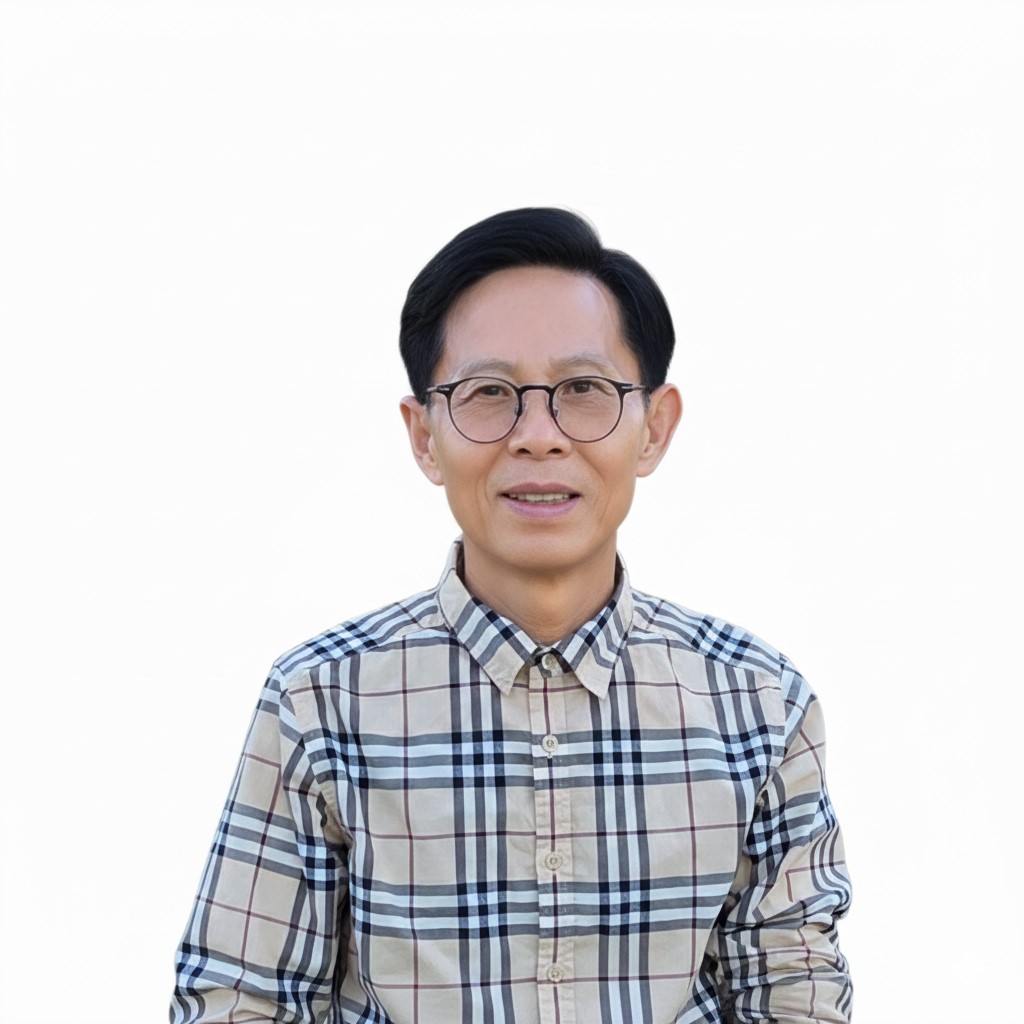
He is an international poet and writer from South Korea. He achieved Ph. D. in English literature from the graduate school of Hanguk University of Foreign Studies in Korea. He was a lecturer at Hanguk University of Foreign Studies and an adjunct professor at Incheon Junior College in Korea for about 20 years. He has published 8 poetry books, one novel, and one book of essays. One poetry book, “Duel among a middle-aged fox, a wild dog and a deer” was a bestseller in 2012, one page from the book of Letters for Teenagers was put in textbooks of middle school (2011) and high school (2014) in South Korea, and four books (Easy-to-read English Bible stories, Old Testament(2017), New Testament(2018) and Teenagers, I Support your Dream”) were bestsellers.
He was granted a Rookie Award for poetry by the magazine of Monthly Literature Space in South Korea, and he received the World Peace Literature Prize for Poetry Research and Recitation, presented in New York City at the 5th World Congress of Poets(2004). He published poetry books, “Prescription of Civilization” and “Flowers of Thankfulness“ in America.(2019). He received Geum-Chan Hwang Poetry Literature Prize in Korea(2019), The Golden Prize from Poetry City and International Indian Award(literature) from WEWU(World English Writer’s Union)(2019). He published the English version of “Heart of God”(2020, a bestseller) and its Spanish version in America(2021, a bestseller).
He received The ‘ORDER OF SHAKESPEARE’ MEDAL from Motivational Strips, Golden Words Certificate on Mother’s Day from Beliterat.com and WORLD POETIC PILLAR AWARD 2020-2021 from WNWU (World Nations Writers Union)(2021). He published my autobiography, “Secrets and Fruits of Mission” in USA(2021, a bestseller). He received Poetry Star Award from Chinese Literature Magazine and The International Issue Poetry Magazine(2021). He received Eva Prize from The Moment Inspirational News1(2022). He received Certificate of Honour from Oxygen Pen(2022). He published the Chinese version of his book, “Heart of God” in Amazon and reached Amazon bestseller #1 in Chinese eBooks. He received Tagore Memorial Honours(2022) from Motivational Strips with joint association of Department of Culture, Government of Seychelles and its Journal SIPAY. He received Kazi Nazrul Islam Birth Anniversary Literary Award-2022 from ShahityaPata(2022).
He received CERTIFICATE Nelson Mandela 2022, CERTIFICADO INTERNATIONAL VIVCTOR HUGO and MAHATMA GANDHI INTERNATIONAL LEADERSHIP AWARD 2022 etc. He got The Christmas Literary Honors 2023 from Motivational Strips and Golden Bridge award from the Rahim Karim World Foundation in 2023. His poems were published at the literary magazines or anthologies of about 26 countries such as America, India, Mexico, Chile, Belgium, Greece, Indonesia, Italy, England, China, The Philippines, Peru, Serbia, Colombia, France, Sri Lanka, Uzbekistan, Dubai, Tunisia, Kyrgyzstan,Portugal, Syria, Romania, Nigeria, Lebanon and Pakistan.
My Short Bio (Wansoo Kim)
Wansoo Kim achieved Ph. D. in English Literature from the graduate school of Hanguk University of Foreign Studies. He has published 8 poetry books. One poetry book, “Duel among a middle-aged fox, a wild dog and a deer” was a bestseller in 2012. He won the World Peace Literature Prize for Poetry Research and Recitation, presented in New York City at the 5th World Congress of Poets(2004). He published poetry books, “Prescription of Civilization” and “Flowers of Thankfulness“ in America.(2019), received Geum-Chan Hwang Poetry Literature Prize in Korea(2019) and International Indian Award(literature) from WEWU(World English Writer’s Union)(2019).
He published “Heart of God” in America(2020). He published an autobiography book, “Secrets and Fruits of Mission” and a poetry book, “Flowers of Gratitude”(2021). He received India’s Independence Day Literary Honors 2021”(2021). He published the Chinese version of his ebook, “Heart of God,” which reached Amazon bestseller #1(2022). He published poetry books, “Captive of Crazy Love.”(2023) , “Teachings of Mother Nature(2024) and Exclamation Mark of Tears(2025)
About the hadiths of Imam Bukhari. Imam Bukhari. He is considered one of the most famous people of the Islamic world and is called the “Imam of Muhaddis”.
We can come across many hadiths during our life, but the hadiths of Imam Bukhari are very beneficial for Islam and cause a radical change in the way of life.
There are 7379 hadiths in the book of Imam Bukhari “Al-jame’ as-sahih”. These hadiths are about the good and bad sides of people, about honoring parents, about giving zakat to relatives, about pride and love. It is a hadith. After hearing the name of this hadith, I had a question. How can a person insult his parents, and I learned the answer to this question after reading this hadith. The hadith begins like this: A person does not insult his parents!
Abdullah bin Amri narrates: “The Messenger of God, may God’s prayers and peace be upon him”, said: “One of the greatest sins that a person commits is to insult his parents!” Then he said: “O Messenger of God, how can a person insult his parents?” they answered. I read this hadith and wrote down the sentences that I remembered for people. No one should insult the parents of another person, because the person who insults him is considered to have insulted his own parents.
Abdukakhorova Gulhayo was born in 2006 in Namangan region. Currently, he is a 2nd-year student of the Uzbek language Department of Philology at the University of Business and Science. Ambassador of the International Organization for the Protection of Children’s Rights in India to Uzbekistan. He is the author of many scientific and journalistic articles.