The same fire called Love burned us both. My sorrow-sister – you, firewood. You blazed like a tree, I burned like a man. Our smoke became one spirit, (somewhere, fire made peace with water) From you – a fist of ash remained, From me – a fist of earth. Tell me… which of us burned more beautifully, firewood?
YOU AND I
I sought the truth- but you came to me as a gentle lie.
I sought the dawn of hope- but you came as a trembling “perhaps.”
I sought the joy that sings- but you came as a quiet consolation.
I sought forever- but you came as a fleeting lifetime.
And on this wide earth, I searched for the self I had once lost in the wind… and it was you who stood before me.
POEM WOMAN
Seeing your delicacy, they compared you to a flower…
Seeing your mischief, they compared you to the wind…
Seeing the tears in your eyes, they compared you to the sea…
Seeing your boundless loyalty, they compared you to the earth…
But you, woman, are a poem created by God. And I compare you to a poem that soothes my soul. Your name is Poetry…
You were born like a poem. Verse by verse, you live. Syllable by syllable, you weep. Line by line, you laugh. With your laughter, you wipe away the world’s sorrow.
Sometimes you are joyful like a poem. Sometimes sorrowful like a poem… Yet, woman, you are eternal like a poem! Your name is Poetry…
Prof. Phd. Rasmiyya Sabir’s nine books have been published in Azerbaijan, Turkey, Uzbekistan, and Iraq. She is one of the members of the Union of Writers of Azerbaijan and Chuvashistan. At the same time, she is a co-founder of the Union of the World’s Young Turkish Writers. More than 130 poems have been composed by the composers. Her first CD and cassette with the music from her poems was recorded in 2002. Her poems have been translated into many foreign languages, including Turkish, Russian, English, Georgian, Persian, and published in Turkey, Iran, Iraq, Sweden, Germany, Bulgaria, Uzbekistan, Kazakhstan, and elsewhere. She has been awarded many prizes. The first prize was given to her in the year 2000 in a competition dedicated to Fuzuli. She has been chosen “The person of the literature of the year” by the International Organizations called KIBATEK and VEKTOR. She has translated Modern Azerbaijani poems into Turkish and modern Kazakh and Uzbek poems into the Azerbaijani language. She has been represented in different poetry festivals in Azerbaijan. She has gained the benefit of the President’s Fund of the Azerbaijan Republic.
And the voice of the question when it emerged from fear.
In the hand of the first human, it became a tool that holds life,
A spark that lights the darkness,
A ember that preserves the body from the cold of annihilation,
And the first line on the cave wall.
It was a home when a home was unknown,
A sky to seek shade beneath,
A ground that bears the tremor of a step,
And a language that speaks without letters.
From it the story was launched,
Upon it the cry was broken,
In its hollows the trace dwelled,
And through it, humans understood the meaning of being.
In all its transformations, it bore witness,
In the grave, a mark,
In the temple, a symbol,
In the crown, glory,
And in sculpture, immortality.
O you,
Silent one who thinks,
Heavy one who speaks with wisdom,
Secret one dwelling at the edge of time.
I AM NOT AN IDOL
I am not an idol,
nor a silent wall where your voice hides when it fears the void.
I am the breath of the universe when its chest feels tight,
and I am the wound that refuses to become a scar.
I am woman,
not a shadow that follows you wherever you walk,
nor a mirror that polishes your face to see your own glow in it,
but another face of truth,
questioning you when you long for forgetfulness.
I am not a stone that adorns your throne,
I am a wave uprooting silence from its roots,
and a land returning to the seed the whisper of eternity.
You want me as a chain,
but I want you as a journey,
searching with me for a meaning beyond flesh and blood.
I am not an idol,
I am a question dwelling in your eyes,
and an answer written only with the freedom of the soul.
I am woman,
and if you understood me…
if you stood before me without fear and without dominion,
you too would become… human.
A TEST FOR CONSCIENCE
In the silence of closed homes
The stone bleeds from the heat of bodies,
And the gaze of shadows trembles in the corners of the soul,
As if time itself fears to witness.
The hand that strikes is but an echo,
An echo hiding in the hollows of the heart,
And a letter lost amidst the silence of screams,
A soul learning to live without a voice.
In every wound, a river of questions is born,
And in every tear, the philosophy of existence takes shape:
Is freedom merely a distant dream,
Or a secret hidden in the depths of anguish?
The woman is not merely moving silence,
Nor a stone dwelling between walls,
She is a light slipping through the cracks of pain,
A river flowing despite the chains,
And wisdom that cannot be broken by the striking hand.
Every fracture teaches the stone to dream,
Every tear gives the shadow new colors,
Silence becomes a cry,
Pain opens gates to light,
And resilience births a new horizon for life.
Violence against women is a test of life,
An experiment of human awareness,
A test for conscience,
And where the soul endures,
Light springs from the depths of the stone,
And dignity learns it cannot be killed,
Silence becomes strength,
And freedom echoes in every heart that remained silent,
Until the world understands that true power
Lies in respect, and in enabling the soul
To bloom without limits.
TAGHRID BOU MERHI is a Lebanese-Brazilian poet, journalist, and translator, whose writing carries echoes of multiple cultures and resonates with a deeply human spirit. Born in Lebanon, she currently lives in Foz do Iguaçu, Brazil, after spending significant periods in various countries, including eight years in Italy and two in Switzerland, where she absorbed the richness of European culture, adding a universal and humanistic dimension to her Arab heritage.
Taghrid writes poetry, prose, articles, stories, and studies in the fields of thought, society, and religion, and is fluent in six languages: Arabic, English, French, Italian, Portuguese, and Spanish. This allows her to move between languages and cultures with the lightness of a butterfly and the depth of a philosopher. Her works are distinguished by a clear poetic imprint even in the most complex subjects, combining aesthetic sensitivity with a reflective vision of existence.
To date, she has published 23 original books and translated 45 works from various languages into Arabic and vice versa. She has contributed to more than 220 Arabic and international anthologies, and her works have been translated into 48 languages, reflecting the global reach of her poetic and humanistic voice.
Taghrid serves as the head of translation departments in more than ten Arabic and international magazines, and she is a key figure in bringing Arabic literature to the world and vice versa, with a poetic sensitivity that preserves the spirit and authenticity of the text.
She is renowned for her refined translations, which carry poetry from one language to another as if rewriting it, earning the trust of leading poets worldwide by translating their works into Arabic, while also bringing Arabic poetry to the world’s languages with beauty and soul equal to the original.
She is also president of Ciesart Lebanon, holds honorary literary positions in international cultural organizations, serves as an international judge in poetry competitions, and actively participates in global literary and cultural festivals. She has received dozens of awards for translation and literary creativity and is today considered one of the most prominent female figures in Arabic literature in the diaspora.
Her passion for writing began at the age of ten, and her first poem was published at the age of twelve in the Lebanese magazine Al-Hurriya, titled The Cause, dedicated to Palestine. Since then, writing has become an inevitable existential path for her, transforming her into a flower of the East that has spread its fragrance in the gardens of the world.
Huge cloud symbols hang low as the hand of fortune
there is a kind of forgetting that cannot be foretold
its shadow crouches on the roof, panting
sunlight is bright, as if it will never fade
I once searched for pollen on the grass
a strong wind blew from the clouds. When I returned
I found the river under the door had long since gone
hanging beneath Mars
The afternoon, refusing to end, pushes away the setting sun
the house of a lifetime slips from the shoulders
all flowers on the grass have turned black
flesh escapes from the petals
a flower’s life shortens to a single kiss
The afternoon, delaying its upgrowth, tell me
who is it, at the speed of a tower’s shadow leaning
fading away in the act of walking
January 4, 1992
Sunset Glow
When the sunset glow unfurls the whole day
a pillar of unearthed radiance shoots up to the sky
you have a thousand reasons to step into coolness
like a horse, walking toward heaven’s feast
The sunset glow appeared early, first in the lungs
then spread to the face
if it burns, it’s a sick child
pouring out roses of imagination
Unfurl, brilliant sunset glow
you’ve burned for too long
that even the form you drag is rotting
yet link a child’s loneliness to a distant place
Now he lives only by his flaws
possessing more landscapes, but unable to hold any
just as the first sunset glow belongs to another land
allowing a white horse to return whiteness to transparency
January 8, 1992
The Black Tower
The first floor will house a woman of non-being
her long hair upsets flowing water
regaining a ghost in the vacancy of her body
The second floor houses a graceful emperor
who abandoned his throne and glory
to pursue a phantom, an echo
Stones thrown from the third floor
scatter across the snow
walking emptily, to gather on the moon
The spire raised toward eternity
occupies the cold
gathers light, the air grows sharp
In the basement, dogs are kept, and devils too
they crawl filthily on the steps, whimpering
pressure makes the darkness seem solid
January 15, 1992
The Setting Sun
The setting sun displaces the scenery in my heart
like a drowning man, searching for traces of his own passing
the setting sun, dividing dizziness evenly among the day’s clouds
An hour’s setting sun reflects into the living room
guests in feathered robes wear restless faces
their white seats roll down from on high
a winter freight train maintains a calm speed
after slopes and tunnels
the setting sun stretches boundless, a winter freight train
gobbling the distance, excreting
stations, snow-laden yards, the living room beneath clouds
a great fire reddens the clear nerve of a needle
If things transform, the setting sun will be the hinge
when summer’s light and shadow, from bread to book pages, enter humanity directly
all evening, snow falls on the railroad ties
and our thoughts, mixed into the darkness
a life confined by the setting sun—who can still step outside
to see the setting sun without end, snow oozing tears under pressure
the living room collapses when glanced back at, flames blazing inside the body
Let a few summers ripen on our bodies, toil bitterly
we poets, grown wealthy, overflow in the living room
go lie beside the witch next door, then lie cold
easily ended by a single word
The setting suns overlap. Weaving hands never pause—
here we are, the stove warming our bodies, making them weak
when you tire of thought, we are silence
balancing your conversations
we are echoes, easily spoken
an hour’s beauty, reflected by the setting sun into the fire
In unusually calm air, the setting sun slices skin
pointing to griefs of early years
the man who’s been away from home five years returns from the dust
mouth holding tiny spring fish fry, crying like a bird
he lingers long before the door
until another spring, the pond fills once more
January 15, 1992
Butterfly
A butterfly is a sleep longer than a lifetime
it shakes off the material that clings to it
entering another dimension of existence
as brief as the radiance of summer
who is dreaming of the butterfly, never waking in whole lifetime
It makes me think of fallen leaves and snow, the early days of the foliage
of the brave mother beneath the tree
she opened the brass dressing case
waiting for someone’s whole life
Shifting ceaselessly in the mood, the butterfly
carries emptiness within its body
appearing in someone’s dream
it does not dream of anyone
whoever it touches vanishes in mid-flight
like a phantom reclaimed by the mirror
Brief, yet longer than our whole life
when it alights, the dark cry of dust surges up to our fingertips
when it flies along the long plane of a person
the dream it unfolds is darker and deeper than hope
January 15, 1992
Crescent Moon
Before the crescent moon rises, we are in darkness
wordless and awkward
souls are right beside us
yet we have not yet been born
The crescent moon rises, all things smaller and colder
behind the moonlight live some other kinds of petals
they lean down, crossing the boundary
like coffins unaware of which world they belong to
If the crescent moon rises
the flowing water will glimmer with silver light
whoever stores spring branches at this moment
their hope will come to nothing
With honey of many uses
anoint our parts
that graceful climate, the chatter of old age
in the dazzling air that records glory
recall the history of the soul
And on the moon, it is always snowing, snowing stones
ten thousand hectares of dust, not falling for a long time
The moon has risen
the moon regains ghosts in the hollows of the body
the world is darker; we once dwelt on the moon
now none of us survive
January 19, 1992
Word: Bees Fluttering
Bees, fluttering over early autumn grapes
at the fruit stall by the crossroads, like sailors in striped shirts
drunk and staggering, carrying a whole world
pointing out the sweetest cluster for you
As long as bees flutter, this world will never vanish
their frail bodies, storing pollen of the departed
they were once just bees, once seen
on window screens dented by the wind after rain
Stinging autumn’s increasingly transparent skin
childhood is shorter than a moment of pain
who secretly pinches the morning glory’s bell
listening to angry dark clouds roll inside
Who passes noon carrying a world no longer whole
and sees bees fluttering. “Buy some, brother
just picked fresh!” “How much to buy
that swarm of bees on your grapes…”
Bees fluttering. They were once a swarm of bees
later turned into a word, stored in the radio
a monotonous sound. Now it’s bees returning, not the word
but they bring more words: a poem
with nine “bees” inside
January 21, 1992
Ma Yongbo was born in 1964, Ph.D, representative of Chinese avant-garde poetry, and a leading scholar in Anglo-American poetry. He is the founder of polyphonic writing and objectified poetics. He is also the first translator to introduce British and American postmodern poetry into Chinese.
He has published over eighty original works and translations since 1986, including nine poetry collections. He focused on translating and teaching Anglo-American poetry and prose, including the work of Dickinson, Whitman, Stevens, Pound, Amy Lowell, Williams, Ashbery, and Rosanna Warren. He published a complete translation of Moby Dick, which has sold over 600,000 copies. He teaches at Nanjing University of Science and Technology. The Collected Poems of Ma Yongbo (four volumes, Eastern Publishing Centre, 2024) is composed of 1178 poems celebrating 40 years of writing poetry.
Jovana Lj. Milovanović is a Serbian poet, born on December 10, 2000. She is a member of the Association of Young Artists of Culture. Her poetry collection In the Beginning There Was a Woman is currently in preparation.
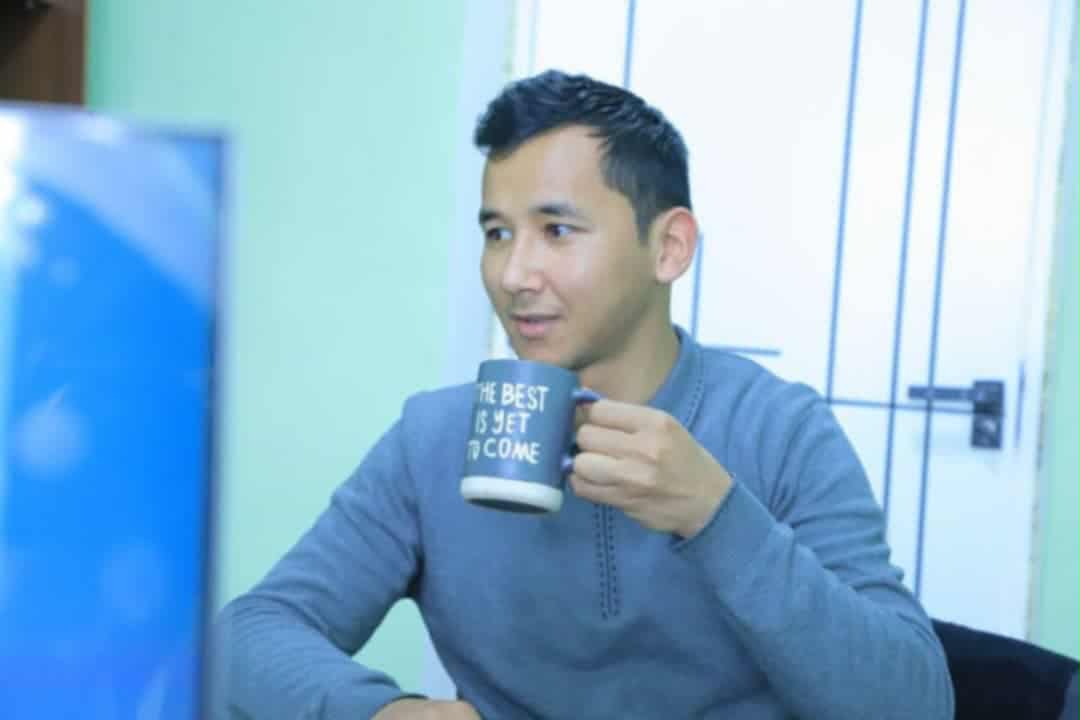
Jakhongir Nomozov is a young poet and journalist from Uzbekistan. He is also a Member of the Union of Journalists of Azerbaijan and the World Young Turkic Writers Union.
Mother, I’ve been deceived by this world, By the feelings it so easily unfurls. My heart is aching, heavy with pain — Mother, today, I feel drained.
Let me rest upon your knee, Sing to me a melody. Today, dear Mother, I need to say, So many words I’ve held at bay.
Your daughter never truly fell, She only bowed, and wore it well. They tried to break me — let them try But breaking me became their cry
Still, deep within, I cracked apart When friends betrayed my loyal heart That day still haunts me, lingers on — Why can’t I let it just be gone?
But hush, don’t worry, I’ll be fine Though shadows fall, the sun will shine So come, dear Mother, sit with me Let’s talk with hearts, and just be free
I’m tired of the masks of faces,
the lies have begun, the truth has stopped. False pictures become interlocutors, and now we live without seeing each other. I’m leaving on the road with my destination unknown, A friend walks beside me, a smile on his face. I don’t know where he got this mask he’s wearing now. Some face meets me, and the face changes as soon as he leaves me. Masks are so skillfully made, even a wise eye can’t sell them. When it’s not written, only masks, expiration dates and dates. Tell me too, where is that, the workshop of the mask maker. I found it. It’s an ownerless shop, but there’s a sign on the facade that says: “Take the mask you want and use it, as long as you leave the original face as payment!”
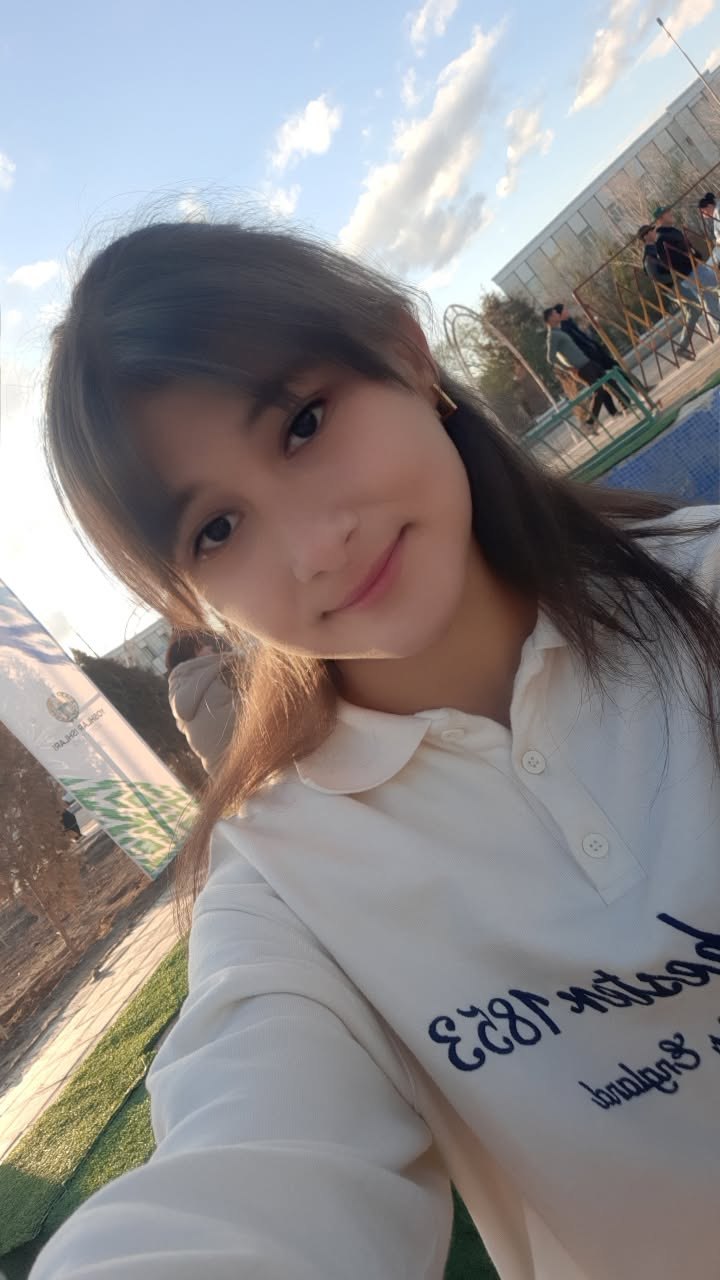
Munisa Rustamova is a 16-year-old creative mind from Yangiariq district, Khorezm region, Uzbekistan. She has a deep interest in both creativity and self-expression. Through poetry she gives voice to her inner feelings, emotions, and personal experiences. Her verses reflect a sincere and powerful connection to the human soul.