The sun’s warm and broken rays disappeared. As the world dressed itself in black, owls shrieked with a chilling ugliness. Some people know better than anyone how terrifying an enemy the dark night can be—those are the ones who live in solitude.
When Sveta’s children suggested placing her in a nursing home, she had refused. And now, in a spacious house, she was left utterly alone. With age her bones weakened, seizures grew worse, and Sveta, helpless, longed for nothing more than a kind word. She cursed fate—for taking her husband seven years ago, and for scattering her children far away, like a volcano erupting from her heart, never to return.
Autumn had arrived, bringing a biting chill. The heavy black clouds above seemed to glare down at her. She went inside, intending to watch television for a while. The clock ticked like tireless ants in the field, yet to Sveta, time seemed to have stopped. Nothing on TV brought her joy; she grew bored. Entering the guest room, she slowly searched through the cabinet and found what she was looking for—the only keepsake left from a broken family: a photo album. Opening it, her eyes fell on the first page—a family portrait. In an instant, tears didn’t fall from her eyes, but blood.
Her little son Oleg, who had first spoken with the words “Mum, mum,” and her daughter Marina, who once prepared for a whole week to recite a poem at a holiday, appeared vividly before her eyes. As she thought of it, she realized the sweetest time for a mother was her children’s childhood. She longed to return to those days filled with tender worries. One by one, her memories poured out. Yet the same children who had never been deprived of her love, strength, gentle words, and money, now showed no interest in their mother’s condition—whether she lived or died, whether she was warm or cold, it was all the same to them. Bitterness filled her heart.
When she saw the photograph from her wedding night, she was struck with yearning for her husband. “If only he were alive now, perhaps I would not be so humiliated,” she thought. Sveta’s soul was gone—only her body remained. Suddenly, a thunderclap split the sky, shaking the windows. Panic seized her. She felt as if she were burning from within, as though left to scorch in the middle of a desert. She longed to turn her face to the rain and rushed outside.
She had lost herself, running back and forth across the yard, as though someone were chasing her but could never catch her. She laughed so loudly as she ran that her voice seemed to echo with the thunder. The old white dog “Belka,” tied in the corner of the yard, barked at her without pause. At one point, she took too wide a step, slipped, and fell backward, striking her head on the ground. Unable to withstand the pain, she burst into tears. Her sobs mixed with the rain. In the embrace of the pitch-dark night, bright days flickered before her eyes.
Years ago, it had rained like this too. Sveta rocked Oleg to sleep in the cradle, while her husband Ivan read fairy tales to Marina by candlelight. She had not known then that fate’s wheel would turn so cruelly. If she had foreseen it, she would never have let her children slip from her embrace. She would have taught them from childhood that it is not man who chases after sustenance, but sustenance that follows man. At that moment, she felt another sharp pain in her body. A seizure gripped her; her tongue rolled back, foam gathered at her lips. Helpless before fate, she collapsed. In the winter night, no one witnessed her agony—no one but the old dog in the yard.
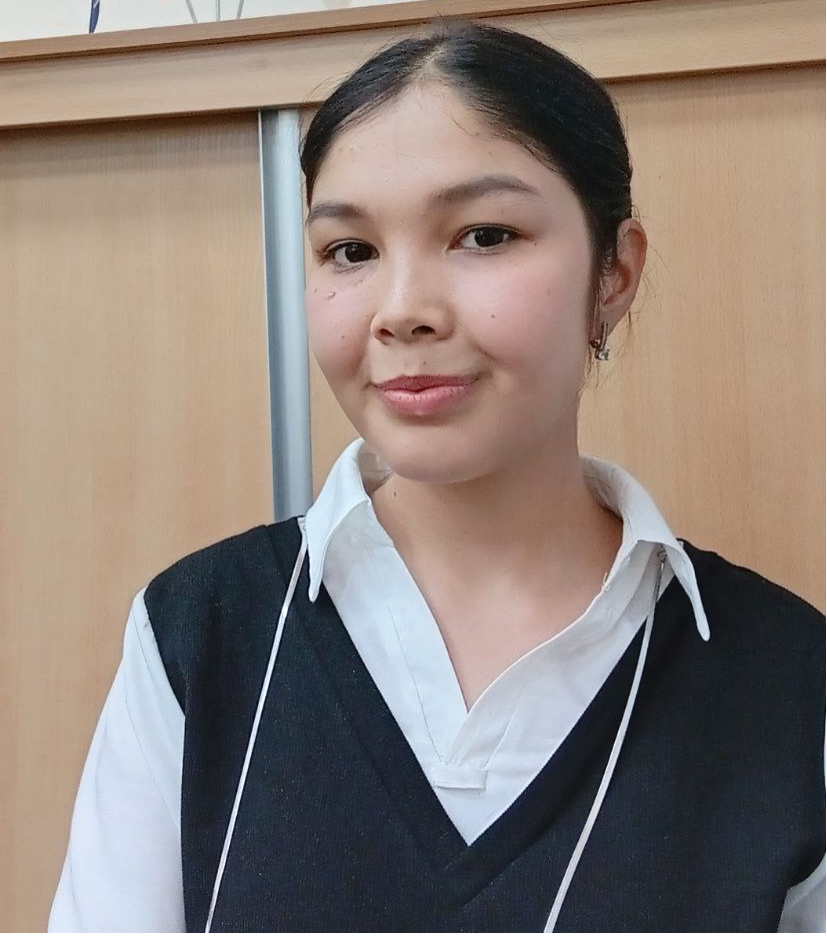
Ablakulova Dilfuza Komiljon qizi was born on March 8, 2006 in Payariq district, Samarkand region. Currently, she is a 2nd year student of the Faculty of Public Law, group “B” of Tashkent State University of Law. Volunteer of the University’s Legal Clinic, “Qomus” Clubs, and representative of the student committee.
Beneath the hill, grass arranges itself into a song. The wind moves through the leaves. I sit counting threads of kitchen smoke, each one a beat of passing time, and you are a gentle rest note. If I could take the infinite distance and shrink it into my hand, your silhouette would fit there like a trembling dew on a blade of grass at dawn, like the last winter light warm enough to hold a season of longing.
Perhaps every season hides a waiting, and we are lost in the instants where one season meets the next. The hill wake, birds sing into the open air, and within that song I hear your footsteps crossing through layers of mist and bands of young sunlight.
Halfway through this journey called life, I realize every meeting is fate, and every parting is fate too. When something dissolves it does not truly vanish but transforms into another form, like smoke melting into wind, like light hiding in the clouds. Life’s changes sometimes wound us, yet it is through impermanence that the heart opens and learns gratitude for what once arrived.
I want to hold the sky’s thin thread as if holding your fragile hand, so near and so real. But the season shifts and the wind takes away its secrets, leaving only the scent of resin and someone’s distant lute on the slope, a note falling into the grass and turning into a lingering farewell.
If you ever return, remember to cross with me the landing where seasons meet, where we once watched leaves fall without sorrow because we trusted that in every fallen leaf a green seed stirs, and love still breathes softly somewhere between you and me on the sun-named hill.
I have learned that letting go is not forgetting but letting things return to their rightful places, like water finding the river, like wind returning to the sky. Some longings must be laid down to become peace, and some loves endure only when we do not cling. From that, my heart becomes as light as a cloud drifting over the hill where seasons keep changing, and the heart no longer fears loss.
Autumn is the most delicate season. Leaves shift in the soft music of time, change colour in a romance all their own, and fall for me to walk through like brief, fragile clouds. The wind touches the skin when I forget my coat. The desire for something warm, a cup of cinnamon and roasted squash, a lover’s scarf places me inside a time-box of memories, both discovering newness and wanting to curl into warmth beside the hearth.
Autumn turns me into the most innocent, hopeful version of myself. Something strong urges me to rewrite simple things into small adventures. I hear songs that blend the craving to touch raw nature with the rapture of perfect colour. The joy of lying outside, resting my head on a loved one’s lap, holding a book to shade against the sun, makes me see the unpretentious beauty of the season.
I want to remember how fragile this weather is, and how easily people open and become vulnerable when they meet during the changing days. For me, autumn is the beginning of something better, the time when the old hard shells are shed to reveal a smiling child beneath, who still knows how to love, to live, and to smile through change.
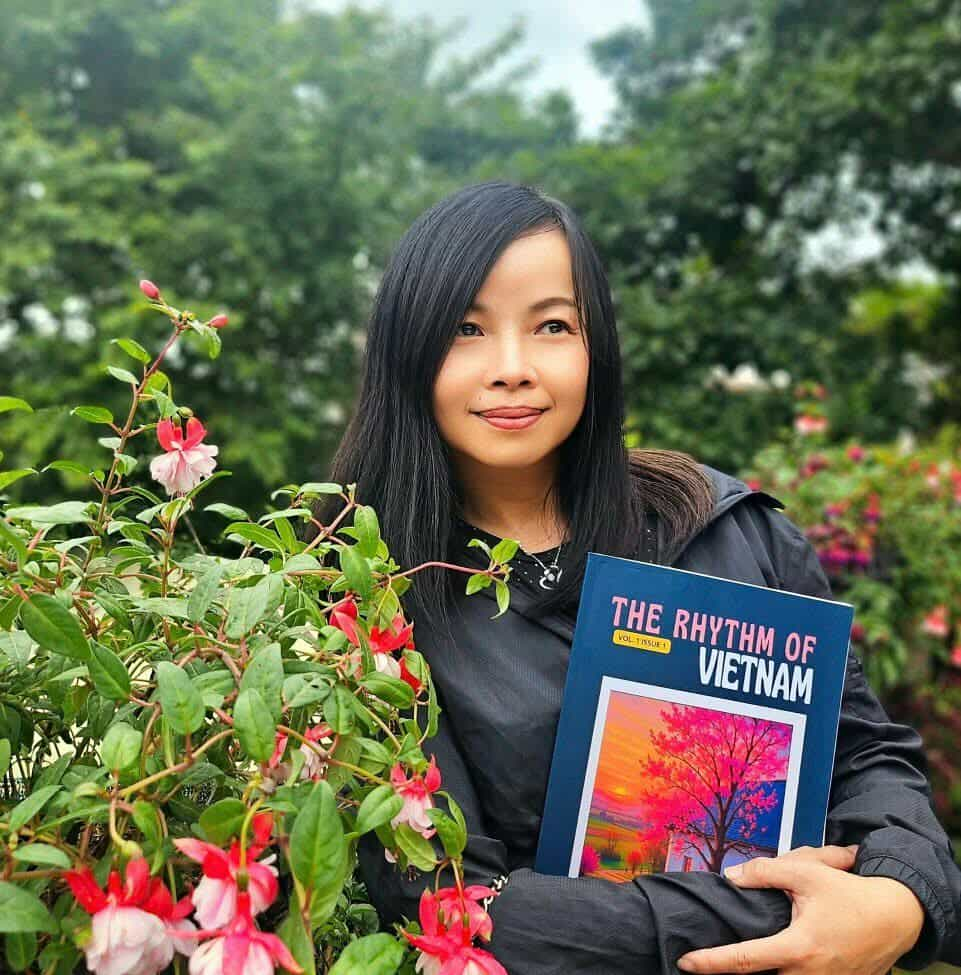
Võ Thị Như Mai (Mai White) was born in Vietnam and began her career as a high school teacher before moving to Australia to pursue higher education. She holds a Master of Education and a Master of Literature and has worked as a full-time teacher in Western Australia for over twenty years. She is the founder of the long run THE RHYTHM OF VIETNAM, a platform promoting writers from Vietnam and many other parts of the world. She also starts working as a reporter of MULTICULTURAL PRESS.COM.AU, featuring many multicultural aspects of the writing world. In May 2025, she was honoured with an Excellence Award from the Consulate General in Australia, recognizing her outstanding contributions to the preservation and promotion of her native language and literary heritage within the international community.
Collaborative renga is a linked-verse poem written by two or more poets. It follows a simple alternating structure:
· A three-line verse (5-7-5 sound units)
· Followed by a two-line verse (7-7 sound units)
The core principle is link and shift: each new verse must connect to the one immediately before it, but the poem as a whole must constantly change scene, mood, and theme, creating a journey of diverse images.
In short, it’s a conversation in verse, where the joy comes from the unexpected path created by multiple poets.
The medal shines, the grade glows, the applause rises and then? A silence so heavy it almost swallows the victory whole. For a moment, the rush of achievement feels like flight, but the wings vanish too quickly. What remains is the familiar hunger, whispering: find the next one, chase the next high NOW.
This is the trap of fast dopamine in achievement. We confuse the thrill of recognition with the depth of fulfillment. A score on a paper, a flash of praise, the tiny red bubble of a notification they light up the brain like fireworks, dazzling but brief. When the glow fades, the darkness feels sharper than before, and suddenly the last victory doesn’t matter because the next one hasn’t arrived.
We tell ourselves this is ambition, but maybe it’s addiction. The rush becomes the goal, and the process becomes invisible. We run faster, collect more, smile harder, all in pursuit of a spark that was never meant to last.
But what if we slowed down? What if achievement wasn’t measured in bursts of dopamine but in the quiet satisfaction of becoming? True fulfillment is less like a firework and more like a flame harder to build, slower to catch, but steady once it burns. It comes from effort that no one claps for, from struggles that leave no medals, from growth that outlives applause.
The silence after achievement doesn’t have to be hollow. It can be the space where meaning settles in if only we allow ourselves to sit with it, instead of rushing to drown it out.
Author: My name is Jana Hossam, a passionate and driven student from Minya, Egypt, currently entering my final year of high school.
I’m the creator of GreenVolt — a plant-based electricity generator with IoT integration that provides clean, real-time monitored energy. I also developed the HEH System, a Smart Pavement project that converts heat, light, and motion into power.
As a facilitator, I teach more than 30 students and have interviewed over 100 participants from international programs. I’m also a freelancer in translation, writing, and minimalist logo design on Fiverr.
I actively participate in mentoring sessions, youth programs, and global initiatives like IRENA. With deep interests in tech, leadership, and education, I continue building a future that empowers young people — especially women — through innovation and impact.
My name is Jana Hossam, a passionate and driven student from Minya, Egypt, currently entering my final year of high school. I’m the creator of GreenVolt — a plant-based electricity generator with IoT integration that provides clean, real-time monitored energy. I also developed the HEH System, a Smart Pavement project that converts heat, light, and motion into power.
As a facilitator, I teach more than 30 students and have interviewed over 100 participants from international programs. I’m also a freelancer in translation, writing, and minimalist logo design on Fiverr. I actively participate in mentoring sessions, youth programs, and global initiatives like IRENA. With deep interests in tech, leadership, and education, I continue building a future that empowers young people — especially women — through innovation and impact.
Out of faded afterthought in its spreading yard of white flame
a line of dark that splits the light moves in several directions at once
and before long has left a skyline of hands raised for shade
to better receive the sight of land despite the only definition
being a debt none of us can afford, though our purpose is the image,
to live in it, to know its glow, know the floor of eternity as the back of the mind
which is the image’s way of ending, of achieving stillness, and further
into the image, sleeves are rendered over the bulk of bare wrists, and we,
we become aware it is us seeing it all, that our silence is always our purpose,
is always to see and refuse what is ours, unable to afford what we’re looking at.
If they are present, the warmth is theirs, so I am still agitated,
wounded even by sleep. Carts of fruit have broken in the street.
Everything cannot form neat little lines; some things must splatter to happen.
The recurring aprons have failed their pledge. The self-checkout is gathering cobwebs.
The menus are blowing away in the wind. A couch in the street is the crested horizon.
But I am still here, shoes and everything, and I am absolutely wasting all of my joke.
I find my truth in what I don’t agree with, and from my seat on the airplane
I hear the flight attendant announce the only missing passenger, and it’s me.
—The Banker
To Come
We thought we might shut the anthem up good,
so we drank, watched unspeakable joy capsize,
touched burgundy night, were outraged with ourselves
in the morning, and realized our inexpressiveness
was our only morality, the anthem. It came from
the heart of inconsequence, only to be glimpsed while forgetting.
It came from a place of purity, purity that rang like escape routes
from an implacable faith, where scouting was a shout at water
lathered in streaks of ash. The anthem came from a place
people weren’t sure really existed, yet had memories of,
memories that announced themselves like collective hallucinations
in rehearsal of childhoods to come, but in the end, the anthem
turned out to be nothing more than the stale air
shut away in a room that was locked from the outside.
All the many thin, angled bars of light
slowly floated dust down the old beer signs.
The jukebox again repeated the good song
which spoke clearly in the only voice.
The bad song does not speak in the only voice.
—The Drinker
Cop
Soon it will be dark, and in her lack of sight
her ear will supply all the courtyard birdsong
of trickling water in a cold office bathroom.
There will be an elevator shaft, and in the silent elevator,
her ear will supply the sound of a dog walking in circles.
Outside on a park bench will sit a little harmonica
and passersby will invent a child blowing into it.
When we think of the past, our efforts seem silly.
It’s often difficult to decide on a monument
when every single sleep that comes answering is bare.
A god is vice begins and ends vice
—The Thief
The One in Charge
One day the ice in his glass
did not melt properly
and he discovered he was empty.
But when no one can afford
to relax at the top, how to tell
what relaxing looks like?
We kidded ourselves; we spoke of tar and rain,
balconies and raw meat, sun on umbrellas.
But what we desired most could only suffice
if too much to receive, a place only visible
from the outside, so we looked all over
not for what we had lost, but for the moments we lost it;
we looked for the beautiful ways, the ambitious ways which
in the past, with far more people to know, we lost it all.
—The Second Gunman
Coin into Fountain
Like any precise enough metallic
put to milliseconds across a dome of daylight,
it wasn’t itself as it was happening,
as it was happening, it was something else,
it was a flickering jewel between towers
in shaky blue sky above city traffic,
then the slap of the surface, water closing fast
the circle by mimicry of shape and rushing
across the engraved profile toward itself
until a clash spiraling finger oil upward
to dissolve under the surface and its dialogue
which was then the intact hum of the buried above
while the bottom was struck and all the other coins
already installed long enough to bear small life
fell storied into their own respective borders,
and the dialogue above the surface continues;
who is there left to abandon?
They learn when they buy.
—The Billionaire
Derek Thomas Dew (he/she/they) is a neurodivergent, non-binary poet currently living and teaching in New York City. Derek’s debut poetry collection “Riddle Field” received the 2019 Test Site Poetry Prize from the Black Mountain Institute/University of Nevada. Derek’s poems have appeared in a number of anthologies, and have been published widely, including Interim, ONE ART, Allium, The Maynard, Azarão Lit Journal, Two Hawks Quarterly, Ocean State Review, and Overgrowth Press.