Journalist Jakhongir Nomozov interviews Azerbaijani poet, translator, and journalist Aysel Khanlargizi Safarli

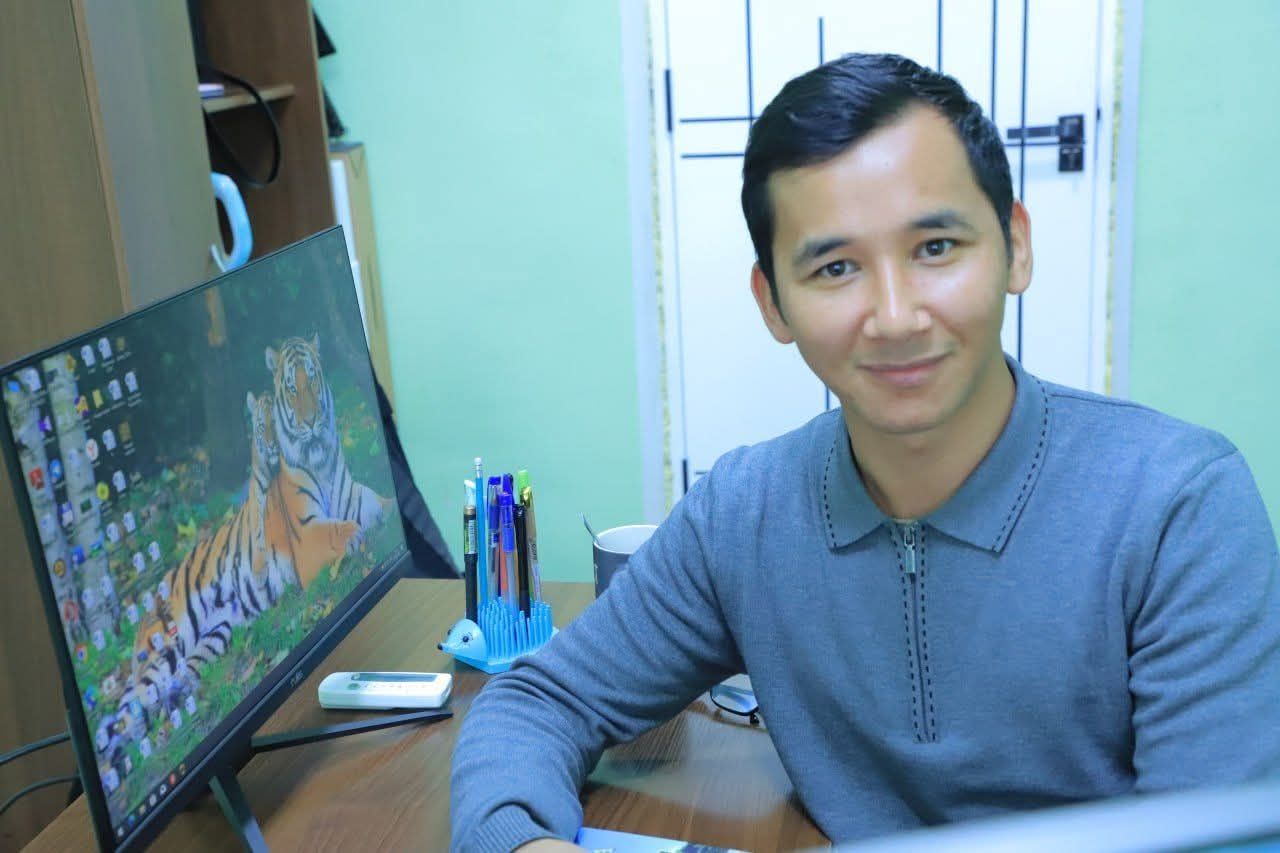
Young Central Asian man with short slick hair, a blue collared top, and a smile, seated by a computer with a tiger  on the screen.

“MY CHILDHOOD MEMORIES ALWAYS TUNE ME TO FRAGILE NOTES”

Our interlocutor is one of the bright figures of Azerbaijani literature — poet, publicist, and editor; a member of the Azerbaijan Writers’ Union, the “Yanqi Ovoz” Central Asian Writers’ Union, and the “Iraq-Turkmen Writers and Literary Figures Union”; a recipient of the Presidential Scholarship; laureate of the “Rasul Rza” and “Shakhmar Alakbarzadeh” Literary Awards; Head of the Women’s Wing of the Civil Solidarity Party; and editor of the website Mustaqil.az — Aysel Khanlargizi Safarli.

Young light skinned woman with shoulder length brown hair, earrings, and a brown collared sweater.

– When speaking about childhood, a person dives into an ocean of both joy and sorrowful memories.

When you recall your childhood years, what feelings awaken in your heart first?

— My childhood memories always tune me to fragile notes. Whenever I recall them, I return to the carefree, beautiful days when my father was still alive. Back then, little Aysel would show her very first poem to her father, and his kind words would light a small spark of creativity in her heart… I become a child again, and my father gently strokes my hair with eyes full of love… In this flow of emotions, I find myself gazing both into my past and into my own soul.

– There is a delicate silence and a deep emotional wave in your poetry.

Where does this silence come from — childhood memories or the turbulence of life?

— Some of these feelings come from the fragility of childhood memories, while others were born while rowing against life in the stormy sea of existence, fighting to survive.

– Every poet carries an invisible flame within.

Who ignited that fire in you for the first time — what event or which feeling?

— The first torch of poetry within me was lit by my late father. From my earliest years, he took pride in my poems, encouraged me, became my first reader, and always stood behind me… I believe it is a unique happiness for a girl to love her father also as her very first reader.

– “Paper planes” — does this symbol represent the purity of childhood or the human need to let dreams fly?

— In fact, the origin of “paper planes” is different. Because I lived far away for many years and waited for someone from afar, my life passed through airports filled with longing… In one of my poems, I wrote about how my son, waiting for his father, made paper planes and flew them across the room, turning our home into an airport… That is where the expression “paper planes” was born.

– Truth and beauty — how do these two concepts merge in your poetic worldview?

— Although truth may sometimes appear ugly to people, in my world it is a form of beauty itself…

Beauty always changes depending on one’s perspective. What matters is the ability to see beautifully. Sometimes a person can feel happiness even in sorrow, can live through pain beautifully, and carry it with dignity.

– In the modern world, a woman is simultaneously a creator, a mother, and a leader.

How do you maintain the delicate balance between these roles?

— I try to maintain it as best as I can. A woman is created so strong and perfect that she can carry the highest emotions of the world with immense love and patience. I am happy that I am both a mother and someone who can express her feelings through writing.

– You also lead the Women’s Wing of the Civil Solidarity Party.

When literature and social activity intersect, what tones collide within your soul?

— The founder of the Civil Solidarity Party is himself a People’s Poet — Sabir Rustamkhanli, a master who gifted priceless works to literature. I believe literature itself is already a form of social activity… 

Even the strongest conflicts have often been resolved with a single word. My soul stands in harmony with both my words and my actions; it befriends them, loves both its work and its word.

– There are wars, hunger, and injustices in the world.

What should a poet do in the face of such pain — remain silent or turn the pen into a sword?

— Even if a poet wants to remain silent, they cannot. Poets feel those pains and emotions as if they have lived them themselves. That is why the countless states of the world have always been transformed into poetry, words, and verses — and will continue to be.

– In your opinion, is modern literature a remedy for society’s spiritual wounds, or merely consolation?

— I believe literature is neither consolation nor a remedy. Literature is the verbal expression of feelings that thousands of people cannot articulate. Literature is the image of emotions, the artistic tones of life. When we are alone with ourselves, it makes us think, sometimes awakens us from heedless sleep, and sometimes gives the human soul the strength to fight. Literature is the nourishment of our spiritual world.

– Time changes, technology dominates the human soul.

Do you think the value of words still remains in this century?

— As long as humans exist, words will exist, and their value will remain. Sometimes a word becomes healing and hope in a sick heart; sometimes it becomes life itself. 

There is nothing a word cannot do… Just as with a single word — “dear” — a person is ready to sacrifice their life for the one they love.

– They say a person must find the meaning of their life.

Where do you see the meaning of life?

— Giving meaning to life depends on the individual. When a person sees what they value in the place they desire, life becomes beautiful in their eyes. For a creative person, the meaning of life is to live, to create, and not to grow tired of struggle.

– What inspires you most or causes you concern in today’s literary environment?

— The emergence of many talented young writers today inspires me greatly. What concerns me are those who devalue words, who seek so-called fame for the sake of publicity and ratings, or who force themselves into being poets or writers. But then I think to myself: time and the scales of literature will weigh every line and every verse; meaningless things that exhaust the agenda will be sifted out and filtered away. 

Leaving everything to time is the wisest choice.

– Is there a distance between today’s reader and the poet, or do souls still hear one another?

— Where there is spiritual kinship, there is no distance. A true reader and one who understands words will feel, sense, and comprehend them anywhere.

Jakhongir NOMOZOV, is a young poet and journalist from Uzbekistan.  

He is also a Member of the Union of Journalists of Azerbaijan and the World Young Turkic Writers Union.
Poetry from Bai Gengsheng, translated by Lan Xin

The poem The Backbone is a profound condensation of the spiritual core of Chinese civilization. Using “backbone” as a metaphor, it interprets the unyielding integrity that underpins the survival and progress of individuals, nations, civilizations and eras. It not only embodies the persistent spiritual essence of the Chinese nation but also echoes the common pursuit of dignity and perseverance shared by all humanity.

  Authored by Bai Gengsheng and translated by L a n X i n (Lanxin Samei), the translation breaks linguistic barriers to accurately convey the philosophical depth and spiritual power of the original work. It builds a bridge for in-depth dialogue between Chinese spiritual thoughts and the world’s diverse civilizations, allowing the wisdom of Eastern civilization to resonate in a global context and serving as a vivid testament to the mutual learning and symbiosis of world civilizations.

The Backbone

Author: Bai Gengsheng

Translator: Lan Xin (Lanxin Samei)

About the Author: Vice Chairman of the China Writers Association, Member of the Standing Committee of the 13th National Committee of the Chinese People’s Political Consultative Conference (CPPCC), Honorary Dean of the China Yulong Wenbi Dongba Culture Academy

About the Translator: Internationally renowned writer and poet, the only female inheritor of the World Memory Heritage Dongba Culture, Dean of the China Yulong Wenbi Dongba Culture Academy, Winner of International Literary Awards

The wind has no backbone

It roams entirely at its own will

Grass needs no backbone

It merely sways as the wind blows

Water requires no backbone

It just flows gently toward the lowlands

Insects have no need for backbone

They have not evolved to that stage yet

Yet

Mountains possess their backbone

To hold aloft the boundless firmament

Houses stand with their backbone

Or they could never shelter all the needy with warmth and delight

Bridges are built with their backbone

To bear the endless throng of carts and steeds passing over

A person must have backbone

For it lets you stand tall and unshakable in life and living

An army must have backbone

For it lets you hold your broad chest high to stand guard and fight

A nation can never go without backbone

With it you keep your head held high in unyielding perseverance

A country can never go without backbone

With it you are filled with boundless vigor spirit and vitality

A society cannot lack its backbone

Among all mortal beings only the awakened and virtuous embody it

An era cannot lack its backbone

Without it we might as well sink back into ignorance and barbarism

Backbones always lie in quiet solitude

Never vying for the spotlight or fame

Backbones are always left uncelebrated

For they scorn all glib and flattering words

Backbones are often cast aside and forgotten

Yet only when we sit upright or stand tall do we fathom their true worth and essence

Backbones have endured endless wrongs for eons

Yet they remain steadfast without regret or grievance

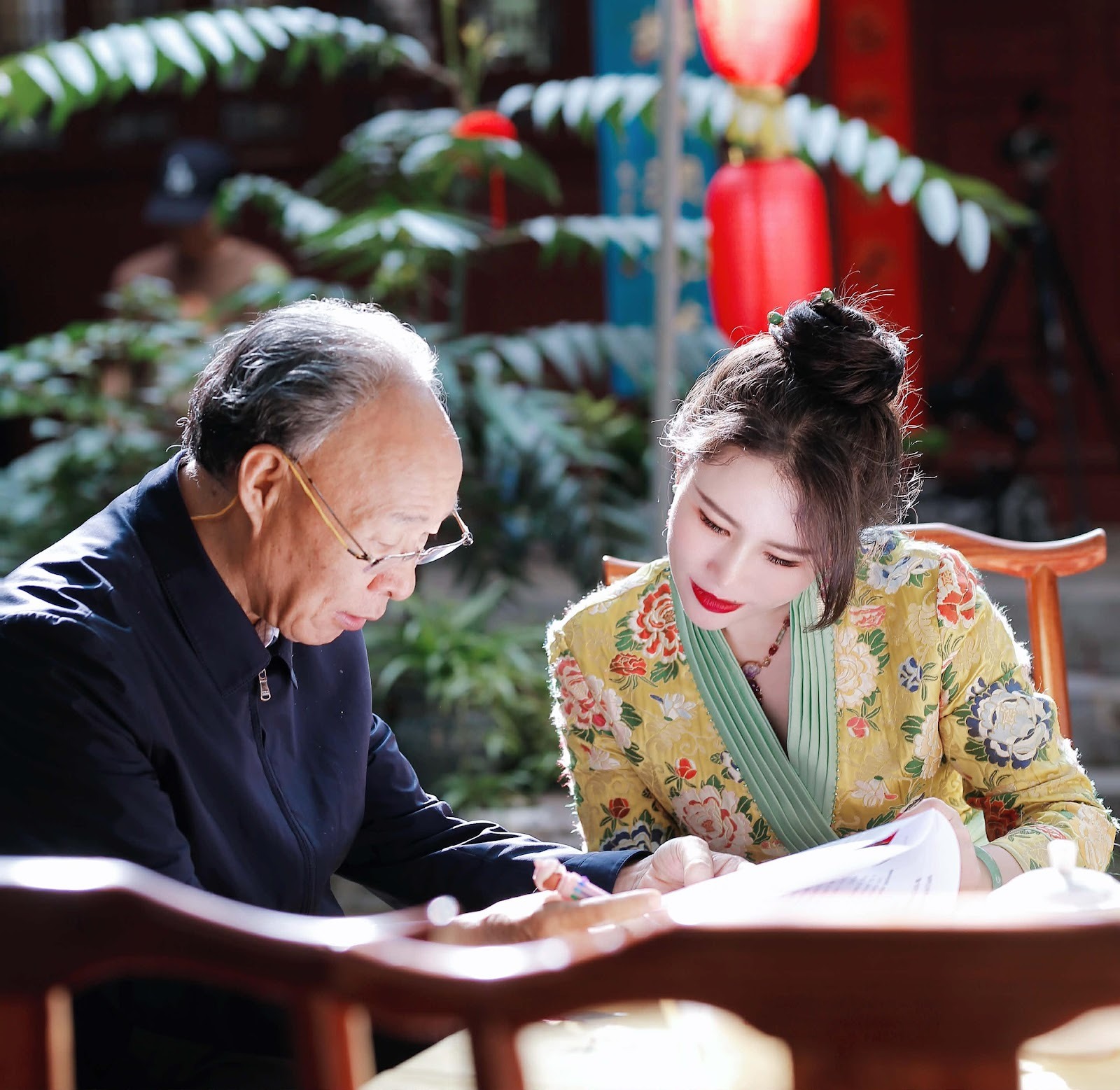
Young East Asian woman with her dark hair up in a bun and a yellow flowered dress seated next to an older East Asian man in reading glasses and a dark coat reading together under the trees.
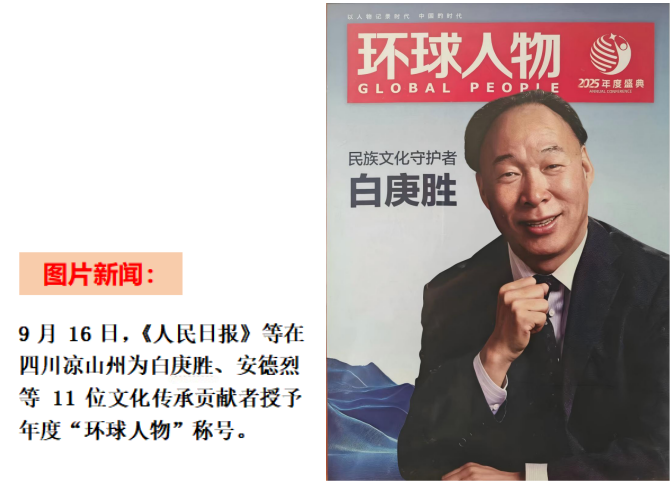
Magazine cover of Global People magazine with a younger Bai Gengsheng standing in front of hazy purple mountains.

654cca392d5ad7e090c3e75286398e65IMG_3422

Poetry from Yongbo Ma

 ……..

Archaeology of the Morning

Suppose a poem was left forgotten in a dream

in the morning, you stroll through the woods

and add the quacking of ducks

to the list of things that gladden your heart

Everything could just go on like this forever

behind the door you’ve closed, the dust no longer shimmers

no matter how hard you try

those words are like fish slipping back into the deep water

all that you write is but the shadow of that only poem

So you keep walking, keep encountering

faces half-familiar, smiling, nodding, exchanging greetings

as if you could wake up, as if you’ve been sitting all along in the morning sun

a little dazed

 ……..

A Hometown with No One Left

It will never be better again

it exists nowhere on this earth

how can I possibly fabricate

a painted paradise?

behind the open door lies a stretch of dimness

when the sunlight of memory surges forth

when even the dust carries a faint yellowish warmth

I have long forgotten the sound of your voice

it lingers beyond life, beyond death

whispering of us who are no more

when marble seals my lips

when I have no time to bid you farewell

 ………

What to Do, How to Proceed

Let’s just sit on this jutting rock

the afternoon sun still keeps it warm

it is firm and solid, leaning out over the abyss

let’s sit right here, we can talk about this rock

besides the sunlight, it bears traces of weather, traces of moss

time and wind have not loosened it

instead, they have fused it more tightly with the cliff

Autumn has come, gazing at the increasingly high blue sky

I feel old age, like a stone inside my body, growing bigger day by day

one day we will lift it up

and tap the moon that rose, somehow, at an unknown time

look—It is nothing more than a stone that is consistent inside and out

The others have all gone down the mountain one after another

or vanished into the rock crevices around the bend

lights have lit up inside the stones

we still wait for a sudden gust of wind

to snatch us up, like two small stones

and hurl us at a forehead, glowing bright with the rage of innocence

The Abyss and the Stone

I discovered it at five years old, inside me

a place I could never reach

vast, wreathed in smoke, yet sometimes seeming not to exist at all

as if a single leaf could cover it whole

in the middle of play, it would suddenly emerge from the leaves across the way

rooting me to the spot in terror, back then, I’d turn deathly pale

grab a pebble, and slip away from my friends without a word

Words cannot hide it either, it defies all depiction

so, carrying this abyss—now swelling, now shrinking,

now fading, now flaring—I walk in the earthy world

gradually wearing an expression of solemnity ill-suited to my years

like the faint, ominous shadow of an iron ring

stealing over the brightness of summer

I buried my face in books through entire nights, wandered far and wide

at times, I would suddenly fail to recognize my own kin

Now, I often take it out

as pull a stone from my pocket, it is harder than a fist

blazing hot, it glimmers for a moment, then its surface turns black

I will not hurl it at dogs, nor cast it down into the valley

nor boil meat with it in a spring, as primitive men might do

I set it on the mountain, I think

perhaps it will slowly cool

slowly fade away into the variegated rocks and stones

Early Summer on Purple Mountain

In the small puddles left by wheel ruts beside the wild path

float clumps of frog spawn, like swollen, sticky clusters of tiny white grapes

the tadpoles that have already hatched refuse to leave

tadpoles, tadpoles, hurry and grow your legs

the woods are growing denser, and the puddles are drying up

At the end of every desolate trail, there are couples parking to make love

the path merely cuts through the sweltering thicket, curving toward another

springy slope that could shield against cannon fire

where obscure signals flicker at the crest

I have no choice but to live and die inside every frog spawn

On quiet afternoons, the mugwort pulled up exudes a stronger scent

I still find myself thinking about those clumps of frog spawn

it would be better if it rained a few more times

climbing the mountain with butterflies in the rain

the mountains are filled with frogs joyfully carting landmines

croaking loudly, their trousers rolled up just like mine

Ma Yongbo was born in 1964, Ph.D, representative of Chinese avant-garde poetry, and a leading scholar in Anglo-American poetry. He is the founder of polyphonic writing and objectified poetics. He is also the first translator to introduce British and American postmodern poetry into Chinese.

He has published over eighty original works and translations since 1986 included 9 poetry collections. He focused on translating and teaching Anglo-American poetry and prose including the work of Dickinson, Whitman, Stevens, Pound, Amy Lowell Williams, Ashbery and Rosanna Warren. He published a complete translation of Moby Dick, which has sold over 600,000 copies.

Prose and visual art from Brian Michael Barbeito

The Earth and Trees There, and the Firmament Angels Also 

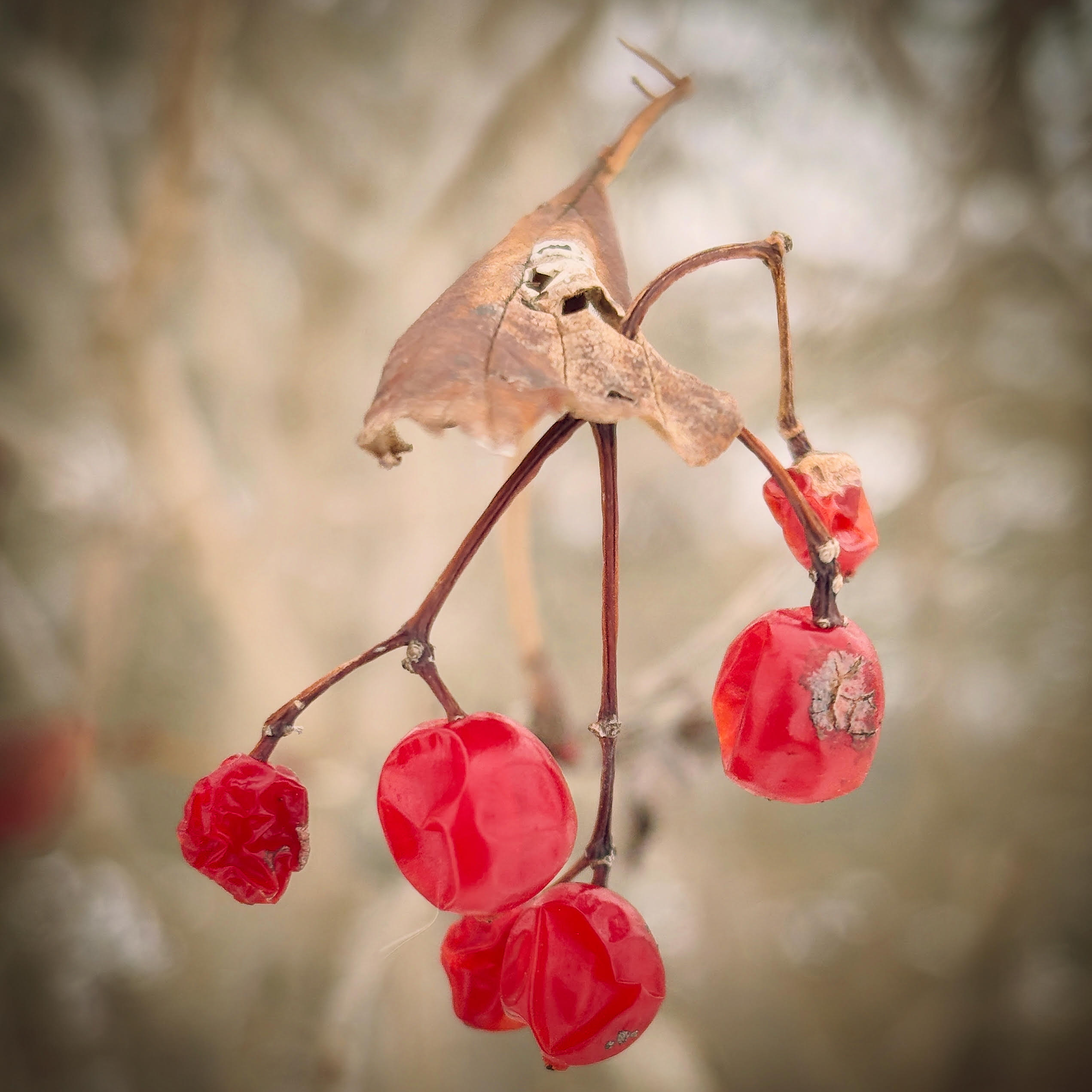
Closeup of red berries drying out on brown stems with a dry brown leaf above them.

The angel and the sky. Well, the angel couldn’t be seen, as it might be in poems and cinema, in ancient and even modern tales. No, but the angel they, the diviners, said was nevertheless there. Ok, I thought, and this is where faith was important. And the clouds remained and some souls out there went past in the distance. You might run into a kind one for there were many good-natured persons, some others a bit grey and a few were very questionable to say the least. But let’s get back to the angel. Angel had become a commonplace and taken for granted word, like Aldous Huxley had said of the word ‘love,’ but that’s okay. I made up a poem in my mind…

Angel angel, 

guiding and wise,

inform and protect the journey,

and guard me from lies

Angel angel,

It’s better above,

Much must be purer there,

Especially love

A wind suddenly sweeps the snow off hills and creates a ghost like air. Power. Prowess. Plenitude. I watch it. What’s more, it sounds alarming but amazing. I feel joyful. Unexpectedly joyful at that. Hopefully, it’s a sign of maturity or good perspective to be impressed by such a seemingly small phenomenon like the wind or snowflakes, barren branches cold and lonesome, or an old acorn or wandering leaf. These are the poet’s and nature photographer’s friends, plus signs for a mystic to read. For the larger world would surely find it all unremarkable. But to condemn the prosaic is to miss the sacred. To dismiss the everyday is to miss the eternal. 

I paused by the invisible angels of evergreens and thought of Rainer Maria Rilke. He had said an angel to a modern would appear terrifying. Maybe that’s why they couldn’t be seen. Breathe. Yes, take a break and even a photograph of the red berries down the way that remained on a tree even in the cold and strange, the overcast and challenging, winter months. 

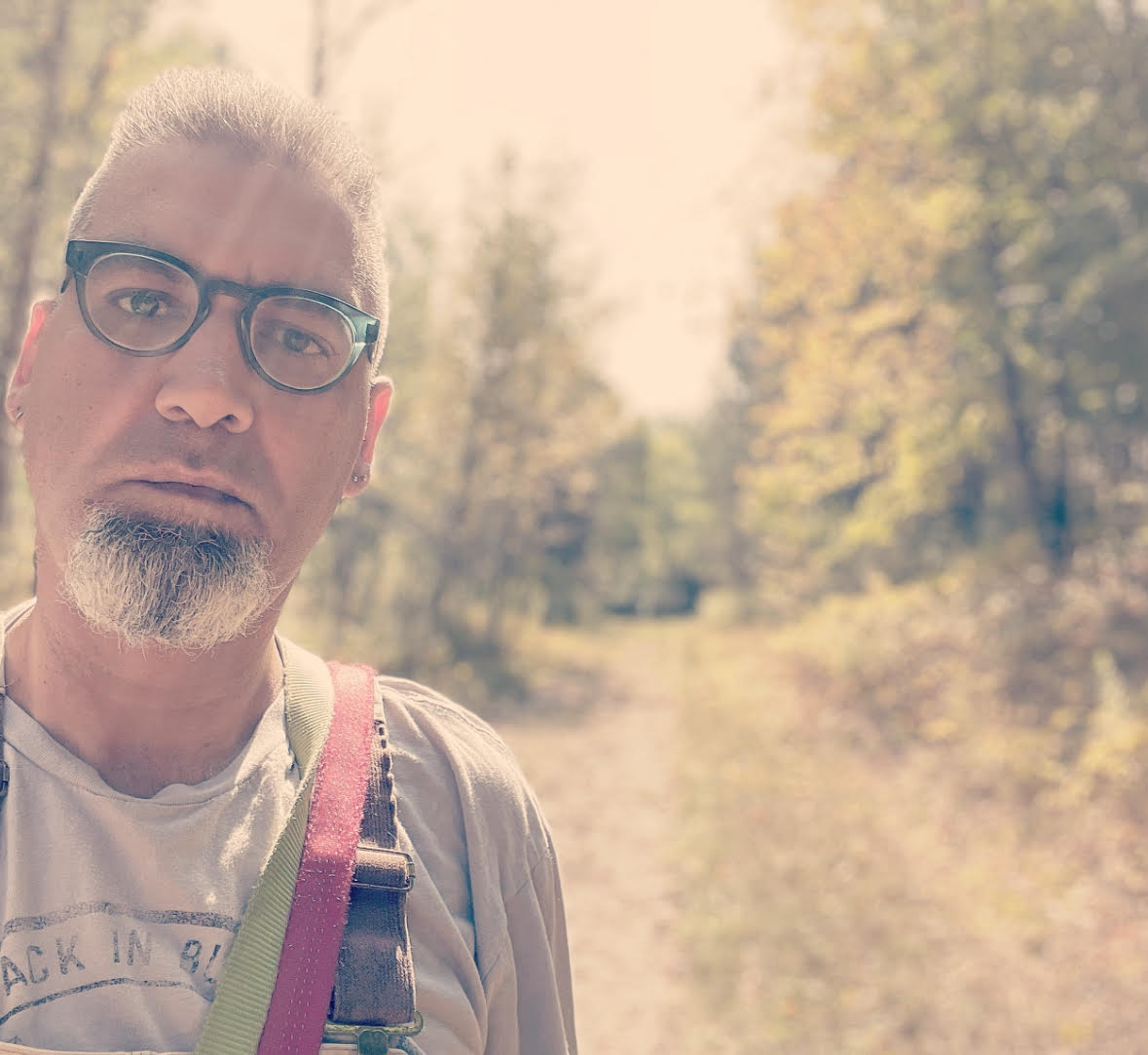
Middle aged white man with reading glasses, a bit of hair and a trimmed beard, in a tee shirt and backpack on a hike out by trees and a trail on a sunny day.

Brian Michael Barbeito is a Canadian poet, writer, and photographer. His most recent work, a third compilation of prose poems and landscapes photographs, is titled The Book of Love and Mourning. 

Essay from Dr. Jernail S. Anand

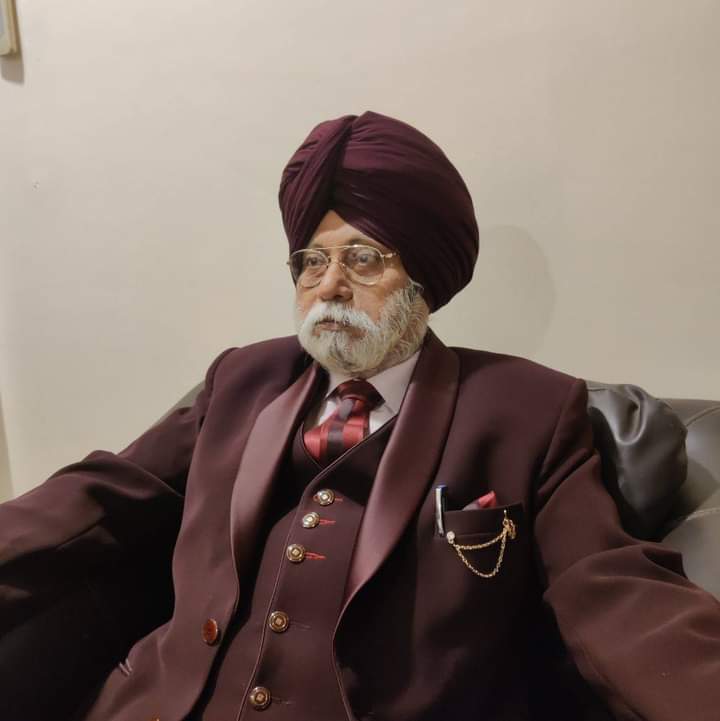
Older South Asian man with a beard, a deep burgundy turban, coat and suit and reading glasses and red bowtie seated in a chair.
Dr. Jernail S. Anand

BOOBYTRAPS AND THE GLASS CEILING: THE COSMIC DETERMINANTS

The Boobytraps

The world is marked by injustice, as a result of which there is moral confusion in human ranks. Peace is missing from the society as well as the mind of man. The world has become a battle ground and if we see it at war, the simple reason is: it has no faith in justice. It is an unjust world in which the principles of the commonwealth are violated. The suffering scattered here and there is the result of this injustice. There is something in the atmosphere which encloses us which does not like injustice. And, all those who play foul, are brought to justice, in this very world. Those who are smart enough to use their wits, hoodwink worldly judges for some time. Finally nemesis overtakes all the evil doers and justice reigns over this world.

The world has been conceived in a state of balance. By night, the gods match the balance sheet of good and evil, crime and punishment, and the cosmos goes to sleep, only when gods are assured that the right has been administered. It is another thing what we see in this world is a different spectacle. We see that good has been hijacked and the evil enjoy the best amenities. People who indulge in corruption have high time. How come, the nemesis strikes them by night?

If human wits could understand this divine operation, gods will be turned out of heaven. Cosmic forces make sure those who play foul with the system of nature are made to suffer. They are all victims of divine justice. What crimes they have committed? Only gods know, or if you can look into their hearts, at least their conscience knows where they have erred.

The Glass Ceiling

This concept of divine intervention can be extended further to include individual achievements. Sky is not the limit. There is a glass ceiling beyond which no man can perform. While I am trying to philosophize on a para-mystical subject, some questions are doing ramp walk before me: Whatever a man has done, does he do it by himself? Or were there any forces, visible or invisible, which acted upon his choices and made him act in certain ways? Could he have performed better if he was left to himself and granted greater freedom? What propelled him, and what stopped him? What was the final settlement between the forces of action, inaction and reaction? Who fixes man’s limits? What stops a man from realising his dreams?

Whatever we achieve is the result of an honourable settlement with time. The past is frozen and shows our limits. The present and future are in a constant dialogue with time for a permanent settlement. We invest time, we invest money, we invest resources. What we get is decided by the balancing out operations of our destiny.

Dr. Jernail Singh Anand, with an opus of 180 plus books, is Laureate of the Seneca, Charter of Morava, Franz Kafka and Maxim Gorky awards.  His name adorns the Poets’ Rock in Serbia. Anand is a towering literary figure whose work embodies a rare fusion of creativity, intellect, and moral vision. He is not only lone of the most influential voices in contemporary Indian poetry, but a global voice, challenging readers to confront the complexities of existence while offering hope through art and ethics.   

Poetry from Sayani Mukherjee

World

The world revolves around you
My name is in your heart strings
It whispers mystery and magic
Of obligations and revolutionary zeal
The same name is in the church
Roaring twenties and Velvet Underground
Writings abound around the newspaper
My children played hide and seek
The streets are aglow with sweet jasmine
The cross and Bible hanging with passion
My new found love for solitude and distance
Hope it reaches into your ear
Forget about blind inspiration
The cats are meek and playful
Books are your beautiful yearning
As you pin your love for me.