Today, Turkic-speaking peoples are spread not only in Central Asia, but also from the Sea of Oxoto to the shores of the Black Sea, from Siberia to northern Afghanistan and Iran, partly in Iraq and Eastern Europe, and the total number of speakers is more than 200 million.
The largest number of Turkic-speaking people are the Turks, that is, the people living in the territory of Turkey, their number is about 100 million, and most of them live in Germany. The second largest group is the Uzbeks, the total number of which is about 50 million. because about 8 million people of Uzbek nationality live in the geographical area called South Turkestan, that is, in northern Afghanistan.
At the same time, I must say that in the Republic of Azerbaijan, more than 9 million people of Uzbek nationality live in the northern Ereon area, which is the unofficial name About 15 million Azars live in southern Azerbaijan. As we mentioned above, Gagauz people of Turkic nationality live in Eastern Europe, that is, in the Republic of Moldova, and they have their own administrative territory and language. Currently, Turkey, Azerbaijan, Uzbekistan, Kyrgyzstan, Kazakhstan, and Turkmenistan are part of the United Nations.
There are a few independent Turkic states, but the Turkish Republic of Northern Cyprus is partially recognized and there are also about 20 autonomous or separate Turkish states. For example, Nakhichevan Autonomous Republic in Azerbaijan, Gagauzia in Moldova, South Turkestan in Afghanistan, Eastern Turkestan in the PRC, i.e. Uyghurs. and many other republics in the territory of Russia: Bashkirstan, Tatarstan, Tuva, Yakutia, Chuvashia, Crimea, Karbadino, Bulgaria, Karachay, Cherkessia, etc., and in the territory of Uzbekistan there is also the sovereign democratic republic of Karakalpakstan, and the population belonging to the Karakalpak nation lives here.
These peoples speak several languages belonging to the Turkic language family. We will divide them into 4 large and 2 small groups. The first group is the Kipchak group, this group includes: Kazakh, Karakalpak, Kyrgyz, Karaim, Bashkir, Karachoy, Nogay, Tatar, Crimean Tatar, the second group, Oghuz, Azerbaijani, Turkmen, Gagauz trills, and the third group, Qarluq.
It includes the Uzbek and Uyghur languages, and then the big group is the Siberian group, which includes the Altai Tuva, Khakas, Shora, Yakut languages. The other two subgroups are the Bulgar group, which is grammatically and lexically slightly different from the Turkic languages, the only language of which is the Chuvash language, and the second subgroup is the Khalaj Gurhi, which includes the Khalaj language and the Khalaj language of Iran. used by the Turkish ethnic population.
By Jakbaraliyev Zafarbek Ziyodbek, 8th general secondary school
Now he is an 11th grade student in school. He has a B2 level in English, besides he knows Turkish and Italian. Until now, I have been the “Laureate” of the “Rainbow Stars Art Festival” republic. At the same time, I am a participant of the republican stage of the “most exemplary school captains” competition. I am a participant of the regional head of the 2023 History Olympiad.
Village morning

Morning, the spring's canopy shutter,
The heart is ready for the feeling of purity.
Simple people, simple people,
The bag turns the black heart into colors.

I'm satisfied with sincere tunes today,
The sound of the swallow decorates my heart.
Walking in the city streets, I found out that
The value of such stones is like a stone.

By a rightful mistake of fate,
I'm in love with basil today.
That another place is like this,
Majnuntol, you didn't say, why didn't you say.

My magical world with moving walls,
The rooster crows in the early morning.
After all, you are honest, you are wonderful,
The rustling of trees, the dawn of my village!


Nilufar Anvarova, daughter of Ulugbek: born in 2011 in Chimyon town, Fergana district. He initially studied at 31 schools, and since September 2023 he is a student of the 8th grade of the creative school named after Erkin Vahidov in the city of Marģilon. His creative works "Human rights in the eyes of children", "The swallow that chased my imagination", "Sizdek sultan yòq" were published in the newspaper "Tong styziri" and the poems "Ha, men oshà..." and "Uzbek's dish" were published in the newspaper "Yangiyer Tongi". published. In addition, creative samples were published in the prestigious "Raven cage" of Germany and "Kenya times" magazine of Kenya. Currently, he has many certificates, diplomas and international certificates. Our poet is active and known to the world for her creative works in anthologies that collect the creative works of various artists! One of his future goals is to win the "Zulfiya" award!
 Happy Constitution

Deuteronomy head book.
The appeal of all the people,
Disaster of freedoms
Happy Constitution.

He pledge of peace Harmony,
Light of happiness the fountain.
Of perseverance,
Fortunately the Constitution!

                    Maftuna Rustamova
                   Bukhara region
                   Jondor district
                   30th school
                    8-"a" class.
Faizullayeva Gulasal was born on January 28, 2009 in Gijduvan district, Bukhara region.The author of “My father’s dream” and “My mother’s paradise”.In addition, he made many achievements in chemistry and biology. English language, literature, mother tongue are among his favorite subjects. Participated in the “Festival of Book Lovers” – “Festival of Literature” and won a 3-day trip to Tashkent. There are 6 people in their family. His father died. She is a very talented, smart and beautiful girl. She has many plans, dreams, and goals for the future, so Gulasal is studying biology and chemistry and making every effort to achieve them. He wants to become a good doctor in the future and send his mother to Hajj. Her future dreams are to take IELTS, win student of the year, Zulfiya award and open a course and teach students.
Well, The essay of mine is based on overcoming conflicts in my personal life. If I reveal something about my personality, character or lifestyle, it's that I am such a calm, peaceful, introverted, relaxed person. I can say that not upsetting people is one of my traits.

So, why am I writing or exposing my character in this essay? To explain that I have encountered so many problems, conflicts, issues and longitude considerations. I am absolutely saying as one of the minor member of this generation -people, especially youngsters, do not want to respect others. I had had some kind of conflicts with children, individuals and school organization that year, I am going to speak about them one by one in my essay.

Initially, my personal character has caused many misunderstandings with school mates during my school years. I do not fancy having a conversation with people who are irresponsible, irresistible, irrespective, rough, rude and also stupid. Nonetheless, we must admit these types of people are more and more around us.

Once upon a time, when I paid a visit to school in the past, some teens in my school were kidding me and say something worse about me. At that time I did not pay attention to their stereotypes. I though it was a simple childish thing of them to say. Then it escalated and I should have done something to prevent these bad things for me, at this time I had few conceptions of how to get rid of their violations or bullying.

Therefore I have three ways to figure out this conflict, First, I can utilize adequate manipulations to their psychology, because if they had had a good personality, they wouldn't have behaved themselves in this way. In this situation, not only did I not influence them with true and impactful opinions and conversation, but I was likely to be influenced. I just ought to speak to their guardians or parents, if I was not able to manage it.

I would call their parents, so that I could have a straightforward and easy conversation. The next day I did come across again to them in the hall. Tranquility was really gone there, they were bound to reveal some of nasty or unacceptable sayings again and again. After that I had been trying to have a top-notch and real conversation with them.

I requested them to please tell me why they were doing that to me.    I had spoken about their life, asked them to be a merciful person. I told them about homes for orphans, refugees, and the poor. Then I said it was not too complex to be a better person.

Every person has a admirable personality, positive hobbies, and closest acquaintances who are able to shape that person from the core. After this phenomenal situation, every member of his "crew " left there without any words, genuinely realizing that we must be thankful, respectful, and responsible humans. We must take a look at the significant issues around our world.

They understood that embarrassing people did not gain them anything. I was both happy to influence someone to find out the significance of their life, why they are living in this life, what the importance of their goals and dreams are, and indispensably, to be a grateful person. They had bullied everyone, not just me, so that's why I did these campaigns to teach manners to them. It was beneficial for everyone who were suffering from their actions, because everyone has a right to live proudly and independently.
Murodova Muslima Kadyrovna was born on June 29, 2010 in Jondar district of Bukhara region. Currently, she is a 7th grade student of school No. 30 in this district. Her first book of poetry was published in 2024 under the name “Come beautiful spring”. Winner of many achievements. She won the 2nd place at the festival held in the district. She won the 1st place in the district stage and the 2nd place in the regional stage of the “Bakhtim Shul: Zulfiyasiman Uzbek” contest. Her first anthology was published by the UK publisher Justfiction Edition. Founder of “Muslima’s” blog. A young teacher who was able to develop about 250 artists. Owner of more than 50 international certificates.
First, here’s an announcement from contributor Frank Blackbourn, who asked us to share in our publication:
I hope this message finds you well. I’m reaching out on behalf of a woman in our community who urgently needs support to avoid eviction. She is a neurodivergent artist and mother who started a small Etsy shop to support her family by selling unique items that promote acceptance for the LGBTQ+ and ADHD communities.
Right now, she faces a critical challenge. Her only means of transportation—a van she relies on for her business and income—broke down, requiring $1,700 in repairs to fix both the suspension and antilock system. Without this van, she can’t attend events, make deliveries, or earn enough income to cover mounting bills. Every day the van sits unrepaired, her financial situation worsens, bringing her closer to eviction.
The impact of this breakdown has been devastating, and she now faces the immediate threat of losing her home if she can’t get back to work soon. By supporting her GoFundMe, you’re helping her cover these essential repairs, restoring her ability to work and allowing her to keep her family safe and housed.
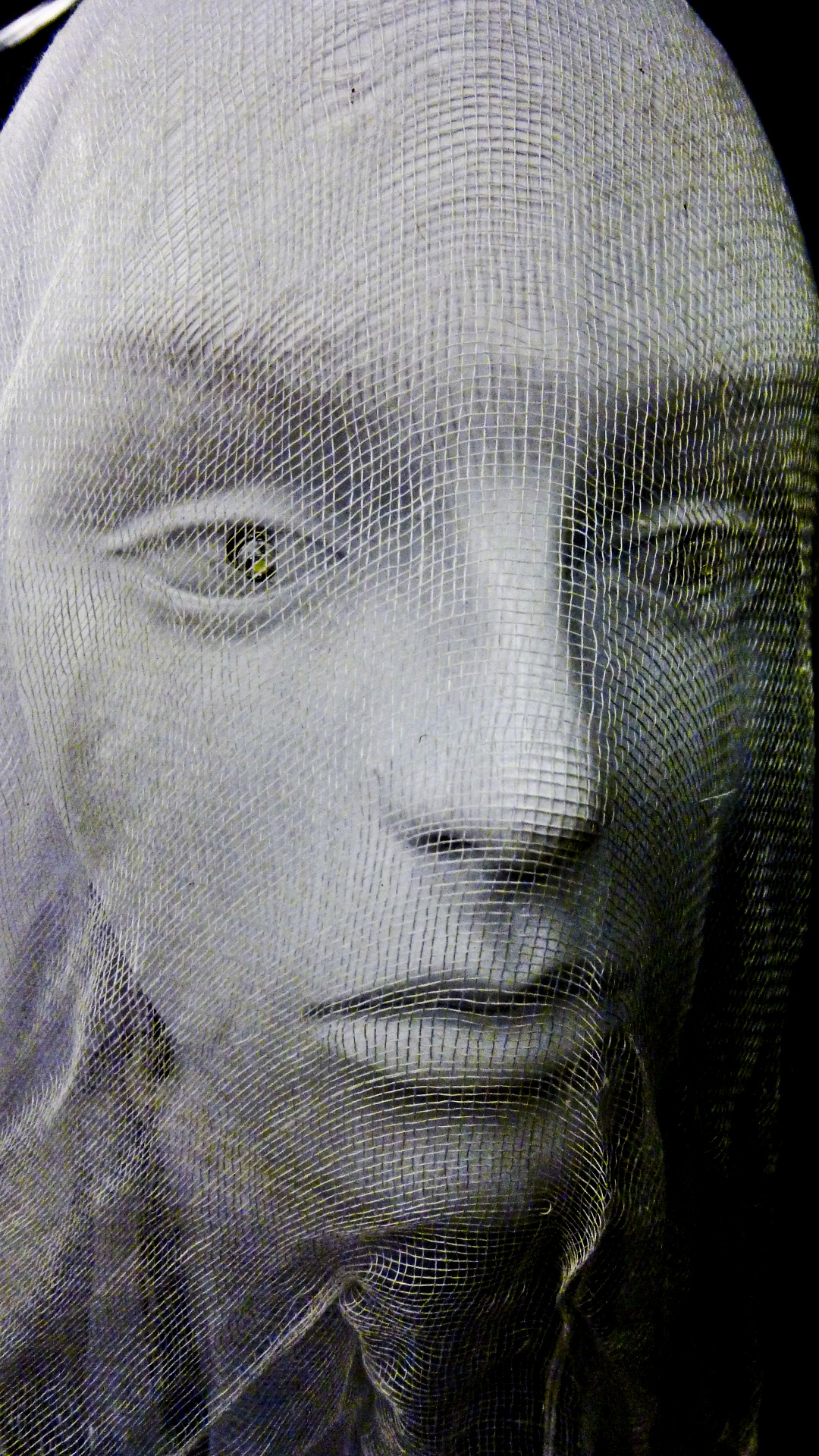
Now, for this month’s issue, the Thin Fabric of Time. Many cultures mark a time to remember ancestors or deceased loved ones this time of year, believing the veil between life and death was thinnest at this time. Modern physics draws on fabric as a metaphor for space and time as fundamental dimensions of the universe.
This issue’s contributors address cultural memory, family heritage, grief, life and death, and the different generations.
Federico Wardal describes a new museum of antique relics that will open up in Egypt.
Jeff Tobin evokes our inextricable human connection to the past and to personal and cultural memory. Terry Trowbridge recollects the strong and competent women of past Saturday morning cartoons while lamenting his own human weaknesses.
John Grey speaks to our human powerlessness in the face of our own natures as well as the external world. Yet, despite this, we can still believe we are the centers of our own universes.
Xavier Womack’s poetry advises a person to heal the generational wound of not loving oneself. Rubina Anis shares her paintings of women of varying ages standing together.
Dilnura Kurolova celebrates the treasure of friendship. Azemina Krehic draws on contradictions as a metaphor for the irrational beauty of romantic love. Mahbub Alam expresses how love can create its own likeness to heaven here on Earth. Stephen Jarrell Williams shares a simple but elegant poem on spiritual and divine love. Closer to Earth, Noah Berlatsky waxes clever about a clumsy but perfect love.
Duane Vorhees presents near-operatic musical and poetic images of sensuality as Eric Mohrman gasps out miniature vignettes of romantic tension.
Janet McCann reviews Chuck Taylor’s new collection Fever, observing not just the sensuality of the work, but the many restrictions and ‘prisons’ in which the mostly male narrators find themselves and what that says about modern masculinity and men in love.
Philip Butera uses an unfinished painting as a metaphor for a fleeting love affair, highlighting the tragedy but also the inevitability of its bittersweet ending. Taylor Dibbert’s poetic speaker once again sets off on a jet plane after a harsh divorce.
Ozodbek Narzullayev reflects on a passing school year with nostalgia and wishes to stay in touch with classmates. Sevinch Shukurova outlines various types of sentence construction. Z.I. Mahmud churns Indian and Anglo-Saxon cultural iconography together in a cauldron of speculative fiction that ends in effusive praise of Shakespeare.
Maftuna Yusupboyeva celebrates the literary contributions of Karakalpak Uzbek poet Berdak and his place within Uzbek folk and working people’s culture. Marjonabonu Xushvaqtova rejoices in her love for books and reading. Aymatova Aziza celebrates the cultural treasures found within libraries.
Yolgoshova Sevinch offers her love and praise for her native Uzbekistan as she would to her parents.
Marvelous Monday expresses a cultural group’s proud resilience despite poverty and injustice. Komron Mirza laments social and moral decline around him, yet resolves that the world is not yet ending. Rasheed Olayemi Nojeem laments corruption in his country’s judicial system while Jake Cosmos Aller decries the cultural ugliness of hate and authoritarianism. Christopher Bernard highlights the difficulty of choosing among political leaders with imperfect agendas and ideas.
Faleeha Hassan’s short story highlights the strength of a couple keeping their dignity under grinding poverty. Howard Debs’ poem comments on the reality of food service and on those who see the work as a game or a photo-op.
Dr. Jernail S. Anand reminds us that poets and cultural creators are as human as the rest of us, and urges people to be strong yet flexible, like water.
Giulia Mozzati-Zacco captures the scattered thoughts of a young woman nearing her death.
Mark Young conveys moments when the surreal enters our ordinary physical world. Maurizio Brancaleoni highlights humorous moments of life surrounding Halloween/Day of the Dead.
Patrick Sweeney proffers glimpses of the world and culture through sentence fragments. Texas Fontanella plays with words and syntax to craft prose. Saad Ali pairs original haiku with lesser-known historical paintings.
Later, Texas Fontanella plays with verbiage and syntax through disjointed text messages. J.D. Nelson highlights tiny bits of urban and wild life during fall. Rachel Bianca Barbeito crafts tender portraits of gentle puppies.
Turgunov Jonpolat outlines his volunteer work in climate ecology, made possible through an international educational collaboration. Muhammadjonova Farangizbegim Ma’mirjan discusses technology and gamification as ways to effectively teach the natural sciences, including ecology. Anna Keiko writes of psychological and ecological dreamtime and awakenings and the need to protect the environment.
Sayani Mukherjee recollects a languid and happy day in a small country village. Wazed Abdullah praises the steady presence of the stars. Maxliyo Axmatova reflects on the warmth, growth, and renewal brought by the sun.
Ahmad Al-Khatat speaks to the memories that live on in the minds of exiles from war, even on bright calm sunny days. Azemina Krehic reflects on the human cost of war and other violence to Bosnian women and girls.
Maja Milojkovic shares her hopes for peace among the world’s nations and peoples. Eva Petropoulou Lianou speaks to our universal human desire and need for love and mercy. Mesfakus Salahin describes the spiritual and human unity made possible through universal love.
Abigail George grieves over the loss of life in Palestine. Iduoze Abdulhafiz’ prose evokes the human trauma unfolding in Gaza. Jacques Fleury reviews Duane Vorhees’ poetry collection Between Holocausts, which grapples with that vast historical trauma. Daniel De Culla laments the grotesque tragedy of war on this Day of the Dead. Alexander Kabishev evokes the gross devastation of war through a tale of the death of a zoo elephant in Leningrad. Nuraini Mohammad Usman uses onomatopoeia to render digestion into poetry while urging world peace: making dinner, not war.
Ivan Pozzoni evokes the dark history among the beauty of his home Italian island. Alan Catlin describes varying levels of grief underlying a peaceful and beautiful place. Tuyet Van Do laments the human tragedies caused by recent hurricanes in the southeastern U.S.
Anindya Paul harshly evokes the loss of innocence in his poetry. Rukhshona Toxirova outlines ways for physicians to show compassion for patients at a tender age.
Isabel Gomez de Diego crafts images of childhood: a visit to a maritime park, a family photo with a young brother, dressing up for Halloween. Kylian Cubilla Gomez presents photographic scenes of nurturance: squash cultivated in a garden, children’s toys, Russian nesting dolls.
Stephen House grieves over and remembers his deceased mother. Graciela Noemi Villaverde grieves for the loss of her mother’s gentle spirit. Lan Qyqualla draws on a variety of ancient Western myths to lament the loss of his wife.
Nurullayeva Mashhura’s tragic tale of a neglected grandmother reminds us to care for our elders. Rahmiddinova Mushtariy offers praise for the nurturance and teaching of her father. Ilhomova Mohichehra comes to realize how much she values and respects her father as she grows more mature.
Michael Robinson recollects the loving fatherhood he has found from God in a piece describing his Christian salvation and personal journey from wanting to die to having a fresh new life.
Fhen M. crafts a vignette on a comfortable porch, a liminal space between the interior and exterior, inspired by change and transition.
Brian Barbeito speaks to the poetic and mystical meanings he finds embedded in each season, with wisdom in autumn and winter.
Chloe Schoenfeld captures the aftermath of a festive event, the small chaos after the elegance. Seasons change and time passes for us all, and no “mountaintop experience” can last forever.
Jacques Fleury shares wisdom from a teen dying of cancer to motivate us to live with passion and joy. Mashhura Ahmadjonova reflects on the whirlwind passage of time.
Mykyta Ryzhykh depicts a ghostly ship where all the mariners have turned skeletal, forgotten even by history. David Sapp also comments on our mortality and how others will eventually lose our memories in the swirling fog of time.
Before that happens, please take some time to savor this issue of Synchronized Chaos and honor each of the contributors by letting their voices be heard.