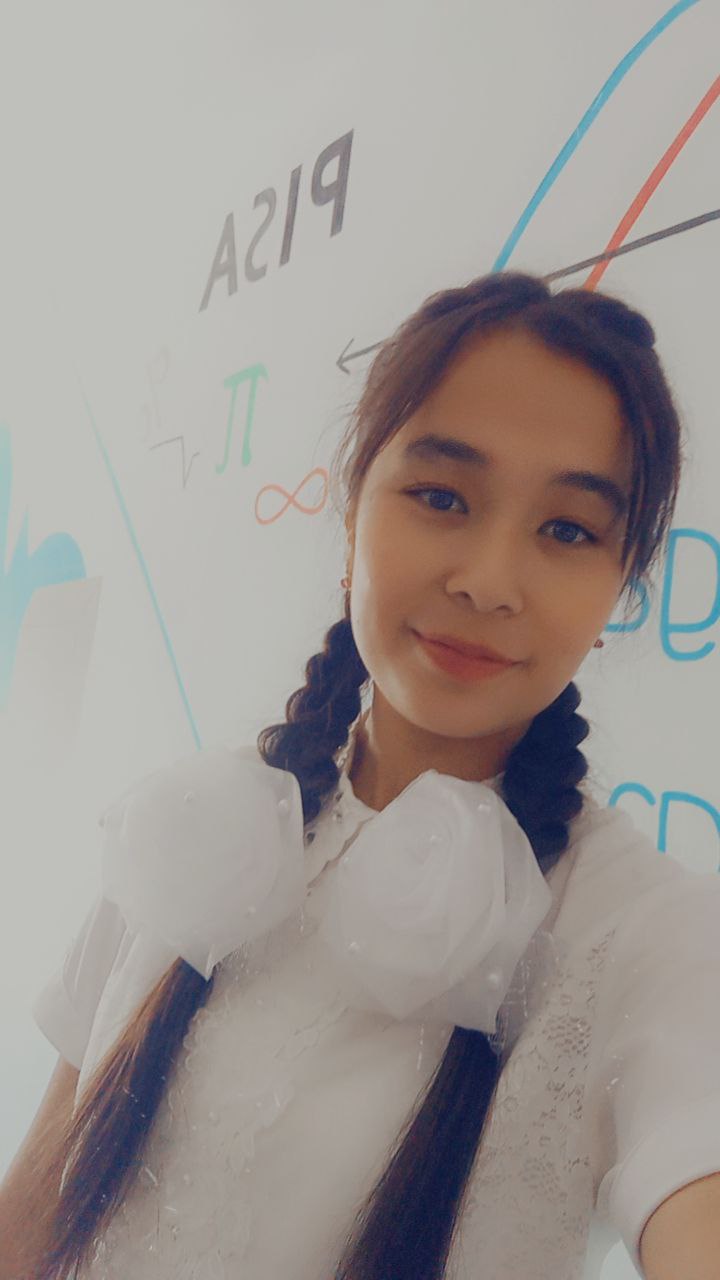
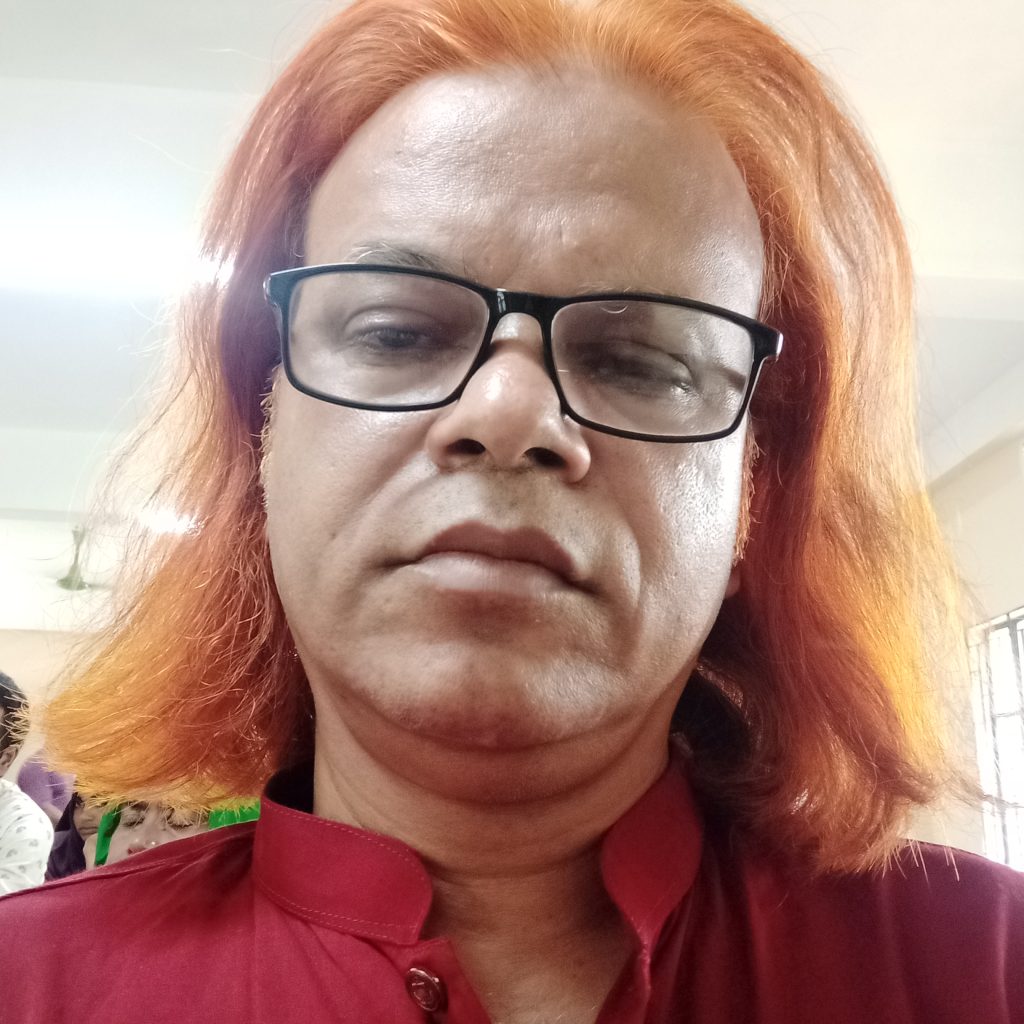
Farida Afroz (Farida Botayeva) was born on March 5, 1956 in the city of Kokan, Fergana region. She studied at the Kokan State Pedagogical Institute named after Muqimi. She is a member of the Writers’ Union of Uzbekistan, a deputy of the Legislative Chamber of the Oliy Majlis of the Republic of Uzbekistan.
Fate
No matter how much suffering hurts my tongue,
I will go on my way.
Sometimes falling, sometimes standing
Trials lead to dreams.
If not for God,
The wind doesn't blow, it doesn't pour high
I fall for a reason too
This fall will not last forever.
The stars count the days in the distance,
The sun always shines its golden light.
If only I had wings to fly
I would reach the heavens.
Just that
A beautiful breeze works every moment
My dreams are with me
It's like a long time ago
I just learned to live.
When I am in pain, my heart feels my pain.
Every breath I take is visible to my body
Obedience all my life
Just stop for a moment.
My imagination is sad and gently stirs
The sweet door of my heart
It is as if he has entered a mysterious world
I just live in a secret age.
A butterfly will land on my hand
And my emotions are like an unstable wind
My tender words from the heart
It's just a piece of paper.
Ziyoda Murodilova, daughter of Zufarjon, was born on October 15, 2007 in the city of Fergana in the Republic of Uzbekistan. She wants to use her creative abilities to read, write and help people any way possible.
Toshtemirova Dildora Hakim qizi was born on October 9, 2008 in Khatirchi District, Navoi Region. I am 16 years old now.
Due to my interests and constant support from my parents, today I am a member of All India Council for Technical Skill Development. I won the “Volunteer of the Year” 2022, “Star of the Year” nominations from the school. In addition, Dildora’s creative works have been published in international magazines, and her articles and poems have been indexed in Google.
Intizor Samandarova was born on May 3, 2007 in Gurlan District, Khorezm Region, Respublic of Uzbekistan.She is the author of the books “The best invitation” and “My grandfather’s memoir”.She is the member of international organizations “Iqra” of Pakistan,”Asih Sasami”of Indonesia,”Juntos por las letras”of Argentina,”All India council for technical skill development” of India.Her poems have been published in newspapers, magazines and international anthologies.
When a person comes into the world, he should take the wise word “seek knowledge from the cradle to the grave” as his motto. It is this knowledge that saves humanity from destruction, preserves the decadent, and determines its prestige and influence in life. I remembered his wisdom: “Be angry without enthusiasm, be a lover without sorrow, be a scholar without a student.” Indeed, the work of my parents and my first teacher is immeasurable in helping me to reach these days. My parents taught me humanity. “if they taught me, my teacher brought me up with the knowledge of education and morals. When a person comes into the world, he is a cave baby who does not know anything, if he thinks with a real life example Just like a small and delicate sprout, if we take good care of it, we can get fruit from it, we can enjoy its scenery, if we don’t take good care of a small sprout, we can’t get fruit from it.
If you don’t get education, it won’t help you to study a thousand times. The first person who encouraged me to love the country, to love books, and to study science is definitely my first teacher. I am studying in the field of science. About ten of my stories have been published in foreign magazines, I am working as an international ambassador in two countries on behalf of Uzbekistan, alhamdulillah. I am a member of the Volunteer Academy of Uzbekistan, I regularly participate in the “Legendary Youth” forum, in a word, I am slowly taking steps towards my goal, the “Zulfiyakhanim” award. All this is my tireless work and knowledge. I can say that it came from behind.
As I mentioned above, these achievements are due to the hard work of my mentors and coaches Hasanova Tursunoy, Boronova Aziza, Teshayeva Dilrabo, Talibova Muhabbat, who taught me. Not only me, but my classmates who studied with me, fought and fought at the same desk for eleven years, are also achieving the achievements they were looking for. First of all, it is not an exaggeration to say that our first achievement was that we earned the happiness of being a student by justifying the trust of our teachers. Each of us was honored and dear to our teachers. When I remember my school days, the times when we did not listen to the teachers, when we ran away from the class, when there were competitions, when we argued with parallel classes, all this has become a thing of the past. It’s been more than two years since we heard the school bell, and those who said “I don’t miss school” are now walking past the school gate in a whirlwind of memories.
We have found our way, we are slowly flowing from our own tributary like a spring water from a mountain, but I must say that without our teachers we are absolutely nothing. We would be an example of a creature that does not understand anything. That’s probably why they say that the teacher is as great as your father. As much as our father thinks about us and gives us advice, our teachers see only good things for us in the same way. Thank God that after me, my brothers and sisters will pass through the threshold of the school where I studied, and the teacher who taught me will teach them. My teacher Hasanova Tursunoy, if you are reading this article, I would be very happy. May your students always be healthy and happy, your student Sevinch who loves you. This poem I wrote is dedicated only to you.
First of all, an announcement on behalf of Synchronized Chaos Magazine. We’re going to help authors with research by setting up a section where readers and contributors can volunteer to provide information to authors who want to do research for their writing projects. So, if you have knowledge or lived experience in some area and are open to answering questions for someone’s project, please email us at synchchaos@gmail.com and we’ll add you to our upcoming list!
Now for this month’s issue: Self, Others, Source. As a teenager I attended a spiritual retreat where the leader encouraged us to think of our relationship to ourselves, the people and other beings in our lives, and our Source, the higher power, however we understood that. He commented that when we got in trouble, we could imagine sending out an S-O-S and looking within, to our social networks, and our faith.
Some of this issue’s contributors engage with the self.
Sandra Rochelle describes a healing journey where a woman chooses play and joy over self-conscious judgement.
Rus Khomutoff speaks to dreams, the surreal, and the subconscious as Texas Fontanella’s pieces express energy, tension, and action within the artist’s mind and Mark Young sends up swatches and swathes of color and texture. J.D. Nelson experiments with thought bubble bursts of words.
J.J. Campbell reflects on memories and disillusionment and the fragility of hope as Elan Barnehama offers an exploration of how an introvert and an extrovert cope with tragedy.
Jonibek Miraxmedov presents the poetry of youth: first love, optimism, dedication and determination, and joy in life. Z.I. Mahmud examines the psychological and emotional world of T.S. Eliot’s The Love Song of J. Alfred Prufrock.
Mykyta Ryzhykh speculates on the competing twin powers of passion and destruction, Eros and Thanatos, sensuality and fear and death. Prosper Isaac draws on the dual nature of the cultural symbol of flowers, joy and grief, weddings and funerals, the happiness and sorrow making up all of our lives.
Salihu Muhammad’s piece reminds us that like ripples in a pond, our attitudes and character shape how we view the world.
Other work addresses the human and natural world around us.
Kylian Cubilla Gomez’ photography captures moments of delicacy, small creatures or objects, and encourages us to pay attention to our world on a micro level.
Marisa LaPorte describes a quest for peace of mind and peace within a family. Taylor Dibbert continues to reflect on a divorce and all it portends for his poetic speaker. Abdel Zahra Amara’s short story, translated by poet Faleeha Hassan, comments on the difference between pretty sentimentality and actual love.
David Sapp reflects on adult friendship and what makes a good friend versus a good colleague as Quinn’s evocative story highlights the power of childhood friendship to change a life and remain in a person’s memory for years.
Talia Borochaner finds the poetry in childbirth, gardens, and kitchens as the heart of much existence. Abdullajonova Zurakhan’s poem laments a caring and faithful uncle who passed away. Nosirova Gavhar writes of a young ballerina shaped by the love and encouragement of her father. Ilhomova Mohichehra celebrates the sweet fruit and memories of her home village. Tursunova Sarvino brings a scientific analysis to an aspect of childcare, the development of children’s speech abilities.
Akmalova Zebokhan Akobirkhan contributes a whimsical love poem about the disorientation she feels due to her emotions. Maja Milojkovic reflects on different types of sentimental sweetness in life and cautions us to enjoy with discretion. Mesfakus Salahin evokes the various senses in his love poem.
Raquel and Brian Barbeito reminisce on the joy of living with seven dogs throughout their lives, each of whom had a unique personality. Sushant Kumar merges with both the Earth and a lover in his poem. Sayani Mukherjee highlights the power of the sun in an evocative summer pond scene while Wazed Abdullah reflects on the calm of a moonlit night. Naeem Aziz’ poem draws on natural imagery to highlight the inner and outer beauty of a woman he loves. Maftuna Rustamova’s work urges preservation of the natural environment as Lilian Dipasupil Kunimasa calls on people to step up amidst their trauma and exhaustion to heal Mother Earth.
Madinabonu Mavlonova outlines methods to improve seed germination in a plant biology laboratory.
Jonibek also suggests ways for Uzbek businesses to adapt to technological changes and increasing environmental awareness. Muquaddas Maxmarejabova outlines the many practical and social changes that came with industrialization.
Isabel Gomez de Diego’s work captures history still standing: a concrete cellar and castle from centuries ago and a dinosaur museum. Shodiyeva Mehribon asserts the pride she takes in her heritage and homeland of Uzbekistan as a young person shaping her country’s future as Alina Ibrohimova offers a tribute to the nation’s Olympic athletes.
Sitora Otajonova outlines the promise and problems of social media for contemporary users. Pat Doyne expresses her hopes for civil dialogue, equality, and progressive values.
Fatima Abdulwahab’s piece is a lament for a lost home and family in a war-torn country while Faleeha Hassan describes war as a hungry, predatory, grotesque animal. The poetry of Abdulrasheed Yakubu Ladan highlights the corruption often present in politics when there is a great power imbalance. Mahbub Alam draws on the metaphor of a large bird being chased away to depict the recent student revolution in Bangladesh. Daniel DeCulla’s poetry highlights how even candidates praised with lofty rhetoric and slogans will not be perfect or bring peace to our world. Naeem Aziz writes of students taking to the streets to make things right.
Anila Bukhari encourages writers to bring hope to those who struggle and bear witness to the world’s tragedies. Martha Ellen’s poetry muses about wide-ranging effects of trauma on a personal level, finding compassion for aggressors as well as victims. Komron Mirza laments the decline of dignity, ethics, and compassion in his society.
Bekzod Ergashev highlights the problem of youth unemployment within Uzbekistan and its effects on the economy as well as on youth confidence.
Nigora Tursunboyeva’s short story highlights the pain of impoverished orphans in Uzbekistan and the fragility of all our lives. Sonmin Yoongi urges people to live lives of compassion, dignity, and faith.
And still other contributors consider matters of faith, the divine, and sources of ultimate purpose and meaning in life.
Amirah Al-Wassif renders family tragedies and spiritual searchings into surrealist poetry while Kahlil Crawford reviews the eclectic, evocative, and ethereal stylings of musical artist Pinhdar.
Duane Vorhees probes and turns over thoughts about religion and art, history and youth, in his poetry.
Of course, facets of our existence cannot so easily be divided into three boxes. Many contributors’ sense of self is shaped by their communities and cultures, many times meaning and purpose in life comes from serving others, and it becomes possible to live in a healthy relationship with others when one is strong within oneself.
So, while these dimensions inevitably overlap and influence each other, they provide a general guide to understanding ourselves and are a source of artistic inspiration.