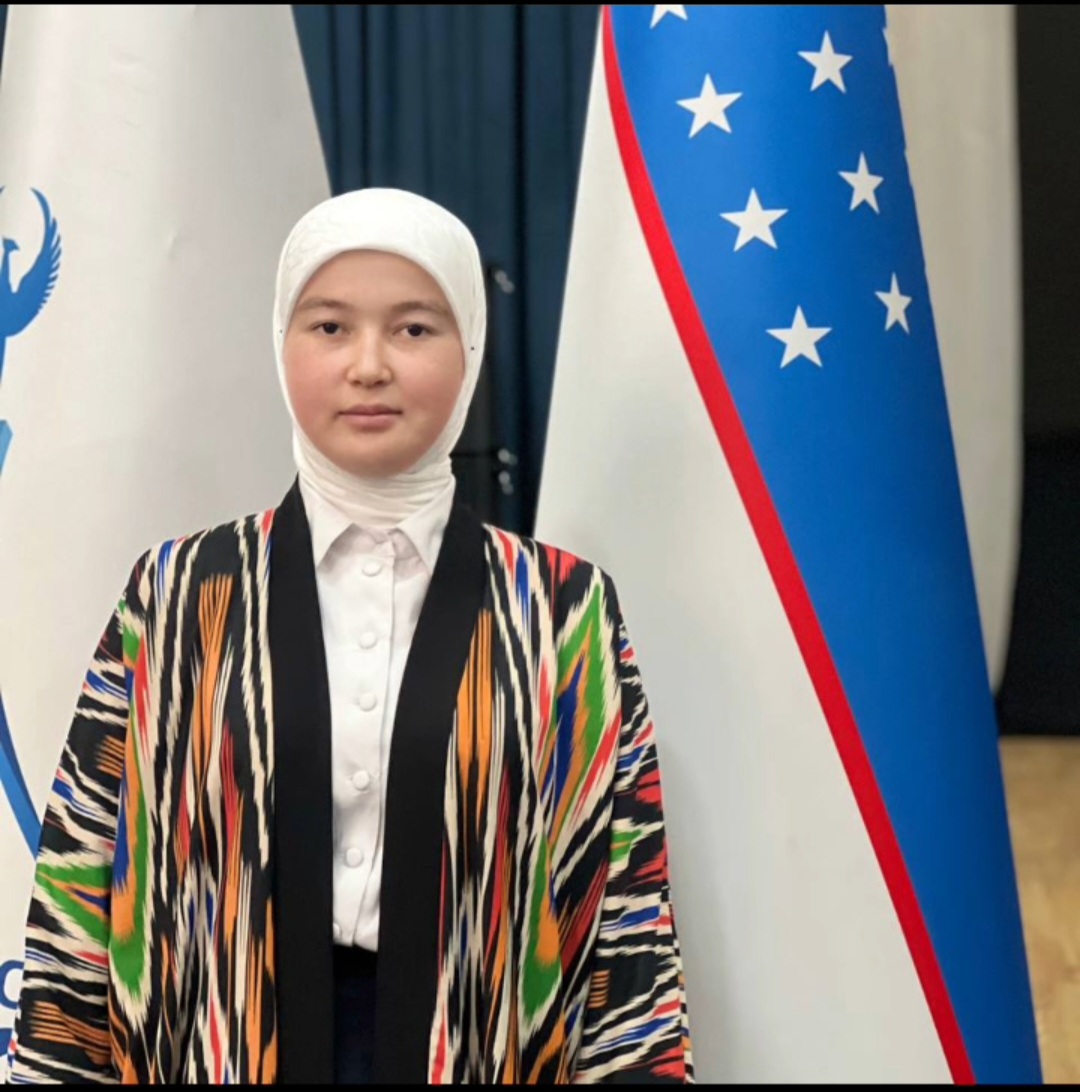
Essay from Sevara To’lanboy qizi Mahmudova

Sevara To’lanboy qizi Mahmudova, first-year student of the Preschool Education program, Namangan State Pedagogical Institute.

Yangi To’da MFY, Pop District, Namangan Region.

THE EDUCATIONAL AND UPBRINGING SIGNIFICANCE OF DIDACTIC GAMES IN PRESCHOOL EDUCATION

Zohidaxon To’lanboyevna Qoraboyeva

Associate Professor, Department of Preschool Education, Namangan State University

Sevara To’lanboy qizi Mahmudova

1st-year student, Preschool Education, Namangan State University

ABSTRACT:

This scientific article provides a comprehensive analysis of the educational and upbringing significance of using didactic games in preschool education. The role of didactic games in developing children’s cognitive activity, independent thinking, logical reasoning, speech, and creative abilities is examined. Additionally, the development of social skills, teamwork, mutual cooperation, discipline, and moral qualities in children during play is scientifically explained. The article discusses the types of didactic games, methods for their effective implementation in the educational process, and pedagogical outcomes through examples.

Keywords: Preschool education, didactic games, educational significance, upbringing significance, cognitive activity, creative abilities, social skills, pedagogical process, education through play.

Over recent years, significant efforts have been made in our country to raise children into healthy and well-rounded individuals, as well as to establish an effective preschool education system that implements efficient teaching and upbringing methods. In particular, educational-methodical, didactic materials, and literary works for preschool organizations have been selected and incorporated into classroom activities.

Play is the leading activity for preschool-aged children. Learning through play is one of the approaches for children’s education and development. Play is a natural way for children to explore themselves and the surrounding world. It develops the child’s personality, cognitive abilities, social-emotional skills, creativity, and physical development. Interaction with peers and educators during play enhances speech, social skills, and motor development. Play provides opportunities for cooperative learning, taking risks, making mistakes, and overcoming challenges. Most importantly, play makes learning enjoyable and fosters imagination and creativity.

Play can take various forms: completely free initiated by the child or group, minimally guided, or fully organized by the educator. While recognizing the importance of free play, the decisive role of the educator in guided play should also be acknowledged. The educational process should provide opportunities for play, and a supportive environment contributes to it.

Didactic games, in particular, enhance critical thinking, attention, memory retention, and quick reasoning. Creating the conditions for play—providing children with sufficient time, space, supportive resources, and toys—is crucial. Educators working with preschool children should actively facilitate children’s play.

A key element of didactic games is rules. Adhering to rules ensures the content and objectives of the game are achieved. Didactic games are directly related to education and serve as a teaching method suitable for preschool-aged children. Experienced educators use these games to engage passive children in group activities and encourage them to perform tasks without fear. Didactic games should always be planned based on clear objectives.

Didactic games help children play together, align personal and group interests, assist each other, and experience joy from peers’ success. They also foster positive personal qualities such as honesty and sincerity. As practical activities, didactic games allow children to apply knowledge gained during lessons in various ways, helping them connect learning with real-life situations.

Examples include games like “Find by Color” or “Find by Shape” for younger children, and “What do workers do?” or “What do farmers grow?” for older children. Didactic games reinforce knowledge about the surrounding world, develop thinking, creativity, sensory skills, and help organize acquired knowledge.

Didactic games make learning easier and more enjoyable. Age-appropriate and engaging activities allow children to complete intellectual tasks naturally and effectively. The more playful elements included, the greater the enjoyment for children. The central aspect of a didactic game is its guiding idea, which generates interest and motivates participation, such as games like “What’s in the Bag?” or “Who makes which sound?”

Each didactic game has content, rules, and activities closely linked; removing any component prevents the game from proceeding. Rules in didactic games govern children’s actions, interactions, and help cultivate self-regulation and mutual control. Evaluating the outcomes from both children’s and educators’ perspectives is important. From the children’s perspective, one should consider moral and educational gains, intellectual effort, reasoning, attention, and memory. Positive experiences increase self-confidence and bring joy. From the educator’s perspective, it is necessary to assess whether the objectives and intended outcomes were achieved. A game is considered successful if it both engages children and meets planned pedagogical goals.

Rewards and recognition can motivate children, but they should not be the sole incentive. Game actions include moving objects, organizing, classifying by color, size, or shape, and performing critical thinking tasks. Older children engage in more complex group interactions and coordinated activities.

The game’s outcome is the specific achievement of the didactic game, such as solving riddles, completing tasks, or demonstrating reasoning. The game’s content, concept, actions, and rules are interconnected, and the educator guides the process, incorporating children’s questions, suggestions, and initiatives to enrich and expand the game. Timing the start and end of the game effectively is crucial.

Didactic games can be conducted in classrooms, halls, playgrounds, forests, fields, and other spaces, enhancing impact, variety, and children’s engagement. Considering children’s age and individual characteristics, adjusting pace and rhythm, and proper evaluation by adults are essential.

TYPES OF DIDACTIC GAMES

Tabletop games: Help children organize knowledge about the environment, develop thinking (analysis, generalization, description). Examples include lotto, matching pairs, dominoes, and mazes.

Verbal games: Develop listening, quick thinking, and the ability to express ideas clearly. Typically conducted with older preschool children.

Object and toy games: Played from early childhood to school age, focusing on attention and imagination. Children learn about objects’ properties, functions, and characteristics.

In conclusion, play is a fundamental activity for preschool children, shaping personality, social behavior, and future learning, labor, and interpersonal skills. Didactic games are crucial tools for intellectual, moral, labor, and aesthetic development, and their careful planning and implementation support effective preschool education.

References:

Resolution of the Cabinet of Ministers of the Republic of Uzbekistan, December 31, 2019, No. 1059, “On approval and implementation of the Continuous Spiritual Education Concept.”

Resolution of the Cabinet of Ministers of the Republic of Uzbekistan, December 22, 2020, No. 802, “On approval of the State Standard for Preschool Education and Upbringing.”

F. Qodirova, Sh. Toshpo’latova, N. Qayumova, M. A’zamova. Preschool Pedagogy. Tafakkur Publishing, Tashkent, 2019.

I.V. Grosheva, G.E. Djanpeisova, U.T. Mikailova, M.A. Ismailova et al. Learning through Play / Methodical Guide. 1st Edition, Tashkent, 2020.

D.Sh. Mirzayeva. Preschool Pedagogy, Tashkent, 2022.

Sh. Sodiqova. Preschool Pedagogy, Tafakkur Publishing, Tashkent, 2013.

Poetry from Axmedova Gulchiroyxon

I am Axmedova Gulchiroyxon, a second-year undergraduate student at Kokand State University, Faculty of Primary and Technological Education, specializing in Primary Education. I actively participate in numerous competitions and assessments.

Oh God, Take Away My Mother’s Pain

Oh God, take away my mother’s pain,

Her heart half-closed, her gaze in rain.

See how sorrow drives her to despair,

Longing for spring, tears fill the air.

Oh God, take away my mother’s pain,

I’ve yet to lead her on pilgrimage’s lane.

A heavy question weighs upon my soul,

Why each day I failed to make her whole.

Oh God, take away my mother’s pain,

Though I spoke my love, some days in vain.

Today my eyes at last open wide,

To cherish her, with nothing to hide.

Oh God, take away my mother’s pain,

Illness should not touch her radiant face again.

She says, “Waste no time, don’t let life fall,”

Yet I ignored her golden call.

Oh God, take away my mother’s pain,

Her trials and hardships she must sustain.

Her sweet words drip like gentle balm,

Her conversations bring the heart calm.

Oh God, take away my mother’s pain,

Let no tear fall from her eye again.

All her burdens, let me bear them all,

Keep her safe, let no harm befall.

Oh God, take away my mother’s pain,

My hands in prayer shall never wane.

It’s in Your power, O Lord above,

I beg You, answer my plea of love.

Oh God, take away my mother’s pain,

My gentle angel, pure heart’s domain.

Place the key of hope within my heart,

Her presence makes my whole life start.

Oh God, take away my mother’s pain,

Your healing shines as truth’s own reign.

As our people say with reverent call,

Heaven lies beneath a mother’s thrall.

Essay from Adhamova Irodaxon Akmal qizi

Student of Fergana State University

Faculty of Foreign Philology

Major in Foreign Language and Literature (English)

2nd-year student

OLIGOFREN CHILDREN: PSYCHIC DEVELOPMENT CHARACTERISTICS AND EDUCATIONAL CHALLENGES

Annotation: This article provides a scientific analysis of the concept of oligofrenic children, their cognitive development characteristics, and the challenges encountered in the education and upbringing process. The study examines cognitive activity, thinking, memory, attention, and speech delays in oligofrenic children, as well as the special pedagogical methods used in their teaching and upbringing. Methodologically, the article is based on theoretical analysis, observation, and comparison. The results indicate that early identification of oligofrenic children and the implementation of individualized programs and specialized approaches effectively promote their development and social adaptation.

Keywords: oligofrenic children, special pedagogy, psychology, oligophrenopedagogy, cognitive development, correctional lessons, pedagogical methods.

Introduction: In modern society, the socio-economic development of a country places new and responsible demands on the education system. In particular, identifying children with intellectual disabilities and organizing effective educational and upbringing processes for them is one of the pressing issues. Failure to adequately consider the psychological and individual characteristics of oligofrenic children during instruction reduces educational effectiveness and prevents children from fully realizing their potential. Practical experience shows that many oligofrenic children are forced to study in general education institutions, which creates additional difficulties in their cognitive activity. Insufficient use of special pedagogical approaches and the lack of individualized educational programs exacerbate the problem, leading to decreased interest in learning and slower social adaptation.

Proper inclusion of oligofrenic children in educational processes is not only pedagogically but also socially important. Scientific, systematic, and goal-oriented approaches are necessary to prepare them for independent life and societal integration. Therefore, it is crucial to study the cognitive development characteristics of oligofrenic children, identify challenges in education, and develop solutions. This article examines the concept of oligofrenic children, their levels of intellectual development, psychological characteristics, and educational challenges from a scientific perspective.

Methodology: The study used theoretical and practical research methods to explore issues related to oligofrenic children, based on scientific perspectives from special pedagogy, psychology, and oligophrenopedagogy. The analysis of scientific and pedagogical literature was employed to examine the concept of oligofrenia, its causes, levels of cognitive development, and psychological characteristics of oligofrenic children. Comparative analysis and generalization of sources were used to draw key conclusions. Observational methods were applied to identify difficulties in cognitive activity, speech, behavior, and learning. Data were analyzed using synthesis methods to ensure scientific validity. Pedagogical approaches were also assessed to evaluate their effectiveness in teaching and upbringing oligofrenic children. This methodology ensured achievement of research objectives, scientific substantiation of the topic, and practical conclusions.

Discussion and Results: Theoretical analysis and pedagogical observations indicate that the unique characteristics of cognitive development in oligofrenic children require special approaches in the educational process. Cognitive processes—thinking, memory, attention, and speech—develop slowly, making it difficult to assimilate learning materials. Therefore, traditional teaching methods alone do not yield sufficient results and may cause excessive stress and discouragement. Visual aids, repetition, and activity-rich lessons demonstrate high effectiveness. Individualized lessons increase students’ engagement, strengthen self-confidence, and positively influence social adaptation.

Early identification and referral to specialized educational institutions significantly enhance educational effectiveness. Special methods, including individualized programs, correctional lessons, labor activities, and daily life skill tasks, play a crucial role in developing independent functioning. Additionally, teachers’ knowledge, preparation, and empathetic approach directly impact the social and psychological development of children. Family and social support further contribute to personal development, facilitate social integration, and enhance self-awareness.

Conclusion: Research and analysis confirm that scientific, systematic, and individualized approaches are essential in working with oligofrenic children. Cognitive delays in thinking, memory, attention, and speech determine challenges in education. Specialized pedagogical methods—visualization, practical activities, repetition, individual approaches, and labor-based tasks—ensure high effectiveness. These methods enhance engagement, independent functioning, and social adaptation. Teacher expertise, family support, and societal conditions directly influence children’s development. Early identification, referral to special educational institutions, and individualized programs maximize developmental potential. Applying scientifically-based, individualized pedagogical methodologies not only improves educational outcomes but also ensures social adaptation and preparation for independent life. Continued research and development of effective methods in special pedagogy remain critical both scientifically and socially.

References:

V.S. Rakhmonova. Fundamentals of Defectology and Speech Therapy. Tashkent, 1991.

S.Sh. Aytmetova. Oligophrenopedagogy. Tashkent, 1996.

C.Sh. Aytmetova. Psychological Development Characteristics of Students in Auxiliary Schools. Tashkent, “Teacher”, 1984.

Sh.B. Akhmedov. Methodology for Teaching and Educating Oligofrenic Children. Tashkent: Teacher, 2018.

T.M. Boboev. Special Pedagogy and Corrective Education. Tashkent: Fan, 2020.

A.R. Karimov. Oligofrenia and Intellectual Development Disorders. Tashkent: Ilm, 2019.

Essay from Muxlisa Olimjon qizi Tursunaliyeva

1st-year student in the Oligophrenopedagogy program,

Faculty of Pedagogy and Psychology,

Qo‘qon State University

OLIGOPHRENIC CHILDREN: FEATURES OF PSYCHIC DEVELOPMENT AND PROBLEMS IN EDUCATION

Abstract: This article analyzes the concept of oligophrenic children, their features of mental development, and the problems they face in the educational process from a scientific perspective. The study examines cognitive activity, thinking, memory, attention, and speech delays in oligophrenic children, as well as the special pedagogical methods applied to their teaching and upbringing. Methodologically, the article is based on theoretical analysis, observation, and comparison methods. The results indicate that early identification of oligophrenic children, the use of individualized programs, and special approaches effectively ensure their development and social adaptation.

Keywords: oligophrenic children, special pedagogy, psychology, oligophrenopedagogy, mental development, corrective exercises, pedagogical methods.

Introduction: In today’s society, the socio-economic development imposes new and responsible tasks on the education system. In particular, identifying children with intellectual disabilities and effectively organizing their educational process remains a pressing issue. Inadequate consideration of the psychic and individual characteristics of oligophrenic children during teaching leads to reduced educational effectiveness and prevents children from fully realizing their potential.

Practical experiences show that, in many cases, oligophrenic children are obliged to study in general education institutions, which creates additional difficulties in their cognitive activity. Insufficient application of special pedagogical approaches and the lack of individualized educational programs exacerbate this problem. As a result, these children lose interest in learning, and their social adaptation process slows down.

Proper involvement of oligophrenic children in the educational process has not only pedagogical but also social importance. Scientific, systematic, and goal-oriented approaches are required to adapt them to society and prepare them for independent life. Therefore, it is essential to deeply study the features of mental development in oligophrenic children, identify the problems encountered in education, and develop ways to address them.

This article scientifically analyzes the concept of oligophrenic children, their levels of mental development, psychic characteristics, and the problems they face in the education process.

Methodology: In preparing this article, both theoretical and practical research methods were used to study the problems related to oligophrenic children. The methodological basis of the research relied on the scientific perspectives of special pedagogy, psychology, and oligophrenopedagogy. The study applied the method of analyzing scientific-pedagogical literature, which allowed a deep examination of the concept of oligophrenia, its causes, levels of mental development, and the psychic characteristics of oligophrenic children. Comparison and generalization of existing scientific sources were used to draw key conclusions on the topic.

Practically, the observation method was applied, which was crucial in identifying the cognitive activity, speech, behavior, and educational difficulties of oligophrenic children. The obtained data were processed using analysis and synthesis methods to ensure scientific validity. In addition, methods for evaluating pedagogical approaches and their effectiveness were used, allowing assessment of the importance of special techniques applied in teaching and upbringing oligophrenic children.

This methodology contributed to achieving the research objectives, scientifically substantiating the topic, and deriving practical conclusions.

Discussion and Results: The theoretical analysis and pedagogical observations showed that the specific features of mental development in oligophrenic children require a special approach in the educational process.

The study results indicate that cognitive processes in oligophrenic children—thinking, memory, attention, and speech—develop slowly, creating difficulties in mastering educational material. Therefore, traditional teaching methods alone are insufficient and may lead to additional stress and frustration.

It was found that methods based on visual aids, repetition, and practice-oriented activities are highly effective when working with oligophrenic children. Using visual materials, games, practical exercises, and real-life situations enhances children’s interest and ensures stable learning outcomes. Individualized lessons increase engagement, strengthen self-confidence, and positively influence social adaptation.

The study also shows that early identification of oligophrenic children and their placement in special educational institutions significantly improves learning outcomes. Special methods, including individualized programs, corrective exercises, and tasks aimed at developing labor and daily life skills, play a crucial role in fostering independent functioning. Furthermore, the teacher’s knowledge, experience, specialized training, and empathetic approach directly affect the social and psychological development of the children.

Observations also highlight the importance of social support from families and society. Family and pedagogical assistance together positively influence personal development, facilitate adaptation to society, and enhance self-awareness. Therefore, applying a systematic, scientifically based, and individualized pedagogical approach in teaching and upbringing is essential to achieving positive outcomes.

Overall, the analysis shows that scientifically based pedagogical approaches, individual programs, and special methods in working with oligophrenic children support cognitive development, prepare them for independent life, and successfully facilitate social adaptation. The teacher’s professional competence and family support play a critical role in this process.

Conclusion: Research and theoretical analysis indicate that scientifically based, systematic, and individualized approaches are the most crucial factors in working with oligophrenic children. The findings confirm that cognitive delays in thinking, memory, attention, and speech create educational challenges, and traditional teaching methods alone are insufficient.

Special pedagogical methods, including visual aids, practical exercises, repetition, individualized approaches, and labor-oriented tasks, are highly effective in working with oligophrenic children. These methods increase interest in learning, develop independent functioning, and enhance social adaptation. The teacher’s professional preparation, family support, and societal conditions directly influence child development. Early identification, guidance to special institutions, individualized programs, and systematic approaches in education maximize the development potential of oligophrenic children.

In general, applying scientifically based, individualized pedagogical methods not only improves educational effectiveness but also ensures social adaptation and preparation for independent life. Thus, further research, development of new effective methods, and practical implementation in the field of special pedagogy are urgent scientific and social tasks.

References:

V.S. Rakhmonova. Basics of Defectology and Logopedics. Tashkent, 1991

S.Sh. Aytmetova. Oligophrenopedagogy. Tashkent, 1996

C.Sh. Aytmetova. Features of the Mental Development of Students in Auxiliary Schools. Tashkent, “O‘qituvchi”, 1984

Sh. B. Akhmedov. Methods of Educating and Teaching Oligophrenic Children. Tashkent: O‘qituvchi, 2018

T. M. Boboev. Special Pedagogy and Corrective Education. Tashkent: Fan, 2020

A. R. Karimov. Oligophrenia and Mental Development Disorders. Tashkent: Ilm, 2019

Essay from Abdullayeva E’zozaxon Qobuljon qizi

Abdullayeva E’zozaxon Qobuljon qizi

Date of Birth: 19.02.2007

Chekmirzaobod MFY, Bag‘dod District, Fergana Region, Uzbekistan

First-year student, Economics Program, Faculty of Natural Sciences and Economics

INVESTMENT IN EDUCATION AS A FACTOR OF ECONOMIC DEVELOPMENT

Abdullayeva E’zozaxon Qobuljon qizi

Student at Qo‘qon State University

Abstract: This article analyzes the role and significance of investment in education as a key factor of economic development. In a modern knowledge-based economy, education, skills, and innovation are the main drivers of sustainable growth. Investments in education contribute to the development of human capital, increase labor productivity, and provide a solid foundation for economic growth. The article highlights the relationship between education and economic development, the socio-economic benefits of investing in education, and the roles of both government and private sectors in this process. It also examines the challenges in educational investment and potential solutions. The study concludes that investment in education is a long-term and essential factor for sustainable economic development.

Keywords: education, investment, human capital, economic development, labor productivity

Introduction: Education plays a crucial role in the economic development of any country. In the modern globalized world, economic growth is increasingly determined not by natural resources but by human capital, knowledge, and innovation. Investment in education is considered one of the most effective ways to enhance human potential and ensure sustainable economic progress. Countries that prioritize education tend to experience higher productivity, technological advancement, and improved living standards. Education not only provides individuals with skills and knowledge but also contributes to social stability and economic resilience. Therefore, analyzing the impact of educational investment on economic development is essential for policymakers, researchers, and educators. Investment in education has become one of the most significant determinants of long-term economic growth in the modern knowledge-based economy. Numerous international studies indicate that countries allocating a higher share of their GDP to education tend to demonstrate faster productivity growth, higher innovation capacity, and stronger labor market performance. For example, World Bank reports show that a one-year increase in average schooling can raise national GDP growth by approximately 0.3–0.5 percent annually. Despite the recognized importance of educational investment, many developing countries still face challenges related to insufficient funding, unequal access to quality education, and weak integration between education systems and labor market demands. Therefore, analyzing the economic impact of educational investment and identifying effective policy approaches remains a crucial research issue. The scientific novelty of this study lies in the comprehensive analysis of the economic and social outcomes of educational investment and the evaluation of the roles of both government and private sector participation in strengthening human capital formation and sustainable economic development.

Education and Human Capital Development: Human capital refers to the skills, knowledge, and abilities that individuals acquire through education and training. Investment in education directly strengthens human capital by improving the quality of the workforce. A well-educated population is more adaptable to technological changes and better prepared to meet labor market demands. Higher levels of education are associated with increased employment opportunities and higher income levels. Educated workers tend to be more productive, innovative, and efficient, which positively affects national economic performance. As a result, education becomes a strategic investment rather than a social expense.

Economic Benefits of Investment in Education: Investment in education generates both direct and indirect economic benefits. Direct benefits include increased labor productivity, higher wages, and reduced unemployment rates. Indirect benefits involve improved health outcomes, reduced poverty, and enhanced social cohesion.

Moreover, education fosters entrepreneurship and innovation. Individuals with access to quality education are more likely to create new businesses, adopt advanced technologies, and contribute to economic diversification. This process strengthens economic stability and competitiveness at both national and global levels.

Role of Government and Private Sector: The development of education requires active participation from both the government and the private sector. Governments are responsible for creating favorable policies, allocating sufficient funding, and ensuring equal access to education. Public investment in education lays the foundation for economic growth and social development. At the same time, private sector involvement enhances efficiency and innovation in education. Partnerships between educational institutions and businesses help align educational programs with labor market needs, increasing graduates’ employability and economic contribution.

Challenges in Investing in Education: Despite its importance, investment in education faces several challenges. Limited financial resources, unequal access to quality education, and outdated educational systems hinder effective outcomes. In developing countries, rural and low-income populations often lack adequate educational opportunities. Additionally, rapid technological changes require continuous updates to educational curricula. Addressing these challenges requires strategic planning, policy reforms, and international cooperation to ensure that educational investments yield maximum economic benefit.

Conclusion: In summary, investment in education is not only a social priority but also a strategic economic policy instrument that determines the long-term competitiveness of a country. Strengthening financial support for education, improving the quality of educational programs, and expanding cooperation between educational institutions and the private sector can significantly enhance human capital development. The findings of this study confirm that consistent and well-targeted educational investment leads to higher labor productivity, innovation growth, and sustainable economic expansion. Therefore, policymakers should prioritize long-term educational funding strategies and institutional reforms to maximize the economic returns of educational investment.

References:

Becker, G. S. (1993). Human Capital: A Theoretical and Empirical Analysis. University of Chicago Press.

World Bank. (2020). The Role of Education in Economic Development.

OECD. (2019). Education at a Glance.

Schultz, T. W. (1961). Investment in Human Capital. American Economic Review.

Hanushek, E. A., & Woessmann, L. (2015). The Knowledge Capital of Nations: Education and the Economics of Growth. MIT Press.

Barro, R. J. (2013). Education and Economic Growth. Annals of Economics and Finance.

Essay from Abduraufova Nilufar Khurshidjon qizi

Date of Birth: 26.10.2007

Farg‘ona Region, Uzbekistan District

Sochtepa Neighborhood, Chinor Street, House 93

Faculty of Primary and Technological Education, Primary Education Program, 1st Year, Group 03/25

National Values and Traditions of the Uzbek People

Abduraufova Nilufar Khurshidjon qizi

Student of Group 03/25, Primary Education Program, Faculty of Primary and Technological Education, Qoqon State University

Abstract:

This article discusses the national customs and traditions of the Uzbek people. It highlights the role of national traditions, their cultural uniqueness compared to other nations, the appreciation of inherited customs from ancestors, and the fact that these traditions have retained their significance even in the current era of modernization. Real-life examples are provided to show that each nation can demonstrate its identity primarily through its national customs, emphasizing the importance of respecting and preserving them. Observations indicate that the unique practices of the Uzbek people are one of the main factors ensuring societal stability and the continuity of cultural heritage.

Keywords: Uzbek people, nationality, tradition, custom, value, culture, national clothing

Introduction:

Throughout several millennia of human history, various cultures, customs, and traditions have existed. Each tradition reflects the moral views of the people and the social relations in their daily life, passing down from generation to generation as a priceless heritage.

According to historical sources, the Uzbeks, originating from Dashti Qipchoq, consist of ninety-two tribes and clans that have become part of the Uzbek nation. Historian T. Sultanov notes that these ninety-two tribes included both Turkic and non-Turkic peoples who inhabited Central Asia at that time. The Uzbek people are among the ancient nations that have held a unique place in world civilization. In the present era, characterized by increasingly global interactions, it is essential for every nation to preserve its national values and pass them on to future generations.

The aim of this research is to scientifically analyze the main traditions of the Uzbek people while highlighting their significance and role in human life.

Methodology:

The study was conducted using observational, historical, and comparative methods. During the research, historical literature and studies related to cultural science were examined. Additionally, scientific articles on traditional Uzbek ceremonies and holidays, as well as contemporary observations, were analyzed. The collected data were organized, generalized, and scientific conclusions were drawn.

Results:

Analysis shows that the national customs, culture, and traditions of the Uzbek people manifest in the following main directions:

In Uzbek households, one of the most important values is hospitality. In Uzbek oral literature, expressions such as “Mehmon-otangdan ulug‘” (“A guest is greater than your father”), “Mehmon-atoyi xudo” (“A guest is a gift from God”), and “Mehmon kelgan uy barakali” (“The house is blessed when a guest arrives”) emphasize hospitality, abundance, generosity, and respect. For example, when a guest arrives at an Uzbek home, the table is prepared first, essential food is presented, and then tea is served to the guest. This demonstrates respect for the guest and the sincerity and warmth of our hospitable people. Greetings are traditionally accompanied by handshakes or hugs, followed by inquiries about the person’s health, work, and home life.

Many customs relate to family life, including childbirth and upbringing ceremonies (cradle ceremonies, circumcision ceremonies) and marriage rituals (courtship, Fatiha, wedding). In addition, elder men visit neighborhood teahouses to drink tea, socialize with friends and brothers, and stay informed about local news, which has also become a tradition. The unity and benevolence of our people are especially evident during weddings and celebrations. On such joyous days, respected community members announce the gathering in the village early in the morning with the word “oshga” to bring everyone together.

When someone passes away, the entire village collectively supports the bereaved family, prepares for the ceremony, and ensures that no one is left alone in difficult times.

The Uzbek nation celebrates the arrival of spring and the awakening of nature with Navruz, strengthens religious values through Ramadan and Eid al-Adha, and commemorates Independence Day as a symbol of unity and solidarity. National dishes, such as pilaf, are prepared on these special days. Those gathered around the table express sincere and kind wishes to each other, symbolizing blessings, peace, and abundance.

Uzbek girls also have unique customs that distinguish them from girls in other countries. Before holidays or wedding ceremonies, they decorate their eyes with kohl and apply natural beautifying oils, style their hair carefully to reflect purity and modesty, and wear traditional clothing made of atlas and adras fabrics. These customs not only enhance their elegance but also vividly showcase our national values.

Discussion:

Observations and analyses indicate that the customs and traditions of the Uzbek people, formed over centuries, play an invaluable role in the moral development of individuals. Even in the era of digital technologies, while adapted to modern times, these traditions retain their value.

For example, decrees by our national leader Shavkat Mirziyoyev on “Developing National Values and Spirituality” help reinforce national values in society. The designation of Friday as “National Day” across Uzbekistan, when citizens wear traditional symbols such as doppi hats, chapan robes, and clothes made from atlas and adras fabrics, reflects respect for our priceless values and the necessity to preserve them.

Respecting and maintaining the national customs and traditions of our ancestors, preserving ancient values through generations, is an integral part of the Uzbek mentality.

Conclusion:

In Uzbekistan, which is gradually entering a new era of national development, traditions are preserved as cultural heritage. The national culture of the Uzbek people reflects their identity and distinctiveness, and it is crucial to teach future generations to honor and respect these values from childhood. Our customs are a guarantee of our unity!

References:

Azizov R. “Uzbek Customs and Traditions.” Tashkent, 2021.

Mirzayeva Sh., Asqarova M.H. A glance at the history of Uzbek national ethnic clothing // Oriental Art and Culture Journal. 2022. Vol. 3, Issue 1, March.

Shoniyozov K. “The Formation Process of the Uzbek People.” Tashkent, 2001.

Essay from Islomova Maxsudaxon Axrojon qizi

Islomova Maxsudaxon Axrorjon qizi

Qo‘qon State University

Faculty of Primary and Technological Education

Second-year student, Primary Education Program

In 2025, she transitioned from a contract to a grant during the Grand-Contract selection stage.

She is a member of the “Council of Leading Girls”.

She holds 3 international and 21 official certificates.

She has participated in 2 international scientific-practical conferences.

She took part in the III International Handicraft Festival.

She received a Level B certificate in the National Exam for the Mother Tongue subject.

Pedagogical Foundations of Moral Education and Worldview Formation in Primary School Students

Islomova Maxsudaxon

Qo‘qon State University

Faculty of Primary and Technological Education

Primary Education Program, Group 05/24

Abstract:

This article explores the pedagogical foundations of moral education and the formation of worldview in primary school students. The primary education stage is a crucial period in personality development, during which moral education, norms, social values, and initial worldview are formed in students. The article analyzes the essence and content of moral education and worldview, as well as their role in the development of the student’s personality. It is concluded that a properly organized pedagogical process contributes to the formation of positive moral qualities and a broad worldview in students.

Keywords: primary education, morality, moral education, worldview, pedagogical foundations, educational methods.

Primary education is the main stage where a student’s attitude toward knowledge, tendency to imitate, interest in learning, and activity are formed. Therefore, instilling moral virtues and embedding national and universal values is an important pedagogical task. The integrity of education and upbringing processes plays a key role in forming a positive worldview in students.

Today, in the context of globalization, educating the younger generation to be morally mature, with strong beliefs and a correct worldview, is one of the most pressing issues. From this perspective, studying the pedagogical foundations of moral education and worldview formation in primary school students is of significant scientific and practical importance. The country’s education system, i.e., academic institutions, not only provide theoretical knowledge but also focus on raising morally educated youth, which is currently a requirement of the times. It is no secret that the importance of moral education is steadily increasing worldwide.

Morality has a historical and changing character; moral norms are defined by social conditions and vary across different strata of society. A moral norm is recognized by society and is a rule whose compliance can be obligatory or voluntary. To ensure that primary school students remember and understand morality easily, it can be defined as follows: “Morality is behaving politely, respecting elders, helping friends, speaking truthfully, and doing good deeds.”

Moral education is a purposeful pedagogical process aimed at developing in students the moral norms, behavior, and values accepted by society. Moral education in primary education is particularly important because at this stage, children begin to form an understanding of behavior, habits, and worldview. Through observation and imitation of teachers and parents, children quickly acquire moral qualities.

When forming moral education in primary school students, it is important to consider the ideas of great thinkers, as our ancestors highlighted high virtues such as human perfection, morality, honesty, justice, compassion, and patriotism in their works. Their perspectives have retained their value over the centuries and still serve as a strong theoretical and moral basis for educating the younger generation. The lives and activities of these thinkers serve as exemplary models for students because they demonstrated a pursuit of knowledge, diligence, and moral excellence. Furthermore, the universal and national values promoted in their works help form a correct worldview, national pride, and moral maturity in primary school students. Therefore, using the heritage of great thinkers in moral education is pedagogically important and effective. The ethical views of Eastern scholars help cultivate humanity in students’ hearts.

Along with moral education, students’ worldview gradually develops. Modern psychology considers worldview as a part of personal development. The foundation of worldview is formed by scientific knowledge.

Worldview is the system of a person’s knowledge, concepts, values, and beliefs about existence, nature, society, humanity, and the meaning of life. It determines a person’s attitude toward events, behavior, and life position. Worldview is not just a collection of knowledge; it also encompasses inner beliefs, attitudes toward values, and goals. Its formation is a continuous process influenced by education, social environment, family upbringing, and personal experience.

The foundation of worldview is laid during primary school years. At this stage, children perceive surrounding events in a simple but emotionally intense way. Therefore, education provided at this stage directly influences their future perspectives. Students learn mostly through observation, imitation, and practical activity. Their worldview develops through the teacher’s personality, family environment, classroom processes, and social surroundings. In particular, a teacher’s personal example, fair and caring attitude contributes to forming positive perspectives in students.

The following methods are used to develop worldview in students:

Integrating education and upbringing;

Ethical conversations and educational hours;

Explaining through tales, stories, and instructive proverbs;

Group games and activities;

Instilling national and universal values.

In addition, fostering independent thinking, encouraging questioning, and teaching problem-solving also broadens students’ worldview.

Conclusion:

Primary education is the foundation of personality development. At this stage, students begin to form moral virtues, national values, and worldview. In shaping these qualities, it is essential to use the works of great scholars and thinkers to guide children correctly and teach knowledge they will apply throughout life. Properly organized education and upbringing contribute to the development of a positive worldview, strong moral values, and well-rounded personalities in students.

References:

Yoldoshev O’. Didaktik prinsiplar tizimida tarixiylik. Tashkent: Fan, 2005.

Yoldoshev J. Hayot va tafakkur sayyorasi. Tashkent: Fan, 1991.

Yoldoshev O’. Ta’lim nazariyasi asoslari. Tashkent: Fan, 2006.

Khodjayev B.X. Umumiy pedagogika nazariyasi va amaliyoti. Tashkent: Sano-standart, 2017.

Yoldoshev O.J., Ziyayev A., Yusupov M., et al. Umumiy pedagogika. Tashkent: Fan va texnologiya, 2017.

Mavlonov V. Development of vigilance and awareness in students based on neuro-linguistic programming technologies. Pedagogika, TDPU, 2017/3.

Nurmatova M. History of Origin and Social and Pedagogical Need of Tutor’s Activity. International Bulletin of Applied Science and Technology, 3(2023):151-154.

Nurmatova M.O.Q. Is’hoqxon Ibrat’s Contribution to Knowledge and Enlightenment. Academic Research in Educational Sciences, 3.NUU Conference 2(2022).

Nurmatova M.O.K. Psychological and pedagogical features of older preschool children. Youth and the XXI Century (2015).

Nurmatova M. Teacher-Leader in Education. Current Scientific Research in the Modern World, 2018.

Nurmatova M. Work “Odob vs-Salihin” – a Handbook on Politeness and Rules of Conduct. Current Scientific Research in the Modern World, 2018.