
Hades

From 4 AM on,
We’d sweat, underpaid,
in an understaffed
bakery.

He was the bread guy.
I made the pastries.
To pass time,
we’d talk

about bosses,
	who were anything but
banter on news
between passing utensils.

Reaching a ten-pound whisk
across the table
he said,
“Here’s a whip for your icining.”

Until then, he had been
describing coverage
of an earthquake
“Down in Hades.”

We spoke in yells.
Tiled walls shook
with eighty-quart mixers.
The stereo crackled,

“…She fuck me like she Haitian…”
	What odds?
I said I wonder
what Haitian women fuck like.

He lied that maybe he’d tell me
after his family
trip to Dominican, smiling,
“It’s right next door.”

Since I quit,
he works the big whip
The bosses made him
the pastry guy.
Cowboy Kindred

He was standing outside the liquor store, looking lost
in time. A nod to a bygone era that left, like a
one-night stand he thought was the one
but snuck off sometime before morning.

The shaking head and agape mouth sold me.

He looked to be in his mid-fifties
in cowboy boots, ripped jeans, a tank top,
and aviators, with long bleached curls
beneath a straw Corona hat.

His steroidal arms, tanned and hairy up the bicep,
bore tattoos I can’t remember. He had a 1980s
pro-wrestler-like quality, like Dog the Bounty Hunter,
in the clothes of Kenny Chesney.

As I approached the entrance, an electric CUV
whirred past us. Though there were others,
he looked at me, someone to whom he sensed
he could speak. He said:

“I remember when cars sounded like cars.
These fucking things sound like spaceships.”
To drive the point home, he trilled his lips,
bbbrrrrr, then waved both arms in defeat.
I laughed. He shook his head humorlessly.

I wonder if he’s composing a poem now
about a hard-luck case whose expression
read lost, like a guy who’d missed his stop,
avoiding sincerity in a liquor store parking lot.


Song of Domesticity
My neighbour’s window plays
the clatter of stacked plates,
an accordion of forks
chiming into place.

I don’t know if it’s music
preceding a quiet evening
or silence that succeeds
the absence of ketchup.

It’s thirty degrees.
If the dog in the driveway’s
chain could reach the shade
of my neighbour’s lifted pickup

he could sleep with the filthy,
silhouetted women, who flap
beneath Browning bumper stickers,
never breathing a word.


Peg Ride

For my last dance with ego,
I’ll wish not to be dispatched
to the back of a Chrysler
mini-van hearse, ferried by some
Charon in budget coattails
listening to car salesmen—
when he breaks from humming
along to exhausted CanCon
that predates and outlasts me,
while dreaming of a used Chevy—
unmindful of the dead guy’s
peg ride to oblivion.


16
I’ve committed to her body
as an archaeologist commits to a crypt
crawling through his fantasy
eyes rounded, fascinated by the study

or as an old-world tribesman’s tattooed face
marks idolatry, obsession,
a commitment to her sovereignty;
like the letters on my cheek.

I’ve heard colleagues’ repudiations—
bitter, lonesome men, cynical
as their tropes are predictable:
One pussy; the ol’ ball ‘n’ chain…

I once penetrated her with a bottle of Spumante
that tasted sweeter than any Champagne
that same year we had sex on the train
passing scenic blurs in New Brunswick or Quebec

Those short, counting years tarnished dark
as Petite Sirah. I savour her scent,
swirl, our long finish. I’d quaff
a chalice of her plasma, both hands cupped.

Now, for the first time, I feel doubt—
or grief for my dead self—
hearing sometime this year,
she wants to break our old record.

My Bones
What I felt in my bones
is dead.
Praise my fickle bones!
With a turnover rate
of ten years.

Farewell to certainties
I’ll soon forget.
Make way, old bones!
En garde!
I sense a new revelation.
Author Archives: Synchronized Chaos
Poetry from Türkan Ergör
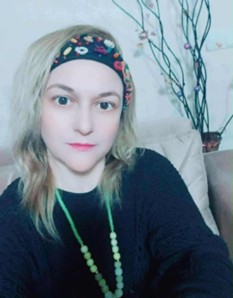
WRITING IN THE SAND
Some loves
It’s like writing in the sand
Evanesces
Disappears
Some loves
It’s like night
Darkness
Burn out
Then
Its name is
Love is not
Just fate.
Türkan Ergör, Sociologist, Philosopher, Writer, Poet, Art Photography Model. Türkan Ergör was born 19 March 1975 in the city of Çanakkale, Türkiye. She was selected International “Best Poet 2020”. She was selected International “Best Poet, Author/Writer 2021”. She was selected International “Best Poet, Writer/Author 2022”. She was awarded the FIRST PRIZE FOR THE OUTSTANDING AUTHOR IN 2022. She was awarded the 2023 “Zheng Nian Cup” “National Literary First Prize” by Beijing Awareness Literature Museum. She was awarded the “Certificate of Honor and Appreciation” and “Crimean Badge” by İSMAİL GASPRİNSKİY SCIENCE AND ART ACADEMY. She was awarded the “14k Gold Pen Award” by ESCRITORES SIN FRONTERAS ORGANIZACIÓN INTERNACIONAL.
Poetry from Cyril Erchev
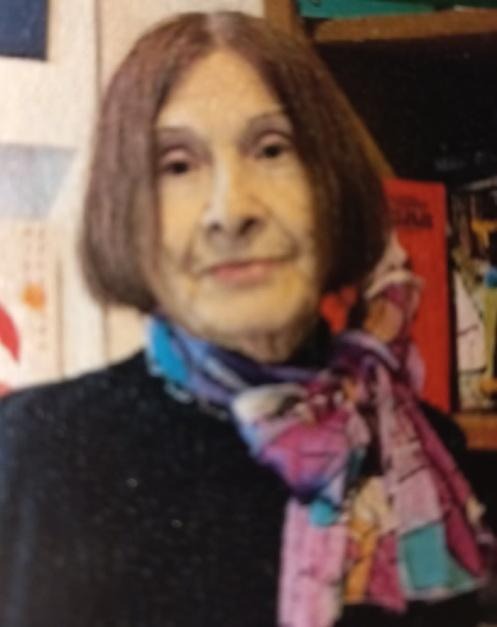
THE GRINGA
Cyril Erchev – Gchú.
You dance with the wind
and with the storms.
You seek treasure
in every dawn.
The enchanted flowers
bow reverently
as you pass by
in the daylight.
You walk barefoot
on the grass
arranged with dew
and sighs.
You wait in silence
while the sky announces
your half-smile
to captivate time.
You carry sweetness
in your hands
as night falls
you drift off to sleep.
Restless maiden
you captivate the breeze
you awaken passions
with your blonde hair.
The thrush loves you.
The lark sings to you.
The sparrows invite you to dance.
A black-headed siskin blows you kisses.
On serene nights.
Your green eyes
dream of the return
of your ancestors…
Vikings!
CYRIL ETCHEV, pseudonym of Elvira Cirila Etcheveste, was born in the city of Gualeguaychú, Entre Ríos. She studied at School No. 4, Gervasio Méndez, and became a teacher at ENOVA. She taught in Islas del Ibicuy, Entre Ríos, and in Buenos Aires: Necochea, Quequén, and Mar del Plata. She is a Professor of Language and Communication Sciences, with a degree in Language and Literature.
She specializes in Reading, Writing, and Education, and has completed national and international postgraduate studies. She is an independent researcher of the works of Cortázar, Borges, and Chekhov. She is an International Ambassador of the Word (Quero, Toledo, Spain) and a World Ambassador of Culture (Tarija, Bolivia). She is a Distinguished and Illustrious Citizen in cities in Argentina and Bolivia. She has directed plays for children and young people, as well as adult storytelling performances. Founder of Literature Clubs: Little Prince, The Blue Heron, and The Bicycle.
Published books: She Tells, The Book That Speaks, and Amara, the Eyes of Time. Essay and profile magazine: The Blue Heron. Attends Writers’ Meetings and National and International Book Fairs. Has given lectures on Latin American authors in theater, art, and literature. Edited the book: The House on San Juan Street and Other Stories. De Los Cuatro Vientos Publishing House. San Telmo, Buenos Aires. Tucumán Park Editions: The Women of the Earth. She pro bono promotes Latin American stories among children, young people, and adults in cultural centers, libraries, and institutes. She collaborates on anthologies with the group: Together for Letters: THE IMMORTALS on the Web, in ArtePoética, the cultural magazine THOTEM, and in Weaving International Brotherhood: with essays and short stories. Dr. Mirta Ramírez, Chaco, Argentina. Translated into thirteen languages.
She is invited to read, present, teach classes, and give lectures to all countries via streaming networks: YouTube and Facebook. She also appears simultaneously on radio and YouTube. She has been an active writer at Mercosur Congresses since 2020. President: Professor Zulma Nicolini, Gualeguaychú, Entre Ríos. In Mar del Plata, she belongs to the Ibero-American Society of Poets, Writers, and Artists (SIPEA). From Mexico, she represents the International Book Confederation. Presidents: César Salvatierra and Alan Morales from Peru. Coordinated by Cultural Ambassador Julio Gorenaud for the world. She receives distinctions as a Writer and Cultural Promoter from the Organization for the Defense of Peace and Art AWARD THE BEST World Federation of Women Grand Masters.
Presidents: Elena Paniagua and Nora Miranda at the Palace of the Buenos Aires City Legislature. The International Mendoza Condor Award/Presidents: Guillermo Salinas and Adela Cornejo. She receives the Silver Seagull Award/The Knight Errant/Dr. Princess Alexandra of Easter Island. Dr. J. Manuel Equihua Estrella International Literature Prize from the International Cultural Collective, Universal Poetic Utopia USA Branch, and the International Program of Virtual Tributes to Living Artists. Selected among the 100 writers of Ibero-America and the Caribbean by EDITORIAL HISPANA USA, Atlanta, Georgia, 2020.
She has numerous publications in anthologies from Argentina to the world. MSADEI Diplomas of Honor. J. PAYRÓ, Dr. Jorge Citrángolo Casal. Mercedes, Buenos Aires, Argentina. Sworn in as a writer at the “Monument to the poet Alfonsina Storni” in Mar del Plata, Buenos Aires, by Dr. Jorge Citrángolo Casal. She is a member of the National Society of Writers (SADE) and the Gualeguaychú branch in Entre Ríos, Argentina. She donates books of her authorship to the Domingo F. Sarmiento Library in Gualeguaychú, Entre Ríos, the National Library, the Library of Congress, and the Library of the Legislature of the Autonomous City of Buenos Aires, as well as to schools and museums she visits. In 2025, she published Romance de la Sirena, followed by the publication of BORGES, nació con el Tango (Borges, Born with Tango).
Poetry from Elmaya Jabbarova

BOOMERANG
I wonder when we will give up,
From ignorant customs, traditions,
Clinging tightly to old things,
Separating the lover from the beloved!
… A love grows from the neighboring yard,
… A love speaks of an unfortunate fate.
An epic is written about love…
From an eternal feeling, from an undying feeling!
I turn away and say, oh humanity,
Come out of ignorance, from the black darkness,
Shahs, Pharaohs, Khagans could not,
They stayed in this world and did not live!
Remember, you are also without a ruler,
You live your life with sedition and corruption,
And if you have a signature,
You will rot in sins!
Effect and reaction are equal,
Don’t think that it will bypass you.
The deeds you do are like a boomerang,
It will definitely return quickly without delay!
Elmaya Jabbarova was born in Azerbaijan. She is a poet, writer, and translator. Her poems from 2019 to date were published in the regional and foreign newspapers, magazines, books, websites, and anthologies. She has been awarded many certificates, diplomas, and medals. She is the department manager of Hekari newspaper of Azerbaijan. She is an honorary member of the Writers of Kazakhstan and the Kyrgyzstan World Association of People’s Creators, Honorary member of the International Academy of Literature, Art, Culture and Social Sciences of Uzbekistan. She is an Academic Appointed Coordinator by the Secretary General of Azerbaijan, Argentina. She is presented in the book Famous Personalities MultiArt – 5, Argentina. She was a member World Poetic Fraternity. She was awarded the title of Global Poet of 2023; 2024. She was awarded the title of World Poet Laureate from Azerbaijan as one of 55 poets selected by Pentasi B Friendship Poetry for 2025.
Poetry from Sumana Bhattacharjee

Untitled
When we step out of our internal conflict
We bring clarity and it brings new verdict
Only then we can move on; matters not. Outside world what is going on.
Only we can choose the path
What is right for us,
When the veil of right and wrong
Collapse like a tower
Only can save us our inner power.
Eventually this power makes us strong
The pathos of life prolong,
Then life become a mellifluous song
We left behind the tune of melancholy song.
No one can judge us
Even we can’t judge anyone,
Someone who is imperfect
Become perfectly perfect to someone.
We have to overcome the
The hardles of life one by one,
Divine power only guide us…
When we become the stronger one.
Sumana Bhattacharjee
27/6/2026
Sumana Bhattacharjee is a bilingual poetry writer from India. She born and brought up in city Kolkata in a family of teachers. From her childhood she has had a keen interest in music, poetry and drama. She is a published poet and her poems have been published in more than twenty national and international anthologies. She is a regular contributor of ezines like Glomag Raven-Cage Ezines, Spillword. com, and Cultural Reverence. She founded two online literature group and she is working as an assistant executive editor at Global Nation Newspaper, Bangladesh. She is the peace ambassador of WHMP. She is passionate about poetry and she thinks this is the only way she can spread her thought around the world.
Poetry from Teresa Safar
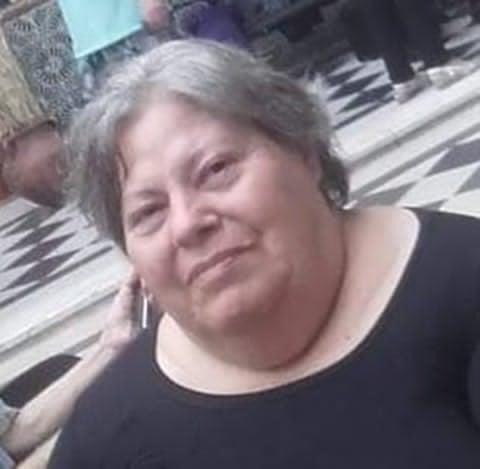
MATURITY
Mature woman,
you carry your years,
you don’t stop to look at life.
The waves carry you,
the sky covers you,
The birds are accomplices
of your thoughts.
Teresa De Lujan Safar is a member of Together for Letters. She lives in Pergamino, Buenos Aires province, and has written a book, Crisol of Ideas. She’s published in the “Huellas de Cristores” anthologies and seven “Rosario, Bridges of Words” anthologies, curated by Gladys Lopes Pianesi. She has participated in the literary workshop of Estela Torres Erill and currently attends the “Florilegio” literary workshop, coordinated by Marta Susana Lomellino. She’s a current member of “Together for Letters.”
Poetry from Nidia Amelia Garcia
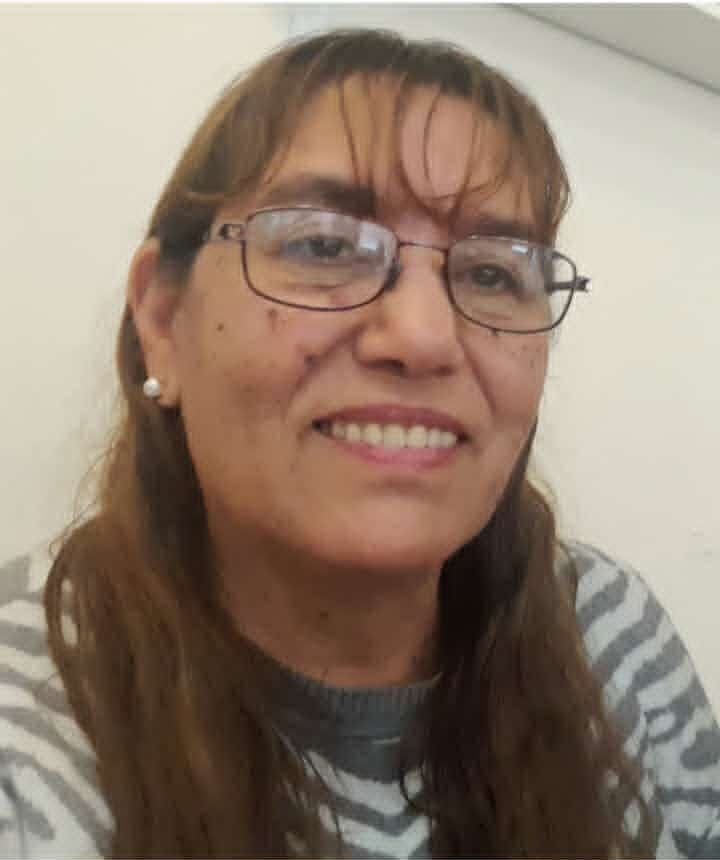
MEMORIES OF AN OLD MAN
The face of an old man,
with deep wrinkles,
Remembers the past,
with a distant gaze,
Fleeting images,
of a time that is no more,
Vanish in his mind,
like dry leaves.
In his head,
thinking, a pair of old shoes,
With worn laces,
that have walked many miles,
A bare torso,
strong and vigorous,
The lower part,
a long skirt,
That billows in the wind,
with a gentle rhythm,
The old man’s memory,
is a rich recollection,
Stitched with threads of love,
work, and life.
Nidia Amelia García, from Buenos Aires, Argentina, is a writer and an active member of Juntos por las Letras (Together for Letters). She has participated in numerous virtual events in Uruguay, Paraguay, Bolivia, Spain, Colombia, Portugal, Nigeria, Uzbekistan, Kyrgyzstan, and elsewhere. She has also contributed to literary anthologies such as “Books of the Immortals” and “Anthology of the 50 Poets of the World 2022.”