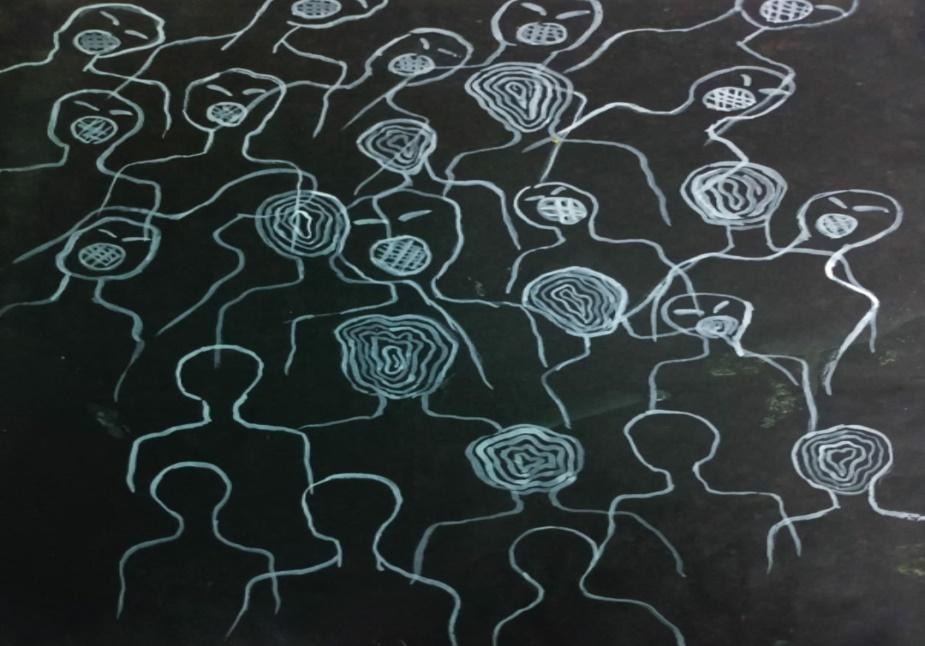
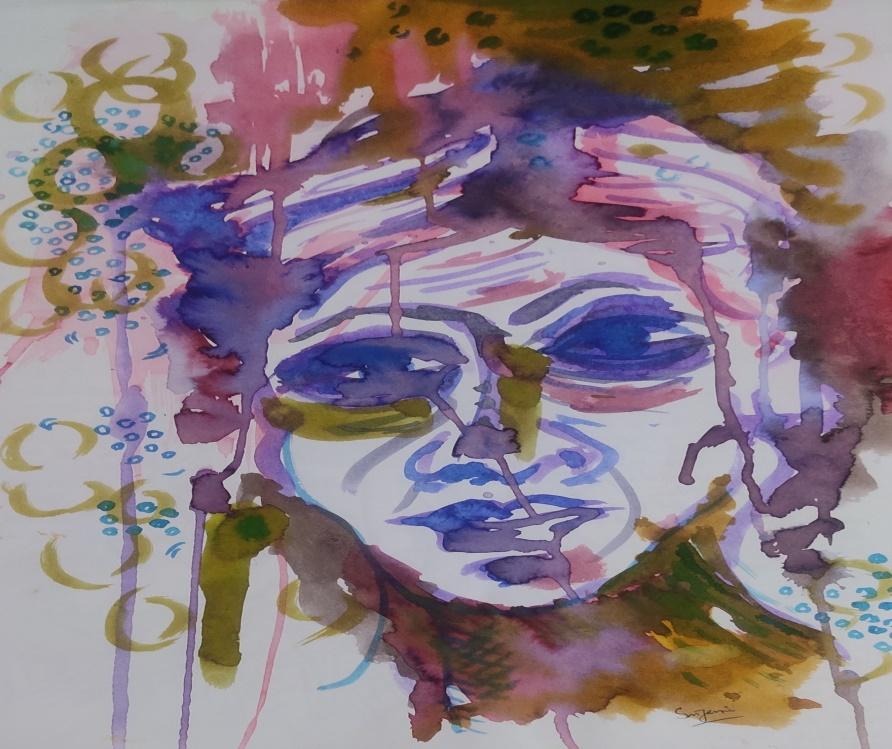
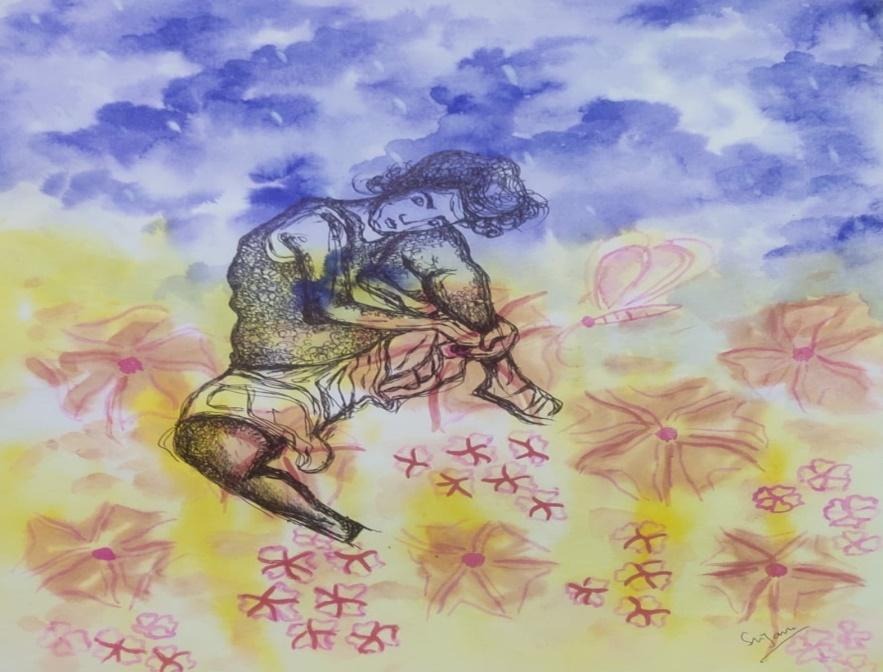
The classroom smelled of pencil shavings and damp jackets. For five minutes, we folded scraps of notebook paper into planes, launching them across the room. Some glided, some wobbled, others crashed into walls. I traced their arcs with my eyes, noting collisions, ricochets, and the occasional flight that defied expectation.
Laughter erupted, papers tumbled, and yet patterns emerged: the planes avoided certain corners, landing repeatedly in familiar arcs. I folded another, adjusting the crease slightly, predicting its path, marveling that small variations led to wildly different outcomes. In that brief chaos, I glimpsed a lesson bigger than geometry: that unpredictability is only meaningful if we observe, if we participate, if we notice the subtle orders forming inside the mess.
CONSTITUTION – A GUARANTEE OF A FREE AND PROSPEROUS LIFE
Jumanazarova Zuhra Kattakurgan State Pedagogical Institute Faculty of Foreign Languages and Literature, Group 24/12 Tel: +998 50 040 6125 Email: jumanazarovaz896@gmail.com
Abstract: The Constitution of the Republic of Uzbekistan ensures human rights and freedoms. At the same time, the Constitution is the law of any state, which is the legal basis for regulating all aspects of public life. The Constitution of the Republic of Uzbekistan determines the guarantees and direction of comprehensive structures and public works implemented in the form of a constitution. Keywords: Republic of Uzbekistan, Constitution, free life, Supreme Council, Revised Constitution, Social state, Human dignity, People’s power, welfare
Introduction The Constitution of the Republic of Uzbekistan is an important foundation for establishing democratic principles in the country, protecting the rights and freedoms of citizens, ensuring the sustainable development of public administration and social life. It determines the path of independent development of Uzbekistan and forms a legal guarantee for the processes of reforms, creative work and modernization. In addition, we can say that in accordance with Article 20 of our Constitution in the new edition, “All contradictions and uncertainties in the legislation that arise in the relations between a person and state bodies shall be interpreted in favor of the person”
Main part After the collapse of the USSR, the leadership of Uzbekistan began to fully take its independence into its own hands. President of Uzbekistan Islam Karimov proposed to the Supreme Council of the Republic to prepare a draft law on the State Independence of the Republic in a very short period of time and submit it for discussion at an extraordinary session of the Supreme Council. After that, on August 26, 1991, the Supreme Council adopted a decision to prepare a draft law “On the State Independence of Uzbekistan”. On August 31, 1991, the extraordinary historical VI session of the Supreme Council of the Republic of Uzbekistan was held.
At this session, President of the Republic of Uzbekistan I. Karimov made a speech and in his speech analyzed the socio-political events that have occurred in the former Union in recent years, the consequences of the attempted coup, and comprehensively substantiated their direct relevance to the fate of Uzbekistan and the history of our people. He also declared the state independence of the Republic of Uzbekistan and proposed to strengthen it with a law on independence. After Islam Karimov became the first President of the Republic of Uzbekistan, Uzbekistan boldly began to strengthen its state independence. First of all, state symbols were determined. After gaining independence, such urgent tasks as building a national legal state, establishing a democratic society, and forming market relations required the development of the Constitution of independent Uzbekistan.
When developing the draft Constitution, the world experience of constitutional development was studied, and the achievements achieved in the world in the field of human rights, democracy, and legislation were taken into account. In order to celebrate the adoption of the Constitution of the independent Republic of Uzbekistan, the day of the adoption of the Constitution, December 8, was declared a national holiday – the Day of the Constitution of the Republic of Uzbekistan [2]. The Constitution of the Republic of Uzbekistan was developed independently, based on the will and wise opinions of our creative people, as well as taking into account the most advanced experience of constitutional development accumulated in the world, as well as the characteristics of our national statehood.
Our Constitution places special emphasis on the priority of the interests of the people and human rights. In particular, according to Article 7, “The people are the only source of state power,” that is, all decisions and reforms in the country must be carried out in the interests of the people. This norm strengthens the legal basis of democracy in Uzbekistan. Also, Article 20 of the new Constitution enshrines the principle that “All conflicts arising in relations between a person and state bodies shall be interpreted in favor of the person.” This ensuring the primacy of the rights of citizens and further strengthening the state’s responsibility to the people. These principles serve as the main guarantee of justice, freedom and prosperity in our country. In the process of studying the Constitution of the Republic of Uzbekistan, it is worth mentioning the main principles that reveal its essence.
•An important principle of the Constitution of Uzbekistan is state sovereignty. •Another principle of our Constitution is people’s power. •The next principle is the division of state power into three independent branches. The division of power in the system of state power of Uzbekistan into legislative, executive and judicial branches has been legalized.
According to Article 21 of the Constitution, a single citizenship is established throughout the territory of the Republic of Uzbekistan. All citizens of the Republic of Uzbekistan, regardless of their nationality and ethnicity, constitute the people of Uzbekistan [Article 21 of the Constitution]. The adoption of the Constitution of the Republic of Uzbekistan has become of great importance in the life of our country. It is a fundamental principle of the rule of law in our country. Became the basis for legal reforms for the development of the country.
Hundreds of laws, codes, national programs have been developed, passed public discussions, adopted, and are being implemented in all aspects of our lives. According to the law adopted on April 11, 2007, the norm that the President is the head of the executive power – the Chairman of the Cabinet of Ministers was removed from Article 89 of the Constitution. In addition, Article 89 stipulates that “the President of the Republic of Uzbekistan is the head of state and ensures the coordinated activity and cooperation of state authorities.”[2]
The new Constitution perfectly embodies the principle of self-determination, which the people have long dreamed of. Therefore, it is based on and strengthens the principle of people’s power. The expression people’s power means that all power belongs to the people in practice and in law. People’s power
Conclusion The guarantee of freedom of entrepreneurship in the Constitution, the creation of a healthy competitive environment, the protection of the property rights and other legitimate interests of the individual indicate that the principle of the “social state” is being fully implemented in Uzbekistan. This increases the trust of our people in the state and serves as an important factor in building a prosperous life. The principles set forth in our “Basic Dictionary” — the primacy of human dignity, justice, the rule of law and loyalty to the interests of the people — form the foundation of the country’s development.
The implementation of the criteria reflected in the Constitution ensures the stability of the development of society and leads to a free and prosperous life. Therefore, adhering to each of the norms and principles set forth in our Constitution, further improving the legal framework of reforms, and ensuring their effectiveness is one of the most important tasks on the path to the prosperity of our country. In this sense, the Constitution is the confidence of our people in tomorrow and the guarantee of a prosperous future.
List of used literature ⦁ Q. Usmanov, “History of Uzbekistan, second edition”. Tashkent-2016. B-357-363. ⦁ The Updated Constitution of the Republic of Uzbekistan. – Tashkent: “Uzbekistan” publishing house, 2023. -20-21-89-148-articles ⦁ The Constitution of the Republic of Uzbekistan. “Library of the Constitution”. 2015 – 2024 – ⦁ www.conctitution.uz ⦁ “History of Uzbekistan”. Tashkent-1998 B-64.-66. ⦁ The Constitution Library channel, useful information and manuals section, .https://constitution.uz/oz/list/articlesKarimov I.A. “Uzbekistan on the Threshold of Independence”. — Tashkent: “Uzbekistan” Publishing House, 2011. ⦁ I. Karimov, “Uzbekistan on the Threshold of Independence”. – Tashkent: “Uzbekistan” Publishing House, 2011.
National and Cultural Features of Phraseological Units in the Uzbek Language
Kokand University, Andijan Branch Faculty of Philology and Language Teaching Uzbek Language, Group 25-07, 1st Year Student Habibullayeva Laylokhon Zarifjon kizi
Annotatsiya: Ushbu maqolada o‘zbek tilidagi frazeologizmlarning milliy-madaniy xususiyatlari, ularning xalq tafakkuri, qadriyatlari va turmush tarzi bilan uzviy bog‘liqligi tahlil etiladi. Frazeologik birliklarning mazmunida xalqning mentaliteti, tarixiy tajribasi, urf-odat va an’analari aks etgani ilmiy asosda yoritiladi. Shuningdek, maqolada o‘zbek tilidagi barqaror iboralarning badiiy-estetik va ma’naviy yuklamasi, ularning xalq og‘zaki ijodi hamda milliy o‘zlikni ifodalashdagi o‘rni misollar asosida tahlil qilinadi. Tadqiqot natijalariga ko‘ra, frazeologizmlar o‘zbek xalqining dunyoqarashi, axloqiy mezonlari va madaniy boyligini namoyon etuvchi muhim til birliklari sifatida baholanadi.
Kalit so‘zlar: frazeologizm, milliy madaniyat, xalq tafakkuri, qadriyat, mentalitet, an’ana, o‘zlik, til, badiiy ifoda.
Annotation: This article analyzes the national and cultural features of phraseologisms in the Uzbek language and their close connection with the people’s mentality, values, and way of life. It is scientifically substantiated that the meanings of phraseological units reflect the historical experience, traditions, and worldview of the Uzbek people. The article also examines the artistic, aesthetic, and spiritual significance of stable expressions in Uzbek, illustrating their role in folk creativity and in expressing national identity. The research concludes that phraseologisms are important linguistic units that represent the worldview, moral principles, and cultural richness of the Uzbek nation.
Keywords: phraseologism, national culture, folk mentality, values, mentality, tradition, identity, language, artistic expression.
Аннотация: В данной статье анализируются национально-культурные особенности фразеологизмов в узбекском языке, их тесная связь с народным менталитетом, ценностями и образом жизни. Научно обосновано, что в значении фразеологических единиц отражаются исторический опыт, традиции и мировоззрение узбекского народа. В статье рассматриваются художественно-эстетическая и духовная значимость устойчивых выражений, их роль в устном народном творчестве и выражении национальной самобытности. В результате исследования установлено, что фразеологизмы являются важными языковыми единицами, отражающими мировоззрение, моральные принципы и культурное богатство узбекского народа. Ключевые слова: фразеологизм, национальная культура, народное мышление, ценности, менталитет, традиции, самобытность, язык, художественное выражение.
INTRODUCTION The language of every nation is its spiritual wealth and an expression of its mentality. Through language, a nation reflects its worldview, traditions, and historical lifestyle. In this regard, phraseology is considered one of the brightest examples of national thinking and culture. Phraseological units in the Uzbek language also deeply reflect the lifestyle, values, and psychology of the Uzbek people. Expressing a simple idea through phraseology gives speech imagery and expressiveness. Nowadays, their usage has become common in social networks, memes, and advertisements. For example, the phrase “to disconnect from the Internet” is understood as being left behind from news or trends.
Many linguists have thoroughly studied Uzbek phraseology. For instance, Sh. Rahmatullayev is one of the founders of Uzbek phraseology. He compiled the Explanatory Dictionary of Uzbek Phraseological Units and developed the theoretical foundations of phraseology. N. Mahmudov conducted research on the role of phraseological units in literary language and their national-cultural aspects.
Phraseological units of the Uzbek language are linguistic elements that reflect the nation’s history and way of life. The contribution of the above-mentioned scholars is invaluable in the scientific study of these expressions. The main purpose of this article is to study the national-cultural features of Uzbek phraseological units and analyze their usage on artificial intelligence platforms.
MAIN PART At the beginning of the 20th century, phraseological units began to be studied as a separate field of linguistics. The general theoretical issues of phraseology were first investigated by the French linguist Charles Bally. In his works, Charles Bally systematized word combinations and, based on their meanings and syntactic features, referred to the stable combinations used as a whole as phraseological units.¹ According to Sh. Rahmatullayev, many expressions originate from ancient Turkic languages and have preserved their meanings to this day. In the studies of E. Begmatov and M. Mirtojiyev, the lifestyle, values, traditions, and mentality of the Uzbek people are revealed through phraseological units. Phraseological units are closely connected with the life, values, and national-cultural characteristics of the people. They enrich the artistic expressive possibilities of the language and add expressiveness, imagery, and national spirit to speech.
Review of sources used During the preparation of this article, several scientific sources related to issues of phraseology were utilized. In her research, M. Asqarova provides detailed information about the lexical-semantic features of Uzbek phraseological units, their structural types, and their role in the language. The scholar’s views served as an important source in shaping the theoretical foundations of phraseology. Based on her scientific views, phraseological units represent the richest layer of the people’s language and culture, embodying their spiritual world, lifestyle, and national-cultural characteristics.
As a result of the works of A. Madlayeva and A. Hojiyev, phraseology has been recognized as a separate branch of Uzbek linguistics. The structure, meaning, types, and grammatical features of phraseological units have been clearly defined. Use of Phraseological Units on Artificial Intelligence Platforms In today’s era of globalization, artificial intelligence and digital technologies are creating new interpretations of linguistic units. Platforms such as ChatGPT, Google, and DeepL work with phraseological units during translation, processing, and text analysis. However, the national color of language is most vividly expressed through phraseology itself. Artificial intelligence often translates phraseological units literally or interprets them incorrectly. Therefore, deep linguistic knowledge is required to correctly identify and contextually translate phraseological expressions.
For example, phraseological units such as “miyasi qotmoq” (to be confused), “kallasiga keltirmoq” (to realize), “tishi o’tmoq” (to become experienced) may be translated by AI literally as “freeze of brain”, “bring to head”, or “tooth becomes sharp”. This leads to distortion of meaning. That is why, in the process of integrating phraseological units into AI platforms, the following aspects must be taken into account: historical formation of the expression connection with national mentality semantic field usage contexts.
Conclusion
In conclusion, phraseological units are the richest layer of a nation’s worldview, cultural memory, and mentality. They create imagery in language, give speech a national spirit, and express meaning more strongly. Since the 20th century, phraseology has developed as an independent scientific field in Uzbek linguistics and continues to develop consistently even today. In the modern digital era, the correct application of phraseological units on artificial intelligence platforms is becoming increasingly relevant. This process plays an important scientific and practical role in correctly integrating the richness of the Uzbek language into the global information space, preserving the national linguistic heritage, and transferring the cultural spirit of the people to future generations.
References Shirvonova, Z. A. (2023). Dissertation. Termiz. Rahmatullayev, Sh. (1978). Modern Uzbek Literary Language. Tashkent: O‘quvchi. Ma’rufov, Z. M. (1981). Explanatory Dictionary of the Uzbek Language. Moscow: Russian Language Publishing. Khodjaeva, Sh. R. Article. Rahmatullayev, Sh. (2006). Modern Uzbek Language. Tashkent: University Publishing. Abdurahmonov, G. On the Modern Uzbek Language. Tashkent.
MODERN DEVELOPMENT PROCESSES OF THE UZBEK LANGUAGE AND ITS IMPORTANCE IN EDUCATION
Denov Institute of Entrepreneurship and. Pedagogica Faculty of Philology
Philology and Teaching Languages: Uzbek Language 1st-year student
Rashidova Shohsanam
sohsanam719@gmail.com
Abstract: This article discusses the modern development processes of the Uzbek language, the internal and external factors influencing its evolution, and the role of the language in the educational system. The study analyzes how the digital age affects linguistic changes, innovations in youth speech, and modern approaches applied in teaching Uzbek. The article also examines the importance of the Uzbek language in the development of society and highlights urgent issues related to its preservation and improvement.
Keywords: Uzbek language, education, language development, modern approaches, digital era, linguistic culture.
The spiritual world of a nation, its worldview, and historical memory are reflected, first of all, in its language. The Uzbek language, with its ancient history and rich lexical and grammatical system, is one of the most valuable cultural assets of our people. In today’s era of globalization and rapid technological progress, the development of language is accelerating, acquiring new forms and content.
Particularly, changes in youth communication, the influence of digital technologies, and modernization in the education system show that the Uzbek language is entering a new stage of development. For students specializing in philology, it is essential to understand these processes thoroughly, analyze them scientifically, and convey accurate knowledge of the language to future generations. Therefore, this topic is highly relevant today.
Main Part
Modern Development Tendencies of the Uzbek Language Throughout its history, the Uzbek language has undergone several evolutionary phases, with unique changes in each period. In the current age of globalization, the transformation of the language has become more dynamic.
Recent years show the following noticeable trends:
Expansion of the Lexicon
Technological, economic, and educational innovations are enriching the Uzbek vocabulary. Examples include digital sphere: online, mobile app, scanner, platform economics: startup, investment, competitiveness education: media literacy, interactive methods, credit-module system. These changes demonstrate the language’s adaptability to modern life.
Growth of Internet-based Vocabulary Young people actively use social media and online terminology, leading to the widespread usage of words such as: like, trend, repost, channel, content, etc. While natural, this trend increases the need to preserve linguistic norms and cultural correctness.
Simplification in pronunciation and grammar In spoken speech, many words are pronounced in shortened or simplified forms, for example: “bo‘lyapti → boptimi”,“borayapsan → borvossan”.Linguists consider this part of the dynamic development of speech.
The Role of the Uzbek Language in Education
Teaching the Uzbek language goes beyond grammar; it shapes students’ thinking, communication skills, and cultural awareness. The educational process faces several important tasks: Applying modern pedagogical technologies Today’s education effectively uses multimedia tools, electronic resources, and online platforms. These help to: increase student engagement, develop independent thinking, make learning more interesting.
Developing speech culture
Knowing the language is not enough; one must use it correctly and elegantly. Therefore, the following aspects require attention: correct pronunciation, expanding vocabulary, mastering literary norms, reducing unnecessary slang in speech.
National values and language
The Uzbek language reflects national identity, traditions, and the wisdom of ancestors. Literary works, folklore, and historical sources form an inseparable part of language education. Thus, connecting language classes with national values is essential.
New Opportunities in Teaching Uzbek in the Digital Era
Digital tools significantly increase the effectiveness of language learning. For example: audio and video materials improve pronunciation, interactive tests boost student participation, online dictionaries enrich vocabulary, applications make lessons more engaging. For teachers, digital tools also provide advantages such as electronic lesson plans, online assessments, and multimedia-supported teaching.
Conclusion
The Uzbek language today is developing rapidly, synthesizing ancient traditions with modern innovations. While digital technologies enrich the language with new expressions and opportunities, protecting its literary norms and national essence remains a crucial task. Improving the methodology of teaching Uzbek, applying new pedagogical technologies, and cultivating students’ speech culture are among the most important objectives of modern education. Language is the spirit of the nation. Preserving and developing it is the responsibility of each of us.
References
Karimov N. Issues of Uzbek Language Development. Tashkent: Fan, 2020.
Yuldoshev A. Introduction to Linguistics. Tashkent, 2019.
Qodirova D. Methodology of Teaching the Uzbek Language. Tashkent, 2021.
Mamajonov M. Digital Era and Language Culture. Samarkand, 2022.
Kholmatov O. Foundations of Modern Linguistics. Tashkent, 2020.
Gratitude
under the bright tree
in its shadow we sip wine
listening to birdsongs
not for the presents
but for the muffled quiet
of fresh fallen snow
I set an extra plate
the candlelight flickers twice
her presence or draft
grilled eel feast
the stray cat licks
its empty bowl
second helping
on the plate
summer cuisine
Dilnoza Bekmurodova Navruzbekovna Student of the Presidential School in Karshi, Kashkadarya Region, Uzbekistan Email address: dilnozabekmurodova89@gramil.com
Abstract This article discusses the importance of choosing the right career in human life. It focuses on the social, psychological, and personal factors that influence career choice and highlights why this decision is crucial for young people. The article emphasizes the significance of aligning one’s interests and abilities to find a meaningful path, analyzes the consequences of poor career decisions, and explores how the right career choice leads to success and personal fulfillment. In the modern world, career choice has become one of the most decisive factors not only for individual happiness but also for social and economic development.
Introduction One of the most important decisions in a person’s life is choosing a career. Every individual defines their future, social standing, and success through their professional path. Therefore, the right career choice plays a crucial role not only in one’s personal life but also in the development of society as a whole. Today, with the rapid advancement of technology, the digital economy, and artificial intelligence, the global labor market is changing dramatically. New professions are emerging, while many traditional ones are gradually disappearing. In this context, it is vital for young people to choose careers that align with both modern demands and their own interests.
Thus, making the right career choice means consciously building one’s future, realizing personal potential, and taking responsibility for one’s own life. A career is not only a means of earning a living but also a way of self-discovery, achieving dreams, and contributing to social progress.
Main Body Research shows that the number of people dissatisfied with their professions or working in fields that do not match their abilities is increasing worldwide. Statistical data indicates that about 66% of workers have career regrets — mostly due to poor career choices, lack of motivation, and job dissatisfaction — which often lead to stress, burnout, and decreased productivity. Many people make incorrect career decisions early in life and end up working in areas that do not bring them fulfillment. Therefore, proper career selection has become not only a personal necessity but also a social priority.
Studies also suggest that individuals who choose careers aligned with their interests and strengths are 70% more satisfied with their jobs and demonstrate up to 1.5 times higher productivity. This shows that self-awareness is the key factor in successful career planning. A person must understand their talents, passions, and values to evaluate which professional path best fits them. For instance, creative individuals often thrive in art, design, or media fields, while analytical thinkers may excel in technology or scientific research.
Labor market demand also plays a critical role. According to the Future of Jobs Report 2025, the most in-demand professions in the coming years will include artificial intelligence and data analysis experts, software developers, environmental specialists, cybersecurity professionals, and healthcare workers. Meanwhile, automation is leading to the gradual decline of roles such as cashiers, clerical staff, and data entry operators. This transformation highlights the necessity for individuals to adapt, reskill, and continuously develop new competencies to remain competitive.
Gender-based differences also remain a major issue in the global job market. Current data reveals that 72% of men participate in the workforce, compared to only 47% of women. This gap underscores the need to ensure equal opportunities and promote women’s education and professional development. Research shows that when women’s participation in the workforce increases, a country’s GDP and overall economic growth also rise significantly.
To choose the right career, individuals should follow several essential steps. First, self- assessment is necessary to identify personal strengths, values, and areas of interest. Second, one should research current and future labor market trends to understand which professions offer stability and growth. Gaining practical experience through internships, volunteer work, and mentorship programs is also vital to test one’s abilities in real-world settings. Moreover, consulting career counselors and taking personality or career aptitude tests (such as Holland’s or MBTI) can help make informed decisions.
In today’s world, success depends on continuous learning, flexibility, and adaptability. As new technologies reshape industries, traditional professions are disappearing while new ones emerge. Therefore, individuals must choose careers not only for today but also for the future. When personal interests, social needs, and market demands intersect, a person achieves both material success and emotional fulfillment.
Conclusion In conclusion, choosing the right career is one of the most important and responsible decisions in life. A well-chosen profession leads to psychological stability, financial independence, and overall life satisfaction. Conversely, a poor career choice can result in unemployment, stress, and dissatisfaction. Therefore, career decisions should be made thoughtfully—through self-reflection, experience, and awareness of future opportunities.
In the modern world, the greatest wealth is adaptability and lifelong learning. When individuals find their true path, they not only shape their own destiny but also contribute to the prosperity and progress of society.
Dilnoza Bekmurodova Navroʻzbekovna – 13 years old, born on January 31, 2012. Currently, she is a 7th grade student at the Presidential School in Karshi, Kashkadarya region, Republic of Uzbekistan. Dilnoza is interested in writing poetry, reading books, drawing, and making things. She has been interested in creativity since the age of seven, and has been writing poems and various creative works. Currently, her creative works have been published in several international magazines. One of her biggest dreams for the future is to open her own educational center, travel to many countries, and publish her author’s works. She is very interested in learning languages, and currently knows two more languages.
References
Coursera. (2025). The 10 Most Popular College Majors. Retrieved from https://www.coursera.org/articles/most-popular-college-majors
BestColleges. (2025). The 10 Most Popular College Majors. Retrieved from https://www.bestcolleges.com/blog/most-popular-college-majors
World Economic Forum. (2025). Future of Jobs Report 2025: Jobs of the Future and Skills You Need to Get Them. Retrieved from https://www.weforum.org/stories/2025/01/future-of-jobs-report-2025
International Labour Organization (ILO). The Gender Gap in Employment: What’s Holding Women Back? Retrieved from https://webapps.ilo.org/infostories/en- gb/stories/employment/barriers-women
OECD. (2025). Retaining Talent at All Ages. Retrieved from https://www.oecd.org
UNESCO Institute for Statistics (UIS). (2025). Data for Sustainable Development Goals. Retrieved from https://uis.unesco.org
Forbes. (2025). 66% of Workers Have Career Regrets—How to Avoid Being One of Them. Retrieved from https://www.forbes.com
Harvard Business Review (HBR). (2025). The Key to Choosing the Right Career. Retrieved from https://www.hbr.org
Inc. Magazine. (2025). Why 99 Percent of People Choose the Wrong Career Path. Retrieved from https://www.inc.com
Debra Smouse. (2025). Career Selection Simplified: How to Choose the Right Profession. Retrieved from https://www.debrasmouse.com
Kun.uz. (2025). Trends in Career Choice among Uzbek Youth. Retrieved from https://kun.uz
Jizzakh State University (JDU). (2025). Scientific Analyses on Career Choice.
Bukhara State University (BuxDU). (2025). Modern Approaches to Professional Orientation.