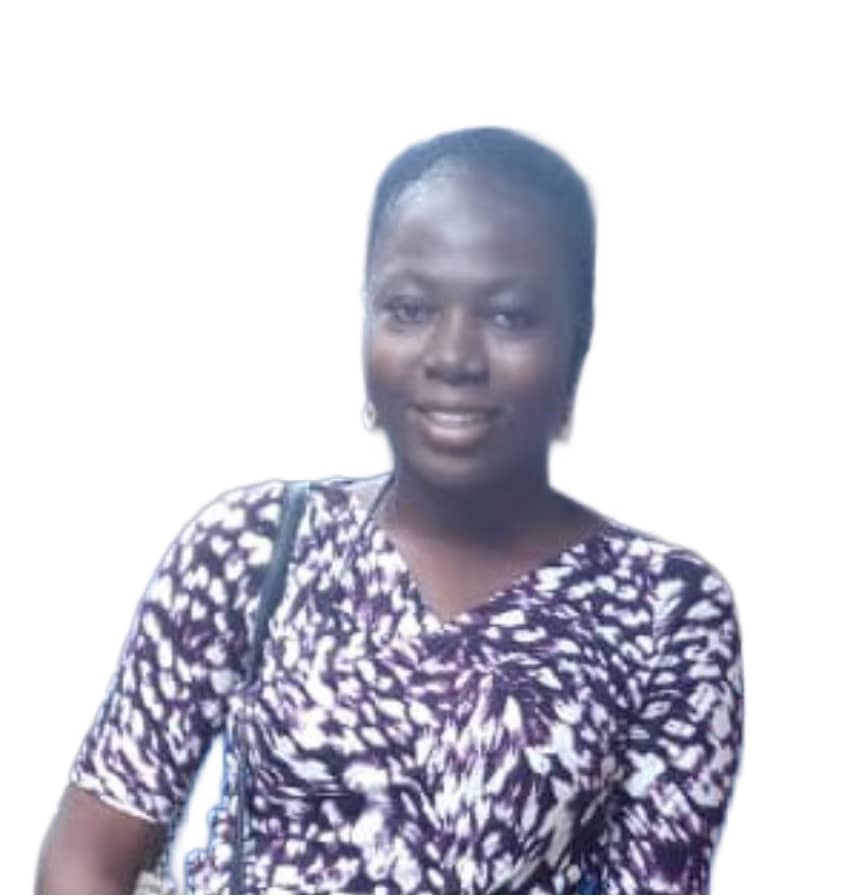
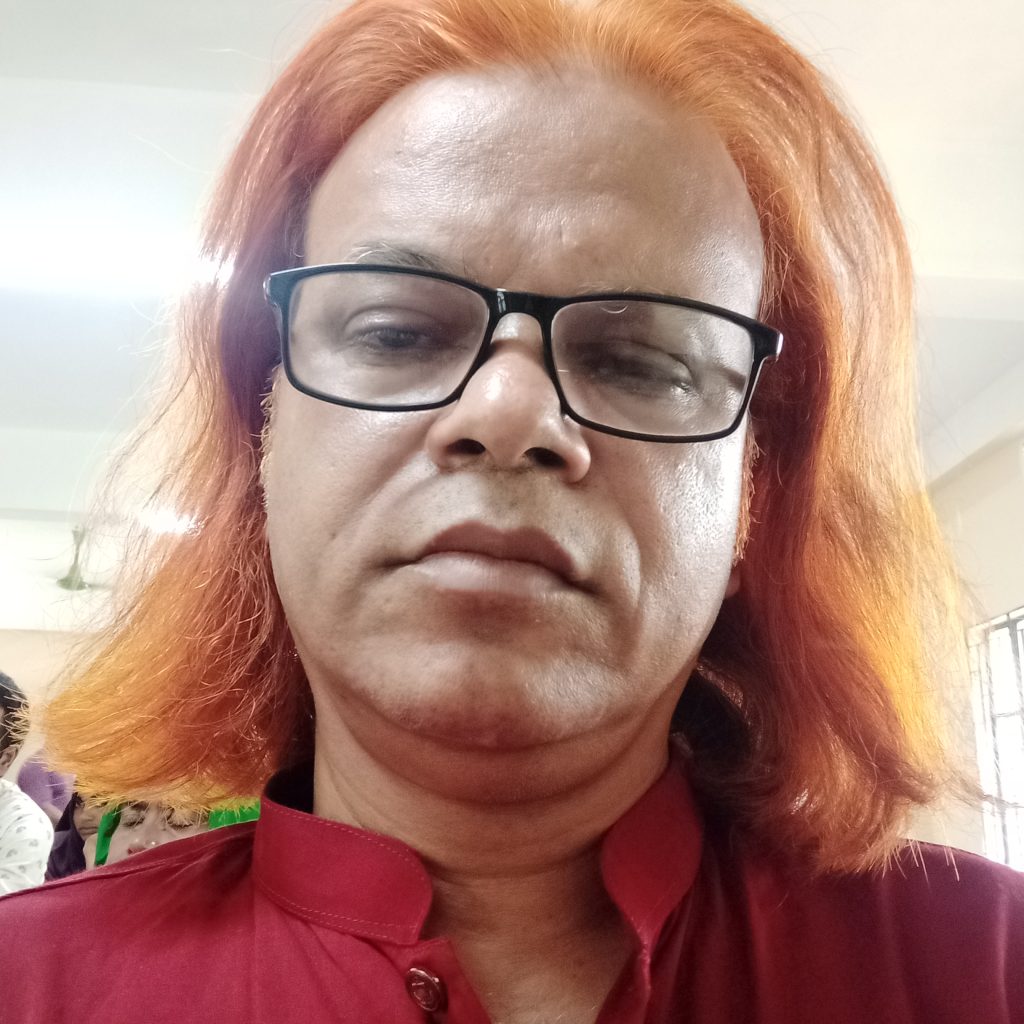
Chidimma Ewelukwa is a Nigerian writer whose work explores memory, belonging, identity, and the quiet tensions of everyday life. She has been published in Writer Monk Literary Magazine.
It cannot be told by drowning someone in false words, by smothering them in gifts, by laying red carpets along their path.
Never with splendor— love is not wrapped in shining paper.
To love is to sit at the edge of the soul, without a rope of safety, with a lamp that gives no light, and descend into a mysterious well.
To love is to wander fearlessly through the hidden chambers of faces where fragile dawns tremble.
In that dark silence, to hear what is left unsaid, to see what mirrors do not reflect, to become the sun that enlightens hearts with sincere glances mistaken for faintness.
Even if centuries pass, though fragile and trembling, it is the majestic mountain whose name never changes, the one you always seek refuge in— to love.
AI in the Classroom: Are We Upgrading Education or Downgrading the Human Touch?
Not long ago, a university laboratory was a place defined by the smell of chemical reagents, the scratch of pens on notebooks, and hours spent looking through optical microscopes. Today, a student can walk into that same lab, open a laptop, and let an Artificial Intelligence algorithm simulate the entire experiment in three seconds.
Technology has moved from the margins of our lives right into the center of our classrooms. For the current generation of university students, AI is no longer a futuristic concept—it is a daily study partner. We use it to debug our Python code, translate complex foreign texts, and organize messy research data. On paper, this is the ultimate democratization of knowledge. But on the ground, the reality feels a bit more complicated. The biggest promise of AI in education is efficiency. In scientific research and laboratory settings, digitalization has broken down massive barriers. Algorithms can analyze thousands of data sets in real-time, helping young researchers spot patterns that would otherwise take months to find. It acts like a super-powered assistant, handling the repetitive, time-consuming parts of science so that human minds can focus on actual creativity and big-picture questions. However, this rapid transition hides a subtle trap. When an AI tool can write a flawless essay, solve a complex higher-mathematics integral, or predict a physics simulation instantly, the human brain gets lazy. The critical muscle of “struggling” with a problem is being bypassed. True learning rarely happens when the answer is delivered instantly on a screen; it happens in the frustrating, messy process of trial and error. Furthermore, there is an invisible element that no language model can replicate: the human connection. A screen cannot replace a professor who notices a student’s hidden potential during a rough lecture. It cannot replicate the late-night debates between roommates trying to crack a logic puzzle together, or the shared joy when a peer finally passes a difficult national certification exam. These deeply human interactions are what actually shape an academic journey. Technology should serve as a bridge, not a substitute. The goal of integrating AI into our universities should not be to turn students into passive consumers of machine-generated data, but to empower them to become sharper thinkers. We must treat AI like a high-tech microscope: a tool that helps us see the world more clearly, but never a replacement for the human eyes doing the looking. As we reshape education for the digital era, the challenge is not just teaching students how to code or use prompts. The real challenge is ensuring that as our technology becomes smarter, we do not lose the raw curiosity, persistence, and human empathy that made us want to learn in the first place.
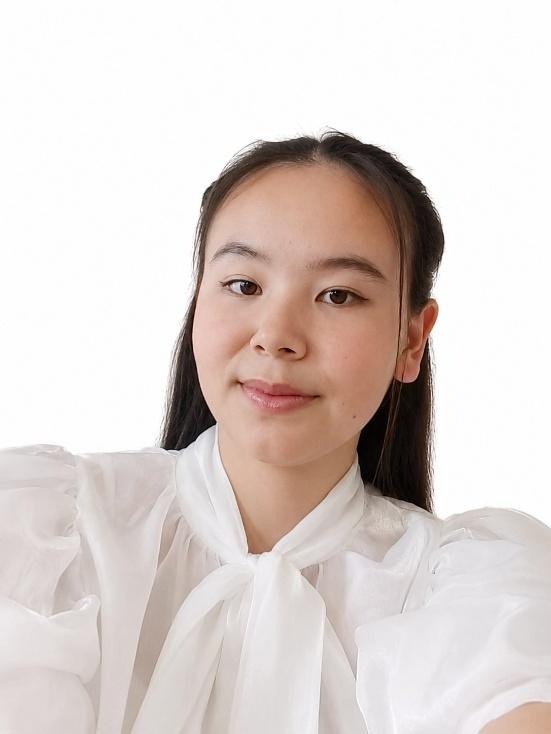
AMONBOYEVA SHAHNOZA, UZBEKISTAN FACULTY OF COMPUTER ENGINEERING IN URGENCH STATE UNIVERSITY
[Excerpt from Fleury’s Boston Globe featured poetry book Sparks in the Dark: A Lighter Shade of Blue, A Poetic Memoir
archived permanently at the University of Massachusetts’s Healy Research Library]
Dock we’ll dock stones roll and we’ll unroll in my America the big flying eagle birds well done abroad. two groups of people the rich and the poor the young and the old the white and the black and three tons of fat all in procession silent tales are blooming flowers growing shells olive branches climbing white house walls two candles burning shades of gray I trust in god holy bloody sunday comes sunday morning god bless those whose veins bear none twilight swallows the moon darkness descends soldiers gone AWOL run like panthers here and gone they’ve staged a snare running rivers very dry mouths Dutiful soldiers beat their drums paragons of strength and honor masquerade balls dinky shoots smack and the dumb blond flunks fall down stand up walk the line walk backwards juggling well will set you free!
Jacques Fleury
Jacques Fleury is a Boston Globe featured and internationally published Haitian American poet, theater reviewer, educator, author of numerous books of essays, reviews, fiction, poetry and literary arts student through Harvard University. He was chosen among over 4, 000 competitors from 83 countries as the Recipient of the International Naji Naaman Literary Prize for Creativity (2026) and a Certificate of Participation for his “…esteemed contribution of poetry to the anthology Water: The Source of Life (Volume IV) presented by La Fenetre De Paris.
Jacques Fleury’s book You Are Enough: The Journey Towards Understanding Your Authentic Self
I do lust after gold, jewels, and such, shiny things. I am shamelessly bold, and I want shiny things because they are shiny. And I deserve honors, distinctions, high titles. I crave folds of fawners, many affairs, sweet flings meaningless as candy but rich in imaginings that appease variety. I burn with impatience and rely on cunning, grasping will to hasten the end of the burning. And I want what I want — any passing fancy — and of course I must flaunt that uproooted pansy. And I rationalize injustice in my dreams, and I invoke conscience to accomplish my schemes; it reminds me of rules I use to maneuver sure-footed among fools who forsake their Mover.
Translated and excerpted from the novel “Voices from There.“
by Naim Al-Musafir
(Published in Arabic in 2017 by Dar Al-Rafidain, Iraq, Basra, Ishtar)
Translated by Faleeha Hassan
A Whisper
Whenever I pass by the river, I catch a glimpse of that small hill on its bank, as if it were trying to tempt me to stop there and get closer so it could tell me something, or to send a message. I had always wished to stop there, hoping to find a piece of clay, for example, or a bottle washed up by the river, or some other sign, so I might know what message I assumed it wanted to convey to me. Still, I avoided doing so because of the many stories circulating about it, which insist that it is a haunted hill!
My car broke down near it one evening, so I got out to see if I could figure out what was wrong with it!
I heard the music of the place: relaxed frogs croaking their song in the river, night insects chirping in the thickets, the howling of foxes lying in wait from the open wilderness all the way to the city, the excited barking of dogs echoing from the opposite bank where the village lies unaware,
Is this all the hill wanted to reveal?!
Just before leaving, I heard a rustling, as if voices were whispering to me: I turned around but saw no one!
Fear gripped me, so I ran off quickly; the whispering followed me to the car, the street, home, and work in waking and in sleep, while eating, while talking to someone
Those voices confused me, so I began to imagine that everything in that place was speaking to me: the hill, the river, the village, the people, and the nights and days that had passed over it. All of this caused me a great deal of psychological stress. I tried to rid myself of its burden by various means, but to no avail. It occurred to me to write down everything I could remember of those whispers, but as soon as I began writing, the voices stopped. I asked myself repeatedly: if someone were speaking to me, surely there must be a reason driving them to do so?
And they must be seeking something through their words. So why was the place itself speaking to me?
What drove it to do that? And what was it seeking?
The Whisper Blog became a large file titled “Voices from There,” and at the time, I hadn’t decided what to do with it.
In what literary genre would I publish it?
But the computer suddenly crashed, and the file disappeared.
I tried to recover it by various means, but I couldn’t. I went to the hill and sat there for hours, but I heard nothing; those voices no longer haunted me.
I returned to the vortex of psychological pressure and questions…
Did those whisperers cut me off because I lost the stories I had written down?
Or had they said everything they had to say and didn’t want to repeat what they’d said before?
I tried to convince myself that there was good in what had happened, as I always do when I lose something precious and let my imagination wander far away… I imagined that the whispering belonged to the very essence of that place and the spirits that inhabit it, and that they had captivated me with their story for some reason. Perhaps they didn’t like the way I was writing it down, so they hid the file so I could craft those stories differently, or write them as a fictional novel, but why did it occur to me to write them as a novel?
Did they whisper this to me, and I forgot?
Sasa Hill
Why do you hesitate to stop by and listen to me?
What is it that frightens you?
To all appearances, I am nothing more than an ancient earthen mound. Are you one of those who judge things only by what others say about them?
Had I known you belonged to that kind, I would never have spoken to you. Yet, as a punishment, I shall not tell you everything. Instead, I will tell you only a fragment of what people have disputed about me. Do you not think that the worth of a thing often lies in the very disagreements it inspires?
The people of Al-Jadi Village have long differed over the origin of my name and my historical beginnings. Since childhood, Yusuf Al-Mulla and Yahin Al-Hassawi held a conviction that bordered on certainty: that ancient peoples had once dwelt within me. They often saw countless shards of pottery scattered across the surface. Then, one day, the bank of the nearby river collapsed, revealing skulls and the bones of men of extraordinary stature.
In their imagination, I became a great city, one belonging to one of the many civilizations that had passed through this land. And indeed, how many there have been, from the Sumerians until today. Their belief was strengthened by words they had heard time and again from their history teacher, Mr. Badr: “God placed Al-Jadi Village and Sasa Hill at the heart of a region that is itself a museum of human civilization. In His wisdom at the dawn of creation, He destined this land to witness the descent of Adam, the father of humankind, and the birth of Abraham, the father of the prophets. Around them lie the ancient cities of Ur, Umma, and Lagash, together with the mounds of Al-Haba and hundreds of other tells and archaeological rises, some of which may date back as far as five thousand years.”
The people of Al-Jadi Village believe that I am a haunted mound. They have made me a burial ground for newborn infants, premature babies, and girls slain in the name of so-called honor.
The fishermen, too, avoided casting their nets into the river near me, fearing the Sa‘alwa—a fearsome creature whom many claimed appeared to anyone daring to fish in those waters. Among those who most insistently swore they had seen her were Matar Al-Houli and Dhiab the Fisherman. Whenever they took the village boys on fishing trips, they would recount her tale, warning them of her sudden appearance and steering clear of that stretch of river. Later, Dhiab’s son, Farhan, inherited the duty of retelling those stories whenever the boys gathered at night in Kokaz Al-Hassawi’s orchard.
Mulla Alikhan, however, held another certainty. He believed beyond doubt that I concealed treasures beyond measure within my depths. According to him, I had once been a village upon which God’s wrath descended. Because of the wickedness of its people, He overturned it, turning its heights into depths, burying its inhabitants beneath the earth along with all they possessed.
And so, the Mulla said, God had appointed guardians for my hidden riches: the Tantal, the Sa‘alwa, Abd al-Shatt, and the jinn. They would stand watch over my treasures until the Promised Redeemer appeared.
Yet the Mulla never knew that the buried treasures he imagined and believed in so fervently were being stolen by Ghaylan Al-Ati. Nor did he realize that those fearsome guardians existed only as puppets of deception. Ghaylan had borrowed their names and shapes from old folktales, weaving them into terrifying legends to keep the villagers away from me, lest they discover his theft. Ghaylan merely robbed me. But his son, Jabbar, was far worse.
He brought machines to tear away my flanks and scrape at my body. He came close to erasing me from the face of the earth altogether. Had Yusuf not returned from exile when he did, I might have vanished forever.
Yusuf
I returned from an exile that had lasted fifteen years, borne aloft by longing like a magic carpet, suspended between the blue of the sky and the blue of the ocean. I came back from the other side of the globe to two loves; yet, I could not tell which of the two still haunted my memory, nor for the loss of which one I still felt the world and everything within it to be a desolate place. Was it the Village of Al-Jidi? Or was it Yahya Al-Hasawi?
They were, to my soul, like two inseparable twins. But the village that mother, in whose lap I now felt only coldness! I found it utterly different from the memories I had long ruminated upon during my exile, and my only lifelong friend was no longer to be found there.
Nothing remained to remind me of their presence save for the Hill of Sasa! Thus, I became addicted to visiting it every afternoon, staying until the light began to yield to the encroaching dusk.
I would sit cross-legged, feeling as solitary as a desert lark, my loneliness soothed only by the faint call of a reed warbler. Upon hearing that small brown bird, I would revert to a child once more, searching for its nest amidst the thickets of reeds.
Yet, it did not flutter about anxiously, as one might expect!
Perhaps it did not consider this nest situated here to be its true home among the reeds, and thus, deemed it unworthy of the burden of worry, much like how I, too, had felt during my own exile.
On the eve of the “Yawm al-Dukhul”, I lay upon the hill, gazing up at the celestial dome, a vast expanse in which an infinite number of tiny, shimmering points of light twinkled.
Before my eyes, the constellation of the Daughters of the Bier the Big Dipper came into view; and in my ears rang the voice of my grandfather, Mulla Alikhan, just as it had when he used to hold my hand and point toward the sky: “Yusuf, count the Daughters of the Bier starting from the bottom then measure out five handspans equal to the distance between the sixth and seventh stars; do this, and you will know exactly in which direction the North Star lies.” I have lost all sense of direction, Grandfather… And in my bewilderment, here I sit waiting for the arrival of Warda, her granddaughter Salwa, and Jumhouri Alabid, so that we may hold a séance to summon the spirit of Yahya, hoping, perhaps, to speak with him just as we did in the days of old.
I rose to count the stars of the Big Dipper, searching the sky to locate Polaris; suddenly, I heard the crack of a rifle shot coming from the direction of the river, and I collapsed right where I stood! I felt a numbness spread through my flank; my strength failed me, and my eyelids grew heavy. I reached my hand toward the spot where the numbness had taken hold, only to feel a hot, viscous fluid gushing forth. With great difficulty, I struggled to rise; instead, I tumbled down the slope, falling into a pit at the foot of the hill as the earth rained down upon me.
Sasa Hill
My friend Yusuf breathed his last and vanished. A shroud, soft as a rabbit’s fur, slipped from beneath him, and I watched it drift away under the moonlight. I do not know why I nearly died in those moments, except that he had been my only hope of remaining alive in this world. My friend Yusuf had been attached to me since childhood. Every day, he would come to me accompanied by his friends Omar, Farhan, and Jumhouri. I was their favorite playground. Yet none of them nor any of the villagers would dare approach me at night, except for the witches. Whenever they needed to perform a spell, they came here, for certain magical rites were believed to require the space between two graves. Some sorceries demanded a human skull or one of its bones, and I had no shortage of buried infants.
Ghilan had another story about me, one he repeated whenever the opportunity arose. He claimed that his grandfather had bought this land from its owner, Sassoun the Jew, more than a hundred years ago, and that he possessed a deed proving it. Every time he told the tale, he would add that, had it not been for this title deed, the Revolutionary Government would have distributed the land among the peasants at the end of the 1970s. In his peculiar way, he also insisted that his farmhands had witnessed the jinn, the Tantal, and the Sa‘lawa haunting me, and that they heard strange voices emanating from my side while they slept in his palace on the opposite bank.
As for the archaeologists, they held a different opinion. Although they rarely mentioned me, they secretly believed that I concealed traces of the Sasanian era. One of them would often say: “Complete the green River. Its course runs to the east of the city of Lagash (the mounds of al-Haba’), and of the city of Nina (Zurgul), at distances of approximately 23 km and 15 km respectively. From it branches the Sasa River. Its source lies to the south of the headwaters of the Abi Da‘b River, and it is most likely the same “Sasi” river mentioned among the waterways of Wasit especially given the presence of a small archaeological mound known as “Sasa,” where fragments of pottery and glazed ceramics are scattered across its surface, dating back to the Sasanian era, and later reoccupied during the Abbasid period.*
Stranger still than all of this is the tale of the sorceress Wardah, which she tells again and again to her granddaughter’s friends, Salwa, though I, unexpectedly, become the hero of that story, even if it belongs more to the village of Al-Jadi than to me. For we are neighbours, each sustaining the other’s life, with our shared companion, the river, flowing between us.
Yet I shall leave the village of Al-Jadi to tell it to you better than I ever could; it is eager to speak if only the river allows it to speak before he does.
…….
*From the article “Archaeological Sites in the Batiha of Wasit and the Central Marshes” by Dr. Abdul Amir al-Hamdani.
Sasi River
I do not need to speak to you, as those who have spoken or those who will speak do. I am not threatened, like them, by disappearance or metamorphosis, nor is my spirit wandering; I want it to settle. I am not subject to extinction… my course may shift, my waters may diminish, yet I remain, before and after all things.
But I do not want anyone to speak on my behalf, or to draw my image as they please.
I still flow, since ancient times, between the mound and the village. It is unthinkable that they should speak before me! I am the reservoir of secrets, and whatever Wardah and the rain of al-Holi carry of mysteries is nothing compared to what I conceal.
From me begins the chronicle of the place, and to me it ends everything within it. Yet since you have already listened to Tell Sasa and Yusuf before me, I shall deprive you of speaking about me; instead, I will speak of some of my manifestations and attachments, the most important of which is my beloved and bride, Sa‘diyya al-Sayyad.
The people of Al-Jadi village see me every day, staring at me endlessly, yet they perceive nothing of what lies within me. They imagine I am nothing but a reservoir of water and fish, though I am one of their few outlets of relief from the suffocating repression they live under.
Every house in the village overlooking me had a sharī‘a, a riverside landing considered a meeting place for gossip, exchanging news, and waiting for lovers. This happened while carrying water to the houses and while washing clothes and utensils. If someone wished to see Salwa, or to send a message of love, longing, and obsession, all he had to do was take his boat tied at the sharī‘a, pretend to be fishing, or display his swimming skills, or pass along the riverbank as if going about some work. This is what Sarhan and Jabr used to do. Jabr’s passing used to anger me greatly because he competed with me for the heart of Sa‘diyya, and whenever he was on the verge of drowning, I would save him out of love for her.
At sunset, silence would cover the village, and my shara‘i would be empty of people; then the mothers would come to me. They descend to me from the sharī‘a, immersing their legs up to the calves; they open their pockets and lift their breasts toward the sky, praying for their sons to return safely from war. And often, I would see them days or weeks later, swimming or fishing in my waters.
Children and women had to be careful not to come too close to me when I surged with the waters of al-dahla, that dark water in the season of al-khitiyab (the flood), even though it is my most beloved season.
For I would arrive roaring, bringing goodness to all living things, human, animal, and plant, and with my flow I carried tidings of fertility and growth, and the beginning of a season of abundant fishing. At that time, the villagers would prepare for what they call the flood, building small earthen dams on the shara‘i so that I would not inundate the paths, orchards, and houses.
In truth, what I do is not a flood, nor anger, it is a wedding I hold every spring for my beloved Sa‘diyya. Then I return to stillness, waiting for destiny to one day carry her to me as a bride.
I will tell you about my wedding during one of the seasons of al-khinyab in the village of Al-Jadi
……….
Note: khitab / khitiyab is originally Akkadian khitabu, meaning “abundant water.”
The Village of Al-Jadi
This river, upon whose banks I have drifted into sleep since my earliest beginnings, never ceases its chatter just like its waters. It tries to deceive you into believing that it has no reason to speak. Yet, in truth, it too has its own reasons. I challenge it to reveal to you what became of Sa‘diyya. Leave this arrogant, enigmatic river aside and listen to me.
My name has nothing to do with the star of Capricorn, as Mulla Ali Khan used to claim. Perhaps the Mulla’s story is true, but I am more inclined toward Wardah’s version, because I find it more captivating.
She says I was once a vast land called Sasa, owned by Ati Abu Ghilan, with a river dividing me into two halves. In the western part stood a small mound. Farmers avoided cultivating me, for anyone passing through would see a strange creature, its upper half in human form, and its lower half in the form of a goat.
That fear turned me into barren land, where nothing grew except natural vegetation: tamarisk trees, willows, poplars, and shrubs such as jolan, hamd, thill, and aqool. I became a pasture for the livestock of Ati cattle, sheep, and goats, and a refuge for foxes, jackals, and rabbits. In my nests, partridges, sandgrouse, and quails would breed.
The goat herds that grazed across my lands produced more milk, and the females gave birth to twins twice a year instead of the usual once. But this did not please Ati, for he valued crops more than goats, which the villagers cared for less than sheep and Bedouins did.
So, Ati sought help from Wardah, who summoned the jinn spirit Shamhurish. The spirit transformed that creature, turning its upper body into a goat and its lower body into a fish. The transformed being descended into the river and became Abd al-Shatt, dwelling in its deep waters near the mound, appearing to anyone who came to fish there.
From the opposite bank, whenever one looked toward the mound, strange lights could be seen, along with drums and uncanny sounds unlike anything human.
People eventually felt reassured about the eastern side after that creature had left it. Ati then distributed parts of the land to his farmers, and those dwellings became my first nucleus. The remaining part on the opposite bank, where the mound stood, remained barren, as misfortune had shifted to it, turning it into a pasture for wild and domesticated animals alike.
Ati died of grief when all his lands were distributed among the peasants, leaving only the western portion of me, where Tell Sasa lies. Ghilan was still young when that part became his, so he named it al-Ghilania. The name “Sasa” came to refer only to the haunted mound, after having once referred to me entirely, as a vast land stretching across both banks of the river.
He claimed that the western portion had not been distributed because he held an Ottoman title deed for it. He was more cunning than his father, Ati, despite his young age. He claimed wisdom, piety, mercy, humility, and solitude.
He reclaimed that barren land and cultivated it, settling it with discreet farmers who did not mingle much with the villagers.
In truth, I am a village in the form of a great nest. My birds leave me the moment their feathers grow, and their wings become strong enough to carry them toward cities. I do not deny that they carry their longing within their ribs wherever they go, but they do not return.
The only bird of mine that ever came back was Yusuf… But now I am losing him again…
………
Footnotes
* The Tantul: One of the most renowned terrifying creatures in Iraqi folklore. It is a mythical shapeshifter that typically manifests at night, appearing as a human, an animal, or a shadow. Often invoked to frighten children, it is closely associated with the marshes of southern Iraq in the popular imagination.
* The Sa’luwah: A monstrous female entity from Iraqi folklore that inhabits wilderness areas and abandoned places. It occasionally abducts or terrifies travelers and is often described as a cannibal or a savage beast.
* Abd al-Shatt: A creature associated with water in certain narratives. It is a water spirit, a subordinate entity of the aquatic realm that dwells in rivers or marshes, where it frightens fishermen or children playing near the water’s edge.
* Banat Na’sh: A well-known group of stars visible in the night sky, forming part of either the Ursa Major or Ursa Minor constellations. Their existence is linked to a legend of vengeance and eternal grief.
* The Capricorn Star: Associated with the constellation of Capricorn, this star serves as a seasonal marker used to determine the onset of agricultural seasons.
* The Tree of Al-Zor: A symbolic tree associated with haunted places or boundary zones; it is frequently mentioned in tales concerning Jinn (spirits) and other supernatural entities.
* Yawm al-Dukhul: A traditional observance marking the beginning of a new season or a temporal transition. In some villages, it is used to signal the start of plowing, the onset of the rainy season, or the commencement of the agricultural cycle. It is not an official public holiday, but rather a component of an ancient, oral calendar system.