POETRY IS AN ARGUMENT WITH THE SELF AND DISCOURSE WITH THE DIVINE –
DR JERNAIL S. ANAND IN CONVERSATION WITH DR. ANNIE JOHN
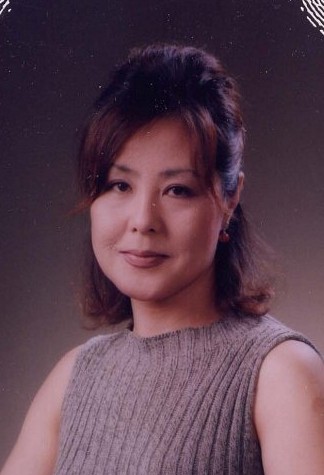
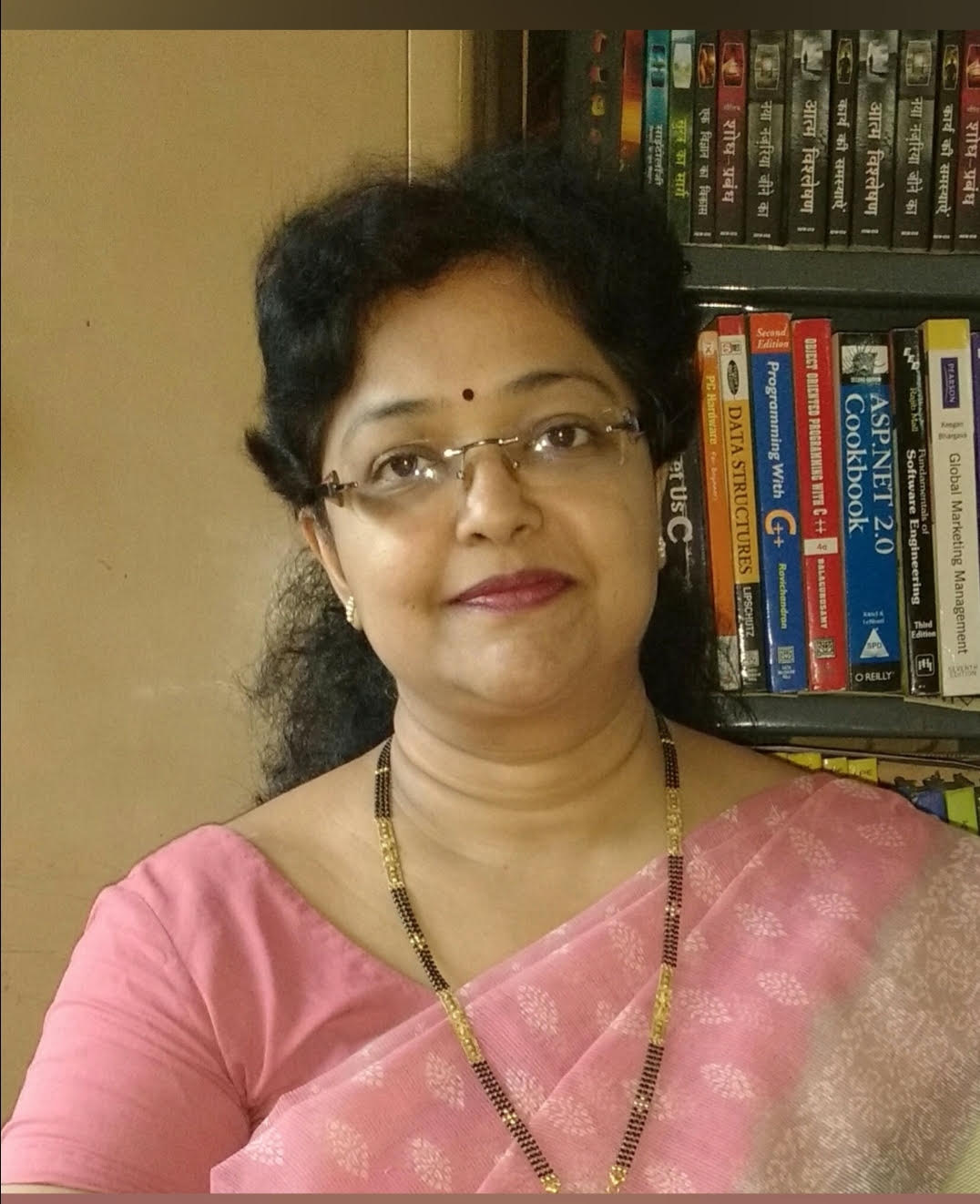
[Prof. Dr. Annie John, Head, Dept. of English, A. R. Burla Mahavidyalaya, Solapur, serves as Chairperson, Board of Studies and Member of Academic Council. A prolific writer, editor, and reviewer, she has authored 46 books, 60 research papers, 27 chapters, 40 articles on morals and ethics, guided 9 Ph.D scholars, and contributes as resource person at conferences.]
1. When and how did you first discover your passion for writing?
I was studying in B.A. when I came across a friend who had published a book of Hindi short stories. That was the stimulus for me to move ahead in the direction of writing. However, I was very young, in 9th standard, when I started writing in my mother tongue Punjabi. I wrote a short novelette about our migration from the village to the industrial city of Ludhiana. In our school times, in 9th and 10th standard, two teachers would inspire us to read Russian and Punjabi novelists, which propelled me towards writing. Lala Hardyal’s Hints for Self culture gave me the necessary impetus for loving English writing.
2. How does your personal and cultural background align with your writings?
I believe that all art is autobiographical. Objectivity has its limits. The personality of a poet or an artist makes interventions in his artistic pursuits. The text that a poet creates comes from several sources, and the most momentary of all is the personal circumstances which govern his mindset. Once this moment passes, he will create a different type of text, words will be different, arrangement will be different, and may be, the entire idea of writing may change, and it is also possible, he may decide not to write at all. This is how bio text works. The personal and the cultural lie embedded at the foundation of every writing, and they colour the thought process of the writer. The suffering that I have seen in my life has always coloured my world view, and I come from a humble background, I possess a particular world view about the subaltern sections of society. All the empathy that you can see saturating my works is the result of my personal and cultural bearing, a period of struggle and evolution.
3. What inspires you to write and how do you balance imagination with reality?
Writing is second nature to me. Most of the thoughts come to me while I am on a walk. As soon as I enter the fields, and get close to the grooves of trees, thoughts which have poetic potential strike my mind. So, it it is natural settings, birds, vegetation, the sky, animals – all these have the potential to set the poetic bells ringing. Thoughts actually come with a certain continuity. Sometimes it is not easy to connect back to that series of thoughts. So, I always make a small note of key words, from which I could rebuilt the poetic spectrum which made me think of a particular idea. As I get home, and when I get time, I write poetry directly on the mobile. Reality and imagination coalesce in a poetic text. Reality is the pitch and imagination is the flight. Everybody comes across ordinary events, but the poet has to impart these events a sense of urgency, some element of rhetoric, so that they become special, and for this, he needs imagination. Imagination is the mint where the words are sculpted.
4. How do you blend excellence and understanding in your writings?
Things come naturally and effortlessly when we are clear in our head about our priorities, which also gives us a sense of the fields forbidden to saunter in. Understanding is the base, the foundation, on which excellence can be built. Excellence is the pursuit of the finest in a particular field, and for achieving this state, it is essential that we understand what we are after. It also includes our understanding of our limitations and strengths, and what we should aspire for. What is best for us, perhaps it is too tall an order to know. But, it is a fact that we do not get beyond our capabilities. Excellence also embraces the idea of hard work and pursuit of a particular ambition. People who are habitual of hard work, excellence is a natural corollary of their actions. Understanding, as I said earlier, is the foundation and for this to be strong, we need proper education and training of our faculties.
5. What type of sensibility is required for excellence in poetry?
You are talking of a poetic sensibility. It is a unique endowment which cannot be acquired in training saloons. It is inborn. Poets are divinely endowed with a sensitive mind, which can discover the inevitable in every event, and perceive the invisible presence of a divine hand behind whatever happens. The highest poetry has been written by poets who were blessed by the Muse. Writing poetry for the sake of poeticising is also an art, in which we can compete with others for positions in contests, but for excellence in creativity, we need a sensibility rooted in a divine vision, of the oneness of creation, and man’s divinity. I find the poetry of sages and saints like Guru Nanak Dev from Punjab is the highest form of poetry. Nobody can excel Kabir and Rumi.
6. What goes into making a literary work truly excellent and immortal?
It is the subject matter of a work of literature which lends it immortality and it is its treatment and presentation, which make it excellent. Great literature deals with questions of existence, philosophy and spirituality. Excellence relates to the formal aspect of the writing. The treatment, the selection of language, the clarity of thought, and how the poet finally delivers his message, all these aspects add to the excellence of a work of art. Immortality simply means transcendence in matters of time and space. Art that deals with eternal values, finally transcends time. A work whom generations after generations find conversing with them, stands the test of time, and in such a work, the loftiness of thought is combined with its formal finesse in delivering a message of ultimate significance.
7. Has writing ever changed your own perspective on life?
Civilization is a ceaseless progression from past into the future. So are our lives. Whatever we face, and how we negotiate it, leaves its impact on our life and thinking. I feel as times have changed, and I have assimilated more and more of life and literature, I perceive a definite change in my perceptions. My thoughts on nature can be cited as an example. Previously, I thought that nature is secondary to mankind, and less intelligent too. But over the time, my perception has changed. Now, I believe that nature is the first empire of Godly creation, which possesses the highest level of intelligence. Human intelligence, in my opinon, is acquired intelligence, we can call it AI. To every new born child, God gives a natural intelligence. Nature also has this original intelligence. It is also called INNOCENCE. Innocence should not be confused with ignorance. Nature is not ignorant. They know their job better than men can perform. That is why there is comparative peace in the world of nature, whereas there is absolute chaos in the world of men, where we depend on artificial intelligence, which I dare described as ‘Artificial Wisdom’. These ideas have been dealt with in my epic ‘Revelations’, which was released recently.
8. How do you know when a piece of writing is complete?
It is not possible to say that a piece of writing is complete. We leave it half way. In India, when a man dies, it is said, “poora ho gaya’ which means, his journey has been completed. In the same way, a writing can be called complete, it seems impossible, because, just as a man continues to live even beyond his years through his sons and daughters, an author bears poetry which keeps evolving in time. So, the idea of a writing being complete is illusionary. An artist when he gives finishing touches to a work of art, is never sure of its completion. It is only his feeling that it is completed. Personally, I always feel there is so much to say on any topic on which I write poetry or prose. But it has to be rounded off with a temporary sense of conclusion.
9. Many people opine that there is magic missing in contemporary poetry. How do you react to this?
I find there is a lot of democratization of the poetic sensibility. It is not confined to literature benches only. People are writing poetry, getting it published, and books after books are being released by different poetry portals. You find so many competitions, so many awards. These days, senior scholars are holding workshops also to teach how to write poetry. In this connection, I feel that any person can write an article, or even a story, or a novel, because after all these genres are dependent on the thought stream of writers, in which mind plays a great role. But, these criteria do not apply to poetry. Poetry cannot be taught. It is a natural endowment and poets are inborn. They have a special sensibility and a keen view with which they look at life, and this keen vision is coupled with the power of versification, which again is innate. If the poetry comes from these natural sources, it carries a certain loftiness, and what you call ‘magic’. If it is forced, it is just versified prose which lacks poetic magic.
10. What tempts you to keep the pen rolling?
Poetic sensibility means a poet’s power to discern poetic moments in ordinary life. These moments cast a pull on our imagination, and then, while walking, I make a halt, take out my mobile phone, go to notes, and write down a word or two, so as to remind me of the entire spectrum of thought, when I start writing a bit later, when I feel comfortable. For me, it is the wish to share my experience with the cosmic audience, what I have felt about certain things, and whether I like them, or how I want them to be. Poetry is an argument with the self and the cosmic forces as well. It is a private conversation, which we make public so that it remains as a living document of the discourse with the divine.
11. How has modern technology changed writing and reading habits?
Modern technology has opened great vistas of knowledge which has been documented for future generations. Things are available at the click of a button. Scholars are simply required to sift the information and select from the information available in abundance. All this seems to be a rosy picture. It should have made more time available to the youngsters. But, no. Their reading habits have undergone a marked change. The question is why people develop reading habits? In the past, people had vacant time, and they wanted novels and short stories etc. for the sake of entertainment. Now, the youngsters are left with no time at all. Moreover, whatever entertainment they need is coming from the films and videos streamed nonstop of the OTT platforms. You tube is a great source of entertainment. So, should our youngsters go to books? Instruction, which came from books, is no longer required because the kids grow mature quite faster, and overtake the wisdom of their parents. In a way, reading has become out of place. That is why, libraries are becoming cold stores of knowledge, which have no takers. AI has further brought people to the brink of thinking that book reading is a wastage of time. Make reels and make money from you tube and google. I don’t think any serious book readers are left in our vicinity, except those who rush to books written in lighter vein, comics, or books which tell ten ways to make money, and these days books about astrology are becoming acraze with young ones. Interest in books dealing with serious literature are accessed by students only if these books are prescribed in their course of study.
12. Looking back is there anything you would like to change in your literary journey?
We cannot go back, nor can we edit what has taken place in the past. Moreover, I am a strong believer that we are performing to the best of our abilities, yet, there are forces which don’t allow us to do things neither better nor worse. I have a positive faith in invisible forces. I have always looked forward, and did whatever I thought better in those circumstances. Some decisions were rash also. But, we cannot go back, nor edit what we have done. So, I think it is better to focus on the future.
13. How would you like to be remembered as a writer?
Here lies the man who was his own worst critic because he was his own greatest lover.
14. What advice would you give young aspiring writers?
If you look at my life, I have always believed in hard work, and a passionate engagement with my ambition. I never deviated from my mission to be a Lecturer in English, and then, to be an author. What makes you better is the struggle that we have to face while wading through life. In this struggle, we should not play smart for the sake of success. It is better to remain rooted, and have faith in the power of our faith. One should aspire for the impossible and work for its achievement, there is nothing wrong in it, but, while working for our own wellbeing and uplift, we must not bring any harm to anyone else, may be from our family, or society, or the larger cosmic society. In other words, our actions should be in harmony with the cosmic forces. By way of advice to upcoming generations of poets and writers, I would like to say: try to be original and creative, and don’t keep looking towards the past. Future has a different composition, and it requires an innovative treatment. Evolution is the law of nature. Spiritually and philosophically, we need to grow and confront the emerging realities, so that our writing reflects contemporary conflicts and possible resolutions.
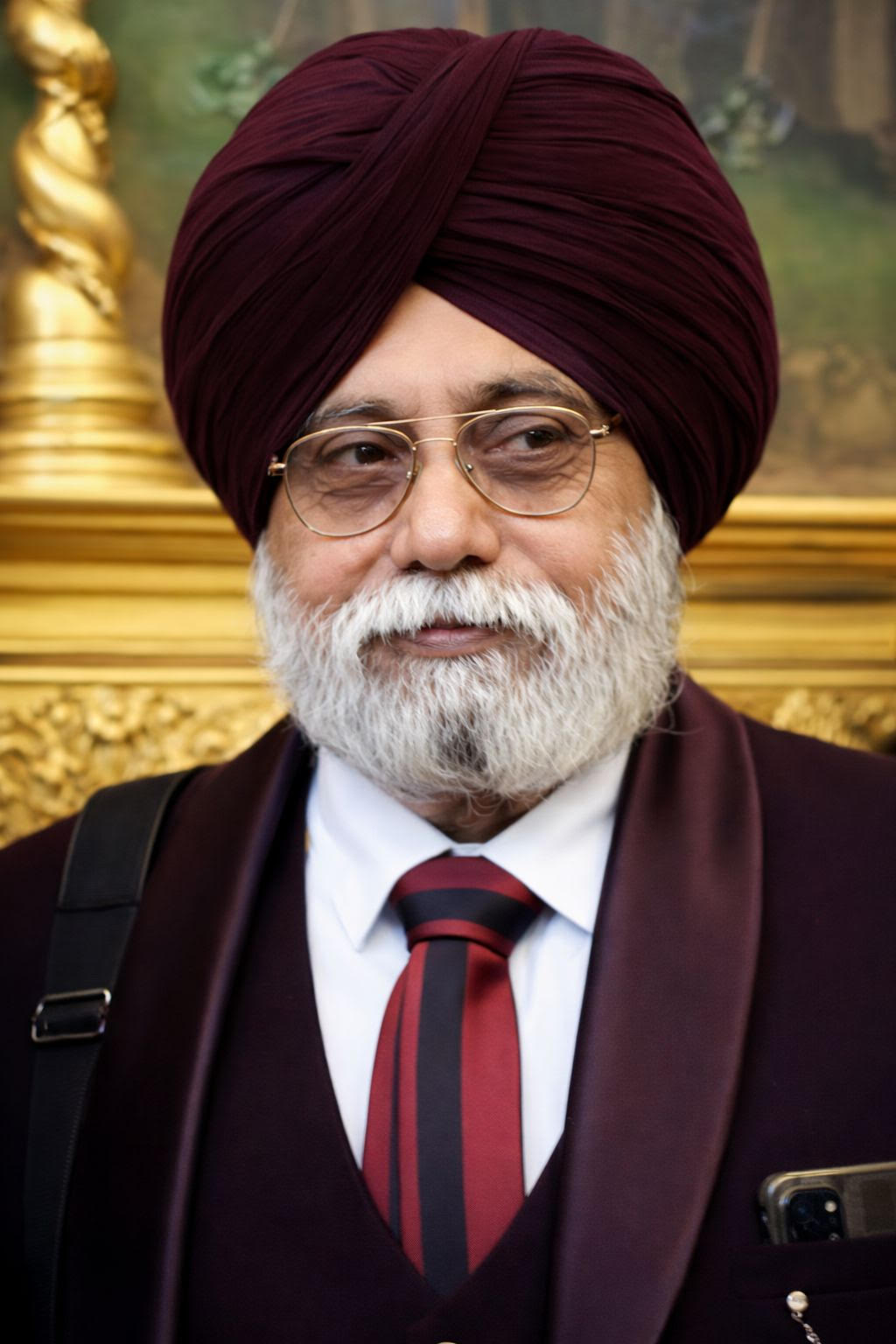
Dr. Jernail S. Anand, with 200 books to his credit [20 epics] is a Chandigarh-based polymath, and a vital architect of the 21st century ethical literature whose seminal work ‘Lustus: The Prince of Darkness’ challenges the moral complacency of our era. Founding President of the International Academy of Ethics, and Laureate of Charter of Morava [Serbia], Seneca [Italy], Franz Kafka [Germany, Ukraine, Czech Rep] and Maxim Gorky [Russia], his name is inscribed on the Poets’ Rock in Serbia. He is an Honorary Member of the Serbian Writers Association, Belgrade. Anand has built a poetics that unites ethics, Vedic spirituality, social critique, and the philosophy of meaning. Anand presents an articulated perspective on poetry as an instrument of planetary consciousness. A moral philosopher, professor, and international speaker, Anand has devoted much of his research to the ethical dimension of language, to the responsibility of the individual within a globalised society, and to the relationship between matter, consciousness, and transcendence. Email: anandjs55@yahoo.com.
Bibliography:
https://sites.google.com/view/bibliography-dr-jernal-singh/home