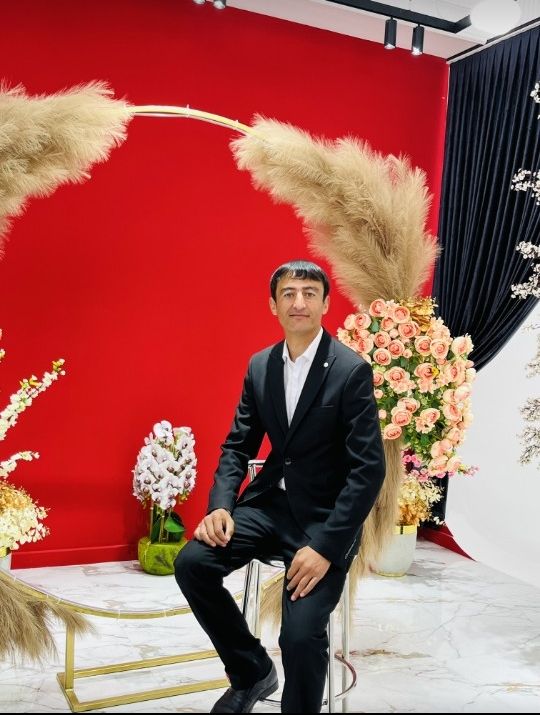
What a wonderful sweetness mixed with mountain trees and shrubs!
Transplanted before my eyes
You are intertwined with a tree for a lifetime
Years are passing by in the wind
The ants are climbing in rows.
Md. Mahbubul Alam is from Bangladesh. His writer name is Mahbub John in Bangladesh. He is a Senior Teacher (English) of Harimohan Government High School, Chapainawabganj, Bangladesh. Chapainawabganj is a district town of Bangladesh. He is an MA in English Literature from Rajshahi College under National University. He has published three books of poems in Bangla. He writes mainly poems but other branches of literature such as prose, article, essay etc. also have been published in national and local newspapers, magazines, little magazines. He has achieved three times the Best Teacher Certificate and Crest in National Education Week in the District Wise Competition in Chapainawabganj District. He has gained many literary awards from home and abroad. His English writings have been published in Synchronized Chaos for seven years.
PSYCHOLOGICAL CHARACTERISTICS OF COPING WITH STRESS IN PREGNANT WOMEN
Annotation:
This article highlights the causes of stress in pregnant women, their psychological characteristics, and the emotional and physiological changes occurring during this period. It also analyzes the importance of psychoprophylaxis and psychocorrection methods in coping with stress. The article emphasizes ways to reduce stress through psychological support, creating a positive environment, and strengthening family relationships.
Pregnancy is one of the most natural, and at the same time, emotionally delicate periods in a woman’s life. During this time, profound physiological, hormonal, and psychological changes occur in a woman’s body. Therefore, pregnancy requires special attention not only from a medical perspective but also from a psychological one. The pregnant woman’s psychological stability, emotional state, and the level of social support she receives directly affect her health, the mental development of the unborn child, and the well-being of the family environment.
Modern scientific research shows that stress, anxiety, depressive mood, and emotional instability are increasingly common among pregnant women. This is primarily influenced by the fast pace of modern life, economic and social pressures, family conflicts, lack of support, low self-esteem, and natural physiological changes experienced during pregnancy. Sometimes a woman may not experience pregnancy positively, may struggle to accept her condition, or may not feel prepared for motherhood, which intensifies internal psychological tension.
Stress is the body’s response to internal or external stimuli. While short-term stress can enhance adaptability, prolonged stress can seriously harm health. During pregnancy, the effects of stress become even stronger due to hormonal imbalance and increased sensitivity of the cardiovascular and nervous systems. As a result, high anxiety, fear, insomnia, and depressive symptoms may appear. These conditions negatively impact not only the mother’s health but also the psychological and physiological development of the fetus.
Providing psychological assistance, family support, a positive environment, and cooperation between medical and psychological specialists play a crucial role in stabilizing the emotional well-being of pregnant women. The application of psychoprophylaxis and psychocorrection methods, teaching women positive thinking, and preparing them to manage their emotions are effective in preventing stress.
The relevance of this topic lies in the fact that the psychological state of pregnant women affects not only their personal lives but also society’s responsibility to nurture a healthy generation. Therefore, studying the psychological characteristics of stress in pregnant women, analyzing its causes and consequences, and developing effective coping mechanisms is one of the important directions in contemporary psychological research.
Methodology
This research employed theoretical and practical methods of psychology.
Methods included:
Direct interviews and questionnaires
Observation
Psychodiagnostic tests
Spielberger–Hanin Anxiety Scale
Beck Depression Inventory
Psychological interviews
Research tasks:
Identifying the main causes of stress in pregnant women
Assessing the psycho-emotional state and studying its dynamics
Developing and implementing stress management techniques
Applied Methods and Procedures
The study involved 40 pregnant women aged 25–35 from the gynecology department of Andijan City Family Polyclinic No. 1. Psychodiagnostic tests and interviews were conducted. The results were processed using standard statistical analysis methods in psychology.
Research Results and Analysis
The findings revealed that 68% of pregnant women experienced moderate stress levels, 20% had high anxiety levels, and 12% showed mild emotional instability.
Main stress factors identified:
Concerns about the fetus’s health
Conflicts in family relationships
Financial difficulties
Hormonal changes and dissatisfaction with physical appearance
Analysis
The results show that women who receive strong social and family support experience significantly lower stress levels. Those who receive psychological counseling and emotional support cope with their condition more easily and maintain psychological stability even after childbirth.
Discussion and Recommendations
The following recommendations are essential when working with pregnant women:
Conduct psychological training sessions and counseling
Introduce family psychocorrection programs to strengthen marital relations
Recommend emotional relaxation techniques, music therapy, and breathing exercises
Enhance cooperation between medical and psychological services
Important Factors
Hormonal changes influence emotional stability
Social environment and family relationships determine stress levels
Psychological support is crucial for the health of both mother and baby
Conclusion
The analyses show that the physiological, hormonal, and psychological changes occurring during pregnancy significantly influence a woman’s overall mental state. Although stress is a natural protective response, its intensification can lead to psychological instability, anxiety, depression, and emotional tension. Therefore, studying the psychological aspects of stress management during pregnancy is important not only scientifically but also practically.
The research results confirm that the psychological stability of pregnant women is closely linked to their social environment, the level of family support, the quality of marital relationships, and the availability of medical and psychological assistance. A positive psychological atmosphere, affection, and a sense of being valued reduce stress levels, restore emotional balance, and ensure healthy motherhood.
Implementing psychoprophylaxis and psychocorrection programs during pregnancy, teaching stress management techniques, and using psychological methods such as breathing exercises, relaxation, and music therapy produce positive outcomes. These methods not only stabilize the woman’s emotional state but also positively influence the healthy psychological development of the baby.
A mother’s emotional well-being during pregnancy is not only a personal matter but also a social priority, as a psychologically healthy mother gives birth to a healthy child – shaping the physical and moral well-being of future generations.
References
Abdurakhmonova, G. Psychological Characteristics of Pregnant Women. Tashkent, 2020.
Beck, A. Foundations of Cognitive Therapy. Moscow, 2019.
Spielberger, Ch. The Psychology of Measuring Anxiety and Stress. Saint Petersburg, 2018.
Ministry of Health of the Republic of Uzbekistan. Reference Materials, 2023.
Yusupova, D. Perinatal Psychology. TDPU Publishing, 2022.
Lazarus, R. Stress and Emotion: A New Synthesis. Springer, 2006.
APA Psychological Bulletin. Pregnancy and Stress Management, 2021.
World Health Organization (WHO). Maternal Mental Health During Pregnancy. Geneva, 2022.
This article highlights the importance of integrating educational and upbringing approaches in the learning process of primary school pupils. It analyzes the theoretical and practical aspects of developing students’ personalities, shaping their moral values, and effectively applying educational methods during lessons. The article also examines the teacher’s pedagogical skills, the organization of student activity, and the educational impact of school–family cooperation. Keywords: primary education, educational approach, pedagogical process, moral upbringing, moral values, student personality, unity of education and upbringing, teacher competence.
ANNOTATSIYA
Ushbu maqolada boshlang‘ich sinflarda ta’lim jarayonini tarbiyaviy yondashuv bilan uyg‘unlashtirishning ahamiyati hamda shaxsni har tomonlama rivojlantirish, ularning ma’naviy–axloqiy fazilatlarini shakllantirish, hamda dars jarayonida tarbiyaviy metodlardan samarali foydalanishning nazariy va amaliy jihatlari tahlil qilinadi. Shuningdek, o‘qituvchining pedagogik mahorati, o‘quvchi faolligini tashkil etish va oila-maktab hamkorligining tarbiyaviy ta’siri masalalari ko‘rib chiqiladi
В данной статье освещается значимость интеграции образовательного и воспитательного подходов в учебном процессе начальных классов. Анализируются теоретические и практические аспекты всестороннего развития личности учащихся, формирования их духовно-нравственных качеств, а также эффективного использования воспитательных методов на уроках. Кроме того, рассматриваются педагогическое мастерство учителя, организация активности учащихся и воспитательное влияние сотрудничества семьи и школы.
Ключевые слова : Начальное образование, воспитательный подход, педагогический процесс, духовно-нравственное воспитание, нравственные качества, личность учащегося, единство обучения и воспитания, педагогическое мастерство.
Introduction
The process of primary education is not only a stage for providing pupils with basic knowledge but also an important period for shaping them as individuals. It is during this stage that a child’s worldview begins to expand, and essential competencies such as understanding the environment, communicating, managing their own behavior, and recognizing their role in society begin to develop. Indeed, an educational process that is not enriched with moral and nurturing elements may result in students gaining only theoretical knowledge without being prepared to apply it in real life.
The integrity of education and upbringing means prioritizing the development of the learner’s personality in the content, methods, and organizational forms of the learning process, as well as continuously strengthening their moral qualities. In primary education, one of the main tasks of teachers today is raising independent thinkers who are socially active, possess communication skills, and demonstrate responsibility and strong values within a market-economy environment. This, in turn, requires teachers to possess high professional mastery, psychological sensitivity, and the ability to use modern methods effectively.
Studying the importance of an educational and nurturing approach in primary education, analyzing its theoretical foundations, and defining mechanisms for practical application directly influence the quality of education and the development of students’ personalities. This article scientifically explores the harmony between teaching and upbringing, the application of nurturing methods in the classroom, teacher professionalism, and the importance of school–family cooperation. A thorough study of these aspects serves to improve the quality of primary education and raise the younger generation as well-rounded individuals.
Main Part
In today’s era of globalization and rapidly advancing information technologies, the need to organize the educational process on the basis of innovative approaches is increasing day by day. The primary education stage is the foundational period during which the child’s thinking, character, interests, and worldview are formed. Therefore, applying innovative methods at this stage is not only a requirement of the time but also the most effective way that aligns with the natural development of children. An innovative approach means viewing the educational process from a modern perspective and harmonizing contemporary pedagogical technologies, interactive methods, and digital tools. Such methods transform students from passive listeners into active participants. Game-based tasks, multimedia tools, interactive presentations, online learning platforms, and virtual laboratories increase students’ interest in lessons and encourage independent thinking. For example, the STEAM approach develops scientific thinking, technical interest, creativity, and observation skills among primary school students. Gamification strengthens motivation, fosters a sense of competition, and teaches responsibility in completing tasks.
Most importantly, the innovative approach shapes students not just as memorizers but as individuals who conduct research, ask questions, solve problems, and express their ideas freely. In this regard, modern education requires teachers to think innovatively and constantly seek improvement. A teacher’s pedagogical skill, technological knowledge, and creativity in organizing a lesson directly influence the quality of primary education. As President Shavkat Mirziyoyev noted, “Today’s teacher is the person who creates tomorrow’s society.” This reflects the importance of innovative education. Education based on innovation develops students’ intellectual potential, social activity, and life skills.
The advancement of modern science and technology shows that creativity, adaptability, critical thinking, and digital literacy will be essential competencies for success in the future. This process aims not only to make students knowledgeable but also morally, socially, and spiritually mature individuals.
Psychological research shows that children aged 6–10 easily accept new knowledge, but they need a nurturing approach to apply it in practice and develop self-control. As the great pedagogue K.D. Ushinsky said, “If education is separated from upbringing, the spiritual world of a person becomes fragmented.” This emphasizes the unity of education and upbringing.
Because primary school pupils are sensitive and highly curious, lessons enriched with nurturing elements help them develop self-awareness, respect for others, and positive behavior. Mother tongue lessons can instill values such as honesty, friendship, and patience, while mathematics teaches order, accuracy, and responsibility. Nature and environmental topics build a sense of respect and responsibility toward the environment. Ahmad Donish also expressed this idea: “Being a child of the homeland is the greatest honor.” Therefore, the content of lessons must be harmonized with nurturing components. Modern pedagogical methods play an important role in strengthening nurturing approaches. The “brainstorming” method develops free thinking, respect for others’ opinions, and problem-solving skills. For instance, a brainstorming activity on “How can we strengthen friendship in the classroom?” teaches students kindness. Furthermore, methods such as “Insert”, “Cluster”, and “T-chart” help students analyze information, think logically, and draw conclusions, while also fostering discipline and responsibility. Group work teaches cooperation, active listening, and respect for different opinions. As Jalaluddin Rumi stated: “One person sees one thing, another sees something else; but together, the truth becomes clearer.” Thus, collaborative methods strengthen unity and teamwork among children.
Game-based technologies are the most natural and effective tools for nurturing in primary education. Role-play games such as “Store”, “World of Professions”, and “Library” teach communication culture, waiting for one’s turn, polite behavior, and kindness. Active games like “Think Fast”, “Mind Circle”, and “Guess Who?” develop attention, quick thinking, and discipline. Moral games such as “What Is Good Behavior?” and “Who Does Good Deeds?” instill values of kindness and morality. Thus, games not only serve as educational tools but also reinforce the nurturing process. The teacher’s personal example is also an inseparable part of nurturing. If a teacher is polite, fair, responsible, and kind, these qualities naturally influence students. As Leo Tolstoy noted: “Good upbringing begins with a good teacher.” Therefore, the teacher’s speech, behavior, and work ethic help develop positive habits among pupils.
School–family cooperation is another essential factor in strengthening the effectiveness of nurturing. Open-house days, parent meetings, and joint events help reinforce responsibility, discipline, and moral values. A child’s personality is largely shaped within the family, and parental speech is the strongest pedagogical tool. Through language, a child learns not only information but also values, worldview, and communication culture. If parents speak clearly, use rich vocabulary, and encourage conversation through questions, the child learns to express ideas accurately and confidently. Through parents’ speech, qualities such as kindness, honesty, patience, justice, and respect are naturally absorbed into a child’s consciousness. Modern research shows that supportive and consistent parental speech positively affects emotional development and academic performance.
Instilling national values is also crucial in child upbringing. Lessons that include folklore, historical events, and cultural traditions cultivate patriotism, respect for culture, and a strong sense of identity. Nurturing must be continuous and systematic. When carried out consistently, children grow not only knowledgeable but also morally and spiritually rich individuals. A supportive psychological environment helps children fully reveal their potential, quickly absorb new knowledge, and develop positive qualities. As Albert Einstein said: “The aim of education is not knowledge, but action.”
Conclusion
In conclusion, the use of modern, effective, and child-centered approaches in the primary education process plays a decisive role in the comprehensive development of students. Every lesson, every nurturing influence, and every word of the teacher becomes the foundation for shaping the worldview, thinking, character, and interests of the younger generation. In today’s rapidly changing world, organizing education through interactive methods, games, experiments, and practical activities encourages students to think actively, supports their creativity, and nurtures initiative. Considering each child’s unique abilities, temperament, and interests is essential for effective teaching. Likewise, the teacher’s knowledge, kindness, professionalism, and attitude toward children greatly determine the quality of the lesson, as young students view their teacher not only as an instructor but also as a guide in life.
The harmony of education and upbringing ensures that students not only gain knowledge but also grow into polite, thoughtful, and responsible individuals who benefit society. Therefore, giving serious attention to primary education and organizing lessons in rich, engaging, and child-friendly ways is the most reliable foundation for our future. Research and practical experience show that applying nurturing approaches, using modern pedagogical methods and game technologies, as well as teacher example and effective school–family cooperation, significantly contribute to the development of children. The main aspects that require attention in child upbringing include kindness, trust, discipline, independent thinking, communication culture, and the integration of national values. When these elements are harmoniously implemented, students grow not only knowledgeable but also morally and socially mature members of society.