Once I was famous, forgotten now, handsome once, ugly now, alpha once, feeble now, wealthy once, a poor man now—
but you loved me from sun to sun, and they were kind whatever the moon, and food and wine are rich on my tongue, and every summer lilacs bloom.
I have lost all I won. I have no trophy brighter than the sun, no applause louder than birdsong.
Still, soothing it is to know that winning what most will never know, drunk on the shouts of the applauding crowds, metaled, victorious, exalted, alone, is beautiful, is fine, is very fine, yet small, a crumb of sweetness that falls from the table like a crushed star, almost nothing at all.
The day I was born, the day I die, I lose the same world that I won. And you I won— it was very sweet. Then you I lost. And where went the triumph in that defeat?
Winning was nothing, nothing at all. The only gift that mattered here was the gift we all were given here. That is our hell, that is our heaven. We make of it what we can, or cannot. From wind to wind, you came, you went. From same to same, I went, and came.
The old man
bends to the stone
and kisses the carved letters of the name.
_____
Christopher Bernard is author of the novel A Spy in the Ruins and co-editor of the
webzine Caveat Lector. His poetry blog is called “The Bog of St. Philinte.”
This article’s primary objective is the neurobiology of the brain and not the evolutionary, psychological, and social influences that might have formed the particular brain chemistry.
Rachael walks into the dimly lit bar and scans the faces to locate her friend. Priya is not here yet. She recognizes a guy at the bar as someone she has seen before. She stares at him a little too long, so he looks up at her. But there is no sign of recognition in his face and he looks away.
“Rachael?”
A black man, whom she does not recognize, walks towards her. Rachael pulls at a handful of her blonde hair with a nervous tug. Her heart races slightly and her palms are a bit sweaty. She smiles and says hello. The guy, Paul, tells her that they have met before. Oh, right, she remembers, she says, but she does not recognize him.
Illustration by Leena Prasad
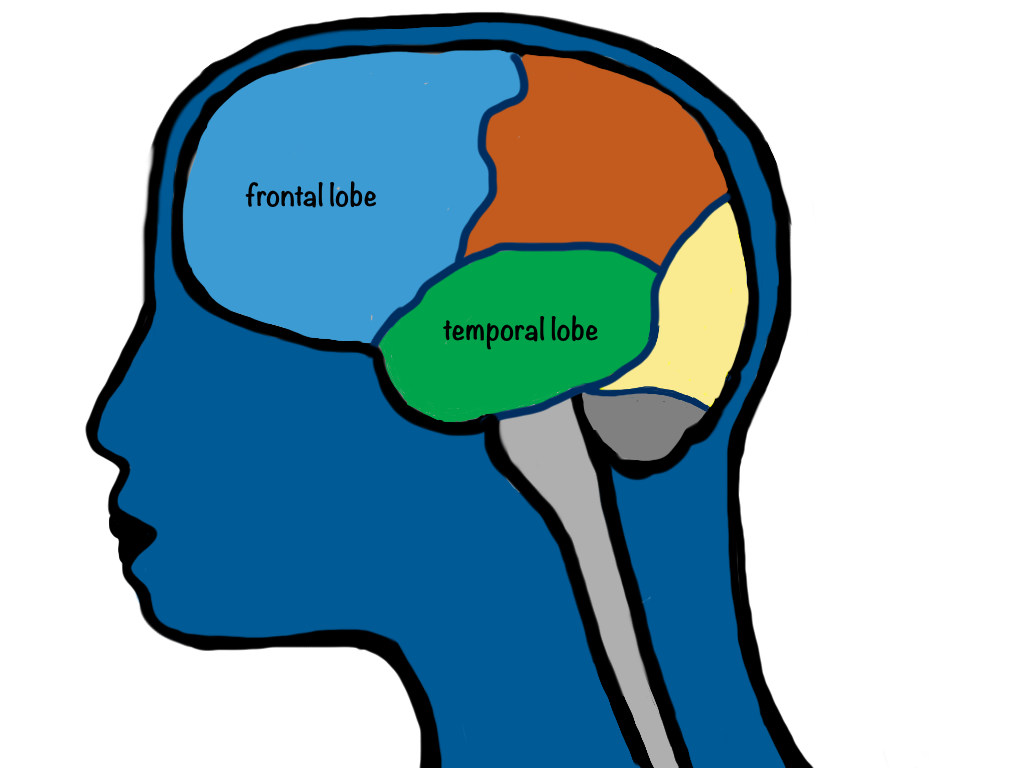
Rachael has seen Paul more often than she has seen the guy at the bar. Why does she recognize him but not Paul? There can be many factors for this discrepancy, but one of them can be a biological one. The man at the bar is white. Rachael is white. Neurosurgeon Alexandra Golby conducted a study in which she discovered that the face recognition areas in the temporal lobe are more active when people see someone of their own race. This higher activity leads to higher recall of the faces of people of their own race. Rachael’s brain is not unique in making this discrimination.
Illustration by Leena Prasad
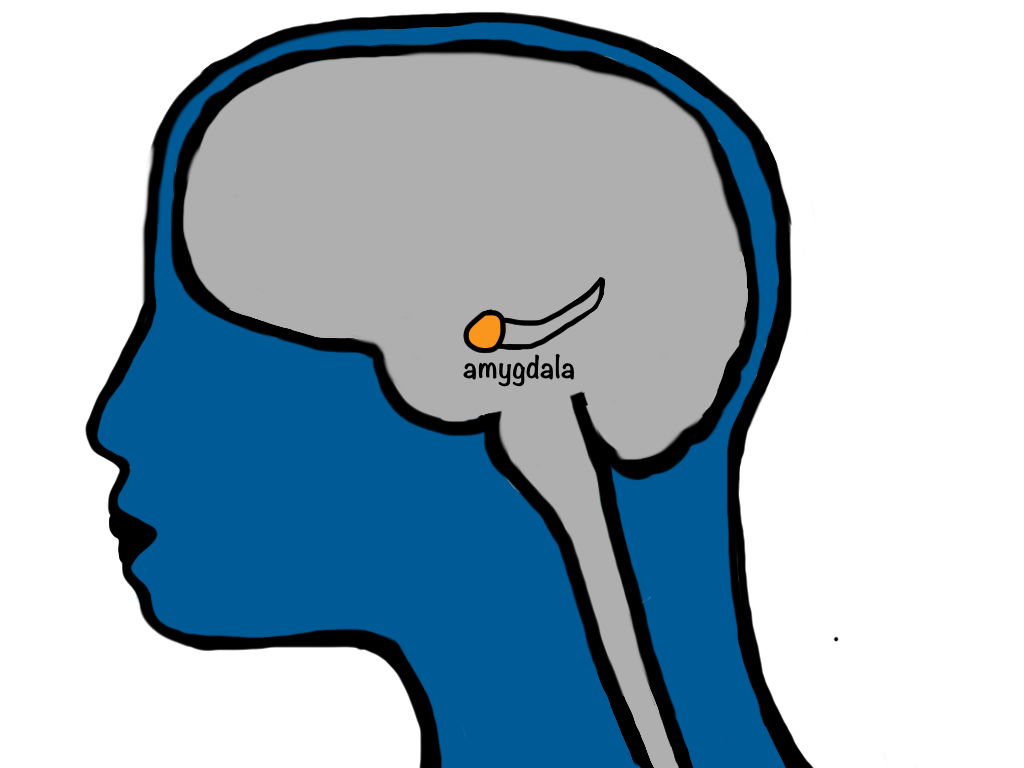
Why does her heart race when she sees Paul? This is a slightly racist response to seeing a black man she does not recognize. But it is not a conscious one. According to studies, many white people (most of the studies have been performed on white people) show an increased activity in the amygdala when they see a black face. The degree of response varies from person to person and the intensity of the response can be matched to the degree to which the person is a racist. The racing of her heart is triggered by the higher activity in her amygdala, the area of that brain that responds to fear by activating the fight-or-flight response and places the body in a stress mode.
Priya walks in to the bar and goes towards the guy at the bar. Paul leaves Rachael and goes up to Priya and gives her a hug. Priya’s amygdala activity stays the same when she interacts with Paul or Rachael or anyone else of any race. Her mother is Japanese and her father is from Palestine. She has had an early start in being comfortable with people of different races. Environmental factors contribute significantly to a person’s racist attitudes and thus in forming the chemical patterns of their brain. This is a positive indication that racist attitudes can be changed at the biological level.
Paul is happy to get away from Rachael. She fails to recognize him despite having had several conversations with him and he feels tense around her. Her body language is aloof towards him. It could be that she does not like him but he is starting to sense that perhaps it has to do with his race. Paul is right and Rachael does have racist tendencies even though she is not a racist, per se. She has friends of other races but she is most comfortable with people of her own race and exhibits other prejudiced characteristics. Rachael’s racist response to Paul raises the cortisol, the stress hormones, in both their bodies. Thus, her response not only hurts Paul but also harms her.
If not managed properly, issues of racism can lead to unpleasant results not only for the victims but for the racist herself. If Rachael continues to think and behave in her current mode, she is setting herself up for a future of stress leading to health problems. In order to change her automatic racist responses, she will first need to become more aware of her responses and consciously work on changing them.
What can she do to change her biological response? There is another part of the brain which is also activated when a white person sees a black face. The prefrontal cortex, the region that manages information and puts a brake on the emotional responses of the amygdala, is also activated when study participants respond to a black face. This part of the brain, located in the anterior part of the frontal lobe, is involved in learning and behavior control. Thus, conscious efforts made by a person to change their behavior can train the pre-frontal cortex to manage the amygdala-responses more effectively, and thus minimize the cortisol and any other potential side effects of racism.
Rachael does not need to know the inner workings of her brain to effect change. She just needs to understand that her behavior is counterproductive not just towards herself but towards society in general. This understanding could lead to healthier brain chemistry and a better life for herself and for others around her.
Upcoming…
November: politics
December: neuroplasticity, the brain’s ability to change
Dr. Nicola Wolfe is a neuroscience consultant for this column. She earned her Ph.D. in Clinical Psychopharmacology from Harvard University and has taught neuroscience courses for over 20 years at various universities.
References:
1. Smith, Jeremy A., Marsh, J., & Mendoza-Denton, R., Are We Born Racist? Beacon Press 2010.
2. Zimmer, Carl., This is your brain on racism. Or is that liberal guilt?, Discover Magazine, November 18, 2003
3. Miller EK, Freedman DJ, Wallis JD. The prefrontal cortex: Categories, concepts and cognition. Philos Trans R Soc Lond B Biol Sci. 2002;357:1123–1136. [http://www.ncbi.nlm.nih.gov/pubmed/12217179]
Welcome to Family Day at the Pleasantville Zoo. I’m Loretta and I’ll be your tour guide. I can’t wait to introduce our animals to you, so let’s get started with one of our most popular mammals, the elephants.
Elephants
Elephants are matriarchal. That means they kick their boys out at puberty, and girls stay with their mothers forever. Forever! Jeez, that would’ve killed me. In the wild, it makes sense because older elephants have longer memories of where the food is. My mother had a long memory.
“You’re still doing homework? When I was your age, I washed my dress when I got home from school so it would be dry to wear in the morning. Then I made dinner for my sisters and gave them baths. On weekends, I scrubbed the floors and the bathrooms….So you’re just gonna keep doing homework!”
When I hear the word “matriarchy,” I say, “Find your own food, ladies. It’s not worth it.”
But I digress. Let’s check out more charismatic megafauna, the giraffes.
Giraffes
Aren’t they elegant? Giraffes are herd animals, like all the artiodactyl ungulates. Herds protect the young from predators. But life in a herd is not all warm and fuzzy. Giraffes fight. They swing their huge heads on the end of that long neck, and smash it into the chest cavity of an adversary, and they can cause a lethal cardiac arrest with one blow. Thank God my mother didn’t have a long neck. Giraffes stick with the herd despite the conflict, and you never know when it will break out, so let’s get out of here.
Lizards
This is Ophelia, our spiny monitor lizard. Reptiles are cold-blooded, as you know. I don’t mean cold-blooded in the sense of a mother who says “I hate you kids. I hate your father. I hope you all suffer the way you make me suffer.” I mean cold-blooded in the sense that they freeze to death if they don’t go out in the sun every few hours. Look, Ophelia’s basking in the sun right now.
“Don’t think I enjoy this. I risk being eaten alive by a predator every second. I rush back into hiding the instant my temperature rises.”
I know just what you mean, Ophelia. I spent most of my childhood in hiding. But my predator was so big, and my house was so small, that I could hear my mother screaming wherever I was. But I ignored it.”
“You can’t do that. You have a reptile brain under your cortex. It scans for danger all the time. Danger danger danger.”
“Speak for yourself, Ophelia. I’m really good at reading with someone screaming in the background.”
Meerkats
Meerkats are cooperative social animals. That’s what I’ve been trained to tell you. Wanna know what really goes on down in those burrows? No sex, except between the alpha male and the alpha female. If any other female gets knocked up, the alpha bitch kills the baby. Alpha bitch is a science term, but kids, don’t use it in the car on the way home.
When I had a baby I moved 3,000 miles away from my alpha bitch. Smart, huh?
Speaking of infanticide, let’s go see the chimps.
Chimps
Female chimpanzees only have sex every five years. That’s because male chimps are not interested unless a female is ovulating, and that’s delayed by lactation for four years per child. During the long wait, male chimps fight with each other to be first in line when the fertile moment arrives. Who’s ever the big kahuna will guard the estrus female to make sure his DNA is the one that gets passed on. But he will share her with buddies – the guys who fought on his side in past battles.
“She’s a looker, huh? Yuwanna have a go? Be my guest.”
“No, Godfather. She’s yours.”
“I do you a favor, you do me a favor.”
Chimps are always fighting and making up. One minute they’re patting each other on the back and the next minute they’re biting each other’s fingers off. They remind me of the Mafia, where they whack a guy and then bring flowers to the funeral. My grandparents were from a Mafioso part of Italy, and my parents were from a Mafioso part of Brooklyn. In our family, we knew how to submit to dominant apes to avoid getting our fingers bitten off.
So I was telling you about infanticide. Sometimes the alpha chimp kills all the babies. That stops lactation so all the Moms become sexually available immediately. If he just sat on his hands instead, he could be deposed from this throne before he planted his seed, and he didn’t fight his way to the top for that! Apes don’t understand conception conceptually, of course. They just respond to the brain chemicals they inherit from their ancestors, and pass their brains on to the next generation. Those same brain chemicals are in you and you and you.
A mother chimpanzee knows how to protect her child from infanticide. She tries to mate with every male she can find, because a male chimp won’t kill the child of any female he’s had contact with. This is not easy because the alpha takes revenge if he catches a female with a lower status male. But “sneaky copulations” happen somehow- that’s what field biologists call it. We know what’s going on because of paternity tests in the wild. Now you’re probably thinking, who the heck does paternity tests in the wild? And how can I get a great job like that? Well, it’s one of the exciting career opportunities that could be yours if you get a PhD in primatology. I’d love to tell you more about chimp pimps, but we have more animals to see.
Lions
Lions have a unique family drama. Well, maybe not so unique. Female lions do most of the hunting. When they finally snag a meal after slaving over a hot savannah, the alpha male swoops in and steals it.
“I’m stuffed. Thank you, ladies. Deeelish. I left a little for you. Make sure to share it with the kids.”
That is what my grandfather did. My grandparents were always separating and getting back together, over and over. Once, they didn’t have money for my grandfather to move out, so he went to the refrigerator and drew a line down the middle.
“This is mine. This is for all yooz guys. Keep your hands off my food.” Italians call this a divorce settlement because food is all that matters.
When my mother was 12, it was her job to buy the food and cook it while her mother was working at a garment factory. She also did the budgeting to make sure the money didn’t run out before payday. She couldn’t afford meat a lot of the time. One day she came home and saw her father eating a thick ham sandwich.
“Papa, Can I have some?”
“Go ask your mother. She got money for your food. This is mine.”
My mother was always angry at her father. She was always angry at me.
Why me? What did I do?
I’m feeling a little verklempt. Talk amongst yourselves. I’ll give you a topic.
Cognitive neuroscience is neither cognitive nor a science. Discuss.
There, I’m better, and we still have time to see the tamarin monkeys.
Tamarin Monkeys
I’ve spent a lot of time here watching these critters. See that one, she’s the daughter. Last week, she found a bit of banana and I saw her run to that corner before she put it in her mouth. Then her mother, that one there, ran after her and tried to snatch it from her mouth.
Was I seeing things? Would a mother really try to steal food from her own daughter’s mouth? I often felt like my mother was snatching the good things from me, but I didn’t dare say it because she would yell, “How dare you accuse me. You torture me all the time!” This confused me. I was confused about reality when I was growing up.
But here at the zoo, reality is clear because blood was splattered all over this cage when those two went at each other last week. Veterinarians rushed in to treat the deep puncture wounds, and the instant they turned their backs these ladies went at each other again. And that’s why you see them here in separate cages for their own protection.
No one protected me when my mother attacked. No one even noticed. Except once. A guidance counselor. He called every family my junior year of high school. He handed my mother a list of the colleges I could get into. I was thrilled because they were all sleep-away colleges. My mother did not approve of young ladies going to sleep-away college, but she was afraid to say that to the guidance counselor. And that is how I escaped from the zoo!!!
________
Loretta Graziano Breuning, Ph.D., is author of the books I, Mammal andMeet Your Happy Chemicals; and the blogs The Political Mammal at Independent Voter Network and Your Neurochemical Self on Psychology Today. She’s Professor Emerita of International Management at California State University, East Bay, and a Docent at the Oakland Zoo, where she leads tours on mammalian social behavior. She began focusing on the mammalian brain after lecturing worldwide on her book, Greaseless: How to Thrive without Bribes in Developing Countries, which draws on her year in Africa as a United Nations Volunteer.
We want to forgive our memories. The trees are blackened with snow. We can imagine
small pink flowers on them, the trees blackened instead by rain, and the ground streaked
with petals. Rain and snow smell a little alike, only snow is more dry, more hollowing
when breathed in. Rain is a sudden fortissimo. But we can only smell the snow.
We are followed everywhere, and even in the quietness of the deep country, the echoes
sound out our names. The water loiters around us, then slips away, calling. Even when
there is no sound, we hear ourselves spoken.
There is a flat rock in the middle of the woods where we watch stars. In the sky we see
rivers which flow differently. They stay still, but are not frozen. They expire loudly in
spheres of fire and dust.
Now it is summer again. In the night limpid flames burn through the forest. The last
figures flee, perhaps gathering their skirts, perhaps abandoning them, where they lie like
poppy petals in the flickering light.
Visit
He grazed a fencepost
on the narrow road,
the green pyramid top
glazed white in the sun
the fields are yellow with flowers
and a small woman in a limp
gray dress, his grandmother,
watches him pull up,
from her stoop,
in his big car
He brought her
yellow flowers
Mud Flats (Myth of the Weaver Girl)
Two crows pick at the muddy, dry flesh
of tiny fish washed up
along with
salt;
A pigeon’s found a mate
beneath the branch
of a gnarled, dead tree;
and the sun rolls
behind hills like moons
like a ball of yellow silk
coming
undone.
The story
is preserved.
The lovers
will
ascend the stars
and cross the sky.
Abigail Schott-Rosenfield attends the Ruth Asawa School of the Arts in the Creative Writing department, and is an editor of her school’s literary journal, Umlaut. Her poetry has been published in several journals, including Snakeskin Magazine. She lives in San Francisco.
THERE’S A LAND BEYOND THESE WATERS By: Emmanuel Ikem Bertrand from Amurri, Enugu, Nigeria
There’s a land beyond this water. You may not have paddled your way to it or stretched your
eyes enough to glimpse its travails, but there’s a land miles away from where your enticing
riches are blooming.
There are worlds confined within the walls of poverty – a name that ruthlessly obscure their
true colors from the eyes of the peering world. Poverty is more popular than the most
popular celebrity in Hollywood. So many persons fail to stop and consider that there could
be a heart-consuming pain flaming beneath the skin of that fame.
You may not have gone beyond the confinement of your riches to discover that there’s a
land in Africa, after every water that separated you from the rest of the world,
where infant mortality is no news to weep over, since it’s as familiar as the whistling of the
wind, and in most cases as certain as the coming of darkness.
You could be an African breed, knowing all her beauty and splendor. But I bet you’ve never
imagined a vast world outside your little enclosure, harboring the countless downtrodden of
this generation, who live through days without the certainty of winning a grain of rice from the
lottery of their drudges and who only have swamp or polluted waters that appease their thirst.
And of course you may never get to know the hell they pass through to get to the heaven of a
poorly equipped healthcare centre, since they dwell miles away from your don’t-approach-me
castle – where at a dial of a telephone, dozens of physicians queue to defend your life from an
accusing death.
Yet, if truly all men trace the same source, then beyond these waters dwells your poor family
whom the harsh wind of life has tossed into the dungeon of hopelessness. There, also, is your
poor village whose children perish in the hand of such conquerable diseases as Measles,
Polio, Malaria, River-blindness, and a basket full of the rest.
I know you’ve never considered it. But I thank God you’re still alive. You can yet build bridges
over these waters and link the infant souls and dreams ravished by penury to your future of
great abundance. So that the generation to come will not only celebrate your talent, wealth
and fame, but your kind heart which raised dead dreams, revived dying souls and alleviated
pains.
Believe me, there’s a land beyond any water you see, where flowering stars are falling before
their twilight. Yes, infant stars who are yet to taste the light of the sun are falling at Amurri
in Nigeria, at Soweto in South Africa, at ………….in Kenya, at ………………….. in Niger,
at ……………….in India, at …………………..in………. And the list is nearly as endless as
eternity. I call them “The Mirrors of the World”. Look into their eyes; whatever you behold of
yourself is exactly how you are.
You may not be able to change their life, but you can add a meaning to it. Don’t help
everyone; that will be obviously asking for the impossible. Just help someone and let’s see
where the star shall lead us.
Even when out of your Elephant Purse you lift an invaluable Ant of a gift you turn your back
and disregard the insatiable greed in men’s tongue. Whether they utilize it for your intended
course or not, you’ve played your part. Yes you have, but please, don’t turn your back till you
see a child smiling.
Sorry you tasted a piece of my heart from a bitter voice. Yet, this is not the pot of it – you
know how incapable the hands could be in interpreting the words of the heart. But beneath
the consciousness of my incapability, I believe the truth is prevalent in this tiny piece: “there’s
a land beyond this water”, which yearns to welcome your Boat.
Emmanuel Ikem Bertrand is a poet, screenwriter, motivational speaker, and Gospel enthusiast from Nigeria. He can be reached at ikembertrand@msn.com.
A Review of Opera San Jose’s performance of The Pearl Fishers at the California Theatre
By Bramani Spiteri
A journey of forbidden love, secrecy, revenge, and regret, Opera San Jose’s 29th season, “Secrets
Revealed” opened on September 8, 2012 with French composer Georges Bizet’s The Pearl Fishers at the California Theatre. Set on the shores of Ceylon (Sri Lanka) a village of pearl
fishers looks to Zurga, played by returning resident baritone Evan Brummel, as its leader.
Shortly into the first act, Nadir, a past rival and current friend of the new king, arrives. The role
of Nadir is filled by another returning resident company member, tenor Alexander Boyer.
The opening scenes of the opera prove to be less than tantalizing, with plenty of fault to go
around. There were, however, a few diamonds in the rough. The set and costuming create
great depth and color in most aspects, although a large head reminiscent of the 1990’s game
show Legends of the Hidden Temple proves a distraction. Only once, later in the first act, when
Nadir lies in front of the huge sculpted features after singing “Je crois entendre encore” does the
beautiful symmetry in posture and lines add to the visual interest of the set; it is otherwise a poor
choice.
A much-anticipated rendition of “Au fond du temple saint”, the famous duet where Nadir and
Zurga proclaim their dedication to their friendship and denounce the lustful wonders of an
unnamed priestess, does nothing to improve one’s impression of the first act. Boyer certainly
outshines Brummel during their duets, but neither is particularly spectacular. Brummel struggles
to project sincerity and neither stays on pitch.
Performers were not helped at all by a poorly tuned orchestra. Unfortunately, this was only
accentuated by the beautifully composed dissonant tones of Bizet’s pieces. Conducted by
Anthony Quartuccio, music director of South Valley Symphony, the orchestra seemed to
compete with performers, especially during the program’s featured duets.
In her company debut, Cecilia Violetta Lopez enters as Leila, the veiled virgin priestess, come
to pray for the fishers’ safety and honor her commitment to chastity. Lopez quickly becomes an
indispensable asset in an otherwise-shaky Act One. And although the dancers could seem heavy
on their feet at some points, choreographer Lise la Cour provides relief to the opening act by
incorporating ethnic lines into ballet form in an incredibly beautiful manner.
With the plot well on its way, the company completely redeems itself in Act Two, set in the
midst of the night. Lopez and Boyer are fabulous together as their characters, Nadir and Leila,
discover each other once again and fall to the will of their love despite the priestess’s oath to
the village and Nadir’s promise to Zurga. Silas Elash delivers a wonderful performance as
Nourabad, the priest tasked with keeping watch over Leila who unknowingly seals the couple’s
fate when he reveals the priestess’s identity to Zurga after they are found out by the villagers.
Zurga’s love for her flares, but his jealousy pushes him into rage. He condemns his friend and
the woman he loves to death. The orchestra has a shining moment of its own as a beautiful
cascade played on the flute transitions seamlessly into the clarinet. The sounds of the instruments
melt together creating an incredible alloy of talent. This is what the audience came to see!
The curtain closes on Act Two, and one is hopeful that the third and final act will continue this
upward trend.
Act Three brings an exciting twist of fate to the story, turning jealousy into remorse. Brummel
completely contradicts his earlier performance, filling the intimate theatre with the beautiful
baritone melodies of the third act. Lopez, Boyer, and Elash carry their strong performances
from the second act through to the end. The chorus balances male and female parts beautifully,
creating a fierce array of tones, a background that allows the soloists to shine.
With opening night jitters a thing of the past, it is a shame that the opera will only be running
until September 23rd. Fortunately, The Pearl Fishers is only the beginning of the 2012-2013
season. We expect that Opera San Jose will continue to deliver exceptional performances
throughout the year.
what if i want my roots back
want to dig into my skin and
pull them out of wet soil
wrap them around my neck
in spirals, all the way down
to my ankles
my birth rights are
written across my palms
the lines in my hands
are in hebrew
i want to know what it’s like to believe
in something and i want to know
what it’s like to be a part of something
a cultured community
of curly hair
i feel like my roots are waking up after
a long nap and they’re stretching up
and my body is shaking
my eyes are watered down
and my skin is taking in all the sunlight
that i’ve missed; i’ve been
blocking my view with a hate
for god, with a hate
because if there’s a god
why did my puppy die
why can’t i seem to figure out what to do with my life
why does my soulmate live in a different state
i want to grab my
religion by the neck
and i want it to fight
back and spit in my
face and beg me to
believe in it
Shanna Williams is a vegetarian from San Francisco and no, she doesn’t have her nose pierced or ride a Fixie bicycle.