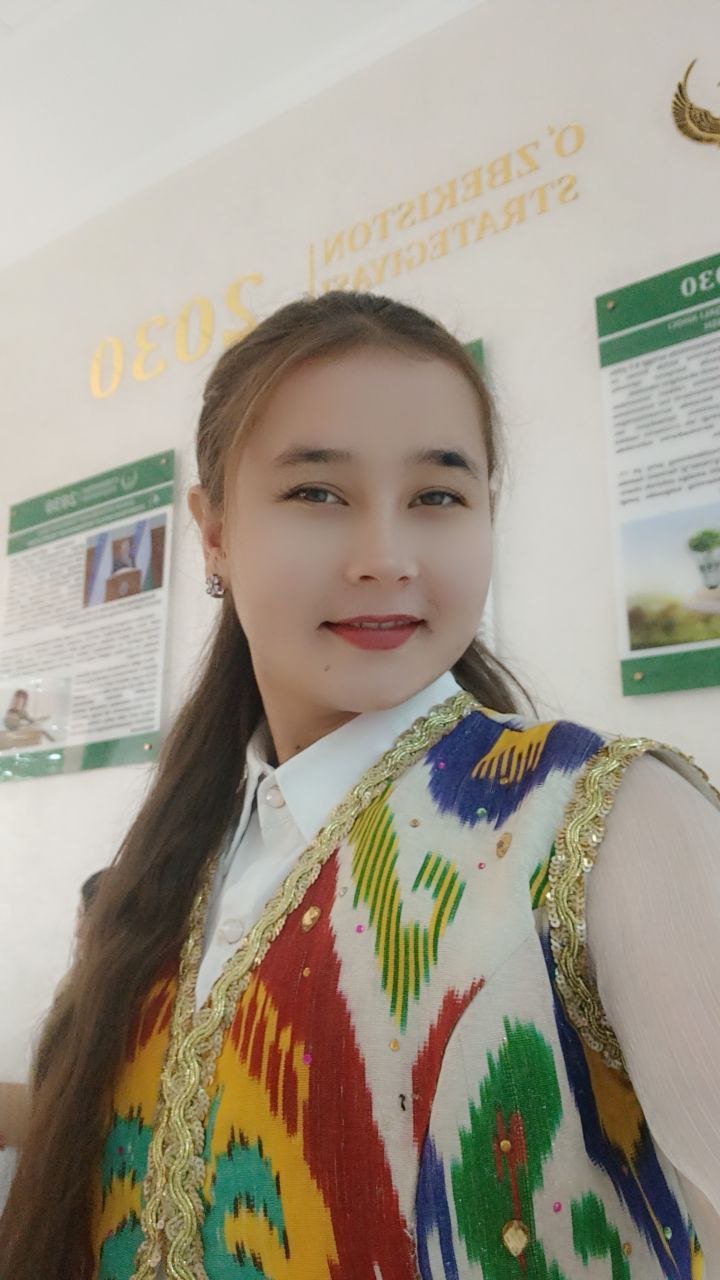
Essay from Munisa Yo’ldosheva

Zulfiya Isroilova, known as Zulfiyaxonim, is one of the most outstanding poets in Uzbek literature. She is remembered for her emotional poems, strong character, and lifelong devotion to art and love. Her works continue to inspire many generations.

Zulfiyaxonim was born on March 1, 1915, in Tashkent. From a young age, she showed great interest in poetry and literature. Her poems mainly focus on love, loyalty, patriotism, nature, and the inner strength of women. She wrote with deep feelings and sincerity, which made her works close to readers’ hearts.

Her personal life greatly influenced her creations. She was married to the famous Uzbek poet Hamid Olimjon. After his tragic death, she remained loyal to his memory for the rest of her life. This loyalty and sadness can be seen in many of her poems. Besides writing, she also supported young writers and contributed to the cultural development of Uzbekistan.

In conclusion, Zulfiyaxonim is not only a great poet but also a symbol of devotion, strength, and patriotism. Her literary heritage remains valuable today, and her poems continue to teach readers about love, loyalty, and courage.

My name is Munisa Yo’ldosheva. I was born on 6 July 2007. I am from Khorezm region of Uzbekistan.

Now I am a first-year student at Uzbekistan State world Language University. I study at the Faculty of English Philology. I chose this faculty because I am interested in learning English and foreign languages.

In the future, I want to become a good English specialist and achieve my goals.

Essay from Abdusaidova Jasmina

Abdusaidova Jasmina was born on July 20, 2011, in Gallaorol District of Jizzakh Region. She is a young creative talent and aspiring writer who continues to actively pursue her artistic work. She has participated in numerous competitions and events, winning prestigious first, second, and third places.

From an early age, she developed a strong passion for learning and has tested herself in various fields and disciplines. She is the recipient of the “Best Leader” nomination award.

Her creative works have been published several times in the international newspapers Classico Opine and Kenya Times. They have also been featured on international platforms such as Atunis Galaxy Poetry (Albania), Alessandria Today (Italy), and SynchChaos (United States).

She serves as an ambassador for three international organizations in India. Her creative works are indexed on Google.

She actively participated in the creative festival titled “Mosaic of Nations – 8 Countries, 1 Stage, 1 Heart,” where she won first place and was awarded the “Ambassador of Friendship” badge.

She is also a member of the Writers’ Union of Argentina.

Alisher Navoiy and His Literary Heritage: His Unparalleled Place in Uzbek Literature

Abstract

Alisher Navoiy is one of the greatest figures in the history of Uzbek literature. His творчество not only made an immense contribution to the development of the Uzbek language but also had a profound influence on world literature. This article explores Alisher Navoiy’s life, literary heritage, philosophical views, most famous works, and historical significance. It also analyzes how Navoiy’s творчество is perceived in the modern era and how his works influence the thinking and worldview of contemporary readers. Navoiy is examined as a poet, thinker, and statesman, and his role in today’s cultural and spiritual heritage is evaluated.

Keywords: Alisher Navoiy, Uzbek literature, poetry, Fuzuli, love, Sufism, historical heritage

Introduction

Alisher Navoiy (1441–1501) is recognized as one of the greatest poets and literary figures of Central Asia. Born in the city of Herat (present-day Afghanistan), Navoiy had an unparalleled influence not only on Uzbek literature but also on the development of the entire Turkic and Persian literary traditions. The deep philosophical thought, spiritual meaning, and poetic mastery found in his works have been studied for centuries. This article provides a detailed analysis of Navoiy’s contribution to literature and culture, as well as his life, works, and philosophical views.

Main Part

1. Alisher Navoiy: His Life and Personality

Alisher Navoiy was born in 1441 in Herat, which was part of the Timurid Empire. Raised in an intellectually rich family, he studied literature, philosophy, logic, astronomy, and religious sciences from a young age. Despite living during a period of political instability, he served as a minister in the court of Sultan Husayn Bayqara.

Although he was a statesman, he paid great attention to the development of art, science, and literature, supporting many scholars and poets. His personality harmoniously combined the qualities of a politician, poet, and Sufi thinker.

2. Navoiy’s Works: The Harmony of Poetry and Philosophy

Alisher Navoiy was an extremely prolific writer, and his works cover a wide range of themes, including love, morality, justice, enlightenment, and spiritual perfection.

His most famous work is Khamsa (“The Quintet”), a collection of five epic poems, which includes:

Hayrat al-Abrar (“Wonder of the Righteous”) – a moral and philosophical work discussing virtue and the spiritual principles of society.

Farhad and Shirin – an epic devoted to tragic love.

Layli and Majnun – a famous love story symbolizing divine love and spiritual madness.

Sab’ai Sayyar (“Seven Planets”) – a work about enlightenment, justice, and governance.

Saddi Iskandari (“The Wall of Alexander”) – a poem devoted to wisdom, politics, and leadership.

Navoiy’s mastery of language, thought, and genre has ensured that his works remain valued not only in his own era but also today.

3. Sufism and Philosophy: The Foundation of Navoiy’s Worldview

One of the most important aspects of Navoiy’s творчество is Sufi philosophy. Sufism is based on the ideas of spiritual purification, closeness to God, and the cleansing of the soul.

In his work Muhabbatnama (“The Book of Love”), the concept of love is interpreted not only as a feeling between people but also as a spiritual path toward reaching the Creator.

For Navoiy, true love is the path that leads the soul toward perfection.

4. Navoiy and the Uzbek Literary Language

Although Navoiy wrote in two languages—Persian and Turkic (Chagatai)—his greatest contribution was elevating the Turkic language to a high literary level. During a time when Persian dominated literary expression, he deliberately wrote in Turkic and demonstrated its rich expressive possibilities.

By doing so, he laid a strong foundation for Uzbek literature.

5. Navoiy’s Legacy in Modern Literature and Thought

Even today, Alisher Navoiy’s творчество has not lost its relevance. His works have been translated into many languages and are studied worldwide. In Uzbekistan, February 9 is celebrated annually as “Navoiy Day.”

His ideas about justice, compassion, knowledge, and love remain an invaluable spiritual heritage for modern society.

Conclusion

Alisher Navoiy was not only a poet but also a great thinker, statesman, and spiritual leader whose influence has endured for centuries. The poetic beauty, philosophical depth, and spiritual values in his works continue to inspire humanity to reflect and to cultivate self-improvement.

Navoiy’s heritage is an invaluable treasure of the Uzbek people and an integral part of world culture.

References

Navoiy, A. (2013). Khamsa (Five Epics). Tashkent: Akademnashr.

Navoiy, A. (2011). Hayrat al-Abrar. Tashkent: Gafur Ghulom Publishing House.

Navoiy, A. (2012). Lison ut-Tayr. Tashkent: Fan Publishing.

Sultonov, B. (2015). Alisher Navoiy and His Sufi Views. Tashkent: National Library of Uzbekistan.

Mahmudov, R. (2020). Alisher Navoiy: His Personality and Literary Heritage. Tashkent: Writers’ Union of Uzbekistan.

Komilov, N. (2001). Sufism. Tashkent: Movarounnahr.

Quronov, D. (2004). Introduction to Literary Studies. Tashkent: Akademnashr.

Ibrohimov, A. (2018). History of Uzbek Classical Literature. Tashkent: Fan and Technology.

Yoldoshev, M. (2016). Artistic Thinking in the Works of Alisher Navoiy. Tashkent: O‘qituvchi Publishing.

Karimov, I. A. (1997). High Spirituality — An Invincible Force. Tashkent: Manaviyat.

Essay from Botirova Mubina

Educating the Builders of the Future – The Most Important Issue

Today, cases of juvenile delinquency are increasingly common in our country. Some people believe that the government is responsible for preventing such situations, while others emphasize that parents should bear the main responsibility. So, whose opinion is actually more justified?

According to supporters of the first viewpoint, the state’s responsibility in preventing crime has several advantages. First, organizing activities that encourage young people’s interest in education plays a significant role in reducing delinquency. In particular, assigning psychologists and National Guard officers to state institutions is one of the most important measures. Second, if employment services provide young people with appropriate jobs, the number of crimes will decrease. As Confucius stated: “Hands that are busy with work stay away from evil deeds.”

The representatives of the second viewpoint approach this issue differently. First of all, a child’s character and worldview are largely shaped by the family environment and the love and care shown by parents. Moreover, parental supervision is crucial in choosing friends and using social networks appropriately. Furthermore, our Constitution — the charter of our happiness — clearly defines parents’ duties toward their children.

In my opinion, parents should bear greater responsibility for raising future builders into morally mature and well-rounded individuals. As Abu Ali Ibn Sina said: “Failing to guide children onto the right path is an act of injustice.” My neighbor, who was indifferent to her child’s upbringing and ignored his harmful habits, eventually saw her 20-year-old son fall into the path of crime.

In conclusion, parents should be attentive to their children and help organize their free time productively. Encouraging adolescents to engage in professions and education is the foundation of our future. Indeed, it is not criminals but educated youth who will build the New Uzbekistan.

Essay from Axtamova Orastaxon Salimjon qizi

Autistic Children. We Are Always Together

Compiler: Axtamova Orastaxon Salimjon qizi – Student of Speech Therapy (Logopedics)

Annotation:
This article discusses the practical aspects of psycho-corrective work in the successful socialization of children with autism spectrum disorder (ASD). It analyzes the psychological characteristics of social adaptation problems in children with autism and outlines effective approaches for intervention. The paper also explains what autism is, when it first becomes noticeable, its classifications, and how to build appropriate relationships with children on the autism spectrum.

Key words: Autism, psychocorrection, early childhood autism, adolescent autism, adult autism, external speech, monologic speech, stereotypical movements, social interaction.

Introduction

In modern psychology, increasing attention is being paid to emotional development and its role in personality formation. Emotions serve as an internal signaling system that helps individuals evaluate events, regulate behavior, and respond appropriately to different situations. When the emotional-volitional sphere develops typically, a child can interpret social cues, adapt to environmental changes, and establish relationships. However, disturbances in this sphere may significantly affect communication, behavior, and social adaptation.

One of the developmental disorders associated with emotional and communicative impairments is autism. Autism (from the Greek word “autos,” meaning “self”) refers to a specific psychological condition in which a person withdraws from social interaction and prefers isolation. The term “autism” was introduced into scientific literature in 1912 by Eugen Bleuler. Later, in 1943, Leo Kanner provided one of the first detailed descriptions of early childhood autism in his work Autistic Disturbances of Affective Contact.

Autism spectrum disorder is more commonly diagnosed in boys than in girls. The first signs usually appear before the age of three, although in some cases they may be noticeable during infancy. Early detection plays a crucial role in ensuring effective intervention and better developmental outcomes.

Clinical Characteristics and Symptoms

Children with autism spectrum disorder often demonstrate difficulties in social interaction, communication, and behavior regulation. Common symptoms include:

  • Limited or absent eye contact;
  • Delayed speech development or lack of functional speech;
  • Indifference to separation from or reunion with parents;
  • Preference for solitary play;
  • Repetitive behaviors and stereotypical movements;
  • Strong attachment to routines and resistance to change;
  • Hypersensitivity to sounds, light, or touch.

Speech development in autistic children may vary. Some children do not speak at all, while others may use echolalia (repeating words or phrases without understanding their communicative meaning). Monologic speech may be present, but interactive dialogue is often limited.

According to the International Classification of Diseases (ICD-10), autism-related disorders are categorized under F84, including childhood autism, atypical autism, Rett syndrome, and Asperger syndrome. These classifications reflect differences in symptom severity, onset, and associated developmental conditions.

Classification of Early Childhood Autism

Early childhood autism can be divided into four conditional groups based on behavioral patterns:

Group 1: Children who show almost complete indifference to the external world. They avoid eye contact and physical touch and demonstrate minimal emotional response even toward parents.

Group 2: Children who are isolated but maintain limited contact with close family members. They are highly dependent on routines, specific foods, clothing, or environments. Any change may lead to emotional outbursts.

Group 3: Children immersed in narrow and often unusual interests. These interests may not be educational and can include repetitive or fantasy-based themes.

Group 4: Children who are extremely sensitive and emotionally vulnerable. They desire interaction but struggle to cope with criticism or unexpected changes.

Understanding these groups helps specialists develop individualized psycho-corrective programs.

Causes and Risk Factors

The exact causes of autism spectrum disorder remain unclear. Research suggests a combination of genetic and environmental factors. Possible contributing factors include genetic predisposition, prenatal stress, exposure to environmental toxins, heavy metals such as lead and mercury, complications during pregnancy, anemia, hypertension, and ecological pollution.

Previously, autism was considered purely genetic, but recent studies emphasize the multifactorial nature of the disorder. Importantly, autism is not caused by parenting style or emotional coldness of caregivers, as was mistakenly believed in the past.

Psychocorrection and Social Adaptation

Psychocorrectional work plays a vital role in supporting children with autism. Early intervention programs may include speech therapy, behavioral therapy, sensory integration therapy, and social skills training. The goal of psycho-corrective work is to develop communication skills, reduce stereotypical behaviors, enhance emotional regulation, and improve adaptive functioning.

Speech therapists help children develop functional communication, whether verbal or alternative (such as gestures or visual systems). Structured routines and visual supports are often beneficial. Gradual exposure to social environments also improves adaptive skills.

Family involvement is essential. Parents should treat autistic children as capable individuals, providing responsibilities appropriate to their developmental level. Considering them “defective” or equating autism with intellectual disability may hinder progress. Many children with autism have average or above-average intelligence.

Conclusion

Autism is not a dangerous or hopeless condition. It is not a verdict. Individuals with autism live among us and can achieve remarkable success when provided with understanding, acceptance, and professional support. Early identification, environmental modification, and consistent psycho-corrective intervention significantly improve long-term outcomes.

Society must replace fear and misunderstanding with knowledge and empathy. Accepting autistic children as equal members of the community and offering them appropriate educational and social opportunities will facilitate their successful integration. With timely support, many individuals on the autism spectrum grow into independent, talented, and socially active adults.

Poetry from Sayani Mukherjee

Sky


In our long forgotten of summer days
I pine for forbidden forests
And a winter love that will wreak havoc
Inside my amorphous vein
Lately I scream at the stars in the night long haul
The sky seems forgotten and unlikely
An innocence that hangs in the tropical rain
The ecological summer that God created
I still seek for an unassuming answer
My past years gone and dusted under a oak tree
Oaths of haunting fairies in the far land
The sea change of the seasons as tomorrow comes
I will hold roses under my bosom
At nighttime the sky again becomes my neighbor
I scream and wait as the year pass by.

Poetry from Ri Winters

ocean

my head is an ocean
in which I more frequently drown than swim.
my mouth is a loaded gun
and I am the finger that holds the trigger.
sometimes I cannot stop myself
from getting tangled in the algae of my depression,
from drowning in a sea of anxiety.
sometimes I cannot stop myself
from firing on the first one to cross my path.

my head is a void,
an endless continuum in which I often find myself lost.
as I walk through the gates at the precipice of nothingness
I am greeted with only a baleful silence.
with every step I take in my own mind
I fear that I will slip into the deep
and never be able to return again.
my head is an ocean
in which I more frequently drown than swim.


Riley “Ri” Winters (she/they) is a young transgender poet, author, and musician from San Francisco, California. Her work focuses on social justice, identity reclamation, and self-expression, and advocates for mental health awareness and LGBTQ+ rights.

Essay from Kadirova Feruzakhan Abdiyaminovna

USE OF DIDACTIC GAMES AND MODERN TEACHING METHODS TO INCREASE STUDENTS’ INTEREST IN SCIENCE IN SPECIALIZED CLASSES OF FUTURE TEACHERS

Kadirova Feruzakhan Abdiyaminovna
Andijan State Pedagogical Institute
Master’s student of pedagogy
Scientific supervisor Abdullayeva Nasibakhan Jorayevna


Today, the reforms carried out in the education system require future teachers to deeply master modern pedagogical approaches. The use of didactic games and modern interactive methods is important in teaching.

Didactic games increase students’ interest in the lesson and make them active participants. For example, in the role-playing game method, students take the role of a certain profession or pedagogue and solve a problem situation. In this process, they apply their theoretical knowledge in practice. Or through a game organized in the form of a question-and-answer competition, students strengthen the topic and test their knowledge based on healthy competition.


The brainstorming method, which is one of the modern teaching methods, also develops students’ independent thinking. For example, students are asked to express different ideas by setting a problem on a new topic, in which each idea is appreciated and a general conclusion is drawn. This method is used by students forms the ability to think freely and defend one’s point of view.


The cluster method is also one of the effective methods, for example, a certain concept is written on the board, and students branch out their thoughts related to this concept. As a result, a comprehensive idea of the topic is formed This method is especially useful in the systematization of theoretical topics.

Through the insert method, students analyze their knowledge in the process of working with the text. They confirm the information they know during the study, determine new information and identify incomprehensible aspects, which develops students’ independent learning skills.


Case study, that is, the method of analyzing problematic situations, can also be widely used in specialized subjects. For example, students are given a pedagogical situation and asked to find a solution to the problem. This increases the ability to work in a team.


The use of information and communication technologies has also become an integral part of the modern lesson. Presentations, videos, online tests and lessons organized using interactive platforms attract the attention of students. For example, quick assessment
through electronic test or explanation of the topic through interactive presentations.