Poetry from Taghrid Bou Merhi

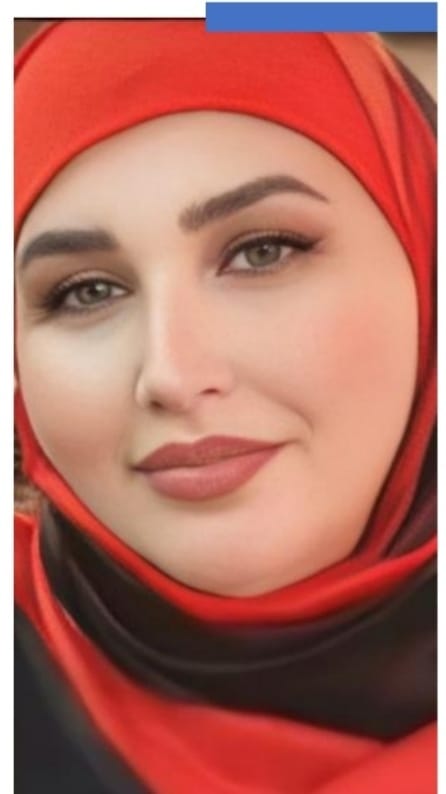
Middle Eastern/South American woman with a red headscarf

THE STONE

It is the awakening of beginnings,

A pulse born from the silence of ages,

The first memory of existence,

And the voice of the question when it emerged from fear.

In the hand of the first human, it became a tool that holds life,

A spark that lights the darkness,

A ember that preserves the body from the cold of annihilation,

And the first line on the cave wall.

It was a home when a home was unknown,

A sky to seek shade beneath,

A ground that bears the tremor of a step,

And a language that speaks without letters.

From it the story was launched,

Upon it the cry was broken,

In its hollows the trace dwelled,

And through it, humans understood the meaning of being.

In all its transformations, it bore witness,

In the grave, a mark,

In the temple, a symbol,

In the crown, glory,

And in sculpture, immortality.

O you,

Silent one who thinks,

Heavy one who speaks with wisdom,

Secret one dwelling at the edge of time.

I AM NOT AN IDOL 

I am not an idol,

nor a silent wall where your voice hides when it fears the void.

I am the breath of the universe when its chest feels tight,

and I am the wound that refuses to become a scar.

I am woman,

not a shadow that follows you wherever you walk,

nor a mirror that polishes your face to see your own glow in it,

but another face of truth,

questioning you when you long for forgetfulness.

I am not a stone that adorns your throne,

I am a wave uprooting silence from its roots,

and a land returning to the seed the whisper of eternity.

You want me as a chain,

but I want you as a journey,

searching with me for a meaning beyond flesh and blood.

I am not an idol,

I am a question dwelling in your eyes,

and an answer written only with the freedom of the soul.

I am woman,

and if you understood me…

if you stood before me without fear and without dominion,

you too would become… human.

A TEST FOR CONSCIENCE 

In the silence of closed homes

The stone bleeds from the heat of bodies,

And the gaze of shadows trembles in the corners of the soul,

As if time itself fears to witness.

The hand that strikes is but an echo,

An echo hiding in the hollows of the heart,

And a letter lost amidst the silence of screams,

A soul learning to live without a voice.

In every wound, a river of questions is born,

And in every tear, the philosophy of existence takes shape:

Is freedom merely a distant dream,

Or a secret hidden in the depths of anguish?

The woman is not merely moving silence,

Nor a stone dwelling between walls,

She is a light slipping through the cracks of pain,

A river flowing despite the chains,

And wisdom that cannot be broken by the striking hand.

Every fracture teaches the stone to dream,

Every tear gives the shadow new colors,

Silence becomes a cry,

Pain opens gates to light,

And resilience births a new horizon for life.

Violence against women is a test of life,

An experiment of human awareness,

A test for conscience,

And where the soul endures,

Light springs from the depths of the stone,

And dignity learns it cannot be killed,

Silence becomes strength,

And freedom echoes in every heart that remained silent,

Until the world understands that true power

Lies in respect, and in enabling the soul

To bloom without limits.

TAGHRID BOU MERHI is a Lebanese-Brazilian poet, journalist, and translator, whose writing carries echoes of multiple cultures and resonates with a deeply human spirit. Born in Lebanon, she currently lives in Foz do Iguaçu, Brazil, after spending significant periods in various countries, including eight years in Italy and two in Switzerland, where she absorbed the richness of European culture, adding a universal and humanistic dimension to her Arab heritage.

Taghrid writes poetry, prose, articles, stories, and studies in the fields of thought, society, and religion, and is fluent in six languages: Arabic, English, French, Italian, Portuguese, and Spanish. This allows her to move between languages and cultures with the lightness of a butterfly and the depth of a philosopher. Her works are distinguished by a clear poetic imprint even in the most complex subjects, combining aesthetic sensitivity with a reflective vision of existence.

To date, she has published 23 original books and translated 45 works from various languages into Arabic and vice versa. She has contributed to more than 220 Arabic and international anthologies, and her works have been translated into 48 languages, reflecting the global reach of her poetic and humanistic voice.

Taghrid serves as the head of translation departments in more than ten Arabic and international magazines, and she is a key figure in bringing Arabic literature to the world and vice versa, with a poetic sensitivity that preserves the spirit and authenticity of the text.

She is renowned for her refined translations, which carry poetry from one language to another as if rewriting it, earning the trust of leading poets worldwide by translating their works into Arabic, while also bringing Arabic poetry to the world’s languages with beauty and soul equal to the original.

She is also president of Ciesart Lebanon, holds honorary literary positions in international cultural organizations, serves as an international judge in poetry competitions, and actively participates in global literary and cultural festivals. She has received dozens of awards for translation and literary creativity and is today considered one of the most prominent female figures in Arabic literature in the diaspora.

Her passion for writing began at the age of ten, and her first poem was published at the age of twelve in the Lebanese magazine Al-Hurriya, titled The Cause, dedicated to Palestine. Since then, writing has become an inevitable existential path for her, transforming her into a flower of the East that has spread its fragrance in the gardens of the world.

Poetry from Emeniano Somoza Jr.

Anhedonia

I can’t cry

The tearducts are dry

Its been long since death

Stung me in the eye

I still have deep respect

For people who can at will

Break open a floodgate

On something real hard

While I just stand there

Laughing at the littlest detail

I sit on sad movies that make people go ape shit

I get the stories but when shit hits the fan

The sadness never gets to me

What price joy?

A pill that my doctor says to keep a black wolf at bay?

Poetry from Graciela Noemi Villaverde

Light skinned Latina woman with dark blonde hair, brown eyes, a black top and small silver necklace.
Graciela Noemi Villaverde

International Day of Peace 

The essence of a firefly in a child’s palm,

a faint spark against perpetual night,

echo of laughter in a valley of silence.

Hummingbird graffiti on a concrete wall,

a color that breaks the monotony of hatred,

a musical note out of tune with a war anthem.

Origami cranes,

a thousand wishes folded in paper of hope,

an army of dreams invading reality.

It is not a white flag of surrender,

but a secret garden blossoming ideas,

a weeping willow’s embrace

comforting the warrior.

A river of ink writing new stories,

a canvas painting possible futures,

a constellation of joined hands

illuminating the universe.

GRACIELA NOEMI VILLAVERDE is a writer and poet from Concepción del Uruguay (Entre Rios) Argentina, based in Buenos Aires She graduated in letters and is the author of seven books of poetry, awarded several times worldwide. She works as the World Manager of Educational and Social Projects of the Hispanic World Union of Writers and is the UHE World Honorary President of the same institution Activa de la Sade, Argentine Society of Writers. She is the Commissioner of Honor in the executive cabinet IN THE EDUCATIONAL AND SOCIAL RELATIONS DIVISION, of the UNACCC SOUTH AMERICA ARGENTINA CHAPTER.

Poetry from Mykyta Ryzhykh

leviathan

Dictators ride to and fro upon tigers which they dare not dismount. And the tigers are getting hungry.

Winston Churchill

my sweet boy

oh die in this doll dress

like a god in the arms

of a disbelieving priest

iron rivers bring sand

and suffering on their waves

iron birds bring emptiness

and dampness in their beaks

iron hands bring thirst in their palms

from this sea of fingers

like from waves LEVIATHAN crawls out

his constitution and plenary sessions

of deputies float out onto the plain

silt and silt like pain and pain

interfluve of emptiness and emptiness

and in the middle HE

floats

LEVIATHAN

my friend my

brother my

reflection

my monster

I love you at sunset and at dawn

I vote for you in elections and without a choice

I die for you and I don’t know who you are

because of you I lose

my brother

my son my father my

reflection

and future

priests bless your bloody fangs

war is going on but you

but YOU

don’t resurrect anyone

and hide in your cast iron waves

like in a dead man’s tea night

my sweet boy

you must to die

in this doll dress

you must to die

like a god in the arms

of a disbelieving priest

like silence that is sacrificed

although this silence

will never be broken

HIS eyes are white

like ashes and night

and three times more is ashes of battle

your eyes are sad boy

they are so black as if

leviathan tore you out

and replaced you with stones

when you were a baby

everyone wants to die but doesn’t know it

everyone wants to kill the leviathan

everyone wants to be the leviathan

everyone wants to kill kill kill

because that’s fatalism

the leviathan falls asleep after

lunch along with the thunder

of guns and statechannels

the boy falls asleep

and never wakes up

again

if someone wrote prose about this

the blood would drip like poetry

snowflake isotopes

descend on the city

everyone knows that this city

belongs to the leviathan

gasoline waterfalls descend

from the mountains of scrap metal

sleep my boy sleep

we will wake up in the forge

we will put the seal of emptiness

on your chest and sleep again

in the death row

kill kill kill death

kill kill kill the military

kill kill kill flowers

sleep my boy sleep

we will not wake up

the colonel will arrest us all

and the knot of forced humility

is already hung around our necks

god is coming

the dead are drinking

the silence

*** The author’s version of the poem, that was published in another edition in O:JA&L; Open: Journal of Arts & Letters

Poetry from Rasmiyya Sabir

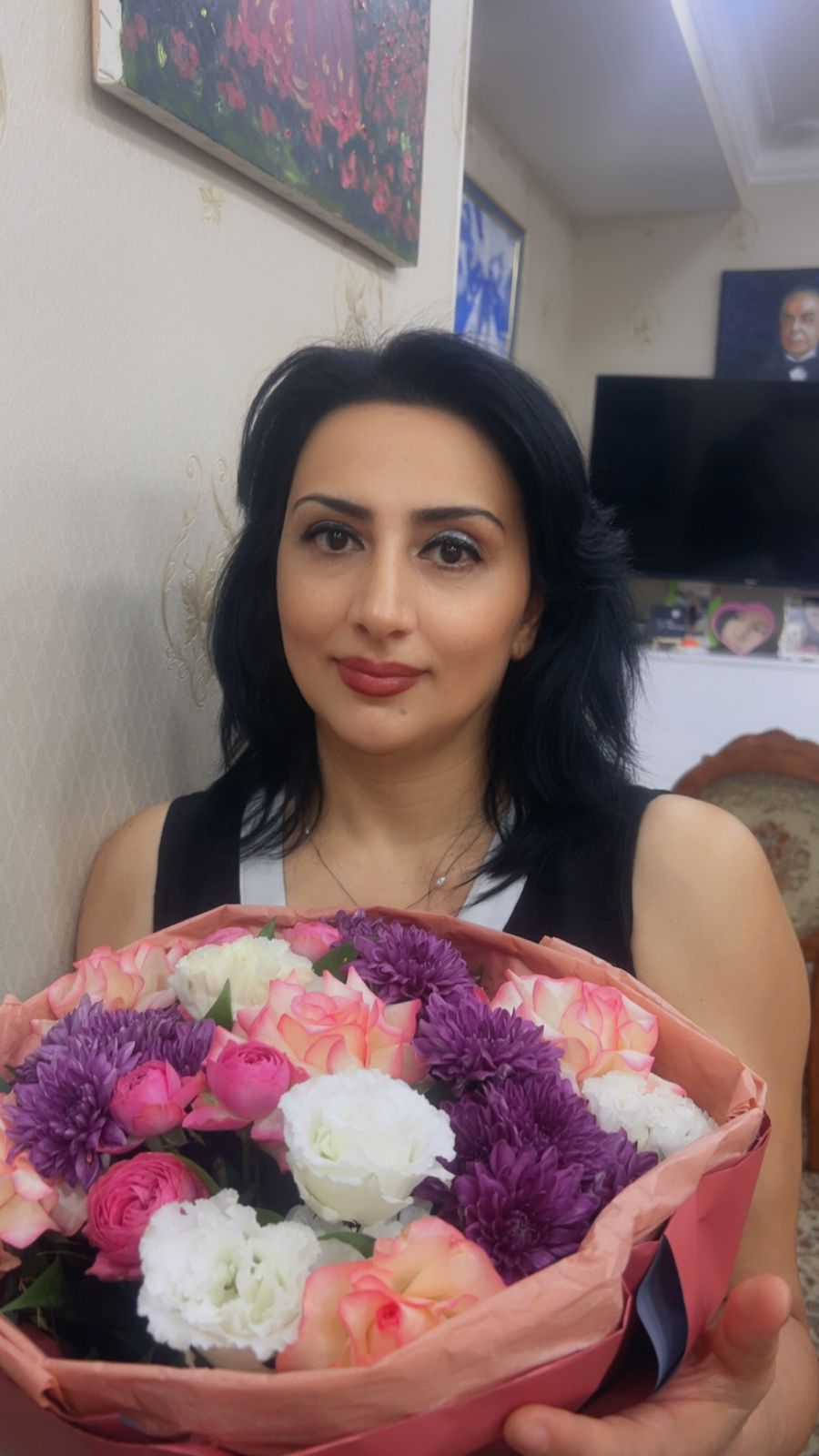
Central Asian woman with short dark hair and a black sleeveless top holding a bouquet of pink and purple flowers.

THE SUN

I am the Sun under the ground!

If you do not see me,

With the sun shines – my poems

You will hear me.

I am the Sun under the ground!

The heat of my words

will burn the people.

Who are ashamed for me.

They will not be able to hide

in the back of the eyelash.

I am the Sun under the ground!

I will melt

the ice world of the people.

I am the Sun under the ground!

I will bright

the world of the people

whose insides are dark.

I am the Sun under the ground!

To kill darkness –

it is my profession

every round.

A TALK WITH THE FIREWOOD

The same fire called Love
burned us both.
My sorrow-sister – you, firewood.
You blazed like a tree,
I burned like a man.
Our smoke became one spirit,
(somewhere, fire made peace with water)
From you – a fist of ash remained,
From me – a fist of earth.
Tell me…
which of us burned more beautifully,
firewood?

YOU AND I

I sought the truth-
but you came to me as a gentle lie.

I sought the dawn of hope-
but you came as a trembling “perhaps.”

I sought the joy that sings-
but you came as a quiet consolation.

I sought forever-
but you came as a fleeting lifetime.

And on this wide earth,
I searched for the self
I had once lost in the wind…
and it was you
who stood before me.

POEM WOMAN

Seeing your delicacy,
they compared you
to a flower…

Seeing your mischief,
they compared you
to the wind…

Seeing the tears in your eyes,
they compared you
to the sea…

Seeing your boundless loyalty,
they compared you
to the earth…

But you,
woman,
are a poem created by God.
And I
compare you
to a poem
that soothes my soul.
Your name is Poetry…

You were born like a poem.
Verse by verse, you live.
Syllable by syllable, you weep.
Line by line, you laugh.
With your laughter,
you wipe away
the world’s sorrow.

Sometimes you are joyful like a poem.
Sometimes sorrowful like a poem…
Yet,
woman,
you are eternal like a poem!
Your name is Poetry…

Prof. Phd. Rasmiyya Sabir’s nine books have been published in Azerbaijan, Turkey, Uzbekistan, and Iraq. She is one of the members of the Union of Writers of Azerbaijan and Chuvashistan. At the same time, she is a co-founder of the Union of the World’s Young Turkish Writers. More than 130 poems have been composed by the composers. Her first CD and cassette with the music from her poems was recorded in 2002. Her poems have been translated into many foreign languages, including Turkish, Russian, English, Georgian, Persian, and published in Turkey, Iran, Iraq, Sweden, Germany, Bulgaria, Uzbekistan, Kazakhstan, and elsewhere. She has been awarded many prizes. The first prize was given to her in the year 2000 in a competition dedicated to Fuzuli. She has been chosen “The person of the literature of the year” by the International Organizations called KIBATEK and VEKTOR. She has translated Modern Azerbaijani poems into Turkish and modern Kazakh and Uzbek poems into the Azerbaijani language.  She has been represented in different poetry festivals in Azerbaijan. She has gained the benefit of the President’s Fund of the Azerbaijan Republic.

Poetry from Soumen Roy

Lonely 

~~~~

When you love,

just love. 

No matter how long? 

Love should be pure as it is,

coming straight from a loving heart unconditionally.

Cause love has no reason to be lovable. 

As I find life so natural to breathe, 

not only to live but it comes naturally. 

So is love! 

Love doesn’t need to be loved.

Still, if you have a question, 

let me tell you

love is enough

to be together 

in the moment,

however long it may be. 

Love lives with its purity. 

Love is a blessing, 

the highest form of charity,

and the moments remain captured forever,

even when things turn bitter. 

Love is made for all, but not everyone receives love. Somewhere, the mind becomes heavy over the heart. 

But still, love is power, 

the power to forgive one another. 

But the most empowering love turns so pale today ,

in your courtyard of interests, 

and I remain in awe. 

My love isn’t forbidden. 

I neither wear a fake smile; 

I just can’t.

There, I get caught. 

But I am so happy to get caught like that.

But I am not happy to experience love that comes with conditions and remains hidden for long, 

until it becomes visible in the light of conditional actions.

Essay from Elbekova Nilufar

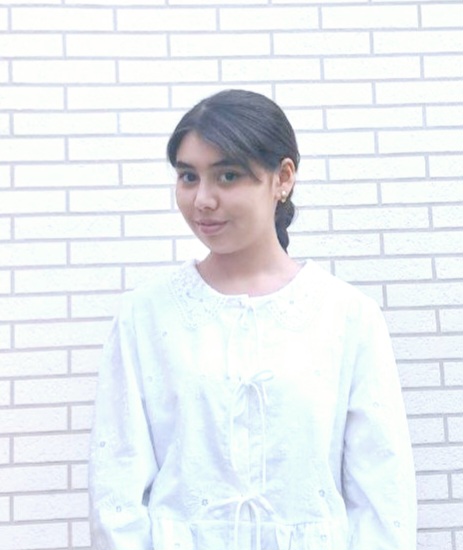
Young Central Asian woman with long dark hair behind her head, brown eyes, and a white blouse.

THE POSSIBLE PHYSICAL AND PSYCHOLOGICAL HEALTH PROBLEMS IN CHILDREN ASSOCIATED WITH EXCESSIVE INTERNET USAGE: EXPLORING COMPUTER VISION SYNDROME AND DEPRESSION.

Elbekova Nilufar Nodirbek kizi

20-school Namangan region, Uzbekistan

nilufarelbekova31@gmail.com

Annotation: Internet usage (IU) is becoming problematic among children, which is raising the possible health problems associated with IU. This article aimed to assess how children are becoming addicted to the virtual world and explore possible physical and psychological problems associated with IU. According to the latest available data, children spend an average of 2 hours and 30 minutes on social media every day, raising the possibility of having serious digital health problems among children, which can be either psychological or physical. Several studies globally, and numerous anecdotal media reports, suggest possible links between overuse of the Internet by adolescents and young adults and negative health consequences such as depression, attention deficit hyperactivity disorder, excessive daytime sleepiness, problematic alcohol use, or injury [1]. About 90 percent of children and adolescents aged 5-17 (47 million persons) use computers, and about 59 percent (31 million people) use the internet [2]. 

Key words: Internet usage (IU), Virtual world , Internet addiction, Computer vision syndrome (CVS) , Digital health, Depression, Support vector machine (SVM), Children, Physical health problem, Psychological health problem, Major depressive disorder (MDD), Bipolar disorder, Dysthymia.

Abstract: The use of internet among children has been increasing dramatically. Sadly, one of the biggest factors that children becoming addicted to internet is many parents` dependence on virtual world. The enough attention is not giving to children while they are being busy with internet-related activities and on top of that, even some parents are allowing them to engage with useless and harmful activities, subconsciously. About 60 percent of parents globally let their children use the Internet without any limits and do whatever they want on social media, and they do not even pay much attention to how much time their children spend in the digital world. The Internet has been having a big impact on academic performance in the last decade, making computers and electronic devices an indispensable source of education in many classrooms. Although nearly all schools have Internet access, many children and adolescents are more likely to access the Internet from their homes. Of those children and adolescents who use the Internet 78 percent access it at home compared to 68 percent who access it at school. Many of those who rely more an access at school come from lower income families (less than $35,000 per year) or have parents who have not earned at least a high school credential [2]. According to Of com, 9 out of 10 UK children aged 5 to 15 went online with an electronic device.98 per cent of 5-7-year-olds watch TV programs or films on any device for an average of over 11 hours per week. And younger kids aged 3-4 are watching for even longer with 12 hours and 42 minutes per week with 24 per cent even having their tablet [3]. Excessive use of internet gaming apps during childhood may be associated with hyperactivity, peer problems, high socioeconomic level, alexithymia concerns, shorter daytime sleep duration, and a delayed morning wake-up [4].We divide digital health problems arising from overuse of Internet into two categories : physical and psychological problems.

PHYSICAL HEALTH PROBLEM: Computer vision syndrome (CVS)

       1.1 General information about CVS: One of the biggest and problematic physical health issue associated with children is computer vision syndrome (CVS). Studies have shown that eye-related symptoms are the most frequently occurring health problems among VDT users. Computer Vision Syndrome, also known as Digital Eye Strain, is a group of eye and vision-related problems that result from prolonged use of digital devices.These devices include computers, tablets, smartphones, and even e-readers. CVS is characterized by a range of symptoms that primarily affect the eyes and may manifest in various ways, such as eye discomfort, blurred vision, and headaches [5]. CVS is one of the most common and conspicuous physical health problem associated with overuse of smartphones and UV devices. A study conducted by the American Optometric Association (AOA) reported that nearly 25% of children between the ages of 6 and 18 have experienced symptoms of CVS [5].

1.2 Causes of CVS: Several causes are found but the first and primary one is prolonged screen time which is followed by long time screening. Children often spend hours on social media, entertainment apps and games. Even if they are doing assignment, this does not mean they will be bypassed. Second biggest factor is poor seating posture while working with computer, forcing child to come closer to the screen and absorbing high UV lights. That is the reason why office workers make sure that they are taking short breaks while working long hours—not only to ensure their safety and health, but also because taking quick breaks means standing up and doing some physical activity to avoid long-time sitting pain. Another interesting but simple cause of CVS is reduced blinking or in another terms -starring at screen for a long time without blinking. Eyes cannot become wet if blinking is not normal, which creates an ideal environment for UV light to more deeply penetrate the eye [5]. The last one is Blue light emitted by digital screens is known to be a significant factor in CVS. Exposure to excessive blue light, especially before bedtime, can disrupt the sleep-wake cycle and cause digital eye strain. Many devices now offer blue light filters to mitigate this issue [5]. These are the main causes of CVS, and according to many surveys it is found that many people who have suffered from it have faced these causes in the first place.

1.3 Symptoms of CVS: As CVS has several causes, the symptoms are not less. Frequent eyestrain or eye discomfort. This is manifested in the way the eyes itch, redden or often blink , often disturbs child to focus on tasks. Headaches are the most painful part of CVS. The strain on the eye muscles and the continuous effort required to focus on screens can trigger headaches, which can be quite debilitating [5]. These are quiet common among children. Researchers always involve blurred vision as a symptom CVS. Difficulty in focusing on near or distant objects is a sign of a blurred vision. It has many negative effects on childrens academic performance as they might face to some difficulties while reading from a distance or writing thanks to blurred vision. Dry eyes-as mentioned earlier, reduced blinking while using digital devices can lead to dry eyes. Dry eyes can cause discomfort, redness, and even pain. In severe cases, it may lead to long-term eye problems [5]. Symptoms are not so painful, but it is difficult for children to solve such health problems, even if they are always small. Parents should not allow these symptoms to be experienced by young children. They must teach children about the consequences of excessive IU and show some experiences for children to reflect on such physical problems.

1.4 Methods and materials: Many studies are conducted by researchers and results are approved by doctors of ophthalmology departments. Cases can be studied in various ways: assessment of the patients history, by testing patients with measurement of visual acuity, by refraction tests (it determines the necessary lens power to correct refractive errors such as nearsightedness, farsightedness, or astigmatism), by eye focus and coordination tests and questioning patients. 

1.5 Results: According to recent studies female (all ages)are the most likely to have CVS than male. Age group also plays a role and children aged 8-11 develop this syndrome faster than adults with headaches has seen as the most common and frequent symptoms of CVS among all studies.Continents Percentage of children-adults

Asia (India) 50%

Africa ( Nigeria) 50-65%

North America (US) 65%

South America (Brazil) 33%

Antarctica No permanent residents

Europe (UK) 55%

Australia 58%

It is clear that 65% (around 48 million) children in US experienced with the symptoms of CVS which shows that the highest percentage among other 5 countries. Except from South America (Brazil) with the lowest percentage, other continent`s given countries showed around 50-60% of children with CVS. Because of Antarctica has no permanent residents, there is no any research has held.

                                               Adults Children

                                 Male Female Boys Girls 

                                 61,8% 71,4% 48-52% 50-55%

In all categories women (especially office workers) are more likely to have symptoms of computer vision syndrome, which is because they have hormonal influences to computer more than man and they are more sensitive to UV lights.

Elbekova Nilufar, daughter of Nodirbek, was born on the 7th of March in 2010 in the Namangan region, Namangan district. Study in 10th grade at 20-local school located in the Namangan district. Nilufar is interested in reading books and 3D designing as well as curious about learning new languages. Her articles have been published in various local journals. Her main aim is to become the leader of her chosen field and share her knowledge with youth.