Challenges in the Development of Wellness Tourism in Uzbekistan and Their Solutions
Jumaniyozova Nazokat Olim qizi 2nd-year Student, Tourism and Hospitality Program
Abstract: This article is devoted to addressing the challenges and shortcomings in the development of wellness tourism in our country and to identifying solutions for creating more favorable conditions for visitors. At present, numerous wellness facilities are operating nationwide, each with its own particular focus and methods of treatment. Despite the abundance of natural healing resources available in Uzbekistan, the sector remains underdeveloped, and even where progress has been made, consumers often lack sufficient access to information. In this article, we will examine the problems faced by wellness tourism and discuss potential solutions. In addition, we will review some of the most prominent wellness centers in our country.
In this article, we focus on wellness facilities. But what exactly are wellness facilities? They are defined as medical-recreational establishments that provide services aimed at restoring and strengthening health, preventing and treating illnesses, as well as offering opportunities for rest and relaxation.
Below, we highlight some of the existing problems in wellness tourism and their possible solutions:
Outdated infrastructure (in certain sanatoriums).
Insufficient advertising and information for foreign tourists.
Low qualification of staff (massage therapists, physiotherapists, guides).
Absence or malfunction of online booking systems.
Weak integration among regional tourism clusters.
Treatment methods that do not fully meet modern standards.
Imbalance between pricing and service quality.
For instance, the problem of outdated infrastructure stems from the fact that many sanatoriums were built in the 1980s–1990s and no longer meet contemporary requirements. Similarly, even well-developed facilities are often poorly promoted, meaning that foreign visitors remain unaware of them. The shortage of qualified personnel—especially therapists and service staff—represents another critical challenge. A further issue is the lack of effective online booking systems. For example, if one wishes to visit a sanatorium, it is often impossible to check room availability in advance, which may cause significant inconvenience upon arrival. Additionally, regional tourism clusters tend to function in isolation, with little cooperation among sanatoriums located within the same area.
Below, we can observe some of the wellness facilities available in our country:
№
Wellness Facility
Location
Brief Description
Contact Number
1
Omonkhona Balneological Sanatorium
Boysun District
Specializes in balneotherapy; beneficial for dermatological and musculoskeletal conditions.
+97 530 29 63
2
Chortoq Sanatorium
Chortoq District
A balneological and climatic resort; offers therapeutic mud and baths with thermal mineral waters.
+69 412 64 44
3
Chimyon Sanatorium
Fergana District
Provides treatment for cardiovascular, pulmonary, neurological, and musculoskeletal disorders.
+90 390 49 47
4
Zomin Sanatorium
Zomin District
Specializes in the treatment of respiratory and neurological diseases.
+95 503 71 35
5
Sitorai Mokhi-Khosa Sanatorium
Bukhara City
A historic healing complex renowned for its therapeutic environment.
0-365 228 50 66
Proposed solutions to existing challenges:
Modernization and technological re-equipment of sanatoria.
Development of a dedicated marketing platform for wellness tourism (vlogs, websites, mobile applications).
Promotion of wellness tourism among the local population to encourage the growth of domestic tourism.
International cooperation through knowledge exchange with wellness centers in Russia, Kazakhstan, and China.
Training of cross-disciplinary specialists combining expertise in both medicine and tourism.
“All-in-one” packages integrating sanatorium services with excursions, dining, and transportation.
Interactive QR code–based promotional materials (individual videos and content for each sanatorium).
Integration of eco-tourism with wellness tourism (e.g., “Zomin-Eco + Sanatorium” combined experiences).
At present, significant work is being carried out to overcome the existing challenges. These sites are not only wellness destinations but also serve as eco-tourism hubs.
Conclusion: In this article, we have discussed the wellness facilities operating in Uzbekistan and examined possible solutions to the challenges they face. Tourism in our country is developing rapidly, and sanatoria and recreational centers are making a significant contribution to this growth. Consequently, special attention is being paid to this sector, and both the number and quality of wellness facilities are steadily increasing.
References:
Decree of the President of the Republic of Uzbekistan, No. PQ–5052 (April 5, 2021) – On the Strategy for the Development of Tourism.
T.T. Saydaliyev. Fundamentals of Tourism. Textbook. Tashkent, 2021.
Official website of the Tourism Committee of the Republic of Uzbekistan – www.uzbektourism.uz
International articles on wellness tourism – World Health Tourism Reports, 2022.
Feruza Umarova. “Prospects for Wellness Tourism in Uzbekistan.” Research article, 2023.
United Nations World Tourism Organization (UNWTO) – www.unwto.org
Jumaniyozova Nazokat Olim kyzy was born in Toprakkale district of Khorezm region. Currently I am a 2nd year student of the Denov Institute of Entrepreneurship and Pedagogy of the Surkhandarya region in the direction of tourism and hospitality.
Today I learned something that cracked open the cosmos a little wider: the phrase “Slutty Detective”—the name of my beloved character Kandy Fontaine, the lipstick-smeared, truth-sniffing, sex-positive sleuth—originates in the writing of Kathy Acker.
Yes, that Kathy Acker. The literary anarchist. The punk priestess of cut-up prose and radical identity. In Empire of the Senseless, she wrote:
“I was a slutty detective in a city of mirrors.” And just like that, the lineage snapped into place. I wasn’t just riffing—I was channeling.
This is more than coincidence. It’s a revelation. A reminder that queer art is a palimpsest of rebellion, a collage of voices screaming across time. My work, my characters, my obsessions—they’re part of a living archive of resistance.
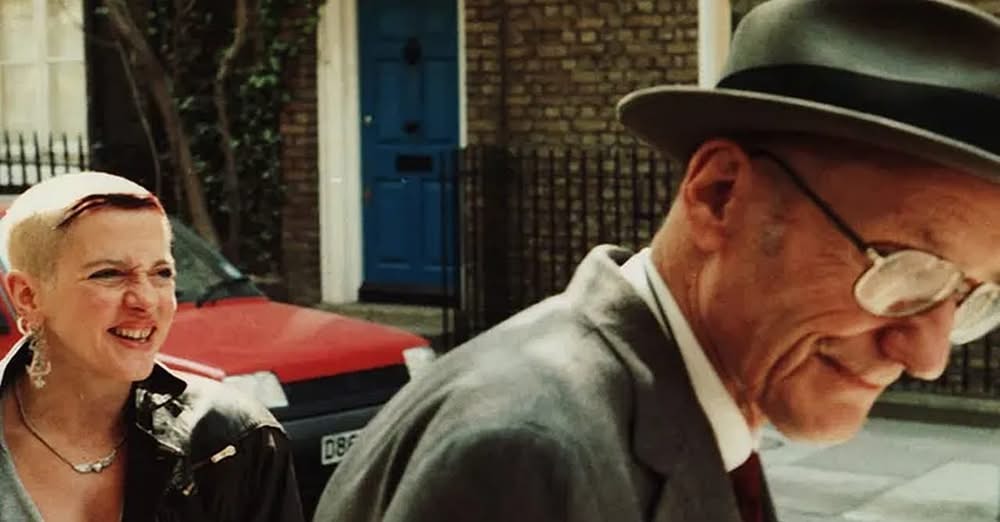
I’ve been honored to share pages with Danielle Willis, Allen Ginsberg, Patrick Califia, Caitlín R. Kiernan, Poppy Z. Brite, Jan Steckel, Thomas S. Roche, Carol Queen, and Amelia G.—writers who didn’t just write queer stories, they rewrote reality. They made space for the freaks, the lovers, the gender outlaws, the sacred sluts. In the Foreword to my recent collection The Doom Hippies III: A Great Variety of Monsters, Weird Fiction legend Jeffrey Thomas compares me to the late, great Joseph S. Pulver, Sr. and William S. Burroughs himself.
And I’ve collaborated with Kari Lee Krome, the co-founder of The Runaways with Joan Jett, on songs and stories, some of which can be found in my recent collections. The songs were her and I-an absolutely surreal dream come true for someone who has admired Kari’s work for decades and spoke about it in class as a college comp instructor. The stories-Department of Youth, for example-are still being written; those were directly suggested by her when she would pop up on my Facebook message feed and call me “Mister.” If I’m lyin’ I’m dyin.
In my Queer Voices interview with Stephanie Magister, I spoke of the need for creative disruption. And now, in this age of Trump, where MAGA dreams of erasure and conformity, we must respond with radical queer anarchy. We must be slutty detectives in cities of mirrors, exposing hypocrisy, decoding oppression, and seducing truth out of hiding.
On The Smol Bear Show, I sat with cyberculture pioneer Ken Goffman (aka R.U. Sirius), a close associate of William S. Burroughs and Kathy Acker, and with Marc Olmsted, the post-Beat poet whose friendship with Allen Ginsberg spanned decades. We spoke of memory, myth, and the power of art to mutate minds.
This is our moment.
We must write like our bodies are on fire. We must create like the world depends on it—because it does. We must be unapologetically queer, defiantly erotic, and intellectually feral.
Let the slutty detective rise. Let her lipstick be warpaint. Let her trench coat be armor. Let her questions be knives.
We are the resistance. We are the remix. We are the revelation.
We don’t want light. We want darkness, in which we could pursue our dark passions.
If we look at the focus of studies in modern times, scales have shifted away from the study of literature and greater emphasis is being placed on the study of subjects which are directly in demand for the purpose of jobs. Only those things are studied in schools and colleges which make students sharp of understanding, quick at decision making, and fast at the art of problem solving. The focus of studies, and the prized positions for which the cream of the students aspire and work assiduously, are top IT jobs with millions in packages, or positions of power and wealth in civil services.
In a scenario, where people are bewitched by the political and bureaucratic power, and wealth, it is but natural that students tilt towards subjects which deliver them into plum positions of society. Now, look at literature, a field which has been sent to margins, and now being obliterated altogether, being replaced by language studies, and teaching of letter writing and draft making. No one can contest if, as we go along, we improve our teaching techniques, and introduce new subjects. But, if we just reduce to nothingness subjects which have always remained the grandeur of universities, it is a serious setback to the idea of education at a whole.
In a society which is being controlled by power lobbies, and machines, and where tastes are being dictated, and human nature is under close scrutiny of AI and other appliances, everything can be digitalized and documented except human mind, his imagination, his feelings, and how a man reacts differently at different occasions to the same stimuli. Psychology is a science, but not an exact science, because human mind cannot be fully brought on the laptop screen. Tentative decisions are made with results which too are approximate. Literature which studies human mind, his psychology, his passions, his joy, and his pain, has revolted against regimentation and digitalization, and herein lies the danger of revolt to an organized society which believes in power and control.
Look at the plight of teachers in schools and colleges. They are booked and copy-booked the whole day, without a moment for themselves, when they can breathe free. Same is the condition of students. No time to look away from the syllabus books. The Principals are happy, now they have made every one busy, and there is no nonsense like students indulging in lofty thoughts, studying great men, and learning arts which relate to higher learning. From books to more books, this is our studies nowadays. From marks to more marks is their trek. And if they top the lists, newspapers capture headlines. And there the game ends.
Literature and Free Thought
Literature is on the losing end, and it is being eliminated, for the reason that it believes in free thought. It believes in the life of the mind. It believes in ethics, beauty, art – things which do not go well with the matter-of-fact practitioners of pratical sense. If we look back, challenge to the political power always came from educational institutions. Because universities were the places where people could study great masters, had time to discuss and debate. Now, also, debates are held, but they do not relate to philosophy. They relate to Shark Tank.
Moreover, the world has learnt the art of turning literature into a commodity, as it has done with religion. A noble activity, which is meant to refine human sensibility, can lose its own sensitivity if it is reduced to an economic activity, a passion for success and awards. The genuine man of literature has been pushed out of the margins, while those who can fight it out, pay it out, buy it out, stay in the field, with laurels. If literature does not subdue, rather gives rise to the running sensations of success and wealth formation, best sellers and copies sold, I wonder it can do the job it is basically expected to do.
Literature has become a liability for the society as a whole, when it resists the attempts to commercialise it and it fails to yield returns in terms of money and power. It is a light which shows us the path. Herein lies the problem. We don’t want light. We want darkness, in which we could pursue our dark passions.
Another major reason why literature has become a defunct field of study, relates to how the leaders of the world behave. Politics and real life is a field of a cutting-edge race of macabre lies. Literature does not fit into a world which has no stake in truth, goodness, honesty, integrity and values like ethics.
If we want a better world, we shall have to revive literature and bring mankind back from the brink of unrealistic dreams of high life based on power and wealth. Else, the drift into the morass of a world of flimsiness, artificiality, shallowness and duplicity is inevitable, and irresistible.
Dr. Jernail Singh Anand, with an opus of 180 plus books, is Laureate of the Seneca, Charter of Morava, Franz Kafka and Maxim Gorky awards. His name adorns the Poets’ Rock in Serbia. Anand is a towering literary figure whose work embodies a rare fusion of creativity, intellect, and moral vision. He’s not just an Indian author but a global voice, challenging readers to confront the complexities of existence while offering hope through art and ethics. If Tagore is the serene sage of a colonial past, Anand is the fiery prophet of a chaotic present. Recently he dedicated hos collection of 12 epics Epicacia Vol 1 and Vol 2 to Serbia and Dr Maja Herman Sekulic.
Annotation: It would not be a mistake to say that the “Office of the Future” is a true center of opportunities and knowledge for young people. During the program, participants have the chance to strengthen their teamwork and leadership skills, attend master classes from experienced speakers, and exchange ideas and experiences with new friends. Over the course of five days, more than 150 young people discover new sides of themselves. This program is highly valuable and essential for today’s youth.
Keywords: Education, 5 days, Kelajak ofisi, project
Аннотация: Не будет ошибкой сказать, что «Офис будущего» является настоящим центром возможностей и знаний для молодежи. В рамках программы участники имеют возможность укрепить свои навыки командной работы и лидерства, посетить мастер-классы от опытных спикеров, а также обменяться идеями и опытом с новыми друзьями. В течение пяти дней более 150 молодых людей открывают в себе новые грани. Эта программа является очень ценной и необходимой для современной молодежи.
Ключевые слова: Образование,5 дней, Проект,Келажак офиси
Annotatsiya: “Kelajak ofisi” yoshlar uchun haqiqiy imkoniyat va bilim maskani desak, adashmagan bo‘lamiz. Dastur davomida ishtirokchilar jamoada ishlash va yetakchilik ko‘nikmalarini mustahkamlash, tajribali spikerlarning mahorat darslarida qatnashish, yangi do‘stlar bilan fikr va tajribalar almashish imkoniyatiga ega bo‘ladilar. Besh kun davomida 150 dan ortiq yoshlar o‘zlaridagi yangi qirralarni kashf etadilar. Ushbu loyiha yoshlar uchun nihoyatda muhim va qadrlidir.
Kalit so’zlar: Ta’lim, 5 kun, proyekt, Kelajak ofisi
Mukhammadiyeva Sevinch is a second-year student at Tashkent State Medical University. She graduated from school with a gold medal in 2024, demonstrating her academic excellence. In 2022, she earned an IELTS score of 6.5, reflecting her strong proficiency in English. Sevinch is also the holder of a National “A” Certificate in Chemistry and has achieved distinction as a winner of the Chemistry Olympiad.
Contributor Abigail George would like to share a new project of hers: a blog called Mentally Sound that features articles, updates, a magazine, poetry, and uplifting music. In this day and age, so many things can affect our mental health. Please feel free to join the blog and blog about your own experiences or loving someone who has a mood disorder or an individual who is suffering from depression. Log in, blog, do read the posts and leave comments to inspire our growing community!
For we are all bound in stories, and as the years pile up they turn to stone, layer upon layer, building our lives. – Steven Erikson
This month’s contributions deal with the complexities of nature, history, culture, language, or even the psyche of a single person. Everything we choose or experience builds upon itself to make us who we are, even short-lived experiences.
Yucheng Tao’s poetry collection April No Longer Comes,published by Alien Buddha Press and reviewed by Cristina Deptula, explores moments of love and beauty that are wonderful and transient, like the season of spring. Sean Lee’s poems remind us that even fleeting moments can be meaningful and beautiful. Jian Yeo’s poetry touches on the pain and beauty we can find in mortality. Mykyta Ryzhykh contributes surreal images of life, death, and the cycle of modern existence. John Grey’s poetry explores comings and goings, presences and disappearances.
Yoonji Huh presents nature, family tenderness, and humor with a color scheme that looks historical and weathered. Gwil James Thomas speaks in several tough-minded pieces to memories and dreams and our sources of inspiration. Sean Lee’s artwork evokes the power of the imagination to illuminate daily life. Alina Lee’s poetry suggests that our pasts and futures comprise layers of each moment in which we find ourselves. JK Kim’s poetry looks at summer scenes with a calm nostalgia, after events have passed. Alexis Lee’s poems probe what we choose to value and remember, what we invest in and find beautiful. Olivia Koo probes the nature of memory, how multiple moments combine to craft a mental impression and feeling. Ah-Young Dana Park’s poetry comments on our changing memories and perspectives as time passes and we age. Chloe Park’s art revels in exquisite detail, probing culture and memory with intricacy. Sally Lee provides poetic snapshots of moments in time, considering whether they have meaning or value without context.
Seoyun Park’s visuals speak to how we observe and confront life, the dangers we face and those we pose. Ethan Lee’s poems remind us of the underside of our world: the everyday grotesque and the many layers of the ordinary. Irene Kim’s work explores the strain and melancholy that can permeate ordinary moments. Austin Chung’s poetry illustrates various kinds of disorder and dispersion as Taylor Dibbert vents his annoyance at the common problem of loud museum patrons. Lauren Kim stays with a single scene from everyday life for an entire poem, probing its layers. Haeun Regina Kim’s poetry examines ordinary objects and animals in depth, sharing details and language to create an off-kilter feel.
Brian Barbeito also explores deeply, focusing in on the flora and fauna of an Aruba resort. Debabarata Sen celebrates the verdant beauty of Costa Rica. David Sapp’s poetic speakers become waylaid by the arresting color and beauty of nature. Dylan Hong’s pieces present a gentle, abstract, even whimsical peek at nature. Grace Lee’s poetry crafts dreamlike, gentle, floating scenes. Terry Trowbridge’s pieces on peach harvests evoke the challenging economics and natural realities of farming. Mahbub Alam reminds us of the innate rough wildness of nature: storms, volcanoes, huge predators.
Sayani Mukherjee evokes the rhythm of a public piano played for big city pedestrians in a rainstorm. Eva Petropoulou Lianou waxes poetic about the beauty of the moon. Noriniso Kasimova shares memories of spring in her hometown and her father’s love. Chinese poet Su Yun collects a group of short poems from elementary school students, mostly impressions of natural scenes. Dhani M.’s artwork stylizes natural scenes to create emotional senses of calm, curiosity, and wonder. Jinwoo Brian Park’s art suggests that we can re-incorporate the old into the new, the natural into the artificial.
Mark Young contributes a fresh set of fanciful geographies. G. Emil Reutter humorously describes noisy construction’s impact on local residents. Erin Kim’s artwork explores the upsides and downsides of civilization’s technological progress. Katie Hong’s work critiques our isolation and obsession with technology as Xushnudbek Yakubov warns of the dangers of online misinformation. Sophie Yoon’s art critiques our complex relationship with consumption and the natural world. Eugene Han’s art explores who we are and where we’re going as humans, and our relationships with nature. Shabbona Abdurashidova highlights the importance of sustainable ecology in Uzbekistan. Jahin Claire Oh’s work speculates on how the world’s other creatures might see us: mimicking and learning from them, drifting into or penetrating their environments.
J.K. Durick speaks to new, wild, and real frontiers in modern nature and technology, commenting on our efforts to understand and control them. Pulkita Anand evokes the mental and physical disorientation brought on by the colonization of one’s land.
Ahmed Miqdad calls the world to action to help suffering civilians in Gaza. Patricia Doyne also calls the world’s attention to starvation in Gaza. Stephen Jarrell Williams speaks to the numbing, mindless destruction of war.
Abdisattorova Xurshida highlights the contrasting legacies of Genghis Khan and Amir Temur. Abdisattorova Hurshida reflects on her admiration for Uzbek martial artist Abdulbosit Abdullayev. Maftuna Rustamova and Chorsanbiyeva Gulnoza poetize in honor of the military personnel who serve and guard Uzbekistan. Zumrad Sobirova celebrates the poetic beauty and pride of her Uzbek heritage. Jumaniyozova Nazokat encourages Uzbekistan’s young people to develop a greater appreciation for their heritage by visiting points of historical interest.
Nilufar Moydinova’s essay highlights language’s inextricable interconnection with thought, life, and culture. Mauro Montacchiesi creates a dialogue of philosophical thoughts and poetry between Dr. Jernail Singh and Rabindranath Tagore. Federico Wardal speaks to his long admiration for artist Andy Warhol and director and screen writer Federico Fellini. Orolova Dinora explores layers of meaning in Antoine St. Exupery’s The Little Prince as Surayyo Nosirova celebrates the heritage of Uzbek author Alexandr Faynberg.
Reagan Shin revels in the comfort and ecstasy and happy memories she finds in books. Mushtariybegim Ozodbekova highlights the power of books and stories to transcend time, culture, age, and space. Panoyeva Jasmina O’tkirovna highlights ways language teachers can help students develop fluency through relevant speaking and grammar practice. Turg’unov Jonpo’lat explores techniques to help children of all abilities to learn foreign languages. Nafosat Jovliyeva and Dilshoda Jurayeva illustrate gamification and other creative strategies for language learning. Rahimova Dilfuza Abdinabiyevna discusses ways to improve student competence with writing and speaking. Hilola Badriddinova outlines strategies used throughout the developed world to teach foreign languages.
Linda S. Gunther contributes a craft essay on “interviewing” your characters to better understand them as a writer. Paul Tristram’s poetry explores the heroic narratives we create through our writing and our lives. Gloria Ameh evokes the visceral sensations of writing on topics close to the bone.
Abigail George writes a stream of consciousness essay on her vulnerabilities from mental illness and just plain existing as a female-bodied person and how enduring them inspired her to write. Soumen Roy also connects beauty to vulnerability, speaking to the fading Mona Lisa and the union of joy and sorrow as fellow travelers.
J.J. Campbell reflects on disillusionment, loss, and the eternal quest, against all odds, for love. Mesfakus Salahin speaks evocatively of his quest for love and freedom. Baxtiniso Salimova’s poetry tells an epic love story. Mirta Liliana Ramirez relates intense grief at the loss of her lover. Dilnoza Islomova expresses her gratitude for her mother’s tender care. Bill Tope and Doug Hawley collaborate on a love story that turns unexpectedly tender. Urazaliyeva Sarvinoz shares an emotional tale of jealousy, love, and forgiveness between two twin sisters. Sarvinoz Orifova expresses gratitude for her parents’ constant love and care. Wazed Abdullah expresses his love and gratitude for his mother. Ozodbek Narzullayev expresses his love for his mother and invites her to share her life struggles with him for support. Xurshida Abdisattorova shares the story of a mother’s complicated grief for an imperfect husband and father who passes away in a sudden accident. Shoxrukh Fayzulla o’g’li Dusmatov speaks to his mother’s love and care and how wealth alone matters little without compassion and humanity.
To’raqulova Pokiza Sanjarovna speaks to the need for human compassion, wisdom, respect, and personal development. Hamza Kamar’s poetry expresses his powerful hopes for a transcendent hero. Bhagirath Chowdhary expresses his determination to avoid the next life until he has finished roaming this world, offering blessings to others. Charles Taylor’s short story probes our ethics and the extent of the compassion we owe our friends and fellow humans.
Julia Kanno reminds residents of the USA that most Latino immigrants are hardworking people with lives and dreams. Bill Tope presents a tale of a survivor’s search for justice for a sexual assault that shattered her psyche. Abdisattorova Khurshida presents a tale of thievery exposed.
Graciela Noemi Villaverde shares a poem on the joy of community and diversity and welcoming special education students. Haeun Regina Kim’s artwork explores unity and acceptance of others, as well as harmony among rural and urban areas. Nabijonova Madinabonu outlines how sharing coffee can help us build building friendship and community. Khudoyqulova Shahzoda highlights Uzbekistan’s programs to enhance economic opportunities for low income women and families and the disabled.
Nazarova Moxiniso looks into discipline and student character development as part of Uzbek preschool education. Ulsanam Ulmasovna outlines Amir Temur’s contributions to the Uzbek education system. Islomov Inomjon describes the Geoment, a device to teach mathematical reasoning to children with low or no vision.
Bozorboyeva Iroda offers encouragement for young people to find and follow their own dreams. Khudoykulova Shahzoda points out consequences of and solutions to youth unemployment.
Various contributors celebrate notable people who should be better known, or highlight important research work. Sobirjonova Rayhona outlines the career and accomplishments of Uzbek woman mathematician and teacher Shodmonova Hilola. Eshmurodova Sevinch highlights the need for training for employees in Uzbekistan’s banking industry in digital technology to modernize industry. Muslima Olimova highlights strategies corporations have used to adapt to stay on top in a digital world. Jo’rayev Ulug’bek outlines engineering techniques for strengthening concrete structures. Mirzaolimov Mirabbos probes the medical relationship between diabetes and cardiovascular diseases. Ostanaqulov Xojiakbar speculates on how to improve web search engine optimization to improve online communication and website findability. Orozboyeva Mohina Nuraliyevna outlines the role and history of psychology as practiced in Uzbekistan.
On a more psychological level, Duane Vorhees’ poetry covers and highlights human complexity: different aspects to our personalities, different choices we can make, how we can change with time. James Benger’s poetry explores the fear and tension underlying our individual existences, the danger from geologic pressure, storms, raw meat – and how we sometimes find hope to carry forward.
Andrew Ban shares restless, random thoughts, finding commonalities with all humanity while acknowledging the need to protect and defend himself if needed. Dongeon Kim’s work presents scenes of intense human and natural energy while Texas Fontanella revels in the pure sound of non-representational language. Dennis Daly wanders through a variety of human feelings, from nostalgia to frustration to faith. Michael Robinson shares his journey and heritage of faith, how he found a spiritual home and refuge in Christ and the church. Muhammad Sanusi Adam speaks to struggle, resilience, destiny, creation, and faith.
Gaurav Ojha seeks out meaning in a confusing and vast world, ultimately affirming everyone’s ability to find their own truths. We hope that reading this issue helps you to find a smidgen of truth for your own life.
Hennie stepped out of the shower, trailing twinking droplets of water onto the bare linoleum floor. She grabbed a towel from the towel bar and draped it around her wet hair and shoulders. She stood there for a moment, under the unforgiving glare of the bathroom light, contemplating the brutal rape she’d suffered just hours ago, at the hands of a man she once trusted. Suddenly overwhelmed, she burst into racking sobs, drawing the towel to her overflowing eyes. “Sonofabitch,” she murmured, barely audibly. She was exhausted, both emotionally and physically. She sat at her vanity.
Michael – one year ago
As he said he would, Michael, Hennie’s ex-brother-in-law, showed up in the courtroom today, the day after Halloween. He comforted Hennie and gave her solace over the way that his brother Mark had run out on her, trading up to a younger, wealthier and prettier woman. The divorce proceedings left Hennie feeling drained and vacant inside, and Michael was there for her. Afterwards, he took her to a tavern within walking distance of his apartment, where he plied her with beers throughout the day, until late in the evening. Then they stumbled back to his place, where he seduced her with a studied charm. Like his brother, he was a handsome man. Hennie was a willing participant that night, hoping in some way to get back at Mark by sleeping with his little brother. This’ll show him, she thought spitefully.
But Michael, besotted with alcohol, was barely functional and scarcely managed to penetrate her, eventually falling asleep atop her. In the morning, he seemed to have blacked out the entire episode, and Hennie hadn’t the heart to disabuse him of his perceptions. Driving Hennie back to her place that morning, Michael said, “Keep in touch, huh?” Hennie nodded, gave him a chaste kiss and that was the last she saw of the man. Until exactly one year later. – – – After sitting for some time, Hennie stood and began wiping her arms and legs and torso with the towel. She was practically dry already. She shifted her feet and winced with pain. Michael had not been gentle. He had shown up at her apartment, the same apartment she had shared with Mark for 9 years, bearing a bottle of inexpensive champagne and a barrel of fried chicken, of all things. “KFC?” she asked with a grin when he stood in her doorway. She had been lonely and was happy for the company. He grinned back at her. “You can have the legs and wings,” he told her pointedly, “but I got dibs on the breasts and thighs–particularly the thighs.”
They both laughed easily. She let him into the apartment, where he stuck the bottle in the fridge and pulled out cans of beer. They enjoyed their repast; Hennie was hungry. She thought about the significance of the date: one year ago to the day since she and Mark had made their divorce official. Was Michael’s appearance here today intended to mark the occasion? she wondered. They noshed on the fried chicken and drank the beer and Hennie noticed that Michael was already slurring his words a bit. “Did you just come from the bar, Michael?” she asked. Michael frowned. “So what if I did?” he asked gruffly. Hennie shrugged. “Just asking,” she said lightly.
Michael snorted, drained the third beer since his arrival and then grabbed another. “You’re not driving, are you, Michael?” asked Hennie with concern. Michael had a history of drinking and driving and, last she heard, had lost his license for that reason. “What’re you, my freakin’ mother?” he asked peevishly. “I just wouldn’t want you to get into an accident,” she told him. She touched his shoulder and rubbed it with her fingers.
“God,” he said, arching his shoulders, “you chicks sure got needs, don’t you?” She stopped rubbing. “What do you mean?” she asked. “I mean,” he said spitefully, “that it wasn’t 30 minutes after you divorced Mark last year, that you were doin’ it with me.” She withdrew her fingers. Michael laughed coarsely. “You remember alright!” he accused. “Michael,” said Hennie, feeling hurt, “all I remember from that night was the little brother of my ex-husband taking me home and getting so drunk that he puked all over his mattress.”
Michael flinched. He hated to be reminded that he was a little brother. He had long had issues with his big brother and the role he played in his life. “Watch what you’re sayin’, Hennie,” he warned. Next, Hennie did the one thing she should never have done: she laughed at the little brother. In response, Michael roughly seized his ex-sister-in-law and kissed her hard on the lips.
She struggled, but in vain. Michael was terrifically strong. He worked as a trainer at a gym and lifted weights relentlessly. Almost before she could take another breath, he had her pinned beneath him on the sofa and was roughly stripping away her clothes. “C’mon, Hennie,” Michael growled hoarsely, “you know you want it!” He laughed, a harsh, unpleasant cackle. “I don’t!” she came back. “Please stop!” As he looked her over, gloating, she suddenly brought her knee up and into the region of his crotch. Her aim was errant, however, and her action served only to enrage Michael further.
“Goddamn bitch!” he snarled, and punched her with an open hand upside her skull. Her ears rang. Then he seized her long blonde hair and forced her onto her belly and began brutally sodomizing her. “Oh, God!” she screamed. “Stop!” She felt her hair being torn out by the roots. “You know you want it!” he said gruffly, and punished her with his sex. “Mark always said you like it rough,” he said, laughing darkly again. That’s what Mark had always said to her, whenever he drank too much and then forced her. Had he told his little brother about that? “I don’t!” she cried, but Michael paid her no mind.
After he finally came, he backed off of her, leaving her trembling and sobbing on the sofa–the scene of the crime. Hennie, an ER nurse by trade, recognized that she was in shock. As she lay there, humiliated and hurting, she heard Michael fastening his pants. “What,” he asked flippantly, “no goodbye kiss? I’d better get a kiss, Hennie,” he said ominously. Hennie, a mass of pain and degradation, came to all fours and then slowly turned to face her assailant–her rapist. When they were again face-to-face, Michael hauled off and punched her with a closed fist in the mouth. In shock anew, Hennie fell off the sofa and crashed into the glass-topped coffee table, which shattered. She lost consciousness.
“Catch you later, Hennie,” said Michael, as he rose from the couch. From her place on the floor, she could hear the door open and then click shut. – – – Hennie reentered the bathroom and regarded her image in the mirror. She ran her tongue over her swollen lip and opened her mouth, saw the vacant spot in the corner of her mouth where Michael had knocked out her tooth. She wailed, then wept anew. Immediately following the assault, Hennie had showered for what felt like hours, with very hot water, but found she couldn’t wash away the hurt or sense of debasement she felt. Then she had collapsed into bed and slept fitfully for a dozen hours. Only now did she take stock of herself. The idea of reporting the incident to the authorities was immediately dismissed. This was not her first brush with sexual assault. 19 years ago, at 16, she had gone to a party at the college with a group of her friends, also young like her. The experience was as vivid today as it was nearly two decades ago. That was in 1985. – – – “Hennie, this is Matt,” gushed Crystal, her best friend, introducing her to a slender, feral-looking young man at the dorm. “Hennie Penny,” he parodied, squeezing her shoulder. She immediately felt uncomfortable with the closeness of his touch, and drew back a little.
“Haven’t been educated yet, huh?” he said with a smirk. “We’ll soon fix that.” Crystal, uncomfortable with his unseemly intimacy, laughed, too loudly, at his remarks. At the gathering, two dozen members of the frat entertained a like number of young women, university and high school students. None of the females was over the age of 18, guessed Hennie. Some she recognized as upper-classmen at her high school. The night proceeded apace, with loud music; Hennie still recalled Van Halen’s “Jump” blaring over the huge stereo speakers, over and over again. Don’t they have another LP? she later remembered wondering. There was copious drinking and marijuana use and other drugs: a colorful assortment of pills and capsules that Hennie had no clue about.
She got high and drank a lot, but not to the point where she was wasted. She eschewed the pills, however, and said no when one of the boys, a creepy-looking fellow she saw only the one time, tried to entice her into a bedroom in order to “slam” a concoction of cocaine and other stimulants. Hennie learned later that Crystal had succumbed to the temptation and that’s the last Hennie saw of her for the evening. Inasmuch as Hennie had ridden to the college with her friend, she felt abandoned and vulnerable.
Unaccustomed to consuming spirits, Hennie readily imbibed everything that was handed her and began to feel giddy. God, she thought, such freedom and release! Then Matt reappeared at her side and handed her a vivid yellow fluid on ice and invited her to “drink up!” Without thinking, she did. Matt had begun to look good to her; his corded. sinewy muscles she suddenly found to be a turn on. Crystal had told her he was a stud and she wondered fancifully about that. Hennie was a virgin. The yellow drink was wonderful! A pineapple-based concoction, it was sweet and tart and refreshing, unlike the medicine-like Black Jack that most of the guys were drinking. Next, Hennie lost all track of time.
When she awoke in the passageway between different dorms, her head felt heavy on her shoulders. She had a terrific headache and she ached all over–especially there! Hennie glanced down at herself and she was a mess. It was like the sidewalk had been swept with her jeans and sweater and then her clothes put back on her. And her underwear was missing. She looked around for her purse, found it and opened it. All her money was gone! Crystal was nowhere to be found; how would she get home?
At length, Hennie wandered to the campus proper, to the Student Union, and asked for help. An older woman, probably in her 20s, took in Hennie’s disheveled appearance, asked her a few questions and then took her in hand to the basement of the building where she turned her over to a woman at the campus Rape Crisis Center. “Ricki,” said her rescuer, who never identified herself to Hennie, “this is Hennie McCoy. I believe she was sexually assaulted at a frat party last night or this morning.”
A few minutes later, Hennie found herself being interviewed by Ricki, who was a rape crisis counselor. She took Hennie into a back room and asked that Hennie recount the incidents of the night before. Hennie did the best she could, but there were large gray spaces in her memory. After a brief interview, Ricki asked her if she could bring law enforcement into the picture. She said that she first needed Hennie’s permission.
Hennie shrugged. “Okay,” she said. She hurt everywhere. Hennie waited on a cold plastic chair in an anteroom for 30 minutes before two representatives of the campus police–both men–turned up and invited her back into the interview room. One of the men, who were not in uniform, but rather clad in burgundy suits, was in his early 20s. He identified himself as Officer Ballard and introduced his companion, a 40-something man with a world weary expression, as Officer Chambers. Their first names were not revealed. Without indicating the direction the interview would take, they began immediately peppering Hennie with queries and taking copious notes: her name, of course, and her age, address, telephone number, how she happened to be at the university and so forth. After gathering that sterile data, they both sat and stared at her for what felt like an eternity. Hennie cleared her throat nervously.
“So,” said Ballard, “you told the counselor that you think you were raped?” Hennie looked up at him. She saw skepticism in his pale blue eyes. “Y…yes,” she stammered. “Aren’t you sure?” he queried. “Well, things are a little blurry,” Hennie confessed. “We you using alcohol or illegal drugs at the time of the alleged incident?” asked Chambers, speaking for the first time.
Hennie’s mind raced. Would she get in trouble herself now? she wondered. What would her parents say? She was only 16. She wound up saying nothing. “Is this what you were wearing at the time of the…incident?” asked Ballard with what Hennie interpreted as an aggressive glare. “Yes,” she answered. The two cops exchanged a knowing look. At the time, Hennie was a slender, pretty, nubile girl, and the officers seemed to feel that, by attending a frat party dressed in tight jeans and a revealing sweater, she was just asking for whatever happened to her. They continued to stare appraisingly at her until she felt like a specimen on a slide.
“Can you tell us what happened, Miss McCoy?” asked the younger cop. Hennie recounted the events of the party as she remembered them, including, after a moment’s deliberation, the drinking and the pot. “How many drinks would you say you consumed?” asked Chambers. Hennie shrugged. Her mind swam again. “At least 5,” she said. “Maybe 10?” “Don’t ask me, Miss,” said Chambers sharply. “We’re collecting the evidence; you’re the one providing it.”
Hennie flinched and withdrew into herself like a turtle into its shell. Not once did the officers ask who had assaulted her. She would not have been able to tender an answer, but they couldn’t know that, and their not asking was one of the things that stuck with her, all those years later. Finally, the interrogation concluded, both men rose to their feet and left without another word. Hennie waited for some minutes, thinking they would return, but when they didn’t, she drifted out of the room and again confronted Ricki, who was sitting at a desk paging through a magazine.
“Are you okay?” Ricki asked tenderly. Hennie shrugged. “What’ll I do now?” she asked. “What do you mean?” asked Ricki, “I mean, what happens next? How do I get home?” “How did you get here?” the other woman asked. “I rode over with Crystal; my friend Crystal,” explained Hennie. “She disappeared last night and I haven’t seen her since.” “You can take the bus into town,” said Ricki. “On weekends they run on the hour.”
Hennie nodded and started to walk away, then turned back. “All my money is gone,” she said, holding open her now empty purse. Ricki scowled and reached into her own pocketbook and turned up two one dollar bills. “This isn’t a part of my job description,” she muttered resentfully, but then her features softened. “Did Frank and Tony treat you alright?” she asked, as if just remembering that Hennie’s wellbeing was her responsibility. “Who?” asked Hennie.
“Ballard and Chambers,” said Ricki. Hennie frowned. “They practically blamed me for what happened,” she said. “And they didn’t seem very interested in finding the guys who did this to me.” Hennie felt a sullen spark of anger. “The frat you accused,” said Ricki in a confidential voice, “is prominent on this campus and has a lot of friends. Both of the cops are alumni of the frat too, as are almost every member of the university administration. The A-holes,” she added.
“Then why do you even work here?” Hennie wanted to know. “In this world, you have got to find someplace to fit in,” she said dispassionately, then went back to leafing through her magazine. Hennie never heard another word from the university police, nor did she ever reveal to her parents or friends what had befallen her at the party. She was so beset with regret and guilt and self-blame that she forever consigned the incident to the dead past. – – – Hennie sat in her robe on a chair in the living room–she avoided the sofa upon which she had been assaulted–and, as with the incident nearly 20 years ago, wondered what to do next. Whom should she call? Surely there was someone she should tell. Hennie hadn’t had a significant other since the dissolution of her marriage eighteen months ago. Mark had always kept close tabs on his wife, and then, as now, she had no real friends. It had come as a shock when he told Hennie that he wanted out.
The breakup
“What are you saying, Mark?” asked Hennie. He had just graduated from school and begun making nebulous references to a future without her. “I’m just saying,” he explained, “that I think we’ve grown apart. You want one thing and I want something else.” This was the first that Hennie had ever heard of their diverging interests.
“I don’t see myself in the same space as you, say, 5 years from now, you know?” he said. “Where do you see yourself then?” she asked, perplexed. “Aspen,” he replied at once. Mark was an avid skier, and ventured there from their home in Kansas City every opportunity he had. As a long-time medical student, without a regular job, his schedule was at times more flexible than Hennie’s, who had worked for 10 years at a demanding job at the hospital. It wasn’t lost on her that his tenure as a student coincided with their years of marriage. Now, with his residency and his boards complete, Mark was ready to take a huge bite out of life–but without Hennie.
“Why can’t I be a part of that?” she asked in a bewildered voice. He replied, “It just ain’t in the cards.” And that was that. They’d had no knock-down, drag-out battles. Hennie offered barely a whimper. She’d long doubted her self-worth and had considered herself lucky to hook up with such a smart and attractive man. Of course she’d asked the obvious question. “Of course there’s no one else,” he assured her.
Shortly afterward, calls began coming in from Adele, who variously identified herself as Mark’s lab partner, his colleague and finally, his fiance. It turned out that Adele Brennan was Mark’s new love interest, younger than Hennie by 7 years, taller than her by 4 inches, and lighter than the present Mrs. Davis by 20 pounds. Hennie saw a photo of Adele in Mark’s wallet and her heart ached at how pretty and sexy she was. But when the “other woman” began calling herself the new Mrs. Davis, Hennie angrily slammed down the phone, and did so every time she heard the soft purr of her voice. Which only nettled the man who was, for now, her husband. Then, diploma in hand, Mark moved out.
Mark’s younger brother Michael began hanging around, taking up the space left vacant by Mark’s absence. He and Hennie became close, but never lovers. They exchanged warm hugs and chaste kisses, but nothing more. To Hennie, Michael, 10 years younger than she, and whom she had known since he was a skinny teenager of 14, was always the little brother. – – – A week following her assault, Hennie was awakened by an insidious itching in her anal region. Fearing the worst, but knowing she should take action, she contacted a woman doctor she was friendly with and Sheila took a swab sample, sent it off to the lab for a NAAT and the next day told Hennie she had Chlamydia. The doc wrote a 7-day script for antibiotics and a week later Hennie was cured.
When Hennie first received her diagnosis, she sighed with relief; it could have been so much worse. She hated Michael now, for what he’d done to her and for how she felt about herself, but she knew she couldn’t turn him in. Mark would never forgive her, nor would his parents, with whom she continued to be on good terms. – – – A couple of nights later, on the midnight shift at the hospital, Hennie observed an older woman, perhaps late 40s or early 50s, talking to the intake registrar. The woman was in the company of what turned out to be her daughter, a girl of perhaps 15. The young girl reminded Hennie wistfully of herself at that age. The older woman sported a black eye and had been crying, but had a fierce look on her face. Hennie returned to work.
“That woman,” said Norma, a 50-ish charge nurse on Hennie’s shift, “just reported a rape.” Several women were drinking coffee and gossiping in the break room. “Yes,” said Milly, another nurse, a recent grad from nursing school who was several years younger than Hennie. “She said it was her husband. Law enforcement and the Crisis Intervention Unit have been summoned.”
“My God,” said Norma. “How can she turn in her own husband?” she wondered aloud. “Her husband is the attorney for this hospital. He is very well respected and earns a great deal of money and is well connected. If she were to succeed at sending him to prison over a marital dispute, where would that leave her family?” “It was rape,” Milly reminded her, “not a marital dispute. At least that’s what she says.” “A man cannot rape his own wife,” said Norma doggedly. “By definition, it can’t happen.”
“Whose definition?” Milly came back, “a man’s? She said it was forced sex and she has the black eye and the vaginal tearing to prove it!” “A husband and wife are a unit,” maintained Norma. “You don’t turn in your lover…” “What’s love got to do with it?” asked Milly. “When a man forces himself on you, he gives up the title of lover and comes away with the role of assailant. And predator.”
“You’re so much younger,” said Norma dismissively. “When you get older…” “I wouldn’t tolerate a man who would force himself on me–at any age! Would you, Norma?” she asked. Norma blushed and turned away, saying nothing.
“I’m not trying to embarrass you, Norma,” said Milly, taking a seat next to her boss. “But think of Mrs. Mason, the rape victim. She has three daughters. They know what happened. It’s happened before. And it’ll happen again, if she doesn’t act.” “Why do you bring her children into it?” spluttered Norma. “Because,” said Milly calmly. “She doesn’t want them growing up with the idea that having sex with your wife when she doesn’t want it is normal. What would that say about her? About them? They would be more likely to form relationships with abusive men themselves.”
The three women sat in silence and contemplated what had been said.
Kevin
It was only by chance that, over the weekend, Hennie encountered her one-time beau Kevin. He was the first male figure with whom she had formed a significant romantic relationship two years following her assault at the frat house. Then 18, she was attracted to Kevin’s wide shoulders and pleasant manner. Kevin was not, unlike the other men and boys she’d dated over the past two years, sexually aggressive. He was, as Crystal once pegged him, a “teddy bear.” And perhaps that was the problem. He was boring. Like all teenaged girls, Hennie was viscerally attracted, even after the assault, to the bad boys, the slender young men who smoked and drank and rode motorcycles. But, Kevin thought he was in love with her.
“Will you marry me, Hennie?” he asked, dropping to his knee at the ice skating rink one night after they’d dated for several months. She was taken aback. She genuinely cared for the man, but she felt she was too young to even know what love was. Other skaters observed the scene and spontaneously cheered and applauded. Hennie was embarrassed.
“Kevin, get up off your knee,” she hissed furtively. Eventually, to keep from hurting his feelings, Hennie introduced Kevin to a friend, and a year later, Kevin and Crystal were wed. Today she met up with him again. When Kevin spotted her in the produce aisle at Kroger, he immediately enclosed her in a bear hug and swung her around in the air. She grew stiff, still a bit queasy about personal intimacy, no matter how innocent or well meaning. “How are you, Kevin?” she managed to ask. He released her. “I’m good, Hennie!” he said. “And Crystal?” she asked.
Kevin instantly became more subdued. “Crystal and I split up,” he revealed. “Two years now. She’s doing good, we still talk. She’s engaged to some guy.” He scuffed his shoe on the floor. “And the kids?” she asked. Kevin and Crystal had two daughters. Hennie received the yearly Christmas and birthday cards from her friend, but she’d heard nothing of the split.
The joy returned to his face. “Fine. Just fine. They live with Crystal, in Jefferson City,” he said, referencing a town a hundred miles distant. To her unasked question he said, “I see them two weekends a month and then for a full month in the summer. It’s kinda’ hard on the girls, but we do the best we can, you know? I moved back to town,” he revealed. “My job.” Hennie nodded.
“How are you and Mark doing?” he asked because he had to. He had never cared for Hennie’s husband. “We were divorced last year,” she said bleakly. It was Kevin’s turn to nod. “Are you seeing anyone?” he asked. “No,” she said, “are you?”
Kevin shook his head no. Hennie could almost see the wheels of fantasy turning round inside her old boyfriend’s head. After they exchanged phone numbers and email addresses, Kevin made his exit, saying that his children were waiting for him in the car. As he departed, Hennie could see the hopefulness on his face. She smiled wistfully. She was unwilling to close any doors. – – – The next morning, when her shift ended, Hennie visited the hospital library and there checked out a DVD on sexual assault. It was part of the institution’s continuing education program. At home she inserted the disc and watched attentively. She had a lot of questions. 40 minutes later, she paused the DVD, and then pressed Replay and watched it again to the end. The recorded presentation, delivered by a well-known, rather radical proponent of women’s rights, made a number of what Hennie felt were salient points.
“A woman, be she a student, a daughter, a wife, a mother or a complete stranger, is more than a semen receptacle, accountable to the whim of any man…” Hennie scribbled this down on a pad. “Every woman has worth,” the lecturer went on, “equal in every respect to that of any man.”
But the most important concept that Hennie took from the DVD lecture was the statement: “Rapists are motivated to assault women–or other men–not by lust or the attraction they feel for their victims. Their most powerful motivation is the infliction on their weaker victim, of a sense of shame, humiliation and abject helplessness. A rapist,” she concluded, “is on a power trip! And there is only one way to combat the inimical forces of misogyny and sexual abuse, sisters, and that is seize back the power!” Hennie found herself nodding at the words. – – – On Dec. 1, precisely 30 days after her former brother-in-law sadistically raped her, Hennie visited the police station in her hometown, accompanied by her attorney. There she filed an official complaint of forcible rape against Michael Davis. Before the inevitable grilling began, this time by two female detectives, her lawyer turned to Hennie. “Are you ready for this?” she asked her client. “Bring it on,” she replied, for all the right reasons.
My mother was chatting and laughing with the neighbors on the lush green grass. As their joyful laughter rose into the sky, suddenly dark clouds blanketed the heavens. A light rain began to fall. The women ran toward their homes. Thunder cracked through the sky, followed by a heavy downpour.
There’s a unique pleasure in watching the rain from behind a window—especially when the raindrops tap against the glass, stirring your thoughts. As I sat with a cup of coffee, the scene outside awakened memories. The rain wouldn’t stop. The streets were silent. Then the power went out. I reached for a candle, searching for matches. As always, they were probably in the box near the old cabinet where my mother’s photos were kept.
Indeed, when I opened the box, I was surprised to find my mother’s worn-out diary. I lit the candle and began to flip through it… I had seen the diary before but never read it. Now, as I turned each page, every line felt like a finger pressing on my heart.
Lightning lit up the room as if emphasizing each word. My little brothers, scared, buried their heads under the blanket while my mother listened to a greeting on the radio.
As a child, I was afraid to touch that notebook. My mother would scold me sharply: — “Don’t touch it without permission, it’s mine!”
But today… with a trembling heart, I asked shyly: — “Mom, may I read your diary?”
— “Alright… just be careful, the pages are very old. Inside are my childhood, my sorrows,” she said, her eyes filled with sorrow and permission at once.
The first entry was about a trip to Samarkand—I read it with delight. But the next page had a blank space that shook me.
“Why?”—I used to ask my mother such questions when I was little. — “Mom, why does everyone have a father, but you don’t?”
She would sigh deeply, gaze at the sky, and with sadness in her voice reply: — “My father flew to the sky. He’s watching over us from there. But don’t ever mention it when your aunt comes to visit!”
One particular line in the diary broke my heart: “Spring, I hate you. When you come, I’m afraid you’ll take someone away again…”
That line unlocked more fragments from the past. When my older brother came home with wild spinach, my mother angrily gave it to the animals. My brother would plead: — “Mom, please make green somsa! Jasur’s mom did!”
— “No! Just eat what I’ve made in silence!” she’d snap, and it used to irritate me.
Back then, I didn’t understand her harshness. But now… I think I do. Her dislike of spring, of green somsa—those were silent echoes of pain, memories tied to her father.
Further in the diary, there was a photograph of her father—tall, dark-haired, and dignified. Below it, a line read:
“Today was unforgettable. My father didn’t go to work!”
— “Daddy, aren’t you going to work?” I asked.
— “No! Today I’ll spend time with you all!”
But early in the morning, his friends came over, saying, “Let’s go to the mountains.” My sister cried:
— “So you’re not staying again?”
— “That’s enough! Don’t embarrass us in front of his friends!” my mother scolded as she took my sister away.
Was it necessary to go to the mountains on that rainy day?
The final lines of the diary tore at my soul: “Father didn’t want to go. He said, ‘My feet feel heavy today.’ But he went anyway. We made green somsa and waited for him… He never came back.”
Reading these lines by candlelight, the rain hitting the window, and the wind outside felt like they were singing the sorrow in my mother’s heart.
Only now do I understand—this diary wasn’t just a collection of words, it was my mother’s silent scream.
I think my grandmother’s words had truth. My father would leave for work at dawn, long before we woke up. Sometimes he wouldn’t return for days—he carried the burden of two families.
Yet my grandmother supported him unconditionally. Even when he brought another woman with a child into our home, she welcomed them with kindness, offering new clothes without a glance of resentment. A different woman might have thrown her out, but my grandmother understood everything from my father’s eyes—without needing words.
That cursed day, my father left with his friends for the mountains. My sisters and I started making green somsa. In just an hour, it was ready. My grandmother had gone to a neighbor’s house to spin yarn. The house was tidy, our hearts filled with joy. For us, Father skipping work was a celebration.
But that celebration didn’t last long. Our neighbor, Eshim bobo, burst into the house—his slippers mismatched, face pale with fear.
— “Sharofat! Sharofat!” he shouted.
My sister’s face darkened: — “Is everything okay? Speak quickly!” she said sarcastically.
— “Sharofat, Amir… there’s been an accident…”
— “What?! What are you saying?!” My mother’s breath caught, her gaze suspended midair. “This can’t be true!”
— “At first, I didn’t believe it either… but it’s real, sister. You must go to your in-laws’ home. They say he’s in critical condition…”
— “Tell me clearly! What happened?! Why are you suddenly saying such things?!”
Just then, my uncle and his friend arrived. They loaded us into the car, and we set off. The half-hour journey felt eternal for our shattered hearts.
When we reached my grandfather’s house, my grandmother was crying loudly, the house filled with grief. I was seized by panic. I desperately wanted to see my father—to hear someone say, “It’s not him.” But my legs trembled, my heart pounded.
Strangers kept entering—men with bloody hands, scarves at their waists, skullcaps on their heads. When we finally entered the room where my father lay, I saw him.
His watch still ticked on his wrist. His face was bruised, his body scratched. My grandmother let out a wail: — “Oh, my God!” But we, still too young to comprehend death, didn’t understand why everyone was crying.
My sister tugged at his hand: — “Dad, get up! Let’s go home! Where’s your car?!” But he didn’t move.
My grandfather wept: — “You left your children behind, my dear son. How could you bear it?”
Later… we laid him to rest. As they carried his coffin out, the sky wept with us—a torrential rain as if nature, too, was mourning.
My sisters clung to our grandfather: — “Grandpa, please don’t let them take our dad! You’re strong—stop them! Don’t let them separate us! We love our father!” they sobbed.
My sister screamed at my father’s friend, Rahmatjon uncle. He embraced her tightly, tears streaming down his cheeks.
— “If you hadn’t insisted, this wouldn’t have happened! Why are you silent?! Say something!”
Those questions hung in the air. There were no answers. Father was gone.
We held the memorials. We returned home. But the pain lingered. Every time I looked out the window, I imagined Father driving up again.
Spring, I hate you! You took my father away! I had barely tasted his love. But my little brother—he was only three. And my baby sister… she wasn’t even three months old. Every night my pillow soaked in tears, as if the pain in my heart spilled onto the bed.
Spring, please, don’t come again. The thought that you might take someone else from me makes my skin crawl…
Reading these pages, I couldn’t hold back my tears. We tried hard to fill the hole in my mother’s heart. But no… neither we, nor time, nor even Father himself could fill that emptiness.
That emptiness—was a scream in silence.
Xurshida Suvon qizi Abdisattorova was born on November 9, 1997, in Olmazor village, Chiroqchi district, Kashkadarya region. She is currently a third-year student at the University of Journalism and Mass Communications, majoring in Sports Journalism.
Her articles have been published in newspapers such as “Hurriyat” and “Vaziyat”, as well as on online platforms like “Olamsport” and “Ishonch”. She is also a participant in the international scientific-practical conference titled “Future Scientist – 2025”. Additionally, her article has been featured in the anthology “Let the World Hear My Words”.