Her face appeared, Moons in her veil, In rosy, red like coral…When she removed a veil from her full moon, and shyness adorned her gaze…
Ah, my beloved…!! After you, Will I see…? A full moon I converse with in the sky of my horizon, And love asks: Where is the reader of the verse of passion…?! In embrace and union…
For your eyes, A poem tempts me…From the clarity of your intoxicating glance. My soul is reborn, and for your union, I wrote poetry as ink. The hunter of your heart. I strive towards that heart, And the eyes’ confession Of longing openly To a beloved… who stood at my door…And what she hid from my eyes openly, I see in her beauty the chapter of embrace…
Fadi Sido is the editor in chief of Raseef 81 magazine in Germany.
Short biography: Amb. Dr. Priyanka Neogi from Coochbehar. She is an administrative Controller of United Nations PAF, librarian, CEO of Lio Messi International Property & land Consultancy, international literacy worker, sports & peace promoter, dancer, singer, reciter, live telecaster, writer, editor, researcher, Literary journalist, host, beauty queen, international Co-ordinator of Vijay Mission of Community Welfare Foundation of India.
This article discusses the issue of developing emotional intelligence and social skills in preschool education. The concept of emotional intelligence, its theoretical foundations, and its importance in the personal and social development of children are analyzed. Also, methods that serve to develop empathy, self-control, communication culture, and cooperation in preschool children are analyzed – approaches such as role-playing games, fairy tales and stories, collaborative tasks, and art activities. The article also shows the role of cooperation with parents and the advantages of upbringing methods based on national values. The conclusion justifies the necessity of developing emotional intelligence from an early age for the child’s future.
Keywords: emotional intelligence, social skills, empathy, communication culture, preschool education, cooperation.
Enter
In today’s globalization process, one of the main tasks of the educational process is to form not only knowledge and skills, but also personal and social qualities in children. A person’s full self-expression and effective functioning in society are directly related to the level of emotional intelligence (EI).
Psychologists believe that the earlier a child learns to understand his own emotions, manage them, and respond appropriately to the emotions of others, the higher his future educational success and level of adaptation in social life. Therefore, the development of emotional intelligence in the preschool education system is one of the most pressing issues today.
The main part
The concept of emotional intelligence
The concept of “emotional intelligence” was first introduced into scientific circulation by American scientists P. Salovey and J. Mayer. Later, D. Gouleman developed this idea and identified five main components of emotional intelligence:
1. Understanding one’s own emotions;
2. Self-control;
3. Intrinsic motivation;
4. Empathy,
5. Social skills.
These components play an important role in a child’s personal development, educational success, and future professional career.
The importance of emotional intelligence in preschool education
Preschool is a crucial period in the psychological, social, and emotional development of a young child. During this period, the development of emotional intelligence provides the following opportunities:
creates the child’s ability to understand and correctly express their feelings;
managing negative emotions and channeling them constructively;
-develop a culture of communication with peers;
-developing group and team work skills;
enhancing empathy and compassion.
Methods for building social skills
The following methods are effective for developing social skills in children:
is:
1. Role-playing – children learn to understand the feelings of others by acting out different situations.
2. Collaborative tasks develop communication and collaboration by completing tasks together in a small group.
3. Through fairy tales and stories, artistic works instill qualities such as distinguishing between good and evil, kindness, and helpfulness.
4. Artistic activities enhance the ability to express emotions through music, painting, and drama.
5. Cooperation with parents and emotional support in the family ensure psychological stability in children.
Scientific and practical foundations
According to psychological research, the age range of 3-6 years is the most active period in a child’s emotional and social development. Therefore, educators and psychologists should pay special attention to the development of emotional intelligence in children.
The “Concept of Preschool Education” adopted in the Republic of Uzbekistan also identifies social and emotional development in children as one of the priority areas.
Summary
In conclusion, the development of emotional intelligence and social skills is an integral part of the preschool educational process. A child with high emotional intelligence:
-can understand himself and others; -keeps balance in stressful situations;
– establishes positive social relationships;
– achieves high results in education.
Therefore, special programs aimed at developing emotional intelligence in children should be developed in collaboration with educators, parents, and psychologists. This will not only ensure the harmonious formation of the child’s personality, but also create a healthy, tolerant, and cooperative society in the future.
Therefore, developing emotional intelligence is the most important foundation for successfully building a child’s future.
Used literature
1. Salovey P., Mayer J. D. Emotional Intelligence. Imagination, Cognition and Personality, 1990.
2. Goleman D. Emotional Intelligence: Why It Can Matter More Than IQ. Bantam Books, 1995.
3. “Concept of Preschool Education” of the Republic of Uzbekistan. Tashkent, 2019.
4. Karimova V.M. Fundamentals of Psychology. Tashkent, 2018,
5. Methodological manuals of the Ministry of Preschool Education, Tashkent, 2022.
6. Vygotsky L.S. Development of psychology for a child. Moscow, 1984.
7. Shoumarov G. Pedagogical Psychology. Tashkent, 2020.
8. OpenAl. Scientific and analytical materials created using ChatGPT (GPT-5). 2025.
Abdirashidova Ozoda, Born in Chiraqchi district of Kashkadarya region, studied at the Pedagogical Faculty of Karshi State University, majoring in preschool education. Ambassador and member of international organizations. Holder of international certificates.
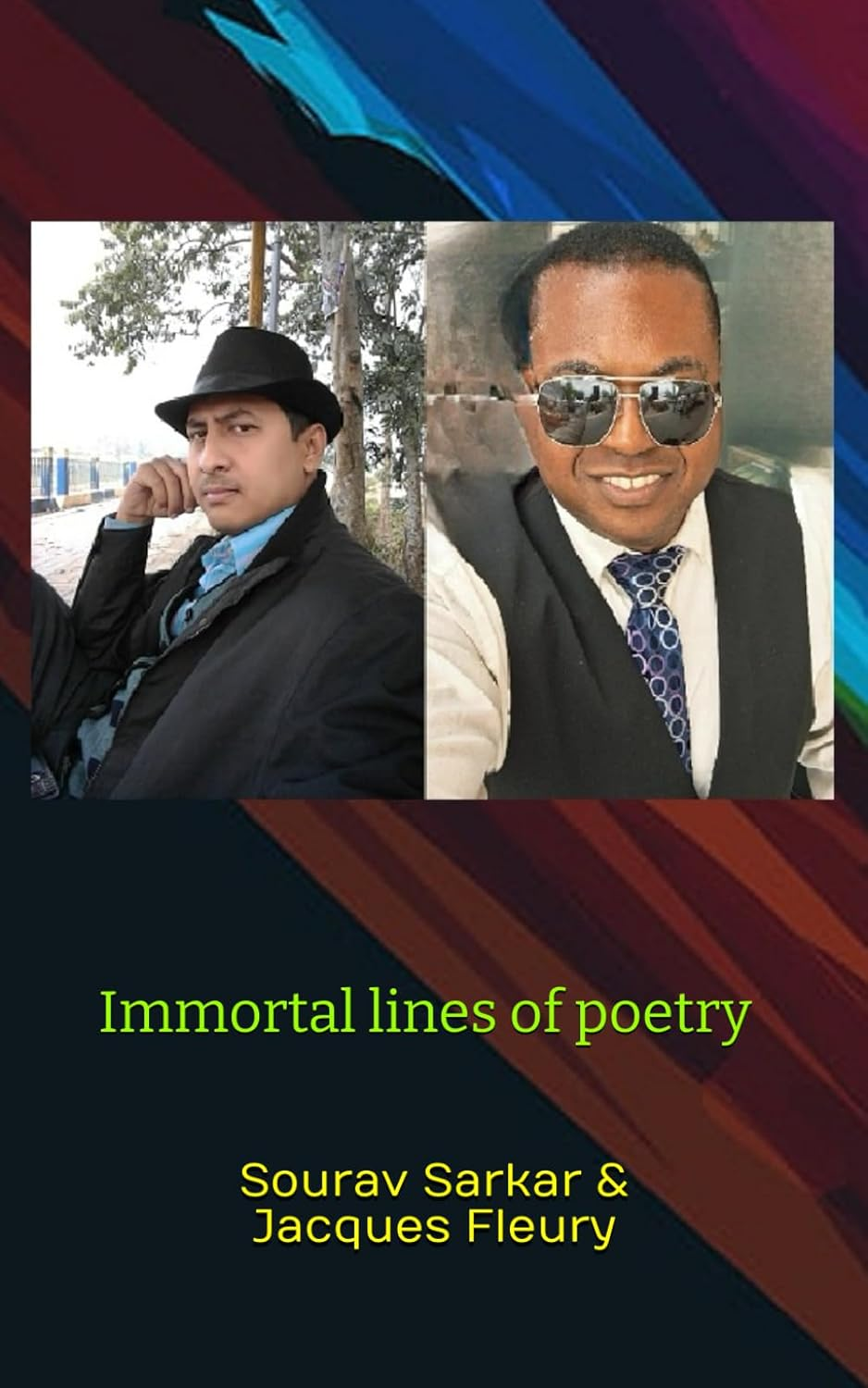
A collaboration between myself and internationally renowned poet Sourav Sarkar of India. The book presents us both as “2 Poets of the Common Era Literature Period” (a term Sarkar claims to have coined himself on Oct. 24, 2021 and is celebrated worldwide on its founding date yearly) and allows the reader an opportunity to “sample” our poetic styles and substance. It is at times a supple staccato or eroticism, at times mesmerizingly musical of humanism, at times visceral to its soul core but eventually reaches a crescendo to volcanic eruption of literary passion, hope and inspiration for our seemingly crumbling humanity. Here is a sample of one of MY poems from the book. Hope you check it out on Amazon. Merci beaucoup!
This month’s issue focuses on what’s going on inside of all of us, and how that shapes who we are. We’re going Beneath the Surface.
Image c/o Stella Kwon
Stella Kwon’s paintings explore dreams, childhood, fantasy, and the interiority needed for a creative life. Jacques Fleury’s sample poem from his new book Immortal Lines of Poetry looks into dreams and internal inspiration. Debabrata Maji’s poem traces his heart’s inner journey. Damon Hubbs tracks the odds and ends running through his mind while watching competitive tennis. Annabel Kim’s artwork explores and celebrates human and natural creativity. Ma Yongbo evokes the change of seasons, nature, and mortality.
Mark Young renders maps and nature into works of art in his ‘geographies.’ J.K. Durick speaks to intellectual experiences – the news, books, museums – and how we communicate ourselves to ourselves. Jasmina Saidova honors an inspirational teacher as Abdirashidova Ozoda explores possibilities for digital technology in early childhood education. Eshmamatova Shabbona traces the history and evolution of Uzbek literature and Munira Xolmirzayeva traces the history of Russian writing.
Eva Petropoulou Lianou praises the delicate elegance of Lily Swarn’s new poetry collection A Drop of Cosmos. Uralova Gulmira highlights themes of personal experience and motherhood in the patriotic writings of Uzbek poet Saida Zunnunova. Sayani Mukherjee reflects on being driven towards poetry in a full and changing world. Dr. Rasmiyya Sabir writes of romantic love, poetic inspiration, and the irrepressible drive to be heard.
Jakhongir Nomozov interviews poet Rustam Bekhrudi, who intends to capture and convey the resilient Turkish spirit in his writing. Mesfakus Salahin speaks to human psychology and the drive to live amid the allure of death. Mahbub Alam describes a night of discomfort due to mosquitoes, which he endures by thinking of people who have it much worse. Abdisattorova Hurshida’s short story highlights the dignity and self-determination and patience of the hardworking rural poor in Uzbekistan, even when facing death.
Hanen Marouani probes our internal emotional life with tenderness. Bill Tope uncovers the veil of a past sixth grade classroom where the students and teacher are full of inner and outer turmoil. Alan Catlin continues his surreal examination of the physical manifestations of work anxiety as Elbekova Nilufar warns of the danger to our eyes and psyches posed by Internet addiction. Emeniano Somoza Jr. reflects on what we lose by lessening the ups and downs of our emotional nature. Donia Sahab’s poetry probes the psychological torment and confusion Dr. Alaa Basheer alludes to in his painting. J.J. Campbell navigates loneliness with his trademark wit and cynicism.
Joana L.J. Milovanovic’s words bear witness to the psychological and physical damage domestic abusers inflict. Mykyta Ryzhykh’s characters find themselves subsumed by the crushing violence of a metaphorical “leviathan.” Alex S. Johnson reflects on his friendship with Runaways band member and visionary Kari Lee Krome and how the music industry elevates and chews people up.
Jakhongir Nomozov’s speaker reasserts himself after intense seasons of emotional pain and rejection. Soumen Roy highlights the importance of respect and patience in true love. Munisa Rustamova expresses gratitude for her mother’s constant love in a harsh world full of fake people. Alex S. Johnson and Kandy Fontaine assert their confidence in their way of living and loving and show how power is expressed through service and care, not abuse. Liderqiz demonstrates this ethic of service through a profile of Uzbek Information Service leader Dilbar Ashilbayeva.
Andela Bunos speaks of the universal human grief of lost love. Kristy Raines’ poetry expresses commitment to a romantic relationship despite being separated. Lola Ijbrater outlines the rise and fall of a romance through a series of flowers. Ken Gosse describes heartbreak through clever poems with increasing numbers of lines. Eva Petropoulou’s lines address intimate love and the beauty of forgiveness. Annamurodov Umarbek reflects on coming of age after losing his father.
Taylor Dibbert reflects on the impression Americans make while traveling abroad. Doug Hawley and Bill Tope present a humorous tale of unintended interplanetary cooperation. Duane Vorhees’ poetry deals with our humanity, the roles we play in life and who we choose to become to each other.
Abdel Iatif Moubarak’s words express solitude and the hopes and dreams of individuals and communities in an uncertain world. Abigail George reviews Nadine AuCoin’s horror novel Tucked Inn, a tale of survival and good overcoming evil. Justin Faisal, a Rohingya refugee from Myanmar and advocate for his fellow refugees, writes of his inner journey of perseverance and finding beauty in life. Sharifova Saidaxon reflects on similar sentiments, finding forgiveness and acceptance through her faith.
We hope this issue inspires you to dig into your inner psyche and uncover strength and reach for your hopes and dreams.
The wheat stalks breathe you in, Braid your letters for the evenings. And stir your songs the day they met Upon his face, the silence… the flock of stillness. Depart to where we began our journey, Indeed, the streams hold but fragments. To a time squandered, Forgive my death when I choose you, To the mercy of the devout, in protest, To the dwelling of the wound, The distance of desolation. And your endurance was to borrow From the star, the day of collapse’s rituals. Within you, the debasement of poems eludes, Towards the sunrise. And you quiet above some plains The languages of apprehension, In your sailing times. You soothe the blaze of solitude… cities, And pour into the eye the tears of reunion, Branches from the beginning we were, For the land of severance. We carry to it the beseeching letters, To write in love, The beloved’s spinning song. And you still swear by the earthquake, So as to prepare a new homeland, Which the questions lost in their lament, And the impossible bolted its gates With bursts of time that began to depart. You never left the harvests of remembrance, That we were quenching. With your silence, visions will not overflow The boundaries of emptiness. And we… Are in vain.
***
May God Strengthen You
When love confused you one day, And you melted into it, and you had no choice. That separation was coming for you, my heart, Anyway, may God strengthen you. Why did you obey him and walk with him? He got lost with you from the first step. You lived life after him, And the pain of his separation keeps you awake. When love called to you, You saw paradise with your own eyes, And you returned again with what’s inside you, In every glance, he makes you remember. Were his days a dream, or Was it a time that came and went? In it, my joy is absent from his presence, And my sorrow and worry destroy you. Believe me, a page has been turned, Like the hearts that were burned. From him, love and hearts intended To return to him again and command you. Anyway, may God strengthen you.
***
The Roofs of Houses
It peeks from the window of our hearts, And steps onto the paths that have drunk From its spring, the tales. Upon a thousand civilians who implore, And thousands of throats whose echo Is the roofs of houses. Their lament still embraces them, And gathers them, A million prayers, Except what it couldn’t contain. And you, who are ascetic within your prison, waiting For a glimpse of light, Just to caress your forehead. Your umbilical cord between you And the homeland, Knows you overcome your tears And split your chest for the cities, So that life may enter them, Free from the gloomy darkness clinging To every wall that the specter of silence Has demolished. These are thousands of throats whose echo Is the roofs of houses.
***
The Scars of Salvation
Let the halos of my heart fall from my brow, A light I thought I’d find while resting on the shoulder of the word, The one that hums a tune through the folds of this poem. Illuminate for others my journey, this bitter taste of a homeland’s pain, The anguish that fills it, stirring with every dawn That rises on a morning full of nonsense. The word was powerless then, Unable to forge a new space for confession, Or pluck a bejeweled pearl from its sky To gift to the poor, the orphans, the forgotten, Those on the brink of death. I know I am the zero from which all poets begin, The seed whose sprout only grew in the shadow of my ancestors’ verses. From them, I drew the strength to survive, Dreaming of their blissful, generous seas. I lean on them all with a pride that lifts me Into realms bright with the light of their wisdom, O Lady Poem. All I ever wanted from you was salvation, To end on your shores. I began you (or you began me) among the transients In a city whose streets had all gone dark, Forgotten by long wars, then awakened just once By the triumph of survivors, and drops of hope That thirst couldn’t defeat. Between tables of gunpowder and napalm, Scattered limbs and blood-stained walls, Jackets lie vomiting on the sides of ruins, With the words “I was here” scrawled upon them. A hemorrhage of questions. How I’ve longed for my poems to take them on, A path to grief and to release. I craft my shoot for the fated crowd, And belong to the march coming from those forgotten lands Hidden in the folds of shackles and prison cells, The torment of hungry stomachs, The gasping of tongues behind cries for departure, The absence of hope for a coming brilliance That carries on its face the radiance of the impossible. Lady Poem, I know glory in your proof. I know the secret in your river. This is how we meet, and with us, we meet A life that has no shrine, A life that only survived through an impossible bargain Between a bundle of thorns that grew just once From the pain of salvation. I am destined to live and to see the city Be the first to bless the burning heat of a step toward freedom, Swearing by the fading glory in its children’s eyes, The honeyed treasures flowing over a new homeland.