Night, winter
Night, winter
Cold stubble burns;
A gash of wound
Is bitterness
And a stealthy weather,
Which unfurls marks of hope,
As winter is just another season.
Ananya S Guha
Shillong
India

Night, winter
Night, winter
Cold stubble burns;
A gash of wound
Is bitterness
And a stealthy weather,
Which unfurls marks of hope,
As winter is just another season.
Ananya S Guha
Shillong
India
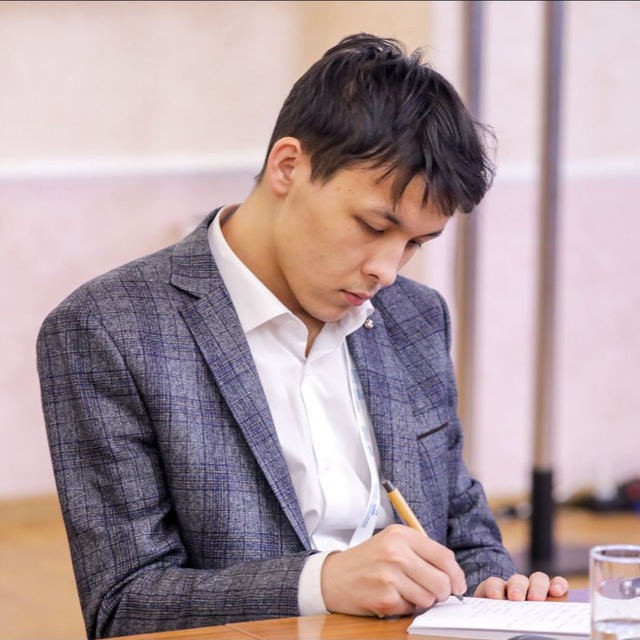
HONESTY KNOWS NO NATIONALITY
Muslimbek Abdurakhimov
Computer Engineering Specialist
Annotatsiya
Mazkur hikoyada kundalik hayotda uchraydigan oddiy savdo jarayoni orqali halollik, mas’uliyat va insoniylik kabi fazilatlar yoritiladi. Muallif Rossiyada tahsil olayotgan paytida quloqchin sotib olish jarayonida yuzaga kelgan kichik muammo haqida hikoya qiladi. Sotuvchining vijdonli munosabati, xaridor oldidagi mas’uliyati va halolligi voqea orqali ta’sirchan tarzda ochib beriladi. Asar insoniy qadriyatlarning millat va hudud tanlamasligini ko‘rsatadi.
Kalit so‘zlar: halollik, savdo madaniyati, mas’uliyat, insoniylik, sotuvchi va xaridor munosabati, ishonch.
Аннотация В данном рассказе через простой случай из повседневной жизни раскрываются такие человеческие качества, как честность, ответственность и порядочность. Автор описывает ситуацию, произошедшую во время покупки наушников в период обучения в России. Несмотря на возникшую небольшую неисправность товара, продавец проявляет честность и ответственность перед покупателем. Рассказ показывает, что такие человеческие ценности, как честность и добросовестность, не зависят от национальности и границ.Ключевые слова: честность, культура торговли, ответственность, человечность, отношения продавца и покупателя, доверие.
Annotation This story highlights values such as honesty, responsibility, and humanity through a simple situation from everyday life. The author describes an incident that occurred while purchasing headphones during his studies in Russia. Despite a minor defect in the product, the seller demonstrates honesty and responsibility toward the customer. The story emphasizes that human values such as honesty and integrity go beyond nationality and borders.
Keywords: honesty, trade culture, responsibility, humanity, seller–customer relations, trust.
Story
I study in Russia. Recently, I bought a pair of headphones. Since the distance was quite far, I asked the seller to deliver them to the place where I live (my rented apartment). He agreed and brought the headphones. I received the product, but the delivery person did not give me even 15 minutes to check it. Therefore, I had to test the headphones later. After he left, I tried them. Unfortunately, the volume control buttons did not work, although the rest of the headphones worked perfectly. I thought, “Never mind,” and decided not to tell the seller about it. After some time, unexpectedly, the seller himself contacted me on Telegram. He asked how the headphones were working. At that moment, I told him the truth — that the volume control buttons were not functioning.
The seller immediately called me and sincerely apologized. He then refunded the full price of the headphones. What surprised me the most was that he also told me to keep the headphones as a gift. Although I am still young, I have visited several countries. In those places, I have also faced various problems while shopping. In many cases, sellers would turn off their phones or simply ignore messages.
This incident proved something to me once again: honesty and conscience do not depend on nationality. Once again, I was impressed by the honesty of the Russian people.
About the Author
Muslimbek Abdukarimov is a computer engineering specialist with a higher education. He works in the field of modern technology. His writings reflect real-life events, human values, and meaningful situations from everyday life.

The Lake of Stars
By: Adham Boghdady – Egypt
Here…
Where the valleys stretch out to meet the horizon,
The mountains rose up to speak their eternal words,
And that lake slumbered peacefully,
Gazing with its wide smile
Upwards toward the sky—
The sky, which became a roof of serene blue,
Sent its color to the lake,
So its waves shivered in ecstasy,
And it burst into happy, hearty laughter.
***
At night,
The sky drew its curtain,
And the stars said:
“O Lake,
Let your surface now shine with pearls,
Be a brilliant mantle
That captivates the minds!”
***
The stillness of the valleys called out to me,
“Come to the lands that found their meaning in silence,
Where the water touches the lips of the stone,
In the Lake of Secrets.”
Fleeing the clamor of life…
I left behind the noise of the cities
And went to an invaluable clarity.
In the mirror of the water,
I saw a splendor
That time had not yet visited.
I swam like a soul wandering without a body,
Hovering around water made of silk.
It is the night of the inspiration of feeling,
At the Lake…
Where the voice of secrets unites with the pearls of the stars forever.
Hiding for hours
behind the ironing board
in the stuffy room at the back of the house,
body rigid with fatigue and fear.
How much longer?
Will they find her?
Burn her—as they did the others?
Outside, the voices of Nona and her mother,
nonchalance carefully masking naked fear.
In a corner of the room,
on the pallet-bed, Mahattaya—
Usually so loud with life,
whose kindness made the loneliness
bearable. Now lies, silent and stiff.
Paralyzed. Petrified.
She dozes, and dreams
of the highlands of her childhood.
The air fresh and spicy
like the tea she and Amma used to pluck,
Chilly nights in the little line-room,
squashed between Akka and Thambi,
Stomach hollow with hunger,
heart heavy with hope.
She came to Colombo
in the winter months of ’82.
Eyes dazed with the heat and hurry.
Crying herself to sleep, clutching letters from home—
“We bought shoes for Thambi, and school books,
medicine for Appa’s cough-
with the money you sent.”
Amma’s words—
Such a comfort and consolation.
Looking after Baba.
Baba—such a strange conundrum
of angel and devil: a temper erupting
like a burning cauldron.
Little fists beating her,
A tongue scalding her.
Yet, Baba—cuddling close, sharing sweets,
chattering endlessly, calling her name.
Baba now, crouching beside her
Behind the ironing board,
the mischievously wicked face—now wan.
Sent to the back room with sharp orders
not to speak so loudly in Tamil.
Voices. Violent, virulent, veering closer.
Loku Nona’s voice, calm.
“We’re Sinhalese.”
Silence.
I breathe again.
They are leaving…
But then—a rough voice.
“Where are your daughter’s husband and child?”
I stop breathing, pull Baba close—
eyes seared, heart raging.
Waiting for the flames
To rise, engulf—
And burn us,
Whole.
2. Rapture that Never Knew my Name
Slipping in guiltily,
like a would-be thief for sweets,
I stand, outwardly nonchalant,
behind the empty pews.
Memories flooding like a spring breaking free—
Sunday mornings,
lost in dreams while the priest intones,
knees gritty from kneeling on unswept floors.
Amma’s voice—tinny in its high pitch,
singing lustily to prudish hymns.
Rising, kneeling, crossing, genuflecting.
Waiting for the rapture
which never came.
Now, older than Amma was then,
inside that familiar, sacred space,
by chance, not choice,
I stand again, listening—
for rapture that never knew my name.
3. After our Laughter
He used to walk down our middle-class lane
every Saturday afternoon,
A boy my age—a barefoot scarecrow,
with a heavy sack of cow-dung.
Walking bravely,
a smile as bright as summer—
amidst the boos
and insulting names.
A smelly, funny creature selling cow-dung
to fertilize our plants.
Pausing in the midst of hide-and-seek, hopscotch,
badminton and blind-man’s-buff,
we laugh and cheer at this hilarious distraction
from our conventional, cosy, Colombo existence.
A cheerful clown with cow-dung.
Years wheel by,
neighbours scatter,
games give way to grown-up routines,
childhood memories blur into nostalgia.
Until, one Saturday afternoon—
A gleaming car.
A tall, polished stranger.
Something suddenly familiar
in that smile—as bright as summer.

The Role of Environment and Upbringing in Human Development and Personal Growth
Uzbek National University of Pedagogy, Primary Education Department, 3rd-Year Student
Abstract
This article analyzes the role of environment and upbringing in human development and personal growth from a pedagogical perspective. Personal formation is a complex and multi-factor process, in which the natural-geographical environment, social environment, family conditions, and purposeful upbringing play a significant role. The article explains, based on scientific evidence, how external factors influencing human development are interconnected, and how the environment impacts a person’s worldview, behavior, and life activities. The role of microenvironments, such as family and educational institutions, in a child’s development is particularly emphasized.
Furthermore, the article highlights the purposeful nature of upbringing and its leading role in forming positive traits, social skills, and moral qualities in a person. Through upbringing, it is possible to develop a person’s natural abilities, reduce the negative influence of the environment, and ensure the individual’s adaptation to society. The article demonstrates, with scientific evidence, that pedagogically well-organized activities contribute to intellectual, physical, and volitional development.
The study concludes that human development emerges from the harmony of heredity, environment, and upbringing, with upbringing acting as a leading factor. This article is of theoretical and practical importance for students in pedagogical fields, teachers, and specialists involved in the upbringing process.
Keywords: personal development, environment, upbringing, social development, pedagogical process, personality formation
Introduction
Human development and personal growth are among the most important and relevant issues in pedagogy. The progress of any society is directly linked to how the younger generation is raised, the environment in which they grow up, and the values instilled in them. The formation of a well-rounded individual is not a random process but a complex pedagogical and social process resulting from hereditary potential, environmental influences, and purposeful upbringing.
From birth, a person lives and develops within a specific environment, which includes natural-geographical conditions, social relations, family upbringing, and the education system. These factors play a key role in shaping a person’s worldview, behavior, interests, and attitude toward life. Initially, the child receives upbringing in the family, and later acquires social experience under the influence of school and society. Therefore, the environment serves as a natural field for personal development.
Modern pedagogy emphasizes that human development cannot be explained solely by innate abilities. A person’s capabilities, social activity, and moral qualities largely develop through the upbringing process. Upbringing is a key factor in purposefully guiding personal development, fostering positive traits, and raising an individual adapted to societal needs. Educational institutions and teachers play a crucial role in the intellectual and moral development of the younger generation.
In today’s era of globalization and increased information flow, individuals are exposed to various social influences. Therefore, studying the interaction of environment and upbringing scientifically and identifying pedagogical conditions that positively affect personal development is highly relevant. The aim of this article is to analyze the role of environment and upbringing in human development from a pedagogical perspective and to highlight their interconnected influence on personality formation.
The Role of Environment
Personal formation is a continuous and complex process resulting from the interaction of multiple factors. In pedagogy, environment, upbringing, and personal activity are recognized as the main factors influencing human development.
These factors are closely interconnected, and their harmony ensures comprehensive personal growth.
The environment forms the natural and social foundation of human development. It includes external conditions, social relations, lifestyle, and life events surrounding the individual. The natural-geographical environment affects a person’s way of life, work activities, and even character traits. Climate, living area, and natural conditions influence daily life and activity patterns. For example, the habits, work activities, and adaptability of people living in different regions vary depending on their natural surroundings. Thus, the environment acts as an indirect factor influencing personal development.
Microenvironments, such as family, occupy a special place in personal development. The early years of a child’s life are spent in the family, where initial ideas, behavior, and attitudes are formed. Relationships among family members, moral values, and educational approaches significantly affect the child’s psychological and moral development. Human qualities such as affection, respect, and responsibility are primarily instilled through the family environment. A child raised in a positive family setting adapts quickly to society, develops self-confidence, and grows into a socially active individual.
The social environment is another key factor in personal development. Social relationships, cultural values, laws, and interactions within society broaden a person’s worldview. Through interaction with others, individuals gain life experience, prepare for work activities, and adapt to societal requirements. Educational institutions are a vital component of the social environment, where students not only acquire knowledge but also learn to collaborate, assume responsibility, and understand social values.
The Role of Upbringing
However, environment alone does not determine personal development. Upbringing serves to purposefully guide human development. Its key characteristic is its goal-oriented nature. Through educational activities organized by teachers and mentors, positive moral qualities, social skills, and life values are developed in individuals. Upbringing enhances a person’s potential, brings out their abilities, and helps them grow into a socially valuable individual.
The upbringing process not only imparts knowledge but also enriches the inner world, strengthens volitional qualities, and fosters diligence. Many traits—such as responsibility, patience, discipline, and perseverance—develop through upbringing. A well-structured educational and upbringing process also supports physical development and forms healthy lifestyle habits.
Moreover, upbringing helps mitigate or eliminate the negative influence of the environment. A child left unsupervised or exposed to a negative social environment may develop behavioral problems. Pedagogically well-organized upbringing prevents such issues and guides the individual correctly. Therefore, cooperation among school, family, and society is crucial for effective upbringing.
The Role of Activity
Activity plays a distinct role in personal development. Through activities, individuals demonstrate their abilities and acquire new skills. In childhood, play is the primary form of activity, while during school years, learning and work activities become central.
Conclusion
In summary, human development and personal growth are complex, multi-factor, and continuous processes. Environment, upbringing, and personal activity interact harmoniously to influence development. The environment provides natural and social conditions, while upbringing purposefully directs these opportunities to form positive traits. Family environment, educational institutions, and social relationships in society are particularly important in shaping worldview and moral perspectives. Pedagogically well-organized activities support intellectual, moral, physical, and volitional development. Age-appropriate progression of activities fosters growth as an individual.
Educational efforts carried out in cooperation among family, school, and society are essential for raising well-rounded, independent, and responsible individuals.
Human development is thus a unified process shaped by the interaction of environment and upbringing, in which personal activity also plays a vital role. Through purposeful pedagogical influence, each individual’s potential can be realized, enabling them to mature into a capable person who contributes to societal progress.
References
R. Mavlonova, N. Voxidova, N. Rakhmonqulova, History of Pedagogical Theory. Tashkent, 2010.
Daminova Sevinch
Born in 2006 in Shahrisabz district, Qashqadaryo region. She graduated from Secondary School No. 72 in Shahrisabz district, Qashqadaryo region. In 2023, she became a student at the Uzbekistan National University of Pedagogy. She has volunteered at the “Pinnacle Science” Republican Scientific Center.
Her scientific articles have been published in prestigious journals from the United States, Singapore, and Russia. She is the holder of more than 50 diplomas and certificates. In 2025, she received the “Future Star” statuette organized at the level of the Commonwealth of Independent States.
She is a recipient of the “Advanced Generation” breastplate and the “High Devotion to Science” breastplate. She also won 1st place and the “Friendship” badge in the “Mosaic of Nations” competition held by the “Jadidlar” International Scientific Research Association. She has earned more than 50 international certificates and is the author of several poems and international articles.
Mother, Please Do Not Call Me Your Child
I left my classes and hurried home,
For I missed my paradise so much.
With longing in my eyes I opened the door,
But found my mother in the cotton fields.
I entered the house and spread the table,
My stomach was empty, I prepared some food.
If I did not return for dinner,
My mother would wait with hardened bread.
I called her once in between,
She could not answer, I could not reach her.
After some time from an unknown number,
My phone began to ring.
I picked up and said hello,
It was my mother, and I was stunned.
While I sat in a cool and quiet room,
My mother was picking cotton in the heat.
Her legs ache, her body is weak,
Her delicate hands are wounded and cracked.
The pains and sorrows that trouble my mother,
Let them come to me, but do not hurt her.
Her hair has turned white, wrinkles mark her face,
Yet even so, she remains my paradise.
While her peers wear fine silk and satin,
My mother’s head is never free from hardship.
My goal is to build a beautiful life for you,
One that suits only you and your comfort.
But if from now on I remain a burden to you,
Mother, please do not call me your child.
On the Pier
I gazed at a moment
From the Marblehead shore
On the pier’s end
A thick muscled arm
Thrust into lake Erie
When the early morning sun
Bounced on the horizon
An infant Apollo tossing
Flecks of gold leaf paint
Across a restless surface
A father and son cast
Then hook and net two bass
Their rods bowing in unison
Just as a mom and baby
In her stroller arrive
A Madonna and child
Bringing luck
The men seem to want
To rub the baby’s head
With fishy hands
The fisherman and their catch
Pose for a snapshot
The mouths of the fish
Sucking the air for water
Open as wide as
The men’s boyish grins
And an old couple arrive
On skinny weathered legs
In time to see the fish
Returned to the waves
Their scales for a moment
Throwing a reflection of light
Waiting for Dad
Not so long ago when Dad was spotting timber
I’d follow him up
Steep wooded hills
And beg him to wait
As I caught my breath
His silhouette ablaze
By the sun at the crest
And now after he’s lit up
And sucked down the smoke
Of five decades of cigarettes
The white sticks tally marks
Of hours days and years
After I quit worrying about
Cancer emphysema and stroke
He helps me move from Main Street to Hill Road
And as we dance
With a fat mattress
He asks me to wait
At the top of the stairs
His lungs clutching at air
His chest and
My heart heaving
For Thirty-Eight Years
After thirty-eight years
I need a few pills
To ease the ache
Of love’s history
There wasn’t much schooling
For love when I was growing up
For thirty-eight years
I’ve worked at love
Like being tied to the line
For ten and twelve hour shifts
Or for thirty-eight years
Shoveling corn
Or cow shit all day
And digging post holes
For putting up fence
After thirty-eight years
I see love easily
Wrapping warmth
Around my heart
When my baby daughter
Tosses me a smile
Like she’s been doing it
For thirty-eight years
Pills
Clasp the comfort
Of an amber bottle
When shaken distracts
Like a baby’s rattle reads
Take two tablets twice a day
To smile permanently
An immaculate plastic smile
To recite the right words
At the right time
To the right face
To get noticed and promoted
Gratified and acquitted
To get what’s wanting
When it’s craving
Where it’s lacking
There’s no need to gnaw
On the bitter pretty colors
There’s no need to swallow hard
Kiss them before they slide
Over the tongue and slip
Smoothly into the belly’s nest
Shoving despair aside
There’s no need to notice
A hollowness in a promise
Surging through the veins
With ardent seduction
They’re absolutely-iron-clad-guaranteed
To keep a head serene
In My Pocket
I carry pain in my pocket
A small smooth stone
Once an ugly jagged rock
Dulled and polished
By the stream’s hard current
My hand finds it easily – as predictably
As winter drifts and spring buds
And occasionally I remove it
From my denim reliquary
Open my fist and in my palm
Exhibit it as a famous gem
Its mysticism as potent
As a splinter of the true cross
I chat casually about its history
As a bored museum guard
Or as an old veteran who shows
A wide-eyed boy the bullet
Which pierced his chest in the Pacific
On a few winter days each year
I allow the tears to fall
Like snowflakes drifting
Large and reluctantly
From heaven to earth
To wet the stone
And wear it away
Slightly more
Five Stitches
Five stitches in my back
I can’t reach the wound
Only you can dress it
Each morning before work
With ointment bandage and tape
In hurried maneuvers
Or in a slow loving ritual
We do this together as with
Groceries supper dishes laundry cleaning
Raising our children
And when the day is finished
Falling asleep entwined
In front of the TV
Or making love
With drowsy tenderness
And with a little passion
About the Author.
David Sapp, writer and artist, is the recipient of Ohio Arts Council Individual Excellence Grants for poetry and art and is a Pushcart nominee. His poetry and prose appear widely in the United States, Canada, the United Kingdom, and Asia. His publications include articles in the Journal of Creative Behavior; several chapbooks; a novel, Flying Over Erie; a book of poems and drawings, Drawing Nirvana; and four books of poetry and prose, Love and History, Acquaintances, A Precious Transience, and a memoir titled The Origin of Affection, winner of the Violet Reed Haas Poetry Award.