Dr. Kareem Abdullah reviews poetry by Eva Petropoulou Lianou

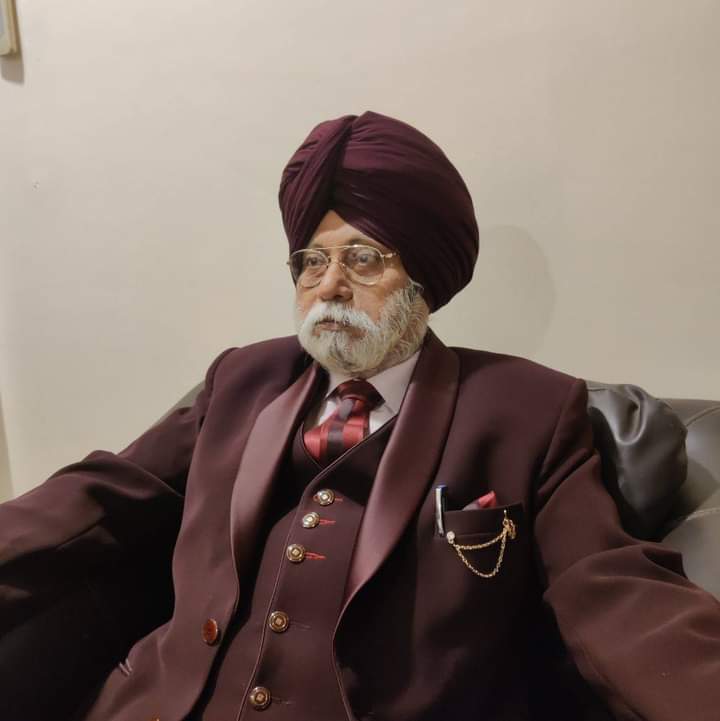
Older man with a bald head and a gray jacket and blue tie seated in front of a bookshelf.

Critical Analytical Reading of “Voices” by Eva Lianou Petropoulou – Greece .

By : Kareem Abdullah – Iraq .

Introduction: Eva Lianou Petropoulou’s poem “Voices” offers a profound exploration of the paradoxical nature of human emotions and responses in different situations. The poem presents a series of thought-provoking questions, drawing attention to the complexities of human behavior in the face of both joy and suffering. Through its introspective tone and concise structure, the poem challenges the reader to reflect on the deep connections between emotional expression, the human mind, and the concept of free will.

Analysis:

Title – “Voices”: The title immediately introduces the theme of communication and internal dialogue. “Voices” can be interpreted as a reference to the various calls for help, freedom, and peace that people make, but also to the internal voices that dictate how we react to different emotional states. The plural form of “Voices” suggests the multiplicity of perspectives and experiences, implying that the poem is not only about individual experiences but also about collective human emotions and struggles.

Theme of Contradiction in Human Emotion: The central theme of the poem revolves around the contradiction in human emotional responses. The poet asks, “But why we cry in our happy moments / And laugh…..when we are in a very difficult situations?” This rhetorical question serves as a powerful paradox that challenges the reader’s assumptions about the nature of human emotions. Typically, crying is associated with sadness, and laughter with joy; however, the poet disrupts these associations to point out how human beings sometimes react in unexpected ways. This highlights the complexity of human psychology and the ways in which people navigate their emotional landscapes.

Self-Defense and Human Instincts: The poet suggests that perhaps this contradictory emotional behavior is a form of self-defense. The line, “Maybe this is the self defense of our organism,” introduces an interesting psychological concept: the idea that our emotions, even in their paradoxical forms, may serve as protective mechanisms. This idea evokes the notion of the fight-or-flight response and the instinctual ways in which humans protect themselves from stress, trauma, or emotional overwhelm. The reference to “self-defense” could imply that emotions such as crying or laughing in inappropriate contexts might be subconscious ways of coping with internal or external pressures.

Exploration of the Human Brain: The line, “Still discovering the human brain,” reveals the poet’s awareness of the ongoing research into human cognition and emotion. The statement highlights the mystery of the human mind, which is still being explored by science. It suggests that despite our advancements in understanding the brain and human behavior, there is still much to uncover about the complex mechanisms that govern our thoughts, feelings, and actions.

The Concept of Free Will: The closing line, “What is certain… / It is that we have free will,” serves as a pivotal moment in the poem. After exploring the unpredictability of human emotions, the poet affirms the certainty of free will. Despite the paradoxical nature of human emotional responses, the poet suggests that we still retain the power to make choices and exert control over our actions. This line introduces an element of empowerment, emphasizing that, regardless of how complex or contradictory our emotions may be, we are not entirely at their mercy. The affirmation of free will serves as a reminder of human agency in a world that can often feel chaotic and uncontrollable.

Conclusion: Eva Lianou Petropoulou’s “Voices” offers a rich and thought-provoking meditation on the complexity of human emotions, the mysteries of the brain, and the role of free will in shaping our responses to life’s challenges. Through its paradoxical statements and rhetorical questions, the poem invites the reader to reflect on the deeper, often contradictory, nature of human behavior. The poem’s ultimate message—despite the uncertainty and unpredictability of human emotions—is that we, as individuals, have the capacity for free will and can exercise control over how we respond to the world around us. In doing so, the poem not only engages with deep psychological and philosophical questions but also affirms the resilience and agency of the human spirit.

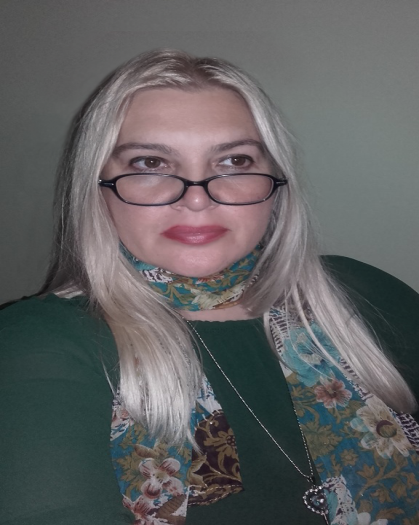
Middle-aged white European woman with green eyes, thick blonde hair, and a green sparkly sweater.

Voices

So many people cry for help

Cry for freedom

Cry for peace

But why we cry in our happy moments

And 

Laugh…..when we are in a very difficult situations?

Maybe this is the self defense of our organism

Still discovering the human brain

What is certain…

It is that we have free will

Eva Lianou Petropoulou ( Greece )

She is an awarded author and poet from Greece with more than 25 years in the Literary field published more that 10 books.

Her poems are translated in more than 25 languages. She is President of creativity and art of Mil Mentes Por Mexico Association

Greece Mexico 

Official candidate for Nobel Peace prize

2024

Poetry from Mark Young

Spokane

Disillusioned by

what was going

on around him

he tried to open

his life in another

window but was

never able to get

past the pop-ups.

Career Paths

At thirteen he decided to become a prophet. By nineteen he had died & been reborn five times. Nobody took him seriously. Youth is a hard barrier to overcome.


He then decided to emulate the form of regeneration that seemed to have been most successful for generating prophet recognition & had himself crucified. Unfortunately, one of the nails was rusty, & during the transition period he contracted tetanus. He came back unable to speak, & essentially illiterate since so certain had he been of his destiny he had neglected to acquire much of an education.


Nobody wants a prophet who cannot communicate his prophesies. He spent the rest of his allotted three-score & ten in silence. Alone.

nOne-step

Nothing ad-

ventured

nothing

gained

when you

rely on

toxicology

instead

of taste.

Otherwise

partly because the sun

was in an

inclement meridian

partially because

the moon was

in the wrong

quadrant of the sky

particularly because

the cusp between

daydream & nightmare

was a silver ribbon

with elastic properties

Ella in Budapest

Something I have always

found disappointing,

hearing a singer in concert,

hearing a recording of that

singer somewhere else, some

years later. The same song,

The Lady is a Tramp, music by

straight George, lyrics by gay

Ira, Ella Fitzgerald singing.

The voice a little harsher than

I remember but the phrasing is

the same. I sing along. We impro-

vise together. In unison. I know

what notes will come next.

Story from Elan Barnehama

B-SIDE

“Isn’t that your sister?” Harry said to Ben as they left school on a warm May afternoon.

“What,” Ben said. “Where?”

“Over there,” Harry said, pointing toward a green VW Bug. Emma was sitting behind the wheel, waving at the boys. “Did you know she was coming?”

“Why is she here?” Ben said, as they wove their way through clusters of junior high students released for the day.

“Hey guys,” Emma said as they approached.

“What are you doing here?” Ben asked.

“Are you hungry?” Emma said.

“I could eat,” Harry said.

Emma laughed. “I’m sure you could. But if it’s okay with you, I need some time with my little bro.”

“That’s cool,” Harry said. “I have a lot of homework.”

Emma pushed open the passenger door. “Get in. I’m starving. Let’s go to the Empress.” She reached into the glove compartment and removed a cassette, which she handed to Ben. “That’s for you. I made it last night.”

Ben read the names of the songs. “Fire and Rain, Gimme Shelter, Bird on the Wire, Universal Soldier. Cool. Can’t wait to listen.’

“You’re going to love Bird on the Wire.”

“What are you doing here?” Ben asked.

“I wanted to see you.” Emma turned up 68th Street toward Queens Boulevard. “There’s a B side too.”

“Aren’t you in school?” Ben asked.

“I have a break before finals.”

“Do mom and dad know you’re coming?”

“I’m not coming home. I just came to see you.”

“Cool. Should I be worried?”

“You worry too much.”

“Maybe. But it’s a five-hour drive. Each way.”

Inside the Empress, they settled into a booth, and Emma ordered a grilled cheese and a slice of blueberry pie. Ben ordered the same.

“You don’t seem happy to see me,” Emma said.

“I am happy to see you.” Ben took a sip of soda.  “I just wasn’t expecting you.”

“It’s a surprise. That’s how surprises work.”

“Is that the only reason?” Ben asked

“How’s school?”

Ben shrugged. “Fine.”

“Junior high is the worst. High school sucks too. But you will love college.”

“Do you?”

“I do. The people I’ve met, the friends I’ve made are all interesting and full of ideas and goals. I like my classes. I just don’t know what I’m doing there. But you’ll know what you want to do. You love math. That’ll make a difference.”

“Everyone says that to me. I’m good at math, and it comes easy. But what if I want to do something else?”

“Then you’ll do something else.”

The waitress topped off Emma’s coffee. Ben watched as Emma poured and stirred the cream. He liked the sound of the spoon against the porcelain. He noticed that Emma’s pink nails were jagged and uneven. She put down her spoon and brought the cup to her lips.

“I’m not quitting,” she finally said. “Quitting is a bad habit that’s hard to break. That’s not what’s going on.”

“What is going on?” Ben said.

“If something is not good for you, then you need to leave it behind and find something else. I don’t have any clue what I’m doing, or what I want to do. And I’m lucky. I don’t have to worry about the draft if I quit.”

“Sounds like you’re quitting.”

“I’ll finish the semester and then figure it out. I need to find a purpose for being there. For my life. And I haven’t found it.”

“Yet,” Ben said.

“Yet,” Emma said. “Let’s go to the pond.”

Emma drove through the neighborhood to Flushing Meadow where they found a bench.

“Remember when dad took us here so he could teach you how to ride a two-wheeler?”

“Not really,” Ben said.

“You were only three,” Emma said. “It came so easy to you.”

“That means you were nine. That’s why you remember. I do remember the time you talked me into riding our bikes to Central Park. Down Queens Boulevard. Across the 59th St. Bridge. It was awesome.”

“That was such a fun day,” Emma said.

They sat together in the park, looking out toward the pond. A breeze sent ripples across the water. Ben took the tape out of his pocket.

“The B-side is just as good,” he said, looking up. “I can’t believe you made a mix tape without a Dylan song. Might be a first.”

“I think you’re right. I wanted to add one from his new album, Nashville Skyline, but I need to listen to it more. Have you heard it?”

“They play a few cuts on the radio. I like the one with Johnny Cash.”

 Emma leaned back, staring at the sky and said. “I’ll go back for now.”

“What?”

“I’ll ace my finals,” Emma said. “Maybe I’ll go to law school and work pro bono for draft evaders and death row inmates.”

Ben looked at her. “Would that make you happy?”

“Happiness is fleeting. Purpose isn’t,” Emma said. “Maybe I’ll go live in Paris and be a writer like Baldwin.”

“Is he a friend of yours?”

“I wish,” she said. “He’s a great writer. You should read him. I’ll get you one of his books. Did you finish, On The Road?”

“Twice. I love it.”

“I’ll bring you The Fire Next Time, when I come back.”

“How would I see you, if you go to Paris?” Ben said.

“You should come back to school with me. Yes. That’s what you should do. We’d have so much fun.”

“You do realize I have school,” Ben said. “And we’d have to tell mom and dad. And don’t you have finals to study for?”

“I know. I know. I just thought it would be fun.”

“It would be fun,” Ben said.

Emma sighed and stretched her arms above her head. “I should take you home.”

As they walked back to the car, Emma jingled her keys. Ben watched her, memorizing the way she moved, the way her shoulders didn’t sway, as if she was holding onto something heavy, and didn’t want to let go.

Elan Barnehama has published two novels: Escape Route and Finding Bluefield. His flash fiction collection is forthcoming in January 2026 from Poets Wear Prada. His writing has appeared in numerous publications, including ParisLitUp, Synchronized Chaos, 10×10 Flash Fiction, Boog City, Jewish Fiction, Drunk Monkeys, Rough Cut Press, Boston Accent, Red Fez, Syncopation Lit, HuffPost, public radio, and more. Elan served as the flash fiction editor at ForthMagazineLA, a radio news reporter, and was a mediocre short-order cook.

Travel Essay from Doug Hawley

Seen In Eastern Oregon                                       

Eastern Oregon is defined as east of the Cascade Mountains.  The east/west divide is political and topographical.  The fauna and flora and climate differ as well.

Many years ago, it could have been 2010, I went with a group of nature guides from the Portland Oregon area to an interesting historical site close to the Northeastern Oregon city Baker.  The main attraction in nearby Sumpter was the remains of an odd gold mining operation that operated from 1934-1954.  A dry land dredge created its own stream while running rock through the dredge.  Workers picked gold from the rock that passed through.

As interesting as that was, what caught my attention was a scene at the yard of a Sumpter resident.  A dog on a leash was barking at a deer peacefully munching on edibles in the yard.  The drama looked like it could be a nightly show.  After he had enough of the relentless barking the resident of the house came out to shoo the deer away.  The dog relaxed.

That wasn’t the only example of games animals play.  When we visited the Malheur National Game refuge in Southeastern Oregon we witnessed a coyote stalking a pheasant.  When the coyote got close the pheasant would fly twenty feet way.  We watched the slow motion unsuccessful pursuit for a few minutes, but it looked like the show could go on all day so we moved on to other wonders of nature.  Imagine a slow motion version of Wiley Coyote and the Road Runner.  Beep Beep.

On another occasion we found what appeared to be a flattened road runner.  A coyote didn’t get it, but it may have failed to Dodge a Maverick, Cougar, Impala, or other animal-named automobile.

Going through South Central Oregon just north of Nevada, we have seen herds of antelope (more accurately pronghorns).  They are the fastest land animal in the USA.  They evolved when dire wolves were around so they needed to be a little faster, and the excess speed has survived the demise of dire wolves.

The bittern is a bird that stays safe by standing head tilted up in reeds and is hard to discern from its surroundings.  It is good at hiding but we saw one.

The landscape east of the Cascades is much different.  The trees are different and smaller.  The juniper, sage brush, and horned toads (actually a lizard made famous by Yosemite Sam – I’ve run across a few) won’t be found in Western Oregon.

The differences between East and West are partly from climate differences and extent and timing of volcanic activity.  Western Oregon has a moderate climate with a lot of rain.  Eastern Oregon is arid and much more extreme.  Volcanoes made both Crater Lake National Park and Newberry Crater National Monument, home to East and Paulina Lakes, a frequent summer vacation for my family in the 1950s.  On a much smaller scale, there are the lava tubes and ice caves which were formed by lava vents.  Lava River Cave is over a mile long and open to visitors.  The various ice caves can keep ice for much of the year when the outside temperature can reach 90F.  In earlier times they provided Bend Oregon with ice in the summer.

Eastern Oregon – it’s something else.

Announcement

The next issue of Synchronized Chaos Magazine will come out on April 5th.

If you’re in the Los Angeles area, please come see us at Chevalier’s Books on Saturday, March 29th at 6pm!

Synchronized Chaos’ Second March Issue: Sanity Break

Blue, full cup of coffee on a light green saucer with some bits of biscotti.
Image c/o Kevin Phillips

In March we will have a presence at the Association of Writing Programs conference in L.A. which will include an offsite reading at Chevalier’s Books on Saturday, March 29th at 6 pm. All are welcome to attend!

So far the lineup for our reading includes Asha Dore, Douglas Cole, Scott Ferry, Linda Michel-Cassidy, Aimee Suzara, Reverie Fey, Ava Homa, Michelle Gonzalez, Terry Tierney, Anisa Rahim, Katrina Byrd, and Cindy Rinne.

Chevalier's Books. Front of the store with glass windows showcasing all sorts of books. Store's name is in gold script letters on a dark pink painted background.

Author Justin Hamm is hosting a FREE online literary event the weekend of AWP, known as StayWP. This will include author talks, informative panels, book launches and networking!

To register, please click here: https://docs.google.com/…/1FAIpQLSe0jqgxfQn…/viewform…

Black on yellow announcement for STAY WP on March 28-30th, typewriter clip art picture on the right.

Poet and essayist Abigail George, whom we’ve published many times, shares the fundraiser her book’s press has created for her. She’s seeking contributions for office supplies and resources to be able to serve as a speaker and advocate for others who have experienced trauma or deal with mental health issues.

Also, the Educational Bookshop in Jerusalem, a store that has the mission of peaceful dialogue and education, invites readers to donate new or gently used books (all genres) that have been meaningful to them, with a note enclosed for future readers about why the books were meaningful. (The books don’t have to be about peace or social justice or the Mideast, although they can be). Please send books here. US-based Interlink Publishing has also started a GoFundMe for the store.

Eva Petropoulou Lianou shares the Dylan Thomas poetry contest and her own poetry launched off to the Moon on the Artemis mission as part of a collection.

A new book, Poetry Mexico, China, Greece, a collection from contributors Jeannette Tiburcio Vasquez, Yongbo Ma, and Eva Petropoulou Lianou, has just been released.

Our April 1st issue will be crafted by co-editor Kahlil Crawford. He’s a poet, musician, and essayist who has put together previous issues on Latin Culture and Electronic Music.

********************************

This issue’s contributors seek balance and mental health by journeying into their pasts, the world’s pasts, into nature, into community, heritage, romantic, and family love. Others find Sanity Breaks in the subconscious, poetry, and art of various kinds.

Tiny bee drinking the nectar of a delicate blue flower in a whole bunch of them on some green grass.
Image c/o Linnaea Mallettte

Marjona Xushvaqtova celebrates the beauty and energy of spring. Shamsiya Khudoynazarova Turumnova takes joy in the fact that winter is dissipating and warmth and growth are returning.

Anna Keiko’s paintings bring a bit of off-kilter color and joy to nature and childhood. Kylian Cubilla Gomez’s photography presents joyful, colorful images of childhood play.

Brian Barbeito conveys the comfort and nostalgia of a small town that seems forgotten by time. Nilufar Anvarova remembers a joyful morning listening to roosters and smelling basil in a country village. Sayani Mukherjee also finds joy in moss, trees, and thatched roof cottages in her piece “Earth’s Song.” In another piece, Brian Barbeito shares intuitions and reflections from a day of walking his dogs in the snow.

Shukurillayeva Lazzatoy translates a poem from Uzbek writer Alexander Faynberg lamenting human-caused environmental destruction and analyzes the literary elements present in much of Faynberg’s work.

Ibragimova Rushana discusses the effectiveness of online language learning programs. Shahnoza Ochildiyeva describes the science of translation and the contributions of Ozod Sharafiddinov to the field.

View out a train window of grass, train tracks, gray rocks, a pole, and distant houses on a rainy day
Image c/o Erene Wong

Shukurillayeva Lazzatoy translates a poem from Alexander Faynberg about always searching for a distant shore, as well as another Faynberg work about finding hope and strength to continue a long journey.

Stephen Jarrell Williams speaks to the shared journey of finding meaning throughout one’s life. Grant Guy contributes musings on relationships and the passage of time as Daniel DeLucie reflects on how time marches relentlessly for us all.

Azamat Abdulatipov highlights how Uzbekistan pays national attention to youth issues through their student development programs. Gulnozaxon Xusanova reminds us to celebrate youthful achievements.

David Sapp draws upon classical art and music to trace a man’s journey towards maturity. Alan Catlin views art and landscapes through the eyes of a variety of well-known international artists. Norman J. Olson seeks out art old and new in London and Italy.

Joshua Martin evokes the subconscious behind-the-scenes consideration of thoughts and sensations in text that reads more like code than writing. Vernon Frazer clangs words together into a street corner symphony. Mark Young’s “geographies” intertwine color, shape, line, and form in unexpected ways. Peer Smits creates abstract images where thick lines and stamps color white canvases, and where posters blur and dance into rippled reflections.

Surreal image of a profile view of a woman with long dark hair curling upwards in a moon shape and a background of gray, black, and brown. Her eyes are closed.
Image c/o Circe Denyer

Mark Murphy illuminates the power of art and imagination to inspire people to claim agency in a world where much seems historically inevitable. Jasmina Makhmasalayeva urges people to form their own self-concepts apart from societal pressure.

Jacques Fleury posits a “resume” for a Black street thug in a way that troubles and questions stereotypes. Isaac Aju presents a tale of a brave student who stands up to institutional disrespect.

Taylor Dibbert highlights the need to write creatively for joy, not for money. Ivan Pozzoni’s work speaks to the struggles of the creative artist in a society dampening creative urges and to romantic love between people not afraid to live fully embodied and present.

Alaina Hammond’s play dramatizes the struggle of a young woman choosing between a steady and comfortable family life and the promise of passionate love. Natalie Bisso’s poem illustrates a tender and intense romantic attraction. Yusufjonova O’gilkhan’s tender short story explores the love between a brother and sister.

Duane Vorhees takes a lexical flight of fancy through nature and romantic attraction. Isabel Gomez de Diego’s photos weave together nature, romantic and family love, and religious devotion. Eva Petropoulou Lianou honors mothers through a poem translated to Arabic by Egyptian poet Ahmed Farooq Baidoon. Musurmunova Gulshoda honors parents, friendship, country and heritage, and teachers. Eva Lianou Petropoulou celebrates friendship and mutual respect among women.

Row of candles burning in pitch black darkness.
Image c/o George Hodan

Poet Joseph C. Ogbonna references the love, comfort and solace he finds through his faith. French poet Timothee Bordenave speaks to his love for the faith-infused atmosphere of Paris.

Mesfakus Salahin speaks to a tender and poetic love, and also describes the joy of authentic love that does not match poetic expectations. Lilian Dipasupil Kunimasa also addresses true love as opposed to exploitation and how reaching maturity will help people figure out the difference, along with the need for universal compassion and empathy.

Kathleen Hellen highlights the fragility and tenuousness of the bonds that connect us. Bill Tope’s short story speculates on the many might-have-beens of a life cut tragically too short.

Mykyta Ryzhykh highlights the devastation of losing years of life to war and grief, blind but able to sense a tree losing leaves and a world that “still remembers the shape of our bodies.” Z.I. Mahmud analyzes the anti-war sentiment of Bertolt Brecht’s play Mother Courage and Her Children by showing how hardship and violence can change or flatten a person’s character and feelings. Umid Najjari’s poetry addresses war, love, loss, and grief.

Eva Petropoulou Lianou raises awareness of how domestic violence can start with control and possessiveness before physical assault. Mahbub Alam writes of his concern for his homeland of Bangladesh where women and girls face rape and assault. Linda S. Gunther’s short story deals with a woman recovering from and reclaiming her self-esteem after a breakup with a powerful man.

Fantastical image of a green monster's hands with red fingernails covering a woman's face. You can see her eyes peeking out. Titled "Depression."
Image c/o Linda Leani

Orinbayeva Dildara reflects on how love has inspired her poetry, but not brought her happiness. Murodillayeva Mohinur expresses the rage and pain caused by betrayal. J.J. Campbell’s work captures ennui and frustration within lonely suburbs.

A fresh installment of Grzegorz Wroblewski’s poems, translated from Polish to English by Peter Burzynski, arrives with surreal and strangely humorous disillusionment about modern society and life in general. Naaman Al-Gharib laments how the modern intellect has descended into petty selfishness and solipsism rather than expansive thought.

Poet Pat Doyne speaks to history’s cycles repeating in the modern world and how easy it is to lose hard-won liberties. Daniel De Culla lampoons and apes Donald Trump in a satirical romp.

Sharipov Dilshod Bakhshullayevich outlines how to maintain one’s sanity and civility in a world that can test your patience. Maja Milojkovic relates how she’s mindfully and carefully maintaining her wisdom and kindness and how she urges the world to do the same, as Mirta Liliana Ramirez shares how she’s choosing the most uplifting and thoughtful memories from all of her past to help her move forward to the future.

We hope that Synchronized Chaos, while challenging your mind and heart and broadening your horizons, also serves as a kind of sanity break.

*********