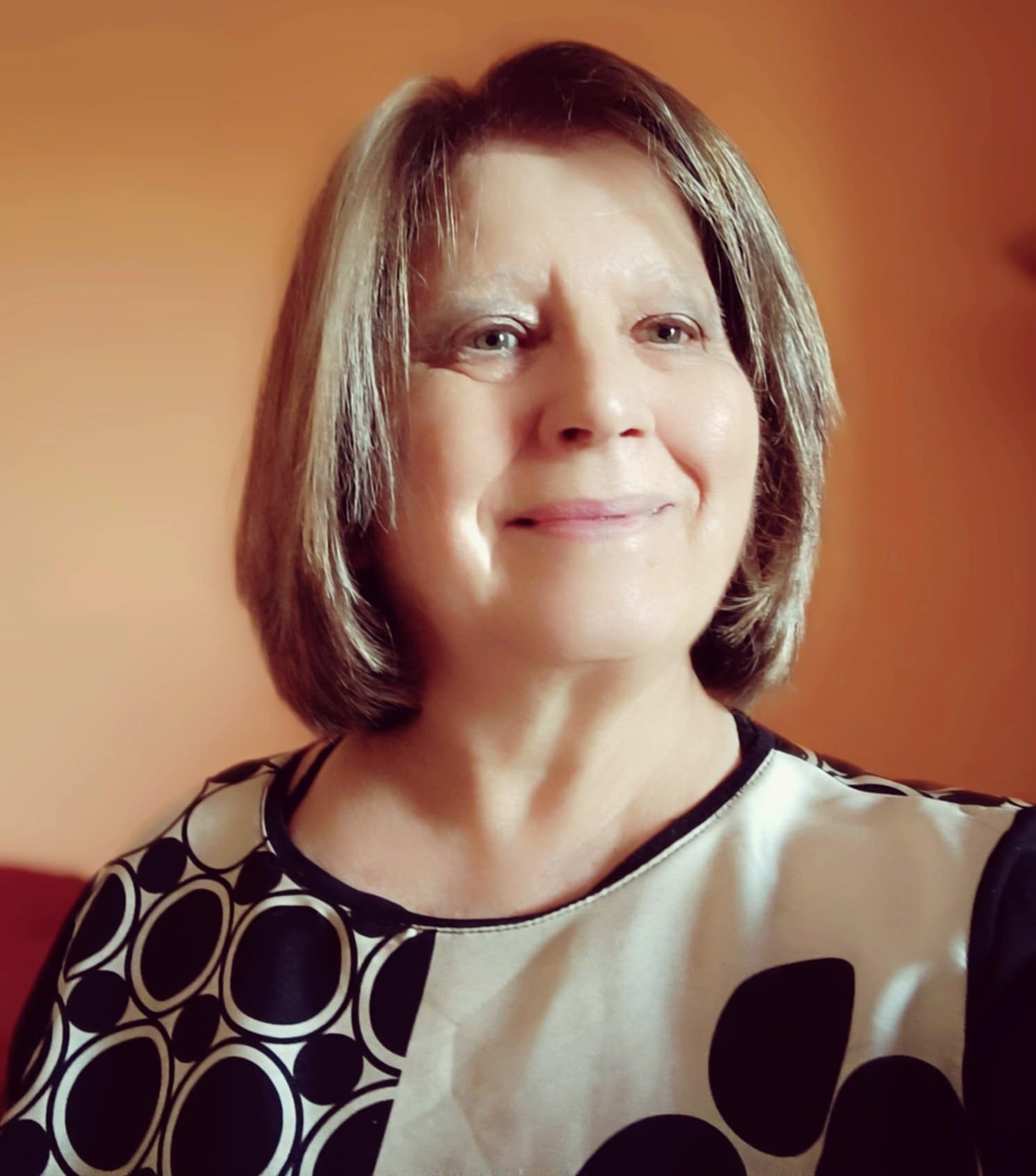
Paul Tristram is a Welsh ‘Street’ Writer who has poems, short stories & flash fiction published in hundreds of different publications all around the world. He yearns to tattoo porcelain bridesmaids instead of digging empty graves for innocence at midnight, this too may pass, yet.
His novel “Crazy Like Emotion”, shorter fiction collection “Kicking Back Drunk ‘Round The Candletree Graves” and full-length poetry collections “The Dark Side Of British Poetry: Book 1 of Urban, Cinematic, Degeneration” and “It Is Big And It Is Clever: Book 1 Of A Punk Rock Hostile Takeover” are available from Close To The Bone Publishing.
Dr. Prasana Kumar Dalai (DOB 07/06/1973) is a passionate Indian Author-cum- bilingual poet while a tremendous lecturer of English by profession in the Ganjam district of Odisha.
He is an accomplished source of inspiration for young generation of India .His free verse on Romantic and melancholic poems appreciated by everyone. He belongs to a small typical village Nandiagada of Ganjam District, the state of Odisha.
After schooling he studied intermediate and Graduated In Kabisurjya Baladev vigyan Mahavidyalaya then M A in English from Berhampur University PhD in language and literature and D.litt from Colombian poetic house from South America. He promotes his specific writings around the world literature and trades with multiple stems that are related to current issues based on his observation and experiences that needs urgent attention.
He is an award winning writer who has achieved various laurels from the circle of writing worldwide. His free verse poems not only inspires young readers but also the ready of current time. His poetic symbol is right now inspiring others, some of which are appreciated by laurels of India and across the world. Many of his poems been translated in different Indian languages and got global appreciation. Lots of well wishes for his upcoming writings and success in the future.
He is an award winning poet author of many best seller books. Recently he is awarded Rabindra nath Tagore and Gujarat Sahitya Academy for the year 2022 from Motivational Strips . A gold medal from world union of poets France & winner Of Rahim Karims world literary prize 2023.The government of Odisha Higher Education Department appointed him as a president to Governing body of Padmashree Dr. Ghanashyam Mishra Sanskrit Degree College, Kabisurjyanagar. Winner of ” HYPERPOEM ” GUNIESS WORLD RECORD 2023.
Recently he was awarded from SABDA literary Festival at Assam. Highest literary honour from Peru contributing world literature 2024.Prestigious Cesar Vellejo award 2024 Completed 200 Epistolary poems with American poet Kristy Raines. Books. 1.Psalm of the Soul. 2.Rise of New Dawn. 3.secret Of Torment. 4.Everything I never told you. 5.Vision Of Life National Library Kolkata. 6.100 Shadows of Dream. 7.Timeless Anguish. 8.Voice of Silence. 9.I cross my heart from east to west . Epistolary poetry with Kristy Raines
And blew a puff on my face in my childhood so that
I could get over the fearfulness
Oh dream you come so sweet
I smile on the face you stand in front of me.
Chapainawabganj, Bangladesh
10 February, 2025.
Md. Mahbubul Alam is from Bangladesh. His writer name is Mahbub John in Bangladesh. He is a Senior Teacher (English) of Harimohan Government High School, Chapainawabganj, Bangladesh. Chapainawabganj is a district town of Bangladesh. He is an MA in English Literature from Rajshahi College under National University. He has published three books of poems in Bangla. He writes mainly poems but other branches of literature such as prose, article, essay etc. also have been published in national and local newspapers, magazines, little magazines. He has achieved three times the Best Teacher Certificate and Crest in National Education Week in the District Wise Competition in Chapainawabganj District. He has gained many literary awards from home and abroad. His English writings have been published in Synchronized Chaos for seven years.
Synchronized Chaos Magazine expresses our sorrow for the lives and property lost in the Los Angeles wildfires. We invite people to visit here to learn about how to send cards of encouragement to fire crews and to donate books to replace school library collections that have burned.
Finally, contributor Chimezie Ihekuna seeks a publisherfor his children’s story collection Family Time. Family Time! Is a series that is aimed at educating, entertaining and inspiring children between the ages of two and seven years of age. It is intended to engage parents, teachers and children with stories that bring a healthy learning relationship among them.
Image c/o Chevalier’s Books
In March we will have a presence at the Association of Writing Programs conference in L.A. which will include an offsite reading at Chevalier’s Books on Friday, March 28th at 6 pm. All are welcome to attend!
So far the lineup for our reading includes Asha Dore, Douglas Cole, Linda Michel-Cassidy, Aimee Suzara, Reverie Fey, Sumiko Saulson, Ava Homa, Michelle Gonzalez, Terry Tierney, Anisa Rahim, Katrina Byrd, Cindy Rinne, Norma Smith, and Kellianne Parker.
Image c/o Justin Hamm
Author Justin Hamm is hosting a FREE online literary event the weekend of AWP, known as StayWP. This will include author talks, informative panels, book launches and networking!
This issue focuses on the journeys each of us, as individuals and cultural groups, take throughout life. We follow characters as seasons change and time passes, through different aspects of our shared humanity.
Sayani Mukherjee conveys the feel of the shifting landscape as night gives way to daytime.
Shukurillayeva Lazzatoy Shamsodovna translates a poem by Alexander Feinberg, which offers advice for new beginnings: start in silence and quietly observe the world before speaking. Sometimes we need to consider and learn before we can act.
As in life, we begin with childhood. Daniel De Culla writes of a kind and gracious angelic intervention on a pair of children’s first communion day. Isabel Gomez de Diego’s photos celebrate the whimsy and raw joy of a child’s dinosaur themed birthday party.
Mahmudova Sohibakhon presents methods of teaching and learning spoken and written English. Abigail George speaks to her friendship and mentoring relationship with aspiring South African playwright Dillon Israel. Sharipova Gulhayo Nasimovna outlines and details her educational dreams.
Lazizbek Raximov’s essay highlights the purposes and power of literature. Mehran Hashemi shares some of his poetry and outlines how his writing journey has changed his life. Federico Wardal interviews filmmaker Michael Poryes in a wide-ranging conversation about both of their artistic visions and goals and about the perils of fame and the necessity of real friendship for artists.
Image c/o Safarova Charos
Anna Keiko expresses how small beginnings can grow into larger scenes of beauty. Safarova Charos’ watercolors capture and highlight simple domestic comforts: tea, flowers, bluebirds.
Mickey Corrigan shares the stories of authors’ and creatives’ homes, which took on a historical cachet after the creatives left their legacies. Nozima Raximova discusses the Jadidist national cultural revival movement in 19th century Crimea, highlighting its importance in modernizing the area.
Caricature of the Crimean Tatar educator and intellectual Ismail Gasprinsky (on the right), depicted holding the newspaper Terjuman (“The Translator”) and the textbook Khoja-i-Sübyan (“The Teacher of Children”) in his hand. Two men, respectively Tatar and Azerbaijani Muslim clerics, are threatening him with takfīr and sharīʿah decrees (on the left). From the satirical magazine Molla Nasreddin, N. 17, 28 April 1908, Tbilisi (illustrator: Oskar Schmerling).
Sean Meggeson experiments with words, sounds, and arrangements of text on the screen. Mark Young splashes swathes of color and delicate text and lines across the page.
Eva Petropoulou Lianou reflects on the beauty of our diverse world full of many people with different creative gifts. For something different, Duane Vorhees contributes Mother Goose-esque pieces that address grace, mortality and human equality and diversity with gentle humor.
Nate Mancuso’s short story presents a couple who meet for a date and finally find themselves able to connect when they let go of their expectations and categories.
Grace Olatinwo recollects her mother’s steady love and draws strength from it as she navigates adult relationships. A rich poem by Kareem Abdullah, translated by John Henry Smith, celebrates sensuality and surrendering to love. Tajalla Qureshi speaks to the fragrant and silken ecstasy of sensual and spiritual love.
Mesfakus Salahin encourages readers to understand and wait for true and non-materialistic love as Maftuna Rustamova reminds us of the importance of money to have a stable life.
Sobirjonova Rayhona takes joy in her sister’s beautiful wedding. Dilbar Koldoshova Nuraliyevna reflects on the wonder and responsibility of motherhood. Lilian Dipasupil Kunimasa shares how she’s doing what she can to show compassion to the world, even as a person of limited means. Michael Robinson speaks to the spiritual love and sense of belonging he has found in his later years through knowing Jesus Christ.
John Grey’s work explores agency: moments when we feel like active protagonists and when we get subsumed by life. Pamela Zero offers her admiration for bold women with confidence who walk by as she quietly weeds her garden. Jumanazarov Zohidjon reflects on the winding road of life and its ups and downs.
Image c/o Kylian Cubilla Gomez
Kylian Cubilla Gomez’ photography explores the dislocation of travel: window views, sculpted renditions of international flights, objects balanced at strange angles.
Eleanor Vincent’s memoir Disconnected, reviewed by Cristina Deptula, charts the journey of a romance between two people with different neurotypes, ending in a different kind of dislocation.
Jacques Fleury’s story relates the tale of a man finding a glimmer of love again after the death of a spouse. Graciela Noemi Villaverde memorializes her deceased husband and the many ways he complemented her and illuminated her life. Taylor Dibbert reflects on how one takes one’s departed loved ones with us in our minds long after their passing. Tursunov Abdulla Bakhrom O’g’li poetically mourns a lost love. Kristy Raines’ evocative poetry illustrates how people can communicate the depth of love and grief with or without words.
J.J. Campbell’s poetry evokes longing, loss, and ennui. Kassandra Aguilera conveys the anguish of unrequited love. John Dorsey’s poetry captures moments of isolation and waiting, characters who feel out of place.
Image c/o Jacques Fleury
Khomidjonova Odina shares a scary story of a boy and his pet deer being threatened by robbers. Mahbub Alam evokes the vast power of the Los Angeles wildfires as Don Bormon speaks to both the destruction and the city’s power to rebuild. Naila Abdunosirova’s poignant piece describes a homeless, landless rabbit devoured by a fox. Ahmed Miqdad grasps the enormity of all he and many other civilians have lost due to the war in Gaza.
Pesach Rotem draws on Dr. Strangelove to try to make sense of the current bewildering state of the U.S. federal government. Pat Doyne laments the national American chaos caused in part by people who believed they were voting for lower consumer prices.
Z.I. Mahmud discusses the mixture of pathos and moral critique of war profiteering and opportunism in Bertolt Brecht’s play Mother Courage, ultimately concluding that Brecht “hated the sin while loving the sinner” and approached all his characters with empathy.
Each poignant in its own way, Bill Tope’s poems cover anti-LGBT violence, a tender moment between mother and son, and a reflection on what matters at different points in life.
Image c/o Brian Barbeito
Joseph Ogbonna revels in Texas’ adventurous and wild countryside and culture. Brian Barbeito reflects on the various ways different people cope with the harsh, primal energies of winter. Harry Lowery’s poetry explores love and loss through metaphors of travel and the nature of light.
David Sapp addresses the human spiritual quest, how searching for transcendence and meaning is natural for us, sometimes to the point where we fight each other over faith. Mykyta Ryzhykh’s poetry conveys longing and acceptance in the face of life’s challenges.
Yucheng Tao’s poetry explores freedom, rebellion and individuality, death, wildness, and loss. Su Yun writes of the interplay of light and shadow, beauty and decay, and humans’ relationship to the vibrant and resilient natural world.
Finally, Stephen Jarrell Williams waxes poetic in his truck at night, overcome with joy and nostalgia.
Mother is the greatest creature in the world. Our mothers carry us in their wombs for nine months and nine days. Then they wash us white, comb us white, and give us white milk. Mother cannot be described in words, because Mother and Motherland stand side by side. The definition of mother is that, “Heaven is under the feet of mothers.”
If heaven is in the sky,
Underneath is my mother.
If heaven is on earth
On top of my mother.
If there is only one heaven
Dear mother.
If there is heaven in this world,
My heavenly mother.
Mother cannot be described in one word. Mother is only three letters, but one life is missing to describe her.
When I look at your eyes, it’s wet.
He clenched his teeth and asked for my heart.
Your white milk is white, mother,
One life is not enough.
We talk about our mothers, we can’t get enough of them, but there are very few of us who actually do it. No mother will ever do bad things to her children, instead they encourage good and show the right path. Some people envy their companions to their mothers, “I wish my mother was like that”, and feed them with envy. But “Kaltafahm” people consider Chuchvara raw
But I lived for six years and did not envy anyone’s parents. Because my parents are heavenly people. If a mother does what she does before the birth of her unborn child, the child will be like her mother. If a mother misbehaves during pregnancy and harms people, she can expect the same from her child. On the other hand, if a mother reads religious books and prays during pregnancy, her unborn child will grow up to be a Muslim like our Prophet Muhammad (pbuh) and a Muslim like our mother Aisha.
O my nightingale, sing it many times
A smile from his lips.
Laugh and see my happiness
My prayers are with you, my mother.
Mother and Motherland cannot be chosen in the world. What I write is not a fairy tale. The truth of my life. Before I was born, my mother prayed, thank God, I bow down like my mother.
May our mothers survive. As long as they exist, life goes on. After all, respected parents rock the cradle with one hand and the world with the other.
Kashkadarya region. Qoldoshova Dilbar Nuraliyevna, a student of the 10th grade of the 10th grade of the 43rd school of Karshi district.
Dilbar Koldoshova Nuraliyevna was born on March 5, 2007 in the Karshi district of the Kashkadarya region.
She is currently the 10th “B” student of the 43rd school.
Dilbarhan is the queen of poetry, the owner of creativity, a singer with a beautiful voice, and a ghazal girl.
She came first in the “Leader of the Year” competition.
1st prize in the regional stage of the “Hundred Gazelles and Hundred Gems” competition.
She took part in the “Children’s Forum” category and won first place in many competitions.
She is currently the coordinator of the training department of Tallikuron MFY in Karshi district.
Kamalak captain of the opposite district.
Head captain of the “Girls There” club at school 43.
The articles titled “Memory is immortal and precious”, “Our School” and “Mother” were published three times in Kenya Times International magazine in 2024.
In 2023, the first poems were published in the poetry collection “Yulduzlar Yogdusi” of the creative youth of the Kashkadarya region.
In 2024, ghazals of the creative youth of the Republic were published in the poetry collection “Youth of Uzbekistan”.
ABSTRACT: This article teaches how to learn a foreign language quickly and effectively. It takes us a lot of time to learn English. I think that this article will help us learn quickly and easily by using our time properly.
KEY WORDS: strong passion, daily practice, type of skills, learning grammar, increasing vocabulary, pronunciation, repetition, proper use of smartphone.
ENTRANCE:By the end of the 20th century, English had finally established itself as a world language. Today, the ability to know foreign languages is becoming one of the integral parts of professional education. Due to the high rate of cooperation with foreign partners among specialists in various fields, there is a high demand for them to learn the language. In modern society, foreign languages are becoming an important component of professional education. People learn such knowledge first at school, college, high school, and then at institutes, training courses or independently by getting acquainted with the basic information sets that help to learn a foreign language.
LITERATURE ANALYSIS AND METHODS
Popular methods of teaching and learning English and Internet resources were used in the research process. During the writing of the article, the principles of theoretical deductive conclusion, analysis and synthesis, logicality were used.
Today, many language courses are held for two hours one or two days a week, which is not good for us. Because on other days we are busy with daily chores. Usually, before the lesson, he forgets the topics of the previous lesson, which slows down the learning process. When we learn any foreign language, it should be studied and repeated daily. Only then the learning process will be much faster. First of all, we must make a commitment to ourselves. For example, “I spend two hours studying English every day, regardless of the situation!” Then our recall results will increase dramatically. Many people say that they should do this method, but they do not do it in practice. We have to adapt ourselves to this day’s training. Only then can we achieve the desired result. Type of abilities.
Linguists have divided the study of the English language into four major directions;
-Reading is the ability to read and understand a text in a foreign language.
-Hearing (listening) is the ability to hear and understand the chat language.
-Writing-the ability to write in a foreign language.
Speaking is the ability to express one’s thoughts and ideas in a foreign language.
In order to achieve this, it is important to master the three most necessary things. These are: grammar, vocabulary and pronunciation.
1. Learning grammar will definitely not be easy for a child. Whether we like it or not, the most difficult part of learning a language is grammar. We often observe that most people focus on memorizing rules when learning grammar. Memorizing the rules does not mean learning grammar. Unfortunately, there are many such people. They know the rules of grammar and phonetics of a foreign language by heart, but they cannot make a more complicated sentence in the language. You don’t have to memorize all the rules, just memorize the most used ones. Once you have memorized all the rules, you will only apply 30% of them. You don’t use the rest. This can cause you various boredom and confusion. Repeat what you have learned every day and build on them simple and then more complex sentences. In a simple sentence, it mainly consists of possessor + participle + complement.
2. Vocabulary memorization.
Even in this process, memorizing yourself for years is a wrong method. I used to memorize 10 words a day. The problem is that I could not use these when I spoke in English, I almost did not use such words. This did not give any results.
We have the concepts of “Active vocabulary” and “Passive vocabulary” for this. To summarize, you can use the words in “active vocabulary” without any problems. You can use them without any difficulties. But it If the words fall into the “passive vocabulary”, you can remember the word only by seeing or hearing it briefly. The words in the passive vocabulary are very dangerous. There is a possibility that the words will be forgotten. For this, we can save the words from the “active vocabulary” and transfer the words from the “passive vocabulary” to the “active vocabulary”. We need to translate all the unfamiliar words in the movies or videos and pay attention to their pronunciation.
3. Pronunciation.
Every language has its own pronunciation. Nowadays, technical progress has developed. This is why we all have access to mass media.
If we listen to different English movies and English songs, our pronunciation will improve a lot. Another way is to use it for another purpose when listening to a song in a foreign language. Find the lyrics of your favorite song in a foreign language and translate it into your language using a dictionary. Or work a lot with English lyrics so that you can mark and translate unfamiliar words. Then you translate the unfamiliar words that cover that text from English to your own language without looking at the translation. Then you will remember them and know when to use them. Another useful way is to listen to native speakers and have conversations with them. Nowadays, we all have the opportunity to communicate online. . That is, we can use this to communicate with native speakers and get various information to improve our pronunciation.
I would like to give some more incentives for us to learn English quickly and effectively.
Define the goal clearly.
If you have to do anything, especially in language learning, it is not for success. Therefore, think about what you want to learn English for. Nowadays, many people are going to learn a language without being interested in the opinion of their family or others. First of all, you should have an interest and a goal. For example, after learning English, I will enter the world languages university as the first grant, “I will enter the University of Westminster on a grand basis” or “I will go abroad to study and work in high positions”, and “I will open new campaigns in cooperation with foreign countries.” “, you can set a goal. Do not forget that the more serious the goal, the faster and more effective language learning will be.
Language is based on repetition.
A language cannot be learned without constant repetition. You can memorize 15 new words a day, but if you do not repeat these words after 2-3 days, it is natural that they will be forgotten. For this, you can effectively use the places where your eyes fall the most. Personally, I stick my newly learned words on a small piece of paper or on various stacks on the door of my room and on my desk.
Communication.
Language is a means of communication. We all know that communication plays an important role in language learning. Go to Speaking Clubs at study centers or resource centres. Never be shy to speak even if you are not fluent yet. The one who tries to speak, even if he does not know the language better, wins than the one who is shy to participate in conversations. Never be shy to speak in general, keep speaking even if you make mistakes.
Or you can find a partner for constant training. Another advantage is that this method creates a unique competitive environment among partners. For example, you try to memorize in order not to fall behind your partner.
Adapt the language learning process to your daily life.
When learning a language, fit everything into your daily life. For example, if you go to the institute or school by bus every day, you will lose at least 30-35 minutes of your time. You can use this time effectively. You can listen to various exercises or audios to develop Listening Comprehension.
Use your smartphone correctly and effectively, you should use easy methods to learn quickly in the process of language learning. Your smartphone will help you with this. Using your smartphone, you can download free English language learning programs and use them without attending paid courses. You can also watch various English movies with subtitles.
The main reasons for this are the natural tendency of children to learn languages, the fact that they have a strong ability to imitate, and the fact that children have more time than adults. It should be noted that 6-7-year-old children do not understand the meaning of information, but memorize it mechanically. Therefore, it is necessary not to start teaching English to elementary school students with grammatical concepts. Otherwise, from the first step of teaching a foreign language, it is possible to strain the child and extinguish his interest. Therefore, teaching a foreign language to young children is very difficult and responsible. The following methods can be used to teach children English in a meaningful and interesting way
-To teach by means of songs and poems the letters or combinations that are difficult to explain or remember, that do not have meaning.
For example, it can be shown that children learning the English alphabet by singing is more effective than just memorizing. – games related to mental and physical activities;
-Cartoons;
While children do not understand the words in the cartoon during language learning, they try to understand the words they use through the actions of the cartoon characters. This is an interesting and effective way for children to learn the language.
– role play, the teacher should role-play or play it to children while teaching some information, for example, the names of animals or birds. For example: one student shows a dog howling, a cat meowing, another student can show which animal these sounds are.
– subject environment;
Children learn the language better if the teacher can create that environment depending on the subject. For example: traveling, birthday, in the kitchen, etc. On the topic of traveling, the teacher organizes a trip, information about the importance of traveling (foot, bicycle, automobile, train, boat, airplane), where to travel (Tashkent, Samarkand, Bukhara, England, USA) will give. This situation strengthens the students’ vocabulary, language abilities, and expands their worldview.
RESEARCH RESULTS AND DISCUSSION
Children have a strong interest in finding answers to riddles. Therefore, when the teacher says the riddle in English or Uzbek, he should ask the children to say the answer in English. Then children learn words quickly.
Practical training (tasting fruits and other foods, smelling flowers); This sentence can be explained by the thoughts of a practicing psychologist: “The pedagogue, who wants something to be firmly fixed in the children’s memory, should use as many of the child’s sensory organs as possible: eyes, ears, sound organs, muscle sensations, and even if if possible, he should try to involve the sense of smell and taste in the process of remembering”. For example: when a student tastes an apple, its color is red or green, He should give information about whether it is sweet (tasty) or big (small), and after feeding other students, he should ask the children to give information about that fruit in English If the teacher asks the students the English name of the colors, the child will immediately remember that they are red-red and green-green. Ensures that information is kept in memory for a long time. – through gestures, facial expressions; When the teacher says something to the child or gives an order, for example, it is understandable to the child if he uses gestures in sentences such as come here, open the book, stand up, look at the blackboard. .
CONCLUSION AND SUGGESTIONS
In conclusion, it should be said that teaching a modern language is aimed at forming a more cultured person, who has the skills of self-analysis and systematization of new knowledge. Innovative methods are an integral part of the modernization of the entire system. This ensures that teachers can familiarize themselves with the most advanced approaches and then integrate them and use them in their work to achieve significant growth in the education system. Many organizations are moving to a new level by using multimedia capabilities to send and receive information. The use of computers and other devices determines the success of the entire educational process. Speech skills in the trainings held during the educational process. Sufficient attention should be paid to formation and development of social flexibility. In addition, the success of each lesson in education largely depends on the correct organization of the training. The lesson should be based on the creative cooperation of the teacher and the student. Only then will students be able to think independently and will be educated. Learning English is not easy. It requires you to set a clear goal, constantly repeat new words, communicate without shame when you have the opportunity, adapt the process of learning English to your life, and finally, use technology effectively.
LIST OF REFERENCES:
Project-Based Learning Using Information Technology By David Moursund International Society for Technology in Education, 2003
Middle School Students as Multimedia Designers: A Project-Based Learning Approach By Liu, Min; Hsiao, Yu-PingJournal of Interactive Learning Research, Vol. 13, No. 4, Winter 2002
5.Jalolov. ―English language teaching methods‖ ―Teacher‖ publishing house Tashkent
6.Tokhtasinova, N. R. Q., & Soibjonova, M. T. O. Q. (2022). A PRAGMATIC STUDY OF THE PHENOMENON OF TAGMA’NA AND PRESUPPOSITION (as an example of Abdullah Qahhar’s works). Central Asian Research Journal for Interdisciplinary Studies (CARJIS), 2(4), 141-146.