Andijan State Institute of Foreign Languages Foreign Language and Literature German Language Direction Student of group 402 Yunusova Khodisa Scientific advisor Isamutdinova Durdona
Annotation: This article explores the concept of clarity in teachers’ speech and its importance in the educational process. It analyzes the lexical, grammatical, and stylistic aspects of clarity and substantiates how clear speech enhances the effectiveness of teaching. The article also provides methods for achieving clarity in teacher speech along with practical recommendations.
Annotation: V dannoy state rassmatrivaetsya ponyatie yasnosti rechi uchitelya, eyo role i znachenie v obrazovatelnom protesse. Proanalizirovany lexicheskie, grammaticheskie and stylisticskie aspekti yasnosti, obosnovana effektivnost prepodavaniya posredstvom chyotkoy rechi. Takje privedeny sposoby obespecheniya yasnosti rechi uchitelya i prakticheskie rekomendatsii.
Speech technique and oratory culture. Speech technique refers to the means used to convey speech to the listener or student. The teacher’s voice, pronunciation, diction, and in general, live speech always serve as a kind of standard, a model for students, especially students in younger grades. Any defect in the teacher’s live speech, whether large or small, does not remain unnoticed by the student, it immediately attracts his attention. If such a defect is regularly observed in the teacher’s speech, then the student, although unfairly offended by the teacher, may go so far as to mock him in absentia and ridicule him on the basis of this defect.
For example, when students talk about such a teacher among themselves, they remember him with this defective voice, pronunciation or diction, which is certainly not a positive situation for the overall educational process. A teacher who is devoted to his profession must always take care of the phonetic correctness of his speech in order to create and maintain the image of a flawless and valuable teacher in the eyes of his students. True, it is impossible to completely get rid of such aspects of the voice that make it unpleasant, such as innate hoarseness and squeakiness.
However, the defects that arise due to insufficient knowledge of speech technique can be eliminated as much as possible by awareness of phonetic knowledge, voice training (in Russian, “postanovka golosa”), accurate pronunciation, and various exercises on correct breathing during speech. Historians have written that the famous ancient Greek orator Demosthenes initially had a low voice, poor pronunciation, and shortness of breath, which prevented him from delivering a beautiful and impressive speech.
As the scientist S. Inomkhodjaev, who has studied this area in depth, noted, later Demosthenes very seriously began to master the basics of speech technique. Speech is a thought that has become reality using the means of expression available in the language and is manifested in two forms: 1) internal speech; 2) external speech. Internal speech is the thought, reasoning, and reflection of a person without opening his mouth, formed in the teacher’s mind, consisting of elements of language that have not yet been realized.
Speech that occurs as real sounds through the influence and movement of the teacher’s thoughts and ideas on the speech organs through language is external speech, which is a social phenomenon. The teacher’s speech activity consists of: speaking, reading, and listening. A speech event can be in the form of a monologue, dialogue, polylogue, declamation, and also in the form of a separate text and book. Speech is referred to the speaker in a specially prescribed manner by its volume.
Based on the analysis of pedagogical and psychological literature, the following characteristics of speech can be distinguished: 1. Functions: communication, influencing the individual, a means of education and upbringing. 2. Forms: external speech (oral): monologue, dialogue, polylogue; writing: report, abstract, annotation, etc.; internal point of view. 3. Speech technique: professional quality of the teacher’s voice: timbre, intonation, diction, tempo (120 words per minute). 4. Types of speech activity: reading, writing, speaking.
A heap of broken images, where the sun beats, And the dead tree gives no shelter…
(T.S. Eliot: The Waste Land)
Among ears of wheat now dry
there are no red poppies in the fields
of this long hot summer.
The sun rises and sets
on a land of dust
on an endless desert.
And that dazzling light seems to burn
blurred memories and vain hopes.
Waiting for the evening shadows and
for a cool breeze that will not come
we can almost feel how time
shuffles and rushes
our fears towards the final collapse.
In front of us only a heap of broken images:
maybe that’s the last call to save the earth.
Lidia Chiarelli, Italy
Lidia Chiarelli (Italy) is one of the Charter Members of Immagine & Poesia, the art-literary Movement founded in Italy in 2007 with Aeronwy Thomas. Installation artist and collagist. Coordinator of #DylanDay in Italy. Award-winning poet since 2011. Her writing has been published in more than 150 International Poetry magazines and web-sites. https://lidiachiarelli.jimdofree.com/ https://lidiachiarelliart.jimdofree.com/
No boundaries, where colors can separate but blend,
Blend into different shades and hues
Even a black and white photograph
Has its different shades and hue
Yet our minds are set
Between one not even two.
For two will make us choose, be IN or OUT
And OUT will always be wrong
Because IN is always right.
And Tolerance does not mean Respect
Just waiting to prove the other Weak.
We see only what we want to see
We understand what we only want
We believe only what is beneficial
Others are blind or lying false.
How I envy the unschooled beasts
They have territories, yet respect boundaries
They do not attack, unless hungry
Knowing not of greed, nor hatred
How I envy the rainbow in the sky
Brightly shining after after cold dark storm
No color, but the sun makes it beautiful
Neither clashing, nor overlapping.
Nature is harsh but it has its rule
Diversity so to balance its growth
Yet we are smarter than Nature
We control, change and destroy
Rules made by Nature, we can overcome
Because we are smarter than Nature.
And rainbows are just part of foolish nature.
Vengeance
Once I donned the perfume of the innocent
Thinking it will shield me from evil’s intent
Yet when you recognized the purity scent
You came and tore down my peaceful tent
Your claw hands my virginal gown did rent
My mind to your devious wishes force bent
My soul to hell’s sulphuric kingdom sent
And my sanity to Limbo’s voidness went
I came back and wore the musk of the beast
My turn to bring havoc to the west and east
I watched as the hyenas and buzzards feast
For the past I know I should not care the least
But why instead of success I feel pains of defeat
Why do I feel numb from head down to my feet
Why have my heart and pulse end their beat
Ashes poured on my head and in the mud I seat
I am the victim but where is the sense of justice
I had my vengeance but where is my peace
All debts been collected yet trouble won’t cease
Tell me God Above, what did my spirit miss?
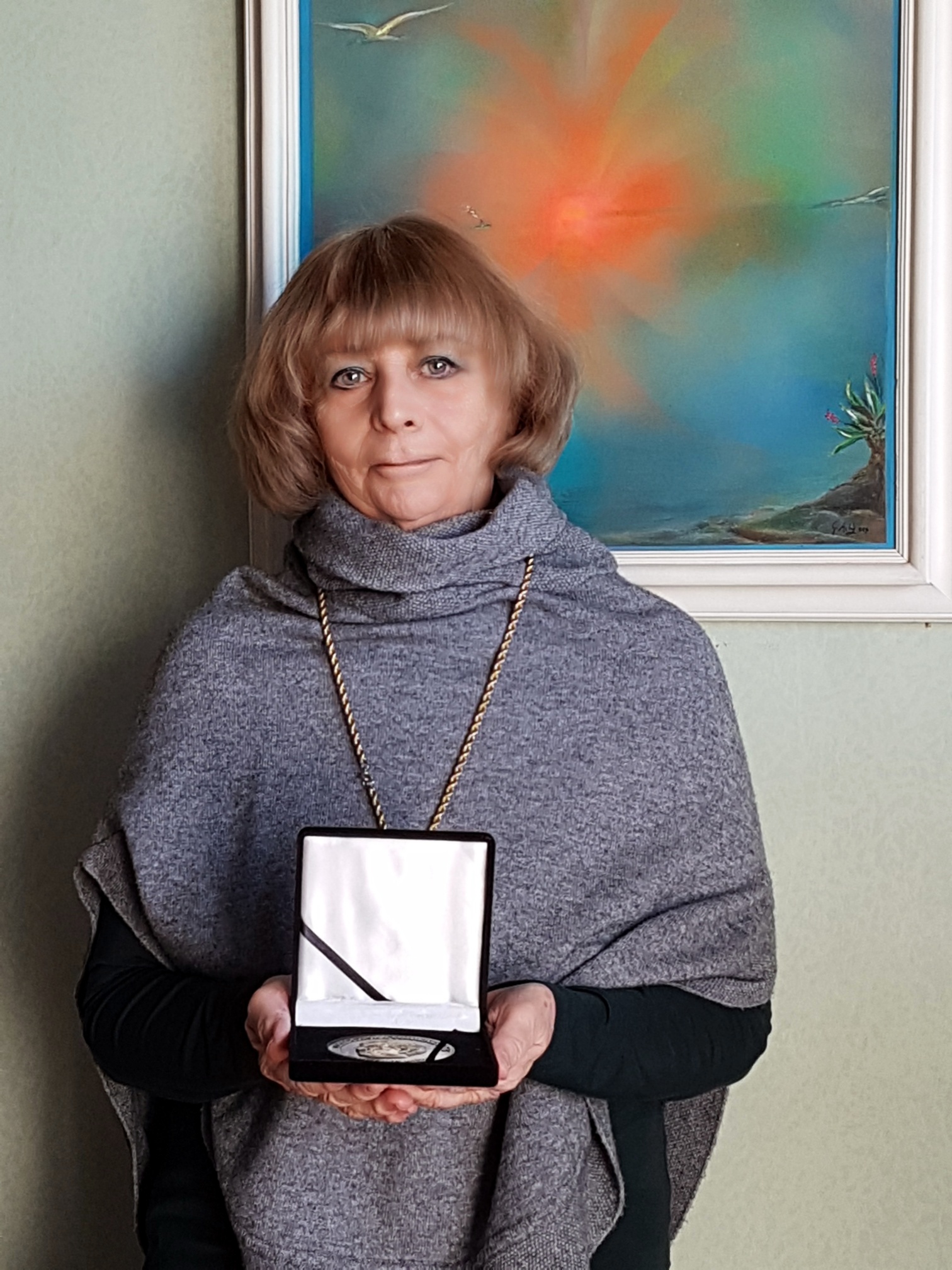
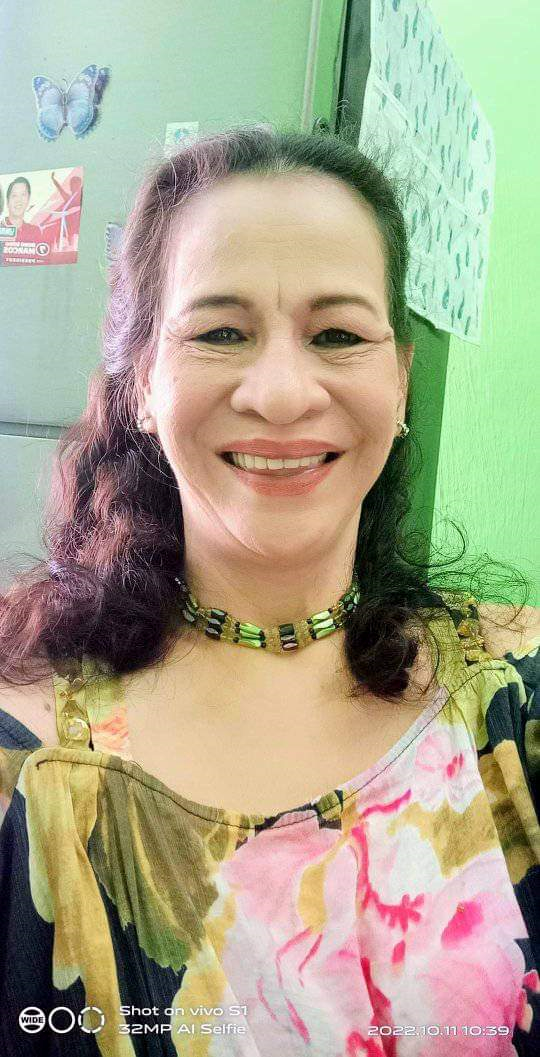
Lilian Dipasupil Kunimasa was born January 14, 1965, in Manila Philippines. She has worked as a retired Language Instructor, interpreter, caregiver, secretary, product promotion employee, and private therapeutic masseur. Her works have been published as poems and short story anthologies in several language translations for e-magazines, monthly magazines, and books; poems for cause anthologies in a Zimbabwean newspaper; a feature article in a Philippine newspaper; and had her works posted on different poetry web and blog sites. She has been writing poems since childhood but started on Facebook only in 2014. For her, Poetry is life and life is poetry.
Lilian Kunimasa considers herself a student/teacher with the duty to learn, inspire, guide, and motivate others to contribute to changing what is seen as normal into a better world than when she steps into it. She has always considered life as an endless journey, searching for new goals, and challenges and how she can in small ways make a difference in every path she takes. She sees humanity as one family where each one must support the other and considers poets as a voice for Truth in pursuit of Equality and proper Stewardship of nature despite the hindrances of distorted information and traditions.
Poetry submissions to North of Oxford’s Streur Anthology are now open!
North of Oxford would like to pay tribute to the late Russell Streur, poet and publisher of The Camel Saloon and The Plum Tree Tavern with an online anthology dedicated to Nature. Send us your poems of Nature, of floral and fauna, of forests and trees, of rivers, creeks and streams. Of farms, of urban nature, of parks and sanctuaries, of oceans and bays, of islands, of all things, Nature.
Send one to three poems for consideration of publication to North of Oxford at sahmsguarnieriandreutter@gmail.comSubject line of submission: Streur Anthology. Submissions will be accepted until 5/31/25. Only submissions attached as word doc will be reviewed. Please include a 100-word bio within the word doc.
Jacques Fleury’s book You Are Enough: The Journey Towards Understanding Your Authentic Self
Eva Petropoulou Lianou shares a short film inspired by NASA’s inclusion of her poetry in a capsule launched to the moon.
Synopsis On 26th February 2025 NASA launched a capsule with poems to the moon, one of them was the anti-war poem “Happy Birthday”. Written by Eva Lianou Petropoulou, Directed & Animated by Zina Papadopoulou, Music & Sound by Grigoris Grigoropoulos
Lunar codex, Athena, Minerva Excelsior, The Vagabond Anthology, edited by Mark Lipman, dedicated to the Palestinian poet Ahmed Miqdad
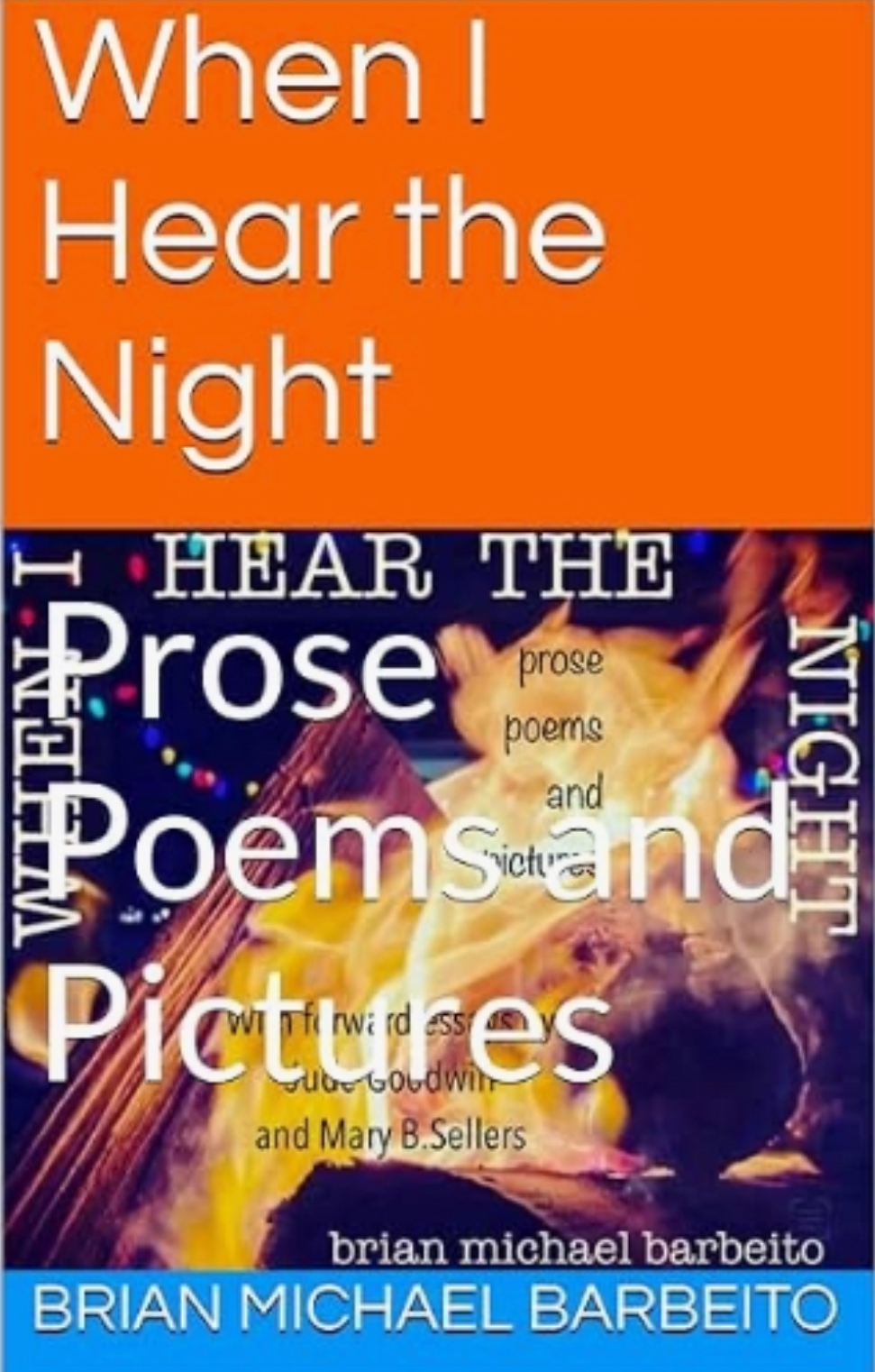
Also, our contributor Brian Barbeito’s new book has just come out, When I Hear the Night. This is a prose poem and landscape photography book. Included with the words and pictures are two literary and dynamic introductory essays, one by poet and editor Jude Goodwin, and another by the writer and editor Mary Buchanan Sellers, figures current and thus well-informed in the field. There are also author notes and question-and-answer sections. The writings can be said to have interesting elements of memoir, essay, belle-lettres, poetry, and short story forms. Their content often includes the mystic and inner vision of the author coupled with the outside world of nature walking and travel.
Now, for May 2025’s first issue: Paradoxical Understandings. In this issue, we explore various perspectives and vantage points, how multiple things can be true at once in our complex universe.
On a more personal level, Peter Cherches writes of understandings and misunderstandings, how much we can come to know or forget about those closest to us. Aziza Xazanova urges human understanding through avoiding assumptions and listening with empathy. Daniel De Culla relates a story where a person in trouble simply seeks a listening ear, not rescue.
One way people can understand each other better is by learning each other’s languages. Several contributors discuss pedagogical methods for language teaching.
Other contributors reinterpret language in concrete and abstract ways. Jerome Berglund renders different poetic forms into concrete images. Noah Berlatsky contributes a humorous poem about procrastination that uses repetition as a literary device. Christina Chin and Uchechukwu Onyedikam craft joint tan-renga poems, finishing each other’s pieces with images of music, nature, rest, and memories. Rus Khomutoff’s concrete poetry takes us on a journey of surrealism, music, and romance.
Like Khomutoff, other writers travel deep into their own psyches. Brian Barbeito reflects on his thought process and creative journeys, considering how he both opens his mind to emptiness and enlightenment and, like a skilled hockey player, remembers the basics of his craft. On another note, Nigar Nurulla Khalilova evokes writers’ block and an intense, foul mood as harsh as the Arab Simoom wind.
Mesfakus Salahin ponders the fragility of human identity and self-concept. Mark Young’s poetry explores creative processes, relationships, and the search for meaning. Texas Fontanella’s music digs deep for a dose of duende. Tagrid Bou Merhi draws on train travel as a metaphor for introspection and longing for one’s past or future. Stephen Jarrell Williams crafts a series of verses describing a person’s inner struggle and renewal. Ari Nystrom-Rice explores identity, wondering who he truly is underneath the surface. Mexribon Shodiyeva’s poetry celebrates the fragile butterfly and the beauty of being yourself. Shamsiya Khudoynazarova Turumovna relates having had the courage to free herself from an unhealthy situation and walk her own path.
Paul Cordeiro speaks to the aftermath of significant relationships and events and to how our feelings can reshape our memories. On a less serious level, Mark Blickley develops a farcical story of unemployment fraud inspired by a photo of a man with a sheep skull, where a character invests deeply into reinventing himself.
On a more cosmic level, Jack Mellender’s work looks at space, time, and humanity’s place in the universe. Ummnusalma Nasir Mukhtar relates a fanciful and expansive dream where she traveled to the moon and stars and gathered her strength. Jacques Fleury’s photography encourages us to view life from different vantage points, exploring concepts as varied as travel, physical attraction, thought, and justice.
Duane Vorhees reflects on ancient archetypes and how we tell stories about ourselves. Sayani Mukherjee reflects on the constant turbulence of human and natural history. Dr. Jernail S. Anand probes some basic paradoxes of modern human life.
Rezauddin Stalin reflects on the beauty and the price of freedom as Blue Chynoweth reflects on the blessing and curse of being able to contemplate one’s place in the universe rather than living by instinct.
Mahbub Alam wonders whether love or self-destruction will win the day. As a person of faith grappling with these issues, Chimezie Ihekuna addresses life’s seemingly intractable struggles, suffering, and human evil, and also God’s implacable goodness in a paradoxical couplet of poems. Lilian Dipasupil’s paired poems take a similar approach, warning of child kidnapping while honoring the love and sacrifice of Jesus.
As writers, one of the ways we can respond to evil is to bear witness and document it as a warning. This is one of the roles of journalism. Davronova Asilabonu affirms the value of journalism and speculates on the field’s future.
More traditionally literary writing can bear witness as well. Yucheng Tao provides a sobering reminder of the historical massacres of the indigenous people of the American West by European settlers and of many Cambodians later in history by the Khmer Rouge. Z.I. Mahmud explores how Arthur Conan Doyle’s The Hound of the Baskervilles brought realism into detective fiction, illustrating the monstrosity of human greed and vengeance. Rahmat Muhammad laments how people where she lives in northern Nigeria no longer honor elders and ancestors as much as they should.
Shuhratbekova Gulzoda describes the historical contributions of the humanist Jadid leaders of Uzbekistan to art, literature, science, and culture. Dilobar Maxmarejabova expresses her pride in her Uzbek heritage and her hometown of Qashqadaryo. Hashimjonova Durdana affirms her pride in her Uzbek heritage and culture. Nozima Gofurova outlines the many achievements of today’s Uzbek youth.
Bhagirath Choudhary points to the role of literature in terms of helping people and societies evolve to become more humane. Dr. Jernail S. Anand illuminates the power of art and literature to touch people’s hearts and souls and inspire wiser and more compassionate behavior.
Alexander Klujev highlights connections between Russian music and Russian philosophy and how both honor the triumph of life over death.
Various contributions celebrate different aspects of life. Shahnoza Ochildiyeva enjoys a picnic with her classmates on a sunny spring day. Su Yun evokes the struggle and beauty of flowers growing in an urban environment. Isabel Gomez de Diego photographs childhood exuberance in a neighborhood where humans coexist with nature, trees and bike paths near city apartments. Eva Petropoulou Lianou crafts a story around the evocatively named “Hero’s Path,” a hiking trail near a European monastery. She finds simple joy in nature and travel. Manik Chakraborty takes poetic inspiration from misty mountains as Taro Hokkyo honors his muse and the land on which he writes.
Marjona Jorayeva Baxtiyorovna expresses her respect for women and the feminine, which she links to nurturing and compassion. Gulsanam Qurbonova celebrates the tender nurturing of a mother’s love. Vo Thi Nhu Mai reflects on the warmth and tenderness of her childhood in Vietnam and how that inspired her creativity. Kylian Cubilla Gomez’ photography captures vintage childhood images: Snoopy, old Easter themed toys, a colorful frog, even possibly Dad’s aftershave. David Sapp enters the mind of a three-year-old, excited about cereal and dogs. Marjona Jo’rayeva relates her enthusiasm for a fresh term at school.
Kristy Raines expresses the simple yet profound joy of two souls finding true love and choosing each other. Eid Saleh writes in English and Arabic of the meeting of souls in a similar way, and refers both to romance and to close friendship. Qaraboyeva Zilola expresses the tender urgency, trepidation, and obsession of young love. Marley Manalo-Ladicho ignites a fiery love feast in his poetry.
However, as Taylor Dibbert points out in his brief poem, romances, and other sources of happiness, aren’t guaranteed to last.
Tuliyeva Sarvinoz’ elegant poetry laments lost love as Mirta Liliana Ramirez honors the memory of a beloved, asserting that she’s not yet ready to move forward. Eva Petropoulou Lianou touches on the tenderness of human hearts and how many of us carry emotional trauma. J.J. Campbell’s poems describe a soul’s slow descent into misery and cynicism. Luis Cuauhtemoc Berriozabal speaks to social and psychological entrapment, stuck with folks tired of his old stories. Linda S. Gunther’s short story “Bake Me a Banyan Tree” explores what we owe our loved ones and how far we would go for them.
Eric Barr’s poetry reflects the realities of navigating life after a stroke. Manik Chakraborty laments destruction caused by a fire as Mykyta Ryzhykh reimagines the Three Little Pigs into a futuristic dystopia in light of environmental destruction. Don Bormon evokes extreme desert heat and the specter of climate change.
Alex S. Johnson takes us on a mythical journey to transmute sorrow in a poem translated into Greek by Cassandra Alogoskoufi.
Sometimes what one needs to overcome suffering isn’t as complex as alchemy, but can just be time at home curled up with one’s cat. Nicholas Gunther’s poem describes a weary soul’s desire to return home after a long journey. Bill Tope’s short story explores how a senior cat helped bring an older woman out of depression after society made both feel useless.
We hope that Synchronized Chaos can inspire creativity, bear witness to the joys and pains of the world, and transform sorrow and stagnation. Please enjoy this issue!
The Role and Future of Journalism in the Digital Age
Journalism has always been an inseparable part of society. It serves the purpose of informing people, uncovering the truth, and delivering unbiased information about significant events. However, with the development of digital technologies, journalism has undergone significant changes. The widespread use of the internet and social media has forced traditional media outlets to transform their formats. In this article, we will discuss the importance, opportunities, and future of digital journalism.
The Importance of Digital Journalism
Digital journalism is much faster and more comprehensive than traditional media, making it the most modern method of delivering information to the public. People can now access news not only through newspapers or television but also through websites, blogs, podcasts, and social media. Moreover, thanks to mobile technologies, news can be read at any time and place.
Additionally, digital journalism stands out for its interactivity. People have the opportunity to comment, share their opinions, and directly engage with journalists. This helps strengthen the connection between journalists and their audience and allows them to better understand the audience’s needs. Journalists can also monitor public opinion in real-time and use it to create news stories.
Opportunities in Digital Journalism
Digital journalism opens the door to new opportunities. Firstly, collecting and analyzing information has become much easier. Artificial intelligence and big data processing technologies allow journalists to explore pressing issues in more depth.
Secondly, new platforms allow independent journalists to amplify their voices. Through blogs, YouTube channels, and social media pages, anyone can gather an audience and spread their news. This has led to the emergence of diverse opinions in the media sector, increasing the diversity of information sources.
Thirdly, the importance of visual content is growing. People are more likely to engage with infographics, videos, and podcasts rather than text-based news. Therefore, journalists need to make their content visually appealing. Furthermore, technologies like artificial intelligence, such as automated news reading or text-to-video conversion tools, are also developing.
Future Developments in Journalism
In the future, journalism is likely to become even more digital. With the advancement of artificial intelligence, automated news-writing systems may emerge. At the same time, virtual reality (VR) and augmented reality (AR) technologies will allow news to be presented in a visual and interactive format. These technologies will make journalism even more engaging and realistic.
However, this development also comes with challenges. The increase in fake news and disinformation, the security of personal data, and the financial stability of independent journalism are major concerns for journalists. Therefore, in the future, journalists will need to develop new strategies and use technology appropriately to deliver trustworthy and unbiased information.
Moreover, improving media literacy is crucial. People should not trust every piece of information they find on the internet and should develop the habit of verifying sources. Journalists, in turn, must deliver reliable and fact-based content to gain the trust of their audience.
Conclusion
Digital-age journalism has transformed traditional journalism and created new opportunities. The speed of information delivery has increased, interactive communication with audiences has developed, and new possibilities for independent journalists have emerged.
Davronova Asilabonu Jo’rabek qizi was born on October 6, 2007, in the Jarqo’rg’on district of Surxondaryo region, Uzbekistan. She is currently studying in the 11th grade at School No. 5. Asilabonu has achieved numerous international accomplishments in various fields, showcasing her dedication and talent. Known for her academic excellence and active participation in global competitions, she is a rising star and continues to pursue her goals with determination and passion.
The past is easy in my breath without you, My day turned into a dark night. Longing roamed the garden of the heart, My night is passing without finding you.
Writing poetry, searching the heart, Let’s remember the past. He wears the lamp of regret, crying is stupid.
I will pour my heart out to you and empty the sack, Don’t let my feelings go to waste. I smile, like a mountain next to me You – be my root, let me live.
*** Comfort the beloved heart, Deceive that you will come. I’ll just stick to it We will also go to the tulip field.
The heavens know that I miss you, Rain falls from his forehead. Patience tested on my shoulder A vein is shooting deep..
My heart goes out to you, Get over the longings. Maybe today, maybe tomorrow Break the barriers.
*** You are my eyes in love I saw my love in your eyes. Do not drown in my tears I will reach out to you
My smiling faces It was like a desert without water. Every minute without you It looked like distant Venus.
My heart is broken, my heart is sick I look for you in myself, wow! Give me your identity My heart is beating, I hear it!
I’m leaving
Let the night wear a black veil, I will drown from the burden of sins. From the cares of a false world Sometimes I don’t know, I choke.
Whom did you envy, weak heart, I will tear my face for you. It’s hard for guilt to be revealed, eh, woah The face is broken. I will pass through the gates.
A day when the reward of sin is measured No one collects merit in time. I’m going, they’re gone, they’re gone No one can fit into this mortal world.
Tuliyeva Sarvinoz Uzbekistan. Born on November 8, 1999. Graduated from Alisher Navoi Tashkent State University of Uzbek Language and Literature (2023). The winner of the state award named after Zulfia (2019). Participant of the Zomin workshop of young artists (2019)
She is the author of the poetry books “Song of Peace”, “I am a Girl of Truth”, “Morning Poem”. Author of the creative collection “Nurli Izlar”. About 100 creative works have been published in republican and foreign newspapers and magazines. His creative works and articles have been published in Russia, Turkey, Germany, USA, Kenya, Great Britain. Teacher of native language and literature at Shaikhontohur District Vocational School, Tashkent.