
Story from Jim Meirose

The Hod Carrier’s Morning Break

Break time, break time. The bricklayers go wherever they go. Here I put my hod aside. Here I sit against the new brick wall. I go half unconscious. Just half, just half. Francis, come home. That’s what they always say to me. Francis come home. They say I’m over the hill. Well, that’s not true. Maybe up the slope sort of far, but not over the hill. In the morning I rise sore all over as usual. Heavily I move to the bathroom and take my morning shower. I am filled with sorrow at there being another day. I wish in many ways that it would be over but I have to show them. Besides, I need more money. The longer I hang in there the more money I will have.

Prickles; bristling prickles of joy. In the basement of life, I live. Off of the walls I lick it. It oozes from the walls. I’ve got to show I’m still made of what I used to be made of—iron and steel. Fit to carry a hod. Fit to serve three bricklayers. Oh my God, my God, how tired I am. It’s curtains for me. There’s nothing sadder than someone who’s over the hill and won’t admit it. You need to go out with them wanting more, not wishing you would leave the stage. I am living proof. An old man like me has no business doing this. I should be off walking with a cane.

Hurry up! Hurry up to go to the memories. And the guts of the fish are steaming on the grass. On the grass in the soul of the land, it goes. It goes and goes and at last it is full of Freddie. I am over the hill from being full of Freddie. He went down to work and sat in his chair. He couldn’t comprehend it all. Hey, Mr. Bassman, he is gone in the guts of the thing, they are full of it. Hot damn—the egg! I wanted to go but I dare not go because I’m over the hill and I got no more to give, no more, no more to give like that and I’m behind the wheel of the limo and I’m speeding and here’s the warmth of an idea; I’m the driver of a limo. No more hod. Geese fried in the egg. That’s it.

Geese fried in the egg is my dish, Iron Chef! Hurtful naught, buy a knife, buy a uniform, wear it downtown wearing wooden shoes. Wear a German uniform downtown with Dutch wooden shoes on and go to the bar and sit. Oh I couldn’t be seen walking with him, I couldn’t be seen doing such things—you are you are you are the willow wand. You are the willow wand and I am the willow. What am I over the hill from? Being a hod carrier. Hot dog!

I want to go and run and do it, but I’m not so sure the men will have me, I’m not built like them, and I’m not sure the women will want me, I’m not built like them either. In the way he goes, up to the tippy top, point out the fryers in the lot of chickens, I should work in a chicken factory my job should be to spot the bad chickens and throw them in a bin at the side and use my nose and my eyes; if they are crispy without being cooked, they’re no good. I’m the streamliner come down the track, free, goop, idea, lost, Mighty Mouse, Mickey as opposed to mini.

I don’t think they will let me carry a hod much longer and they won’t let me go to the house to get my things and I am moving out that’s it it’s just like that, I’m moving out and I want nothing to do with you and I don’t know. What is the right word to say? What is in the cards? I’m an over the hill card player. They think—wait a minute—wait a minute—he’s over the hill, he’s got something to prove, he’s out to prove it, does he succeed or does he fail? Heft the hod. Heft it. They will know, when it’s over, if he had succeeded or failed. Like that story I read that time. You know the one.

The one about the Piano. He’s a washed-up piano player. He is, he is, he is, he is, yes yes yes yes, but he plays the shit out of the thing anyway. It dries up well in the sun but it stays wet in the shade. Something to do with hod carriers. There was warmth before. Let the warmth come up! Let it up! My hand went on the doorknob. The door opened. I stepped through. The Ventures are the guts of the sound and give out the wrong way to be the future people of the earth and I got hey! Trials! Froggy! Do it ripe in the Lenten season! And he’s got a door to go through beyond which he will know if he has succeeded or failed. I can make if I can make it I am just the one who can make it in the farts.

Away with Moon Unit Zappa. Moon kilns in Gene’s jeans. Merry goop! Go the way of the cross and carry the cross and go up the Via Dolorosa and toward the place of the skull and now take a break to read about the Ventures? What are you thinking my man? Are you kidding me? No no no, he is over the hill as a hod carrier, and he wildly prays to Jesus until it’s all over. Tell it slant. You got a lot of nerve. Using her words the way you do. God damn you! Up and up and up I go higher and higher up the count there’s still plenty of time to make it to the top and get off the ground for the sanity show and the silent heat lightning in the summer night and there’s so much going on too! Push, push, hurt! He is hurt!

On the ground he went, in the grey stone tackle box. My first song. I am Spanish. I only speak Spanish. There you go. Its all here in this file; cement a flash drive in the wall and you’ve got a bit of enzymaticism flowering in the darkness. Rush the tackle box. Rush it! The fish are in it and the cars flow by all multicolored tops and hoods and bumpers they don’t make them like they used to thank God they don’t make them like that any more. What are you doing uncle Albert? I’m overhauling this straight eight in this Pontiac. Cow. Cat. Barn. Fluff. Hurt the dry men. Hurt the dry men.

Death by ten thousand cuts. What a way to go. Have you seen the pictures of that? What death could be worse? Hurtfulness. I am not over the hill! I have a lot to prove! Get in the oil you fish! Dry the porcupine. Dead fox in the road. The organ swells. Dry in the poodle pen. There he is. They don’t live long. They can just drop dead just like that. That’s the best way to go. See, you’re not over the hill. Drive the car and grip the wheel and push the gas and go go go to the next place to be. Hurry hurry up tiny Tim, the male bandit. The house of pain in Peking China. Dry the fish. The crispy fish is dry. Wring out the friar’s way of life, gonna go try the friar’s way of life. Into the puddle drive the sedan.

Ouch! Ouch, he cried out. To the wall he leaned back on. I troll deep for the big ones they’re few and far between but when they’re big they’re worth it. Oh my God! Oh my God! I can still run with the best of them—that’s what he’s over the hill for—he was a runner and he went over the hill. Not a hod carrier at all. That is my limit. I can’t go any further I can’t I can’t it’s not in the cards for me I started from almost nothing and got up this high so I got to make it all the way, hot damn! The doctor will call and we’ll make another appointment and it’ll be okay with the doctor, hot damn!

He goes up the wall this high the first time, that high the second time, this high the third time, and yes, oh yes, I’m going to make it because I am not over the hill at all; the auto shop teacher cried let go of my finger before sending the boy to the principal’s office and Panetta said the world is shit and I’m zeroed in on it; it’s a game it’s all a game. I got it in my sights now and the eagle has landed—but the bricklayer comes by and taps me on the shoulder. Break’s over now, shit! Break’s over now, shit! Wait no need ten more wait no need ten more wait no need ten more there you go, break’s over now, shit! My eyes open. Here I come, I rise, regrip my hod. Here I come to the pile of bricks. Here I come back to the backbreaking job.

*** Translated back into English the above means the following: A brick hod is a three-sided box for carrying bricks or other construction materials, often mortar. It bears a long handle and is carried over the shoulder. A hod is usually long enough to accept four bricks on their side, however, by arranging the bricks in a chevron fashion, the number of bricks that may be carried is only limited to the weight the laborer can bear and the unwieldiness of that load. Hod carrying is an unskilled laboring occupation in the building industry. Typically ten to twelve bricks might be carried.

Typically the hod carrier or hoddie will be employed by a bricklaying team in a supporting role to the skilled bricklayers. Two bricklayers for each hod carrier is quite normal. The hoddie’s duties might include wetting the mortar boards on the scaffolding prior to fetching bricks from the delivery pallet using his hod and bringing them to two by two wide stacks upon the scaffold that may then be easily laid by the bricklayers. The carrier needs to time deliveries of bricks with deliveries of mortar—also carried in the hod, to ensure the bricklayers maintain a constant work rate. On sites without premixed mortar, the mortar will also be mixed by the hod carrier.

Bricks may be cut and assistance given to rake out the mortar joints, if that form of coursing joint is required, or in repointing work. The baseline rate for a bricklayer is to lay one thousand bricks a day, if the hod carrier is serving a team of two then he must move two thousand bricks although it is not uncommon for experienced hod carriers to serve three bricklayers. In the song Never Any Good, Martin Simpson describes his father as not steady enough for the office, not hard enough for the hod. In the classic Irish song Tim Finnegan, Tim carries a hod.


Poetry from Mark Young

Train I Ride

I am watching a YouTube video of a train pulling a load of zinc ore on its 750 kilometer journey to the refinery in Townsville, about 100 kilometers north of where we live.

This is no 16-coaches-long-Elvis-Presley number. Think 70 or so wagons, think each one maybe fifteen meters long. The calculating part of the mind goes dizzy trying to work out the metrics of it — total weight carried, total length.

The side panel of YouTube offers me, as alternative, Opening The Coffin Of King Henry VIII, or 80 Incredible Moments Caught On Camera, or Windy Day At The Beach, or David Bowie’s Heroes. All Words In The Title In Capitals, all videos with no relevance to the train pushing on to the refinery.

I leave the train line a few minutes in & open the coffin of KHVIII. Or, more accurately, I am confronted with his six wives chronologically introduced, followed by Kings Charles I & II. Here there is no drone footage, just a commentator droning on. & it’s not the coffin about to be opened but the vault. & because the vault has already been opened to put the headless corpse of Charles I in alongside Henry VIII, plus, probably, opened before that to make sure there was room for a second coffin & opened after to ensure that all proprieties had been observed, the video is something of a anticlimax.

So I return to the zinc. & YouTube, offended by my lack of interest in early 16th century English history, offers up in the side panel Marvel & Star Wars comix — much of it fan-made but posing as the real thing — interspersed with short pieces about the Rugby World Cup.

Now I am offended. I prefer the real thing — if ‘real thing’ is an appropriate term to describe something that is patently not real; & 80-second shorts reveal nothing of the 80-minute struggle that often characterizes the game I’ve loved for nearly 80 years.

The train moves on, past travelers' rest areas & cattle stations, running parallel to the highway. My earlier thoughts catch up with me: the pedant in me rises to the surface; I open another browser window. Search for wagon dimensions: 15.5 meters. 71 wagons comes in at roughy 1.1 kilometers. Plus the two engines. Carrying load per wagon: 72 tonnes. Total load of ore: 5110 tonnes.

Now we’re moving through Calcium — Yes, Virginia, there is a place called Calcium, & guess what they mined there. Time for an interlude. Heroes is again in the side panel, this time a version by King Crimson, also shot live in Berlin like Bowie’s was. & another continuity — the guitarist is Robert Fripp, who played an integral part in the original Bowie recording.

Back to the train for its last minute / forty kilometers to reach Townsville. Maybe it’s the impending presence of a city, but the sidebar fills up with AI-generated jailbait. I switch to full screen, uncomfortable with such companions. & as a convoy of cars towing caravans passes over a bridge while the train passes beneath it, & the beginning of the built-up area draws closer, I close off with my own rendition of Heroes, dipping my toe into those waters where the dolphins swim.

Poetry from Don Bormon

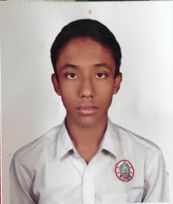
Young South Asian teen with short brown hair, brown eyes, and a white collared shirt with a school emblem on the breast.
Don Bormon
My Best Friend 

Oh, Wazed, my cherished dearest friend,
A bond that time cannot transcend.
Through laughter, tears, and all life's bends,
Our camaraderie shall never end.

In moments of darkness, you bring the light,
Guiding me through the darkest night.
With words of wisdom and calm insight,
You make every burden become light.

Your heart so pure, your spirit so kind,
A true companion, one of a kind.
In your presence, solace I find,
A treasure in this world, hard to find.

You fill my days with joy and cheer,
With your laughter, the skies appear clear.
Together we conquer, with no fear,
For our friendship's embrace is sincere.

In memories we create, forever we'll dwell,
The stories we share, our tales to tell.
Through thick and thin, forever compelled,
With you, Wazed, my dear friend, all is well.

So here's to you, Wazed, my closest confidant,
A friendship so precious, no words can supplant.
May the bond we share forever enchant,
My dear friend, in my heart, you'll always remain, nonchalant.

Don Bormon is a student of grade 8 in Harimohan Government High School, Chapainawabganj, Bangladesh.


Essay from Parivash Sobirova

               Book crazy

      Bonu is seven years old. She learned to read when she was five and she is fond of books. Bonu always dreams about opening a book shop and having a lot of books in the future.
    When Bonu went to the library with me she was very happy. Every book in the bookcase attracted her. Bonu  gazed at the librarian a few times. A librarian had been servicing the booklovers politely. I chose some books and I brought them to the librarian. I said to the librarian:
    - Hello!
    -Hi! Welcome!
   - Could I borrow these books for reading?
   - Of course. Could you tell me your full name, please.
   - Yes...
Bonu was looking at us with surprise during our conversation. 
    After I had borrowed books Bonu and I walked outside. Suddenly, Bonu said me:
     - Why you did not pay for the books?
    - Which books? - said I.
    - The books that you got from this book shop.
I realized the cause of Bonu's astonishment. Bonu thought the library was like a book shop. I explained to Bonu:
    - My little booklover sister, it's not a bookshop. This place is the library. The library has some rules: if you are member of the library, you can borrow the books you want in your free time. For borrowing books in the library you don't pay any money. Understand? 
    - Yes, of course! It's very nice! Can I be a member of the library?
    - Yes, certainly...
I helped Bonu become a member of the library.
      When Bonu disappears, we look for her in the library.  Bonu  will open a library in the future. She is really 'book crazy'!

Poetry from Abdurrashid Abdulrahman (newbornpoet)

Season of tears

The night wears its darkness 
And our blurry eyes are ready to shut their doors
And send our souls into the dreamscape of beauty
Before the cockcrow wakes us again_ into a hostile reality
Behold, our dreams are mirage indeed
Which engulfs our minds with tons of thoughts.
In our illusions, we hold tender dreams of tomorrow
But lo! tomorrow holds none but death
To assassinate our souls, stab us to the chest
And drown our tales into the depths of misery.
Thus, loved ones will assemble in grievance,
Spilling out tears and intercessions for our souls.
Memories flies, wandering in the broad skies 
In search of us to offer us bread;
The bread of hope that never quenches of eternal hunger.


Creative nonfiction from Leslie Lisbona

Middle aged white woman with dark hair and a large brown dog playing on a sandy beach in the water.

Puppy Love

Shortly before the pandemic, I adopted a puppy.  She could fit in my cupped hands.  She got fur on my camouflage dress, and it didn’t matter. I’ve had dogs before, large ones, when I was a kid in my parents’ house in Queens.  I knew what it was to love a dog.

When I was in the sixth grade, we moved from an apartment to a house.  Because we no longer had a doorman to protect us, we got a Doberman Pinscher a few months later.  My brother, Dorian, was enlisted to pick up the dog from the breeder. He took a long time.  I watched for him out the window with my friend Maya. Finally, Dorian walked in the door and put the new black puppy in my arms.  The dog had giant paws, an oversized belly, short legs, and floppy ears that felt like velvet.  We put him on the floor, and Maya put her hand out for him to sniff, and he sneezed in it.  We fell back laughing.  My sister, Debi, suggested the name Fonzie.

I cradled Fonzie in my arms, wrapped him in a blanket.

Dorian said, “Don’t baby him! He’s a guard dog.”

My mom said, “Don’t let him go upstairs!”

He was supposed to sleep in the little room off the kitchen, but at night I sneaked him up to my bedroom.  I hid him under my covers, and we slept cuddled together, his little head on my pillow, while I breathed the sweet mustiness of his fur.  In the morning, I brought him back to his room before my dad got up to make his Turkish coffee.  

After my day at school, I rushed across Queens Blvd. and down the four blocks on 68th Drive. I couldn’t wait to see Fonzie and take him to the park. Often Dorian and I took him for long walks in the neighborhood and let him run free in the fenced-in track area of Forest Hills High School. 

Even though I coddled him, Fonzie was a good guard dog.  He didn’t let strangers ask me for directions; he made such a racket that they had to drive away.  At Flushing Meadows, if a man walked towards me on an isolated path, Fonzie growled until he passed. 

By the time I was 18, both my siblings had moved out to apartments nearby.  When I was 20, my dad announced that we were getting another dog.  One day, I came down to the living room and saw a very large mastiff puppy lying by the front door, with his chin on the beige tile.  Upright, he was taller than Fonzie, like a colt with lots of loose skin. His body was the color of a lion, and his face was black.  Debi suggested the name Cujo. 

Cujo grew to be massive, broader than Fonzie.  He weighed more than I did.  When people saw me walking both dogs, they crossed the street. 

But Cujo was a fearful dog with a look of worry on his crinkled forehead.  He was startled when the traffic light on Jewel Avenue clicked from red to green.  He was just as startled when a dry leaf blew by. 

When I was 25 and still living at home, I went to Mexico on vacation. Dorian cared for the dogs while I was away.  When I returned, only Cujo greeted me. I figured Fonzie, who was 13 then, was looking for his tennis ball, which he loved to have in his mouth when someone came home.  “Fonzie!” I called.  My mom was playing cards with a group of friends in the living room. “Where’s Fonzie?” I asked her. She stood up. “Call Dorian,” she said. 

I ran to the kitchen phone that was on the wall.  “Where’s Fonzie?” I said, instead of hello.  After a long pause, Dorian said, “He died,” and started sobbing.  He told me that they were at the high school.  Fonzie had eaten something and came over to Dorian and lay at his feet.  And then he stopped breathing.  Dorian tried to lift him.  He told me how he struggled to get Fonzie into the car while holding onto Cujo and crying all the while.  Now I was crying, too.  I coughed out sobs, twirling the phone cord around my fingers until my chest hurt. 

Cujo and I became inseparable. I was able to give him my undivided attention, which he had always craved. I brushed his teeth, gave him medicine, cleaned his ears, bathed him.  He was gentle and open to anything I suggested.  When my nieces and nephews came over, he stood stock still while they petted him, staring down.

On one glorious spring day a few years later, I brought Cujo to Central Park, and he stepped on a shard of glass near the Bethesda Fountain.  He held up his paw for me to look at.  It was the size of my fist, with soft fur between each digit.  When I found the glass and pulled it out, blood spurted.  I didn’t know what to do.  I ran with him through the park to 68th Street and Central Park West.  With each step, he left behind a bloodied pawprint. On the street, no cab would take me with such a big animal.  I finally spotted one at a red light and explained that my dog was injured.  The cabbie said he would take us to an animal hospital on York Avenue.  I held Cujo and clasped his paw in my shirt as we sped across town.  He leaned against me, and I kissed his ear, whispering, “It’s okay, Cuji.” He got stitches while I sat in the waiting room for hours.

When he was 10, Cujo needed two surgeries on his hind legs; he could no longer support the weight of his body. I knew he was in pain. By then, Dorian had moved to California.  After many discussions with him and the vet, I decided to put Cujo down. In the waiting room, they called his name.  The aide took his leash and said I could go. But I wasn’t ready to say goodbye.  I said I wanted to stay with Cujo till the end.  The aide said I couldn’t.  I got on my knees, hugged Cujo, and wept into his fur.  I looked into his kind eyes, kissed him all over his grey speckled face, and told him what a good boy he was. When they led him away, all I had left in my hands was his leash and collar and no dog.

I thought of Fonzie and Cujo often.  I missed them.  Dorian and I talked about them.  He said he was sorry that he’d tried to contain my love and affection for them.  That they were probably such great dogs because I loved them so much.  That my babying them the way I did was probably the best thing. 

Decades passed.  I got married and had two sons. I told them all about Fonzie and Cujo.  I showed them pictures.  I told them how I used to wrap Fonzie in a blanket and carry him like a baby.  When Aaron and Oliver talked about Fonzie and Cujo, it was as if they had known them.

I never thought I would get another dog.  My husband, Val, was allergic. We discussed getting a dog when our boys were small, but the allergy issue always arose, and we didn’t like the hypoallergenic breeds.

Then one day, out of nowhere, Val texted me a picture of a black lab puppy with the name and number of the breeder.  He said that a work colleague had used this breeder and had forwarded him the picture.  He said that he would love this kind of dog and that she was available.  Black labs are not hypoallergenic, I reminded him: They shed; he would be ill; his eyes would itch.  Val said he didn’t care.  He would medicate himself and get an inhaler. 

“Val, are we really doing this?”

“This is the dog I want,” he said. 

Before he could change his mind, I arranged for the dog to be delivered from Pittsburgh to our house in Pelham. 

That morning, I felt nervous and excited. I was jittery; I dropped things; a receipt I needed flew out the car window. 

Then I was standing with my family on the curb waiting, as a guy with missing teeth pulled up in front of our house on Clay Avenue. In the back of his truck was a tiny puppy with the shiniest black fur, soft floppy ears, and caramel-colored eyes. When he handed the dog to me, I felt like I was going to burst. I couldn’t speak.  By the time Debi came over from Queens that afternoon, my cheeks hurt from smiling so much. “Maybe I should get a dog,” Debi said. I looked at her, confused; I’d never seen her pet Fonzie or Cujo.  When I asked her why, she said, “Because I want to be as happy as you are right now.”

I named the puppy Rhoda in honor of Valerie Harper, who had died that week. Harper had played Mary Tyler Moore’s Jewish friend Rhoda on a sitcom.  Debi loved the show, and I watched whatever my big sister watched.

Aaron and Oliver babied Rhoda, like I did. I carried her around until she got too big.  Val carried her around even when she was full-grown and was surprised at how much he loved her.

I sent Dorian a picture of me and Rhoda. “Lucky dog!” he said. He said that I looked just like I did when I was 12 – the same joy, “like the day we got Fonzie.”

Poetry from Luis Cuauhtémoc Berriozábal 

Strange Man

After Jorge Eduardo Eielson 

How far can that strange man go
with bird feet, failing eyesight,
and a cane that is liable to break
in half at any time? He is turning
the corner at a leisurely pace.
Snails leave him in the dust. He
is twice, thrice times slower than
slow motion. Day turns to night
and the strange man lumbers on.
His cane miraculously bends but
does not break. Thin and fragile,
the strange man and his cane
has turned the corner.

*

Eventually 

Eventually, you will get 
to the bottom of me.
My shrunken heart, hidden 
under a grain of rice.
You will find me with the moth,
a family of them, drawn
to the light. I will be found
somewhere in Asia.
If you want to know, I will
be there in search of
the footsteps of ancient
poets, Li Po, Tu Fu, to 
draw inspiration. Still
as a birch tree I will be.
I will pay homage to
those who held their own,
whose names stood against
the test of time. I will
acknowledge the people 
who came before me,
who painted on cave walls 
before school eventually 
ruined everything.

*


One of the Many Birds 

I find you in the branches
of the dark tree,
just one of many birds,
just one of the night singers.
You are the neighbors 
I want at my grave
singing my eulogy
and my lullaby to ease
my ghost self into sleep.