Story from Makhfiratkhon Abdurakhmonova

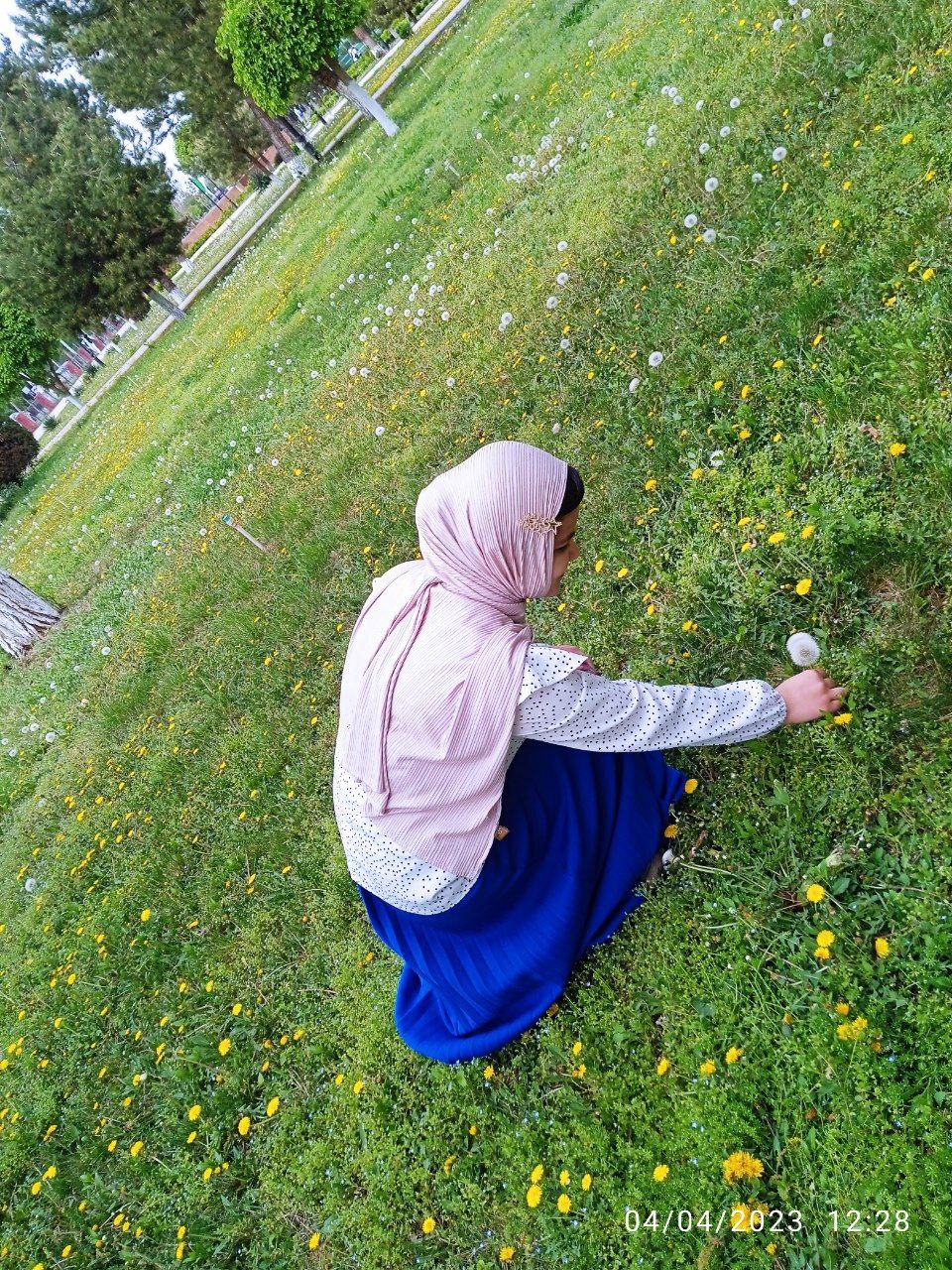
Young Central Asian woman from the back. She's picking a blooming dandelion flower from a lawn and has a pink headscarf and a blue skirt and a white patterned top.
Makhfiratkhon Abdurakhmonova


Never Lose Hope: The Inspiring Story of a Cancer Survivor

Emily was diagnosed with stage 3 breast cancer at the young age of 28. Her world came crashing down as she heard the news from her doctor. She had always been a health-conscious person and this news shattered her completely.

The first few weeks were tough, Emily underwent multiple surgeries and chemotherapy sessions. But as time passed, her condition started to deteriorate, and she started to lose hope. She felt like giving up on life altogether.

One day, while lying in bed feeling helpless and hopeless, Emily stumbled upon a quote that said, "Never lose hope, miracles happen every day." These words struck a chord with her and she decided to hold on to hope.

Despite being weak, Emily started going for walks every morning. She would take each day as it came and tried to stay positive amidst all the chaos. Slowly but surely, her condition started improving.

After months of treatment and perseverance, Emily was declared cancer-free! Her journey wasn't easy but she never lost hope. Her story is an inspiration for all those who are going through tough times.

Even when life seems unbearable and everything feels like it's falling apart, remember to never lose hope. Remember that miracles can happen every day if you hold on tightly enough. Keep moving forward one step at a time because you never know what tomorrow may bring!

Author: Makhfiratkhon Abdurakhmonova from Uzbekistan đŸ‡ș🇿 

Makhfiratkhon Abdurakhmonova, born in 2004 in Uzbekistan, is a remarkable individual with an impressive list of achievements. She has been an International teacher of English for four years and holds various language certifications, including CEFR (UZB)-C1, International ESOL-B2, SAYLOR ACADEMY-C1, and EFSET-C2.

Makhfiratkhon is also a holder of over 70 international certificates and is a member of approximately 35 international organizations. She has completed more than 65 paid courses from international universities and has earned the prestigious IBM $1200 badge. Notably, she completed Arizona State University’s 150-hour TESOL certificate course.

Her academic excellence has led to acceptance into esteemed universities such as North Texas University, Barry University, and St. Johns University. Makhfiratkhon is the recipient of the University Incentive Scholarship.

Aside from her academic pursuits, Makhfiratkhon is a founder of several projects and has participated in around 50 international conferences. She has translated several books and served as a delegate for Asia World Model National Model Offline Conference. Makhfiratkhon also won an International MUN internship and became an ambassador for SGAP Leaders. She is a fellow member of ERU and a member of ISRES.

Makhfiratkhon’s passion for making a difference extends beyond academia. She serves as a Child Rescue Ambassador for IQRA Foundation and a Child Advisor for Glory Future Foundation. Additionally, she is an ambassador for Greenpeace organization and an ACCA member.

She actively participates in various clubs and organizations such as Global Friends Club, IHRC (International Human Rights Commission), FIAG (Foundation for International Affairs and Governance), IAAC (International Association for Advancement in Computing Education), Gurukshetra Foundation, Borsiba International Organization, and INERY.

Makhfiratkhon is also a Global Youth Ambassador and a volunteer for the Movers Program. She has completed courses in TOEFL iBt from the University of California and Food and Health from Stanford University.

Furthermore, Makhfiratkhon has represented Uzbekistan as a delegate for ‘Best Diplomats’ in Thailand, Malaysia, and the United Arab Emirates. She is a volunteer for ‘Quyosh nuri’ and serves as a coordinator for IHRC in Uzbekistan.

Her passion for peace and social initiatives is evident through her role as a Global Peace Ambassador for Iqra Foundation and as the coordinator of Iqra Foundation in Uzbekistan. She is also an ambassador and representative of IHRC in Uzbekistan.

Makhfiratkhon’s dedication to personal development extends to various other areas. She holds two TEFL certificates, is an Independent Travel Manager for Dreamport Company, a VIP member and representative of Borsiba International Organization, and a Global Youth Ambassador for Global Youth Conference Dubai-2023. She also serves as a Country President of Iqra Foundation Global in Uzbekistan, an Ambassador of 21st DigiSkillz, and a Global Education Ambassador.

With her exceptional achievements, Makhfiratkhon Abdurakhmonova embodies the true spirit of ambition, determination, and commitment to lifelong learning. Her contributions to education, humanitarian causes, and global awareness are commendable, making her an inspiration to many aspiring individuals around the world.
Poetry from J.J. Campbell

Middle aged white man with a beard standing in a bedroom with posters on the walls
J.J. Campbell
young lost men
 

demons


lost angels left

to dangle in the

wind


they find homes

in the brains of

young lost men


a simple host that

provides everything

a demon needs


until a woman

comes along


some maturing

happens


and then all hell

breaks loose


the rebellion resembles

a prison riot of sorts


and from experience


soften and give in
-----------------------------------------------------------------
be one with your desire
 

a passing rain

shower


your beauty as

easy as the pain


dance naked in

the shadows


regret, the last

thought that enters

the brain


don't try


just live


be one with

your desire


close your eyes

and let forever

grasp your will

to live


no one knows

the future


even the gods

you talk to every

night before bed


just don't pick

the shortest straw
-----------------------------------------------------------
tennis
 

do any of your dreams come true


does that beautiful woman ever say hello


do those legs go on for miles and miles


does the moon howl at anything


do the flowers still grow this late in the year


does she ever kiss you goodnight


do the ghosts visit you as well


does this music mean i'm going to hell


do you understand what pain really is


does the drugs even touch your soul


do you know when the game is tonight


does your favorite team ever win


do you ever gamble on cricket


does this poem make any fucking sense


do you even care


does it matter


do you know the answer


does anyone
-------------------------------------------------------------------------
still feels like fucking summer
 

here come the ghosts, slutty

nurses, witches, ghouls, goblins,

awkward superheroes and red

wagons full of candy


when i was a kid, it was always

cold on halloween


now, it still feels like fucking

summer


just my luck


i'm old, diabetic, and none of

those "cool" costumes will fit


all that candy would probably

kill me anyway


there are certainly days

where i'm willing to take

the chance
------------------------------------------------------------------------
a lost soul that looks like
 

i see

a young

woman

in glasses

looking

over at

me


i've been

told that

my flirting

is going to

get me

arrested

one day


don't let

these intense,

murderous eyes

fool you


i'm just a lost

soul that looks

like a creep


a child that

was never

loved enough


a poet, a hopeless

romantic that wants

to believe


in a world that

constantly says

no


J.J. Campbell (1976 – ?) is old enough to know where the bodies are buried. He’s been widely published over the years, most recently at The Rye Whiskey Review, Disturb the Universe Magazine, Carcinogenic Poetry, Lothlorien Poetry Journal and Horror Sleaze Trash. You can find him on most days on his mildly entertaining blog, evil delights. (https://evildelights.blogspot.com)

Poetry from Zahro Shamsiyya

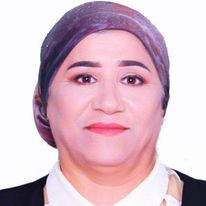
Central Asian woman with a purple headscarf, brown eyes, and a white top and black jacket
Zahro Shamsiyya
MYSELF 

Never ask me, please, who am I myself 
Myself is a couple of verses on paper. 
My self will save myself, and I hope 
For those who left me it is bad news. 
Myself is different, differs from me, 
Far away from those who are so selfish, 
May myself is not visible for everyone, 
But myself will never abandon myself. 
One day I will go shaking my hand to all, 
From the arenas which disappointed me. 
I will tear the dress of arrogance myself 
Then I will throw it from mountain.
A moment, only a moment is enough 
When myself starts a rebel inside me. 
I do not wait for a clap from hands, 
For me being myself is the greatest honor. 
I am never afraid of foxes, no, no,
 Even any jury cannot threaten me. 
I am so proud of being myself, 
I am thankful of God for being me. 
Never ask me, please, who am I, 
Rather read my poems, read my verses. 

BEGINNING
 
One day I lose my life, it is clear 
One day I will return to the Creator. 
And all my collected pains and sorrows 
I will only retell to my only God. 
One day my body will disappear, 
Maybe I will be reborn as a basil. 
Being happy from my death 
One day my haters will have a party. 
Passing through alley with silence 
I hear all the gossips they tell. 
Now my poems will become orphan, 
Now I only live in my poems. 
But the world remains the same, 
Thousand years again it stays still. 
All the lies, all the fake faces, 
And ignorance in the gene. 
All the lips whisper one by one, 
Thanks God, I am far away. 
Blind souls never recover, 
I am not related to earth any more. 
The only thing tortures me is 
My days that I spent aimless. 
And incomplete writings of mine, 
My voice that paused on my throat as well. 
One day I lose my life, it is clear 
One day I will return to the Creator. 
Asking God to revive inside of me 
I will utter the name of my elder son.

Sharipova Zuhro Sunnatovna (Zahro Shamsiyya) She was born on April 9, 1969 in the Nurata district of the Navoi region. Her first poem was published in 1985 in the Gulhan magazine. Uzbek publishing houses published works in the journal "Sharq Yulduzi", in the literature and art of Uzbekistan - "Ma'rifat", in various regional and district newspapers. World almanacs in Canada, -2017 in Dubai WBA 2018 "Turkish poets of the world" (Buta 3) 2019, "Muhammad Yusuf izdoshlari" 2017 almanac. She published her book "Ismsiz tuigular"

Essay from Oydinova Malika

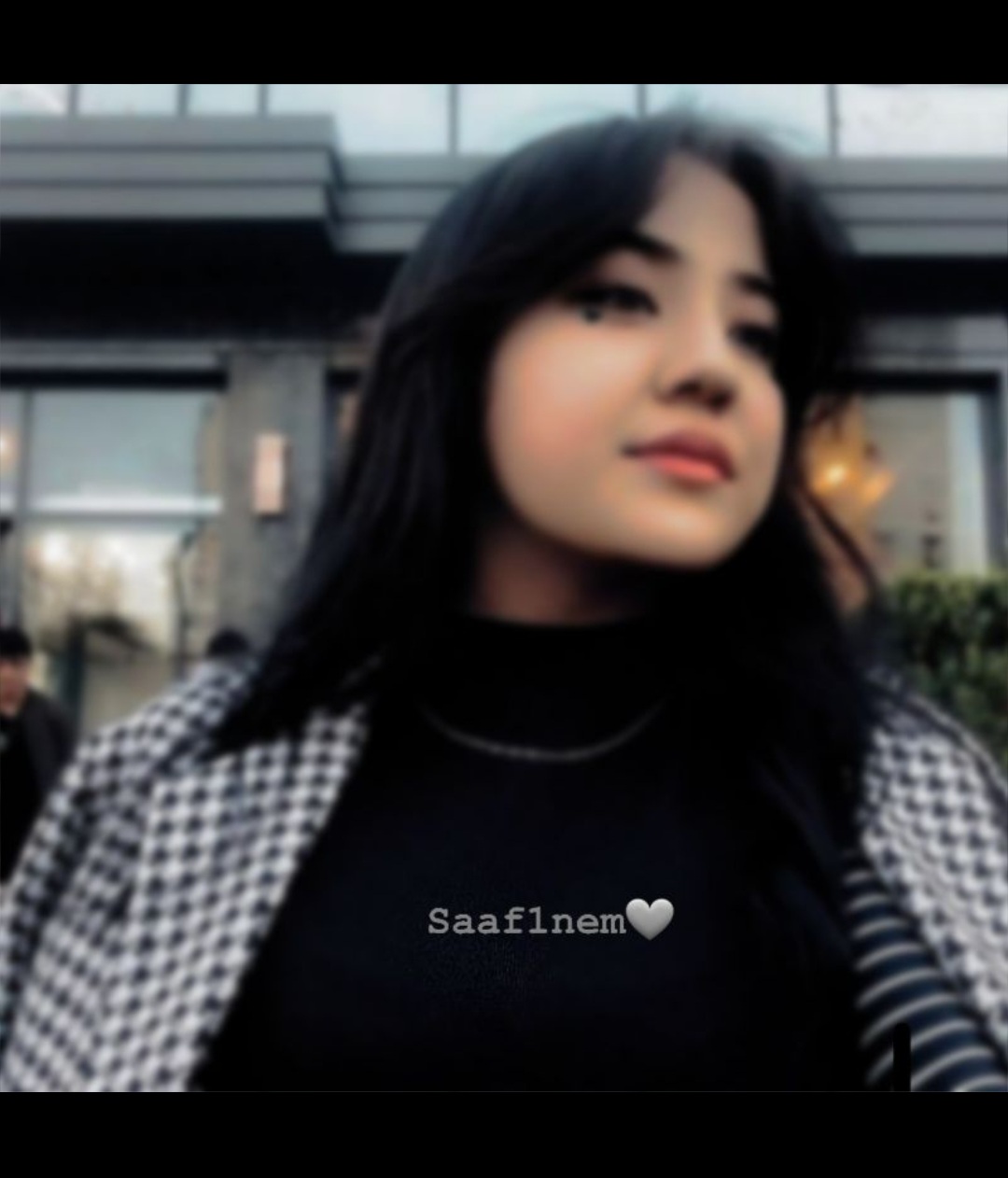
Young Central Asian woman with long straight dark hair, brown eyes, a white and black checkered coat over a black blouse.
Oydinova Malika
Annotation: This article discusses difficulties in learning foreign languages and solutions to avoid this problems.
Key words: learning process, problem, grammatical difficulties, teaching, learning, foreign language.

Today, it is very important for everyone to know foreign languages. The world is becoming more and more globalized, and knowing two or more languages is not just a hobby, but a need of the hour. Of course, everyone wants to achieve a certain goal by doing something. Along with this, new language learners who start learning English, French, German or any other Eastern languages aim to achieve a certain goal and result by learning these languages. Unfortunately, some language learners make mistakes at this step and face a number of difficulties later in the language learning process.

However, learning foreign languages is a more responsible and complex process. Difficulties in learning foreign languages are observed not only in young children and schoolchildren, but also in older learners and university students. It is known that English and Uzbek languages belong to different families, and language learners face phonetic, lexical and grammatical difficulties. Including:

- Almost all students have difficulty learning the sounds [th] and [ð]. The reason for this is the lack of interdental sounds in the Uzbek language. Our language has not developed the skills to pronounce these sounds.

- Since the English pronunciation of the sound [r] is different from the Uzbek r, students also have difficulty in pronouncing this sound.
- The pronunciation of the sounds [t, d] is also not the same in both languages. Therefore, their pronunciation is difficult for some young people.

- [w] sound does not exist in Uzbek either. They also have some difficulty in pronouncing this sound correctly. When pronouncing it, they confuse it with [v] in Uzbek language.

In order to teach the correct pronunciation of the above-mentioned sounds, the teacher should clearly explain to the children the location of the tongue as much as possible, check it regularly through repetition exercises, and pay special attention to the students' pronunciation in each lesson. difficulties in sounds are also eliminated.

It also creates phonetic difficulties in the following cases:
- the letter e is not pronounced at the end of the word — apple, Pete;
- the letter combination gh cannot be read in the middle of a word — eight, night;
- the letter k is not pronounced before n at the beginning of the word — knock, knee and a number of other difficulties can be observed.

The difficulty characteristic of the majority of Uzbek students is that they add the sound [Ə] before the suffixes in their pronunciation when adding plural or tense adverbs: books [bu'kƏs], happened [hĂŠpƏ 'nĀd]. Apparently, by adding such an unnecessary sound, they are also changing the position of the word stress. Not being able to read the transcription is a particular problem. It is necessary to teach the correct pronunciation of words and symbols representing sounds.

When it comes to grammatical difficulties in teaching English, it is safe to say that many difficulties can be encountered. If a person knows all the words in the language, but does not know the connections between sentences and words, he will have difficulty understanding the content of the speech. That's why learning grammar is so important. If he does not have good grammar skills, he will not be able to express his opinion properly. Difficulty in speaking, writing and translating.

-Article problem. This is arguably the biggest challenge in learning grammar. When we talk to many English language learners, almost all of them say that the most difficult part of learning English grammar is the articles and tenses. In fact, since the Uzbek language does not have an article word group, it is difficult to use and translate it.
Article rules should be memorized. However, the many exceptions to the rules make learning difficult for learners. If the translation is taught more precisely, they will not have much difficulty in using the article. For example, it is possible to teach that the indefinite article is translated as one, some kind of one, and the definite article is translated as that, yet.

-Another difficulty in mastering English grammar is prepositions. In the Uzbek language, prepositions are expressed by agreement suffixes. In English, conjugations are expressed through prepositions. For example, the place-time agreement in Uzbek can be expressed in English with the prepositions in, on, at. For example:

in - in January, in 2015, in a week
on - on Monday, on January 15, on birthday
at - at the weekend, at 10 o'clock

As for the lexical difficulties in teaching English, they are as follows:
-Almost all words in the English language have different meanings. That is, one word means more than one. According to M. Norova, one word in English has a maximum of 23 meanings.

-The fact that a certain part of the vocabulary of the English language came from other languages;
-The wealth of idioms of the English language and several others.
In addition, students do not and cannot always follow the rules learned in the training. After the lessons, they do not try to learn new words by practicing pronunciation and writing essays. It is no secret that one of the biggest disadvantages is that when mistakes are corrected, students often think, "This is not my language." This has a negative impact on learning a foreign language.

Excessive use of the mother tongue in the audience:
Learners learn another language best when they are forced to use it. The teacher should require students to communicate in the language being studied. Only in this case, the level of achievement in language learning and fluency in pronunciation will increase. Learning a foreign language will be successful only if it is strictly required and restrictions are imposed during the lesson.

Dependence of students on the teacher:
Independent work on oneself, independent problem solving and research serve to master any subject well. The fact that the student turns to the teacher for every small problem indicates his dependence. This reduces the student's ability to work on himself.

A number of ways can be listed as a solution. The problem is that independently watching foreign language films and videos adapted to language teaching serves as a bridge, at least partially.

In conclusion, as every job has its own difficulties and hardships, there are many problems in learning foreign languages, but there are ways to overcome them. All this is done through the curiosity of the learners and their serious approach to the work they have started, and their further research.

Oydinova Malika student of
Uzbekistan State World Languages University of
English faculty of Foreign Languages and literature


The Crazy Beggars, a drama from Mantri Pragada Markandeleyu (first installment)

Playwright Mantri Pragada Markandeleyu's headshot on a screen on a theater overlooking a busy street corner in a city with musicians gathering around. Text reads The Crazy Beggars, a Melodious, Mind Blowing Motivational Musical Screenplay.

THE CRAZY SINGERS

STORY AND FULL SCREEN PLAY

THE CRAZY SINGERS

(This piece will be shared in installments, one per issue)

It’s a Musical Melody, teenage Love Story

Introduction

At many States/Countries especially in UK, beggars earn substantially good money through their Singing on the public platform.

There are big numbers who earn millions of moneys through begging profession.

These people live a lavish life.

Tax authorities never touch these people.

Beggars are of various types.  Some are small time beggars.

Some are special type beggars.

Some are full time beggars.

Some are professional beggars.

Some are broker beggars.

Most of the full-time beggars and professional beggars even evade tax payments.

For this begging profession, there is no age limit.

Even yudult (those who turn from ‘youth to adult’ are called ‘yudult’. take to begging profession.

Some youth also begs for their livelihood.

Aged and helpless people beg for their bread and butter through various means.

One beggar at a nearby mall, one ‘middle-aged beggar’ sitting leisurely on the platform, keeping a small money pot nearby to his side, wearing a black cooling glass, smoking a cigarette and reading English newspaper.

The beggar did not have any shirt and was only wearing a torn banyan.

The beggar had a short. Pedestrians were surprised by seeing the beggar’s pose of sitting style and reading look at the English newspaper.

Pedestrians thought for a while, about his pleasantness, happiness and comfortably sitting style.

Pedestrians instantaneously, told the co-passenger about the beggar’s style of reading the newspaper.

The beggar looks to be of ‘no worry’ at all.

The beggar looked like having total peace of mind.

On another occasion, the XYZ observed at a “X’ road traffic signal point near the Court mall, that a group of youth, holding small hundies, begging from all the passersby including pedestrians.

When a Pedestrian asked the purpose, the youth who were moving here and there at the mall’s ‘X’ road told that they are collecting money for the help of under-privileged and disabled children/people charity purpose.

The Pedestrian observed several times on several days about this type of begging by youth, who were wearing good dress.

When the Pedestrian enquired about this type of money begging, the Pedestrian was told that there was a racket behind this.

Also, it was told to Pedestrian by the locals, that they earn millions of amounts, by doing this begging.

The Pedestrian was surprised for this type of earning huge amounts. 

All this was happening well in front of the Traffic Police Constables.

It looks, that this is the easy way of earning amount.

For this type of begging, there are no permissions required.

There is no time limit for this.

There is no lunch hour.

Even on rainy days, these types of activities go on by wearing rain coats and umbrella.

At some places, street children also beg from all the passersby.

It looks that there is no control over this begging system

The begging is of many types.

Begging for personal gains, begging for institutions sake, begging for collective purpose, begging for charities purpose and begging for daily enjoyment purpose, has become a regular feature.

It is generally observed that regular daily beggars including ladies beg for money at railway stations, bus stands, in the local trains, cinema halls, function places, malls and at many places including at medium size hotels and Churches/Temple places.

Of course, it is a pity about these beggars.

But, what to do?

Many rehabilitation centers, NGO centers and the Government to take up this matter, for eradication of begging by providing an alternative earning for these helpless beggar’s, fancy beggars and professional beggars.

Most of the money is spent on consuming liquor, viewing cinema etc. 

Beggars, never habituated to work for salary because the amount received as weekly/monthly salary is not suffice to meet their needs.

Therefore, the money received through begging is unlimited and enormous.

If this is the situation everywhere and unchecked this type of menace, one has to think about the eradication of begging habit and remedies in future.

Local government to set up the rehabilitation center’s for beggar’s purpose.

Measures are to be taken to discard this type of begging menace. Government with the help of NGO’s is to work out strategies to curb this type of menace.

Media, TV channels and other nodal agencies have to come forward to bringing these issues to the notice of the Government for rehabilitation of beggars and there should be Plan of Action for eradication of this type of begging.

Respective Municipal Corporations also to work out for help to establish rehabilitation centers for beggars’ purpose and to bring them on par with normal persons.

In some western countries, begging on roads is banned.

Of course, they are western countries.

We have to work and evolve various strategies to eradicate this begging system.

Some types of suitable Legislation are to be passed for total eradication of begging system.

For this, to streamline, it could take some time.

But, in the meantime necessary and appropriate ‘awareness’ program is to be brought in the minds of beggars.

THE CRAZY SINGERS

(Full Screenplay Scenes)

THE CRAZY SINGERS

STORY AND FULL SCREEN PLAY

THE CRAZY SINGERS

It’s a Musical Melody, teenage Love Story

Beggars are of various types.

Some are small time beggars.

Some are special type beggars.

Some are full time beggars.

Some are professional beggars.

Some are broker beggars.

Most of the full-time beggars and professional beggars even evade tax payments.

For this begging profession, there is no age limit.

Mantri's face superimposed on an icon of the color spectrum.

THE CRAZY SINGERS

It’s a Musical Melody, teenage Love Story

Copy Right

Best Content for Utility in Movies/Film Making.

For Any Deal/Agreement for use of this Story for any purpose, please contact Author, Story & Song Writer. Copy Right Stories of Mantri Pragada Markandeyulu. All rights reserved. Any unauthorized reprint or use of this material is prohibited. No part of this content may be reproduced or transmitted in any form or by any means, electronic or mechanical, including photocopying, recording, or by any information storage and retrieval system without express written permission from the author.

————-

Address:

Plot No. 37, H. No. 1-6-53/1,

ANUPURAM, ECIL Post, Kapra,

(Opp. Dr. Homi J Bhaba Community Hall)

Hyderabad -500062

Telangana State (INDIA)

Email: mrkndyl@gmail.com

Twitter: @mrkndyl68

Phone Nos.

+91-9951038802

+91-8186945103


.