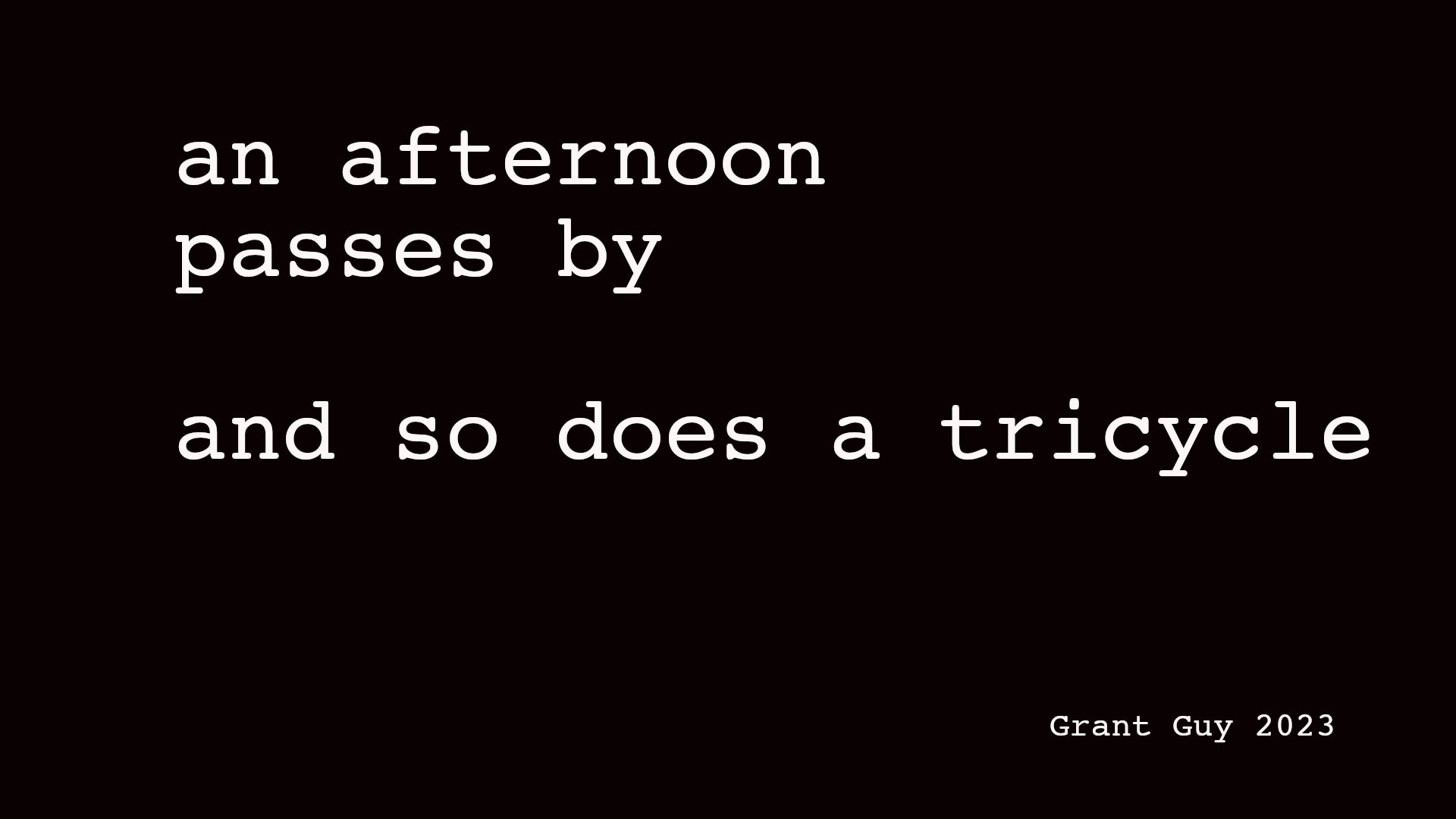
Grant Guy is a Winnipeg, Canada, theatremaker and poet. He has 6 books published and his poems and satories have been published internationally online and as hard copy.He was the 2004 recipient of the Manitoba Arts Council’s Award of Distinction and the 2015 Winnipeg Arts Council’Making A Difference Reward.
THE PSYCHOLOGICAL EFFECTS OF MUSIC ON THE UPBRINGING OF CHILDREN

Ziyoda Khikmatillaeva
Vocal teacher,
Children’s music and art school No 24,
Yashnabad district, Tashkent.
Annotation: This article discusses the psychological effects of music on people’s and children’s mind and its benefits, the recommendations of psychologists and the views of scholars in this field.

At the online meeting held on March 19, 2019 under the chairmanship of the President of the Republic of Uzbekistan, Shavkat Mirziyoev, "Five initiatives related to youth" were announced. It is not coincidence that the first of these five initiatives is aimed at increasing the interest of young people in music, art and other types of art. Currently, our government are taking advanced measures aimed at the development of music and art. At the initiative of the President, several music and art schools are provided with musical instruments, basic and sport equipments. These efforts are definitely a product of attention paid to the young.

President Sh.Mirziyoev claims that "We consider it our first priority to improve the act of all stages of the education and training system based on the current requirements."
In this regard, we should say that in the past centuries, our ancestors also paid special attention to music. We can mention many of our Eastern scholars, such as Abu Nasr Farabi, Abu Ali ibn Sina, and al-Khorazmi as an example. These scholars are considered as the founders of Eastern music theory. Especially Abu Ali ibn Sina emphasized and discussed music in his several medical treatises. He highly promoted music in his treatment method. He described music as "a great power that heals the human psyche. "

Moreover, he treated his patients who has mental disorders with music. Many psychologists have determined a person's psyche based on which genre of music one listens most. Not only in the East, but also in Europe all aspects of music oversaw rapid development in the 15th and 16th centuries. If we look at the life and work of many musicians who lived and worked in those times, we can observe that their psychology was totally different from each other. This is clearly visible in their works. If we consider the great Austrian composer V. A. Mozart, he was very funny by nature, and this was reflected in his works. When we listen to his works, we can certainly observe a bright character.

On the contrary, if we look at the work of the great composer L.A. Beethoven, we can see that he mostly created melodies in a sad mood. It also goes back to his mental state. Music is so powerful that it can't help but affect a person's psyche. Similarly, music had a great influence on Mozart's life. It is no exaggeration to say that music was the cause of his death. As you see, music is such a force that creates mental state that it is inextricably linked with human psychology.
Nowadays, the role of music in upbringing children in all aspects is incomparable. Music has a positive effect on the minds of children who are engaged in music. By nature, such children are brought up with very sensitive taste and  sensitivity to natural phenomena. Music helps to broaden children's horizon and teaches them to understand world sciences. Anyone can listen to music, even if they are not musicians, but not everyone can understand it. Only a musician can understand the language of music. There is a big difference between listening and understanding. Understanding music is a process that is both mental and emotional.

In his  works, the great encyclopedist Abu Ali Ibn Sina spoke extensively about music and its psychological and emotional effects. Discussing the education of sophistication, he said: "In order to strengthen the tamperament of the child, it is necessary to apply two things to him. One is to gently comfort the child, and the other is to put him to sleep. They are music and lullabies, respectively. Depending on the amount of acceptance of these two, the child's talent for physical education with his body and music with his soul is formed, the first belongs to the body, and the second belongs to the soul " said the scholar.

If we talk about his opinion in this regard, Ibn Sina firstly understands music as a means of communication between people. In expressing thoughts and feelings, he considers verbal speech to be primary and balanced singing as an even more perfect stage. "If the melody is decorated with rhyme and proportion, it has a stronger effect on the soul," explains the scholar. So, in accordance with his opinion, music has a stronger effect on people spiritually than speech. In fact, this view can be an example of our opinion that music controls people's minds and soul. Ibn Sina emphasized the importance of forming different emotions in children with the help of music, and in his work "The Laws of Medicine", he emphasized the need to develop musical emotions in children from childhood.

The psychological characteristics of music was analysed in Farabi's "Big book on music", "Book on musical rhythms", Ibn Sina's "Donishnama", "Treatise on the study of music" and other works, Fakhriddin ar-Razi's encyclopedia "Treasure of knowledge" Urmawi's "Book of Periods", al-Husaini's "Laws of Music Science and Practice", Kavkabi Bukhari's "Treatise on Music", Abdurrahman Jami's "Treatise on Music", Abdulkhaq Dehlavi's "Study of Hearing Matters" and a number of other scientific works. Furthermore - "Through his performance and composition, Farabi achieved such high levels of emotional impact on the listeners that it is known that he confused people by playing music and playing melodies, sometimes he put the energetic people into a state of silence, and sometimes he put the smart ones to sleep and surprised the sly ones."

Musical feelings, first of all, expand and develop children's concepts of kindness, value and their horizon. Along with strengthening their aesthetic views on life, it helps them to understand the world in a wider scope. Of course, it is self-evident that music is an essential element for children to beautify their lifestyle and enrich their inner world. This situation is a concept mutually related to psychology, and people who are engaged in music are applying their inner skills to life consciously or unconciously.

In the work "Nightmare", Kaikovus said "...if you are musician, be happy, be cheerful, keep yourself clean all the time, let a pleasant smell come from you, be eloquent, don’t speak rudely, don't be a heavy hearted. Do not always play hard music and do not always play easy musics, because the music should not be taken in the same way, because not all people are the same, and their natures are not compatible with each other, because the people are different ". How meaningful and wise these words are. Here, views on the important role of music practice in the system of social relations are expressed as a means of strong emotional influence on music.

Generally speaking, people who are involved in music have a kind and gentle nature. They are striving for beauty, possessing a unique taste, the manners of speech decorated with a very delicate and beautiful manner. Music can make people happy, calm, make them think, give them peace of mind, wake them up and put them to sleep at the same time. We can describe music as a miracle. So, of course, in order explain the meaning of this to the young people who are currently growing up more deeply and to educate our children to have a musical taste, we must organize conditions for them to engage in and practice music and increase their interest. To achieve this, we should raise children in harmony with music from childhood and it will certainly serve as a great strength for them to find their place in society in the future.

In many countries of the world, musical education of the young generation is of national importance and is considered as an important means of personality formation. As in other types of human activity, in the art of music, attention is an important and necessary condition for the effectiveness of human activity in all sensory (emotional), intellectual (mental) and moving processes. Attention is the concentration of activity on one thing at a certain time. There are mainly two types: involuntary and voluntary attention.

But one more specific type can be distinguished - it is characterized by the fact that it comes after voluntary attention and lasts for a long time. This is a very intensive and effective mental activity, which gives high efficiency to all types of work. In the art of music, all types of musical activity are related to attention. Attention is especially important in public performance. The raised hands of the conductor before the performance, the auftact, the gestures and movements between the soloist and the accompanist - all this is called attention in musical terminology. In modern psychology, its quality features are studied in the structure of attention. This includes the stability, shift, distribution, and volume of attention. It is also possible to include distraction and disorder in this list. Attention is one of the most important components of the learning process. All great musicians have extraordinary attention. For example, Mozart was able to write music calmly even in a crowded room and when outer voices were heard.

The Polish pianist and composer I.Hoffman answered the question about the only way of working with purpose as “Concentration is the first letter of the alphabet of luck”. Whereas Russian composer and pianist N.Metner said "Before starting work, it is necessary to concentrate well and know what and how to do, then the musician will be less tired and exausted ". I.Hoffman claimed "Work is successful only when it is done with full mental concentration".

However, "it should be remembered that the quantitative aspect of training becomes meaningful only when it is combined with the qualitative aspect". Mindfulness puts an end to the question of how long concentration should work. I.Hoffman recommended taking a break every half hour and never working for an hour or two without a break. L.Barenboim proposed exercises for improving concentration for musicians. S.Stanislavsky said that an artist's focus can be improved even without special exercises, if he is as attentive and disciplined as possible in his daily work, understands and responsibly approaches his professional work.

Moreover, all musicians emphasized that the ability to hear oneself from outside is considered very important in the formation of attention. That is why the ability of a musician to control what one plays, to be able to hear oneself from outside, is considered as one of the foundations of the art of music. A musician's focus can be different: wide and narrow, late and progressive. Automation of movements helps to focus attention on one place.

One of the main activities in the art of music is music performance. Listening to a great performance, we feel pleasure, joy, inspiration, or, as the Greeks say, "catharsis" - the process of inner, spiritual purification and renewal. The performer is the link between the composer, and the listener. Differences in the art of musical performance depend on the specific nature of the musical instrument, the form of solo and public performance, the genre and form of the musical work, and, in addition, the creative individuality, professional training and skill level of the performer in the first place.

For the performer, it is essential to understand and feel the psychology of the listener, correctly understand the requirements of aesthetics and the mood of the audience, skillfully deliver the author's opinion, subjugate the audience to his will, awaken beautiful aesthetic feelings in the listener and creative mood. Perception of music by listening should be considered as the main activity in the art of music, just like writing and performing music. Moreover, without listeners, the art of music loses its meaning and ceases to exist. Listening to music and perceiving it is such a type of musical activity that it is nurtured and trained from childhood.

It is said that everyone can hear music, but not everyone can understand it. The level of perception in the process of listening to music depends on the general moral and level of musical training of the listener, and is proportional to it. A complete and deep understanding of a piece of music also indicates the skill of the composer and performer. In this way, it can be concluded that the listening process is inseparable from the listener's upbringing, individual abilities and training. Music is psychology of education and training. This branch of music psychology is based on the guidance of psychology, helps to find specific ways of working with students.

This network is inextricably linked to music pedagogy, which directs the natural characteristics and abilities of students and allows them to develop musical ability. In addition to traditional methods such as the ability to hear music, musical memory, rhythm detection, checking, in music psychology tests have been made on musical intelligence, talent, identifying abilities, studying and working on a piece, preparing for a concert performance, interaction with students and concert team, etc.

We know from history that many famous musicians feel indebted to their teachers. Professional experience has been developed, enriched and continuously passed from generation to generation. The "master-disciple" school, widespread in the East, is a vivid example of this. According to it, the "student" not only took the teacher's lessons, but also lived in his house and mastered the secrets of musical art together with family household psychology.

Then, when the student reached a certain level of maturity, he himself established a similar "school of teachers". Representatives of this school often united as a large association and held mass cultural events and other holidays. Musicology and musical educational activities are aimed at studying and promoting the art of music. Music historians, critics, theorists, promoters, and music scholars analyze, enrich, develop, and conduct cultural and educational work among the masses promoting music in clubs, parks, vacation homes, radio, television, press, and in other places. Musical performance and creativity based on a solid foundation makes art more perfect.

Musical enlightenment introduces the audience to art, masterpieces and achievements of world music culture. In the psychology of music, an important place is devoted to the study of the intellectual and thinking activity of a musicologist, as well as the psychological features of the relationship between a composer, an author, a performer, and a listener. Psychology of technical support and technical equipment of musical art. This is another type of activity without which modern music art cannot be imagined. Professionals in the field of musical arts maintenance and technical equipment should have specialized technical knowledge, as well as musical knowledge, the knowledge and skills needed to build, repair, tune, record music, and work with hearing aids and should be familiar with the post and direction of musical performances, concerts, TV and radio broadcasts.

Modern music art relies more and more on new technologies. This is a completely different psychology that is connected with the technology, creative, performing, and listening activities. Functional music psychology. We see the use of music for practical purposes in the direction called functional music. With its help, aesthetics are given to everyday household life, especially in the field of production, this kind of music ensures that the labor process is carried out at a rapid pace to increase labor efficiency.

The use of music in the work process has its own laws related to the characteristics of nervous and mental states during the working day. It is of great importance to choose music that helps to solve production problems such as establishing the necessary rhythm for the labor process, increasing work efficiency, releasing increasing fatigue. The psychology of music psychotherapy. Music used for healing is studied in music psychotherapy. For this, listening and creating music is recommended. This field of music psychology is almost unexplored in our country, because it requires serious knowledge of both medicine and music. However, we can see research in this field in the studies of Ibn Sina. The ability of music to affect human health and emotional state, the positive impact of deep musical experiences in the process of listening and playing music is an important basis for conducting scientific research in both medical and musical sciences.

In conclusion, it can be said that the results of the psychological effect of music is a necessary element for musicologists who find solutions to problems, such as the development of children's minds, how to instill music in students, to introduce and interest children in music, to concentrate while listening to music, to feel music and rhythm, to have a positive attitude towards music. The science that deals with these problems is called music psychology. We can observe that the science of music psychology is considered a very important science not only in Uzbekistan, but also in foreign countries. We believe that all of the above-mentioned definitions will help to enrich the psyche of young people and their outlook and interest in music.


References

1. Mirziyoev Sh. Ensuring the rule of law and human interests is the guarantee of the country's development and people's well-being. Tashkent – “O`zbekiston”, 2017.
2. Decree of the President of the Republlic of Uzbekistan on “Five initiatives related to youth”. – T.: 2019.
3. Yо‘ldosheva S.H. О‘zbekistonda musiqa tarbiyasi va ta’limning rivojlanishi / О‘quv qо‘llanma. – T.: “О‘qituvchi”, 1985.
4. Raximov S.R. Психолого-психологические взглyaдi Абу Али ибн Синi. – T.: “О‘qituvchi”, 1979.
5. Matyoqubov O. Og‘zaki an’anadagi professional musiqa asoslariga kirish. О‘quv qо‘llanma. -T.: “О‘qituvchi”, 1983.
6. Sharipova G.M. Tojiyeva G.T. Musiqa metodikasi. О‘quv qо‘llanma. – T. 2012.
7. Matyoqub O. Og‘zaki an’anadagi professional musiqa asoslariga kirish. О‘quv qо‘llanma. - T.: “О‘qituvchi”, 1983.
8. В.И.Петрушкин. «Музикалная психология». – M. 1997.
9. Abu Ali ibn Sino. “Tibbiyot fani qonuni”. – T.: “О‘qituvchi”, 1956-1960.
Nothing Like a Genie


Christine’s eyes flickered like kerosene lanterns

vacillating between vibrancy & shadows.


Her Duchenne smile warmed icy hearts during days

without flames & navigated nights without star shine.


We knew she’s among us if we deeply breathed,

inhaling Hypnotic Poison perfume oil by Christian Dior.


Christine’s combustible temper exploded without warning

yet shillyshallied like an oil lamp on a floundering whaler.


She sought public affirmation when her glimmer softened,

hanging around cafés flexing round hips like a streetwalker.


Tender evenings by firesides, telling stories on barstools sustained

Christine’s good nature, attracting suitors—repelling disparagers.


Powder Down


Blue herons alight

on the wooden pontoon

gangly long toes touch down

exert diaphanous pressure

spread the same sparse webbing

that navigated salty marshlands

only moments before the siege

took to the sky resting on a raft

long enough to stand motionless

then stab fish with switchblade beaks.


Friends and I coax conversation, skreich

kut, kut, kut-kaaaoh…kut, kut, kut-kaaaoh!

from the shoreline, distorting our arms

flapping imagined blue plumage on wings

engraving wet sand with temporal footprints.


We marvel at their behavior,

mimic feathered digitigrade skeow calls

anew—muted by restless, crashing tides,

fall face first into surging waves

attempting to emulate the flock’s

balance, poise, and equilibrium

standing peg-legged, posing

like gender neutral Bolshoi divas

locked in graceful Pirouettes, bouncing

Ballonnés and breathtaking Arabesques.


Sunday Song & Dance


Brandon wore his dancing shoes to church

each week, ready to stand when others

sat down, anxious to praise his lord

with the old soft shoe while mumbling

mantras invoking the spirits of Bo Jangles,

Rudolph Nureyev, Isadora Duncan, Gregory Hines,

& Margot Fonteyn—turning pivots, feeling

the fury of careening feet shuffling across floors

or standing on pointe, at one with a universe

cavorting in a sanctuary where parishioners

sang hymns in syncopated time, rollicking

down sacred aisles like Dorothy enroute to Oz.


Radio Daze


Hauling neighborhood kids in my crimson Radio Flyer

I misread love of a free ride as peer approval—

popularity defined by jokes, laughter & abuse.


Touching tired shoulders under sweltering Sahara

heatwaves, sweat chilling blistered cheeks,

my determined hands pulled two, three—four

siblings & their friends—as well as dogs & cats—

over concrete driveways, though granite landscapes,

pea gravel backstreets, & smooth city sidewalks.


My passengers later asked about sidewalk surfin’

donated pairs of roller skates entrusting me to perform magic

& transform them to hipsters, nailing the hard steel wheels

to crudely cut plywood…bending spikes, securing

parts of the composite idem like an expert craftsman

often eyeing my ruddy 4-wheeler on end—neglected,

gathering dust, corroding behind a hot water heater.


I willed my pitted wagon—once smooth & cherry red—

to Grandma’s garden spirit that sat on stacked fertilizer bags

& roamed her barren vegetable patches planting seeds

of encouragement as her corporal body lay six feet under.


Below waxing crescents, compressed rubber wheels

ungreased ball bearings groaned & squealed yet again,

lugging cartloads of manure enriching dry, depleted soil;

I’d glance outside bedroom windows each harvest moon

witness her apparition towing my reclaimed Radio Flyer

to the curbside crammed full of buffalo gourds, cucumbers,

squash, zucchini, warty Jarrahdale & classic orange pumpkins.


Fog


Fog signaled Biblical obscurity,

established paranormal grey zones

            where imagination found literary footing

            rooted in Zeus’s mist spread in Homer’s Iliad,

            Percival’s Holy Grail quest, Hamlet’s Elsinore Castle

            rampart; gothic characters renewed foggy tales

from Catharine and Heathcliff on the moors,

to Poe’s sweaty lampposts in The Rue Morgue.


Black and white films featured Gypsy caravans

wagon wheels cutting through grey wash

            condensation, rolling over damp cobblestones

            passing hazy painted backdrops, searching

            for body parts, lost souls, and graveyard clues,

            evaluating each mad scientist’s prognosis

hidden behind scholarly guesswork, flashing

electrodes, frosty steam pipes, pea soup clarity.


Universal Studio’s horror movies aside

Hollywood fog immortalized Jack the Ripper

            terrorizing Whitechapel’s murky streets,

            glazed over moody train station lovers, had

            Claude Raines and Humphry Bogart disappear

            into ebon veils that hung like airport vapor screens,

Casablanca dry ice melting as they anticipated

the beginning of an enduring friendship.


In the permissive 70’s, Adrienne Barbeau

enjoyed a love affair with fog, its damp caress

            featured the actress’s womanly assets to her

            best advantage, dropping like affectionate

            dew drops on her forehead lighting up brunette

            hair like a damp diadem or angelic halo;

groaning as she escaped the lighthouse with a golden crucifix

vengeful revenants returning as fog, decapitating a priest.
An award-winning author, poet, and former Evergreen Valley College English Professor, Sterling Warner’s works have appeared many literary magazines, journals, and anthologies including Danse Macabre, Trouvaille Review,Lothlórien Poetry Journal,EkphrasticReview, andSparks of Calliope. Warner’s collections of poetry include Rags and Feathers, Without Wheels, ShadowCat, Edges, Memento Mori: A Chapbook Redux, Serpent’s Tooth, Flytraps, Cracks of Light: Pandemic Poetry & Fiction 2019-2022, Halcyon Days: Collected Fibonacci (1923)—as well as Masques: Flash Fiction & Short Stories. Presently, Warner writes, hosts/participates in “virtual” poetry readings, turns wood, and enjoys retirement in Washington.
THE ROLE OF THE FAMILY IN RAISING A CHILD

Termez State Pedagogical Institute Primary Education
Student Of The II stage Ergasheva Mukhlisa Abdulla qizi.

Annotation: This article will talk about the role of children, that is, the foster younger generation, the role of the family in their way of life, the relevance of wise and ardent thoughts in the works of our great ancestors today and the importance of Family Education.
Keywords: Upbringing, child, pedagogy, family education, global, problem, person, organization, Rare works, parent, child, wise words, etc.

Upbringing is the most ancient and eternal value that ensures the humanity of a person. It is considered a practical pedagogical process aimed at the formation of certain physical, mental, moral, spiritual qualities in a person.Upbringing - " Arabic, being a word, means to care, to develop. It includes not only educational work carried out in family, school, children's and youth organizations, but also the entire social system, literature, art, cinema, radio, television, etc., which are its leading ideas. The main hearth of upbringing is the family.

Today, the prosperity of not only one family, but also every country on planet earth is due to the unquestionable education and upbringing of the peoples living in it. There is no such thing as upbringing that is as influential to humanity and whose needs are transparent. For this reason, from time immemorial, famous Sages wrote valuable thoughts about upbringing and its foci. That is, the role of the family in the upbringing of a child is incomparable and unit. Any step in the family, any change will have a great influence on the consciousness, remembrance of the child, and most importantly, on his upbringing. So upbringing is formed only and again only in the family as the main fondant. Our people have such a wonderful saying: “the bird does what it sees in its nest.”

Uzbek people the wise people did not utter such purhikmat words in vain. In the family, the child receives upbringing that is necessary for him, vital, which can be a double wing for the rest of his life. How the family is the environment in which it is pleasant, so much so that the child himself appears the fruit of perfection.The pedagogical process in the family, reading, the attitude of the family to history, the future, the heritage of ancestors, the values left by our ancestors, the mentality and traditions of the Uzbek family is also of great importance in upbringing.

Upbringing in the family is considered the budding criterion period of the child's life, its good fruiting, beautiful flowering, the persistence of his future depend on the parent who is the stronghold of the family. It is this shun process that is a very global issue today and is reflected in such basic disciplines as “family pedagogy", ”folk pedagogy", “family education”.

All such feelings as the future of children, the day after tomorrow, a bright forehead, a sense of loyalty to parents are instilled through upbringing. In which nation,in which country, no matter what planet, any guardians who want to leave a mark on themselves, who want to see tomorrow in their child, who want to know him as an el parent in existence, who leave a mark on himself,without creating a healthy atmosphere in the family, without creating a plan tied to a great.

             In such works as “Pandnoma", “Politnoma", “Qobusnoma" , “moral muhsini", “moral jalaliy”, “moral Nasiri”, “the law of wisdom", “Turkish Gulistan yohud morals”, “Jovidoni Hirad",” upbringing and family relations are reflected in figurative meanings, that is, in these rare works, after commenting on some words and concepts related to morality and upbringing, the reader is provided with meaningful evidence to follow.

In general, the mature ideas put forward in them in their essence have not lost their relevance even today. The reading of works like this in the family, the saying of purhikmat words from the parental language, the fulfillment of actions that motivate upbringing at every step serve as the basis for the strengthening of the family. Chinese sage Syun-Szi says: "babies cry the same everywhere. And when they grow up, they do different things. This is a consequence of upbringing.” Under the influence of these thoughts, it can be understood that children can have the same age, gender, appearance, voices, however, their upbringing, manners, deeds, culture of treatment, their relationship with people will never repeat each other, since families are different with the specific habits, urfs, values and internal disciplines of all of them. Such wise words were uttered by the writers of the ancient world, scientists who expressed their opinion on the topic of upbringing a lot:

•	* German philosopher Immanuel Kant: "a person becomes a person only through upbringing, how he is the result of the upbringing he receives”
•	• The best School of discipline is family.
•	SSMEYLS
•	• The main task of a new family should be the task of raising a person and a grajdan.
•	A.GRAMSHI
•	•The main term and purpose of family life is the upbringing of children. And the main School of child education is the interaction of a husband and wife, parents.
•	V. A. SUKHOMLINSKY
•	• Family upbringing means self-education for parents first of all.
•	N. K. KRUPSKAYA.

 A parent who is the pillar of the family grows a child through very big goals and wants to see good from him. The child is considered a mirror of the family-family environment. At the moment, in today's advanced time, upbringing in the family is also very prosperous as a pedagogical process. Family education has a deep impact on the mental World, feelings and feelings of children in relation to social education.

Well-known pedagogue A.S.Makarenko noted that upbringing under the age of five is extremely important in the formation of the child's personality. He wrote about this: “the main basis of upbringing comes to an end at the age of five, which means that what you did before the age of five is 90% of the educational process, and further education continues on the basis of re-education.” In this process, it is necessary to be extremely attentive to the upbringing of the child. Most of the child's life passes in the family. Therefore, under the positive influence of existing traditions, traditions, paintings and rituals, the child will gradually mature.

Tradition and ritual are powerful weapons of Family Education. Only if the upbringing of the family is inextricably linked with social education, the expected results can be achieved by the husband-edema. Achieving success in family education is also due to the fact that parents have pedagogical knowledge, experience in family education is alma-shishi, and intense involvement of parents in educational work. Every parent should have a deep understanding of their duties and responsibilities in the upbringing of the family. A Normal family environment, timely involvement of a child in reading books, work is also a guarantee of the success of Family Education.

A child brought up in a family, more or less realizing his rights, reaches school age, and now he becomes a member of society, a small member. In the process, his responsibilities on the shoulder of jajji increase. If the parent first demonstrated his “knowledge” within the family, in the circle of children, now it becomes necessary for the child to be able to check the formation in the neighborhood, at school, in the circle of friends , in the social environment, to be able to apply his knowledge in those conditions. At home, in the structure of the family, an inextricably linked parent now forms a connection with the school and the neighborhood, street-blue, as well as with the comrades of his child. A parent whose child went to school must remain a member of the school team. Both the teacher and the class leader must establish a strong relationship with the family of their student. In family education, cooperation of parents with neighborhood activists, labor veterans is also important. Family upbringing can be successful only if favorable conditions are created for the comprehensive maturation of children. In family education, each family manifests its own characteristics.

In conclusion, we should say that the main object of the family is the child. And the hearth of children's education is the family. Throughout his life, a person seeks to constantly live well, leave a trace of himself, build a meaningful tomorrow, no matter what circumstances. Upbringing is considered the greatest blessing that parents give to a child. No matter how much satisfaction we make Boas grow up with the family, all our spiritual and material assistance will lose its value if we have not been able to educate them more or less. We must be able to realize our inner and outer feelings, which are formed in the process of spiritual education of children, to express that their future is our being. The strength, level of upbringing that we give our children begin to bear fruit as soon as they take a step next to us.

How many attempts we can never give after our upbringing, which the child could not give when he was in the arms of the same family.
 In a word, who we are, who we will be tomorrow, in what way we will live life, wear crowns of thanks to our parents, a flash of arrows from every step, a sharp reflection of the nation, El, the people in the spark of those arrows, it all depends on upbringing. After all, we cannot imagine our present day without a family mentality, without the values of the Uzbek people, without their true essence, without upbringing, without traditions that have passed from century to century.

Used literature:
1.	 Karimavi.A., The perfect generation-the foundation of the development of Uzbekistan, T., 1997; Abdulla Avlani, Turkish Gulistan yohud akhlok, T., 1992; Gafbullayev N. R. and other, pedagogy, T., 1999
2.	 R. D. Norkobilova, S. K. Zoirova, B. M. To tajimirzayev. "Near spiritual generation-third Renaissance builders". Journal of Asian Studies in social sciences and humanities. ISSN: 2249-7315 Vol.12, Issue 05, May 2022.
3.	R. D. Norkobilova. "Pedagogical foundations of interdisciplinary communication in the educational process". International Journal of Orange technology. www.journalsresarchparks.org/index.php/IJOT e-ISSN:2615-140|p-ISSN: 2615-7071 volume:02 edition: 10 / Act 2020. 108-111.
4.	R. D. Norkobilova, S. K. Zoirova, B. M. To tajimirzayev. "Near spiritual generation-third Renaissance builders". Journal of Asian Studies in social sciences and humanities. ISSN: 2249-7315 Vol.12, Issue 05, May 2022.
5. R.D.Norkobilova. "Pedagogical basis of interdisciplinary communication in the educational process". International Journal on orange technologies. www.journalsresarchparks.org/index.php/IJOT e-ISSN: 2615-140|p-ISSN:2615-7071 Volume: 02 Issue:10|Act 2020. 108-111.
6. A.Mosurmonova, X.Ibragimova textbook "general pedagogy". Tashkent.:   "House of youth publishing house" 2020.
Why is this on my Timeline?


I trip down the staircase of corporate medicine, wrestling with red light insomnia, and lace my hiking boots to a Stone Age snare drum. I feel sheer delight as I hang from electric waves, and as the scene fades, a microbe haunts the selection of Nazi memorabilia—then the mic is cut.
Next up is the holy war with a milk carton kid, dancing to the hiss of a desktop computer rattling along a German highway like a fragile toaster.
Beneath a dusty camera lies the picture book trees, the night club vapers, and the TV knives drenched in sand.
The threat of a free press and an hourglass figure, lurks.
Further down are the alien visitors embroiled in slave trade lotto, and letters from the government stinking of bad breath.
In a way, chaos reigns over a grand piano, and the future of a lightbulb sobbing by a hotel window, hangs in the balance. But there’s hope—outside is a carpark teeming with Covid dinosaurs giving blood.
If you search carefully there is a pattern: youths jump through glass and eat cigarette ash, and as the death toll grows, fugitive armies yo-yo through the sickening mist. So, the rules are simple—never venture out of your home without white lines in your pocket, or a mirror and a razor blade, or else ghostly apparitions will want their wallet back.
The Cemetery and the Asylum

A girl named Rachel Sunshine had a birthmark. It smelled of bruised apples under native trees, sinking into the soft earth. Rachel’s gravelly voice carved the sky into cigarettes while her feet were tectonic plates stomping on lost Coke cans.
In The Night Heart Hospital, an asylum for submarine junkies dipped in pots of boiling gum, Rachel flipped coins as ballerinas set eyebrows on fire with Zippo lighters.
Opposite the asylum was a cemetery for dystopian hitchhikers who travelled under buckets of moonbeams with tobacco scars.
Rachel escaped to the graveyard every new generation, where hipster grandmas knitted pillars of salt and tangled candy floss. Rachel sucked the dirt from her fingernails and then aborted her husband.
Stoic nurses spat jazz and then carried her fake body home, letting her flop into her room where her bedsheets felt like sawdust and wax.
When Rachel wasn’t dreaming of fashion houses and opera finales, she was staring through a chain-link fence with all her junky soldiers, taking a final look at the fallen regime.
Why do we fiend for aspartame and girls in windows? asked Rachel. And when can I go back to the source?
She gazed into a lagging clock and saw ancient hysteria mocking her frustrated mother. It was a simple game of arithmetic: all that mattered was the tinnitus leaping down sand dunes and how the noise arm-wrestled braille into submission.
Television

Come seek TV wisdom with me and we can blast Noah’s Ark into a brave new world. Let’s fix the leaking pipes in the local skyscraper and spread cash like an aging troubadour.
A crime channel freezes.
Where have you been? a lady with white eyes asks a deformed detective resting on a bench by the lake.
He says, Take me away from this horror and place me in the real world where water tastes like ginger ale and the trees wear blankets of rain.
On another side, three children play rock, paper, scissors, and explode dark matter with their dreams.
Hold tight, their mother says, we have each other for twenty more minutes and even that is not enough time to dole out lots.
They cry together as music builds.
An advert appears from the depths of the sea—crawling, creeping, groaning. Ha, ha, ha, it says with satisfaction.
In a small aspect of paradise, nudes lay on boulders as the sea camouflages drag queens and baby powder on a mirror. The smell is putrid.
At night footballers play to the beat of a restless brain, brimming with antipsychotics and chocolate fudge.
It’s time for bed, the lights go out—but soft cushions and a firm mattress can’t hide the tire tracks of a day’s TV. The blare of the screen from the flat above, watching replays of the shows you saw earlier that day, means you’ll never be able to forget. You’re not sure whether you want to.
The sun’s orb resembled a mosque’s dome rising in the east. Palm-tree columns and smoky columns from burning rubber met a roof of light whose magnitude belittled our delusions of control, Tariq beside the driver, Marwan behind Tariq, James and I on the third seat, the non-English-speaking driver taking an unforeseen route, the usual driver replaced that morning. Instead of charging down the Baghdad-Amman highway we were in the heartland of horror.

Tariq said: “I’ve got no idea why we’re here.”

A dead dog’s roadside head, facing away from its paws, epitomised horrid inevitability.

“Imagine,” James said, “if the normal driver wasn't sick.”

A town rose over asphalt’s converging edges. Palms towered over low buildings. Fast-rising, black-smoke pillars, inexplicably ascending from flaming tyres, evaporated into celestial ambivalence.

“I think,” Tariq said, “it’s Falluja.”

Orange flashed in a hole in a fence, gas veins sucked up into permanent annihilation.

Blue, red, yellow, and green doors, men in white, women in black, people rimmed with light; multicoloured minarets, rusting cars, bleating horns, a long traffic island, criss-crossing pedestrians, honk-bleat, mono-syllable traffic language honking, bleating.

I gawked through a crack between my window’s curtains, my nose meeting glass. A girl’s ivory corneas slithered with surprise when seeing me. Mica-island dots floated shocked in her eyes’ milky lakes. I thought. Girl–don’t say anything! Why did I stuck my stupid face against this glass!

She was on the traffic island, a baby in her arms. James drew his curtains. The baby, wrapped in the same fabric the girl was wearing, resembled a reference to an inevitable future, our futures now unclear. We sat in gloom. Metal glittered outside in sharp light.

The girl looked away. My temples ceased pumping.

“It’s Falluja,” Tariq confirmed.

War places places on the map by blowing them of it and Falluja was again on the map.

Traffic lights ahead. Concern fizzed in the lake of hope that desire had excavated in my head. Lights green. We shouldn't have been in Falluja! Who the hell was this driver!?

“Sometimes,” Tariq added, “the Americans close the highway. Maybe that’s why we’re here?”

The real reason, I feared, was because the driver had masterminded infiltration.

One by one, cars shot past green. People were on the traffic island beside the road, lights green. Two men’s faces were covered by red scarves, lights green. Thin slits in the scarves sat above the men’s eyes, lights still green. A glimmer appeared where an eye should have been, lights still green. My lake temples boiled. Lights still green. The car ahead of us shot through, lights orange. The driver accelerated. Temple-lake steam thickened. Lights red! The last vehicle through! A gap opened behind us. James hissed: “What are we doing here?”

“Having fun,” I replied.

Beeping, honking fume-exhaling cars bleated arcane speech.

We left the main street, houses twenty metres from the road, streets again unpopulated, vision less checked. A swirl disappeared on the lake’s surface where that fizzing had been, newness again attractive, passing jade-coloured minarets like stems of exotic plants, the green bulb between two stems displaying white and yellow tiles beneath blue, green, and gold on the mosque’s walls. The people entering the mosque resembled colourful specimens lured into a wondrous plant.

A tank turret faced us. An armoured vehicle beside the tank. A black soldier’s eyes’ whites–like ivory in ebony–became even more ivory with amazement as our eyes passed, thin glass separating our corneas, his ivories shining astonished in black.

We were as ignorant as he was as to why we were there.

“A short cut?” Tariq suggested.

“The driver must know,” James replied, “what’s happening here?!”

“I hope not,” I said.

Marwan cackled.

Two tanks, separated by a dirt traffic island, spun and faced us with perfect synchronisation, an armour dance, exoticism obliterating my concern.

The driver darted onto the island. The tanks brushed past on each side of us, vision blocked by dust. Disappearing dust revealed machine gunners poised to shoot from the tanks’ tops. Eyes, like stagnant pools of coldness, stared down at me; a gun barrel faced my window. No sympathy, intrigue or compassion coloured the machine gunner’s irises. Buoyed by thermals of hot information, I floated in wonder.

Death happens just like that.

“This,” James said, “isn’t the highway.”

We returned to paved road. I still felt elated because of those spinning tanks. I had never imagined such bulk being so nimble, wonderful seeing the unimaginable–sometimes.

Women in blue wearing pink headscarves were whipping black-and-white cows up an incline. Dawn’s violet ringed Earth’s lip. A woman in burgundy-pink apparel emerged from a palm grove. Yellow dates hung under the trees’ boughs like golden eggs under mothering branch arms, colours colliding gorgeously before rainbow horizon bands. Buzzing with gladdened fulfilment, I now didn’t care about the highway. Maybe soon I’ll regret this. But I’m going to love it before I do.

An oil tanker slowed us at a bridge at the Euphrates, morning’s blurred eye reflected with fuzzy palms in the river’s pale-blue glass. Tightening wire-time strapped us in, opposite-direction, bumper-to-bumper drivers observing us like cats observing humanoid chickens, unshaven, sharp, cold, feline faces spouting whiskers, steely curiosity glinting on dark faces. The traffic crawled. Faces stared. The tightening wires snapped on the river's other side when we accelerated, leaving the tanker behind.

We followed the river, relief like cruising at high altitude, men wearing white under palms on the other bank, heads wrapped in red-and-white scarves. The palms’ Bangalore-tube trunks produced green eruptions; worry obliterated by exoticism’s cleansing alleviation. Mosque domes, amid high palms, sparkled with elegant tastefulness. Pleasure and wonderment struck again before the magnitude of Iraq’s tourism potential, like a brilliant future emerging from a troubled past.

Vehicles, rushing along the distant, umbilical-cord highway, flashed into the horizon, their occupants escaping with fascinating information–and soon we would be joining them.

But the driver, leaving the umbilical cord, joined a queue entering a petrol station, relief disappearing like those smoky columns into an engulfing sky. Our mouths sagged open. He, I thought, dismisses reality!

Two other queues were waiting. Only people were moving inside the station, cars still, the people inside the cars also still. Only men, with heads covered by scarves, were wandering around–carrying guns!

James gasped: “Jesus!”

Tariq, raising his hands, said: “The petrol gauge is almost on FULL.”

His forehead furrowed.

The gun-carrying men wandered, observing. The station’s roof produced a rhombus of darkness, the highway like false hope disappearing into the horizon.

My temples simmered, vision sharpening and hazing simultaneously. I now yearned for boredom, for what normal people adore–predictability. What a turnabout in thinking! I had spent all day oscillating around a thin line of difficult-to-sustain, rewarding sensibility, abstractions removed, feeling a purity of emotion like being a part of nature. Now I was feeling too much like a part of nature! Often my mind had sat contented on that line, but you never know how close intolerability will get, and the potentially intolerable–in this unpredictability–was now making dullness attractive. Maybe, I thought, it’s better having a coward’s imagination, for this restricting blessing would be an intelligent restraining device, like morality.

“Marwan, lay my jacket down,” Tariq said.

The Western jacket screamed against Marwan’s window. Tariq’s left arm, along the back rest of the vehicle’s front seat, exuded pretentious relaxation. Marwan laid the jacket down slowly–no fast movements. James and I drew our curtains slowly, gloom our only protection. Only our eyes shifted in our still heads.

I hissed: “If something happens, and I survive, I won’t be responsible for my behaviour.”

My lips hardly moved.

I was referring to the driver’s mutilation at my hands. He was risking our lives for cheap petrol, Jordan much more expensive than Iraq, risking death to make quick bucks–assuming he even knew the risks existed!

The armed men stared, James’s left-right-then-back-again eyes glinting, his head still. Subdued amazement smeared his stony face. Stacked-up seconds battled to break through uncertainty’s barrier.

James hissed: “Idiot!”

Who was this driver? Nobody can be trusted here! Everyone could be a killer! Especially him!

Speculation swayed my mind, howling possibilities creating blustery cerebral clashes, everything focussed down tight, like staring into wide-lens binoculars.

Tariq, gesturing, expressed: Another place? The driver waved this off, shaking his head, the driver client and supplier simultaneously–a new venture in business practise.

“Just when I thought we’d made it,” I said, “we get a trendsetter in exotic business practices! We’re paying him! He’s supposed to be doing what we want!”

James groaned. One of those scarf-hidden faces filmed before Arabic slogans–groomed to heighten martyrdom’s mounting mountain–knocked on the driver’s window, the “martyr” clutching an AK-47! That gun, with its bony metal braces, resembled a steel skeleton, a cold, bony instrument of annihilation creating cold, bony skeletons.

Molecules, previously unknown, swum up my veins. They felt like the transparent blue spheres of deep-sea creatures. Now I understood terror. The spheres shrunk my ego, sucked, by foul information, into nothingness. My name was supposed to get etched into history’s bedrock through my unusual experience. Because I was supposed to live long enough for this to happen, my possible impending death attained the sad grandeur of tragedy–at least to me. Dying prematurely, without my "vast potential" getting itself realised, smashed all other considerations as I plunged into microscopic insignificance.

The driver’s window fell. James whisper-hissed “Idiot!” like steam escaping from a crack in a pipe, Head Scarf Head persistent with inquiry–a head full of what? Eyes gleamed in the split in the scarf that covered Head Scarf Head’s face. The only visible part of his body were those gleams, James mumbling: “Gawd…” Chemicals swirled like one of those black smoky columns from my feet to my temples, a coiling dread-snake slithering around my heart, squeezing it, Head Scarf Head, of machinegun Arabic, splattering words, driver hands rising exasperated, Tariq staring straight ahead, Head Scarf Head facing Tariq, chemicals sweeping from my feet through my legs and exploding in my head. We resembled street entertainers specialised in immobility. The driver’s hands and head shook again before he tossed them up with recondite annoyance. Was a deal involving us now off?

The driver grabbed the steering wheel. We reversed, swinging around. Then: hollow swat, tight-drum-skin boooom….our roulette-wheel eyes spun, dumb-surprise gapes…A round?....Tariq said: “He was trying to buy petrol! And a car backfired!” We yelled: “A car backfiring!!” The van shot past the burnt skeleton of an upturned bus that resembled the fossil of a creature that had withered aeons before, our Nile-relief laughter flowing amid parched earth.

“Petrol!” the vehicle streaming down the highway. “A car backfiring! Haaaaa!”

We cruised under heavenly vastness. The space now had the levitating beauty of a precious gift. A gigantic horizon rimmed the desert. Relief loosened our limbs. Our heads lolled between wakefulness and sleep. Glinting-dot traffic, a moving diamond necklace, fell over the earth’s edge. The speck of the most distant vehicle glinted where hazy barrenness met gargantuan heavens.

Pylons, twisted into frozen-melt falls by air attacks, lined the road.

James, who real name was Jamal, said: “I’m now worried about my visa.”

He smiled self-deprecatorily. He was Indian. He didn’t have a visa for Jordan.

“You really would be worried,” I replied, “if they shot people for false entry.”

Half-melted pylons disappeared and reappeared behind his grinning face. The road narrowed where buildings, like ivory nuggets at the base of an enormous sapphire dome, dotted the horizon. Those buildings possessed for James a significance that disassociated them from the past, James’s present expanding, future contracting, nuggets expanding. We shot straight at them.

A goat herd throbbed like a moving black carpet. The driver pulled into a petrol station. The carpet halted besides the station’s paved surface, the border just ahead. The driver removed plastic containers from the vehicle’s boot.

The goat herder filled a bucket with water so his goats could drink. The orderly way the goats took turns to drink unconsciously mocked human greed.

The driver filled his containers with petrol. We stretched our legs.

“He loves petrol,” James said.

“Imagine if the Jordanians confiscate it all,” I replied.

“They might,” James said.

“He’d go crazy.”

“He already is.”

Between two border fences was a refugee camp of tents bordered off by barbed wire. Women wearing overcoats and headscarves moved between the tents, their fabrics shimmering like precious stones against tent whiteness. The camp was divorced from normal chronology. You could feel it; it wasn’t just a staging post between more fluid physical states, but an incident freeze that fate had absorbed into the giant-backdrop sky. Time in that camp had geological scales.

“Refused entry,” James said, referring to the refugees.

We passed the first fence, stopping beside a hut. The driver asked for our passports. James wanted to get out. He leant forward, hands on the top of the facing backrest. His nose almost touched the backrest. There wasn’t a door adjacent to our seat.

“Don’t worry,” Marwan said. “The driver will take care of it.”

Marwan’s unflustered casualness suggested destiny was in the hands of Almighty Good.

The driver entered the hut with our passports.

“Please!” James insisted.

James believed his destiny was in the hands of Almighty Earthly Influence.

“It’ll be alright,” Marwan said.

“Please,” James continued. “I really have to get out.”

Marwan let James out. James raced into the hut, clutching a letter from the Indian ambassador obtained through a family connection. I followed him into the hut’s gloom. A man shrouded in half-light behind a desk looked stripped of sentiment. A fan swished. A map of Jordan covered a wall. The man was studying James’s passport.

James said: “Excuse me sir, I’ve got a letter from the Indian ambassador.”

The man read the letter. He was formal, but relaxed, eyes solid with concentration. His facial expression didn’t change.

He said: “I’ll fax the letter to the authorities in Amman for verification.”

“Thank you,” James replied.

“How long are you intending to stay?” the man asked.

“Two days,” James replied. “I’ve got a flight from Amman to Madrid.”

“Can you show me the ticket, please?”

James dashed back to the vehicle, relieved his destiny had returned to his mitts. We were too rational to believe in universal protection–hence we had rational fear. James had a long stride for a short man; he used it to the full while returning to the hut, stretching out with the purposeful enthusiasm controlling fate induces. The letter was in the fax machine. The man studied the airline ticket; then said: “Thanks.”

The fax machine fell silent, the fan humming like summer lethargy.

“It’ll take a few minutes,” the man said.

The driver, drinking tea beside the fax machine, possessed the inoffensive distance of one pursuing vital business. Being in the oil business makes all other activities irrelevant as any oil man can tell you.

The black moustache on a man in a white ensemble on a chair outside the hut contrasted vividly with his apparel, his red headscarf lurid against the hut’s whiteness. Smoking a shisha, he was as sedate as the desert. James paced around in front of him. The curious, non-judgemental pipe smoker observed the pacing James, fretting foreign to the pipe smoker as terror had been to me only hours before.

James, hearing the fax machine, dashed back into the hut. The immigration officer, studying the response, remained mysteriously impassive. Concern's leaf-structure pang sprang inside James’s head–or, at least, it appeared that way to me. The immigration officer’s distance was joyless, no desire to help or hinder.

He picked up a stamp, silence engulfing fan humming. Light from the door left the man’s eyes aglow with lifeless sparkles as if the hut’s gloom had drained those irises of enthusiasm; repressed intransigence could have ignited into something regrettable had any false moves been made by James who observed the stamp with that look that dogs have when they suspect that their food bowls could be filled. The threat the bureaucrat offered to Jamal’s immediate future altered Jamal’s perception of time, trapping him in refugee-camp abeyance, feeling he could have ended up in that camp, separated from progress.

Fear gushed out of him when the stamp struck his passport. The wheels I had imagined spinning in his temples stopped as his stamped passport re-entered his hands. The refreshing light he drifted back out into made things look younger.

In the vehicle, we headed towards another white building where men in blue uniforms were waiting for us. James’s head fell against our seat’s backrest. He glanced out a side window. A self-absorbed disassociation from possibility left him incurious with contentment. The uniformed men’s black moustaches made hairy crescents upon their faces.

We had to get out with our possessions, the driver instructed to place his vehicle over a rectangular hole. A man entered the hole through a door. A metal detector swept over the vehicle’s underside.

Was the driver making Molotov-cocktails? I imagined the man in the hole discovering bottles pasted to the vehicle’s underside.

“He’s just seen Molotov cocktails,” I said.

James hid his amusement.

“He combines driving,” I said, “with Molotov-cocktail manufacturing.”

Marwan and Tariq were asked to enter another hut with the documents and disks they had brought with them from Iraq, Tariq walking head down like a condemned man. Bureaucracy emerges from the territorial instinct. Everyone unknown entering a new space is suspicious until proven otherwise, the more important the space, in the minds of the occupiers, the greater the suspicion.

Tariq conjured up worst-case possibilities. Bureaucracy does that to consciousness, especially as he had to say–exactly–what was on the disks.

“You don’t know?” he heard.

“Only generally,” he replied.

“Generally–what do you know?”

“It must be information about our projects in Iraq.”

“And what projects are they?”

He explained.

“Okay. Wait outside, please.”

Tariq paced around, staring at the hut, terror now distant, like it had occurred to someone he once knew, who now faced paedophilia or planning-terrorism charges, torture and beheading again things that only occurred to others, circumstance elevating or relegating experience with subjective shuffles.

The driver’s hands flew in response to questions about the petrol filling his boot, his vehicle a powder keg. The immigration officer, concerned about a blaze on the road to Amman, listening with pleasant reasonableness, found the driver curious for the driver exuded a disarming oblivion that made the driver look harmless. With spirited determination, the driver convinced the officer that a rear full of petrol wasn’t dangerous, driver hands describing circles, Tariq staring, pacing, stopping, pacing, repeating: “Nawful–what did you put on those disks!?”

“Don’t worry,” Marwan said.

Marwan breathed calmness. He and Tariq had prayed together in Nawful's house in Baghdad that morning. I had reached a conclusion: Only Marwan was a consistent follower of eternal optimism.

We had to put our luggage through an X-ray machine. A conveyor belt entered a grey, metal box. Vents lined the box, other people ahead of us in a queue.

A television monitor sat before a security officer’s face. The solid objects in other people’s bags made schematic representations of reality on a screen. Security is now big business, money made by creating schematic representations of reality in the minds of TV viewers, terrorism, like an oil field requiring exploitation, power’s latest money-making scheme.

I relaxed until seeing a black plaque on the machine’s side. Crosses lay over a sign showing film. Tariq was still staring at the hut. I felt he had little to worry about: his staff would have been careful about what they had put on those disks. But it still didn’t stop him from staring.

“Don’t worry,” Marwan repeated.

I raced to the other side of the machine. My backpack was moving on the conveyor belt towards the X-rays. I removed the film from my bag. The security officer confirmed my suspicions by saying: “Good idea.” I put my backpack back onto the belt. Bending over, I studied the vents inside the machine, trying to convince myself that the rays started past where my backpack had been. I couldn’t determine anything definitive because the purpose of the vents was unclear. Niggling fear arose–a great loss might have occurred! Dread smothered me. I may have lost photographs of a unique phase in history, radiation possibly having obliterated a “glorious” past. And what is death–total obliteration! And now, not directly confronted by real obliteration, I had become sensitive to trivialities, the ego smashing perspective, things swollen by narrowness. My photographs may have been destroyed! My very being may have been compromised!

Tariq, still facing the White Hut of Fate, hands on head, muttered: “Nawful–what did you put on those disks!?” That hut had become a place of grave import in Tariq’s imagination, like a Versailles or a Reichstag, where he felt his future was being decided.

“It’ll be alright,” Marwan calmly insisted.

Tariq’s tight face quivered. I studied those vents. James looked around like a satisfied visitor. He had his visa. I needed evidence to sustain a desired view that had achieved monumental importance. I now had to endure a frustrating wait to discover if X-rays had obliterated a dramatic part of my past. I chastised myself for having been lax. I hadn’t controlled destiny when I should have. What an idiot I was! The fact that I had possibly survived being murdered now wasn’t enough for Fate’s goalposts had moved.

A policeman appeared with Tariq’s disks. Tariq’s temples, if his eyes were any indication, seemed to throb like frogs’ cheeks.

“Here,” the policeman said. “Have a good trip.”

Boyish glints appeared in Tariq’s eyes.

“See,” Marwan said.

Marwan knew what follows death. He had it clearer than anyone I’d ever met, like a pebble of unbreakable consciousness washed smooth by belief’s caressing waves.

“What a relief,” Tariq said.

I hoped to say the same after picking up my developed films; anything could bother me because permanent annihilation was for me the likeliest end, fretting hence inevitable when ideal illusions of destiny got hit.

I breathed again after collecting the undamaged developed films. That happened as two Americans got hung on that bridge near Falluja. I wondered who the driver had been.

Feeling truly lucky lifted me with volcanic grace as it should have when the Jordanians were checking us out.


THE END