
Opera

i sing in career (korea)
at opera
drenched to my bones
in such oily fish
and she won’t see me
in my carpet of gold
the ink substance
seeps thru my veins
i am half yours in
theory but we both know
it will go in a flash
& all that will be
is memories of the flesh
plus its spilt-blood of christ-water.

in lives entwined
then visited once again

as stones to silent rumours
a golden chain of command
seeps thru his ears
as if any of it mattered
what he wrote and didn’t write
it’s all decay in the end
in the end it’s all decay
withering and dwindling
like the hungry fox
who blemishing his
records
by turning a soldier
in the year before they met
in kansas
and then later he drew breath
at her & asked her to leave
move another one in
his old heart beating like an ox
time moved on
time stood still.
he was an angel
but also a broken memory.


Money

in memory of sean bonney.

the sentence listed
against the plain wall
previously that was
not now
now it says your money kills
and
i would like some too.

not death sean

the day moves towards its zenith
while there is hardly anyone left
the clock on the station wall
says it is noon local time
birds fly high thru station’s balcony.

in the blink of an eye
the travellers have gone
about their busy ways
and pierre takes out
his golden pocket watch

presented by the railway
company to its 100th customer
this afternoon he is going to pawn it
while still hoping anxiously
next week
he can get it back again

meanwhile

the silence of the black and white film
is choking him

he needs to get out for some fresh air
& watch the flying fish
And he tries to tempt them with bread
even though hunger presses in
and throws him to the ground.


The Lark


the lark its hopes
dashed upon brigg hill
it screams across the drawing-room claws: its yellow teeth
its stinking breath
and fortunes wasted on drink.

and half-crazy women
but the cuts do not show
they disperse on the wind
with the mounting notes
of her singing.


Waves

Judges’ riddles in plaster-cast moons
tracing
steps of wounded soldiers
fresh & bloody from battles
beyond  the corner wall
to the corner gate
their melting pleas fall on deaf ears
rattling drums/rattlesnakes
circled by banker’s drums
crashing into death’s headlines
the breaking waves: such gentle wars.


Stink of The Rich

time & skies blue lock
faultless jaybirds
swooping on derelict avenues
they, desperate, stink of the rich
fleshlings in a void
such homeless a number
imagined as in millions
glass howls at bellowing poverty
then shatters epileptic
as boris johnson-kind don robot suits
head for the coal mines
(where it all began maggie).
now ‘tis shelter.

in everyday tongue screams
the professor
whose illegitimate claims
to an oxford chair
disembowelled a cancer chain
X  marks this spot where folklore blood was
& among creeping vines
& such graffiti as
the 21st century can muster
                                                    lies the piss & shit
                                                     the human belly of hunger.
Category Archives: CHAOS
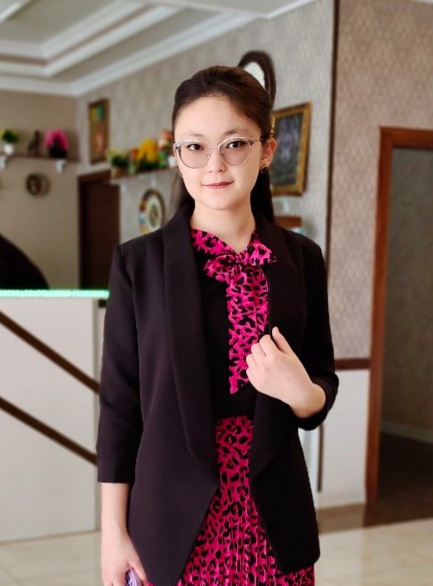
Essay from Nilufar Ruxillayeva
Happiness is…
Happiness! This 4-letter word embodies all the virtues of the world.
Everyone defines happiness differently.
Happiness for someone:
– to achieve a great career;
– to have a car;
-use of the latest model phone;
– construction of a house on the ground floor;
– to sit at the same table with high-ranking people – happiness!
But at the moment there are few for some:
-coming into this world;
-seeing the sun in the early morning;
– having breakfast with the family;
– giving a smile;
– looking forward to the release of the first book;
– building a family, raising children, pampering grandchildren;
– living in love among loved ones is happiness..!
So, this sentence of the Hero of Uzbekistan Erkin Vahidov can fully reveal the sentence of happiness:
What else is missing from you?
Happiness in reality is to win!
Not everyone is lucky,
To breathe in the morning!
Nilufar Ruxillayeva, a 1st-level student of foreign language and literature at the Faculty of Foreign Philology of the National University of Uzbekistan named after Mirzo Ulugbek. Argentina’s Juntos por las Letras, Egypt’s Creativity, Art, Culture Organization, India’s Iqra Fund Organization, India’s All Indian Council for Organization of Technical Skill Development, Kyrgyz Union of Writers, Member of Kazakhstan “Double Wing” Writers Union, Council for Technical Skill Development, National Human rights and humanitarian federation, Glory Future Foundation member! Official guest of Stars international university conference!
Creative works: published in Great Britain, Uzbekistan, America, India, Turkey, Azerbaijan, Russia, Kyrgyzstan, Kazakhstan, Moldavia and posted on the Internet! She was awarded with a badge and “Letter of trust”.In addition, she participated in the 02.02.2023 issue of “Bekajon” newspaper with her biography!
Kavya Kishor is the winner of the best author category.
She is a practicing child of the “Ibrat” children’s project. The anthology HEART TO HEART was published and put on sale in Great Britain. FM 101.3 broadcasts “A minute with literature” on Bukhara radio.
Short story from Chris Butler
The Chase
A fall afternoon. On an empty road, surrounded on both sides by thick pines. Nothing above but gray clouds. Nothing below but gray concrete. There is no wind. No birds signing. No sounds at all, except the scraping of the bottom of a small child’s worn shoes against the concrete, and the click and clack of her mother’s high heels stepping from heel to toe. Heel to toe.
Both dressed in white, buttoned-down shirts, with short black skirts, cut just above the knee, the little girl and her mother walk down the road. She reaches up to grab her mother’s swinging hand, but can’t touch it. It is too high. Her little legs speed up. Her mother’s hand is swinging too fast for her outstretched little hand to grasp. She calls out, “Mom”. Her mother’s long legs stride longer and longer. Her little legs try to keep up. The little girl’s walk becomes a slow jog. She’s still extending her hand, still unable to reach. Her mother’s arm swings like a pendulum, with no signs of slowing. She jumps with her little legs, but still cannot reach. Her mother’s body begins to pull ahead of her daughter. She calls out for her mother again. “Mom.” The little girl’s slow jog speeds up. She jumps up, and down, up and down, reaching for her mother’s swinging hand. “Mom!” She calls again. The mother’s stride widens, the distance between them grows slowly, like the long, black strands of hair on the back of her mother’s head. The little girl cries out, “Mom!” But the mother does not turn around. She does not slow down. Her feet seem to be moving more quickly than before. “Mom!” The clicking of her heels, heel to toe, heel to toe, sound like a clock being winding forward, each second getting faster and faster. “MOM!” The little girl cries out for her mother to turn around. Her mother is too far ahead of her to reach with her short arms. And her clicking heels smack the pavement to a faster rhythm. Click clack. Heel to toe. The little girl’s jog accelerates into a slow run. “MOM!” She jumps with her little legs, her little hands unable to reach her mother’s pendulum arms connected to her swinging hands seemingly reaching the sky. Her mother’s legs move away from her, quicker and quicker with each step. Her lungs are pumping, as fast as her beating heart. The little girl starts to run after her. “MOM!” She cries out to get her attention, to make her slow down. To make her turn around. “MOMMY!” She can no longer see her mother’s heels, clicking over the curve of the road. The little girl runs as fast as her little legs can move her. But she is still falling further and further behind. “MOMMY!” She can longer she her mother’s long legs. The clicking accelerates as if her mother is running. Click clack. Click clack. Heel to toe. Heel to toe. She can no longer see her mother’s hips. “MOMMY! MOMMY!” Her little legs are getting tired. The clicking sounds merge into a single click. “MOMMY!” Click. The little girl stumbles to the pavement. She skins her knees. Two thin streams of blood flow down her little legs. Tears flow into raging rivers down her cheeks. Sitting in the middle of the road, she looks up to see her mother’s long black hair disappear over the curvature of the earth. She cries out with her last, exhausted breath. “Mommy…” But her mother is out of sight. She no longer hears the clicking or clacking of heels. She hears silence.
The twenty something woman awakes in her bed, trying to chase down her breath. She is drenched in a shivering sweat from the feverish dream. Her long black hair has soaked her white pillow. She controls her spastic breathing, slowing down the pounding heart in her rising and falling chest. Her hands, clenching the edge of her bed, slowly release the python grip around the threads of the white sheet. She swings her feet onto the floor, the tips of her toes exposed to the cold, hard wood. She has calmed herself down enough to place her heels on the floor. She gingerly stands, stretching both arms over her head, then allowing them to fall to her sides. She steps, heel to toe, towards the faux oak dresser next to her bed. She pulls out a pair of white cotton panties, a pair of short black running shorts and a pair of ankle high white socks. She slides open the drawer below it and removes a white tank top. She dresses as she always did, from the bottom to the top. She remembers her dream wasn’t just a dream. It was a memory. The last one she has of her mother. On the small desk next to her dresser, she snatches her phone and a pair a white earbuds. She slips into her pair of white running shoes next to the front door of her tiny apartment. She pauses. She forgot her keys. She walked back to her desk and scooped them into her palm, each key settling between her fingers. She jams them into the pocket of her running shorts. She spins in a complete circle, making sure nothing else was forgotten, that nothing else what out of place. She returns to the door, and steps outside to the cool morning.
The sky is gray. No birds are chirping. She inserts the buds into her ears, scrolling along her favorite running playlist to pick a track. She settles on a song simply because it matches the rhythm of her run.
She began jogging down her street. Surrounded on both sides by small, two-floor apartment buildings, each with one small window and a door facing the road, and a second level with two large windows with blinds closed. Painted in monotone colors, most of them gray. It always makes her claustrophobic on cloudy days, surrounded on all sides by shades of pale gray. She runs all the way to the end of the block, where the road met a dead end. There are tall pines, in the middle of which was the opening to a hiking trail, worn down to the ground by the residents of the neighborhood who allowed their children to explore nature, who walked their dogs and the bored housewives or househusbands who walked themselves.
She runs along the trail, following the splats of white paint marking the bark on the trunk of each tree every twenty feet or so. The markers gave anyone on the trail a small sense of safety and security that they couldn’t possibly get themselves lost, so long as they followed the marked trees. Her eyes stare at each marking of white paint as she passes it, then focuses down the trail onto the next splatter of tree graffiti. She peers up to see the usual bluebirds singing their morning songs. The same two bluebirds who perched on the same tree branch to greet her every time she ran and who were never disturbed by her regular appearance. As she runs underneath them, they fly away. She looks back down at the next marking. She doesn’t notice anymore birds along the path. Or squirrels. Or anything. The forest in front of her feet is empty. She turns down the music in her ears and hears the distant thudding of footsteps behind her. They are keeping pace with her. She no longer listens to her shoes go from heel to toe. She begins running a little faster. The footsteps are not only keeping pace, but they are speeding up. Before she realizes, none of the trees’ bark are marked with white paint. She had veered off the trail. But she couldn’t stop to figure out where her feet led her astray. The stamping feet were getting closer. She tries to peer down to her phone while keeping one eye on the dirt in front of her, changing the function from the musical playlist to make a call. She dials the 9, and then the first 1. The stamping feet sound as if they were right behind her. Whoever’s arms they are attached to are just close enough to reach out and grab her. The phone falls from her grasp, hanging onto the chord connecting the phone to the earbuds still in her ears. It drags along the ground behind her. She bolts through the trees to her right, her arms wailing to push the low hanging branches away from her face. She ran and ran. Heel to toe. Heel to toe. She snaps fallen twigs and crunches dead leaves beneath her feet. She hears the same snapping and crunching behind her, two feet still in pursuit.
She runs as fast as her legs can move her. Her legs scratch against the deceased branches on the ground. Her arms scrape from the living ones hanging from the trees all around her. Her years of cardiovascular training on that trail were increasing the distance between her and the stomping feet behind her. She approaches a thick pine tree, and she performs an evasive maneuver, pressing her back against a thick trunk, separating her from the direction she was running towards. She faces away, closing her eyes in hopes she lost the impending footsteps. She holds her hand over her mouth to muffle her panicked breathing. The stamping feet passes by her, slowing down to a jog, before coming to complete stop. She holds her breath. She closes her eyes. The footsteps then speed up and move in the direction she was headed, away from her. She waits for a few eternal moments. She picks up her phone, still dangling from the chords in her head. The screen is cracked into spastic spider webs. She slowly pulls the buds out of her ears, stuffing them both into the pocket of her shorts. She removes her keys from the other pocket, intertwining each one between her fingers around her white, tight fist. She runs in the opposite direction, as fast as she can. Her legs burn, rubbing against each other fast enough to start a forest fire. But she forces them to keep moving. She hurriedly looks at each passing tree, hoping to find a white mark of paint. Tree after tree, the bark is a barren dark brown. She comes upon a small clearing. The forest in the distance appears to be hundreds of feet below her. She stomps her heel to come to a stop, but below her feet is solid stone. Her upper body lunges forward, overseeing a cliff with a straight drop down. She nearly loses her balance and falters forward, but her feet keep her planted in the rocks. Under her accelerated breaths, she hears the stalking feet approaching behind her, then coming to a stop. She slowly turns around to see a towering figure, with a white buttoned up shirt, a short black skirt and high heels. The figure stands in front of her, the face obscured by a dark shadow. Her eyes frantically dart to the left and to the right of the figure. She realizes that if she is to attempt to run around the figure, she would be quickly and easily grabbed. She slowly steps backward, until the backs of her running shoes are at the edge of the cliff. The figure is motionless, face still obscured. She inches back until her heels teeter over the edge. Then the figure steps forward from the shadow into the sunlight. She freezes with crippling fear. “Mom?” The figure, an older woman with long locks of dark hair descending from the top of her head, extends her left arm. The same arm from her final memory. She extends her arm, reaching out for the long, soft fingers that she remembers so vividly. Her keys fall from her opening hand, jingling against the stone underneath her toes. The fingers seem to extend from the knuckle, coiling at the joints, reaching out for her. The figure rushes towards her with arm outstretched. The figure’s hand pushes her chest. She totters for a moment before her balance is lost. The young woman falls over the edge, screaming “MOMMY!”. Her cry echoes all the way down. Then silence.
Poetry from Mahbub Alam

The Love-Rose

Give me a rose
I will give you all my force
I know you are the strength of my heart
The blue lagoon and the azure sky
The seagulls beautifully make the link
Matching the environment of the sea and the heaven
I know you remain always by me
Like the seagulls
Who does not like to fly over?
Or float on the waters?
Years after years throughout the long future round
The generation must read the way in the twinkling stars
And can dive deep into the water of the scented rose.

Chapainawabganj, Bangladesh
10 March, 2023


Living in a Circle

I'm wandering in a circle
It's my globe, a globe - like circle
My neighbour came out and asked me
"How are you going, dear?"
I replied with a long sigh
"This is my world getting smaller day by day
Filled with dust from every side of the space
Evoking the past on the spot by the way
I like to think, wander and play
I like to sing, write and recite
Though nothing is certain for performing well
I like to do some more
Being loved wandering in this circle."

Chapainawabganj, Bangladesh
10 March, 2023
Poetry from Taylor Dibbert
Friday Afternoon With London


He’s trying to finish some stuff up,

On a Friday afternoon,

Another day at the virtual office,

Reports and budgets and emails and so on,

And he’s having a lot of trouble focusing,

Because London has been struggling to walk,

All day long,

And London hasn’t eaten anything,

Which means she hasn’t taken any medicine,

Which explains why she’s really hurting,

He wants to focus,

On his London,

Knowing that she’s unwell,

Makes his heart hurt,

So he decides to log off for the day,

And then he sits down on the ground,

Next to London’s fluffy pink bed,

So that he can give her some pets.


Rice Crackers


He’s picking up some groceries,

At the co-op,

Mostly shopping for himself,

But he’s also stocking up,

On tamari sesame rice crackers,

He’s been having trouble getting London,

To eat,

Which is a big problem,

Because he’s mixing the pain medication,

Into her food,

Which is the way it has to be done,

And London has been gobbling up,

These rice crackers recently,

So he picks up six packs,

He just wants her to be okay.


First Meal of the Day


He’s back home with London,

Preparing another meal for her,

She’s hardly eaten today,

This time he’s giving her some tuna,

Which is a special treat,

And some of those rice crackers she likes,

London looks at him patiently,

As he prepares her food,

Then he puts her bowl on the ground,

He’s filled with hope and anxiety,

If London eats,

The pain medication can do its thing,

He watches as she examines,

The bowl’s contents,

And then she starts eating,

Quickly and voraciously,

In a couple of minutes,

She’s eaten everything,

Licking the bowl now,

He’s so happy for this small win,

A little after 4pm,

And his daughter’s had,

Her first meal of the day.


Taylor Dibbert is a widely published writer, journalist, and poet. He’s author of the Peace Corps memoir “Fiesta of Sunset,” and the forthcoming poetry collection “Home Again.”
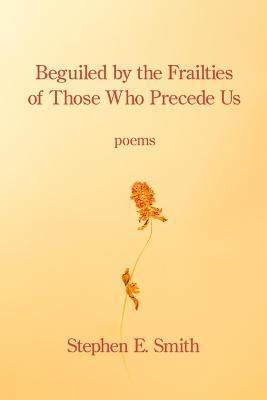
Shelby Stephenson reviews Stephen E. Smith’s Beguiled by the Frailties of those Who Precede Us
TRUTHS AS IMAGINED MEMORIES
Review by Shelby Stephenson of Beguiled by the Frailties of Those Who Precede Us written by Stephen E. Smith (Kelsay Books, 502 South 1040 East, A-119, American Fork, Utah 84003: Kelsaybooks.com)
These are poems, for one thing, about the “there” – there!
Beguiled by the Frailties of Those Who Precede Us: the title tells all, if it could, for Stephen E. Smith shares the joy of family, father and mother, a son, and graves popular as Mortality’s song that others will come along, even after “released on bond.”
What mortal words bring to knowing and not-knowing brim in these poems. See “Stepping Out of Poetry.” Stephen’s father was a boxer: the poem deals with many subjects, the main one, I think, racial prejudice: the conviction of Jack Johnson “by an all-white jury of violating the Mann Act—transporting a woman (in this case his wife) across state lines for immoral purposes—and he was sentenced to a year and a day in federal prison.” Stephen presents his father pondering Humanity. The color-line dominates, still does—in our lives and in American poetry.
Loiter and laugh as wakening comes again: “Last July” shows the natural Unnatural as a child cries as his father leaves him for a podium to read poetry to an audience, the child, now grown, moving us to the window-light.
I did that this morning: opened the blinds. The world said, Hello!!
This book does too, gives light–big time.
Stephen E Smith lives in Southern Pines, North Carolina. His reviews and essays are featured in PineStraw, Walter, and O. Henry Magazine. The book is available here from Kelsay Press.
Poetry from Faroq Faisal

The Earth
There is a hunger for power – there is a lust for power.
There is human waste here – there is the cry of destruction of dreams.