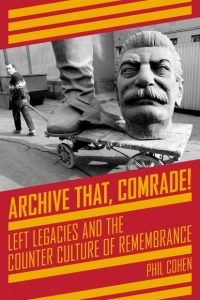
Archivist and memoirist, Phil Cohen, who had been active in the London underground scene from 1965-’78 examines what it even means to be an archivist, and the importance of intention when recording the past so its lessons are accessible to future generations. Cohen was not professionally trained as an archivist or a historian, which makes these lessons so much more valuable: they were learned doing the work.
Cohen diligently end noted sources so you can follow up on the various threads of debate on issues regarding the larger questions of subjects from traditional archiving’s defenders and opponents.
Cohen was trained as an anthropologist, which he acknowledges had its downsides, but at least fieldwork was present tense and gave him insight into what people remember, a form of archiving in and of itself.
Coming out in 2018, all of these debates have the extra layers of digital culture and the alt-right, and the acknowledgement that archiving takes resources and to avoid making it activism.
Cohen also goes back to previous generations of radicals like Antonio Gramsci and Guild Socialists, and looks to the past lessons they could act on like moots, debate assemblies from mediaeval times really bringing to life the intergenerational dialectic.
A little humor also sneaks in early when Cohen quotes a primary school student who thinks Noah’s Ark was an archive. But he doesn’t leave it nestled between dictionary definitions and Adorno and Foucault quotes, Cohen goes on to draw the parallels between an ark and an archive before starting to delve in depth to the pros and cons of archiving. By cons I mean he doesn’t shy away from some of the worst examples such as a British colonial archive in Hanslope Park which had been kept secret because of the brutal acts it recorded.
Again and again theoretical questions about neutrality and archiving to resist change are interwoven with the practical applications with concrete examples like the Benjamin’s Arcades Project, archiving 19th century Paris, or the opening of the East German secret police, Stasi, archives.
I’m not sure if it’s meant to be funny, but writing about the risk of an archive “becoming a prop in the psychodrama of the collector’s secret passion” was a little too easy for me to relate to. A similar barb about some 1960s memoirs as “a never-coming-of-age story” as Cohen steers the discussion towards counter culture along with many others had me cackling like a mad man, at myself as much as anything else, through much of the text. To be clear, this isn’t pure fawning about the past. Cohen is willing to question if it’s relevant now, even as just a cautionary tale.
Questions about navigating the tension between radical Leftism and the counter culture are explored, with Cohen essentially having had feet in both worlds as a squatter. He even excerpts from a novel about a squat called 144 Piccadilly! Cohen also archived mainstream and tabloid coverage of the squats, and made a point of displaying it at a space called May Day Rooms rather than a more conventional venue as to keep it in the broader context of 1960s radicalism.
Cohen questions if the Left even has a future, as he tries to situate the questions left over from the 1960s to this day, before writing about oral traditions and burying or burning possessions instead of archiving or distributing them, and different ways of dealing with the emotions connected to death.
Cohen is on rapid fire going from concept to concept, but it’s methodical. Ways of interpreting history are examined next. Is it an inheritance? A progression? In turn, the industries that emerge around all these things from nostalgia to bereavement are also mentioned, systematically looking at things from the conventional, Left or Right, and various factions within.
In fact, here I want to change gears a bit as a reviewer, since this is the sort of text, dense in a good way with at least one noteworthy things consistently in every paragraph. As an ex-participant in the Infoshop Movement, still experimenting with collective living, I think this book should be recommended reading for everyone involved in a radical library or bookstore, and every radical librarian, museum and bookstore worker trying to figure out how to make their volunteer spaces or workplaces relevant to social change.
It’s not that I think Cohen answers all the big questions of building and maintaining a worthwhile archive, I do think he’s asking the questions in a more comprehensive way than I’ve seen elsewhere. This can easily serve as the basis for an ongoing conversation with plenty of suggestions of other things to read and watch to advance this dialogue.
Plus aside from the meticulous end noting, frequently with multiple sources cited, there’s a hefty further reading list for those who really want to get into it.
Also, this text is fairly short, but I still ended up taking three different sets of notes. One for this review, another to read list, then a set of notes for my own wingnut obsessions I don’t feel like writing about here. I find that remarkable!
Perhaps most importantly, to be clear, Cohen was a participant in the New Left era still writing in 2018 so I don’t think I can emphasize enough the value in such a long view of both struggling for social change, and how to archive that history in a meaningful way. As Cohen writes in the text, “Manifestos have only tried to change the world; the task for the Living Archivist is to interpret them, to provide the resources which will help us decide if they are genuinely performative or merely acts of wish fulfilment.”
For those who didn’t catch the reference, Cohen was essentially doing a Marxist headstand, which I think was spot on. For every Old and New Left barb or twist that I caught, I’m sure there was another that I missed because I’m not English and was born in 1980.
But that’s part of the genius of this book. I think that and other such lines are a perfect use of Marxian dialectics as a tool to understand how archives can be build, radical and relevant, rather than simply looking at the Old and New Lefts with religious reverence alone.
I think this is the clincher: if the Old and New Lefts were all that, we’d be living in some sort of Socialist Utopia right now, rather than the fast track for Dystopian Nightmares that would make Orwell and company spin in their graves. But if we look soberly and systematically at the Old and New Left’s triumphs and defeats, alongside other sources maybe was can get it right rather than just looking cool as we go flying over a cliff.
Cohen’s book strikes me as nothing short of one account of a Love affair with practical knowledge. Anarchival, to use his word!
There are harmless ones, tingles that dislodge your hand so you can run your nails into your hair and along your scalp, up and down, once, twice, and that’s all it takes.
There are elusive ones, beckoning from somewhere on your back that you can’t reach and you can’t find, so you contort your elbow and slide your thumbnail across the vicinity, over and over, leaving angry red lines that you won’t notice until later, when a hot shower ignites them and you crane your neck to see what you’ve done.
There are flirtatious ones, a tickle here and then there, along your ribcage, on the side of your knee, behind your ear. Fickle ones that vanish moments after they emerged, not committed enough to stay.
There are latent ones, absent until you caress the area, tease out the ghost. Then you can scratch or press or rub, as you would with any other itch, all the while knowing that the need wasn’t truly there.
There are urgent ones. Sirens that lure your fingertips, masochists that want the pain your nails offer. You slip them over the bumpy surface. You dig their edges into the core of the call, and you know you shouldn’t, but you can’t stop, and you lose yourself in the scraping, the grating, the ecstasy of what feels like relief but is really the plea for more.
Susan Hodara is a journalist, memoirist and educator. Her articles have appeared in The New York Times, Communication Arts, and more. Her short memoirs are published in assorted anthologies and literary journals, including River Teeth, Feed and Airplane Reading. She is one of four co-authors of the collaborative memoir “Still Here Thinking of You: A Second Chance With Our Mothers” (Big Table Publishing, 2013). She has taught memoir writing at the Hudson Valley Writers Center for many years. More atwww.susanhodara.com.
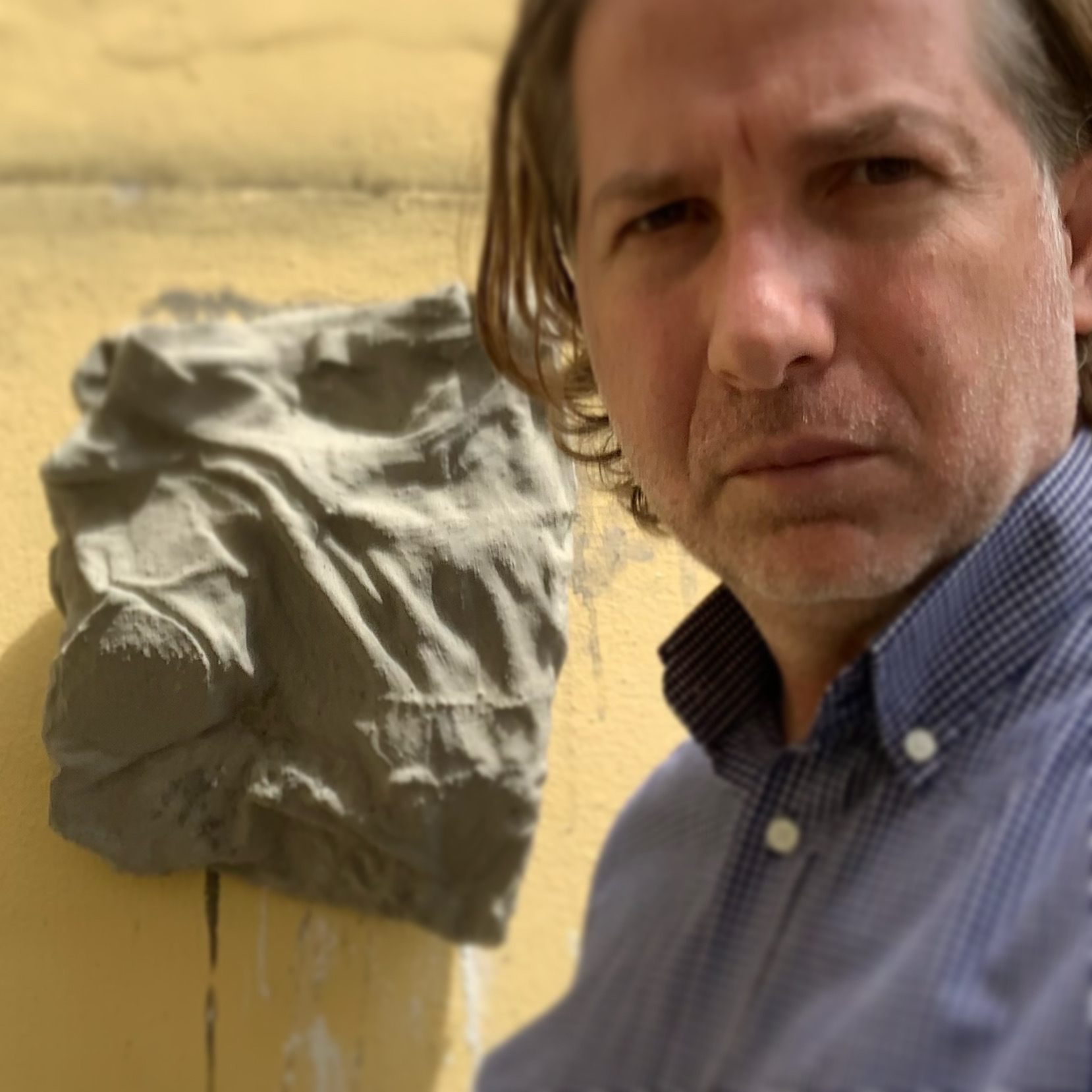
I live in a world that I shape at my liking. I do this through virtual, pictorial, and sculptural movements, transferring my experiences and photographing reality through my mind’s filters. I have refined this process through years of research and experimentation.
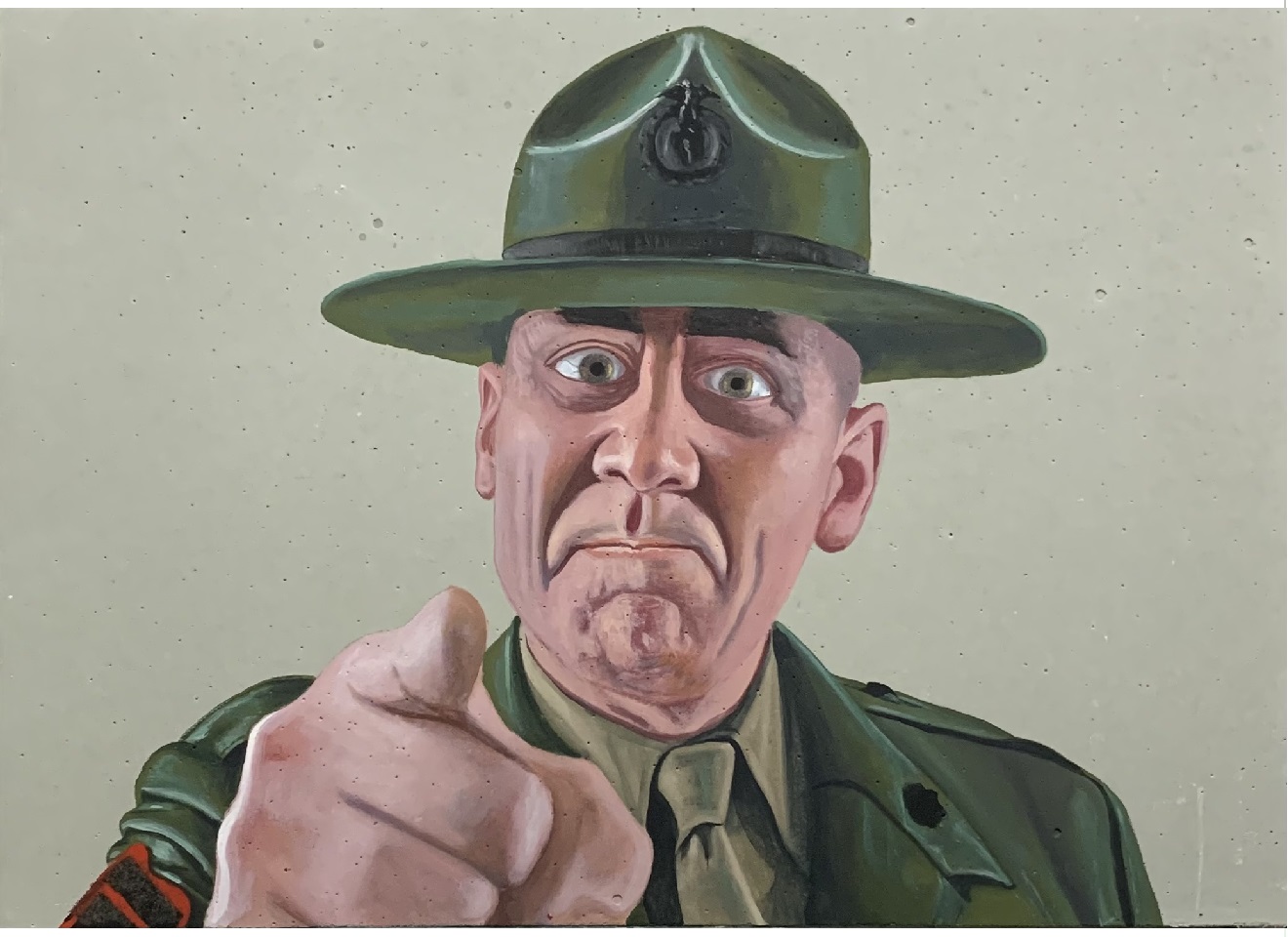
Painting for me is my first love. An important, pure love. Creating a painting, starting from the spasmodic research of a concept with which I want to transmit my message this is the foundation of painting for me. The sculpture is my lover, my artistic betrayal to the painting that voluptuous and sensual lover that inspires different emotions which strike prohibited chords.
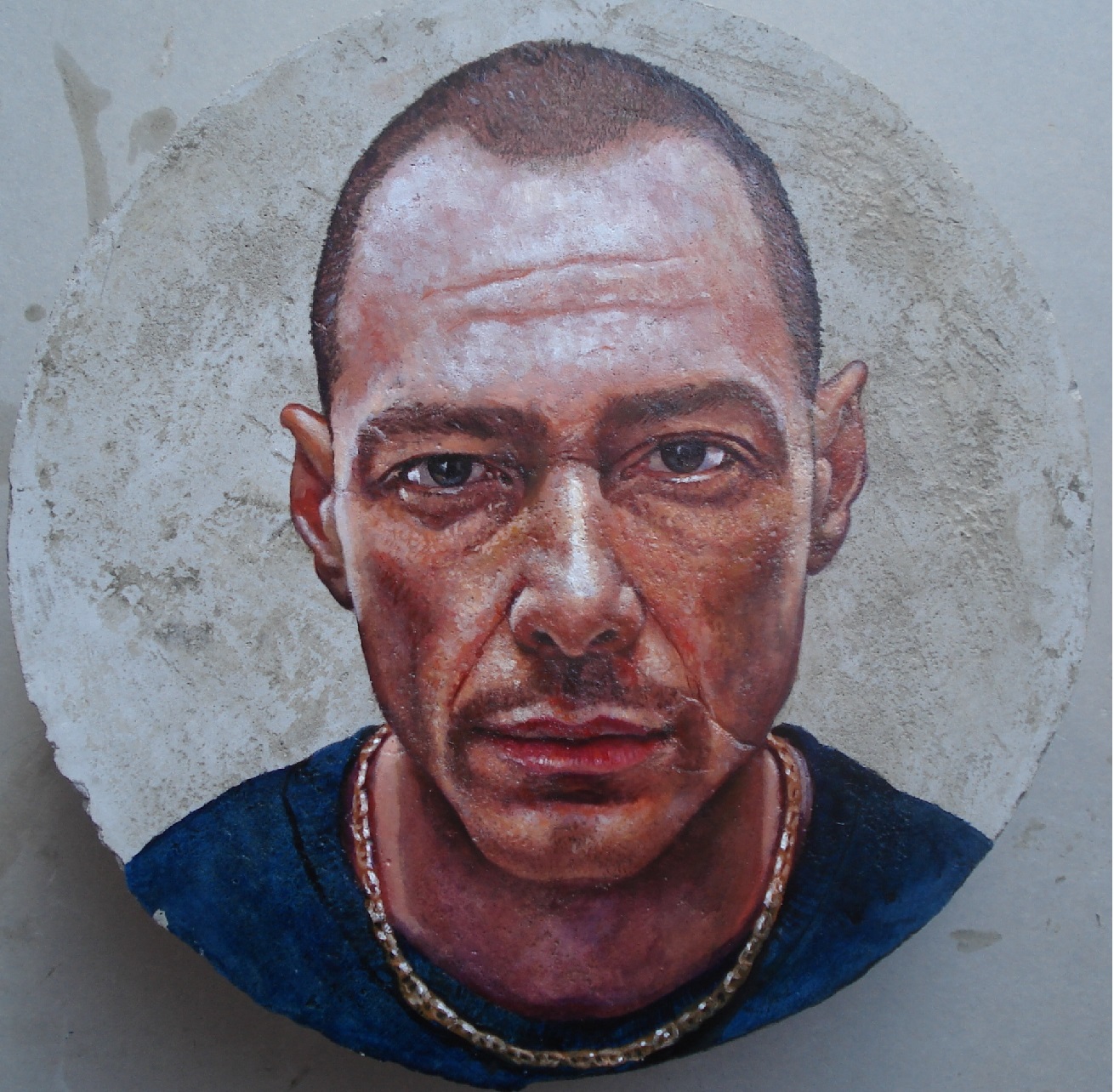
This new series of concrete sculptures has been giving me more personal and professional satisfaction recently. How was it born? It was the result of an important investigation of my own work. I was looking for that special something I felt was missing. Looking back at my work over the past ten years, I understood that there was a certain semantic and semiotic logic “spoken” by my images, but the right support to valorize their message was not there.
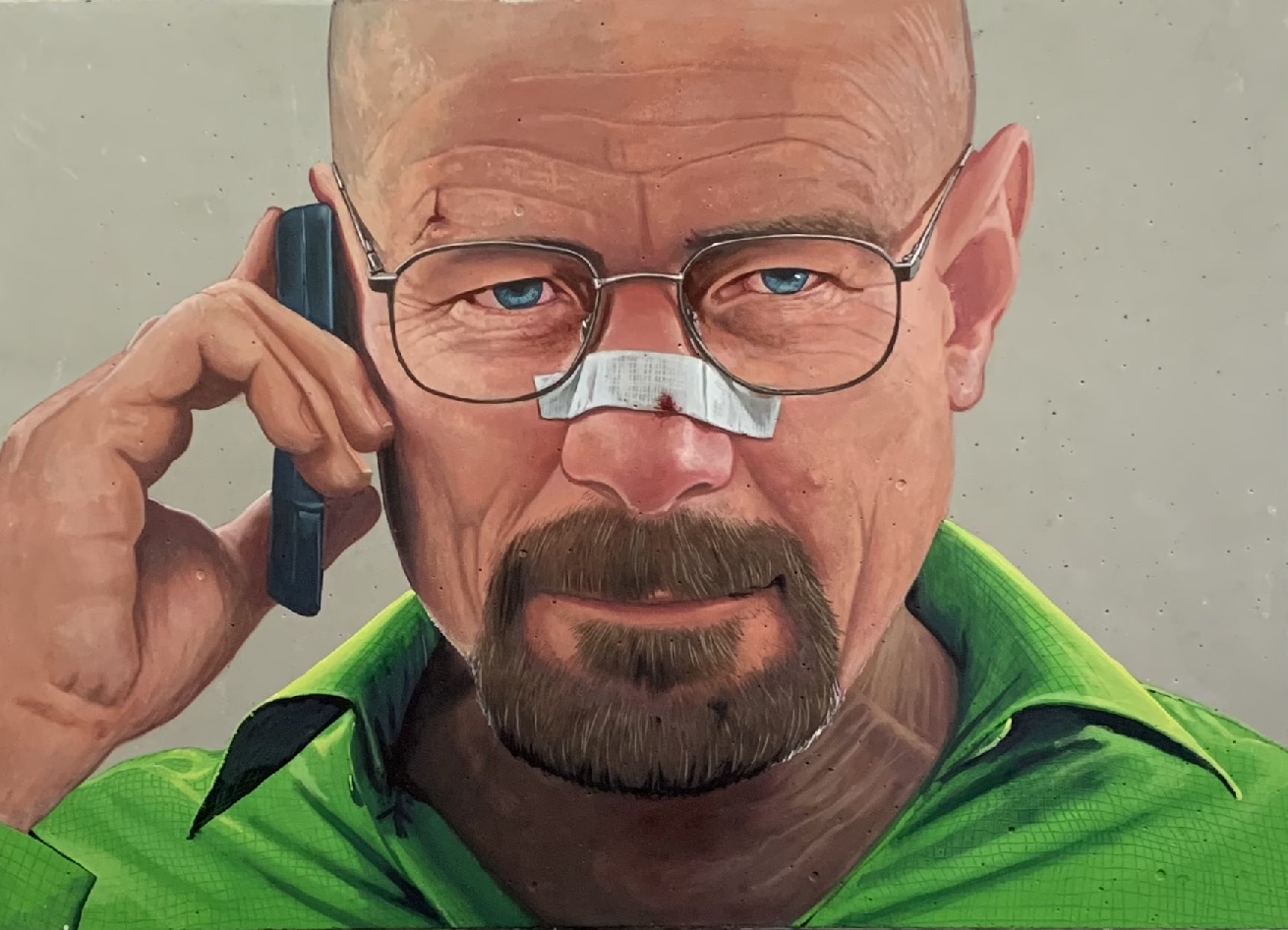
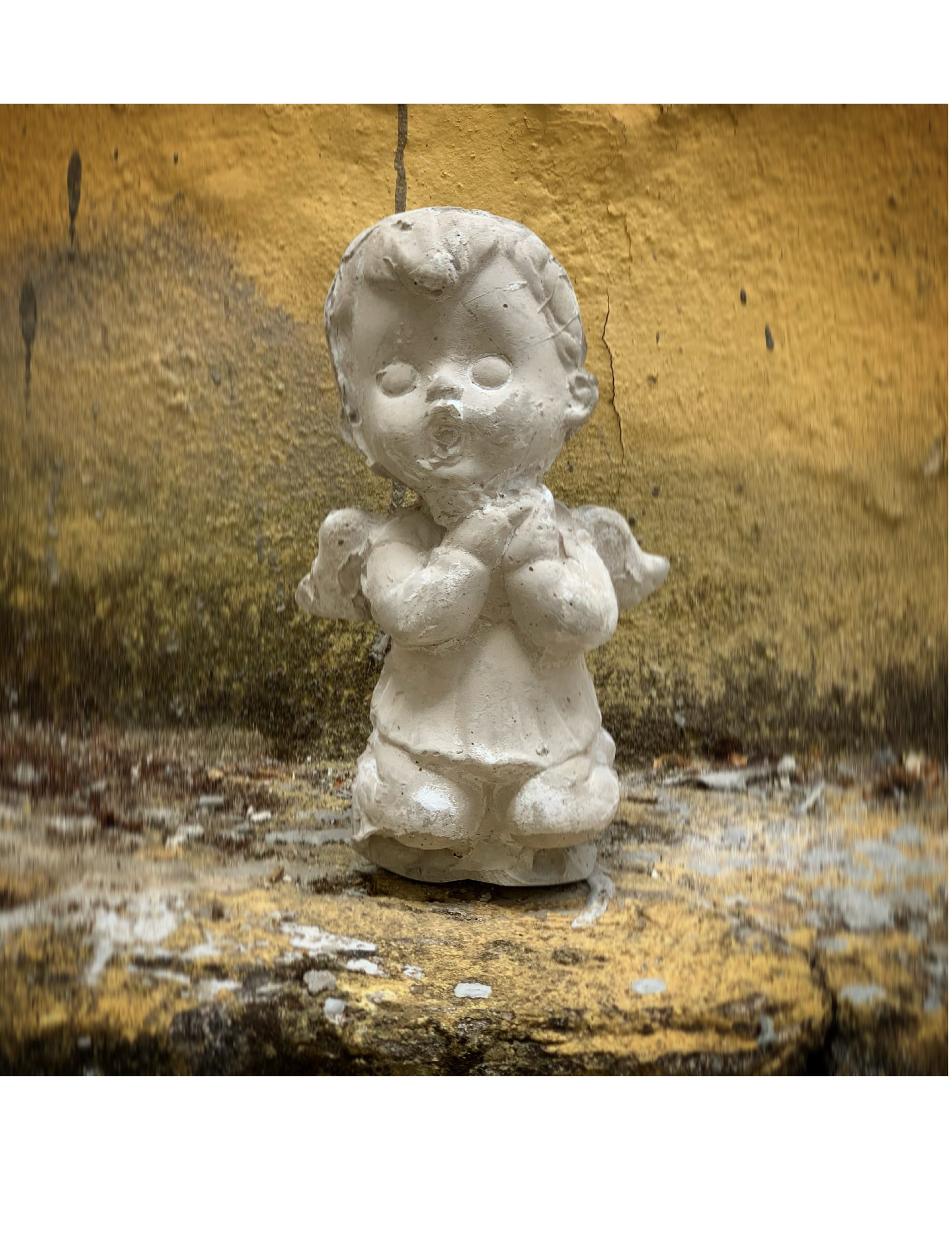
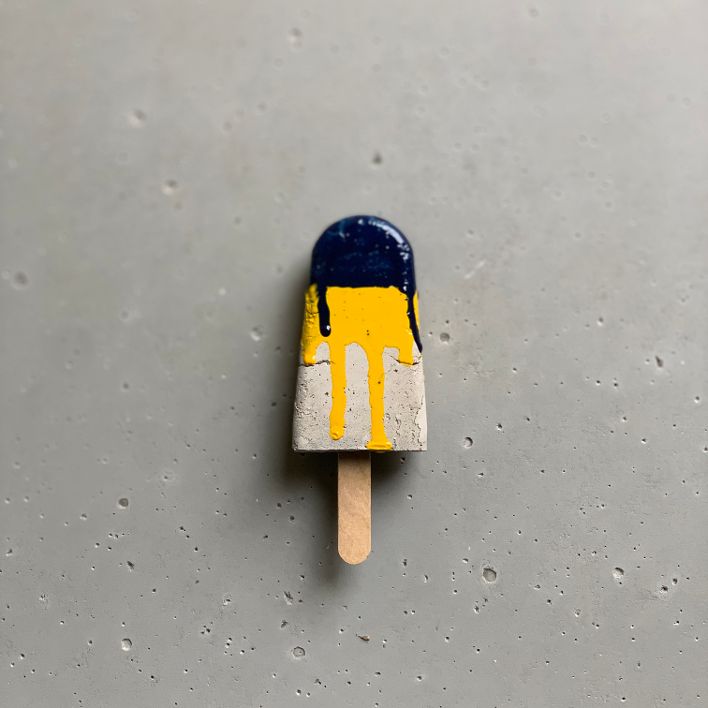
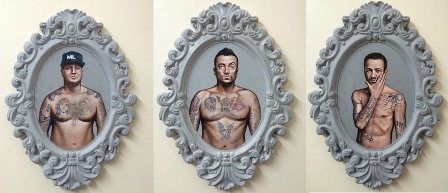
Fabri Fibra oilWalter (oil on concrete) Angel (concrete)Mario Loprete
The reinforced cement, the concrete, was created two thousand years ago by the Romans. It tells a millennia-old story, one full of amphitheaters, bridges and roads that have conquered the ancient and modern world. Now, concrete is a synonym of modernity. Everywhere you go, you find a concrete wall: there’s the modern man in there. From Sydney to Vancouver, Oslo to Pretoria, this reinforced cement is present, and it is this presence which supports writers and enables them to express themselves.
The artistic question was an obvious one for me: if man brought art on the streets in order to make it accessible to everyone, why not bring the urban to galleries and museums? With respect to my painting process, when a painting has completely dried off, I brush it with a particular substance that not only manages to unite every color and shade, but also gives my artwork the shininess and lucidity of a poster (like the ones we’ve all had hanging on our walls).
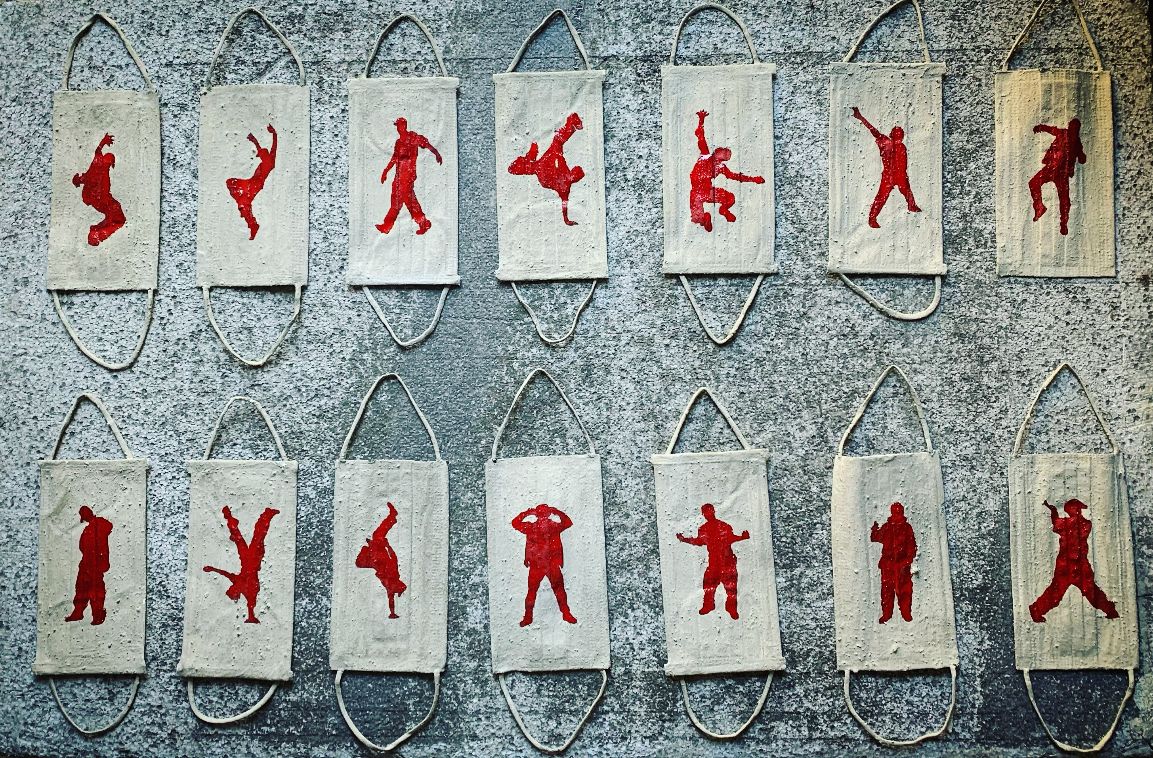
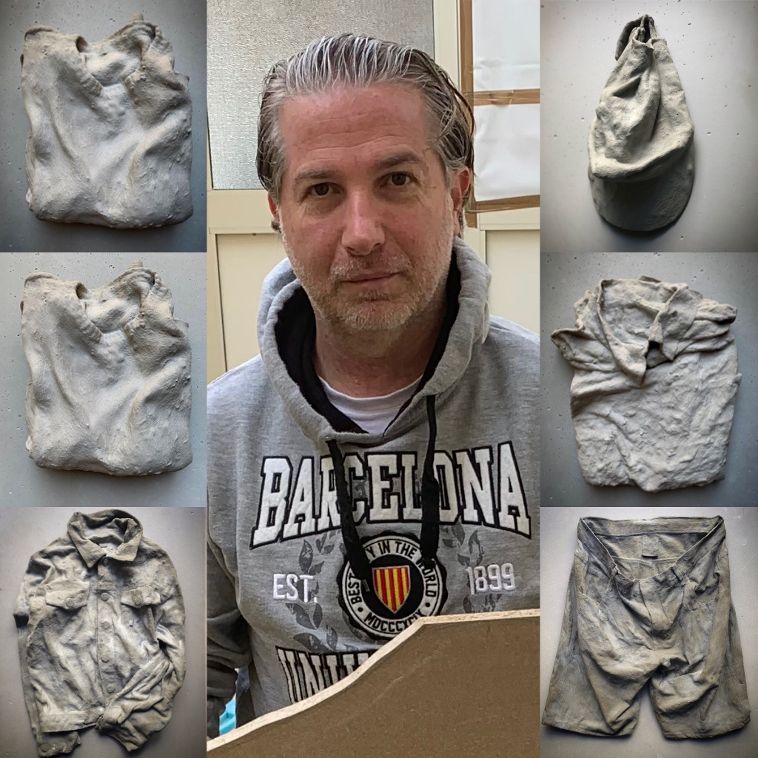
For my concrete sculptures, I use my personal clothing. Through my artistic process in which I use plaster, resin and cement, I transform these articles of clothing into artworks to hang. The intended effect is that my DNA and my memory remain inside the concrete, so that the person who looks at these sculptures is transformed into a type of postmodern archeologist, studying my work as urban artefacts.
Ukrainian Ice CreamClub Dogo
I like to think that those who look at my sculptures created in 2020 will be able to perceive the anguish, the vulnerability, the fear that each of us has felt in front of a planetary problem that was Covid-19 … under a layer of cement there are my clothes with which I lived this nefarious period.
Clothes that survived Covid 19, very similar to what survived after the 2,000-year-old catastrophic eruption of Pompeii, capable of recounting man’s inability to face the tragedy of broken lives and destroyed economies.
Death is the Best Art


Death is not the end of all
Rather it fails to break life's wall
It is the media of transfer
That flies us so far
It is the beginning of mystery
That reflects personal history
Life will kill death forever
Death will not be visitor any where
We will be the permanent guest
The King of death and life will listen request
The world will be without boundary
Endless life will be first mandatory

Death is the best art
Which always dances in my heart
It is truth and beauty
Work hard and perform duty

we are living in  truth and death
It is our power's beneath.
The year was 2089, and the world in which Azila was growing up was evolving astronomically. The city was bustling with self-driving cars and holographic billboards that projected advertisements in every direction.
A towering network of skyscrapers loomed above, connected by high-speed trains that glided silently through the air. But despite all the technological advances, one thing remained the same: emotions were still seen as a threat.
In a society plagued by chaos and uncertainty, the government sought to find a way to maintain control over the masses. The answer they found lay in the control of human emotions. By regulating the emotions of the people, the government could effectively suppress unrest, rebellion, and any actions that may threaten the stability of the state.
The government’s quest for control over the emotions of the masses took a sinister turn with the development of an airborne medication called M1-55 that altered the genetic makeup of the masses. M1-55 was designed to make people naturally prone to emotional control, without the need for drugs or any other form of artificial regulation.
As the medication spread through the air, it seeped into the bodies of countless individuals, altering their DNA and making them susceptible to emotional suppression. The consequences of the government’s actions were devastating. With subsequent generations growing up with an innate inclination towards emotional suppression, the people became increasingly docile and submissive, unable to express themselves fully or connect with others on a deep, emotional level.
The government succeeded in creating a population that was easy to control, but at what cost? The very essence of humanity had been compromised, leaving a society that was devoid of true emotion, creativity, and spontaneity.
Azila was among the recent generations but she had always known she was different from the others; it wasn’t until she started working for the government that she realized just how unique her ability to feel emotions was.
As an agent in the government’s Department of Emotion Control, she was responsible for monitoring and reporting any individuals who showed signs of emotional behavior. But instead of feeling proud of her work, she felt like a fraud and was suffocated by the constant pressure to suppress her own emotions.
Azila’s struggle with her emotions was a constant battle, and she often found herself turning to emotion-suppressing drugs which had been banned by the government. The pills were hard to come by and extremely addictive, but they gave her a sense of control over her emotions that she couldn’t feasibly achieve on her own.
One day, while sitting at a cafe with her friend Jax, Azila pulled out a small bottle of pills and began to fidget with it nervously.
“What’s that?” Jax asked, his eyes darting to the bottle.
Azila hesitated for a moment, then decided to come clean. “It’s a suppressant,” she admitted, her voice barely above a whisper.
Jax’s eyes widened in surprise as he managed to mumble. “What? Azila, you know how dangerous those are. Why are you taking them?”
Azila shrugged, feeling defensive. “It’s the only way I can keep my emotions in check. You know what it’s like to feel too much, Jax. It’s overwhelming.”
Jax shook his head. “That’s not living, Azila. You can’t keep taking those pills. You’re better than that.”
Azila rolled her eyes, feeling frustrated. “It’s easy for you to say that, Jax. You don’t know what it’s like to have emotions that won’t go away.”
Jax leaned forward, his expression serious. “I know it’s hard, Azila. But taking those pills won’t solve anything. You have to face your emotions head-on, even if it’s scary. That’s the only way you’ll ever be truly free.”
Azila frowned, feeling conflicted. Jax was right – she knew that. But the idea of facing her emotions without the aid of drugs was daunting. What if she couldn’t handle it?
“I don’t know, Jax,” she said, her voice barely above a whisper. “It’s just…it’s hard.”
Jax reached across the table and took her hand. “I know it’s hard, Azila. But you don’t have to face it alone. I’m here for you, no matter what.”
Azila felt a warm sense of gratitude wash over her. Jax was right – she didn’t have to face her emotions alone. With a deep breath, she tucked the pill bottle away in her pocket and looked at Jax with a determined glint in her eye. “Okay,” she said, nodding.
Their conversation was just one of many that Azila has had with her close friends on her journey to break free from the chains of emotion suppression.
One day, while on an undercover routine surveillance mission, Azila stumbled upon a group of rebels who were discussing the government’s strict control over emotions. The group was made up of people from all walks of life – engineers, artists, even scientists – all united by a common cause. Azila was hesitant at first, but as she patiently listened to their stories and witnessed their passion, she knew she had to join them.
She had always felt a sense of unease in a society where emotions were tightly regulated. Haven witnessed firsthand how the government’s drugs had numbed the populace, turning them into docile, compliant drones. But when she heard the rebels’ heartfelt concerns for emotional suppression, her sense of unease turned to outrage. It was then that she made a decision that would change her life forever – to become a double agent, working for both the rebels and the government.
In secret meetings with the rebels, Azila heard stories from people who had been rounded up, detained, and experimented upon for expressing their emotions. She even heard of the government’s attempts to further brainwash the populace, using media propaganda to reinforce the message that emotions were dangerous and needed to be suppressed. Azila was moved by the rebels’ passionate speeches and their commitment to overthrowing the oppressive regime.
But in the numerous meetings, she had with her colleagues at the office, Azila also listened to their side of the story. They spoke of the need for stability and order, the dangers of uncontrolled emotions, and the threat of rebellion. Azila began to see that the government genuinely believed that emotional suppression was necessary for the greater good.
Despite the conflict between the rebels and the government, Azila saw that both sides had valid concerns. She knew that a compromise needed to be reached, but how? As she continued to work as a double agent, she became increasingly convinced that the only way to create a society that allowed for emotional freedom was to find a way to bridge the gap between the rebels and the government.
Azila knew that her actions were dangerous and that her loyalties were constantly in question. But she remained committed to the cause of emotional freedom, working tirelessly to find a solution that would benefit all. She had become a true believer, a double agent for a higher cause, and the fate of the nation hung in the balance of her actions.
As Azila continued her work as a double agent, she realized that she needed a new way to fight the menace securely and effectually. She knew that the government was monitoring all channels of communication and that the rebels’ communication channels were also compromised. It was then that she came up with an idea – an anonymous, encrypted podcast and live video streaming channel where she could share her message with the world.
Azila worked tirelessly underground to set up the platform for a while, using her skills as a hacker to create an untraceable network that could not be detected by the government’s surveillance. She used her connections with both the rebels and the government to gather information and build a network of supporters.
In her podcast, Azila spoke out against the government’s policies of emotional suppression, calling on the people to rise and demand their right to emotional freedom. She shared stories of people who had been silenced or detained for expressing their emotions, and she encouraged her listeners to share their own stories.
Azila knew that she was walking a dangerous path. She had to be careful not to reveal her true identity, as she could face severe punishment if she was caught. She continued to work as a double agent, passing on information to both the rebels and the government, all while spreading her message of emotional freedom through her anonymous platform.
As the word spread, Azila’s podcast and live video streaming channel began to gain traction. People from all over the country tuned in to hear her message, sharing their own stories and bitter experiences. As the movement for emotional freedom continued to grow, the government became increasingly nervous.
Azila’s message of emotional freedom was spreading like wildfire. People from all over the country were tuning in to her podcast and live video streaming platform, and the movement for emotional freedom was gaining momentum. People who had never felt anything other than a numb emptiness were starting to experience their emotions again, and they were visibly fuming.
The government was caught off guard by the sudden uprising. They had never expected the people to rise against them in mass, and they were unprepared for the backlash. For weeks, protests and riots erupted across the country, as the people demanded their right to emotional freedom.
At first, the government resisted, using force to try and quell the uprising. But as the movement grew stronger, they began to listen. They heard the stories of people who had been silenced and oppressed, and they began to understand the depth of their pain.
Finally, after months of pressure, the government gave in. They initiated better ways to handle the problem, including the use of therapy and counseling to help people regain control of their emotions. They began to listen to the complaints of the masses, and they worked to address the root causes of the emotional suppression.
Azila watched in amazement as her message of emotional freedom brought about real change. She had never imagined that she could make such a difference, and she was filled with hope for the future. She knew that there was still a long way to go, but she was proud to have played a part in the movement that had changed the world.
Despite her pivotal role in the uprising, Azila remained anonymous. Nobody knew that she was the mastermind behind the movement or that she had been working as a double agent. She didn’t receive any accolades or public recognition for her efforts, but that didn’t matter to her. What was important to her was the knowledge that she had stood up for what she believed in and had fought against oppression.
Azila was content with the knowledge that she had made a difference. She had helped to bring about a new era of emotional freedom and had given the people a voice that they had been denied for too long. She had risked everything to fight for what she believed in, and she was proud of what she had achieved. Even without public recognition, she knew that her efforts had not gone unnoticed, and that was enough for her.
the eyes of jumpsuit elvis

you can see the road
glisten with the rain
through the cheap
blinds

you swear the last
ten years of your
life have been lived
with one foot stuck
in the fucking grave

a woman once told
me i had the eyes
of jumpsuit elvis

i laughed hard
and whispered that
means i'm still the
fucking king baby

she didn't take that
as i was hoping she
would

that fine line of
arrogance and
confidence has
been tripped over
by many drunk
fuckers

and this isn't the
first night i have
worn cheap alcohol

that's why you never
wear the good flannel
in a place like this
---------------------------------------------------------
reminding the clueless

there's his old
guitar

all the blood and
sweat of a genius
soaked into that
old wood

strings nothing
but rust now

the demons walk
these streets at
night reminding
the clueless what
this place used to
be

some people
consume
nostalgia by
the spoon

others prefer
a damn shovel

the lost souls like
to go down to the
river and see which
brave fucker can
make it across

they have pulled
up three bodies
so far this week
-----------------------------------------------
one of the youngest ones here

the smell
of ointment
and decay

must be
tuesday
in the
waiting
room

my mother
is one of the
youngest
ones here

these other
ones are
hanging on
because no
one ever told
them it's okay
to fucking die

the one thing
i can guarantee

i will not be
one of those
miserable
fucks
--------------------------------------------
avoid any and all mirrors

snow in the
middle of
april

arthritis has
me on the
brink of
deciding
death is a
much better
place

the i love
yous are few
and far between
these days

embrace the
pain and avoid
any and all
mirrors

that man has
lost all hope
-------------------------------------------------------
from these suburbs

thoughts of murder
dance in the lost
souls of children
way too young to
know what it truly
means to lose
anything

but it's way too
comfortable from
these suburbs

to think anyone
understands life
on the streets like
the ones trapped
in that fucking
war
J.J. Campbell (1976 – ?) is stuck in the suburbs, plotting his escape. He’s been widely published over the years, most recently at Horror Sleaze Trash, The Black Shamrock, The Beatnik Cowboy, The Rye Whiskey Review and Yellow Mama. You can find him most days on his mildly entertaining blog, evil delights. (https://evildelights.blogspot.com)