
The Winter of 2023

By Christopher Bernard

The winter of 2022
a wind of iron and crystal blew.

In spring a gale attacked the park
Shredding his last piece of heart.

In summer’s dead zone he did dwell
Till rain and frost bathed fever’s hell.

Now winter has come round again.

The twisting seasons never end.

The winter of 2023
A white hand swept across the sea.

A palace of ice rose in the east,
Towers of snow in a waste of peace.

The year before it leaves a scar
Of fire and talisman of war.

It leaves behind a memory
Sweet and bitter as dark honey.

_____

Christopher Bernard’s latest collection of poems, A Socialist’s Garden of Verses, won a 2021 PEN Oakland Josephine Miles Literary Award and was named one of Kirkus Reviews’ “Top 100 Indie Books of 2021.”
Category Archives: CHAOS
Lyrics from Chimezie Ihekuna

Song Title: Take The First Step
Genre: Pop

Chorus
Take the first step  (2ce)
And see what comes out of it (3ce)

Verse 1
They say ‘the journey of a thousand mile begins with a step’
Yea, taking a step could be very herculean
Fear of failure would suffice as the rationale
However, taking the risk is worth it
After all, failing forward is better than not stepping out
The journey of success begins with taking the first step
So, take the giant stride
Take the first step!

Chorus
Take the first step (2ce)
And see what comes out of it (2ce)

Verse 2
Discouragement is a part of success
Success is a journey, not a terminus
Determination without conception is like reaching a destination without intention
Consistency is inevitably important
Life is what you make of it
Walk your talk to see your worth
You learn those only if you take the first step
Now, take the first step!

Chorus
Take the first step  (2ce)
And see what comes out of it (3ce)

Verse 3
The first step in life is uneasy;
It’s like you taking the bull by the horn
It’s similar to how tasking it would be putting the crown on your head
The first step is a lesson that would give room for further learning;
It’s like getting past the hurdles of life
It’s similar to taking away life’s road blocks
The first step marks the road to your freedom
A great feat it would be when you take the first step!

Chorus
Take the first step  (2ce)
And see what comes out of it (3ce)
Essay from Jaylan Salah
What the Man who Laughs can Tell us about Masculinity
By Jaylan Salman

Silent cinema is a mystery to generations that have gone way past the missing dialogue and artistic expression. But as the filmmaking process progresses and avant-garde art dominates a rather dull cinematic world after the introduction of online platforms and networks that exist purely in cyberspace, seeking different and more experimental forms of cinematic experiences has become -strangely- more mainstream.

The origin of the Joker character started in the silent film, giving it a hint of popularity. However, the idea of disfiguring men playing roles that hover on the verge of sympathy vs. non-sympathy could tell a lot about modern society when seen through the light of a politically-correct-driven cinema.

Lon Chaney and Conrad Veidt were two actors recognized for their aggressive masculinity that existed between machismo and the dream-pop verse of soft boys. In their roles, they played dark men, haunted and wounded by society’s addiction to normative beauty aesthetics. As part of the interloping male/female gaze, beauty ideals demanded that Lon and Conrad become misunderstood monsters. They had to play the classic man-monster trope in a Classic Hollywood setting without missing the romanticized touch in the later films. To use Conrad in the classic film version of “The Man Who Laughs” is to subvert our vision from his heinous features to what is more or less masculine representation onscreen. Chances are, man-monsters have been a fascination for centuries. In worlds such as Victor Hugo’s novels, man-monsters are deformed masculine figures, usually crossing paths with fragile, rather petulant women who either defy their independent aesthetic “ugliness” or seem undeterred by it.

“The Man Who Laughs” is not an exception to what Hugo considers ugly, encouraging readers or viewers to judge these characters for their looks, even if their qualities usurp the physical. His cruelty in creating the malformed men-beasts of his writings encompasses a more nuanced analysis of the social and political contexts in which his stories existed.

Enter “The Man Who Laughs” L'Homme qui rit, a less popular novel by Victor Hugo which uses the bored French noblemen and the absurd playfulness of the aristocracy as a social critique of classism, aesthetics, and in many ways, ghoulish masculinity which dominated novels of the romanticism era. This essay tries to draw a comparison or rather a constructive analysis of representing the main protagonist Gwynplaine in the silent 1928 film and the 2012 musical version through both actors chosen to play him and what that tells about modern masculinity and bestiality.

In other films where the human monster appears, it’s through the lens of the bizarre, this carrier of a penis wreaks wrath and fear into the hearts of the fine ladies of the black and white (or silent) cinema. He is feared, despised, and “othered”. The monster is the mutant anti-hero to the chiseled chad. For Batman, there’s the Joker and the Penguin. For James Bond, there’s Alec Trevelyan and Le Chiffre. But in the 1928 “The Man Who Laughs” the mutant man-monster is seen through a sympathetic lens, played by Conrad Veidt, a German Lon Chaney who specialized in the physically displeasing characters who reigned the German Expressionist films in the 1920s.

The demonic grin and crazy eyes contrast with the enforced laughter and mirror Gwynplaine’s abstract torture of being forced to live with his expressionist face while using his eyes to try and reveal his internal agony. Veidt could not be a better actor to embody the brutal fragility of Gwynplaine, his eyes trapping a thousand emotions, all suffocated through his emblematic Glasgow smile. As a silent-film performer, Vedit uses extended poses, stalled gestures, muscular control over the fluency of movement, and extreme crookedness in posture followed by sudden, erratically paced movements. His performance is an extreme expression of the character’s inner conflict conveyed through eye contact, body quivers, facial tics, and a body motion that oscillates between the stifled and the frantic.
Veidt’s Gwynplaine is a rare breed of masculinity, one that does not comprise a menace to society. It is neither inviting nor appealing, it off puts rather than revels in the charm of the ugly. His relationship with the female protagonists. In 1928, the love story between Gwynplaine and Dea feels like a gothic dream; bestiality turned into romance.  While in the 2012 version, the plotline that involves their love is more nuanced and erotic, using both actors’ sex appeal in their favor, creating a story that is both poetic and earthy.

The 2012 French adaptation has clear Tom Tykwer vibes, although directed by Jean-Pierre Améris. The influence of color and atmosphere, as well as the larger-than-life exaggerated depiction of the English aristocracy, has given it a different dimension than its silent 1928 counterpart. It started with picking the actor who played the main protagonist, Canadian androgynous heartthrob Marc-André Grondin as Gwynplaine, and through the complete transformation of the main protagonist casting choice, the film took a dramatic shift toward an undeniably interesting -if a bit less mystique- angle. Grondin is handsome, dark, gender-bending, and homoerotic.

Jean-Marc Vallée’s c.r.a.z.y, a coming-of-age tale that saw Grondin being the archetypal dreamboy/softboy within an LGBTQ context, solidified his softboy and fluid form of masculinity. Grondin as Gwynplaine had nothing to do with Veidt’s. This 2012 version of Gwynplaine was handsome in an “imperfect way”, taking the film narrative afresh.

The 2012 Gwynplaine was fragile, emasculate, beautiful, and scarred. The movie portrayed his love story with Dea in an ethereal, dreamy sense, unlike the 1928 version where Gwynplaine was fearsome, appearing to emerge from a nightmare, his face a work of art that hid behind it layers and layers of repressed fear, torment, and agony. In the 1928 version, Gwynplaine could barely move a facial muscle. In the 2012 version, Gwynplaine could reveal himself through his semi-deformed face, the spectrum of human expressions “happiness, fear, sadness, and love” evident on his features regardless of his mutated cheeks and lips.

The silent film medium of 1928 created a symbolic meaning of how Gwynplaine was used and abused by the haunting presence of the people around him. It glorified its freakish looks, unashamed of being attacked by a better understanding of the language or depiction of a non-normative person regarding beauty standards and aesthetics.

Using words like “ghoulish,” “freaky,” and “ugly” with liberty to describe this silent version of Gwynplaine in which director Paul Leni reveled in his protagonist’s disproportionate features that defied what it meant to be wholesome and complete. But in the 2012 adaptation of Hugo’s novel, Gwynplaine had a voice and thick luscious black hair and dazzling eyes, his Glasgow smile merely an afterthought, a meditation on what it meant to be freaky and not freaky, as if Gwynplaine walked the thin line between normalcy and bizarre.

To say that one version is better than the other is a mistake or -for better lack of terms - a problematic way of evaluating cinema as an art form. The Man Who Laughs conjures a sense of French cinema with the grimness and intolerable cruelty of Victor Hugo’s politicized commentary on aristocratic society. This separates the art from the artist, the film interpretation and adaptation from the heart and soul of the filmmaker’s intent. The Man Who Laughs might not be a timeless story, but its adaptations are a revelation and necessary for lovers of film and art worldwide.
Poetry from Dudu Tome
Therapeutics
It is misting this morning.
So, I open the door to my mouth,
unattired, bring out my tongue,
to kiss waters, undiluted.
And this is a great healing:
Our village market has so many routes.
I mean there are ways to live
in places where air is not measured
with a needle’s eye.
And this is a path to life: bonding––
bond to what gives you hope,
to what gives you a clan,
to what or who calls your name
each time a gusty wind makes itself known
and news about broken things hover around.
So I ask: when harmattan visits,
will you take me as your tropical plant
and spray on me fine droplets? Will you?
Calling for Waters
Because I know darkness is a pebble in search
of a home within me, I call for a drink of water
be it ice falling from heavens,
morning misting on leaves,
a drop of tears from rocks
or the salty sea enclosing borders
to flush them beyond death chamber
before they know the sweetness of success.
Because every day knows the hug of night,
I mean to say light is a man
and darkness is a beautiful maiden
standing along the lane to our home,
waiting to mould us into victims of fate;
(but fate is not a living thing)
I call waters from the depth of holy well
for cleansing. So I would sight only white angels
chanting my name into unending life.
Because I discover my demons are sour salts,
I poke the rock holding me captive.
What proceeds out of it I call fluid,
you can call it waters from within me.
So my demons would know the feel
of body melting into pain, into grief.
Because I love the sound of the drum echoing:
life is a lollipop in the hands of a toddler,
I call upon waters to heal me, in every way possible.
Become Waters
There is fire burning beneath my skin.
It is ruthless than the kind of fire
your clergy makes you see on worship days.
Do not imagine this. Some caked bread
are better not shared––I’ve swallowed this one.
This is not me displaying my pains on a 5D screen.
The smokes erupting from my body is the reason
the neighbourhood’s nose breathed questions.
And yes, this is the answer you seek.
Forgive me. I am stingy with the spirit.
Let my body alone be filled with it until I am
reduced to fine particles on the palms of earth,
until I become the regalia of ash worn by wind.
Be alive, yes live in a peaceful piece
but become waters––water is life. Become waters.
Be alive. Be life itself. Friend, I shall burn.
A cut of this fire said so in a foreign tongue––
it took me a while to crack this hard nut.
Forgive me I did not tell you soon enough
that I am the brown pigment on your roof.
In a flash, be waters––hug me into life eternal.
You live. I would leave and live in you.
Photography from S.J. Fowler
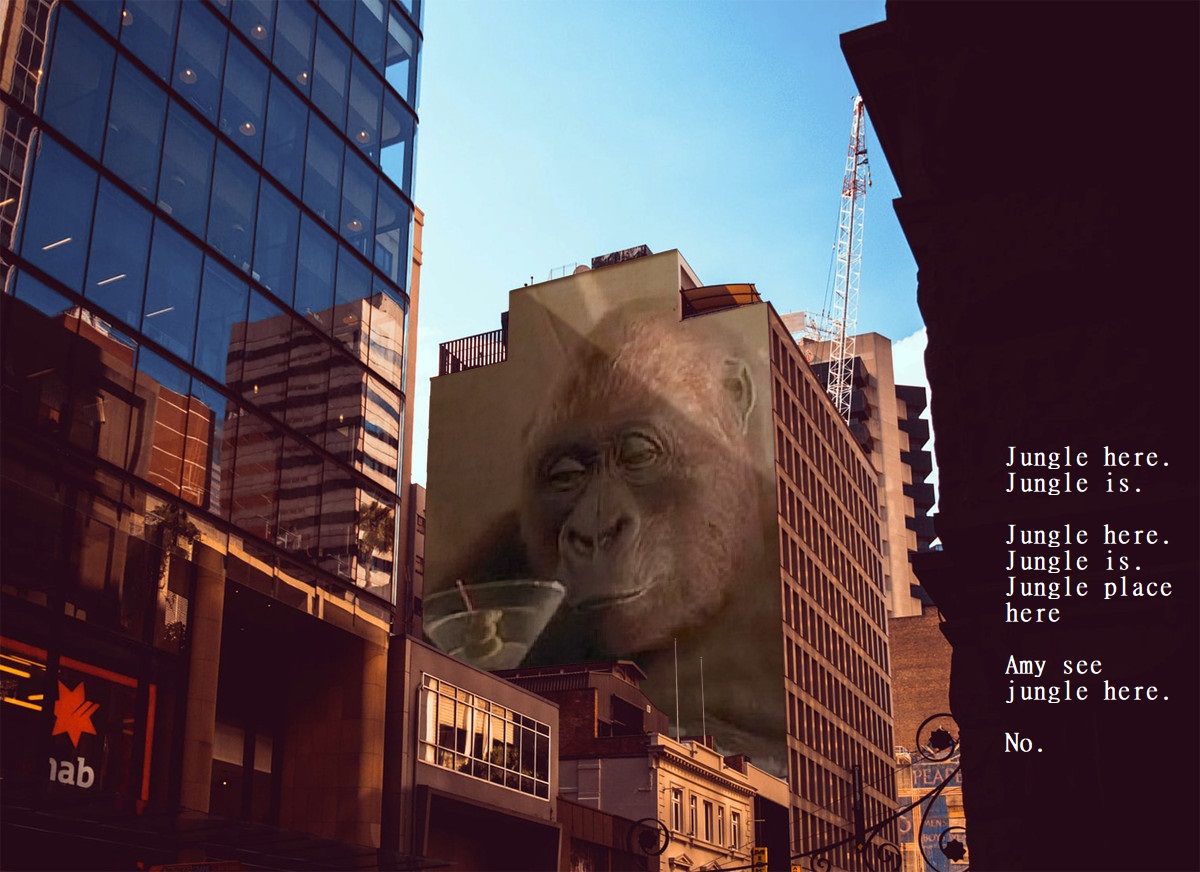

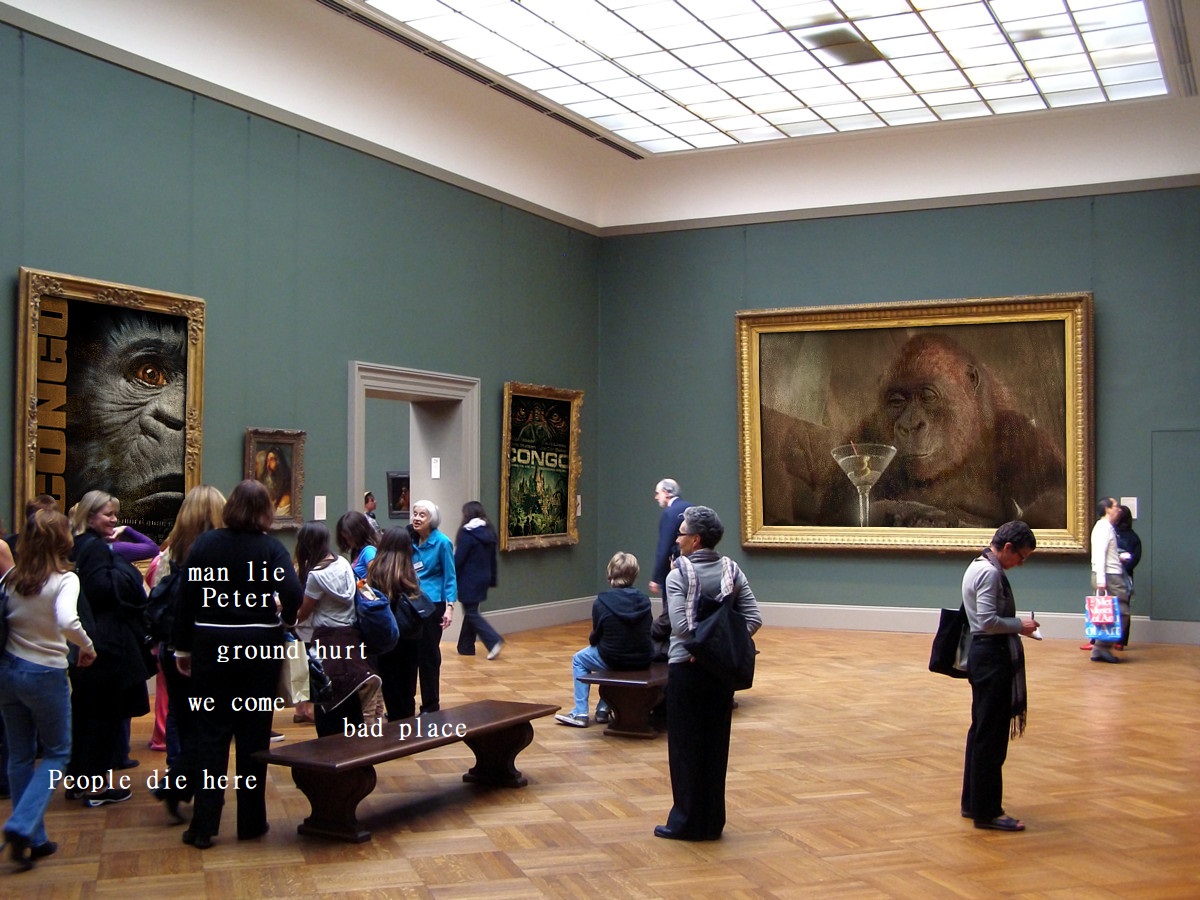

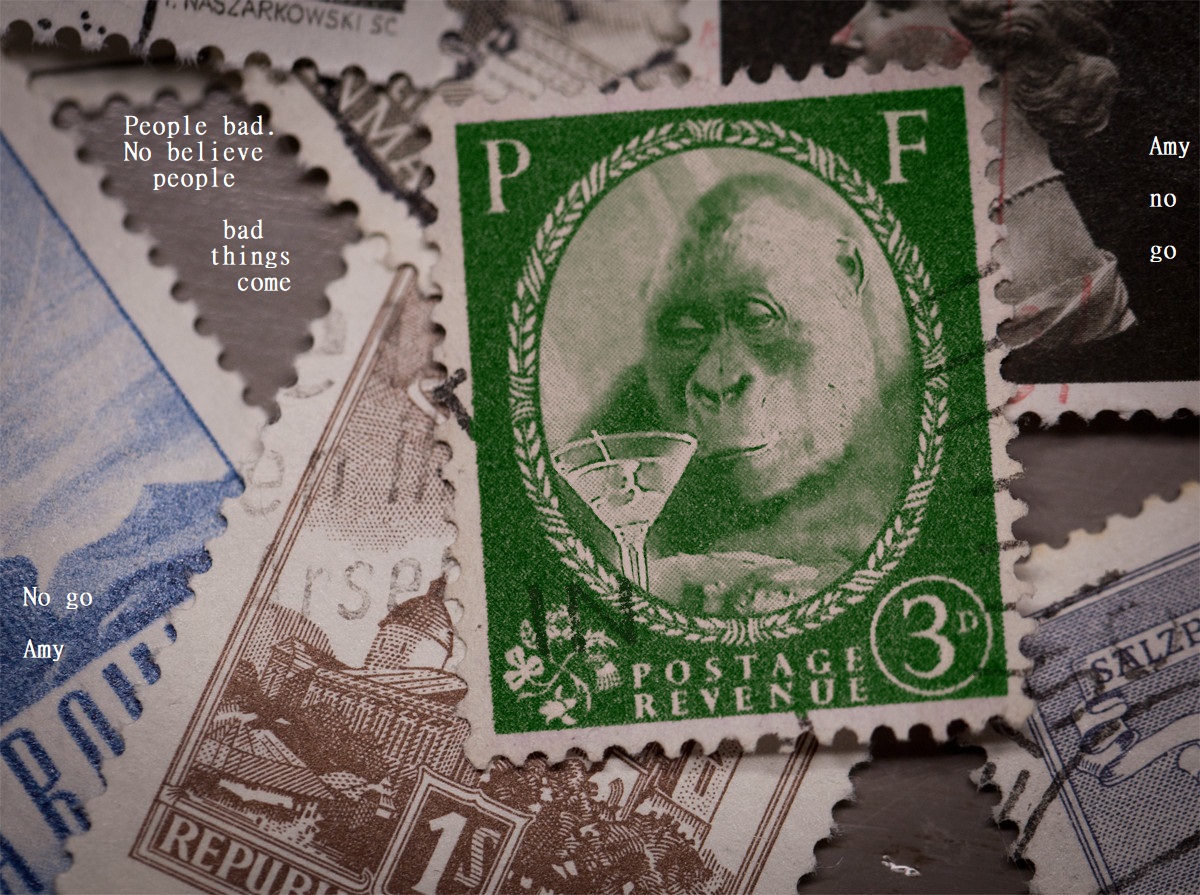

SJ Fowler is a writer, poet and performer who lives in London. His work aims to encapsulate an expansive understanding of what poetry and literature can be – exploring the textual, visual, asemic, concrete, sonic, collaborative, performative, improvised, curatorial – through 40 publications, 200 performances in over 40 countries, 4 large scale event programs, numerous commissions, collaborations and more. His work has been commissioned by Tate Modern, BBC Radio 3, Somerset House, Tate Britain, London Sinfonietta, Southbank Centre, National Centre for Writing, National Poetry Library, Science Museum and Liverpool Biennial amongst others. http://www.stevenjfowler.com
Poetry from RP Verlaine
No Xmas Tree

Just an empty bottle
of very good whiskey,
2 women, and a drink
during the course
of a week that ended
with us not speaking
to each other since.

I put a rose like those
I steal from the neighbors
garden in said bottle
as I reminder
there is much beauty
In this world.

Even with the women gone.

The knife one of them
threw at me for looking
at her friend’s legs remains
on the floor where it landed
after hitting the wall and
missing me by a foot.

A reminder that
any New Year’s Eve
even for a man with little
to lose can be more
curious than planned.

I/he does not mind
the things they stole
or borrowed with ill
intent.

Who alone with
all that once was
still reaches for
what lingered sweet
long enough to be
savored.

His wedding ring
lost in a desk
alongside knowledge
she pawned hers.
He places a comically
large Seashell to ear
just to hear the sea
scream for the past
like him
on most days.


She's OK Almost

She says but
her glazed eyes lost
pinpoints of
confusion
tell me different
and her
skin sallow
with track marks
I can't tell if
old or new
just that
they tell a story
I already know
the ending to.

We talk of poetry
we performed
once, together
apart
to smatterings of
applause long
ago. Of those we
thought we knew
under lights
spilling their souls
with captivating
corrupted
vehemence.

But she hasn't
read in years.
Tells me I look
like I'm doing well.
She's offended
when i ask if
she needs
money...
yet takes what I give
waving as she walks
away into the
darkness on
an unusually
otherwise bright
sunny day.


Ex On the Street

Not being invisible
or able to hide
when she spots
me first with
X-ray eyes.

The air, getting thinner
when she hugs me,
as if we’re still together,
as if that fatal night
hadn’t happened.

Then she says
that I look good,
that I’ve lost weight,
but I don’t and haven’t,
staring at her smiling face.

Love demands forgiveness
but losing your lover
& your best friend
in one cruel night
I never counted on.

I say goodbye 5 times.
It’s like she doesn’t hear
my last image of her,
him in her mouth,
in our bedroom, clear.

One of us was in love
and the other escaped
as I do now with alacrity
all shaken and wounded
by a past now present.
Rp Verlaine, a retired English teacher living in NYC, has an MFA in creative writing from City College. He has several collections of poetry including Femme Fatales Movie Starlets & Rockers (2018) and Lies From The Autobiography 1-3 (2018-2020). Rp’s work has been featured in Punk Noir, Ygdrasil, and Runcible Spoon.
Poetry from J.T. Whitehead
from "The Second Book of Job"


I.


Everyone gets to be Job for a year.

Or more.  Gets to feel that trembling and fear

of losing it all, watching it get lost.

Everyone learns that lesson.  Knows that cost.


You’re not alone when the divorce lawyer

warns about the marital home.  Or you’re

not alone, when you learn another boss

governs the universe – and not you.  Loss


is inevitable.  But it’s what’s next

that no one remembers.  We get the shit.

We forget the growth.  So never forget

that in the end you might just get a sexed


up mate who loves you more than anyone

who ever did.   With all those others done.


 *

 from "The Second Book of Job"

II.


Job Junior lost the marital home when

He and his Ex- were in arbitration

and this clause became paragraph 3 (B),

in the Clerk-filed dissolution decree,

cause 49 dash 33, CV,

and a “you” and an “I” replaced a “we.”


He transferred thirty-eight thousand dollars,

and he intuited things could be worse,


much worse.  Put one thousand books –  poetry,

Literature, drama, philosophy –


Into storage.  He took the last unit,

next to the dumpster, the only model

not re-modeled.  Sat down with a bottle

on the porch.  Impoverished and moonlit.


*

from "The Second Book of Job"


III.


Job’s losses left him as blind as Homer

or Milton and now he is the owner

of very little.  Someday his awareness

will match that of the poets.  He has less


to carry homeward, and has no homeward

to speak of.  It’s impossible to look

back without becoming frozen.  His Book

is closed.  To lose faith, okay, but the Word?


It was lost as well.  So at the machine,

for a spell, staring at the keys, the screen,

and his hands, it all came out gibberish:

“NIGHT OLD MAN HATE MONEY WHITE LUSTY DISH. . .”


For now, it was just blindness, no insight.

That spirit of Homer would have to wait.


 *

 from "The Second Book of Job"

IV.


This particular Job, losing ‘The Word,’

just let it all rip and let it all out.

Typed away.  Just squeezed out every turd

that fell out of his mental ass.  About


midnight he filled three pages’ worth:

HOTEL BILLS . . .  SAME ROOM . . . WEDDING NIGHT . . . HORSE TRACK . . .

ROUTE TO THE HEART . . . MILLIONAIRE . . . HE GETS IT . . .

FREE LOVE . . . MONEY FOR THE PONIES . . . YOU SAY


MORE ANAL . . .  TALK ABOUT THE SECOND BIRTH . . .

I WAS NOT THERE FOR THE FIRST . . . TAKEN BACK

IN TIME . . . DIRTY UNDERWEAR . . . ODD DEBTS . . . SHIT . . .

WHAT’S HAPPPENING . . . DO I DOUBT . . . DO I PRAY . . .


HELL . . . PURGATORY . . .  PURGATORY . . . HELL . . .


But she was gone.  He knew things would end well.


 *

 from "The Second Book of Job"

VI.


Another Job lost seven days with each

of 2 sons out of every two weeks.

“Fifty-fifty fair” made it hard to bitch

but he did anyway, however weak


it left him feeling.  And the Ex- would switch

this day for that day so many days

that he recognized a slow, distinct leak

in his clock, his calendar, in his haze.


Sanity was a thing now out of reach.

There was no point in trying to talk her

into paying back time.  This was not her

M.O.  And he couldn’t pay the lawyer.


He recalled the man in the coat, the wind,

the Sun . . . that fable would win in the end.


*

from "The Second Book of Job"

VII.


Another Job lost his credit rating.

His wife decided to have an affair

with Neiman-Marcus, or women’s clothing,

generally speaking.  A millionaire


was the last affair.  It was spending power.

That was the deal. In an icky hour

in a hotel room beneath his pay grade

he allowed her equal status: she paid.


Savings accounts and college funds went down.

He learned her weakness was the winning horse.

Wads of fives and tens turned up in drawers.

(It takes a lot of paint to paint the town)


This Job inherited: a millionaire.

Grew bored with the track.  But loved the clothing.