Watch the Quiet Ones

There are things never said causing oblivion
Access to information stalling ambition,
Sameness in form a blinding difference
Not ordinarily a problem, but still kissing death.

Some public kiss eats my soul
Enough to dissolve trust in a hare’s eye
Burning over coffee a necessary trick
Dispose with necessity, surviving letters.

Tying up hair in a predictable spancel
Rebuffing concern over a light lunch
Theories of disposition not ringing true
Packing sweetness is a hypocritical mass.

Picking apart decorum to the last degree
In no company do I raise my height
Black serviettes furnish the belated sorrow
A sly association dissolving the soul.

Criminal cliques, deluding God,
The road to perdition calling the shots
The princess stripped of her entourage
Deservedly alone for a minor crime.

Infused with good deeds, compensate for demeanor
Exclusion zones reign supreme across the board.
Waiting for star turns singing a praise
The quiet ones plot again for aggrandizement.


Sing Before Sung

An artist to regimentary love looms large
Taking random lives in due course
A poet’s sweat gone before bedtime
The young king wishes for wisdom,
A fitting climax for the stage hand.

Not seeing that far is a curse to savor
Sequins before substance tighten the screws
Of satisfied failure, a hypocrisy burned,
Loving the weather while you can
Traveling the scorched earth dream.

Stripped to the waist, a boy with principles
With the exact change and a illicit prescription
His discourse is brief, phoning the phonies
No one getting hurt in the course of the day
Sweet failures mourn the last song.

Acrylic eaten quickly by unholy punters
An artist unheard is calling the shots
Acres of beauty for sale, anonymous wishes
Burn with perdition, fighting for a soul
Taking apart roles to expose the carcass.

Justifying desolation before it is sought
Asking for grief before consummation
the roll calls for gridlock of another’s wits
and what is unsaid, playing with fire
and dancing on another’s head.


Hypochoristic

He twists his blade like a remembered kiss
Being made up to a parody of likeness
Attention deflected to a newish fad.

Choosing a clachan over history,
Grinded into heartbreak a savage conclusion
Weeping in public is a hard option.

Some white boy riot simplifies things.
People changing to vicissitudes of embarrassment
Avoidance strategy is a necessary string of events.

Feasting on the street not a good thing
Gathering dishes not an historic task
Sarcasm where intended, a shame of light.

Drawing on tradition edging two souls
Wanting to be a best friend stalls acceptance
Disbelief at parties in another block.

Political solution is on his side
Gathering an importance a done deal
All getting hurt at the end of the present.

Taking a live is the only  possibility at hand
Weeping with pain traveling upstream
Watching over a dangerous cause.

Knowing pain before it is etched
Conceding defeat in a public stare
Filtered through a facetious quip.
Patricia Walsh was born and raised in the parish of Mourneabbey, Co Cork, Ireland. To date, she has published one novel, titled The Quest for Lost Eire, in 2014, and has published one collection of poetry, titled Continuity Errors, with Lapwing Publications in 2010. She has since been published in a variety of print and online journals. She has also published another novel, In The Days of Ford Cortina, in August 2021.
Crime Investigation

One morning I went out for a walk. That day was Wednesday. I was walking past a pond. Then I heard the voices of two men at the edge of the pond. They were arguing about something. I felt very suspicious, so I approached them.

Since there were no houses in the empty street in the morning, that I was suspicious. There I saw two men saying to each other, "You have done the deed. Let there be no blame on me." I didn't understand what job they were talking about, I was not very comfortable with their words.

They were saying the same thing over and over again, so I didn't understand what the point was. At one point one of them said, "Then why should the dead Zia be brought up from the grave?" I was not very comfortable with their words.

Then the other person said, "I would have raised Zia from the grave if he could speak!" I felt that there was some mystery in their words. They then got up from there and started walking towards Fursedpur. I started walking behind them. They both sat in a tea shop and had tea and left in an auto.

After they left, I asked the tea shopkeeper about them. The tea shopkeeper said, "These two are not good people. They will do anything with betel nuts!" Only the two of them kept going around in my mind. I got the home address of both of them from the tea shopkeeper and next day I went to their village and started tracking them.

They both went out of their house towards Mirzapur. I followed them. There is a closed and old bungalow in Mirzapur. There two of them went in and the third started talking to another man. The third person gave them both a lot of money. I found it suspicious so, I took a picture of them on my mobile for proof.

After they came out of the bungalow, I went inside the bungalow and saw many weapons there. It was their secret place. I took those pictures on my mobile phone. My mind seemed to have defeated fear. I had no fear. I made up my mind to reveal this mystery.

The next day I started looking for the dead person named Zia. I asked my friends from two or three neighboring villages, "Do you know someone named Zia, who died a few days ago?" Then one of my friends told me, "Yes, a rich man named Zia in our village died about six or seven days ago."

I then asked my friend, "Do you know where and how the man died?" Then my friend said, "Yes, I know. Someone killed him when he was coming home from the market." I asked him again, "Didn't his family inform the police?" He said, "Why not! The police are investigating the case."

My friend then said to me, "What are you going to do knowing this?" I told him without realizing anything, "A neighbor next to our house was crying a few days ago, that her brother Zia had passed away. So I inquired. Then my friend said, "Okay." After listening to him, I understood that the three of them had some kind of secret knowledge of this incident.

I went to the police and inquired about the case. A police officer told me about that case. I then said, "I can help you with this case." I explained everything. I showed my mobile photos as proof. The police then visited the spot and arrested them. Police and court gave them due punishment.

After this incident the police made a report about me in a huge crowd and there were many newspapers, television reporters and many spectators. I was lucky enough to speak in front of them. I said there, how I investigated this case. Then the police and higher officials gave me a certificate and awarded me.

I was very happy. I never thought I could do something like this. I was very proud.  Our whole family was proud. I thanked my friend who helped me in this matter.  It was so much fun and I never thought I would be doing such a big investigation without my knowledge.
Re-Entry intoSocietyByFernando SorrentinoTranslated from the Spanish by Mary Esther Díaz
We spent our honeymoon in Bariloche and returned to Buenos Aires on a Saturday at dusk, eager to spend our first night together in our cozy one-bedroom apartment.
We found a cage in our bedroom.
It looked just like a parrot cage, only larger. It had a round base, nearly 3 yards in diameter, and vertical bars that came together at the top like meridians, forming a pointed dome that touched the ceiling.
To make room for the cage in the bedroom, our bed and our nightstands had been moved into the dining room, where the dining table and its four chairs had been pushed against the wall. It would be hard to open the cabinets, blocked as they were by the bed. Furniture, floors, and walls were badly scratched.
In the cage, there was a pale man with reddish hair. He seemed to be very clean and a bit anachronistic. He was wearing a black, double-breasted suit with gray pinstripes, a white, starched shirt, a dark tie, and well-shined black shoes. He held a gray hat on his knees; it was as clean, old-fashioned, and new as the rest of his person. Those period pieces, which looked newly-made, gave the odd impression of being props, a disguise, or some archaeological reconstruction.
We noticed all this a bit later. At first, Susana and I were shocked. The man waited for us to calm down, then said in a monotone:
“I wasn’t expecting you today. According to my information (he consulted a booklet) you were supposed to return tomorrow night. The time line is quite clear: ‘Friday the Twelfth, induction of the mentees; Saturday the Thirteenth, physical and mental adaptation; Sunday the Fourteenth, arrival of mentors.’ And today, if I’m not mistaken, is Saturday the Thirteenth.”
“You’re right,” I said, “We came back a day early. It’s not very pleasant to be back to work just a few hours after returning home.”
“What’s even less pleasant is receiving guests early. Mr. Rocchi will not be happy about this breach of etiquette, which, by the way, will also upset my plans for the night.”
“Mr. Rocchi? The owner of the real estate firm?”
“Who else? He, personally, made all the necessary arrangements, and they weren’t quick or easy. But Mr. Rocchi believes that all citizens should be extremely zealous about observing the laws and making sure they’re observed by others.”
I decided to set him straight.
“Laws? Which laws are those? And since when does that so-called Mr. Rocchi, a mere businessman, have any right to enforce the law?”
The man continued, still in a monotone:
“You, obviously, are someone who has not yet learned about life. Furthermore, your wedding celebration has prevented you from learning about certain changes introduced in real estate legislation. For example, Mr. Rocchi is now a magistrate. You’re a magistrate, too, within certain limits.”
“Me, a magistrate?” I gave an incredulous chuckle.
“Not quite: more of a magistrate’s assistant.”
“An assistant to Mr. Rocchi, then?”
“It would be unwise of me to get ahead of the official decision. However (and here he lowered his voice) I trust you to keep this information in strictest confidence.”
“And why are you telling me this confidential information?”
“My golden rule, sir, is knowing how to get along. Since we’ll be spending a lot of time under the same roof ….”
“A lot of time under the same roof?!”
“That’s right, sir. I’m older than you by at least 30 years. I have made very little progress; I’m at the lowest rung of the ladder of incarceration: I’m only an inmate. On the other hand, you are a free man who has already achieved the first promotion on the ladder of incarceration: the rank of assistant.”
Susana then exploded:
“I have never heard so much nonsense in my whole life! Simply put, the problem is this, ‘What the hell is this man doing here with his horrible cage in our bedroom?!’ Furthermore, who and why have they taken the bed and nightstands to the dining room, and who will pay for the damage caused by the movers?”
“My dear lady, I cannot condone the abrasive tone of your complaint. There are practical issues here. The bed had to be moved because, otherwise, the cell could not have been installed according to regulations. As for who will pay for the damages, the authorities plan to gather a team of laborers of various trades who will, for a small sum, return your furniture and walls to their original condition. But you asked, what the hell I am doing with my horrible cage here in your room. In turn, I would ask you, do you think I’m here of my own free will? Do you think I like being a prisoner?”
“I don’t care whether you are a prisoner of your own will or someone else’s. All I know is that I want your cage out of our bedroom!”
“It is not a cage. That term carries the disagreeable connotation of captive animals, which is just the opposite of the humanitarian spirit that guides our governmental authorities. Nor is it a cell or a dungeon. Its technical name is re-entry receptacle.”
This correction irritated Susana even more.
“Why should it be in our bedroom? Why in our bedroom? Why in our bedroom? Why? Why? Why?”
“Our Argentinian representatives and senators are very intelligent, educated, industrious, honest, austere, and altruistic people. In light of these virtues, they have ratified new laws that are jointly known as the Social Re-Entry Regulations and that .…”
"Do you expect me to believe,” I interrupted, “that you’re in our bedroom because of some new regulations?”
He placed his hat on his left index finger and, grasping the brim with his right hand, gave it a twirl as he shook his head.
“I am only an inmate. Within the system of incarceration, I fulfill the smallest of roles. You enjoy a rank one notch higher than mine and, in theory, should be better informed about such matters than I. Yet, in practice, it never works that way, as I have been in the system for many years, whereas you have just been admitted. You should be glad for your admittance, but you’re not. This phenomenon is not, by any means, initially present in the majority of people, but it always comes. When you have read the new regulations, you will feel not only joy, but also pride.”
Susana’s hands were balled into fists.
“If you will allow me,” the man added, “I could share some information about the Social Re-Entry Regulations ….”
“I’m anxious to hear them”—his leisurely manner was hard to take.
“The authorities, after examining the old system, found that it did not meet the needs of modern society. Therefore, they did not delay in replacing it with another one based on a consensus of ideas. Are you following ...?”
"Yes, yes, go on,” I said, waving my hand impatiently.
“The Social Re-Entry Regulation is based on two interrelated principles: A and B. The purpose of A is the progressive re-entry of the prisoner into society. The purpose of B is to replace the old system of collective incarceration units with individual incarceration units. Real estate firms distribute the prisoners among new domiciles and, thanks to this policy, the old jails are demolished and replaced by parks and plazas.”
“But why in new domiciles?”
“Old domiciles don’t always have a pleasant appearance and can negatively influence the prisoner’s psyche. On the other hand, a modern prison environment has a very positive effect on his or her re-entry into society. Besides, housing a prisoner brings great joy to the homeowners. It’s as if .…”
“Hang on a second: Susana and I are supposed to be your guards and you’re our prisoner?”
He shook his head in disappointment.
“The authorities no longer use the terms guards and prisoners. They use mentors and mentees, which are words better suited to Principle A of the system: the progressive re-entry of the prisoner into society. Don’t you agree?”
“But I see that both you and the authorities use the term prisoner.”
“Only as a poetic metaphor so the mentors will understand their obligations.”
“Obligations …?”
“Or shall we say, duties. These are simple and few. You need only provide me with food, clothing, medical and psychological assistance, exercise, toiletries, etc., of appropriate quality and quantity. In short, the material accouterments a human being as such deserves. The mentee’s spiritual rehabilitation is also provided for through recreation and information. I’m entitled to newspapers, magazines, books, television, and audio equipment .… Two nights a week, Tuesdays and Thursdays, friends of a certain age visit me. These gentlemen enjoy playing cards and dice, and it is expected that you shall offer them an assortment of snacks and beverages.”
“How many people would that be?”
“Never more than eight or ten. Likewise, I have not given up my sex life: on Saturday nights I am visited by Miss Cuqui, a pretty, charming, and educated young woman. A young woman of such merit naturally could never fall in love with me, so you must compensate her for her favors. I’m unaware of the exact fee, as I detest handling anything so banal as money. Instead, I enjoy art and, three times a week (Monday, Wednesday and Friday), I take drum lessons from a young rock musician who enjoys soft music and whose fees are not very high.”
“But,” Susana interrupted, “How are we supposed to manage so many expenses?”
“That's just my luck,” he said, shaking his head. “My other colleagues were housed in homes with good financial backing …. Alas, life can be so unfair …. I would suggest that you document the situation in an official letter, attaching a separate sheet in annex, in original and four copies, on official, sealed paper, which must be signed by a public accountant and a notary. The annex should bear a detailed account of income and expenses so that the mentors can prove financial hardship. The authorities take great pains to resolve any otherwise irremediable problems sustained by the mentors, and they may even be able to give you a mentoring grant.”
He suddenly fell silent, making it clear that he had gone too far by revealing this benefit. I had to ask:
"What does the mentoring grant entail?”
“It entails rights and responsibilities. As to the former, the authorities will try to find you both night jobs. For example, the gentleman could be a railroad employee at one of the suburban commuter railway stations. As for the lady, I don’t think Miss Cuqui would be opposed to initiating her in the art of her ministry. In exchange for these privileges, you will have to attend Comprehensive Mentor Improvement Training. The cost of this training is very low and is offered in the city of Luján.”
“Luján?!” I stammered stupidly. “It’s so far!”
“You are not required to request the grant,” he recovered. Then, with a yawn, he added, “It’s almost dinner time. I don’t have any special preferences; I will eat any kind of food, as long as it is abundant, varied, appropriately spiced, and accompanied by a red wine of excellent quality.”
Susana ran to the kitchen.
“I always take a bath before dinner. Here is the key to the cell.”
He handed me the key through the bars. I opened the door and he emerged. He was carrying a small duffel bag, in marked contrast to his formal dress. And now a paradoxical sense of health, strength, and well-being burst forth from this walking anachronism.
“You needn’t hold on to the key. I keep it to come and go, as I wouldn’t want to be a bother to anyone. Madam!” he called out, “Would you kindly turn up the heater a bit for me, please?”
“And you,” he said as he turned to me, “bring me a clean towel and, in preparation for tomorrow’s activities, don’t forget to buy me a large bottle of shampoo formulated expressly for dyed or tinted hair.”
I did as he said. He draped the towel around his neck. We left the bedroom and stopped in front of the bathroom.
“I would like to remind you that today, Saturday, is the day that Miss Cuqui comes. As shy as she is, it would be unsettling for her to meet with strangers. So, if you please, you and your wife should retire no later than eleven-thirty.”
Resting his hand on the doorknob, he added, “I shall be using the full-size bed. The authorities have failed to notice how very uncomfortable the regulation cot is. Oh, and clean sheets, if you please.”
“Um … and how long will all this … take?”
"You may return between three-thirty and four in the morning. Ring the doorbell once; if there’s no answer, do not ring again. Miss Cuqui is very energetic and, when she finishes her work, I usually fall into a deep and well-deserved sleep. In that case, check back in the morning at ten o’clock sharp – not before because I will still be resting and not after ten, as I usually take my breakfast at ten-fifteen.”
As he entered the bathroom, I managed to ask him:
“How long is your sentence?”
“It’s a life sentence,” he answered, as his words were drowned out by the sound of running bath water.
In memory of my beloved K.
Observations

The pitcher of ice water is nearly full.
The refrigerator is stuffed with containers.
There are mice nesting somewhere
in the room. I think behind the oven.
I've laid traps and poison stations,
hoping to end the intrusion.
And I'm making a fish stew
for my wife who'll return later.

I'm not one to add to what
I find here. It's enough for me
that the spatula turns the potatoes,
the corn, and the tomatoes with the pollock.
There's satisfaction in the fact that the cumin
has come from Mexico or the Indian subcontinent.
It's 3050. I am Dr. Roman Tanson. I am a scientist and robotics specialist.

Now people don’t have to go out without their special helpers. Robots help people. So, they rule the world. They have artificial intelligence.

Many countries are conducting weapons tests on the earth using destructive robots. As a result, robots have evolved strangely. They are destroying their control system and they’re running wild and destroying humans. There are even dangerous soldier robots such as AFT-3, AfTO-550, and ASJ-65.

The most dangerous robots are the SCI-FIBOT-5550. Many countries have studied about them and found that they cannot tolerate oxygen.

Now only a super hero can save the world. He is my brother, Misal Stark Saad. Everybody calls him "Legend of the Tree" because he has a lot of power and knowledge about trees.

Everybody told him to save the world. He told me to make some blasting robots. I made AJ52, the blasting robots. Saad went out in his mission with the blasting robots AJ52. Stark Saad slowly destroyed all robots. But the terrible SCI-FIBOT-5550 robots remained.

He fought a dangerous war with them. This time he used his most dangerous power, the tree of unlimited oxygen. In this way my brother Misal Stark Saad saved his favorite earth.
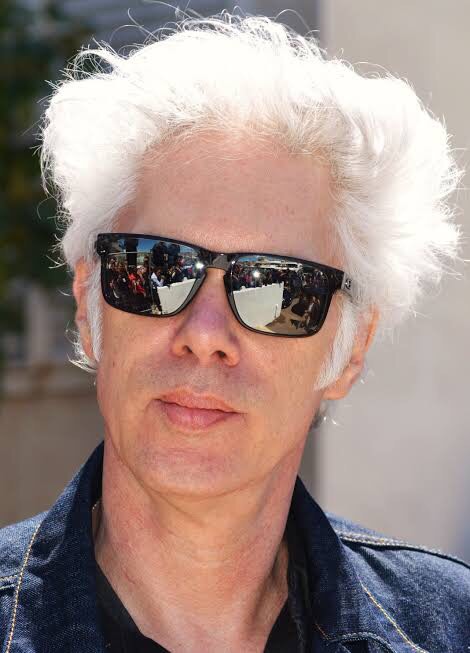
Jim Jarmusch, who are you?

"If aliens watched us make a film, they would think we were ridiculous,"
- Jim Jarmusch, the New York Times, 1992

In one episode of the Simpsons, they meet Jim Jarmusch to ask him who he is. He replies that he tries to answer that question in his films.
So, watching Jim Jarmusch’s films may lead the viewer to understand who he is.
Who could that be?

A loner, a poet, a musician, a socially-awkward artist, reluctant to the spotlight, determined to create art as long as it takes him, a stranger, a philosopher, and a spiritual creation.
All this is obvious, but who is Jim Jarmusch anyways?

He is a weirdo who embraces weirdness to the fullest. All comments and descriptions of him emphasize the halo that surrounds him everywhere. Longtime friend Tom Waits called him,
“The key, I think, to Jim, is that he went gray when he was 15 … As a result, he always felt like an immigrant in the teenage world. He’s been an immigrant — a benign, fascinated foreigner — ever since.”

Juan A. Suárez described Jim Jarmusch in one of the Contemporary Film Director book series. He wrote that Jarmusch was: "An endearing eccentric slightly at odds with his surroundings whose presence is at once self-effacing and subtly pervasive".

Jarmusch enjoys odd pairings of people who sometimes can’t communicate what and how they feel because they either speak a different language or their backgrounds are entirely different. Isn’t this Jarmusch trying to communicate with people all his life? He is trying to be understood by a world that rarely understands him and treats him with caution, probably leaving the sign “Handle with Care” taped to his forehead.

Jarmusch is not concerned with film time. He wants to approximate real-time as much as possible, whether in an awkward café, a room where someone spends too many nights playing guitar, a bus route, or woods mimicking Purgatory. Jarmusch tries to decipher the time code and what it means in real life or on screen. His films are long shots of people breaking the ice of distant relationships and communication methods that miss the spot.

Is he simply a filmmaker or a true artist? How does that show in his movies?

French and Japanese cinema has had a significant influence on Jarmusch. It shows in his deep interest in character analysis and the use of black and white.

Jarmusch’s movies are minimal and austere, strangers on a strange land where nothing is hospitable or inviting. Nothing seems familiar, not the Lower East Side, not Detroit, not Tangier, and not the western town Machine. He is deeply affected by film noir where the traces of a mysterious story where goodness or badness doesn’t matter shows in most of his films. There is no classic good guy/bad guy in a Jarmusch movie, even the ones minding their own business may face a situation where their morality is tested. Still, they don’t end up as heroes or villains but merely humans counting their steps and making the necessary movie one at a time.

Jarmusch is not concerned with breaking that eerie feeling of otherness. He embraces otherness in his films through his protagonists or -more or less- the lack of an actual hero on whom to build a film. He is fascinated by musicians and music. It is his source of inspiration as most of his movies seem like meditative pieces on life, like lengthy guitar solos or jazz improvisations.

Viewers don’t feel his films are meticulously-structured narrative-wise, although his command of the technique shows. Listening to actors talk about Jim Jarmusch shows how they feel that it is genuine and unrestrained to be working on a Jim Jarmusch film. Tilda Swinton called it “like Christmas every day”. Johnny Depp described him as “one of his best friends”. Austin Butler mentioned how he discussed red carpet style with him. Iggy Pop explained how trusting he was of Jarmusch’s artistic choices that he asked him to make a movie about The Stooges regardless of his appearance in it.

In his interviews, Jarmusch speaks slowly, taking his time with answers and elaborations. It doesn’t seem like he is in a hurry, and he seems oblivious to the surroundings, the crowd and the attendees matter least to him, and neither does the one interviewing him or engaging him in a discussion. With Jim Jarmusch, one becomes in Jim Jarmusch's land, where senses collide and coalesce to create a feeling and evoke emotion in the viewer.

However, sometimes, Jarmuschian films may not need to be watched. They can be music compositions on their own. The music takes centerstage more times than often, with soundtracks ranging from grungy electric guitars to ambient electronic music relying heavily on analog synthesizers.

For Jarmusch, music comes first. A love for a musician or a sound could build an entire movie, which is why his films might seem strange without the soundtrack context. His movies are not for the people who cannot immerse themselves in an artistic experience.

But since movies have differed gravely in context and content from before, this eccentric artist has seen a surge in popularity with younger audiences who may or may not be looking for a way to disconnect from the average top 10 on a streaming service experience.

Jim Jarmusch may have been the rockstar of American indie filmmakers, but an aloof one at that, the Thom Yorke of the scene, adding his musician status to the mix, Jarmusch chose a life of secrecy rather than bathing in the much-welcomed attention that stars and star makers revel. His identity remained the same throughout his career, and his state of weirdness proved not to be an act, but an authentic personality trait, as his films grew further apart and his filmography grew more eclectic.

Although his latest film, “The Dead Don’t Die” is an asymmetric, sublime, zombie post-apocalyptic, star-studded tale, it still had some  Jarmusch-ian elements.

A collector of music, photographs, poetry, and people before starting any project, Jarmusch is the American hunter, going out on expeditions to capture gems that pass unnoticed by others, dismissed as mundane. He is the ultimate hoarder, but a poetic one at that. His career in retrospect was not concerned with the aesthetic star beauty of charisma.

“Stranger than Paradise” and “Down by Law” had more unknowns than known actors. Iggy Pop made more than one appearance in a Jarmusch movie, and Yasmine Hamdan appeared in a magical scene to steal the spotlight from Tom Hiddleston and Tilda Swinton.

The thing with Jarmusch is that he experiments with actors all the time. He allows them to surprise him. He retains that curious kid fascinated by art deep and doesn’t let go in favor of the director’s ego.

Jarmusch dismisses the traditional storytelling structure. Like a jazz musician, he improvises, creates scenes on the spot, and changes dialogue constantly. The ending result is a bit chaotic but within a frame of synchronicity. His style doesn’t overshadow his characters’ triumphs and misgivings, lost as they are in big cities, woods, or within the walls of their own homes, they go on aimless journeys not to follow a dream or set on a hero’s route, like the flow of the river, as they move, stillness would only mean stagnancy and Jim Jarmusch is by no means a static artist.
Film critic and author Jaylan Salah
Jaylan Salah Salman is an Egyptian poet, translator, two-time national literary award winner, animal lover, feminist, film critic, and philanthropist. She received her BSc in pharmacy in 2011, and has published film criticism articles, short stories, poems, and translations in many websites and offline publications such as “Al Ahram”, “Vagues Visages”, “Synchronized Chaos”, “The Gay Gaze”, “Cinema Femme Magazine”, ” Eye on Cinema” and “Guardian Liberty Voice”. Her first short story collection, “Thus Spoke La Loba”, was published in 2016 by the Egyptian Supreme Council of Culture. Her first poetry collection in English, “Work Station Blues”, was published by PoetsIN, a British publishing house with the purpose of destigmatizing mental illness and supporting international artists. Her debut novel “Bogart Play me a Classic Melody” has made wide critical acclaim and was recently chosen as one of the 32 novels in the “Arab Voices” initiative at the virtual Frankfurt Bookfair in 2020. Her second poetry book “Bury my Womb on the West Bank”, was published in 2021 by Third Eye Butterfly Press and available on Amazon in both ebook and paperback formats. Her second novel “Rita’s Dance” was published in 2022 by Noon for Publishing and available for purchase both in paperback and ebook formats.
SOLACE OF MOONLIGHT

To be kissed by the moonlight
Is such a glowing grace
To be caressed by stars
Is such a life
Draped In darkened blue
Dancing from mercury to Venus
What an honest dance.

To be found by the light of the moon
And loved under a blackened sky
Let the sun forget about me
It never heard me crying
Not today.

As there is something so special
about the moonlight
Like it was made just for me
Because no matter how bad things go
I have the moon as my company.