Poetry from Mitchell Grabois


Black Tooth Rapids on the River Ardeche

I’m a skilled kayaker

but I approach this easy, class 2 passage

with trepidation

On this trip to France

our teeth

fight us

first me with a toothache

that takes a root canal to put to rest

then Concetta, a shattered molar

We are climbing Dr. Montrose’s marble stairs

as if we are priests

performing regular

penance

Then Valerie gets drunk and falls on her face

knocks out a tooth

Blood runs from her mouth

scaring the Arab children

Is there a vampire mythology

among Algerian Arabs?

Who is their Dracula?

Maybe a Jew

who wandered the desert for a hundred years

in inexorable progress

toward their blood

The children run to their mothers

who come out of cluttered apartments

their faces inked

and tight with maternal care,

ready to rush headlong

into rage and battle

Valerie

and these mothers

terrify each other

Something horrible, devastating is going to happen here

I step over Valerie’s mangled bike

and reassure the mothers

in my bad Arabic

It is only Valerie, drunk

She fell on her face

The mothers spit

Whore they accuse

Valerie doesn’t understand Arabic

All she has is her pearly French

and her big, manipulative boobs

that the Arab husbands have been

coveting for months

I help her back to her apartment

She’s still very drunk

She wants her bike

She wants me to take her clothes off

pour soapy water down her thighs

Concetta agrees with the Arab women

Valerie is a Jezebel

and she’s not getting me alone with her

Where’s John, her husband?

Why isn’t he here

taking care of her?

Then John arrives

and he and Valerie get into a screaming fight

We leave

go back to our adjoining apartment building

the smell of garbage in the halls

These Arabs don’t care enough to close the door

to the garbage room

so it stinks day and night

Concetta starts to complain about it

She complains about it every day

but I don’t want to hear any more

I go out on the balcony

and smoke a cigarette

I remember our passage down the river

early that day

knocking the edge of my paddle blade

against the rock that gives

Black Tooth Rapids its name

The river swirls around me

None of my teeth hurt

I paddle on

Tile

We stop for lunch

We climb some rocks above the river

and find a

flat sandy place

Concetta’s made sandwiches for everyone

Salami, camembert, fresh goat cheese

hot French moutarde on cereal bread

2 huge chocolate bars for desert

The sun shines and Valerie takes off her top

lies in the sand

eyes closed

maybe she’s fallen asleep

I pretend not to notice her breasts

but I watch her nipples harden as

wind blows in dark clouds

the sun disappears

the temperature drops twenty degrees in minutes

My Tilly Endurable blows off my head

and is restrained by its neck cord

which threatens to strangle me

The distant thunder comes

close in the river canyon

the wind pulls Valerie’s blouse from

her hand

Above, a lightning bolt hits the sheer rock wall of the gorge

Valerie and John, like crazed horses

run to the river with their paddles

I have to stop them

I have to knock John down

He remembers this two weeks later

when we carry a load of tile

up three flights of stairs

a job we’re doing for an Englishman

Twenty years younger

John feels he has to reestablish his position

He hauls two boxes of tile

for every one of mine

I am so happy about this I could shit

I’m sweating, breathing hard

I stop to take a break

John brushes by me with two more boxes

Haul those boxes, sucker

I silently tell him

God bless you

and your machismo

Strong Cheese

We’re leaving Provence

Louis the goat man has given us strong cheese

wrapped in plastic

but the smell still comes through on the train

and a couple of Frenchmen in suits

give us dirty looks

as if we were the ones who invented stinky cheese

We’re too hung over to care

We’re headed for Paris

to stay in an apartment

belonging to a drug dealer now in jail

We don’t stay long

The building adjoins the train station

All day and night the ground rumbles

like a Los Angeles earthquake

Anyway

we’ve eaten all the stinky cheese

 Mitchell Grabois may be reached at grabmitch@hotmail.com and is a newly recurring contributor to Synchronized Chaos Magazine. 
 

Poetry from Emma Bernstein


Dawn

the stars spread themselves thin, long-bodied,

stitching the sun into the sky,

crisp fold of linen on the window sill,

like the roll of coffee from a pot,

lulling the darkness to sleep,

beckoning the grass to shiver and grow into the sky,

blue melted into green,

all of us humming birds,

all of us fluttering,

leaves drift gently to earth, softly brushing

my eyelashes and fingertips,

the branches tune violins fashioned of wind

Emma Bernstein can be reached at emmabernstein1@gmail.com and is a repeat contributor to Synchronized Chaos Magazine. 
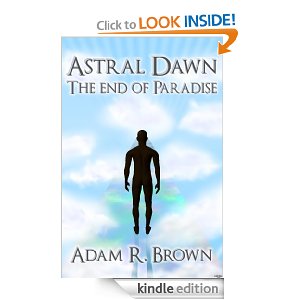
Fran Laniado’s review of Adam R. Brown’s Astral Dawn

astral dawn cover

Review: Astral Dawn: The End of Paradise

by Fran Laniado

If anyone were to ask Caspian Knoll what he was doing with his life, he’d probably have tough time coming up with an answer. At twenty-two he works a low paying dead end job, and lives with his parents. His idea of an exciting weekend involves something good on TV, and he’s never had a real girlfriend. That’s not to say Caspian is “a loser”. Quite the contrary. He’s basically a decent guy.

He is intelligent and inquisitive. He wants more out of life. But he isn’t quite sure how to get beyond “wanting” it. He’s held back by a general sense of fear and anxiety. Of course he doesn’t seem like the type of person to save a heavenly realm from invasion. But are the people who save other worlds ever, really, the people that you would expect?

One Friday evening, Caspian picks up an interesting looking Ankh necklace when he stops into an antique store on his way home from work. Other than that nothing else remotely atypical happens, and Caspian goes home, has some dinner with his family, watches some television and falls asleep. He awakens in a strange Heavenly realm. He’s taken to places with names like the Clear Path, Inspiration’s Light and the Way of Ascension before his arrival in the Celestial City.

Here he finds a guide who tells him that a) he is dreaming (he kind of figured that one out on his own) b) This is somehow different from a normal dream c) He’s in what humans traditionally think of as Heaven and d) He’s not actually dead- just visiting. All seems well in the Celestial City, as you might expect. But Caspian begins to notice some folks around that look like they don’t belong in Heaven. In fact, they look like they belong somewhere a bit further south… But for some reason, Caspian is the only one who can see them. It comes to pass that Caspian might be the only thing stranding between Paradise, and an invasion.

Like any other book, Astral Dawn: The End of Paradise has its share of strengths and weaknesses. Impatient readers be warned that some of the weaknesses appear first. We get a preface and a prologue that are set in realms that we can assume are Heaven and Hell, but without really having an idea of who these beings really are, or the stakes, it’s hard for the reader to engage, or even understand. Push though this.

Once we meet Caspian things start to look up. He has found himself in a similar situation to a lot of other “new adults”. He’s been told that he may have to pay his dues but eventually if he tows the line he’ll have a good job, a family, and a happy fulfilling life. But he’s not sure how to get from point A to point B. He sends out resumes, but not much seems to come of them.

When he sees a girl who catches his interest, he can’t think of anything to say to her. A lot of readers may sympathize with Caspian in this, because it’s a point in life that’s very similar to where a lot of readers either are of have been once: the point where we once assumed that everything would come together, only to learn that it’s not that easy. As a sympathetic and realistic character, he gives the reader a firm foundation in the familiar. Therefore when he starts to encounter realms that are more fantastical, he needs the same explanations that the reader does, in order to understand what is happening. He also gives the reader something firm and familiar to hold onto, in spite of some of the more bizarre goings on.

Things do get weird. We are essentially taken on a guided tour of Heaven here. We learn a lot of “rules” for travel, fighting, and communicating in this new realm. There is are hints along the way, that Caspian’s journey is not yet through by the end of this book, and will be continued in a sequel. There are plenty of loose ends at the finish of this book, but that’s alright as long as they are tied up in later installments.

Author, Adam R. Brown, also deserves credit for setting his novel in a multicultural world. Well, technically two multicultural worlds. He rarely dwells on a character’s race unless it has some relevance to the plot or characterization- which occasionally it does. In his character descriptions he’ll mention that a beautiful woman appears to be of Hispanic descent. We learn that Caspian is African American early on via a few off hand comments, but his race doesn’t define him. There’s a sense of balance in Brown’s depiction of race and culture. It is a part of who his characters are, and sometimes why they act a certain way, but it is never their defining characteristic. This balance is refreshing in fiction, where often all characters are given the same cultural background as the author and/or the intended audience.

Overall, Paradise as seen in Brown’s novel is a vividly created world that is not always what you’d expect of Heaven. No angels playing harps on clouds here! It is the way that the novel subverts our expectations and ideas about Heaven and Hell that make this an interesting read.

Fran Laniado is a recurring writer for Synchronized Chaos, from New York, NY. She may be reached at fl827@hotmail.com 


Poetry from John Grey


THE GIRL AT THE BAR IN THE DREAM


Sure I wanted her.

But wanting isn’t everything.

There’s also fumbling and mumbling.

In the end, I turned away.

My wants and I moved on.


There was the dream of course.

No compromise there.

Everything desired became immediately accessible.

My words…her surrender.

But then I awoke.


There’s a world in my brain

where the most amazing things happen.

But there’s this other world,

composed of one part frozen tongue,

one part trembling knees,

and one part okay but nothing special looks.

Can’t expect much from it.

It’s a raw deal long since dealt.


And sure I wanted her.

But, most of all, I wanted an excuse.

She was waiting for someone.

She wasn’t really so hot.

It’s the lights. It’s the cleavage.

And she was probably dumb as three twigs.

Is that what I want for a lover?


But in my dream, she looked no different.

And she was sure no Einstein.

And she was waiting for someone.

She just didn’t know it.

She was waiting for me.

So my dream was a compromise after all.

Nobody’s perfect.

They just look that way.


And sure I wanted her.

Why not want what you can never have.

And even if you did have it,

it would just leave you wanting more.

And there’s always my dreams.

My wants like it there.


THE BETTER OFF


A man walks past a poor woman,

under a gray sky borne

beyond themselves

but for now each step

carrying iron down a rocky path

flanked by a flight of birds

which they cannot follow.


He’s ignores her,

his head in hands, her mind alight,

her vision immeasurably far

in a shabby sort of way,

in flame, in silence,

burdened by this path to truth.


It’s too quiet,

no alarm to raise, no message,

just a bare tree, a bare-footed woman,

and he recently returned

from every other place,

rests in front of her, on a stick.


She’s only just awakened,

Soon she must find food, shelter.

But now, she tells him,

that all straight lines sear away

the streams, winds, bear us,

the yearning’s tunneled down, turned aside.

gives gossamer to the eyes

that match day’s narrow prism,

that see only fake horizons

as up ahead we travel weathered


What could she say,

What survives the dead?

What does it mean

to ask whose heart is fire,

with a fiery knowledge,

with one absurd center,

with one unwitting voice?


RHONDA RECOUNTS


I walk down to the mailbox in the shivering cold.

I would not do this if it weren’t duty.

I slip, slide, in the snow.

Ice cracks under my slippers.

Birds, whiter-thin, nibble at the feeder.

Is that a rabbit? And is it frozen, dead?


Inside, Amelia won’t get out of her sick bed,

prefers the flakes on the window

to the letters in my shivering hands.

No two alike, she says.

But every day like the one before.


I hear mice scrambling between the walls,

Good luck to them

if they can live in such uninviting, dark places,

They hate the cold as much as I do.


More orders from Amelia’s bed.

She’d like a cup of a coffee.

Is there a magazine in the house?

Could I bring the small black and white TV

up from the kitchen and place it on the dresser.


I vacuum. I rinse dishes.

I throw clothes in the washing machine,

turn on its cycle,

listen to the burps, the grinds,

the rough and tumble, of cleansing.


Later, I sit in the chair beside her.

I still haven’t dressed, still haven’t showered.

I’m still subject to time

but the demands of a single day elude me.

Amelia is my hours, minutes, seconds now.


She recounts a dream of her husband pushing a cow up a hill.

And then one of her father sinking into a swamp.

She says, at the end, all she can see is hands reaching up.

She laughs though it hurts her insides.


A voice inside me whispers, “You have no life of your own.”

It’s simply Amelia, in her bed, somewhere behind my rib-cage,

some place so near the heart.


DEAD MEN POSING


I’m staring at a picture in a magazine,

two guys in their seventies probably,

in a Maine General Store,

circa 1976.

They’re dead now,

I keep repeating over and over and over.

They’re dead as door knobs,

as door frames, as donuts,

even the ones made on the premises.

They’re dead as the racks of Maple Syrup

on the shelves behind them

or the shovels, hardy and deep,

for that wicked Nor’easter snow.

Some cameraman figured he was snapping

a picture of life as it used to be

but it’s really death as it can’t help but being.

Those wise eyes, that skin worn down by

too many mud seasons, that leathery mouth…

all gone, now nothing but the skull

that almost penetrates where cheek meets bone.

The flannel shirts are dust.

The overalls likewise.

And those shoes, resoled more times

than they’ve had hot pancakes,

are all soul now, all spirit.

They’re captured at a moment

when one dead man is telling the other man

a long dead joke.

One’s about to grab a newspaper out of the rack.

Nothing deader than a newspaper in this day and age.

And a rack too for that matter.

The other slips his hands into his pockets.

Neither hand survived.


INTRUDER


Cougar snarls,

what am I doing in its Eden.

All of the heathen

in a lone intruder

is broached in one long

defiant coyote howl.

Junipers shake

to my trample of a twig.

Wind shifts

at the impediment of my flesh.

I sit on a rock

to clear my head.

But suddenly the rock’s head

is as cloudy as the upper sky.

A man is on its throne.

Water falls from high ledge in disbelief.

A creek cannot understand

why it trickles that first step

toward the river and the towns downstream

when civilization is already here,

a pebble toss from its novitiate current.

Send the man away, whispers the canopy.

Who needs his junk, his anxieties,

his hypocritical pieties.

Every forest creature hurtles away

from any place my foot may fall.

The trees would if they could.

Yet I am only here

to wallow in their peace, their loveliness.

How war-like, how ugly that must be.


John Grey is an Australian born poet. Recently published in The Lyric, Vallum and the science fiction anthology, “The Kennedy Curse” with work upcoming in Bryant Literary Magazine, Natural Bridge, Southern California Review and the Pedestal.


Elizabeth Hughes’ Book Periscope


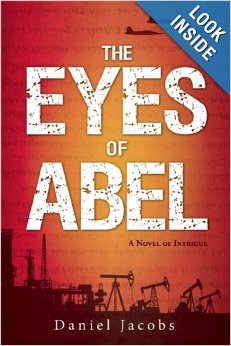
The Eyes of Abel by Daniel Jacobs

The Eyes of Abel by Daniel Jacobs

Daniel Jacobs’ The Eyes of Abel

The Eyes of Abel is a very good novel with surprising twists and turns. It is the story of Roger Charlin, a journalist, and Maya Cohen, a security agent for El Al Airlines…or is she? Charlin poses undercover, and tries to go through the security check point at El Al.

However, Maya figures out who he is quickly. She agrees to an interview with Charlin and they develop an unlikely relationship. They are both working on a fusion energy project that would lead to less reliance on oil from the Middle East. Their goal is to prevent a war in Israel, when other countries have missiles pointed at the country.

The Eyes of Abel is an extremely good novel and keeps the reader riveted to every page all the way through. It is full of nonstop suspense. Mr. Jacobs, I rate The Eyes of Abel 5 stars and very highly recommend this book. The Eyes of Abel is most definitely ‘my cup of tea’!!!

Elizabeth Hughes is a reader, dog lover and book reviewer from San Jose, California. She welcomes paying writing and review gigs and may be reached at hugheselizabeth@rocketmail.com 

Cristina Deptula on California’s Redwood Ecosystem

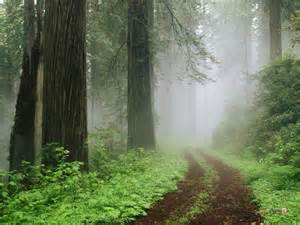
californiaredwoods

 Around five million years ago, the trees of the California coast redwood range would have looked quite familiar. Common plant life, now and in the past, includes sword fern, alder, madrone, dogwood, and big leaf maple, all of which budding naturalists can learn to identify on hikes by their characteristic leaves.


As Emily Burns, of the Save the Redwoods League, explained last month during a volunteer enrichment talk, California’s redwoods store a great deal of carbon, but are highly influenced by climate and moisture. They also provide a living historical record of temperature, as Burns dramatically illustrated. Specimens of redwood trunk reveal almost no growth in 1580, which proved a mystery to ecologists. Until they searched the surviving written records of explorers from that time, who mentioned weather so cold that snow lasted nearly into summer and crew members dreaded getting out of bed.

Ecologists and meteorologists say that temperatures in the North Coast have stayed roughly the same, while the Bay Area and Santa Cruz have seen warming. Also, the region has experienced fewer cold days, rather than more hot days, and the frequency of foggy days has declined. Less fog isn’t good for the swordfern, which depends on the moisture, but may actually be a positive for redwoods, who need sun. Students and teachers at Chabot are tracking changes in swordfern frond size through the Communicating Climate Change initiative, as the plant gives a fairly accurate record of the amount of moisture at any particular time. Much of the predictive modeling surrounding climate change has focused on how redwood ecosystems withstand greater heat, so adjustments to the models are likely necessary to fully understand the effects of change.

Redwood forests reached their peak millions of years ago, and before European settlement of California, they covered 2.2 million acres of land. Now, there are 1.63 million acres of redwoods, 93 percent of which have been harvested and replanted. 23 percent of these live within parks or other protected land, and some of the protected trees date as far back as 328 and 474 A.D.

Changing forests bring about varied effects on the diverse animals and plants within the habitat. Owls are returning to newly replanted areas for better foraging, but still need old growth areas to hatch their eggs. The spotted owl now faces competition from the eastern bard owl, due to cross-country migration. The Steller’s Jay, which eats the less abundant marble merlet’s eggs, has now multiplied after eating food crumbs picnickers and hikers leave behind. Also, to the consternation of ecologists, black bears are now eating the sugary redwood bark.

Forty percent of wood growth by volume occurs in a redwood tree’s branches, and an older tree continues to expand there even when its rings become smaller with age. Researchers have found that redwood growth actually accelerates as trees get older. One ancient tree known as the Big Emerald puts on 1.6 cubic meters a year, enough wood to produce 2.3 million pencils. Conservationists seek to preserve trees of all ages, as young forests let in light for new growth, while older, deeply rooted trees better protect streams from erosion.

There is some reason for optimism about the future of the redwoods, as recent centuries have seen huge annual growth in the mass of California redwood trunks. With awareness and intelligent management, we can continue to preserve and enjoy this natural area for many more generations.


Cristina Deptula is a staff writer and may be reached at cedeptula@sbcglobal.net – and she welcomes paying freelance and professional writing positions. 

Synchronized Chaos December 2013: Defining and Asserting Identity


Greetings readers, tinsel and light and sparkles and redemption and rebirth to those who welcome those sorts of things. Happy Winter Solstice, Christmas, Kwanzaa, Hanukkah, and other celebrations to all of you.

This month we bring you pieces centered on identity: fully embodying and understanding one’s self, and claiming the right to define oneself on one’s own terms.

Poet Linda Allen also draws upon the Christmas holiday as a motif in her cycle of three poems. She begins with a piece describing a winter snowfall, then another where the birds and outdoor scene echo her grief and wonder, and then a final poem which focuses on the widowed speaker’s bittersweet emotions. The natural world becomes a voice and vocabulary for her speakers, a way for them to communicate who they are and articulate their thoughts. Geese, trees, cold weather become not just a pretty landscape, but a common heritage, a way to refer to and thus talk about the same things.

Leila A. Fortier also uses natural as well as spiritual imagery in her poetic writings, rendering her speakers’ ‘ocean’ of memories through italicized fragments resembling an inner dialogue. Having the space to think, to sort through one’s own thoughts, is an important part of developing a personal identity.

In his poetry, Mitchell Grabois intersperses personal thoughts and memories with reflections on historical events, ethnic identity and American culture. His speakers use childhood innocence, rebelliousness, and wry humor as ways of coping, of existing within a changing world.

Emma Eisler’s poetic piece, like some of Fortier’s work, shows a speaker experiencing a complex and troubled interpersonal relationship. In “Flight and Fall,” her character longs to be heard, to be known for who he or she really is, rather than just seen as a symbol of the excitement and glamour of the carnival.

Arthur Gonzalez’ fantasy novel The Photo Traveler, as reviewed in Elizabeth Hughes’ monthly Book Periscope column, presents a narrator who discovers his ability to transport himself through time while escaping an abusive home situation. His moving through history to understand himself and his special role in the book’s drama resembles the internal journeys of Fortier and Allen’s poetic speakers.

Christopher Bernard reviews the current show at San Francisco’s Meridian Gallery, “By Mainly Unexpected Means -” This assortment of artwork, from 20 Silicon Valley artists (in residence at Palo Alto’s Cubberley Studios) combines the old and the new, the analog and digital, the human and the technological. Like Arthur Gonzalez’ protagonist, Gavin, the work travels through time, overlaying multiple layers of thought and history in order to better reflect and convey our world.

Amina Aineb illustrates the vulnerability of the individual in her poem “A Bizarre Way of Walking to a House.” Her writing evokes her young female speaker’s sense of being alone in an unsettling world.

Christopher Bernard’s review of poet Jack Foley’s new collection Eyes highlights the poet’s unique use of multiple voices within his text. Bernard’s piece emphasizes how Foley’s interlineated text encourages people to think rather than getting comforted or instructed, and to pay attention to language and form as well as content. By deconstructing identity in this way, Foley draws attention to the concept, and calls on us to do the hard work of creating ourselves and our world, infusing our words, lives and society with meaning.

The American Conservatory Theater (ACT)’s recent production of Beneath the Lintel, as also reviewed by Christopher Bernard, gives us protagonists with elusive personal identities. We have a murder mystery involving books, stories and libraries, where we are not sure who the perpetrator or victim really are, or even if they exist.

Martin Rushmere follows in this vein with his review of the Marin Theater Company’s production of Ibsen’s A Doll’s House, a drama which critiques the way social expectations define us and our relationships. In the drama, we see a husband forced to choose between love and honor, and a wife who chooses autonomy and self-definition over her roles as wife and mother.

Like Nora in A Doll’s House, Ayokunle Adeleye takes a risk to assert his beliefs. His strident poem in support of a Nigerian university faculty and staff strike states his position with clarity and without apology. Following in the vein of his earlier writings, he advocates for justice and government accountability and transparency within his home country.

Thank you very much for making Synchronized Chaos Magazine part of your December solstice and holiday celebrations! We wish you the light and joy of the season as you read.

http://flickr.com/photos/12836528@N00/3118302526
My heart explodes for the new Motorola+Zine+ZN5
Creative Commons photo found on flickrcc.net